© OECD 
A joint initiative of the OECD and the European Union, principally financed by the EU 
Tirana, 10-12 September 2014 
Workshop System Based Auditing 
Defining controls
2
3
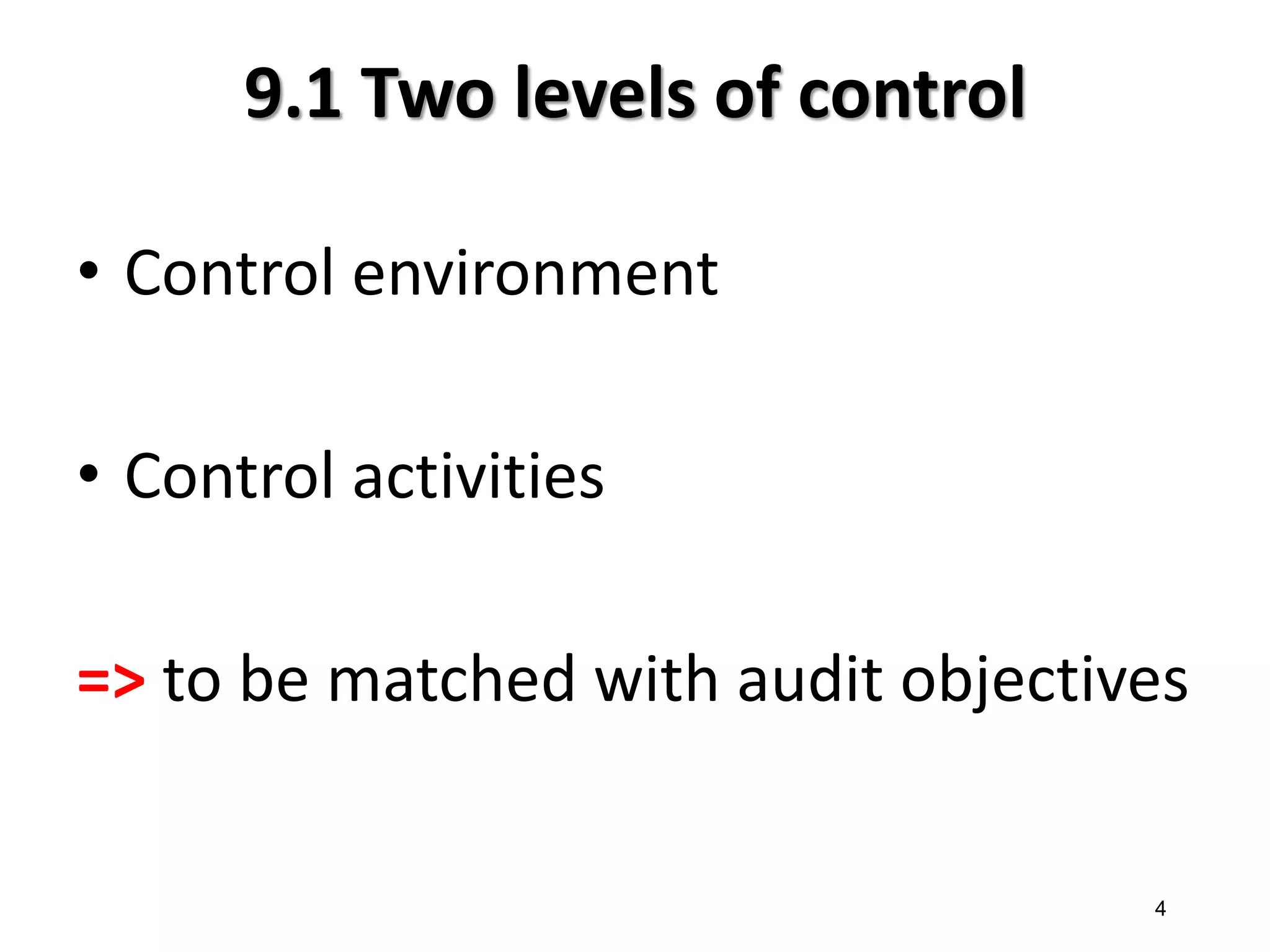
9.1 Two levels of control 
•Control environment 
•Control activities 
=> to be matched with audit objectives 
4
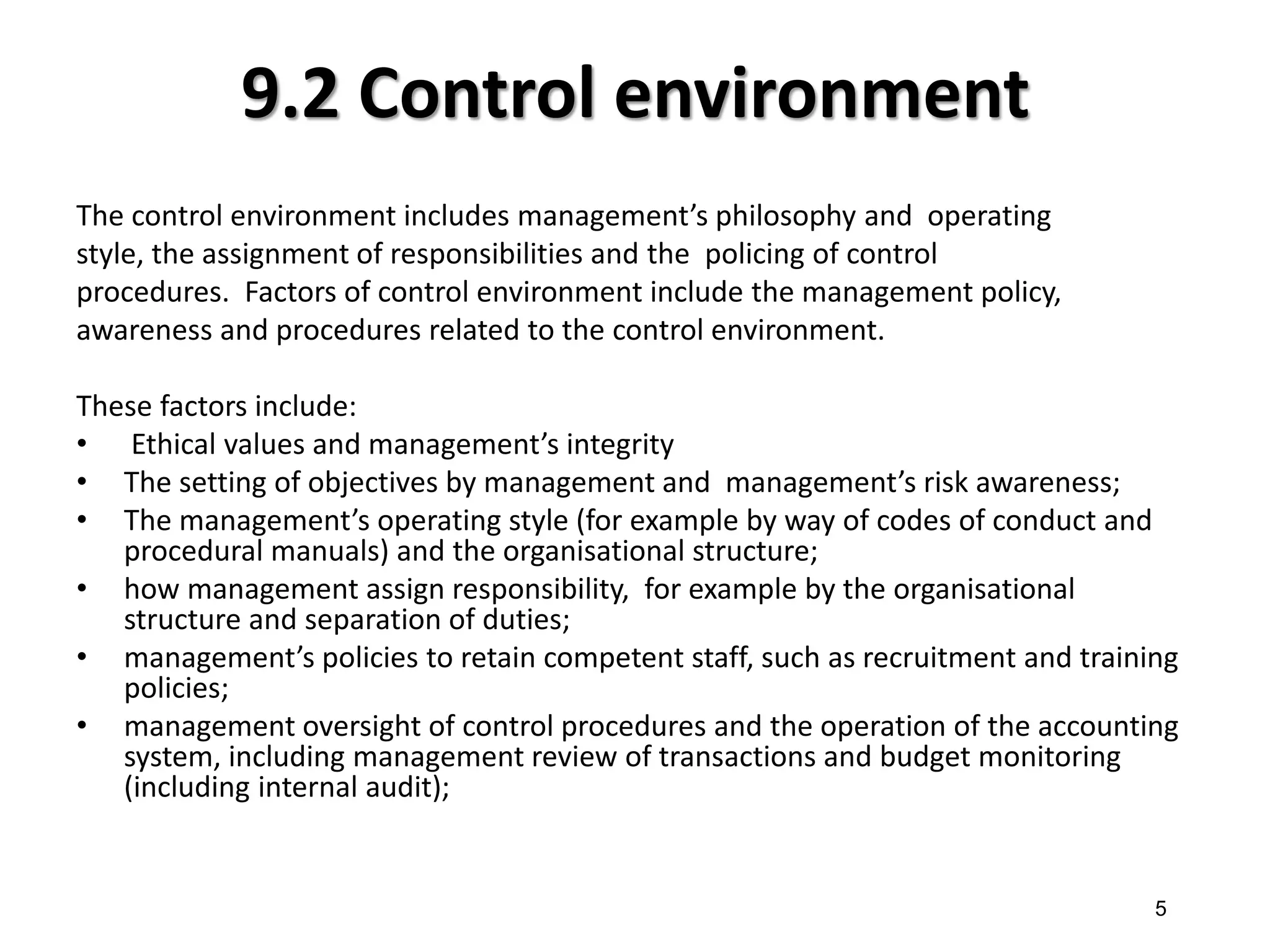
9.2 Control environment 
The control environment includes management’s philosophy and operating 
style, the assignment of responsibilities and the policing of control 
procedures. Factors of control environment include the management policy, 
awareness and procedures related to the control environment. 
These factors include: 
• Ethical values and management’s integrity 
•The setting of objectives by management and management’s risk awareness; 
•The management’s operating style (for example by way of codes of conduct and procedural manuals) and the organisational structure; 
•how management assign responsibility, for example by the organisational structure and separation of duties; 
•management’s policies to retain competent staff, such as recruitment and training policies; 
•management oversight of control procedures and the operation of the accounting system, including management review of transactions and budget monitoring (including internal audit); 
5
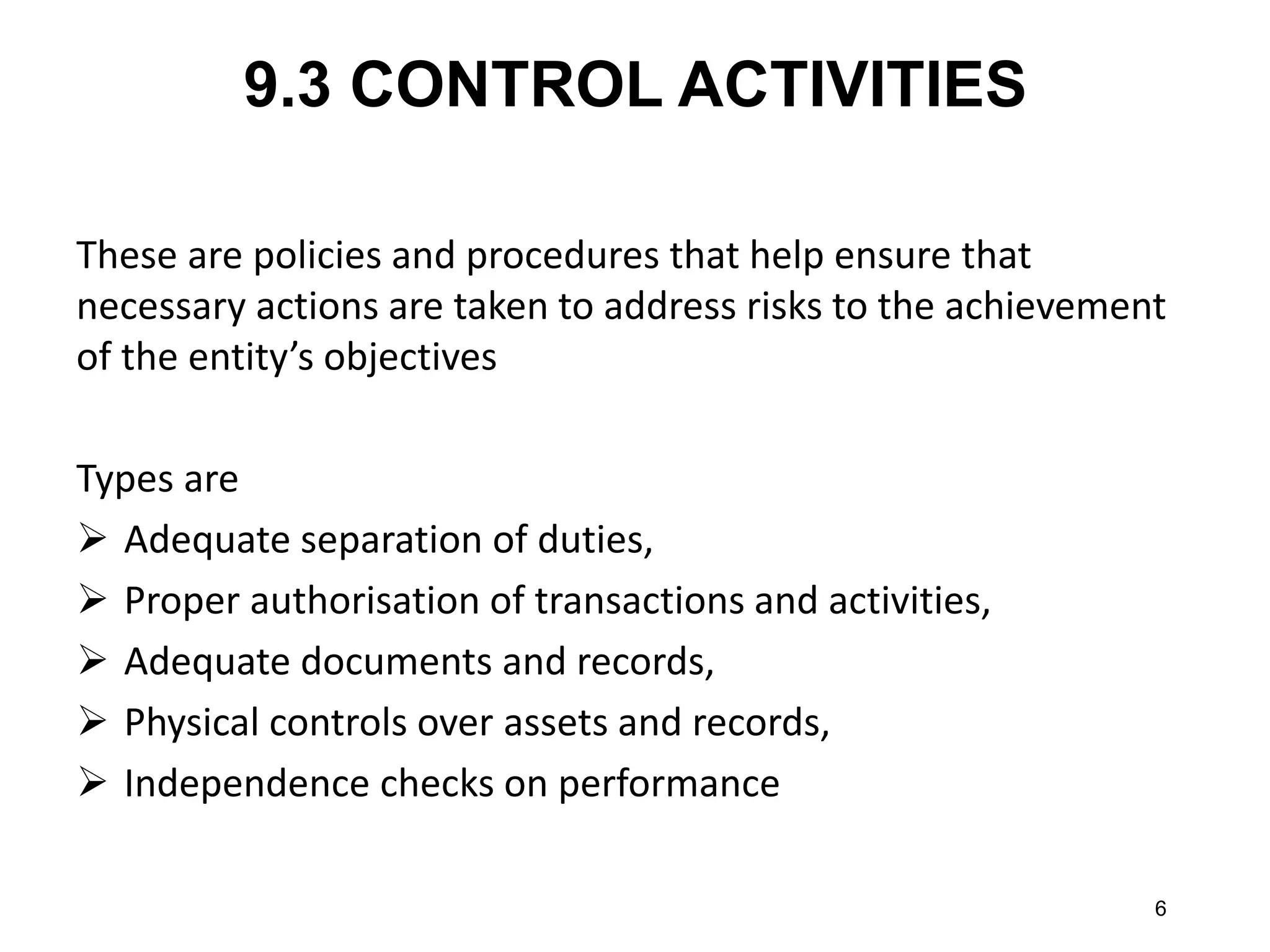
9.3 CONTROL ACTIVITIES 
These are policies and procedures that help ensure that necessary actions are taken to address risks to the achievement of the entity’s objectives 
Types are 
Adequate separation of duties, 
Proper authorisation of transactions and activities, 
Adequate documents and records, 
Physical controls over assets and records, 
Independence checks on performance 
6
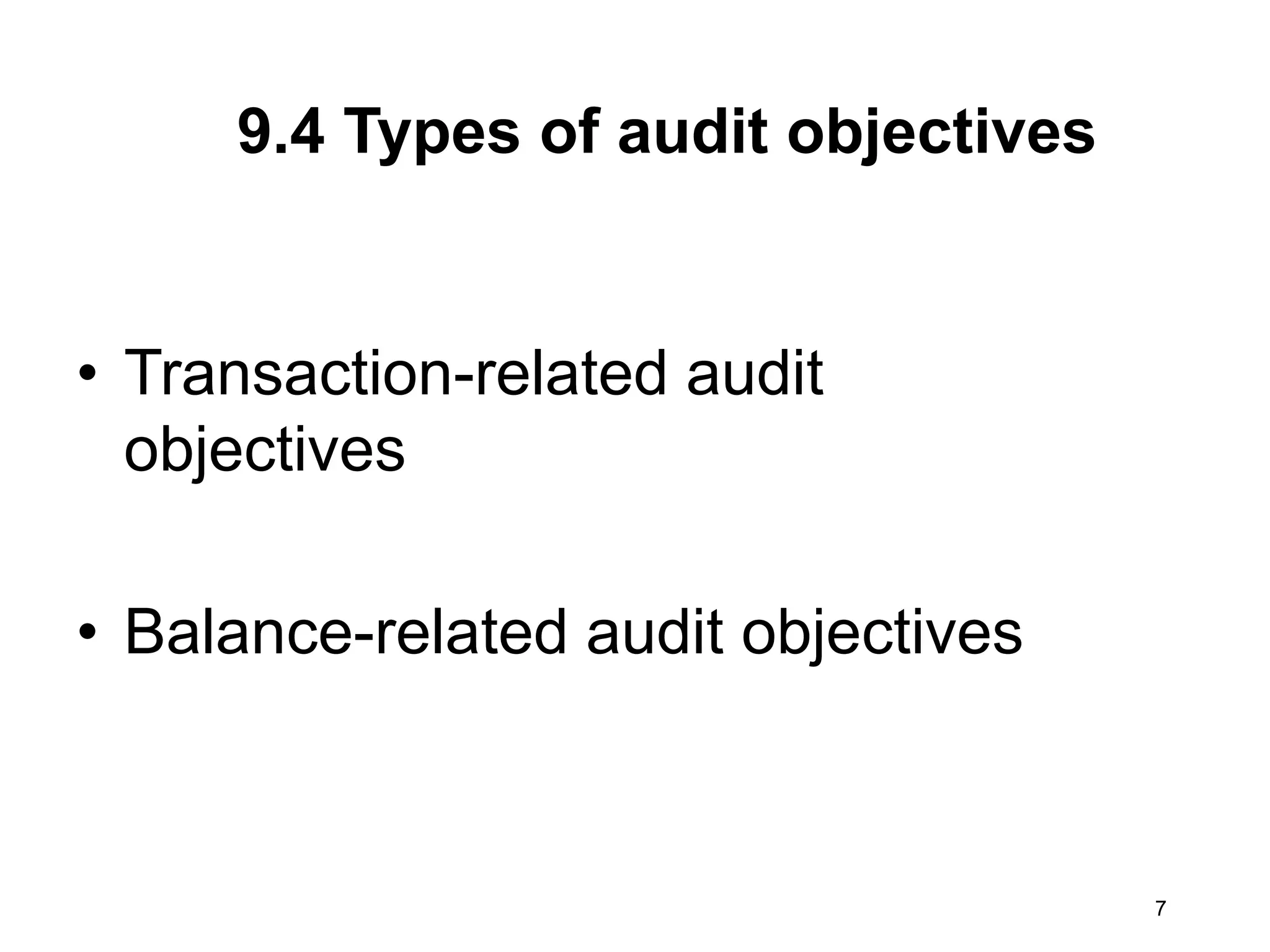
9.4 Types of audit objectives 
•Transaction-related audit objectives 
•Balance-related audit objectives 
7 
7
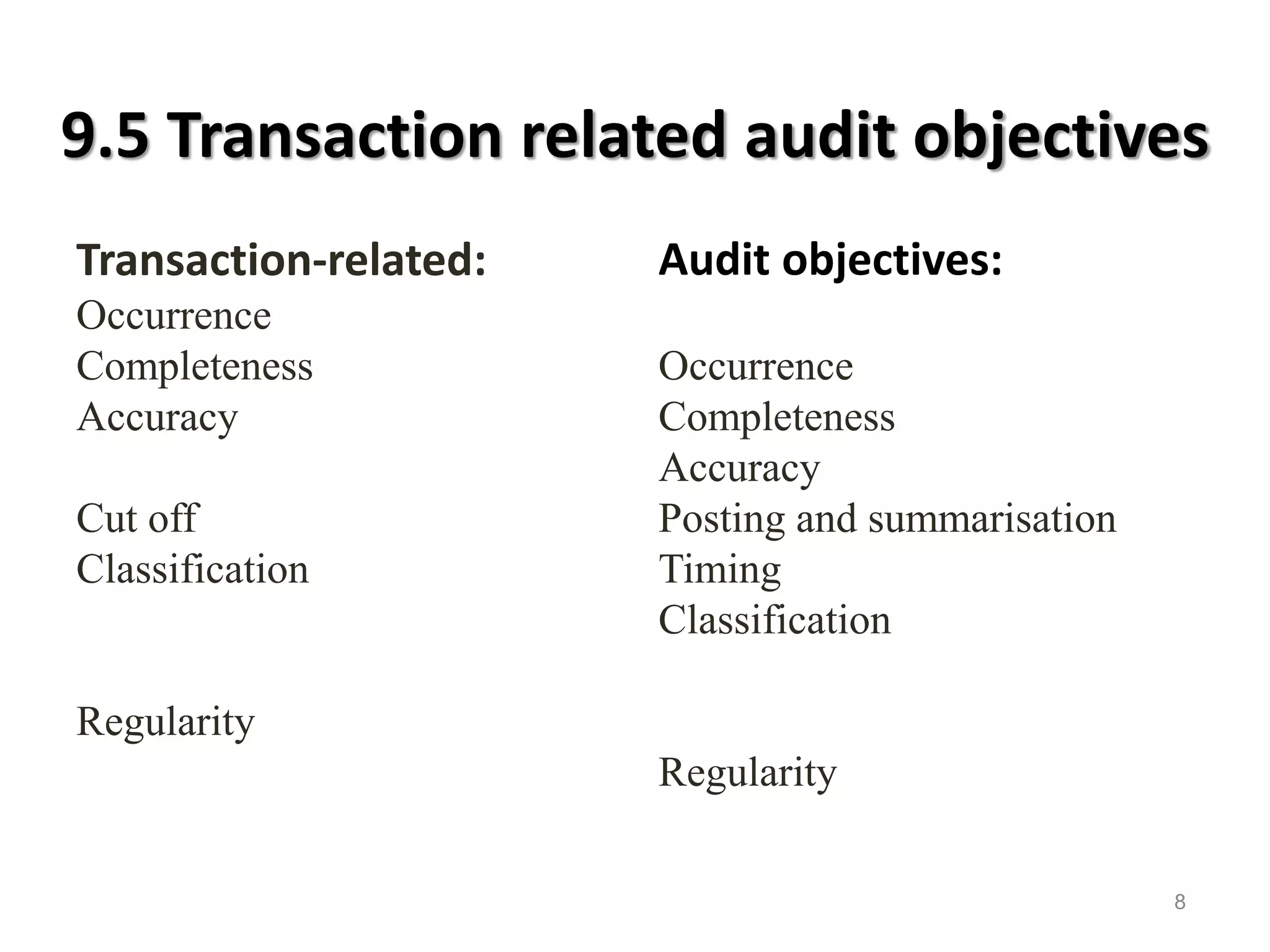
9.5 Transaction related audit objectives 
Transaction-related: 
Occurrence 
Completeness 
Accuracy 
Cut off 
Classification 
Regularity 
Audit objectives: 
Occurrence 
Completeness 
Accuracy 
Posting and summarisation 
Timing 
Classification 
Regularity 
8
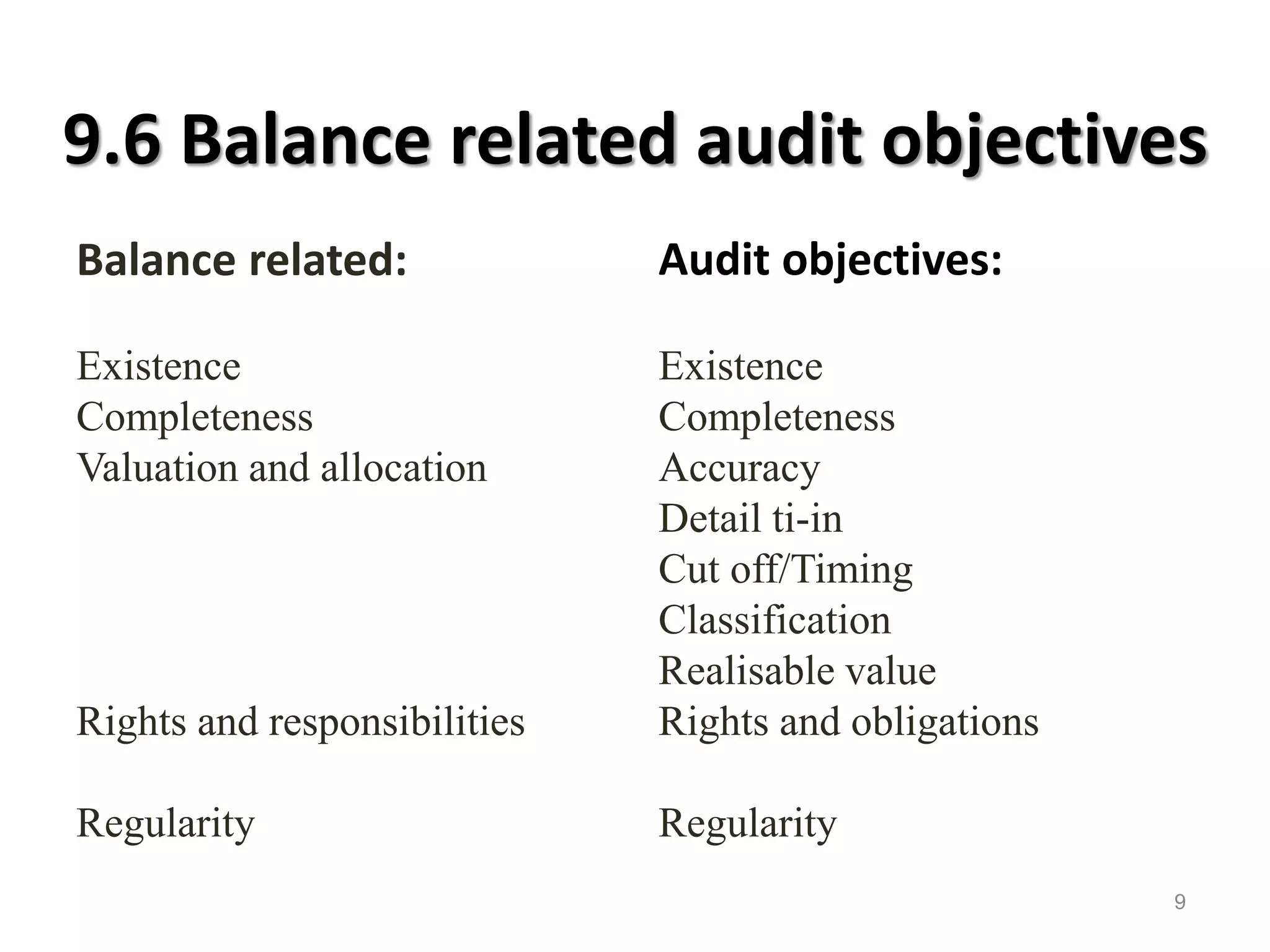
9.6 Balance related audit objectives 
Balance related: 
Existence 
Completeness 
Valuation and allocation 
Rights and responsibilities 
Regularity 
Audit objectives: 
Existence 
Completeness 
Accuracy 
Detail ti-in 
Cut off/Timing 
Classification 
Realisable value 
Rights and obligations 
Regularity 
9
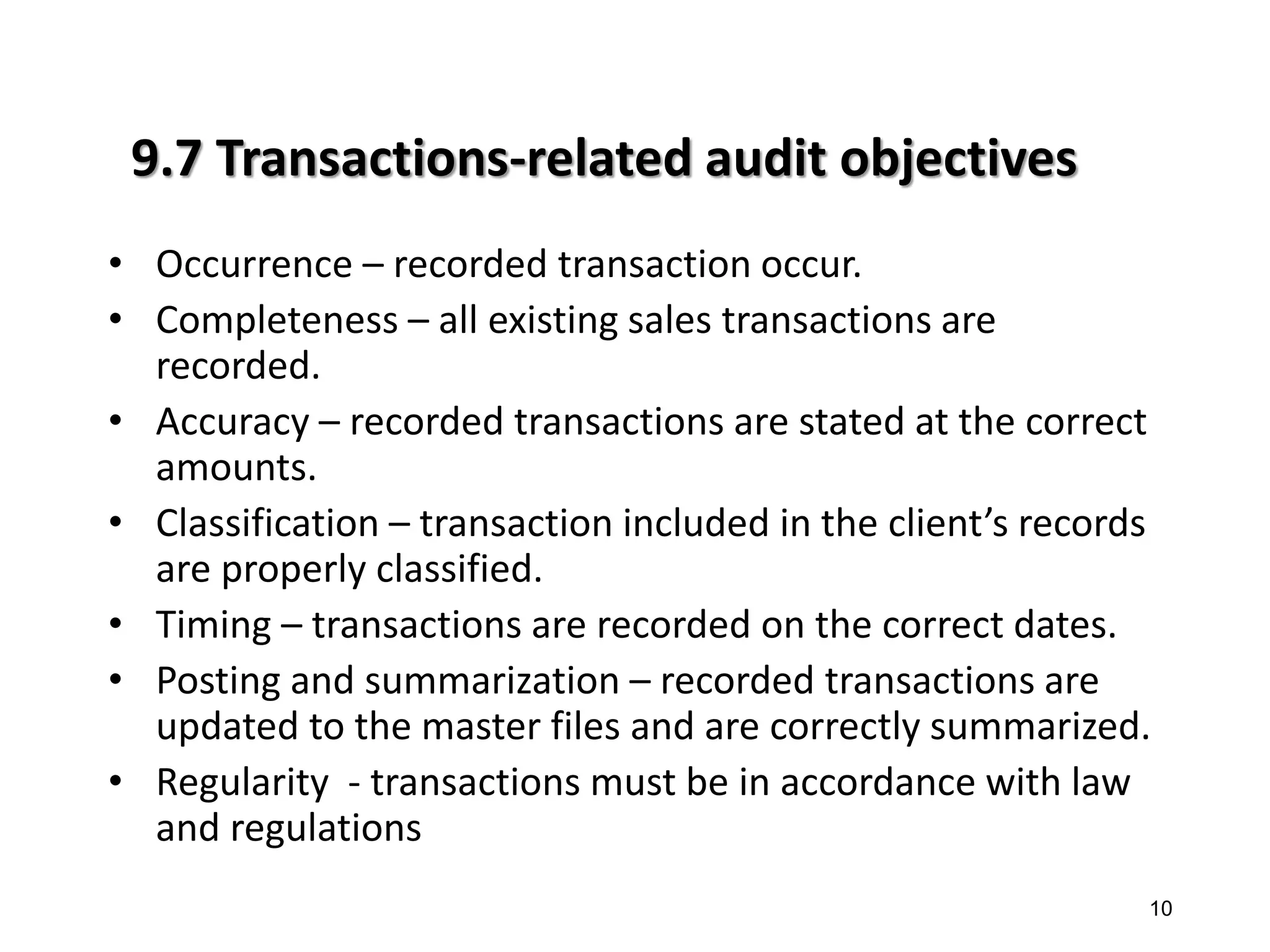
9.7 Transactions-related audit objectives 
•Occurrence – recorded transaction occur. 
•Completeness – all existing sales transactions are recorded. 
•Accuracy – recorded transactions are stated at the correct amounts. 
•Classification – transaction included in the client’s records are properly classified. 
•Timing – transactions are recorded on the correct dates. 
•Posting and summarization – recorded transactions are updated to the master files and are correctly summarized. 
•Regularity - transactions must be in accordance with law and regulations 
10 
10
11 
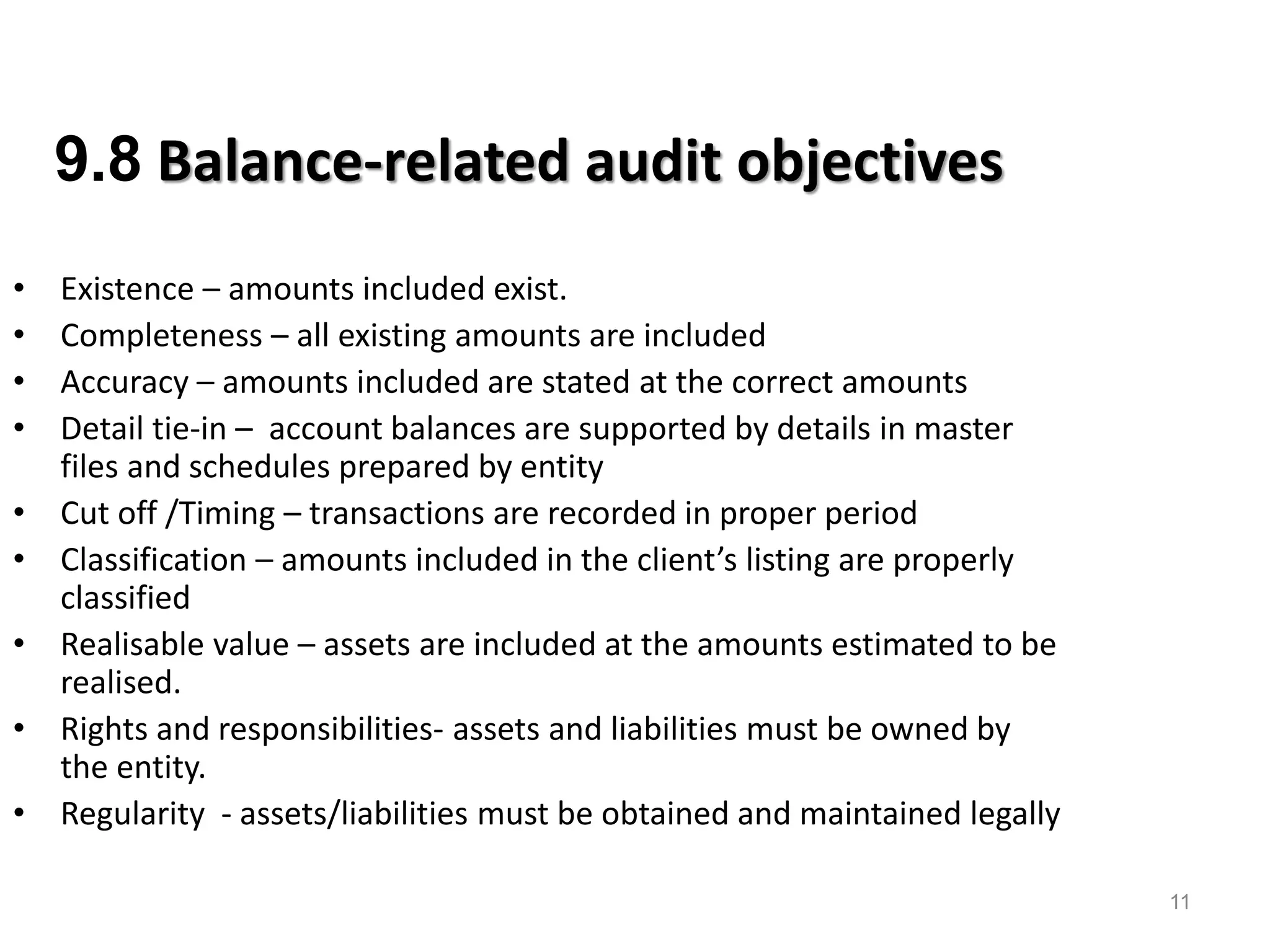
9.8 Balance-related audit objectives 
•Existence – amounts included exist. 
•Completeness – all existing amounts are included 
•Accuracy – amounts included are stated at the correct amounts 
•Detail tie-in – account balances are supported by details in master files and schedules prepared by entity 
•Cut off /Timing – transactions are recorded in proper period 
•Classification – amounts included in the client’s listing are properly classified 
•Realisable value – assets are included at the amounts estimated to be realised. 
•Rights and responsibilities- assets and liabilities must be owned by the entity. 
•Regularity - assets/liabilities must be obtained and maintained legally 
13
QUESTIONS? 
12

Presentation 9, Defining controls of the system, Workshop on System-based auditing, Tirana, 10-12 Sept 2014_ENG

  • 1.
    © OECD Ajoint initiative of the OECD and the European Union, principally financed by the EU Tirana, 10-12 September 2014 Workshop System Based Auditing Defining controls
  • 2.
  • 3.
  • 4.
    9.1 Two levelsof control •Control environment •Control activities => to be matched with audit objectives 4
  • 5.
    9.2 Control environment The control environment includes management’s philosophy and operating style, the assignment of responsibilities and the policing of control procedures. Factors of control environment include the management policy, awareness and procedures related to the control environment. These factors include: • Ethical values and management’s integrity •The setting of objectives by management and management’s risk awareness; •The management’s operating style (for example by way of codes of conduct and procedural manuals) and the organisational structure; •how management assign responsibility, for example by the organisational structure and separation of duties; •management’s policies to retain competent staff, such as recruitment and training policies; •management oversight of control procedures and the operation of the accounting system, including management review of transactions and budget monitoring (including internal audit); 5
  • 6.
    9.3 CONTROL ACTIVITIES These are policies and procedures that help ensure that necessary actions are taken to address risks to the achievement of the entity’s objectives Types are Adequate separation of duties, Proper authorisation of transactions and activities, Adequate documents and records, Physical controls over assets and records, Independence checks on performance 6
  • 7.
    9.4 Types ofaudit objectives •Transaction-related audit objectives •Balance-related audit objectives 7 7
  • 8.
    9.5 Transaction relatedaudit objectives Transaction-related: Occurrence Completeness Accuracy Cut off Classification Regularity Audit objectives: Occurrence Completeness Accuracy Posting and summarisation Timing Classification Regularity 8
  • 9.
    9.6 Balance relatedaudit objectives Balance related: Existence Completeness Valuation and allocation Rights and responsibilities Regularity Audit objectives: Existence Completeness Accuracy Detail ti-in Cut off/Timing Classification Realisable value Rights and obligations Regularity 9
  • 10.
    9.7 Transactions-related auditobjectives •Occurrence – recorded transaction occur. •Completeness – all existing sales transactions are recorded. •Accuracy – recorded transactions are stated at the correct amounts. •Classification – transaction included in the client’s records are properly classified. •Timing – transactions are recorded on the correct dates. •Posting and summarization – recorded transactions are updated to the master files and are correctly summarized. •Regularity - transactions must be in accordance with law and regulations 10 10
  • 11.
    11 9.8 Balance-relatedaudit objectives •Existence – amounts included exist. •Completeness – all existing amounts are included •Accuracy – amounts included are stated at the correct amounts •Detail tie-in – account balances are supported by details in master files and schedules prepared by entity •Cut off /Timing – transactions are recorded in proper period •Classification – amounts included in the client’s listing are properly classified •Realisable value – assets are included at the amounts estimated to be realised. •Rights and responsibilities- assets and liabilities must be owned by the entity. •Regularity - assets/liabilities must be obtained and maintained legally 13
  • 12.