Modern Auditing:
Modern Auditing:

Assurance Services and the Integrity
of Financial Reporting, 8th Edition
William C. Boynton

California Polytechnic State
University at San Luis Obispo

Raymond N. Johnson
Portland State University

Chapter 6 – Audit Evidence
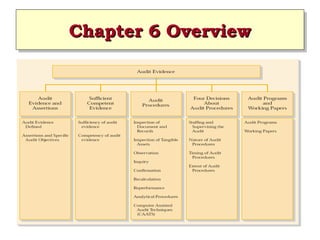
Chapter 6 Overview
Chapter 6 Overview
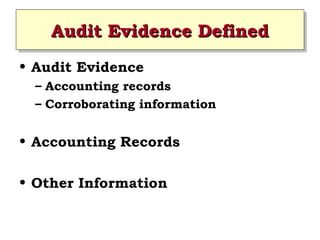
Audit Evidence Defined
• Audit Evidence
– Accounting records
– Corroborating information

• Accounting Records
• Other Information
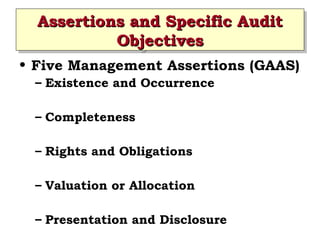
Assertions and Specific Audit
Objectives
Objectives
• Five Management Assertions (GAAS)
– Existence and Occurrence
– Completeness
– Rights and Obligations
– Valuation or Allocation
– Presentation and Disclosure
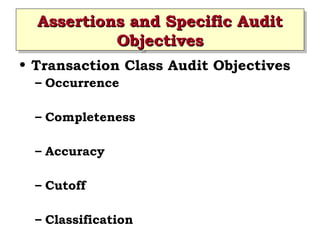
Assertions and Specific Audit
Objectives
Objectives
• Transaction Class Audit Objectives
– Occurrence
– Completeness
– Accuracy
– Cutoff
– Classification
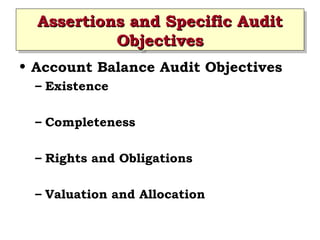
Assertions and Specific Audit
Objectives
Objectives
• Account Balance Audit Objectives
– Existence
– Completeness
– Rights and Obligations
– Valuation and Allocation
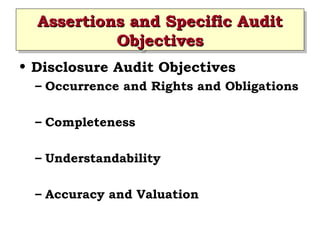
Assertions and Specific Audit
Objectives
Objectives
• Disclosure Audit Objectives
– Occurrence and Rights and Obligations
– Completeness
– Understandability
– Accuracy and Valuation
Sufficiency of Audit Evidence
• Materiality
• Risk of Material Misstatement
• Size of Population
• Characteristics of Population
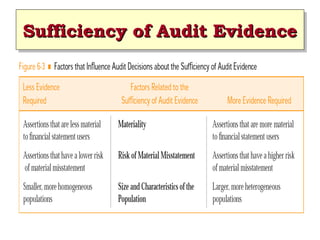
Sufficiency of Audit Evidence
Competency of Evidence
• Relevance of Audit Evidence

• Reliability of Audit Evidence

• Professional Judgment
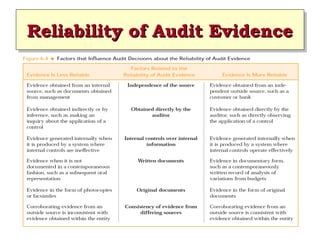
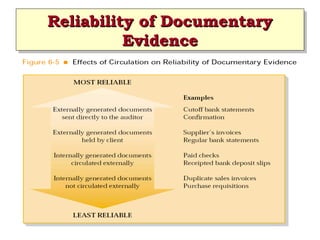
Reliability of Audit Evidence
Reliability of Documentary
Evidence
Evidence
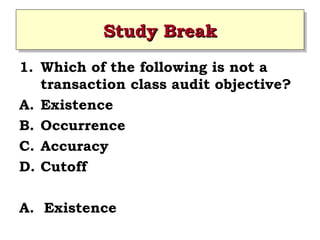
Study Break
Study Break
1. Which of the following is not a
transaction class audit objective?
A. Existence
B. Occurrence
C. Accuracy
D. Cutoff
A. Existence
Study Break
Study Break
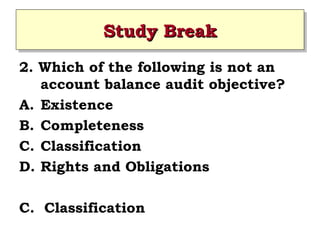
2. Which of the following is not an
account balance audit objective?
A. Existence
B. Completeness
C. Classification
D. Rights and Obligations
C. Classification
Study Break
Study Break
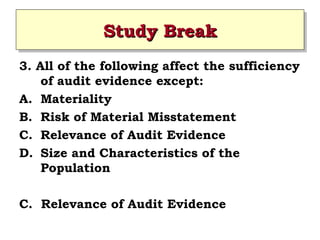
3. All of the following affect the sufficiency
of audit evidence except:
A. Materiality
B. Risk of Material Misstatement
C. Relevance of Audit Evidence
D. Size and Characteristics of the
Population
C. Relevance of Audit Evidence
Objectives of Audit Procedures
• Obtain an understanding of the
entity and its environment
• Test operating effectiveness of
controls
• Support assertion or detect material
misstatements
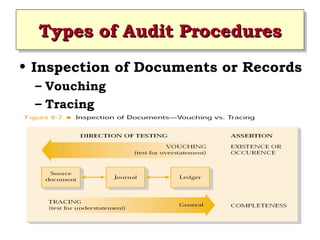
Types of Audit Procedures
• Inspection of Documents or Records
– Vouching
– Tracing
Types of Audit Procedures
• Inspection of Tangible Assets
• Observation
• Inquiry
• Confirmation
Types of Audit Procedures
• Recalculation
• Reperformance
• Analytical Procedures
• Computer-Assisted Audit Techniques
Four Decisions About Audit
Procedures
Procedures
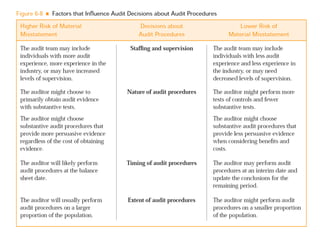
• Staffing and Supervising the Audit
• Nature of Audit Procedures
• Timing of Audit Procedures
• Extent of Audit Procedures
Documenting Audit Decisions
and Audit Evidence
and Audit Evidence
• Audit Program
– Recommended by GAAS
– Documents decisions

• Working Papers
– Documents audit decisions
– Documents audit evidence obtained
Types of Working Papers
• Working Trial Balance
• Schedules and Analyses
• Audit Memoranda and Corroborating
Information
• Adjusting and Reclassifying Entries
Preparing Working Papers
• Heading
• Index Number
• Cross-Referencing
• Tick Marks
• Signatures and Dates
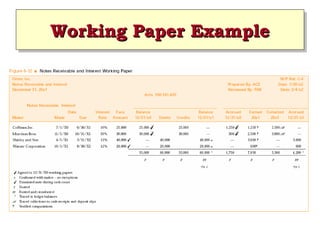
Working Paper Example
Reviewing Working Papers
• Scope of Work Performed
• Evidence and Findings Obtained
• Audit Judgment Exercised
• Conclusions Reached by the Auditor
Working Paper Files
Working Paper Files
• Permanent File

• Current File

• Ownership and Custody
Study Break
Study Break
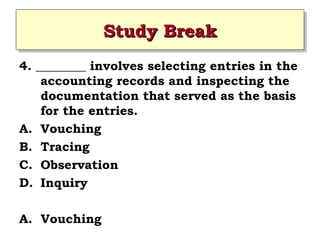
4. ________ involves selecting entries in the
accounting records and inspecting the
documentation that served as the basis
for the entries.
A. Vouching
B. Tracing
C. Observation
D. Inquiry
A. Vouching
Study Break
Study Break
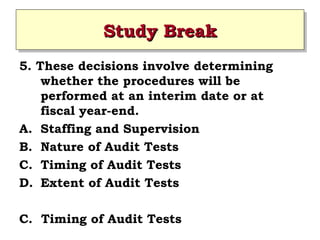
5. These decisions involve determining
whether the procedures will be
performed at an interim date or at
fiscal year-end.
A. Staffing and Supervision
B. Nature of Audit Tests
C. Timing of Audit Tests
D. Extent of Audit Tests
C. Timing of Audit Tests
Study Break
Study Break
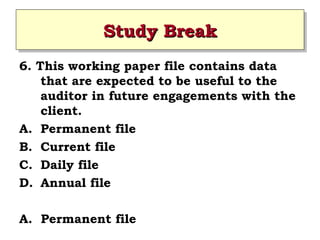
6. This working paper file contains data
that are expected to be useful to the
auditor in future engagements with the
client.
A. Permanent file
B. Current file
C. Daily file
D. Annual file
A. Permanent file

Ch06 modern auditing boynton

  • 1.
    Modern Auditing: Modern Auditing: AssuranceServices and the Integrity Assurance Services and the Integrity of Financial Reporting, 8th Edition of Financial Reporting, 8th Edition William C. Boynton California Polytechnic State University at San Luis Obispo Raymond N. Johnson Portland State University Chapter 6 – Audit Evidence
  • 2.
  • 3.
    Audit Evidence Defined AuditEvidence Defined • Audit Evidence – Accounting records – Corroborating information • Accounting Records • Other Information
  • 4.
    Assertions and SpecificAudit Assertions and Specific Audit Objectives Objectives • Five Management Assertions (GAAS) – Existence and Occurrence – Completeness – Rights and Obligations – Valuation or Allocation – Presentation and Disclosure
  • 5.
    Assertions and SpecificAudit Assertions and Specific Audit Objectives Objectives • Transaction Class Audit Objectives – Occurrence – Completeness – Accuracy – Cutoff – Classification
  • 6.
    Assertions and SpecificAudit Assertions and Specific Audit Objectives Objectives • Account Balance Audit Objectives – Existence – Completeness – Rights and Obligations – Valuation and Allocation
  • 7.
    Assertions and SpecificAudit Assertions and Specific Audit Objectives Objectives • Disclosure Audit Objectives – Occurrence and Rights and Obligations – Completeness – Understandability – Accuracy and Valuation
  • 8.
    Sufficiency of AuditEvidence Sufficiency of Audit Evidence • Materiality • Risk of Material Misstatement • Size of Population • Characteristics of Population
  • 9.
    Sufficiency of AuditEvidence Sufficiency of Audit Evidence
  • 10.
    Competency of Evidence Competencyof Evidence • Relevance of Audit Evidence • Reliability of Audit Evidence • Professional Judgment
  • 11.
    Reliability of AuditEvidence Reliability of Audit Evidence
  • 12.
    Reliability of Documentary Reliabilityof Documentary Evidence Evidence
  • 13.
    Study Break Study Break 1.Which of the following is not a transaction class audit objective? A. Existence B. Occurrence C. Accuracy D. Cutoff A. Existence
  • 14.
    Study Break Study Break 2.Which of the following is not an account balance audit objective? A. Existence B. Completeness C. Classification D. Rights and Obligations C. Classification
  • 15.
    Study Break Study Break 3.All of the following affect the sufficiency of audit evidence except: A. Materiality B. Risk of Material Misstatement C. Relevance of Audit Evidence D. Size and Characteristics of the Population C. Relevance of Audit Evidence
  • 16.
    Objectives of AuditProcedures Objectives of Audit Procedures • Obtain an understanding of the entity and its environment • Test operating effectiveness of controls • Support assertion or detect material misstatements
  • 17.
    Types of AuditProcedures Types of Audit Procedures • Inspection of Documents or Records – Vouching – Tracing
  • 18.
    Types of AuditProcedures Types of Audit Procedures • Inspection of Tangible Assets • Observation • Inquiry • Confirmation
  • 19.
    Types of AuditProcedures Types of Audit Procedures • Recalculation • Reperformance • Analytical Procedures • Computer-Assisted Audit Techniques
  • 20.
    Four Decisions AboutAudit Four Decisions About Audit Procedures Procedures • Staffing and Supervising the Audit • Nature of Audit Procedures • Timing of Audit Procedures • Extent of Audit Procedures
  • 22.
    Documenting Audit Decisions DocumentingAudit Decisions and Audit Evidence and Audit Evidence • Audit Program – Recommended by GAAS – Documents decisions • Working Papers – Documents audit decisions – Documents audit evidence obtained
  • 23.
    Types of WorkingPapers Types of Working Papers • Working Trial Balance • Schedules and Analyses • Audit Memoranda and Corroborating Information • Adjusting and Reclassifying Entries
  • 24.
    Preparing Working Papers PreparingWorking Papers • Heading • Index Number • Cross-Referencing • Tick Marks • Signatures and Dates
  • 25.
  • 26.
    Reviewing Working Papers ReviewingWorking Papers • Scope of Work Performed • Evidence and Findings Obtained • Audit Judgment Exercised • Conclusions Reached by the Auditor
  • 27.
    Working Paper Files WorkingPaper Files • Permanent File • Current File • Ownership and Custody
  • 28.
    Study Break Study Break 4.________ involves selecting entries in the accounting records and inspecting the documentation that served as the basis for the entries. A. Vouching B. Tracing C. Observation D. Inquiry A. Vouching
  • 29.
    Study Break Study Break 5.These decisions involve determining whether the procedures will be performed at an interim date or at fiscal year-end. A. Staffing and Supervision B. Nature of Audit Tests C. Timing of Audit Tests D. Extent of Audit Tests C. Timing of Audit Tests
  • 30.
    Study Break Study Break 6.This working paper file contains data that are expected to be useful to the auditor in future engagements with the client. A. Permanent file B. Current file C. Daily file D. Annual file A. Permanent file