ATHEROSCLEROSIS
 Atherosclerosis can affect any artery in the
body.
 When it occurs in the heart, it may cause
angina, MI and sudden death; in the brain,
stroke and transient ischaemic attack; and in
the limbs, claudication and critical limb
ischaemia.
 Occult coronary artery disease is common in
those who present with other forms of
atherosclerotic vascular disease, such as
intermittent claudication or stroke, and is an
important cause of morbidity and mortality in
these patients.
 Atherosclerosis is a progressive
inflammatory disorder of the arterial wall that
is characterised by focal lipid-rich deposits of
atheroma that remain clinically silent until
they become large enough to impair tissue
perfusion, or until ulceration and disruption of
the lesion result in thrombotic occlusion or
distal embolisation of the vessel.
 These mechanisms are common to the entire
vascular tree, and the clinical manifestations
of atherosclerosis depend upon the site of
the lesion and the vulnerability of the organ
supplied.
 Atherosclerosis begins early in life.
 Abnormalities of arterial function have been
detected among high risk children and
adolescents, such as cigarette smokers and
those with familial hyperlipidaemia or
hypertension.
 Early atherosclerotic lesions have been
found in the arteries of victims of accidental
death in the second and third decades of life.
 Nevertheless, clinical manifestations often do
not appear until the sixth, seventh or eighth
decade.
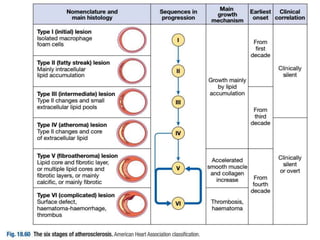
 Fatty streaks tend to occur at sites of altered
arterial shear stress, such as bifurcations,
and are associated with abnormal endothelial
function.
 They develop when inflammatory cells,
predominantly monocytes, bind to receptors
expressed by endothelial cells, migrate into
the intima, take up oxidised low-density
lipoprotein (LDL) particles and become lipid-
laden macrophages or foam cells.
 Extracellular lipid pools appear in the intimal
space when these foam cells die and release
their contents.
 In response to cytokines and growth factors
produced by the activated macrophages,
smooth muscle cells migrate from the media
of the arterial wall into the intima, and
change from a contractile to a repair
phenotype in an attempt to stabilise the
atherosclerotic lesion.
 If they are successful, the lipid core will be
covered by smooth muscle cells and matrix,
producing a stable atherosclerotic plaque
that will remain asymptomatic until it
becomes large enough to obstruct arterial
flow.
 In an established atherosclerotic plaque,
macrophages mediate inflammation and
smooth muscle cells promote repair.
 If inflammation predominates, the plaque
becomes active or unstable and may be
complicated by ulceration and thrombosis.
 Cytokines, such as interleukin-1, tumour
necrosis factor-alpha, interferongamma,
platelet-derived growth factors, and matrix
metalloproteinases are released by activated
macrophages; they cause the intimal smooth
muscle cells overlying the plaque to become
senescent and collagen cross-struts within
the plaque to degrade.
 This results in thinning of the protective
fibrous cap, making the lesion vulnerable to
mechanical stress that ultimately causes
erosion, fissuring or rupture of the plaque
surface.
 Any breach in the integrity of the plaque will
expose its contents to blood, and trigger
platelet aggregation and thrombosis that
extend into the atheromatous plaque and the
arterial lumen.
 This type of plaque event may cause partial
or complete obstruction at the site of the
lesion or distal embolisation resulting in
infarction or ischaemia of the affected organ.
 This common mechanism underlies many of
the acute manifestations of atherosclerotic
vascular disease, such as acute lower limb
ischaemia, MI and stroke.
 The number and complexity of arterial
plaques increase with age and with risk
factors but the rate of progression of
individual plaques is variable.
 There is a complex and dynamic interaction
between mechanical wall stress and
atherosclerotic lesions.
 ‘Vulnerable’ plaques are characterised by a
lipid-rich core, a thin fibrocellular cap and an
increase in inflammatory cells that release
specific enzymes to degrade matrix proteins.
 In contrast, stable plaques are typified by a
small lipid pool, a thick fibrous cap,
calcification and plentiful collagenous cross-
struts.
 Fissuring or rupture tends to occur at sites of
maximal mechanical stress, particularly the
margins of an eccentric plaque, and may be
triggered by a surge in BP, such as during
exercise or emotional stress.
 Surprisingly, plaque events are often
subclinical and heal spontaneously, although
this may allow thrombus to be incorporated
into the lesion, producing plaque growth and
further obstruction to flow in the arterial
lumen.
 Atherosclerosis may induce complex
changes in the media that lead to arterial
remodelling.
 Some arterial segments may slowly constrict
(negative remodelling) whilst others may
gradually enlarge (positive remodelling).
 These changes are important because they
may amplify or minimise the degree to which
atheroma encroaches into the arterial lumen.
 The role and relative importance of many risk
factors for the development of coronary,
peripheral and cerebrovascular disease have
been defined in experimental animal studies,
epidemiological studies and clinical
interventional trials.
 Key factors have emerged but do not explain
all the risk, and unknown factors may
account for up to 40% of the variation in risk
from one person to the next.
 The impact of genetic risk is illustrated by
twin studies; a monozygotic twin of an
affected individual has an eightfold increased
risk, and a dizygotic twin a fourfold increased
risk of dying from coronary heart disease
compared to the general population.
 The effect of risk factors is multiplicative
rather than additive.
 People with a combination of risk factors are
at greatest risk and so assessment should
take account of all identifiable risk factors.
 It is important to distinguish between relative
risk (the proportional increase in risk) and
absolute risk (the actual chance of an event).
 Thus, a man of 35 years with a plasma
cholesterol of 7 mmol/L(approximately 170
mg/dL) who smokes 40 cigarettes a day is
relatively much more likely to die from
coronary disease within the next decade than
a non-smoking woman of the same age with
a normal cholesterol, but the absolute
likelihood of his dying during this time is still
small (high relative risk, low absolute risk).
RISK FACTORS
Age and sex.
Age is the most powerful independent
risk factor for atherosclerosis. Pre-menopausal
women have lower rates of disease than men,
although this sex difference disappears after the
menopause. However, hormone replacement
therapy has no role in the primary or secondary
prevention of coronary artery disease, and isolated
oestrogen therapy may cause an increased
cardiovascular event rate.
 Atherosclerotic vascular disease often runs
in families, due to a combination of shared
genetic, environmental and lifestyle factors.
 The most common inherited risk
characteristics (hypertension,
hyperlipidaemia, diabetes mellitus) are
polygenic.
 A ‘positive’ family history is present when
clinical problems in first-degree relatives
occur at relatively young age, such as < 50
years for men and < 55 years for women.
 This is probably the most important
avoidable cause of atherosclerotic vascular
disease.
 There is a strong consistent and dose-linked
relationship between cigarette smoking and
ischaemic heart disease, especially in
younger (< 70 years) individuals.
 The incidence of atherosclerosis increases
as BP rises, and this excess risk is related to
both systolic and diastolic BP as well as
pulse pressure.
 Antihypertensive therapy reduces
cardiovascular mortality, stroke and heart
failure.
 Risk rises with increasing serum cholesterol
concentrations.
 Lowering serum total and LDL cholesterol
concentrations reduces the risk of
cardiovascular events, including death, MI,
stroke and coronary revascularisation.
 This is a potent risk factor for all forms of
atherosclerosis and is often associated with
diffuse disease that is difficult to treat.
 Insulin resistance (normal glucose
homeostasis with high levels of insulin) is
associated with obesity and physical
inactivity, and is a risk factor for coronary
heart disease.
 Glucose intolerance accounts for a major
part of the high incidence of ischaemic heart
disease in certain ethnic groups, e.g. South
Asians.
 Platelet activation and high levels of
fibrinogen are associated with an increased
risk of coronary thrombosis.
 Antiphospholipid antibodies are associated
with recurrent arterial thromboses.
 Physical inactivity roughly doubles the risk of
coronary heart disease and is a major risk
factor for stroke.
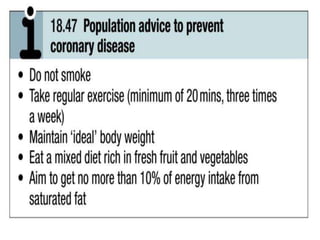
 Regular exercise (brisk walking, cycling or
swimming for 20 minutes two or three times
a week) has a protective effect which may be
related to increased serum HDL cholesterol
concentrations, lower BP, and collateral
vessel development.
 Obesity, particularly if central or truncal, is an
independent risk factor, although it is often
associated with other adverse factors such
as hypertension, diabetes mellitus and
physical inactivity.
 Alcohol consumption is associated with
reduced rates of coronary artery disease.
 Excess alcohol consumption is associated
with hypertension and cerebrovascular
disease.
 Diets deficient in fresh fruit, vegetables and
polyunsaturated fatty acids are associated
with an increased risk of cardiovascular
disease.
 The introduction of a Mediterranean-style
diet reduces cardiovascular events.
 However, dietary supplements, such as
vitamin C and E, beta-carotene, folate and
fish oils, do not reduce cardiovascular events
and, in some cases, have been associated
with harm.
 Certain personality traits are associated with
an increased risk of coronary disease.
 Nevertheless, there is little or no evidence to
support the popular belief that stress is a
major cause of coronary artery disease.
 Health inequalities have a major influence on
cardiovascular disease.
 The impact of established risk factors is
amplified in patients who are socially
deprived and current guidelines recommend
that treatment thresholds should be lowered
for them.
 Two complementary strategies can be used to
prevent atherosclerosis in apparently healthy
but at-risk individuals: population and targeted
strategies.
 The population strategy aims to modify the risk
factors of the whole population through diet and
lifestyle advice, on the basis that even a small
reduction in smoking or average cholesterol, or
modification of exercise and diet will produce
worthwhile benefits.
 Some risk factors for atheroma, such as
obesity and smoking, are also associated
with a high risk of other diseases and should
be actively discouraged through public health
measures.
 Legislation restricting smoking in public
places is associated with reductions in rates
of MI.
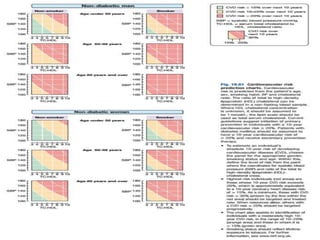
 The targeted strategy aims to identify and
treat high risk individuals who usually have a
combination of risk factors and can be
identified by using composite scoring
systems.
 It is important to consider the absolute risk of
atheromatous cardiovascular disease that an
individual is facing before contemplating
specific antihypertensive or lipid-lowering
therapy because this will help to determine
whether the possible benefits of intervention
are likely to outweigh the expense,
inconvenience and possible side-effects of
treatment.
 For example, a 65-year-old man with an
average BP of 150/90 mmHg, who smokes
and has diabetes mellitus, a total:HDL
cholesterol ratio of 8 and left ventricular
hypertrophy on ECG, will have a 10-year risk
of CHD of 68% and a 10-year risk of any
cardiovascular event of 90%.
 Lowering his cholesterol will reduce these
risks by 30% and lowering his BP will
produce a further 20% reduction; both would
obviously be worthwhile.
 Conversely, a 55-year-old woman who has
an identical BP, is a non-smoker, does not
have diabetes mellitus and has a normal
ECG and a total:HDL cholesterol ratio of 6
has a much better outlook, with a predicted
CHD risk of 14% and cardiovascular risk of
19% over the next 10 years.
 Although lowering her cholesterol and BP
would also reduce risk by 30% and 20%
respectively, the value of either or both
treatments would clearly be borderline.
 Patients who already have evidence of
atheromatous vascular disease are at high
risk of future cardiovascular events and
should be offered treatments and measures
to improve their outlook.
 The energetic correction of modifiable risk
factors, particularly smoking, hypertension
and hypercholesterolaemia, is particularly
important because the absolute risk of further
vascular events is high.
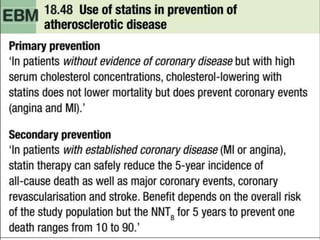
 All patients with coronary heart disease
should be given statin therapy irrespective of
their serum cholesterol concentration.
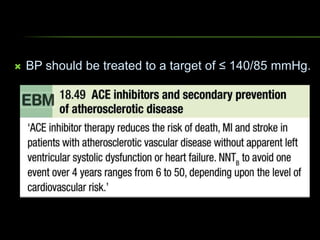
 BP should be treated to a target of ≤ 140/85 mmHg.
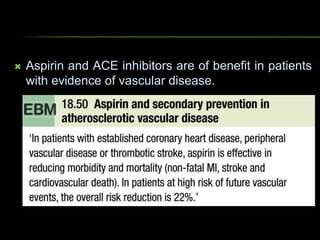
 Aspirin and ACE inhibitors are of benefit in patients
with evidence of vascular disease.
 Beta-blockers benefit patients with a history
of MI or heart failure.
 Many clinical events offer an unrivalled
opportunity to introduce effective secondary
preventive measures; patients who have just
survived an MI or undergone bypass surgery
are usually keen to help themselves and may
be particularly receptive to lifestyle advice,
such as dietary modification and smoking
cessation.
8. atherosclerosis

8. atherosclerosis

  • 1.
  • 2.
     Atherosclerosis canaffect any artery in the body.  When it occurs in the heart, it may cause angina, MI and sudden death; in the brain, stroke and transient ischaemic attack; and in the limbs, claudication and critical limb ischaemia.
  • 3.
     Occult coronaryartery disease is common in those who present with other forms of atherosclerotic vascular disease, such as intermittent claudication or stroke, and is an important cause of morbidity and mortality in these patients.
  • 4.
     Atherosclerosis isa progressive inflammatory disorder of the arterial wall that is characterised by focal lipid-rich deposits of atheroma that remain clinically silent until they become large enough to impair tissue perfusion, or until ulceration and disruption of the lesion result in thrombotic occlusion or distal embolisation of the vessel.
  • 5.
     These mechanismsare common to the entire vascular tree, and the clinical manifestations of atherosclerosis depend upon the site of the lesion and the vulnerability of the organ supplied.  Atherosclerosis begins early in life.
  • 6.
     Abnormalities ofarterial function have been detected among high risk children and adolescents, such as cigarette smokers and those with familial hyperlipidaemia or hypertension.
  • 7.
     Early atheroscleroticlesions have been found in the arteries of victims of accidental death in the second and third decades of life.  Nevertheless, clinical manifestations often do not appear until the sixth, seventh or eighth decade.
  • 8.
     Fatty streakstend to occur at sites of altered arterial shear stress, such as bifurcations, and are associated with abnormal endothelial function.
  • 9.
     They developwhen inflammatory cells, predominantly monocytes, bind to receptors expressed by endothelial cells, migrate into the intima, take up oxidised low-density lipoprotein (LDL) particles and become lipid- laden macrophages or foam cells.  Extracellular lipid pools appear in the intimal space when these foam cells die and release their contents.
  • 11.
     In responseto cytokines and growth factors produced by the activated macrophages, smooth muscle cells migrate from the media of the arterial wall into the intima, and change from a contractile to a repair phenotype in an attempt to stabilise the atherosclerotic lesion.
  • 12.
     If theyare successful, the lipid core will be covered by smooth muscle cells and matrix, producing a stable atherosclerotic plaque that will remain asymptomatic until it becomes large enough to obstruct arterial flow.
  • 13.
     In anestablished atherosclerotic plaque, macrophages mediate inflammation and smooth muscle cells promote repair.  If inflammation predominates, the plaque becomes active or unstable and may be complicated by ulceration and thrombosis.
  • 14.
     Cytokines, suchas interleukin-1, tumour necrosis factor-alpha, interferongamma, platelet-derived growth factors, and matrix metalloproteinases are released by activated macrophages; they cause the intimal smooth muscle cells overlying the plaque to become senescent and collagen cross-struts within the plaque to degrade.
  • 15.
     This resultsin thinning of the protective fibrous cap, making the lesion vulnerable to mechanical stress that ultimately causes erosion, fissuring or rupture of the plaque surface.
  • 16.
     Any breachin the integrity of the plaque will expose its contents to blood, and trigger platelet aggregation and thrombosis that extend into the atheromatous plaque and the arterial lumen.  This type of plaque event may cause partial or complete obstruction at the site of the lesion or distal embolisation resulting in infarction or ischaemia of the affected organ.
  • 17.
     This commonmechanism underlies many of the acute manifestations of atherosclerotic vascular disease, such as acute lower limb ischaemia, MI and stroke.  The number and complexity of arterial plaques increase with age and with risk factors but the rate of progression of individual plaques is variable.
  • 18.
     There isa complex and dynamic interaction between mechanical wall stress and atherosclerotic lesions.  ‘Vulnerable’ plaques are characterised by a lipid-rich core, a thin fibrocellular cap and an increase in inflammatory cells that release specific enzymes to degrade matrix proteins.
  • 19.
     In contrast,stable plaques are typified by a small lipid pool, a thick fibrous cap, calcification and plentiful collagenous cross- struts.  Fissuring or rupture tends to occur at sites of maximal mechanical stress, particularly the margins of an eccentric plaque, and may be triggered by a surge in BP, such as during exercise or emotional stress.
  • 20.
     Surprisingly, plaqueevents are often subclinical and heal spontaneously, although this may allow thrombus to be incorporated into the lesion, producing plaque growth and further obstruction to flow in the arterial lumen.  Atherosclerosis may induce complex changes in the media that lead to arterial remodelling.
  • 21.
     Some arterialsegments may slowly constrict (negative remodelling) whilst others may gradually enlarge (positive remodelling).  These changes are important because they may amplify or minimise the degree to which atheroma encroaches into the arterial lumen.
  • 22.
     The roleand relative importance of many risk factors for the development of coronary, peripheral and cerebrovascular disease have been defined in experimental animal studies, epidemiological studies and clinical interventional trials.
  • 23.
     Key factorshave emerged but do not explain all the risk, and unknown factors may account for up to 40% of the variation in risk from one person to the next.
  • 24.
     The impactof genetic risk is illustrated by twin studies; a monozygotic twin of an affected individual has an eightfold increased risk, and a dizygotic twin a fourfold increased risk of dying from coronary heart disease compared to the general population.
  • 25.
     The effectof risk factors is multiplicative rather than additive.  People with a combination of risk factors are at greatest risk and so assessment should take account of all identifiable risk factors.  It is important to distinguish between relative risk (the proportional increase in risk) and absolute risk (the actual chance of an event).
  • 26.
     Thus, aman of 35 years with a plasma cholesterol of 7 mmol/L(approximately 170 mg/dL) who smokes 40 cigarettes a day is relatively much more likely to die from coronary disease within the next decade than a non-smoking woman of the same age with a normal cholesterol, but the absolute likelihood of his dying during this time is still small (high relative risk, low absolute risk).
  • 27.
    RISK FACTORS Age andsex. Age is the most powerful independent risk factor for atherosclerosis. Pre-menopausal women have lower rates of disease than men, although this sex difference disappears after the menopause. However, hormone replacement therapy has no role in the primary or secondary prevention of coronary artery disease, and isolated oestrogen therapy may cause an increased cardiovascular event rate.
  • 28.
     Atherosclerotic vasculardisease often runs in families, due to a combination of shared genetic, environmental and lifestyle factors.  The most common inherited risk characteristics (hypertension, hyperlipidaemia, diabetes mellitus) are polygenic.
  • 29.
     A ‘positive’family history is present when clinical problems in first-degree relatives occur at relatively young age, such as < 50 years for men and < 55 years for women.
  • 30.
     This isprobably the most important avoidable cause of atherosclerotic vascular disease.  There is a strong consistent and dose-linked relationship between cigarette smoking and ischaemic heart disease, especially in younger (< 70 years) individuals.
  • 31.
     The incidenceof atherosclerosis increases as BP rises, and this excess risk is related to both systolic and diastolic BP as well as pulse pressure.  Antihypertensive therapy reduces cardiovascular mortality, stroke and heart failure.
  • 32.
     Risk riseswith increasing serum cholesterol concentrations.  Lowering serum total and LDL cholesterol concentrations reduces the risk of cardiovascular events, including death, MI, stroke and coronary revascularisation.
  • 33.
     This isa potent risk factor for all forms of atherosclerosis and is often associated with diffuse disease that is difficult to treat.
  • 34.
     Insulin resistance(normal glucose homeostasis with high levels of insulin) is associated with obesity and physical inactivity, and is a risk factor for coronary heart disease.  Glucose intolerance accounts for a major part of the high incidence of ischaemic heart disease in certain ethnic groups, e.g. South Asians.
  • 35.
     Platelet activationand high levels of fibrinogen are associated with an increased risk of coronary thrombosis.  Antiphospholipid antibodies are associated with recurrent arterial thromboses.
  • 36.
     Physical inactivityroughly doubles the risk of coronary heart disease and is a major risk factor for stroke.  Regular exercise (brisk walking, cycling or swimming for 20 minutes two or three times a week) has a protective effect which may be related to increased serum HDL cholesterol concentrations, lower BP, and collateral vessel development.
  • 37.
     Obesity, particularlyif central or truncal, is an independent risk factor, although it is often associated with other adverse factors such as hypertension, diabetes mellitus and physical inactivity.
  • 38.
     Alcohol consumptionis associated with reduced rates of coronary artery disease.  Excess alcohol consumption is associated with hypertension and cerebrovascular disease.
  • 39.
     Diets deficientin fresh fruit, vegetables and polyunsaturated fatty acids are associated with an increased risk of cardiovascular disease.  The introduction of a Mediterranean-style diet reduces cardiovascular events.
  • 40.
     However, dietarysupplements, such as vitamin C and E, beta-carotene, folate and fish oils, do not reduce cardiovascular events and, in some cases, have been associated with harm.
  • 41.
     Certain personalitytraits are associated with an increased risk of coronary disease.  Nevertheless, there is little or no evidence to support the popular belief that stress is a major cause of coronary artery disease.
  • 42.
     Health inequalitieshave a major influence on cardiovascular disease.  The impact of established risk factors is amplified in patients who are socially deprived and current guidelines recommend that treatment thresholds should be lowered for them.
  • 43.
     Two complementarystrategies can be used to prevent atherosclerosis in apparently healthy but at-risk individuals: population and targeted strategies.  The population strategy aims to modify the risk factors of the whole population through diet and lifestyle advice, on the basis that even a small reduction in smoking or average cholesterol, or modification of exercise and diet will produce worthwhile benefits.
  • 45.
     Some riskfactors for atheroma, such as obesity and smoking, are also associated with a high risk of other diseases and should be actively discouraged through public health measures.  Legislation restricting smoking in public places is associated with reductions in rates of MI.
  • 46.
     The targetedstrategy aims to identify and treat high risk individuals who usually have a combination of risk factors and can be identified by using composite scoring systems.
  • 48.
     It isimportant to consider the absolute risk of atheromatous cardiovascular disease that an individual is facing before contemplating specific antihypertensive or lipid-lowering therapy because this will help to determine whether the possible benefits of intervention are likely to outweigh the expense, inconvenience and possible side-effects of treatment.
  • 49.
     For example,a 65-year-old man with an average BP of 150/90 mmHg, who smokes and has diabetes mellitus, a total:HDL cholesterol ratio of 8 and left ventricular hypertrophy on ECG, will have a 10-year risk of CHD of 68% and a 10-year risk of any cardiovascular event of 90%.
  • 50.
     Lowering hischolesterol will reduce these risks by 30% and lowering his BP will produce a further 20% reduction; both would obviously be worthwhile.
  • 51.
     Conversely, a55-year-old woman who has an identical BP, is a non-smoker, does not have diabetes mellitus and has a normal ECG and a total:HDL cholesterol ratio of 6 has a much better outlook, with a predicted CHD risk of 14% and cardiovascular risk of 19% over the next 10 years.
  • 52.
     Although loweringher cholesterol and BP would also reduce risk by 30% and 20% respectively, the value of either or both treatments would clearly be borderline.
  • 53.
     Patients whoalready have evidence of atheromatous vascular disease are at high risk of future cardiovascular events and should be offered treatments and measures to improve their outlook.
  • 54.
     The energeticcorrection of modifiable risk factors, particularly smoking, hypertension and hypercholesterolaemia, is particularly important because the absolute risk of further vascular events is high.
  • 55.
     All patientswith coronary heart disease should be given statin therapy irrespective of their serum cholesterol concentration.
  • 57.
     BP shouldbe treated to a target of ≤ 140/85 mmHg.
  • 58.
     Aspirin andACE inhibitors are of benefit in patients with evidence of vascular disease.

  • 59.
     Beta-blockers benefitpatients with a history of MI or heart failure.  Many clinical events offer an unrivalled opportunity to introduce effective secondary preventive measures; patients who have just survived an MI or undergone bypass surgery are usually keen to help themselves and may be particularly receptive to lifestyle advice, such as dietary modification and smoking cessation.