7 C’S OF EFFECTIVE
COMMUNICATION
Web 2.0 Assignment
Presented By
Arun M.
Imran Alam
Deepika Sethia
Saravana Kumar
Anindya Kumar Neog
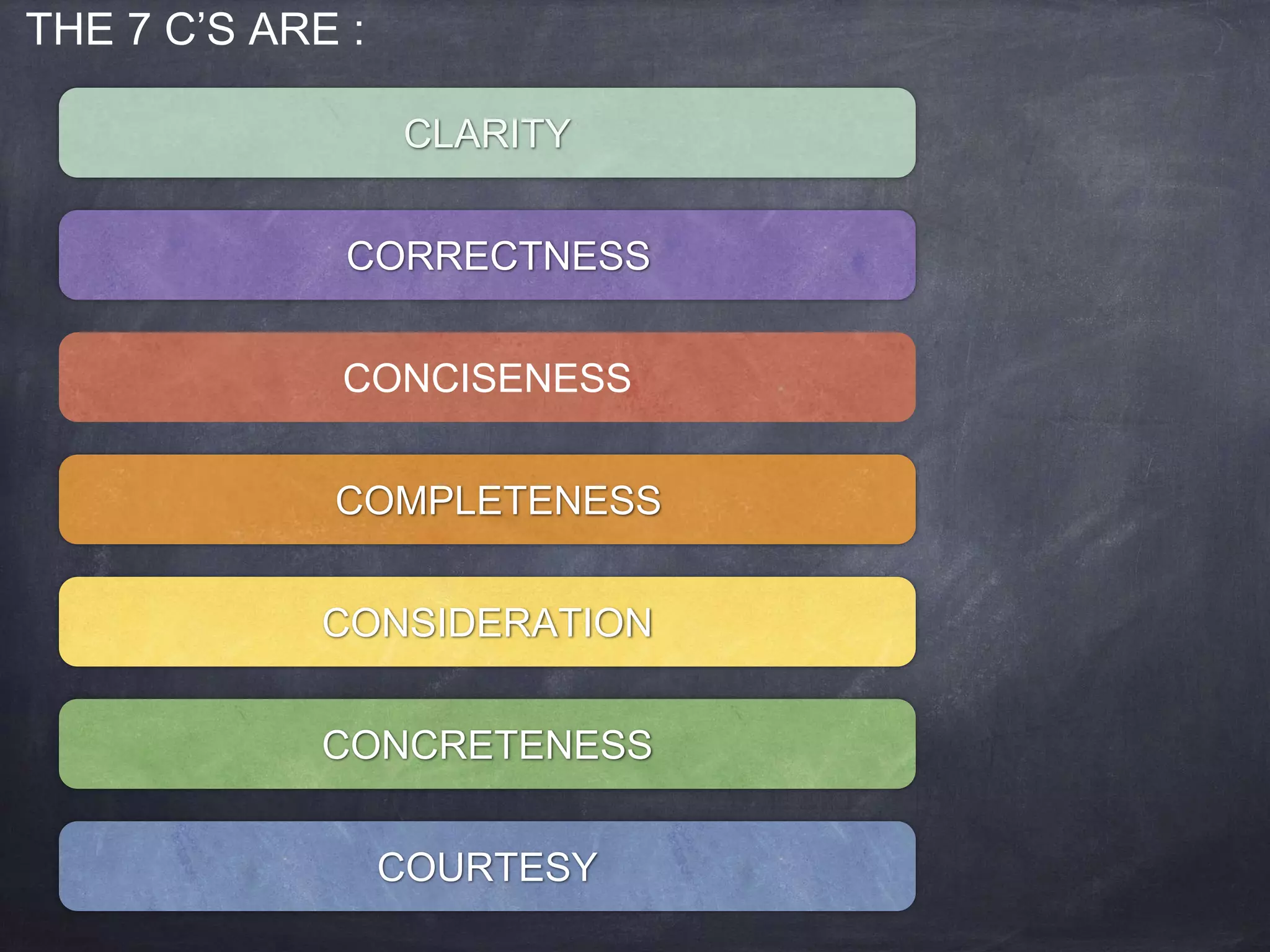
THE 7 C’S ARE :
CLARITY
CONSIDERATION
CONCISENESS
COURTESY
CONCRETENESS
CORRECTNESS
COMPLETENESS
CLARITY
 Clarity demands the use of simple language and easy sentence structure
in composing the message.
 Clarity implies emphasizing on a specific message or goal at a time, rather
than trying to achieve too much at once.
 Mysterious, vague, distorted or conflicting messages foster mistrust.
 Clarity in communication has following features:
It makes understanding easier.
Complete clarity of thoughts and ideas enhances the meaning of message.
Clear message makes use of exact, appropriate and concrete words.
 Correctness in communication implies that there are no grammatical errors
in communication.
 The message is exact, correct and well-timed.
 The facts and figures used in the message should be precise and accurate.
 Communication must be correct in tone, format and style of expression
CORRECTNESS
CONCISENESS
 Conciseness means wordiness, i.e. communicating what you want to
convey in least possible words without forgoing the other C’s of
communication.
 A concise message saves time and cost of both the sender and the
receiver.
 The aimless verbiage, unnecessary details and heavy paragraphs should
be avoided.
COMPLETENESS
 It should convey all facts and figures required by the audience.
 Complete communication develops and enhances reputation of an
organization.
 Complete communication helps in better decision-making.
CONSIDERATION
 Consideration demands to put oneself in the place of receiver while
composing a message. It refers to the use of You attitude, emphases
positive pleasant facts, visualizing reader’s problems, desires, emotions
and his response.
 Consideration implies “stepping into the shoes of others”.
 Modify your words in message to suit the audience’s needs while making
your message complete.
CONCRETENESS
 Being definite, vivid and specific rather than vague, obscure and general
leads to concreteness of the message. Facts and figures being presented in
the message should be specific.
 Concrete messages are not misinterpreted.
COURTESY
 Courtesy means not only thinking about receiver but also valuing his
feelings.
 Use polite words and gestures, being appreciative, thoughtful, tactful, and
showing respect to the receiver.
 Courtesy builds goodwill.
THANK YOU

7 c's of effective communication

  • 1.
    7 C’S OFEFFECTIVE COMMUNICATION Web 2.0 Assignment Presented By Arun M. Imran Alam Deepika Sethia Saravana Kumar Anindya Kumar Neog
  • 2.
    THE 7 C’SARE : CLARITY CONSIDERATION CONCISENESS COURTESY CONCRETENESS CORRECTNESS COMPLETENESS
  • 3.
    CLARITY  Clarity demandsthe use of simple language and easy sentence structure in composing the message.  Clarity implies emphasizing on a specific message or goal at a time, rather than trying to achieve too much at once.  Mysterious, vague, distorted or conflicting messages foster mistrust.  Clarity in communication has following features: It makes understanding easier. Complete clarity of thoughts and ideas enhances the meaning of message. Clear message makes use of exact, appropriate and concrete words.
  • 4.
     Correctness incommunication implies that there are no grammatical errors in communication.  The message is exact, correct and well-timed.  The facts and figures used in the message should be precise and accurate.  Communication must be correct in tone, format and style of expression CORRECTNESS
  • 5.
    CONCISENESS  Conciseness meanswordiness, i.e. communicating what you want to convey in least possible words without forgoing the other C’s of communication.  A concise message saves time and cost of both the sender and the receiver.  The aimless verbiage, unnecessary details and heavy paragraphs should be avoided.
  • 6.
    COMPLETENESS  It shouldconvey all facts and figures required by the audience.  Complete communication develops and enhances reputation of an organization.  Complete communication helps in better decision-making.
  • 7.
    CONSIDERATION  Consideration demandsto put oneself in the place of receiver while composing a message. It refers to the use of You attitude, emphases positive pleasant facts, visualizing reader’s problems, desires, emotions and his response.  Consideration implies “stepping into the shoes of others”.  Modify your words in message to suit the audience’s needs while making your message complete.
  • 8.
    CONCRETENESS  Being definite,vivid and specific rather than vague, obscure and general leads to concreteness of the message. Facts and figures being presented in the message should be specific.  Concrete messages are not misinterpreted.
  • 9.
    COURTESY  Courtesy meansnot only thinking about receiver but also valuing his feelings.  Use polite words and gestures, being appreciative, thoughtful, tactful, and showing respect to the receiver.  Courtesy builds goodwill.
  • 10.