Antibiotic Use in Orofacial
Dental Infection

VGH-TPE
INTRODUCTION
 This presentation will review the

evaluation and management of orofacial
infections with emphasis on:

■
■
■

Antibiotic Therapy
Indications for Prophylaxis
Antifungal Agents

VGH-TPE
ASSESSMENT
 Requires a complete medical history and exam of the

head and neck region with awareness to systemic
factors as part of a comprehensive dental
examination
 Identify local and/or systemic signs and

symptoms to support the diagnosis of infection:
< erythema, warmth, swelling, and pain >
< malaise, fever ( >38 c), chills >
 Loss of function

< dysphagia, trismus, dyspnea >
VGH-TPE
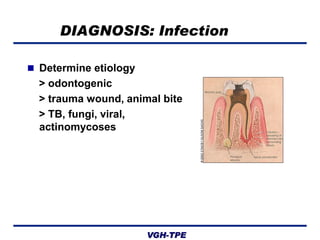
DIAGNOSIS: Infection
 Determine etiology

> odontogenic
> trauma wound, animal bite
> TB, fungi, viral,
actinomycoses

VGH-TPE
DIAGNOSIS (CON’T)
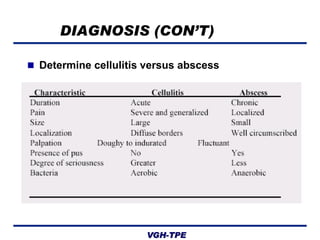
 Determine cellulitis versus abscess

VGH-TPE
TREATMENT of INFECTION
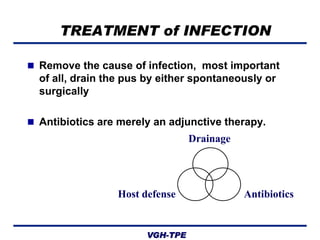
 Remove the cause of infection, most important

of all, drain the pus by either spontaneously or
surgically
 Antibiotics are merely an adjunctive therapy.

Drainage

Host defense

VGH-TPE

Antibiotics
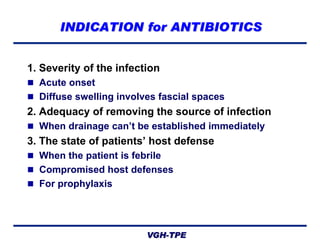
INDICATION for ANTIBIOTICS
1. Severity of the infection
 Acute onset
 Diffuse swelling involves fascial spaces

2. Adequacy of removing the source of infection
 When drainage can’t be established immediately

3. The state of patients’ host defense
 When the patient is febrile
 Compromised host defenses
 For prophylaxis

VGH-TPE
MICROBIOLOGY
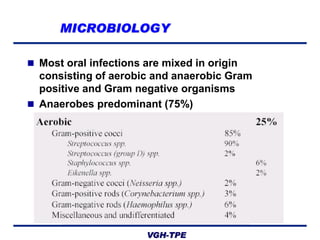
 Most oral infections are mixed in origin

consisting of aerobic and anaerobic Gram
positive and Gram negative organisms
 Anaerobes predominant (75%)

VGH-TPE
COMMONLY USED A/B
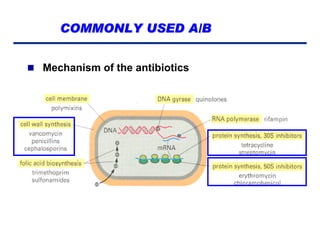
 Mechanism of the antibiotics
COMMONLY USED A/B
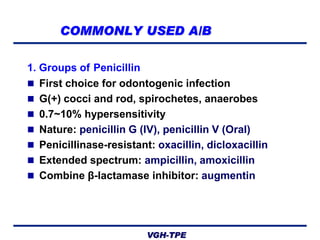
1. Groups of Penicillin
 First choice for odontogenic infection
 G(+) cocci and rod, spirochetes, anaerobes
 0.7~10% hypersensitivity
 Nature: penicillin G (IV), penicillin V (Oral)
 Penicillinase-resistant: oxacillin, dicloxacillin
 Extended spectrum: ampicillin, amoxicillin
 Combine β-lactamase inhibitor: augmentin

VGH-TPE
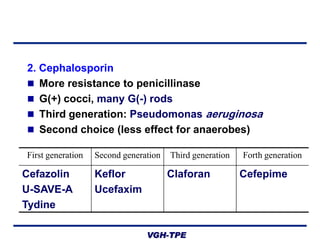
2. Cephalosporin
 More resistance to penicillinase
 G(+) cocci, many G(-) rods
 Third generation: Pseudomonas aeruginosa
 Second choice (less effect for anaerobes)
First generation

Cefazolin
U-SAVE-A
Tydine

Second generation

Keflor
Ucefaxim

Third generation

Claforan

VGH-TPE

Forth generation

Cefepime
3. Clindamycin
 G(+) cocci
 Bacteriostatic -> bactericidal
 Second-line drug: should be held in reserve to
treat those infections caused by anaerobes
resistant to other antibiotics

VGH-TPE
4. Aminoglycoside
 G(-) aerobes, some G(+) aerobes eg S. aureus
 Poorly absorbed from GI tract
 Adjustment of dosage in renal dysfunction
 Drugs: Gentamicin, Amikacin, Amikin
 Combined with penicillin or cephalosporin

VGH-TPE
5. Metronidazole*
 Only for obligate anaerobes
 Can cross blood-brain barrier
 To treat serious infections caused by anaerobic
bacteria, combined with β-lactam A/B
 Effective against Bacteroides species, esp. in
periodontal infections
 Drugs: Anegyn, Flagyne
 Avoid in pregnant women

VGH-TPE
6. Vancomycin
 G(+), most anaerobes, some G(-) cocci (Neisseria)
 Given intravenously, BP should be monitored
 Adjustment of dosage in renal dysfunction
 Use as a substitute for penicillin in the
prophylaxis of the heart valve patient

VGH-TPE
7. Chloramphenicol
 Wide spectrum, highly active against anaerobes
 Limited to severe odontogenic infection
threatening to the eye or brain
 Severe toxicity

VGH-TPE
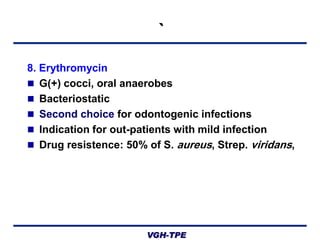
`
8. Erythromycin
 G(+) cocci, oral anaerobes
 Bacteriostatic
 Second choice for odontogenic infections
 Indication for out-patients with mild infection
 Drug resistence: 50% of S. aureus, Strep. viridans,

VGH-TPE
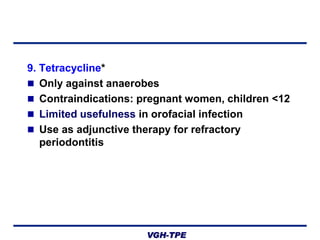
9. Tetracycline*
 Only against anaerobes
 Contraindications: pregnant women, children <12
 Limited usefulness in orofacial infection
 Use as adjunctive therapy for refractory
periodontitis

VGH-TPE
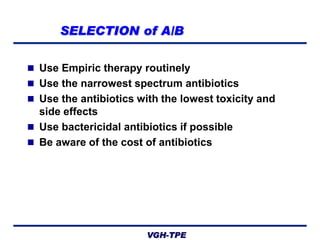
SELECTION of A/B
 Use Empiric therapy routinely
 Use the narrowest spectrum antibiotics
 Use the antibiotics with the lowest toxicity and

side effects
 Use bactericidal antibiotics if possible
 Be aware of the cost of antibiotics

VGH-TPE
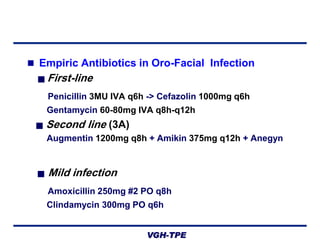
 Empiric Antibiotics in Oro-Facial Infection
■

First-line
Penicillin 3MU IVA q6h -> Cefazolin 1000mg q6h
Gentamycin 60-80mg IVA q8h-q12h

■

Second line (3A)
Augmentin 1200mg q8h + Amikin 375mg q12h + Anegyn

■

Mild infection
Amoxicillin 250mg #2 PO q8h
Clindamycin 300mg PO q6h
VGH-TPE
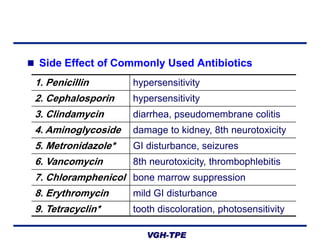
 Side Effect of Commonly Used Antibiotics

1. Penicillin

hypersensitivity

2. Cephalosporin

hypersensitivity

3. Clindamycin

diarrhea, pseudomembrane colitis

4. Aminoglycoside

damage to kidney, 8th neurotoxicity

5. Metronidazole*

GI disturbance, seizures

6. Vancomycin

8th neurotoxicity, thrombophlebitis

7. Chloramphenicol bone marrow suppression
8. Erythromycin

mild GI disturbance

9. Tetracyclin*

tooth discoloration, photosensitivity
VGH-TPE
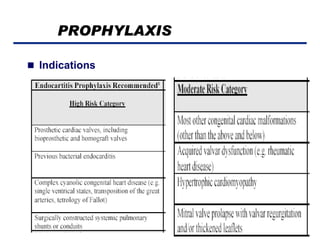
PROPHYLAXIS
 Indications
PROPHYLAXIS (CON’T)
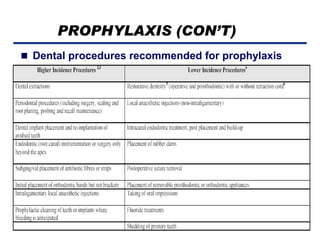
 Dental procedures recommended for prophylaxis
PROPHYLAXIS (CON’T)
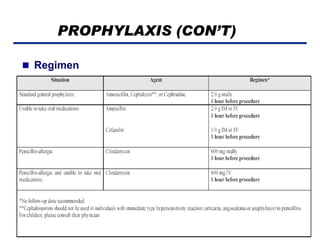
 Regimen
ANTIFUNGAL AGENT
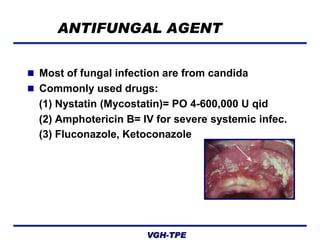
 Most of fungal infection are from candida
 Commonly used drugs:

(1) Nystatin (Mycostatin)= PO 4-600,000 U qid
(2) Amphotericin B= IV for severe systemic infec.
(3) Fluconazole, Ketoconazole

VGH-TPE
Parmason Gargle
 0.2% Chlorhexidine gluconate
 Against G(+), G(-)
 Reduce pain and inflammation, enhance healing
 Indication: immunocompromised patient, C/T R/T

(prophylaxis mouthrinse reduce oral mucositis)
 Use: 2-3 times daily,10-20cc/ time, 20-30sec.
Anti-Virals used in dentistry
 Topical Acyclovir is useful for recurrent

herpetic infections, but must be started early in
the prodromal phase to have a worthwhile effect.
 Oral Acyclovir, Valacyclovir and Famciclovir
are efficacious and safe for the treatment of the
first episode and recurrent genital herpes

VGH-TPE
 FOSCARNET - Class: Non-nucleoside DNA Polymerase

Inhibitors
Indications: "HSV, CMV
Treatment of acyclovir resistant HSV infections in AIDS
patients
Acyclovir resistant VZV
MOA/PCOL: Blocks the pyrophosphate binding site on
viral DNA polymerase
Adverse Effects/Other: "Not a purine or pyrimidine
analog, Phosphono formate analog
Toxic: renal impairment, CNS disturbance, leukopenia,
liver dysfunction

VGH-TPE

antibiotics for dental student

  • 1.
    Antibiotic Use inOrofacial Dental Infection VGH-TPE
  • 2.
    INTRODUCTION  This presentationwill review the evaluation and management of orofacial infections with emphasis on: ■ ■ ■ Antibiotic Therapy Indications for Prophylaxis Antifungal Agents VGH-TPE
  • 3.
    ASSESSMENT  Requires acomplete medical history and exam of the head and neck region with awareness to systemic factors as part of a comprehensive dental examination  Identify local and/or systemic signs and symptoms to support the diagnosis of infection: < erythema, warmth, swelling, and pain > < malaise, fever ( >38 c), chills >  Loss of function < dysphagia, trismus, dyspnea > VGH-TPE
  • 4.
    DIAGNOSIS: Infection  Determineetiology > odontogenic > trauma wound, animal bite > TB, fungi, viral, actinomycoses VGH-TPE
  • 5.
    DIAGNOSIS (CON’T)  Determinecellulitis versus abscess VGH-TPE
  • 6.
    TREATMENT of INFECTION Remove the cause of infection, most important of all, drain the pus by either spontaneously or surgically  Antibiotics are merely an adjunctive therapy. Drainage Host defense VGH-TPE Antibiotics
  • 7.
    INDICATION for ANTIBIOTICS 1.Severity of the infection  Acute onset  Diffuse swelling involves fascial spaces 2. Adequacy of removing the source of infection  When drainage can’t be established immediately 3. The state of patients’ host defense  When the patient is febrile  Compromised host defenses  For prophylaxis VGH-TPE
  • 8.
    MICROBIOLOGY  Most oralinfections are mixed in origin consisting of aerobic and anaerobic Gram positive and Gram negative organisms  Anaerobes predominant (75%) VGH-TPE
  • 9.
    COMMONLY USED A/B Mechanism of the antibiotics
  • 10.
    COMMONLY USED A/B 1.Groups of Penicillin  First choice for odontogenic infection  G(+) cocci and rod, spirochetes, anaerobes  0.7~10% hypersensitivity  Nature: penicillin G (IV), penicillin V (Oral)  Penicillinase-resistant: oxacillin, dicloxacillin  Extended spectrum: ampicillin, amoxicillin  Combine β-lactamase inhibitor: augmentin VGH-TPE
  • 11.
    2. Cephalosporin  Moreresistance to penicillinase  G(+) cocci, many G(-) rods  Third generation: Pseudomonas aeruginosa  Second choice (less effect for anaerobes) First generation Cefazolin U-SAVE-A Tydine Second generation Keflor Ucefaxim Third generation Claforan VGH-TPE Forth generation Cefepime
  • 12.
    3. Clindamycin  G(+)cocci  Bacteriostatic -> bactericidal  Second-line drug: should be held in reserve to treat those infections caused by anaerobes resistant to other antibiotics VGH-TPE
  • 13.
    4. Aminoglycoside  G(-)aerobes, some G(+) aerobes eg S. aureus  Poorly absorbed from GI tract  Adjustment of dosage in renal dysfunction  Drugs: Gentamicin, Amikacin, Amikin  Combined with penicillin or cephalosporin VGH-TPE
  • 14.
    5. Metronidazole*  Onlyfor obligate anaerobes  Can cross blood-brain barrier  To treat serious infections caused by anaerobic bacteria, combined with β-lactam A/B  Effective against Bacteroides species, esp. in periodontal infections  Drugs: Anegyn, Flagyne  Avoid in pregnant women VGH-TPE
  • 15.
    6. Vancomycin  G(+),most anaerobes, some G(-) cocci (Neisseria)  Given intravenously, BP should be monitored  Adjustment of dosage in renal dysfunction  Use as a substitute for penicillin in the prophylaxis of the heart valve patient VGH-TPE
  • 16.
    7. Chloramphenicol  Widespectrum, highly active against anaerobes  Limited to severe odontogenic infection threatening to the eye or brain  Severe toxicity VGH-TPE
  • 17.
    ` 8. Erythromycin  G(+)cocci, oral anaerobes  Bacteriostatic  Second choice for odontogenic infections  Indication for out-patients with mild infection  Drug resistence: 50% of S. aureus, Strep. viridans, VGH-TPE
  • 18.
    9. Tetracycline*  Onlyagainst anaerobes  Contraindications: pregnant women, children <12  Limited usefulness in orofacial infection  Use as adjunctive therapy for refractory periodontitis VGH-TPE
  • 19.
    SELECTION of A/B Use Empiric therapy routinely  Use the narrowest spectrum antibiotics  Use the antibiotics with the lowest toxicity and side effects  Use bactericidal antibiotics if possible  Be aware of the cost of antibiotics VGH-TPE
  • 20.
     Empiric Antibioticsin Oro-Facial Infection ■ First-line Penicillin 3MU IVA q6h -> Cefazolin 1000mg q6h Gentamycin 60-80mg IVA q8h-q12h ■ Second line (3A) Augmentin 1200mg q8h + Amikin 375mg q12h + Anegyn ■ Mild infection Amoxicillin 250mg #2 PO q8h Clindamycin 300mg PO q6h VGH-TPE
  • 21.
     Side Effectof Commonly Used Antibiotics 1. Penicillin hypersensitivity 2. Cephalosporin hypersensitivity 3. Clindamycin diarrhea, pseudomembrane colitis 4. Aminoglycoside damage to kidney, 8th neurotoxicity 5. Metronidazole* GI disturbance, seizures 6. Vancomycin 8th neurotoxicity, thrombophlebitis 7. Chloramphenicol bone marrow suppression 8. Erythromycin mild GI disturbance 9. Tetracyclin* tooth discoloration, photosensitivity VGH-TPE
  • 22.
  • 23.
    PROPHYLAXIS (CON’T)  Dentalprocedures recommended for prophylaxis
  • 24.
  • 25.
    ANTIFUNGAL AGENT  Mostof fungal infection are from candida  Commonly used drugs: (1) Nystatin (Mycostatin)= PO 4-600,000 U qid (2) Amphotericin B= IV for severe systemic infec. (3) Fluconazole, Ketoconazole VGH-TPE
  • 26.
    Parmason Gargle  0.2%Chlorhexidine gluconate  Against G(+), G(-)  Reduce pain and inflammation, enhance healing  Indication: immunocompromised patient, C/T R/T (prophylaxis mouthrinse reduce oral mucositis)  Use: 2-3 times daily,10-20cc/ time, 20-30sec.
  • 27.
    Anti-Virals used indentistry  Topical Acyclovir is useful for recurrent herpetic infections, but must be started early in the prodromal phase to have a worthwhile effect.  Oral Acyclovir, Valacyclovir and Famciclovir are efficacious and safe for the treatment of the first episode and recurrent genital herpes VGH-TPE
  • 28.
     FOSCARNET -Class: Non-nucleoside DNA Polymerase Inhibitors Indications: "HSV, CMV Treatment of acyclovir resistant HSV infections in AIDS patients Acyclovir resistant VZV MOA/PCOL: Blocks the pyrophosphate binding site on viral DNA polymerase Adverse Effects/Other: "Not a purine or pyrimidine analog, Phosphono formate analog Toxic: renal impairment, CNS disturbance, leukopenia, liver dysfunction VGH-TPE