6S Overview
-Azizur Rahman Rohan
QMS executive,EKCL
We will
Learn?
1.What is 6s?
2.Why 6s?
3.Types of 6s?
4.Benefit of 6s.
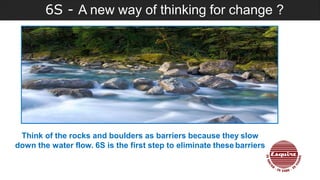
6S - A new way of thinking for change ?
Think of the rocks and boulders as barriers because they slow
down the water flow. 6S is the first step to eliminate these barriers
What is 6S?
• Definition
– An easily identified place for everything, and everything in
its place, clean, safe, and ready for use.
• Workplace organization and standardization
• It’s NOT JUST HOUSEKEEPING!
• Foundational building block of Lean
Sorting (seiri)
Straightening/Set in order(seiton)
Systematic cleaning /Shinning (seiso)
Standardizing (seiketsu)
Sustaining (shitsuke)
Safety (Tran, 2016)
6s stand for:
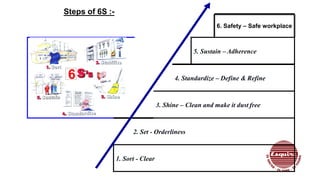
5. Sustain –Adherence
4. Standardize – Define & Refine
3. Shine – Clean and make it dust free
2. Set - Orderliness
1. Sort - Clear
Steps of 6S :-
6
6. Safety – Safe workplace
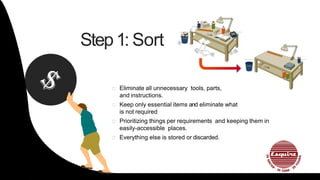
Step1: Sort
Eliminate all unnecessary tools, parts,
and instructions.
Keep only essential items and eliminate what
is not required
Prioritizing things per requirements and keeping them in
easily-accessible places.
Everything else is stored or discarded.
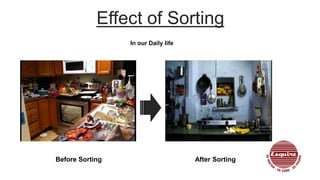
Effect of Sorting
Before Sorting After Sorting
In our Daily life
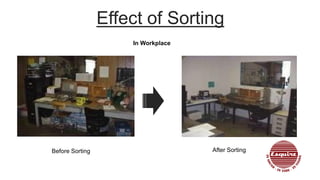
Effect of Sorting
Before Sorting After Sorting
In Workplace
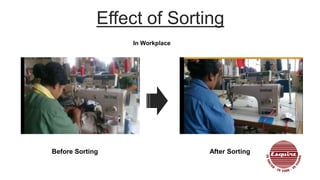
Effect of Sorting
Before Sorting After Sorting
In Workplace
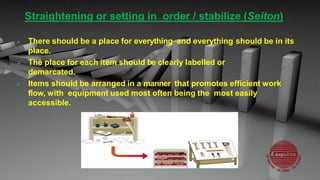
Straightening or setting in order / stabilize (Seiton)
 There should be a place for everything and everything should be in its
place.

 The place for each item should be clearly labelled or
demarcated.
 Items should be arranged in a manner that promotes efficient work
flow, with equipment used most often being the most easily
accessible.
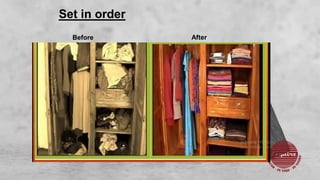
Set in order
Before After
Before After
Set in Order
Set in Order
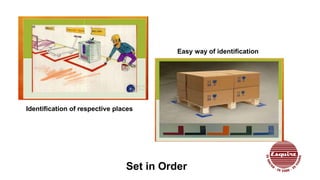
Identification of respective places
Easy way of identification
Set in Order
Before After
Set in
Order
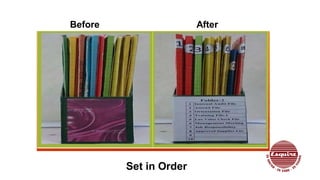
Before After
Set in Order
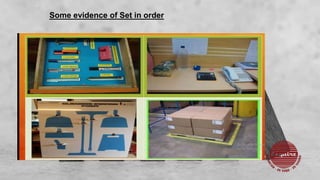
Some evidence of Set in order
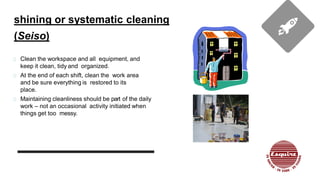
shining or systematic cleaning
(Seiso)
Clean the workspace and all equipment, and
keep it clean, tidy and organized.
At the end of each shift, clean the work area
and be sure everything is restored to its
place.
Maintaining cleanliness should be part of the daily
work – not an occasional activity initiated when
things get too messy.
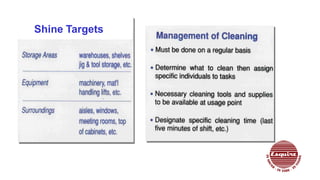
Shine Targets
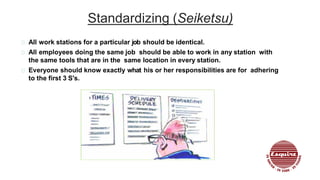
Standardizing (Seiketsu)
All work stations for a particular job should be identical.
All employees doing the same job should be able to work in any station with
the same tools that are in the same location in every station.
Everyone should know exactly what his or her responsibilities are for adhering
to the first 3 S's.
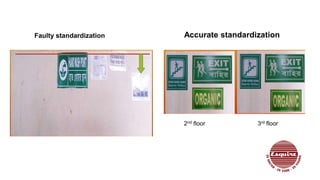
Faulty standardization
2nd floor 3rd floor
Accurate standardization
You can simply impress your
audience and add a unique zing and
appeal to your Presentations. Easy
to change colors, photos and Text.
Your Text Here
 Simple Portfolio Presentation
 Presentation
 Portfolio Presentation
 Simple Portfolio
 Portfolio
 Presentation
 Portfolio
Sustaining the discipline (Shitsuke)
 Maintain and review standards.
 Maintain focus on this new way and do not allow a
gradual decline back to the old ways.
 While thinking about the new
 way, also be thinking about yet better ways.
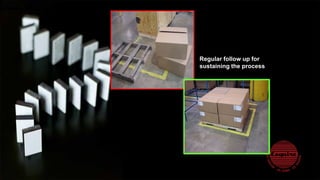
Regular follow up for
sustaining the process
• Tools and Techniques for
Promoting Discipline:
–6S Slogans
–6S Posters
–6S Storyboards (Photos)
–6S Newsletters
–6S Maps
–6S Department Tours
–6S Pocket Manuals
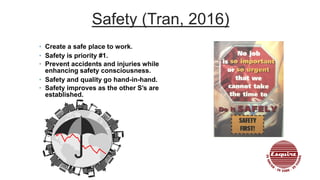
Safety (Tran, 2016)
• Create a safe place to work.
• Safety is priority #1.
• Prevent accidents and injuries while
enhancing safety consciousness.
• Safety and quality go hand-in-hand.
• Safety improves as the other S’s are
established.
• Tools and techniques to increase safety
consciousness:
– Basic safety awareness training
– Hazard identification
– Understanding of policies and procedures
– Incident tracking, investigation and elimination
of root causes
– Visual aides for safety equipment and
protocols
– Machine guarding
– Conduct safety audits/evaluations
Safety
• Typical safety concerns to consider:
– Lift & Carry weight
– Push/Pull weight
– Pinch points
– Trip & Stumble opportunities
– Competition for space
– Improper use of equipment, tools & fixtures
– Repetitive Motions
– Access and availability of safety / emergency
equipment
– Use of personal protective equipment (PPE)
Safety
5S To-Do Items Observed Condition Improvement Action
Sort
· Remove unneeded equipment, tools, furniture, etc.
· Provide information on department PPB
· Review excess inventory,supplies, parts, or materials
· Identify existence of safety hazards (water, oil, chemical, machines,
extension cords, etc.)
Remove unnecessary items. All items not required for
performing operations are removed from the work area. 0
Only tools and products are present at workstation
Straighten
· Correct location foritems are identified
· Items are placed in their correct locations
· Aisle ways, workstations, equipment locations are indicated
· Items are put away immediately after use
· Inventory or WIP height and quantity limits are obvious
Storage of cleaning equipment: All cleaning equipment stored in a neat manner; handy and readily available when
needed 0
Items on floor: Work-in-process, tools and anyother
material are not left to sit directly on the floor. Large items such as tote boxes are positioned on the floor in clearly
marked area, identified by painted or taped lines. 0
Storage and arrangement:: Boxes, containers, and
materials are always stored neat and at correct work angles convenient to the operators where appropriate. When
items are stacked evenly or in a manner that would not cause them to toppling over. Storage areas are provided for all
necessary items at POUS (Point-Of-Use Storage).
No items are placed on top of machines, cabinets, and equipment. Unidentified items can not lean against walls
or columns.
0
Operating equipment/machinery: Each piece of
equipment/machinery has guards and deflectors that prevent debris from falling uncontained to the floor. 0
Document storage: Only documents necessary to the
operation are stored at the workstations and are stored in a neat and orderly manner. 0
Tool and gauges arrangement: Tools, gages and fixtures
are arranged neatly and stored, kept clean and free of any risk of damage. 0
Shine
· Floors, walls, stairs, and surfaces are free ofdirt, oil and grease
· Equipment is kept clean and free of dirt, oil, and grease
· Cleaning materials are easily
accessible
· Lines, labels, signs, etc. are clean and not damaged
· No other cleaning problems (of any kind) are present
Aisle ways maintenance: Aisles are always freeof
materials and obstructions; nothing is placed on the lines and objects are always placed at right angles to the aisles
where appropriate. 0
Equipment painting: All machines and equipment are neatly painted; equipment cleaning schedule developed and
posted for each major piece of equipment. 0
Workbench and desk control: Kept free of objects
including records and documents (unless in use). Tools and fixtures are clean and placed in their proper location. 0
Standardize
· Necessary information is visible
· All standards are known and visible
· Checklists exist for all cleaning and TPM maintenance jobs
· All quantities and limits are easily recognizable
· All necessary items can be located in 30 seconds
Information boards: PPB, COBs, and PABs are arranged
in a neat and orderly manner. No outdated, torn, or soiled documents are displayed 0
Emergency access: Fire hoses and emergency
equipment are unobstructed and stored in a prominent easy- to-locate area with proper identification. E-Stop switches
and breakers are marked or color-coded for immediate visibility. 0
Aisle ways marking: Aisles and walkways are clearly
marked and can be identified at a glance; lines are straight and at right angles where appropriate with no chipped, worn
floor marking. 0
Equipment maintenance: Controls of machines are
properly labeled. Critical points for daily maintenance checks are clearly marked. Equipment check sheets are
clean, neatly displayed and completed daily. 0
Tool and gauges convenience: Tools, gages and fixtures are arranged so they can be easily accessed when needed.
0
Shelves and benches arrangement: Arranged, divided and
clearly labeled it is obvious where things are stored; status and condition is recorded 0
Sustain
· All team members have had 5S training
· Daily 5S actions performed
· Place all personal belongings stored in a neatly maintained
location
· Job aids are currentand readily accessible
· Routine 5SImplementation Audit is performed untilsustained
Document control: All documents are labeled clearly as to content and responsibility for control and revision. Obsolete
0
Equipment cleanliness: All machines and equipment are
kept clean by routine daily care. 0
Floor cleaning: All floors are clean and free of debris, oil
and dirt. Cleaning of floors is done routinely -- daily at a minimum—posted schedule. 0
5S control and maintenance: There is a disciplined
system of control and it is maintained at the highest possible level. It is the responsibility of every one to
maintain this system and environment. Documentation exist indicating cleaning responsibility for each team member in
the work area. 0
Legend: <2 (RED) 2 to 4.75 >4.75 (GREEN) 5S Implementation Audit Score = 0.00
6S Assessment
Score Sheet
BENEFITS OF 6S
improves organizational efficiency
reduces waste in all forms
cuts down employee frustration when
"the system doesn’t work"
improves speed and quality of work
performance
improves safety
creates a visually attractive
environment
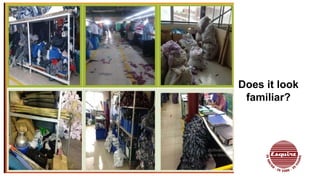
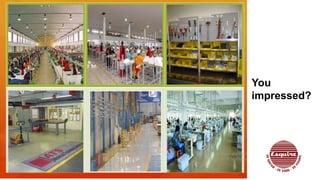
Lets see some picture
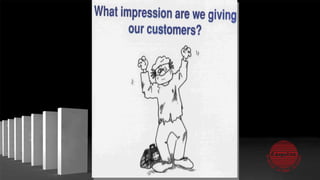
Does it look
familiar?
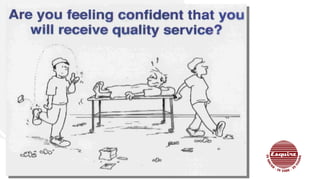
This one too?
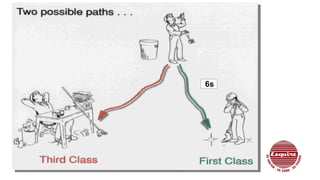
6s
Now watch
this!!
You
impressed?
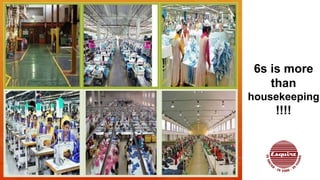
6s is more
than
housekeeping
!!!!
THANK YOU
A place for everything and everything should be in its place.

6s overview in production floor

  • 1.
    6S Overview -Azizur RahmanRohan QMS executive,EKCL
  • 2.
    We will Learn? 1.What is6s? 2.Why 6s? 3.Types of 6s? 4.Benefit of 6s.
  • 3.
    6S - Anew way of thinking for change ? Think of the rocks and boulders as barriers because they slow down the water flow. 6S is the first step to eliminate these barriers
  • 4.
    What is 6S? •Definition – An easily identified place for everything, and everything in its place, clean, safe, and ready for use. • Workplace organization and standardization • It’s NOT JUST HOUSEKEEPING! • Foundational building block of Lean Sorting (seiri) Straightening/Set in order(seiton) Systematic cleaning /Shinning (seiso) Standardizing (seiketsu) Sustaining (shitsuke) Safety (Tran, 2016) 6s stand for:
  • 5.
    5. Sustain –Adherence 4.Standardize – Define & Refine 3. Shine – Clean and make it dust free 2. Set - Orderliness 1. Sort - Clear Steps of 6S :- 6 6. Safety – Safe workplace
  • 6.
    Step1: Sort Eliminate allunnecessary tools, parts, and instructions. Keep only essential items and eliminate what is not required Prioritizing things per requirements and keeping them in easily-accessible places. Everything else is stored or discarded.
  • 7.
    Effect of Sorting BeforeSorting After Sorting In our Daily life
  • 8.
    Effect of Sorting BeforeSorting After Sorting In Workplace
  • 9.
    Effect of Sorting BeforeSorting After Sorting In Workplace
  • 10.
    Straightening or settingin order / stabilize (Seiton)  There should be a place for everything and everything should be in its place.  The place for each item should be clearly labelled or demarcated.  Items should be arranged in a manner that promotes efficient work flow, with equipment used most often being the most easily accessible.

  • 11.
  • 12.
  • 13.
  • 14.
    Identification of respectiveplaces Easy way of identification Set in Order
  • 15.
  • 16.
  • 17.
    Some evidence ofSet in order
  • 18.
    shining or systematiccleaning (Seiso) Clean the workspace and all equipment, and keep it clean, tidy and organized. At the end of each shift, clean the work area and be sure everything is restored to its place. Maintaining cleanliness should be part of the daily work – not an occasional activity initiated when things get too messy.
  • 21.
  • 22.
    Standardizing (Seiketsu) All workstations for a particular job should be identical. All employees doing the same job should be able to work in any station with the same tools that are in the same location in every station. Everyone should know exactly what his or her responsibilities are for adhering to the first 3 S's.
  • 23.
    Faulty standardization 2nd floor3rd floor Accurate standardization
  • 24.
    You can simplyimpress your audience and add a unique zing and appeal to your Presentations. Easy to change colors, photos and Text. Your Text Here  Simple Portfolio Presentation  Presentation  Portfolio Presentation  Simple Portfolio  Portfolio  Presentation  Portfolio
  • 25.
    Sustaining the discipline(Shitsuke)  Maintain and review standards.  Maintain focus on this new way and do not allow a gradual decline back to the old ways.  While thinking about the new  way, also be thinking about yet better ways.
  • 26.
    Regular follow upfor sustaining the process
  • 27.
    • Tools andTechniques for Promoting Discipline: –6S Slogans –6S Posters –6S Storyboards (Photos) –6S Newsletters –6S Maps –6S Department Tours –6S Pocket Manuals
  • 28.
    Safety (Tran, 2016) •Create a safe place to work. • Safety is priority #1. • Prevent accidents and injuries while enhancing safety consciousness. • Safety and quality go hand-in-hand. • Safety improves as the other S’s are established.
  • 29.
    • Tools andtechniques to increase safety consciousness: – Basic safety awareness training – Hazard identification – Understanding of policies and procedures – Incident tracking, investigation and elimination of root causes – Visual aides for safety equipment and protocols – Machine guarding – Conduct safety audits/evaluations Safety
  • 30.
    • Typical safetyconcerns to consider: – Lift & Carry weight – Push/Pull weight – Pinch points – Trip & Stumble opportunities – Competition for space – Improper use of equipment, tools & fixtures – Repetitive Motions – Access and availability of safety / emergency equipment – Use of personal protective equipment (PPE) Safety
  • 31.
    5S To-Do ItemsObserved Condition Improvement Action Sort · Remove unneeded equipment, tools, furniture, etc. · Provide information on department PPB · Review excess inventory,supplies, parts, or materials · Identify existence of safety hazards (water, oil, chemical, machines, extension cords, etc.) Remove unnecessary items. All items not required for performing operations are removed from the work area. 0 Only tools and products are present at workstation Straighten · Correct location foritems are identified · Items are placed in their correct locations · Aisle ways, workstations, equipment locations are indicated · Items are put away immediately after use · Inventory or WIP height and quantity limits are obvious Storage of cleaning equipment: All cleaning equipment stored in a neat manner; handy and readily available when needed 0 Items on floor: Work-in-process, tools and anyother material are not left to sit directly on the floor. Large items such as tote boxes are positioned on the floor in clearly marked area, identified by painted or taped lines. 0 Storage and arrangement:: Boxes, containers, and materials are always stored neat and at correct work angles convenient to the operators where appropriate. When items are stacked evenly or in a manner that would not cause them to toppling over. Storage areas are provided for all necessary items at POUS (Point-Of-Use Storage). No items are placed on top of machines, cabinets, and equipment. Unidentified items can not lean against walls or columns. 0 Operating equipment/machinery: Each piece of equipment/machinery has guards and deflectors that prevent debris from falling uncontained to the floor. 0 Document storage: Only documents necessary to the operation are stored at the workstations and are stored in a neat and orderly manner. 0 Tool and gauges arrangement: Tools, gages and fixtures are arranged neatly and stored, kept clean and free of any risk of damage. 0 Shine · Floors, walls, stairs, and surfaces are free ofdirt, oil and grease · Equipment is kept clean and free of dirt, oil, and grease · Cleaning materials are easily accessible · Lines, labels, signs, etc. are clean and not damaged · No other cleaning problems (of any kind) are present Aisle ways maintenance: Aisles are always freeof materials and obstructions; nothing is placed on the lines and objects are always placed at right angles to the aisles where appropriate. 0 Equipment painting: All machines and equipment are neatly painted; equipment cleaning schedule developed and posted for each major piece of equipment. 0 Workbench and desk control: Kept free of objects including records and documents (unless in use). Tools and fixtures are clean and placed in their proper location. 0 Standardize · Necessary information is visible · All standards are known and visible · Checklists exist for all cleaning and TPM maintenance jobs · All quantities and limits are easily recognizable · All necessary items can be located in 30 seconds Information boards: PPB, COBs, and PABs are arranged in a neat and orderly manner. No outdated, torn, or soiled documents are displayed 0 Emergency access: Fire hoses and emergency equipment are unobstructed and stored in a prominent easy- to-locate area with proper identification. E-Stop switches and breakers are marked or color-coded for immediate visibility. 0 Aisle ways marking: Aisles and walkways are clearly marked and can be identified at a glance; lines are straight and at right angles where appropriate with no chipped, worn floor marking. 0 Equipment maintenance: Controls of machines are properly labeled. Critical points for daily maintenance checks are clearly marked. Equipment check sheets are clean, neatly displayed and completed daily. 0 Tool and gauges convenience: Tools, gages and fixtures are arranged so they can be easily accessed when needed. 0 Shelves and benches arrangement: Arranged, divided and clearly labeled it is obvious where things are stored; status and condition is recorded 0 Sustain · All team members have had 5S training · Daily 5S actions performed · Place all personal belongings stored in a neatly maintained location · Job aids are currentand readily accessible · Routine 5SImplementation Audit is performed untilsustained Document control: All documents are labeled clearly as to content and responsibility for control and revision. Obsolete 0 Equipment cleanliness: All machines and equipment are kept clean by routine daily care. 0 Floor cleaning: All floors are clean and free of debris, oil and dirt. Cleaning of floors is done routinely -- daily at a minimum—posted schedule. 0 5S control and maintenance: There is a disciplined system of control and it is maintained at the highest possible level. It is the responsibility of every one to maintain this system and environment. Documentation exist indicating cleaning responsibility for each team member in the work area. 0 Legend: <2 (RED) 2 to 4.75 >4.75 (GREEN) 5S Implementation Audit Score = 0.00 6S Assessment Score Sheet
  • 32.
    BENEFITS OF 6S improvesorganizational efficiency reduces waste in all forms cuts down employee frustration when "the system doesn’t work" improves speed and quality of work performance improves safety creates a visually attractive environment
  • 33.
  • 34.
  • 35.
  • 36.
  • 37.
  • 38.
  • 39.
  • 40.
    THANK YOU A placefor everything and everything should be in its place.