Present, Past, and Future Tenses Tense means time.
The tense of a verb tells when an action takes place. The bear  walks   to the honey tree. The bear  walked  to the honey tree. The   bear  will walk  to the honey tree.
The Future Tens
Future Tense Future tense expresses action which will take place in the future. It uses the helping verbs  will  or  shall  and the present tense form of the verb). Examples:  He  will send  the letter tomorrow.  I  shall wait  here until you return. * Traditionally,  shall  is used for 1 st  person and  will  for 2 nd  and 3 rd  persons.
Future Verbs Verbs which tell about actions which are going to happen are  future tense verbs .   We will awaken at six a.m. Will awaken  is a future tense verb because the action has not yet happened.
Future tense verbs Future tense verbs use special words to talk about things that will happen: will, going to, shall, aim to, etc. going to start shall email will enjoy
The Future Will  and   be + going + to   are often used to describe future actions . Thomas  will graduate   in June. Maria  is going to go   to Mexico next week.
The Future The simple present and present progressive are also used to express future time.  These are often used in connection with schedules. She  is meeting   a new client at eleven o’clock. The train  leaves  at 6:00 a.m. tomorrow.
The Future Progressive This tense is used to describe an event or action that will occur over a period of time at a specific point in the future. I  will be teaching   ESL 40 at 10 a.m. tomorrow. They  will be moving   their furniture out of the house by the time you arrive tomorrow. at 10 a.m. tomorrow by the time you arrive
The Future Perfect This tense is used to describe an event or action that will be completed before another event or time in the future. We  will have finished   the exam by the time class ends tomorrow. will have finished the exam class ends
Future Perfect Progressive This tense describes an action that has been in progress for a duration of time before another event or time in the future. By the time he finishes law school,  we  will have been living   in the U.S. for eight years. finishes law school will have been living in the U.S. for eight years
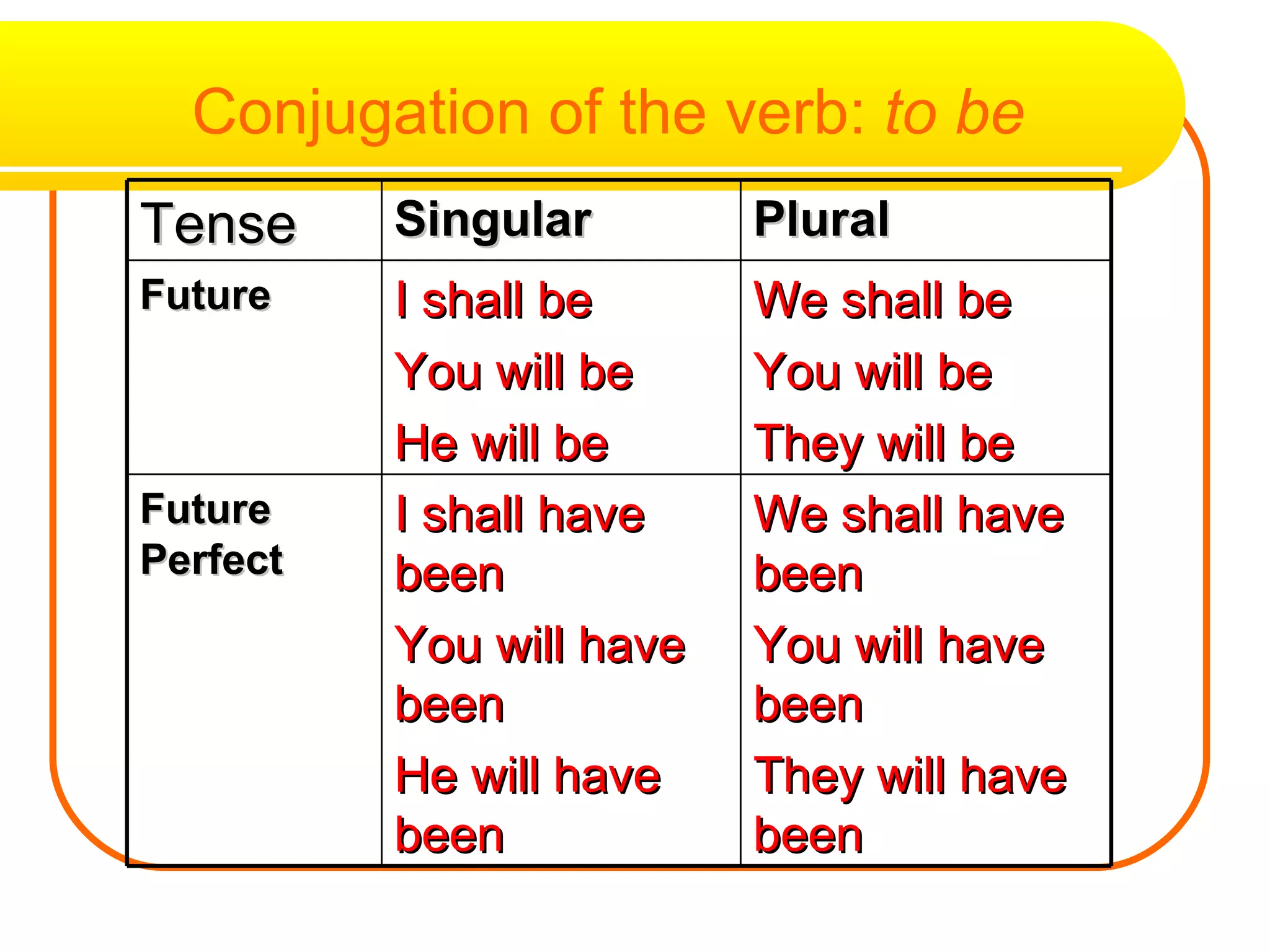
Conjugation of the verb:  to be Tense Singular Plural Future I shall be You will be He will be We shall be You will be They will be Future Perfect I shall have been You will have been He will have been We shall have been You will have been They will have been
sources The Enternet  The Englhsh of 3 rd  year secondary
Thank you

66666

  • 1.
    Present, Past, andFuture Tenses Tense means time.
  • 2.
    The tense ofa verb tells when an action takes place. The bear walks to the honey tree. The bear walked to the honey tree. The bear will walk to the honey tree.
  • 3.
  • 4.
    Future Tense Futuretense expresses action which will take place in the future. It uses the helping verbs will or shall and the present tense form of the verb). Examples: He will send the letter tomorrow. I shall wait here until you return. * Traditionally, shall is used for 1 st person and will for 2 nd and 3 rd persons.
  • 5.
    Future Verbs Verbswhich tell about actions which are going to happen are future tense verbs . We will awaken at six a.m. Will awaken is a future tense verb because the action has not yet happened.
  • 6.
    Future tense verbsFuture tense verbs use special words to talk about things that will happen: will, going to, shall, aim to, etc. going to start shall email will enjoy
  • 7.
    The Future Will and be + going + to are often used to describe future actions . Thomas will graduate in June. Maria is going to go to Mexico next week.
  • 8.
    The Future Thesimple present and present progressive are also used to express future time. These are often used in connection with schedules. She is meeting a new client at eleven o’clock. The train leaves at 6:00 a.m. tomorrow.
  • 9.
    The Future ProgressiveThis tense is used to describe an event or action that will occur over a period of time at a specific point in the future. I will be teaching ESL 40 at 10 a.m. tomorrow. They will be moving their furniture out of the house by the time you arrive tomorrow. at 10 a.m. tomorrow by the time you arrive
  • 10.
    The Future PerfectThis tense is used to describe an event or action that will be completed before another event or time in the future. We will have finished the exam by the time class ends tomorrow. will have finished the exam class ends
  • 11.
    Future Perfect ProgressiveThis tense describes an action that has been in progress for a duration of time before another event or time in the future. By the time he finishes law school, we will have been living in the U.S. for eight years. finishes law school will have been living in the U.S. for eight years
  • 12.
    Conjugation of theverb: to be Tense Singular Plural Future I shall be You will be He will be We shall be You will be They will be Future Perfect I shall have been You will have been He will have been We shall have been You will have been They will have been
  • 13.
    sources The Enternet The Englhsh of 3 rd year secondary
  • 14.