PRACTICAL
STRATEGIES FOR
CRITICAL THINKING
IN COMMUNICATION
Eva Fanjanirina ANDRIANARIVO
English Teaching Program (E.T.P.) Antananarivo Madagascar
TESOL 2013 – Dallas, Texas
STRATEGIES
Before
OBJECTIVES
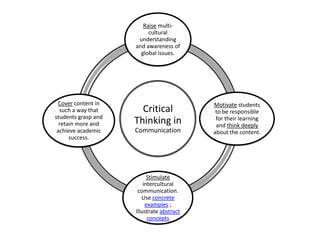
Critical
Thinking in
Communication
Raise multi-
cultural
understanding
and awareness of
global issues.
Motivate students
to be responsible
for their learning
and think deeply
about the content.
Stimulate
intercultural
communication.
Use concrete
examples ;
Illustrate abstract
concepts
Cover content in
such a way that
students grasp and
retain more and
achieve academic
success.
STUDENTS and
TEACHER’S
ROLES
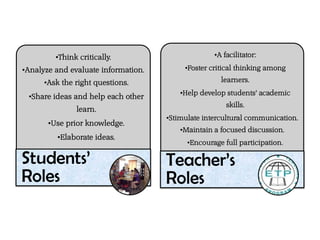
Students’
Roles
.
Teacher’s
Roles
CONTENT
AREAS
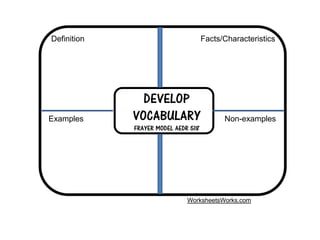
DEVELOP
VOCABULARY
FRAYER MODEL AEDR 518
Definition
Examples Non-examples
Facts/Characteristics
WorksheetsWorks.com
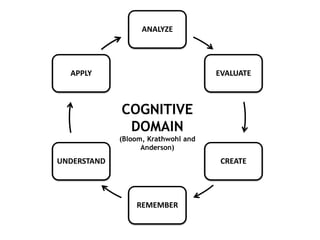
CRITICAL THINKING
SKILLS
ANALYZE
EVALUATE
CREATE
REMEMBER
UNDERSTAND
APPLY
COGNITIVE
DOMAIN
(Bloom, Krathwohl and
Anderson)
ACADEMIC
SKILLS
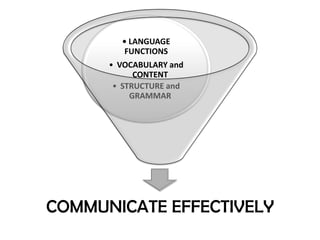
COMMUNICATE EFFECTIVELY
• LANGUAGE
FUNCTIONS
• VOCABULARY and
CONTENT
• STRUCTURE and
GRAMMAR
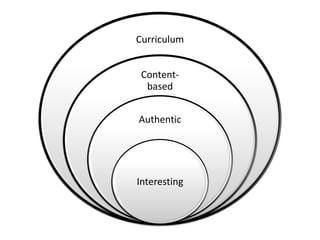
CHOICE OF
MATERIALS
Curriculum
Content-
based
Authentic
Interesting
During
COMMUNICATION
ACTIVITIES
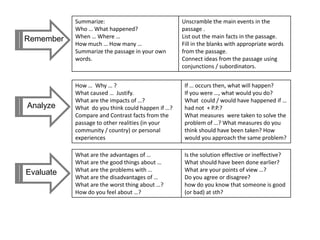
Summarize:
Who … What happened?
When … Where …
How much … How many …
Summarize the passage in your own
words.
Unscramble the main events in the
passage .
List out the main facts in the passage.
Fill in the blanks with appropriate words
from the passage.
Connect ideas from the passage using
conjunctions / subordinators.
How … Why … ?
What caused … Justify.
What are the impacts of …?
What do you think could happen if …?
Compare and Contrast facts from the
passage to other realities (in your
community / country) or personal
experiences
If … occurs then, what will happen?
If you were …, what would you do?
What could / would have happened if …
had not + P.P.?
What measures were taken to solve the
problem of …? What measures do you
think should have been taken? How
would you approach the same problem?
What are the advantages of …
What are the good things about …
What are the problems with …
What are the disadvantages of …
What are the worst thing about …?
How do you feel about …?
Is the solution effective or ineffective?
What should have been done earlier?
What are your points of view …?
Do you agree or disagree?
how do you know that someone is good
(or bad) at sth?
Remember
Analyze
Evaluate
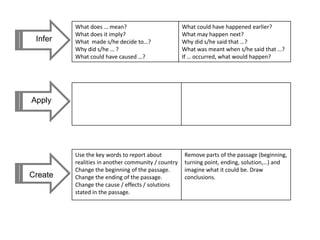
What does … mean?
What does it imply?
What made s/he decide to…?
Why did s/he … ?
What could have caused …?
What could have happened earlier?
What may happen next?
Why did s/he said that …?
What was meant when s/he said that …?
If … occurred, what would happen?
Use the key words to report about
realities in another community / country
Change the beginning of the passage.
Change the ending of the passage.
Change the cause / effects / solutions
stated in the passage.
Remove parts of the passage (beginning,
turning point, ending, solution,…) and
imagine what it could be. Draw
conclusions.
Infer
Apply
Create
After
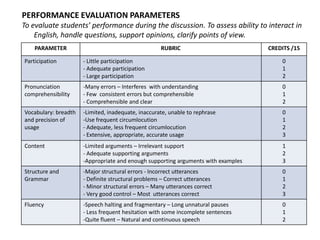
PERFORMANCE EVALUATION PARAMETERS
To evaluate students’ performance during the discussion. To assess ability to interact in
English, handle questions, support opinions, clarify points of view.
PARAMETER RUBRIC CREDITS /15
Participation - Little participation
- Adequate participation
- Large participation
0
1
2
Pronunciation
comprehensibility
-Many errors – Interferes with understanding
- Few consistent errors but comprehensible
- Comprehensible and clear
0
1
2
Vocabulary: breadth
and precision of
usage
-Limited, inadequate, inaccurate, unable to rephrase
-Use frequent circumlocution
- Adequate, less frequent circumlocution
- Extensive, appropriate, accurate usage
0
1
2
3
Content -Limited arguments – Irrelevant support
- Adequate supporting arguments
-Appropriate and enough supporting arguments with examples
1
2
3
Structure and
Grammar
-Major structural errors - Incorrect utterances
- Definite structural problems – Correct utterances
- Minor structural errors – Many utterances correct
- Very good control – Most utterances correct
0
1
2
3
Fluency -Speech halting and fragmentary – Long unnatural pauses
- Less frequent hesitation with some incomplete sentences
-Quite fluent – Natural and continuous speech
0
1
2
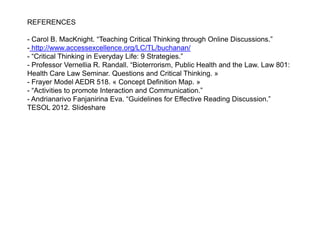
REFERENCES
- Carol B. MacKnight. “Teaching Critical Thinking through Online Discussions.”
- http://www.accessexcellence.org/LC/TL/buchanan/
- “Critical Thinking in Everyday Life: 9 Strategies.”
- Professor Vernellia R. Randall. “Bioterrorism, Public Health and the Law. Law 801:
Health Care Law Seminar. Questions and Critical Thinking. »
- Frayer Model AEDR 518. « Concept Definition Map. »
- “Activities to promote Interaction and Communication.”
- Andrianarivo Fanjanirina Eva. “Guidelines for Effective Reading Discussion.”
TESOL 2012. Slideshare

Practical strategies for critical thinking in communication

  • 1.
    PRACTICAL STRATEGIES FOR CRITICAL THINKING INCOMMUNICATION Eva Fanjanirina ANDRIANARIVO English Teaching Program (E.T.P.) Antananarivo Madagascar TESOL 2013 – Dallas, Texas
  • 2.
  • 3.
  • 4.
  • 5.
    Critical Thinking in Communication Raise multi- cultural understanding andawareness of global issues. Motivate students to be responsible for their learning and think deeply about the content. Stimulate intercultural communication. Use concrete examples ; Illustrate abstract concepts Cover content in such a way that students grasp and retain more and achieve academic success.
  • 6.
  • 7.
  • 8.
  • 9.
    DEVELOP VOCABULARY FRAYER MODEL AEDR518 Definition Examples Non-examples Facts/Characteristics WorksheetsWorks.com
  • 11.
  • 12.
  • 13.
  • 14.
    COMMUNICATE EFFECTIVELY • LANGUAGE FUNCTIONS •VOCABULARY and CONTENT • STRUCTURE and GRAMMAR
  • 15.
  • 16.
  • 17.
  • 18.
  • 19.
    Summarize: Who … Whathappened? When … Where … How much … How many … Summarize the passage in your own words. Unscramble the main events in the passage . List out the main facts in the passage. Fill in the blanks with appropriate words from the passage. Connect ideas from the passage using conjunctions / subordinators. How … Why … ? What caused … Justify. What are the impacts of …? What do you think could happen if …? Compare and Contrast facts from the passage to other realities (in your community / country) or personal experiences If … occurs then, what will happen? If you were …, what would you do? What could / would have happened if … had not + P.P.? What measures were taken to solve the problem of …? What measures do you think should have been taken? How would you approach the same problem? What are the advantages of … What are the good things about … What are the problems with … What are the disadvantages of … What are the worst thing about …? How do you feel about …? Is the solution effective or ineffective? What should have been done earlier? What are your points of view …? Do you agree or disagree? how do you know that someone is good (or bad) at sth? Remember Analyze Evaluate
  • 20.
    What does …mean? What does it imply? What made s/he decide to…? Why did s/he … ? What could have caused …? What could have happened earlier? What may happen next? Why did s/he said that …? What was meant when s/he said that …? If … occurred, what would happen? Use the key words to report about realities in another community / country Change the beginning of the passage. Change the ending of the passage. Change the cause / effects / solutions stated in the passage. Remove parts of the passage (beginning, turning point, ending, solution,…) and imagine what it could be. Draw conclusions. Infer Apply Create
  • 21.
  • 22.
    PERFORMANCE EVALUATION PARAMETERS Toevaluate students’ performance during the discussion. To assess ability to interact in English, handle questions, support opinions, clarify points of view. PARAMETER RUBRIC CREDITS /15 Participation - Little participation - Adequate participation - Large participation 0 1 2 Pronunciation comprehensibility -Many errors – Interferes with understanding - Few consistent errors but comprehensible - Comprehensible and clear 0 1 2 Vocabulary: breadth and precision of usage -Limited, inadequate, inaccurate, unable to rephrase -Use frequent circumlocution - Adequate, less frequent circumlocution - Extensive, appropriate, accurate usage 0 1 2 3 Content -Limited arguments – Irrelevant support - Adequate supporting arguments -Appropriate and enough supporting arguments with examples 1 2 3 Structure and Grammar -Major structural errors - Incorrect utterances - Definite structural problems – Correct utterances - Minor structural errors – Many utterances correct - Very good control – Most utterances correct 0 1 2 3 Fluency -Speech halting and fragmentary – Long unnatural pauses - Less frequent hesitation with some incomplete sentences -Quite fluent – Natural and continuous speech 0 1 2
  • 23.
    REFERENCES - Carol B.MacKnight. “Teaching Critical Thinking through Online Discussions.” - http://www.accessexcellence.org/LC/TL/buchanan/ - “Critical Thinking in Everyday Life: 9 Strategies.” - Professor Vernellia R. Randall. “Bioterrorism, Public Health and the Law. Law 801: Health Care Law Seminar. Questions and Critical Thinking. » - Frayer Model AEDR 518. « Concept Definition Map. » - “Activities to promote Interaction and Communication.” - Andrianarivo Fanjanirina Eva. “Guidelines for Effective Reading Discussion.” TESOL 2012. Slideshare