 Building a successful Marketing Mix: the
importance of managing a brand through the
key variables that make up the mix: Product,
Price, Promotion and Place
 The need for an integrated Marketing Mix
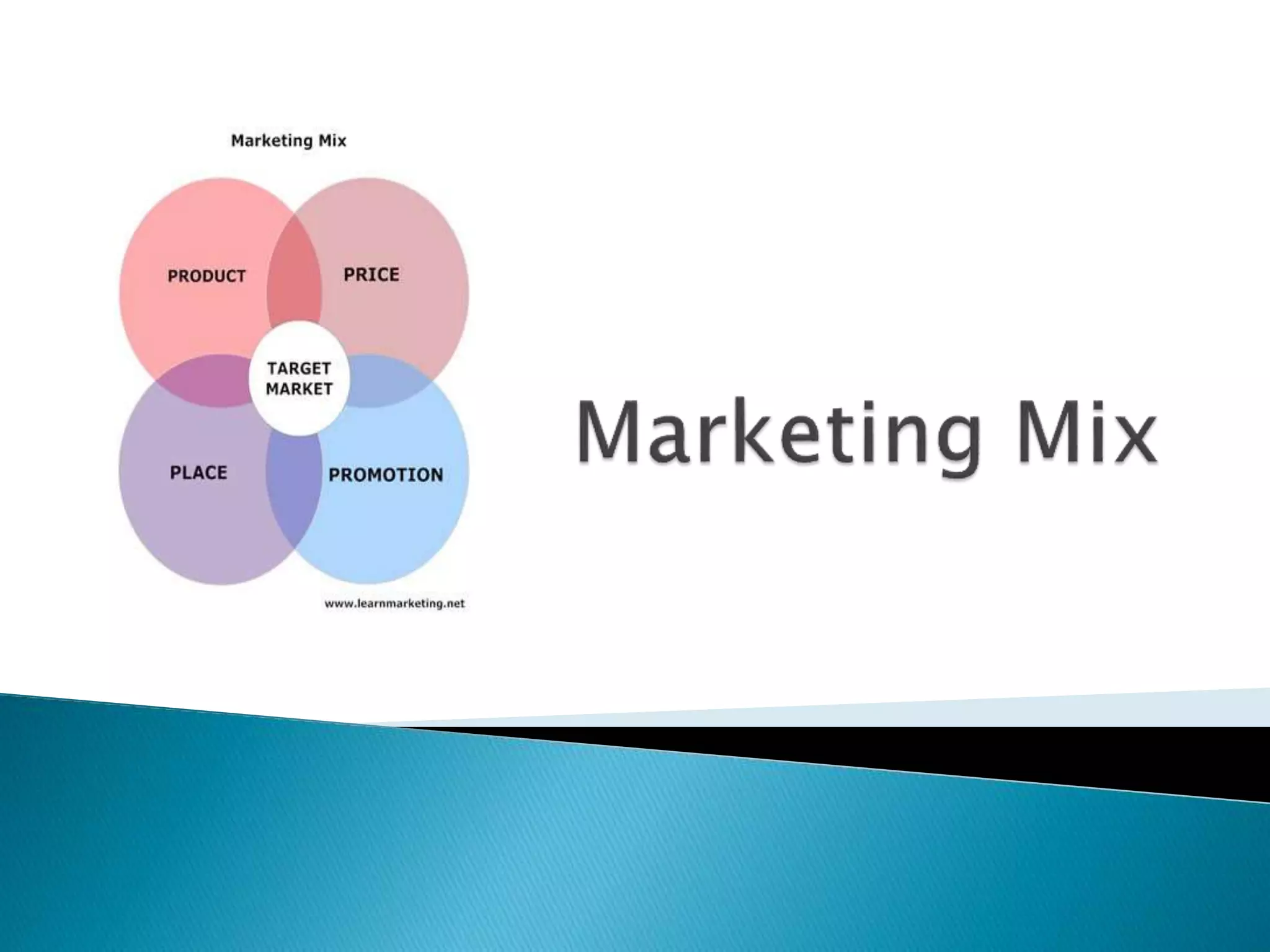
 To effectively market a product or service
there are four things you need to get right:
Product, Price, Place and Promotion.
These four elements are known as the
marketing mix or the 4Ps. The four elements
should be viewed as one unit and structured
to support each other; Otherwise a firm's
marketing strategy will be confusing and
uncoordinated.
 A New Look at the 4Ps of Marketing
 Product: designed to meet a market need or
want
 Well-run firms try hard to keep in close touch
with their customers to find out what they
want.
 The Sun: The first newspaper to realise that people prefer
news that is fun rather than serious
 Primark: Realising the opportunity for up-to-date but
affordable fashion.
 Cadbury Crème Egg: Luxury Easter item
 Who is the product aimed at ?
 What benefit will customers expect
from it ?
 What will be its advantage over
competitor products? Or its unique
selling point?
 How does the firm plan to position the
product within the market?
 Price: factors influencing price-setting to include:
competition, differentiation, target image and
production cost.
◦ Price makers – Strong brand name and a good produce,
they can set their own price.
◦ Price takers – The producer is a follower. They follow the
lead price.
Strong brands are price leaders; weaker brands are price
takers.
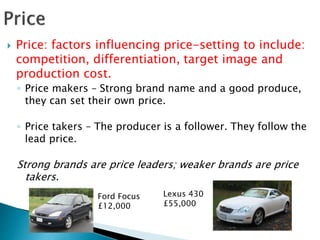
Ford Focus
£12,000
Lexus 430
£55,000
 Promotion, including advertising and sales
promotion; understanding the time-scales,
eg BOGOF is v short-term
 Top 10 Marketing Failures: Coke, Ford,
Netflix
 Place; the difficulties of achieving retail
distribution; the role of the internet
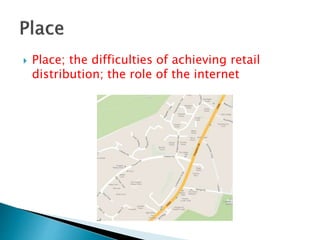
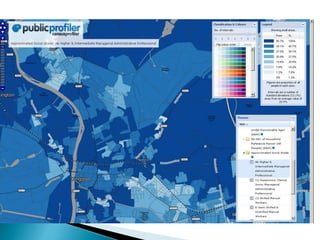
 Print a map from google maps of where you live.
One the same map zoom out as far as you need to
include the closest shops/businesses . Highlight
where you live and where the shops are.
 Describe the area you live in:
◦ House size
◦ Reputation of local schools
◦ Proximity to open spaces, e.g. parks
 Describe the shops/business you have found on
your map.
 Do they have anything in common?
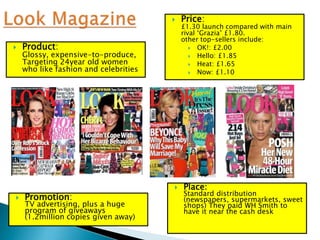
 Product:
Glossy, expensive-to-produce,
Targeting 24year old women
who like fashion and celebrities
 Price:
£1.30 launch compared with main
rival ‘Grazia’ £1.80.
other top-sellers include:
 OK!: £2.00
 Hello: £1.85
 Heat: £1.65
 Now: £1.10
 Promotion:
TV advertising, plus a huge
program of giveaways
(1.2million copies given away)
 Place:
Standard distribution
(newspapers, supermarkets, sweet
shops) They paid WH Smith to
have it near the cash desk
 A-Z GCSE Worksheets:
Building the Marketing Mix
 EXTENSION QUESTIONS:
 Apple’s Cash Machine
 The Heelys Craze
 Flatpack Tractors
 Naked Pizza
6   marketing mix

6 marketing mix

  • 2.
     Building asuccessful Marketing Mix: the importance of managing a brand through the key variables that make up the mix: Product, Price, Promotion and Place  The need for an integrated Marketing Mix
  • 3.
     To effectivelymarket a product or service there are four things you need to get right: Product, Price, Place and Promotion. These four elements are known as the marketing mix or the 4Ps. The four elements should be viewed as one unit and structured to support each other; Otherwise a firm's marketing strategy will be confusing and uncoordinated.  A New Look at the 4Ps of Marketing
  • 4.
     Product: designedto meet a market need or want  Well-run firms try hard to keep in close touch with their customers to find out what they want.  The Sun: The first newspaper to realise that people prefer news that is fun rather than serious  Primark: Realising the opportunity for up-to-date but affordable fashion.  Cadbury Crème Egg: Luxury Easter item
  • 5.
     Who isthe product aimed at ?  What benefit will customers expect from it ?  What will be its advantage over competitor products? Or its unique selling point?  How does the firm plan to position the product within the market?
  • 6.
     Price: factorsinfluencing price-setting to include: competition, differentiation, target image and production cost. ◦ Price makers – Strong brand name and a good produce, they can set their own price. ◦ Price takers – The producer is a follower. They follow the lead price. Strong brands are price leaders; weaker brands are price takers. Ford Focus £12,000 Lexus 430 £55,000
  • 7.
     Promotion, includingadvertising and sales promotion; understanding the time-scales, eg BOGOF is v short-term  Top 10 Marketing Failures: Coke, Ford, Netflix
  • 8.
     Place; thedifficulties of achieving retail distribution; the role of the internet
  • 10.
     Print amap from google maps of where you live. One the same map zoom out as far as you need to include the closest shops/businesses . Highlight where you live and where the shops are.  Describe the area you live in: ◦ House size ◦ Reputation of local schools ◦ Proximity to open spaces, e.g. parks  Describe the shops/business you have found on your map.  Do they have anything in common?
  • 11.
     Product: Glossy, expensive-to-produce, Targeting24year old women who like fashion and celebrities  Price: £1.30 launch compared with main rival ‘Grazia’ £1.80. other top-sellers include:  OK!: £2.00  Hello: £1.85  Heat: £1.65  Now: £1.10  Promotion: TV advertising, plus a huge program of giveaways (1.2million copies given away)  Place: Standard distribution (newspapers, supermarkets, sweet shops) They paid WH Smith to have it near the cash desk
  • 12.
     A-Z GCSEWorksheets: Building the Marketing Mix  EXTENSION QUESTIONS:  Apple’s Cash Machine  The Heelys Craze  Flatpack Tractors  Naked Pizza