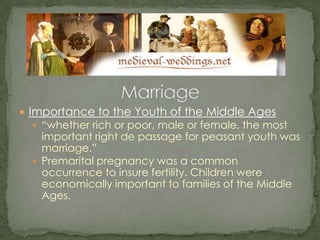
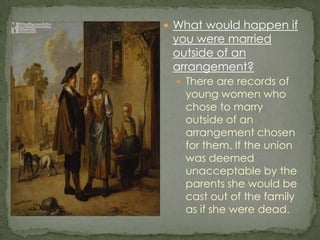
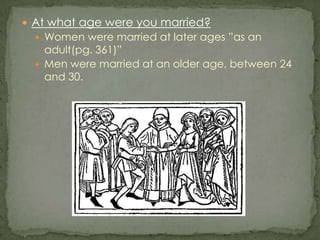
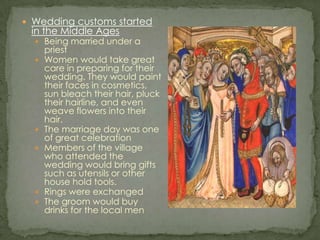
1) Marriage was very important in the Middle Ages, though often arranged by parents for economic and property reasons rather than love. Premarital pregnancy was common to prove fertility.
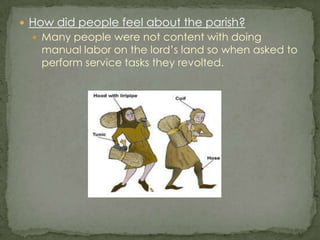
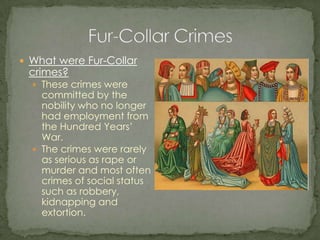
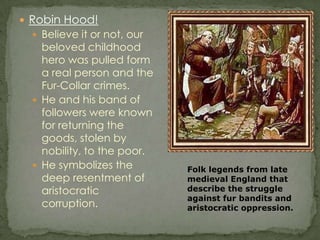
2) Life in villages was difficult, with many rebelling against manual labor demands. Crimes by the nobility, known as "fur-collar crimes", increased as employment after wars ended.
3) Different ethnic groups followed their own traditional laws when moving to new areas, though some laws like the Statute of Kilkenny in Ireland prohibited intermarriage to maintain ethnic purity. Race was based on social constructs of language and customs rather than biology.