TECHNICAL SEMINAR


                      By
btechkaboss
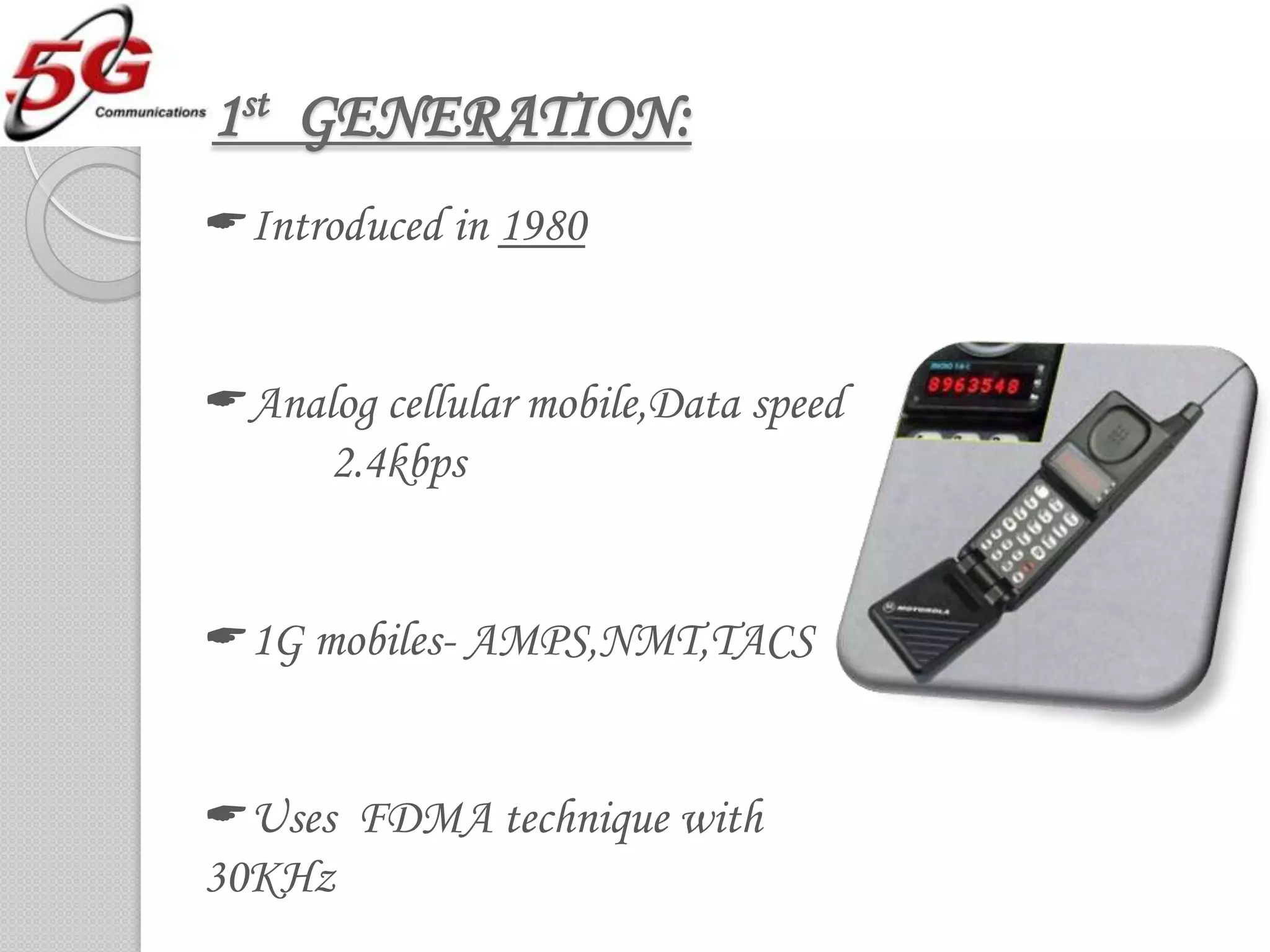
1st GENERATION:
Introduced in 1980


Analog cellular mobile,Data speed
     2.4kbps


1G mobiles- AMPS,NMT,TACS


Uses FDMA technique with
30KHz
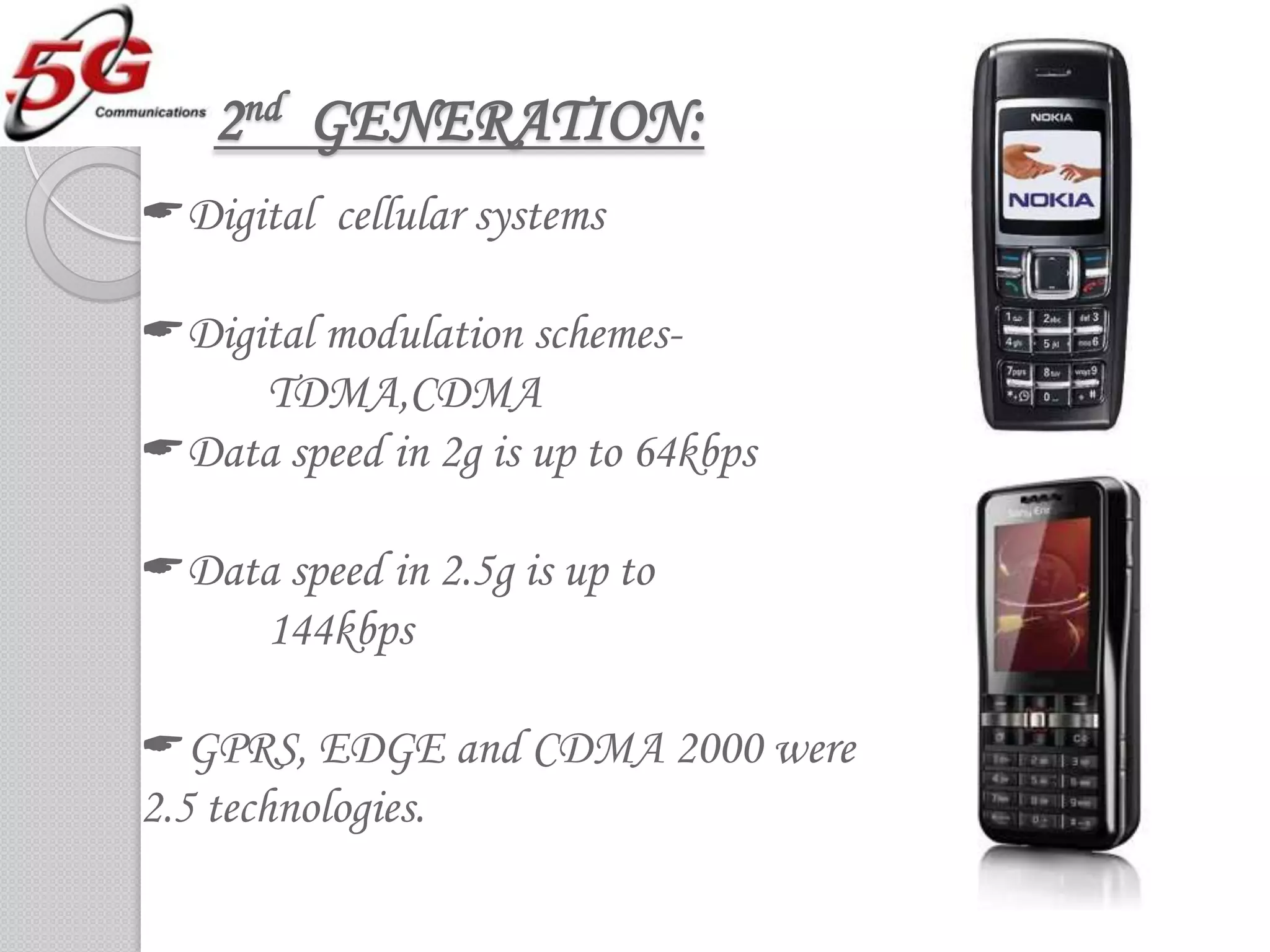
2nd GENERATION:
Digital cellular systems

Digital modulation schemes-
     TDMA,CDMA
Data speed in 2g is up to 64kbps

Data speed in 2.5g is up to
    144kbps

GPRS, EDGE and CDMA 2000 were
2.5 technologies.
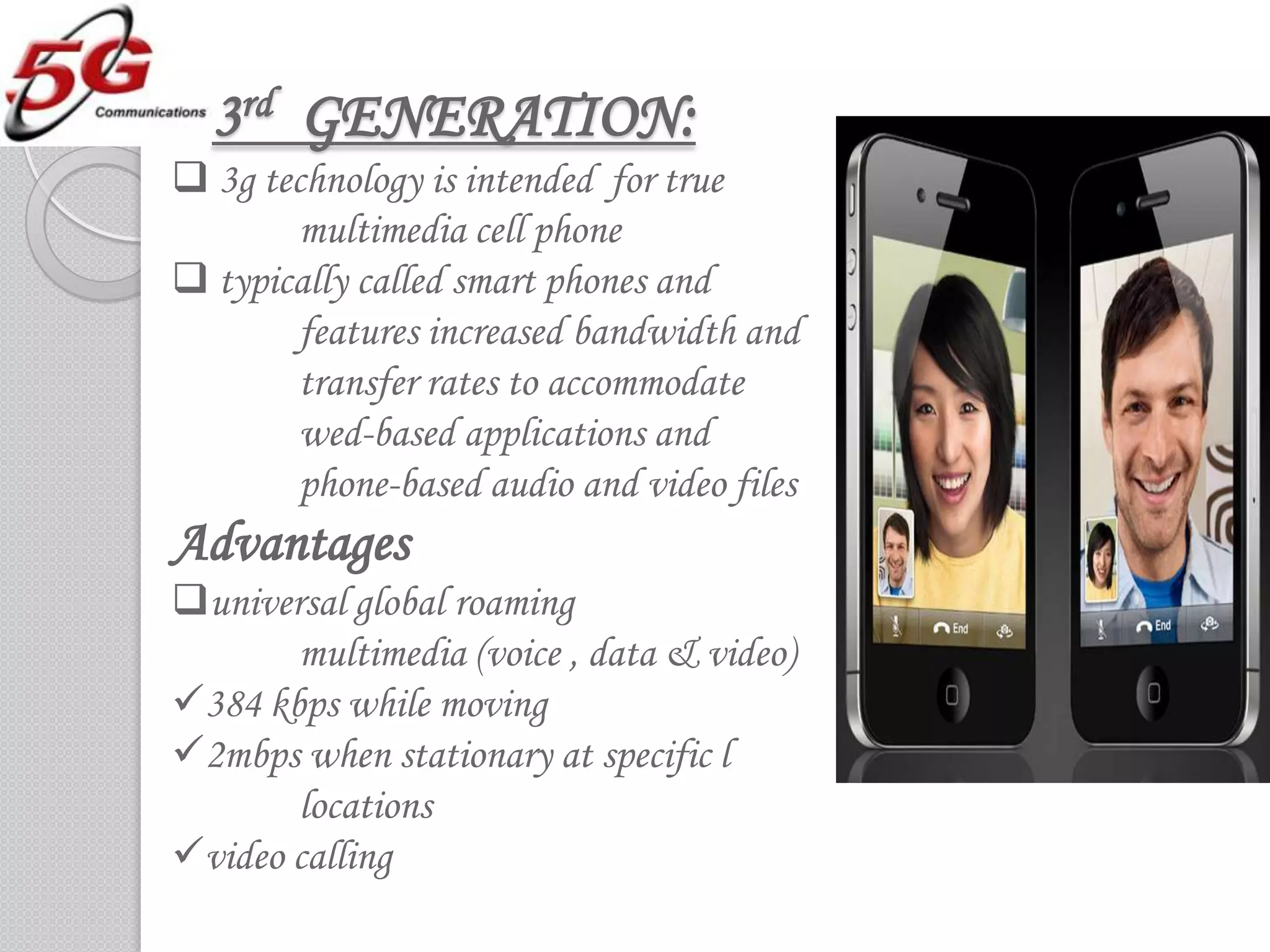
3rd GENERATION:
 3g technology is intended for true
        multimedia cell phone
 typically called smart phones and
        features increased bandwidth and
        transfer rates to accommodate
        wed-based applications and
        phone-based audio and video files
Advantages
universal global roaming
       multimedia (voice , data & video)
384 kbps while moving
2mbps when stationary at specific l
       locations
video calling
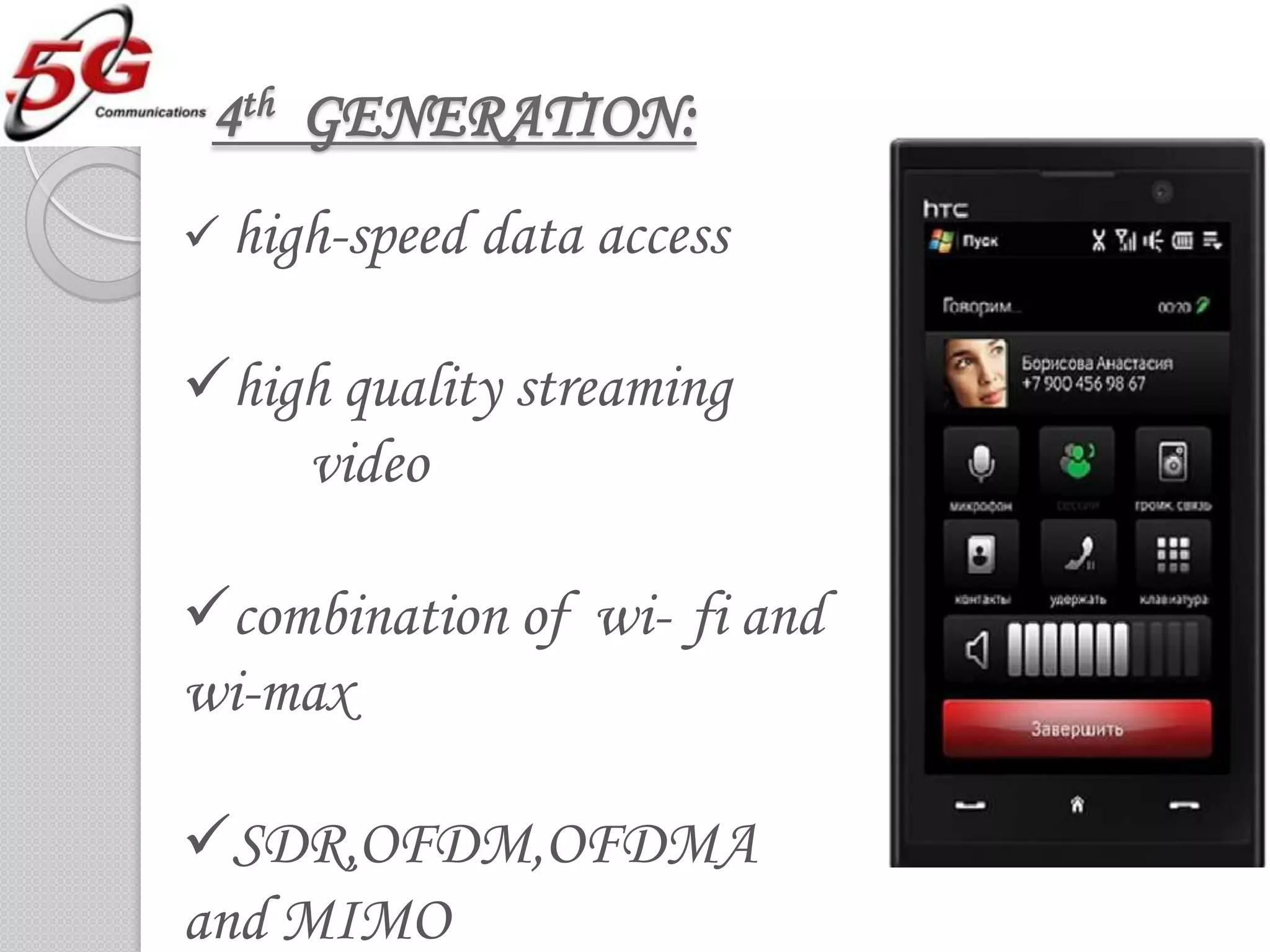
4th GENERATION:
 high-speed data access


high quality streaming
    video

combination of wi- fi and
wi-max

SDR,OFDM,OFDMA
and MIMO
WHAT IS 5G???
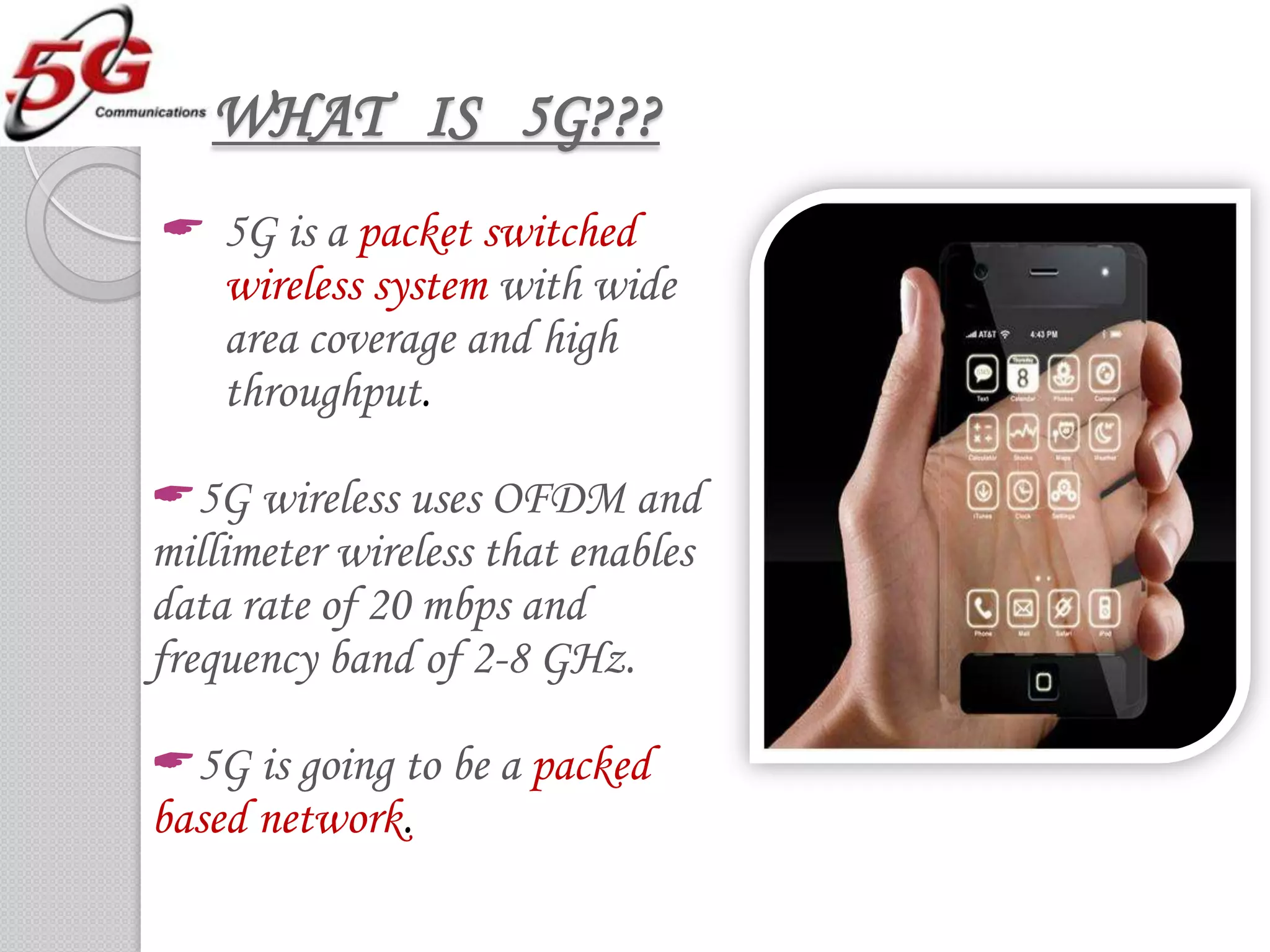
 5G is a packet switched
  wireless system with wide
  area coverage and high
  throughput.

5G wireless uses OFDM and
millimeter wireless that enables
data rate of 20 mbps and
frequency band of 2-8 GHz.

5G is going to be a packed
based network.
OBJETIVES OF 5G:
   5G being developed to accommodate QoS rate requirements
    set by further development of existing 4G applications.

   Flexible channel bandwidth between 5 and 20MHz,
    optionally up to 40MHz.

   Data rate of at list 1Gb/s between any two points in the
    world.

   Increase system spectral efficiency of up to 3bit/s/Hz/cell
    in the downlink and 2.25bit/s/Hz/cell for indoor usage.
STANDARD WIRELESS 5G:
 WiMAX formed to provide conformance and interoperability of
  the IEEE 802.16 standard. It aims to provide wireless data over
  long distance from point-to-point link to cellular mobile type
  access.

    WiBRO a part of IEEE 802.16e in process to provide
    collaborative and generic mobile WiMAX.

    3GPP LTE a project aims to improve the mobile phone
    standard to cope with future requirements.

    5GPP 2 UMB a project to improve the CDMA2000 mobile
    phone standard for next generation applications.
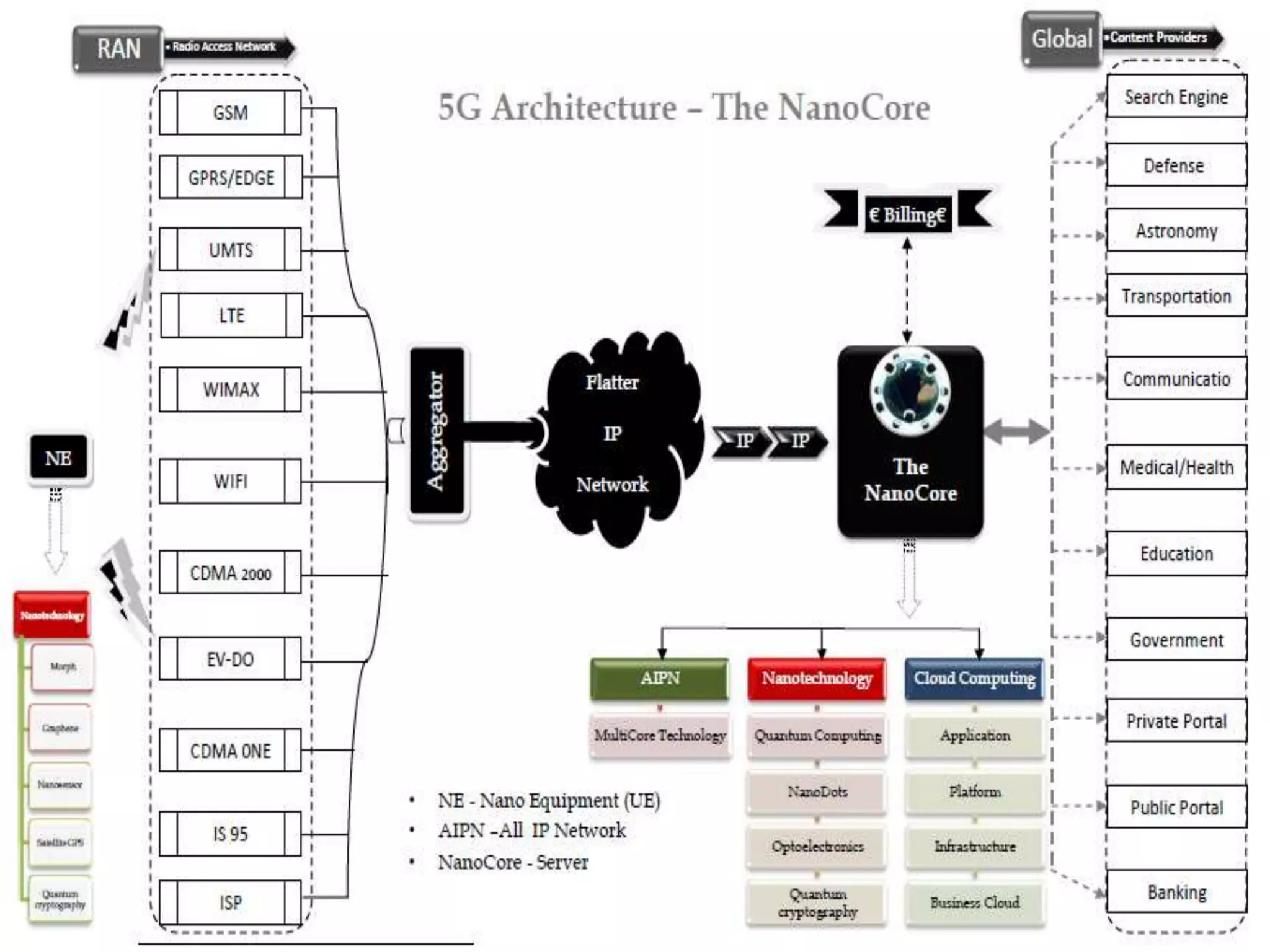
5G NETWORK REFRENCE MODEL:
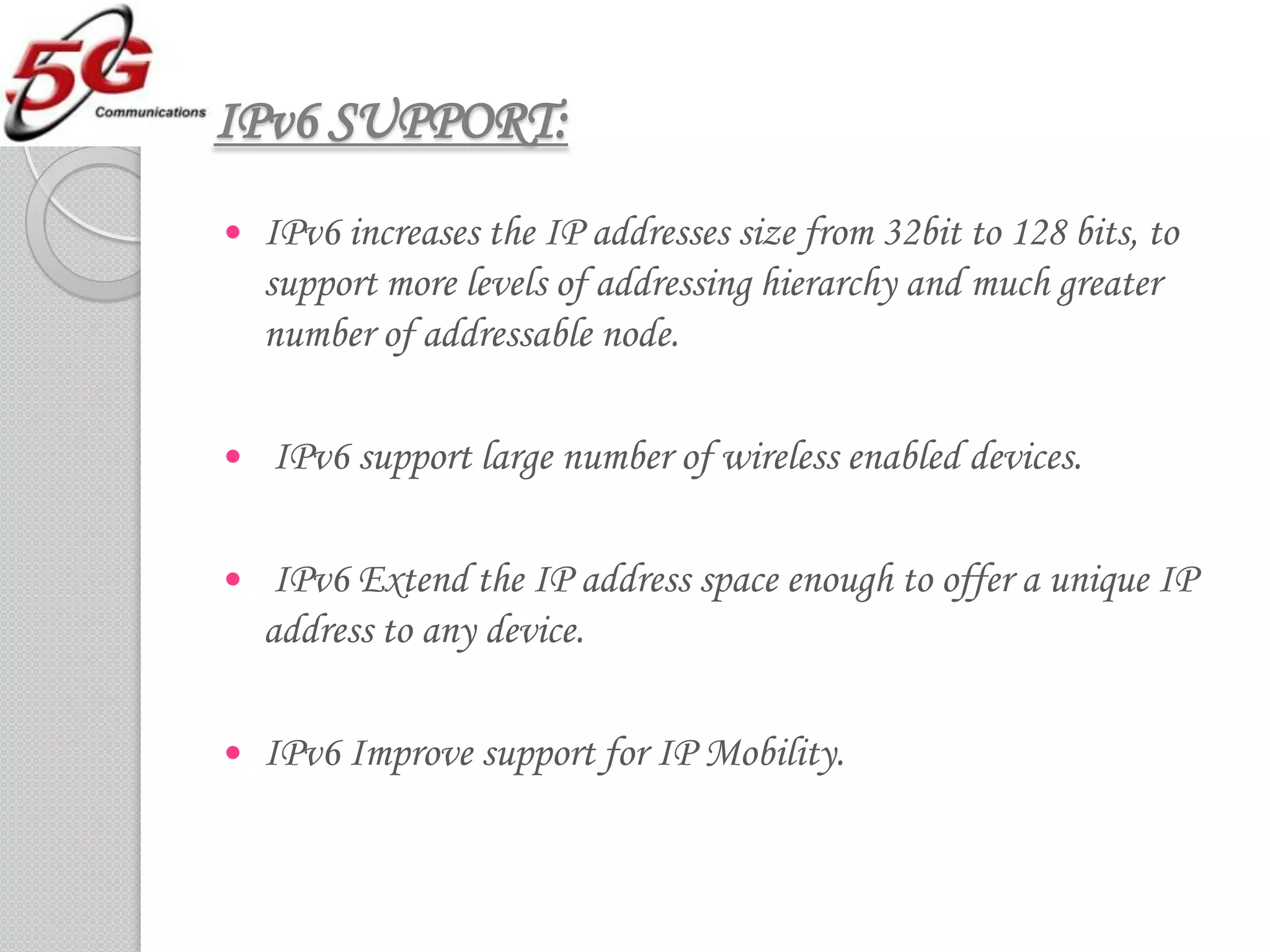
IPv6 SUPPORT:
   IPv6 increases the IP addresses size from 32bit to 128 bits, to
    support more levels of addressing hierarchy and much greater
    number of addressable node.

   IPv6 support large number of wireless enabled devices.

    IPv6 Extend the IP address space enough to offer a unique IP
    address to any device.

   IPv6 Improve support for IP Mobility.
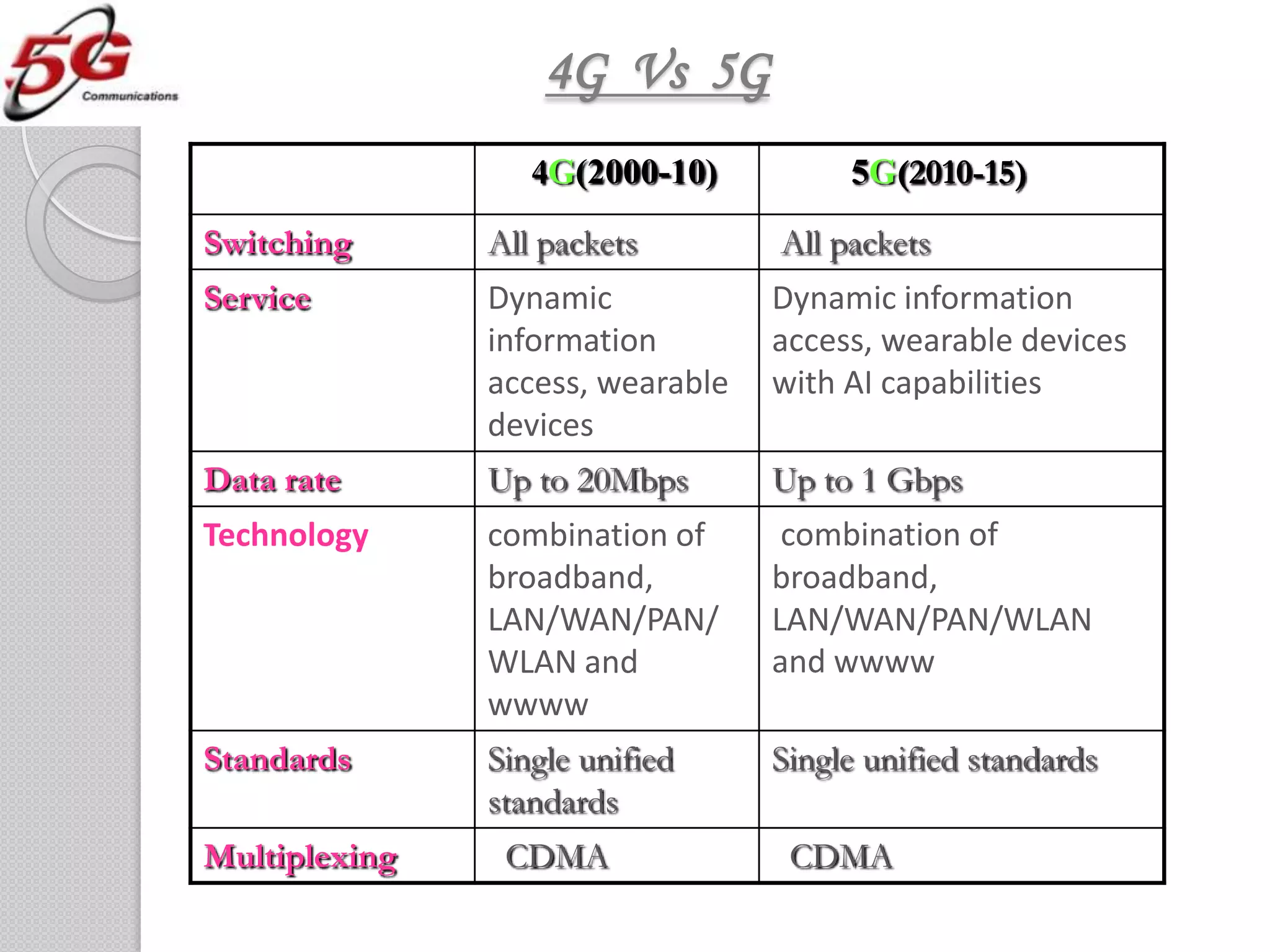
4G Vs 5G
                  4G(2000-10)          5G(2010-15)
Switching      All packets        All packets
Service        Dynamic            Dynamic information
               information        access, wearable devices
               access, wearable   with AI capabilities
               devices
Data rate      Up to 20Mbps       Up to 1 Gbps
Technology     combination of      combination of
               broadband,         broadband,
               LAN/WAN/PAN/       LAN/WAN/PAN/WLAN
               WLAN and           and wwww
               wwww
Standards      Single unified     Single unified standards
               standards
Multiplexing    CDMA               CDMA
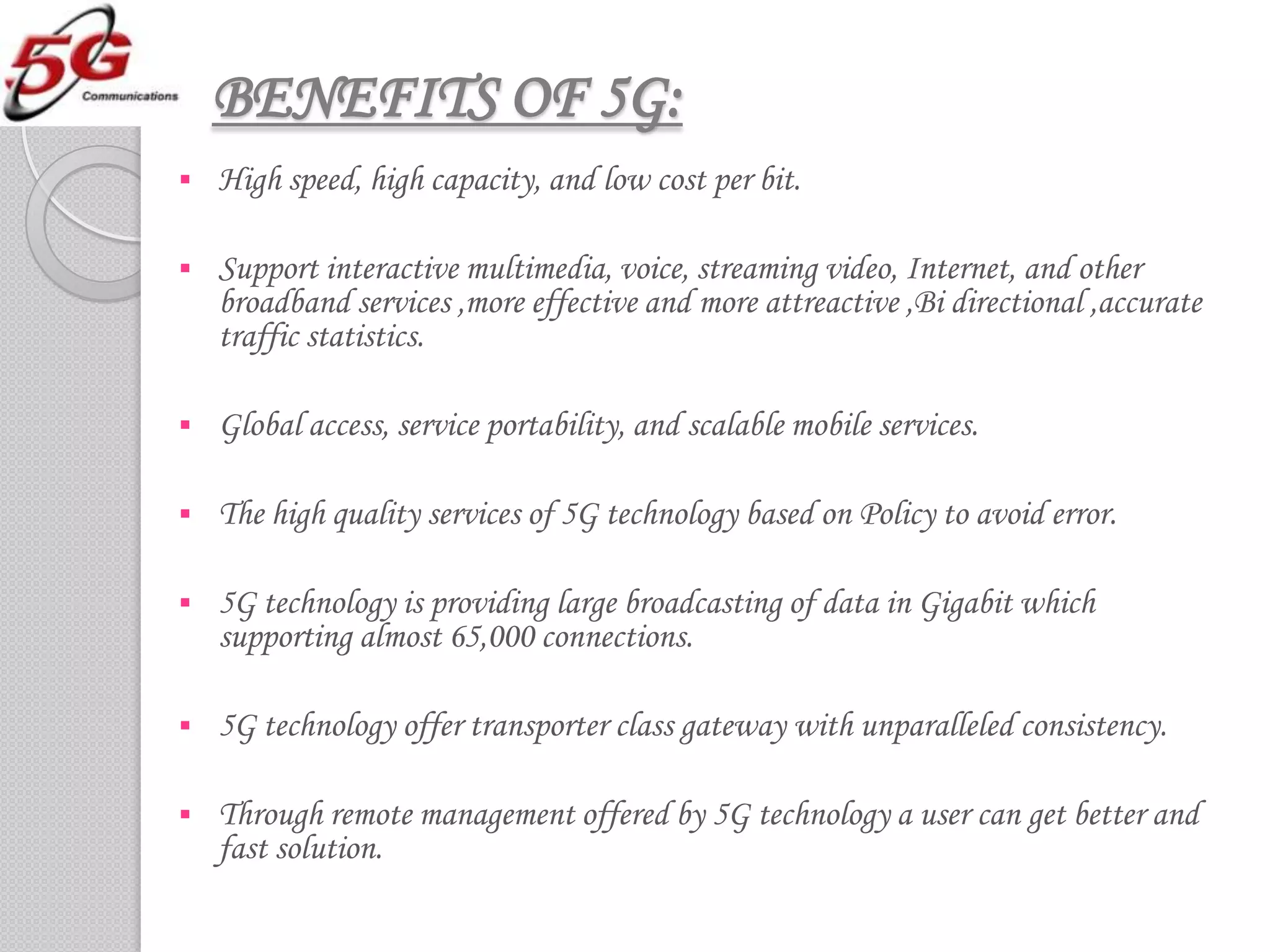
BENEFITS OF 5G:
   High speed, high capacity, and low cost per bit.

   Support interactive multimedia, voice, streaming video, Internet, and other
    broadband services ,more effective and more attreactive ,Bi directional ,accurate
    traffic statistics.

   Global access, service portability, and scalable mobile services.

   The high quality services of 5G technology based on Policy to avoid error.

   5G technology is providing large broadcasting of data in Gigabit which
    supporting almost 65,000 connections.

   5G technology offer transporter class gateway with unparalleled consistency.

   Through remote management offered by 5G technology a user can get better and
    fast solution.
CONCLUSION:
   Migration to 5G networks ensures convergence of networks,
    technologies, applications and services.

   5G can serve as a flexible platform.

   Wireless carriers have an opportunity to shorten Investment
    return, improve operating efficiency and increase revenues.

   5G - a promising Generation of wireless communication that will
    change people’s lives.
5g technology ppt by btechkaboss

5g technology ppt by btechkaboss

  • 1.
    TECHNICAL SEMINAR By btechkaboss
  • 2.
    1st GENERATION: Introduced in1980 Analog cellular mobile,Data speed 2.4kbps 1G mobiles- AMPS,NMT,TACS Uses FDMA technique with 30KHz
  • 3.
    2nd GENERATION: Digital cellularsystems Digital modulation schemes- TDMA,CDMA Data speed in 2g is up to 64kbps Data speed in 2.5g is up to 144kbps GPRS, EDGE and CDMA 2000 were 2.5 technologies.
  • 4.
    3rd GENERATION:  3gtechnology is intended for true multimedia cell phone  typically called smart phones and features increased bandwidth and transfer rates to accommodate wed-based applications and phone-based audio and video files Advantages universal global roaming multimedia (voice , data & video) 384 kbps while moving 2mbps when stationary at specific l locations video calling
  • 5.
    4th GENERATION:  high-speeddata access high quality streaming video combination of wi- fi and wi-max SDR,OFDM,OFDMA and MIMO
  • 6.
    WHAT IS 5G??? 5G is a packet switched wireless system with wide area coverage and high throughput. 5G wireless uses OFDM and millimeter wireless that enables data rate of 20 mbps and frequency band of 2-8 GHz. 5G is going to be a packed based network.
  • 7.
    OBJETIVES OF 5G:  5G being developed to accommodate QoS rate requirements set by further development of existing 4G applications.  Flexible channel bandwidth between 5 and 20MHz, optionally up to 40MHz.  Data rate of at list 1Gb/s between any two points in the world.  Increase system spectral efficiency of up to 3bit/s/Hz/cell in the downlink and 2.25bit/s/Hz/cell for indoor usage.
  • 8.
    STANDARD WIRELESS 5G: WiMAX formed to provide conformance and interoperability of the IEEE 802.16 standard. It aims to provide wireless data over long distance from point-to-point link to cellular mobile type access.  WiBRO a part of IEEE 802.16e in process to provide collaborative and generic mobile WiMAX.  3GPP LTE a project aims to improve the mobile phone standard to cope with future requirements.  5GPP 2 UMB a project to improve the CDMA2000 mobile phone standard for next generation applications.
  • 9.
  • 10.
    IPv6 SUPPORT:  IPv6 increases the IP addresses size from 32bit to 128 bits, to support more levels of addressing hierarchy and much greater number of addressable node.  IPv6 support large number of wireless enabled devices.  IPv6 Extend the IP address space enough to offer a unique IP address to any device.  IPv6 Improve support for IP Mobility.
  • 11.
    4G Vs 5G 4G(2000-10) 5G(2010-15) Switching All packets All packets Service Dynamic Dynamic information information access, wearable devices access, wearable with AI capabilities devices Data rate Up to 20Mbps Up to 1 Gbps Technology combination of combination of broadband, broadband, LAN/WAN/PAN/ LAN/WAN/PAN/WLAN WLAN and and wwww wwww Standards Single unified Single unified standards standards Multiplexing CDMA CDMA
  • 12.
    BENEFITS OF 5G:  High speed, high capacity, and low cost per bit.  Support interactive multimedia, voice, streaming video, Internet, and other broadband services ,more effective and more attreactive ,Bi directional ,accurate traffic statistics.  Global access, service portability, and scalable mobile services.  The high quality services of 5G technology based on Policy to avoid error.  5G technology is providing large broadcasting of data in Gigabit which supporting almost 65,000 connections.  5G technology offer transporter class gateway with unparalleled consistency.  Through remote management offered by 5G technology a user can get better and fast solution.
  • 13.
    CONCLUSION:  Migration to 5G networks ensures convergence of networks, technologies, applications and services.  5G can serve as a flexible platform.  Wireless carriers have an opportunity to shorten Investment return, improve operating efficiency and increase revenues.  5G - a promising Generation of wireless communication that will change people’s lives.