5G WIRELESS TechnologyPresented By  Sushil Sudake
OVERVIEWINTRODUCTION TO WIRELESS COMMUNICATIONEVOLUTION FROM 1G TO 4G SYSTEM5-G WIRELESS SYSTEMFUNCTIONAL ARCHITECTURE FOR 5G MOBILE NETWORKSThe 4A ParadigmFeatures of 5G technology5G  APPLICATION
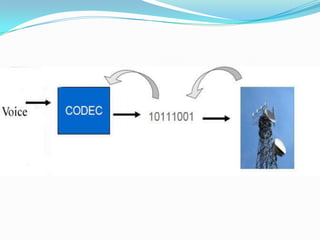
INTRODUCTION TO WIRELESS COMMUNICATIONOur ultimate goal is to communicate with any type of information with anyone, at anytime, from anywhere. This is possible with the aid ofWIRELESS TECHNOLOGY
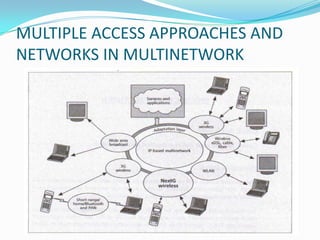
MULTIPLE ACCESS APPROACHES AND NETWORKS IN MULTINETWORK
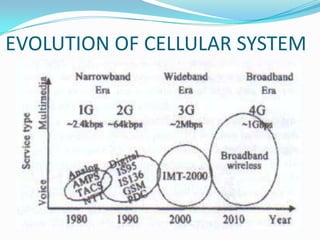
EVOLUTION OF CELLULAR SYSTEM
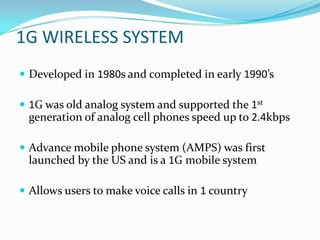
1G WIRELESS SYSTEMDeveloped in 1980s and completed in early 1990’s1G was old analog system and supported the 1st generation of analog cell phones speed up to 2.4kbpsAdvance mobile phone system (AMPS) was first launched by the US and is a 1G mobile system Allows users to make voice calls in 1 country
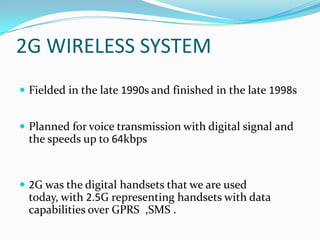
2G WIRELESS SYSTEMFielded in the late 1990s and finished in the late 1998s Planned for voice transmission with digital signal and the speeds up to 64kbps2G was the digital handsets that we are used today, with 2.5G representing handsets with data capabilities over GPRS  ,SMS .
3G WIRELESS SYSTEMDeveloped in 2002 with Large capacity and broadband capabilities Allows the transmission of 384kbps for mobile systems and up to 2MbpsIncreased spectrum efficiency –5MhzIn 2005, 3G is ready to live up to its performance in computer networking (WCDMA, WLAN and Bluetooth) and mobile devices area (cell phone and GPS)
4G WIRELESS SYSTEMDeveloped in  2010 .It offer both cellular and broadband multimedia services everywhereFaster  and more reliable Multi-standard wireless system100 Mb/s Used instead of CDMALower cost than previous generations
Problems in 4GSMS - very low rate, highly delay-tolerant &  requires more reliability than voiceE-mail - very low rate, highly delay-tolerant &  requires more reliability.The potentially high level of traffic variation   (non-uniformity) across the area of network’s coverage. The fluctuations in traffic demand (both in space  and time) will be at unprecedented levels in future networks, which will result in tremendous stress to wireless operators.
5G WIRELESS SYSTEM5G is next major phase of mobile telecommunications standards beyond the 4G10 times more capacity  and broadband capabilities than other Expected speed 1GB/S More Faster  and more reliable than 4GMobile Multimedia Communication
Anywhere, Anytime with AnyoneGlobal Mobility SupportIntegrated Wireless SolutionCustomized Personal ServiceMulti-standard wireless systemLower cost than previous generations
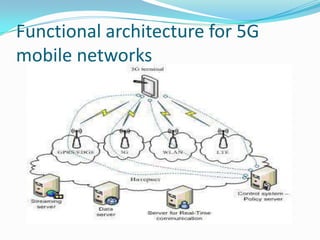
Functional architecture for 5G mobile networks
The 4A Paradigm5-G wireless technology is fulfill for  “4A PARADIGM”4A  paradigm:- “ Any rate, Anytime, Anywhere,                                                 Affordable ”.
Features of 5G technologyBi-directional  large bandwidth.Large broadcasting.Less  traffic.25 Mbps connectivity speed.Connectivity  just  about  the world.Uploading  and downloading speed of 5G technology touching the peak.(up to 1GBPS).Better  and  fast solution.Based on Policy to avoid error.Support virtual private network.More attractive and effective.
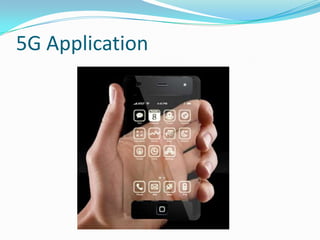
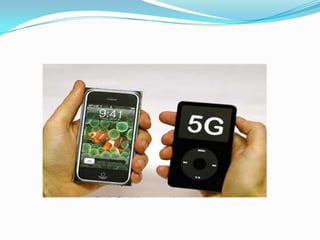
5G Application
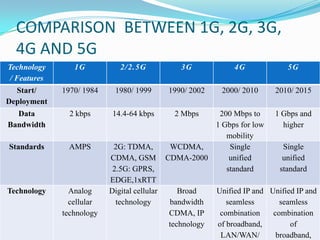
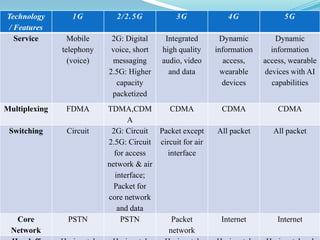
COMPARISON  BETWEEN 1G, 2G, 3G, 4G AND 5G
          Thank you…………

5 g –wireless technology

  • 1.
  • 2.
    OVERVIEWINTRODUCTION TO WIRELESSCOMMUNICATIONEVOLUTION FROM 1G TO 4G SYSTEM5-G WIRELESS SYSTEMFUNCTIONAL ARCHITECTURE FOR 5G MOBILE NETWORKSThe 4A ParadigmFeatures of 5G technology5G APPLICATION
  • 3.
    INTRODUCTION TO WIRELESSCOMMUNICATIONOur ultimate goal is to communicate with any type of information with anyone, at anytime, from anywhere. This is possible with the aid ofWIRELESS TECHNOLOGY
  • 4.
    MULTIPLE ACCESS APPROACHESAND NETWORKS IN MULTINETWORK
  • 5.
  • 6.
    1G WIRELESS SYSTEMDevelopedin 1980s and completed in early 1990’s1G was old analog system and supported the 1st generation of analog cell phones speed up to 2.4kbpsAdvance mobile phone system (AMPS) was first launched by the US and is a 1G mobile system Allows users to make voice calls in 1 country
  • 7.
    2G WIRELESS SYSTEMFieldedin the late 1990s and finished in the late 1998s Planned for voice transmission with digital signal and the speeds up to 64kbps2G was the digital handsets that we are used today, with 2.5G representing handsets with data capabilities over GPRS ,SMS .
  • 9.
    3G WIRELESS SYSTEMDevelopedin 2002 with Large capacity and broadband capabilities Allows the transmission of 384kbps for mobile systems and up to 2MbpsIncreased spectrum efficiency –5MhzIn 2005, 3G is ready to live up to its performance in computer networking (WCDMA, WLAN and Bluetooth) and mobile devices area (cell phone and GPS)
  • 10.
    4G WIRELESS SYSTEMDevelopedin 2010 .It offer both cellular and broadband multimedia services everywhereFaster and more reliable Multi-standard wireless system100 Mb/s Used instead of CDMALower cost than previous generations
  • 11.
    Problems in 4GSMS- very low rate, highly delay-tolerant & requires more reliability than voiceE-mail - very low rate, highly delay-tolerant & requires more reliability.The potentially high level of traffic variation (non-uniformity) across the area of network’s coverage. The fluctuations in traffic demand (both in space and time) will be at unprecedented levels in future networks, which will result in tremendous stress to wireless operators.
  • 12.
    5G WIRELESS SYSTEM5Gis next major phase of mobile telecommunications standards beyond the 4G10 times more capacity and broadband capabilities than other Expected speed 1GB/S More Faster and more reliable than 4GMobile Multimedia Communication
  • 13.
    Anywhere, Anytime withAnyoneGlobal Mobility SupportIntegrated Wireless SolutionCustomized Personal ServiceMulti-standard wireless systemLower cost than previous generations
  • 14.
    Functional architecture for5G mobile networks
  • 15.
    The 4A Paradigm5-Gwireless technology is fulfill for “4A PARADIGM”4A paradigm:- “ Any rate, Anytime, Anywhere, Affordable ”.
  • 16.
    Features of 5GtechnologyBi-directional large bandwidth.Large broadcasting.Less traffic.25 Mbps connectivity speed.Connectivity just about the world.Uploading and downloading speed of 5G technology touching the peak.(up to 1GBPS).Better and fast solution.Based on Policy to avoid error.Support virtual private network.More attractive and effective.
  • 17.
  • 19.
    COMPARISON BETWEEN1G, 2G, 3G, 4G AND 5G
  • 21.
    Thank you…………