5 Steps to High Quality
Software
Tutorials
Linda Schwaber-Cohen, Skilljar
Originally presented at FocusOn Learning
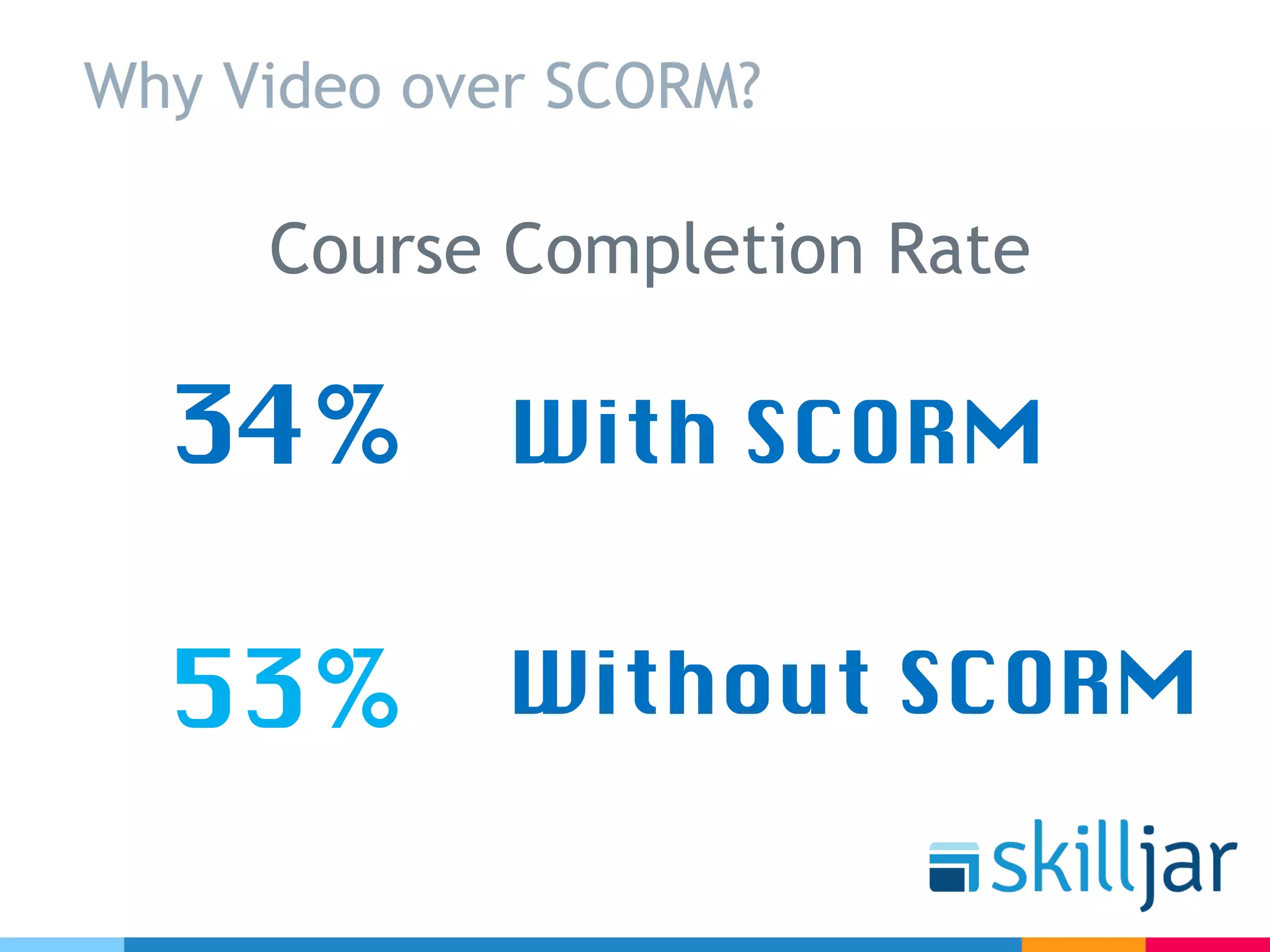
Why Video over SCORM?
34%
53%
Course Completion Rate
With SCORM
Without SCORM
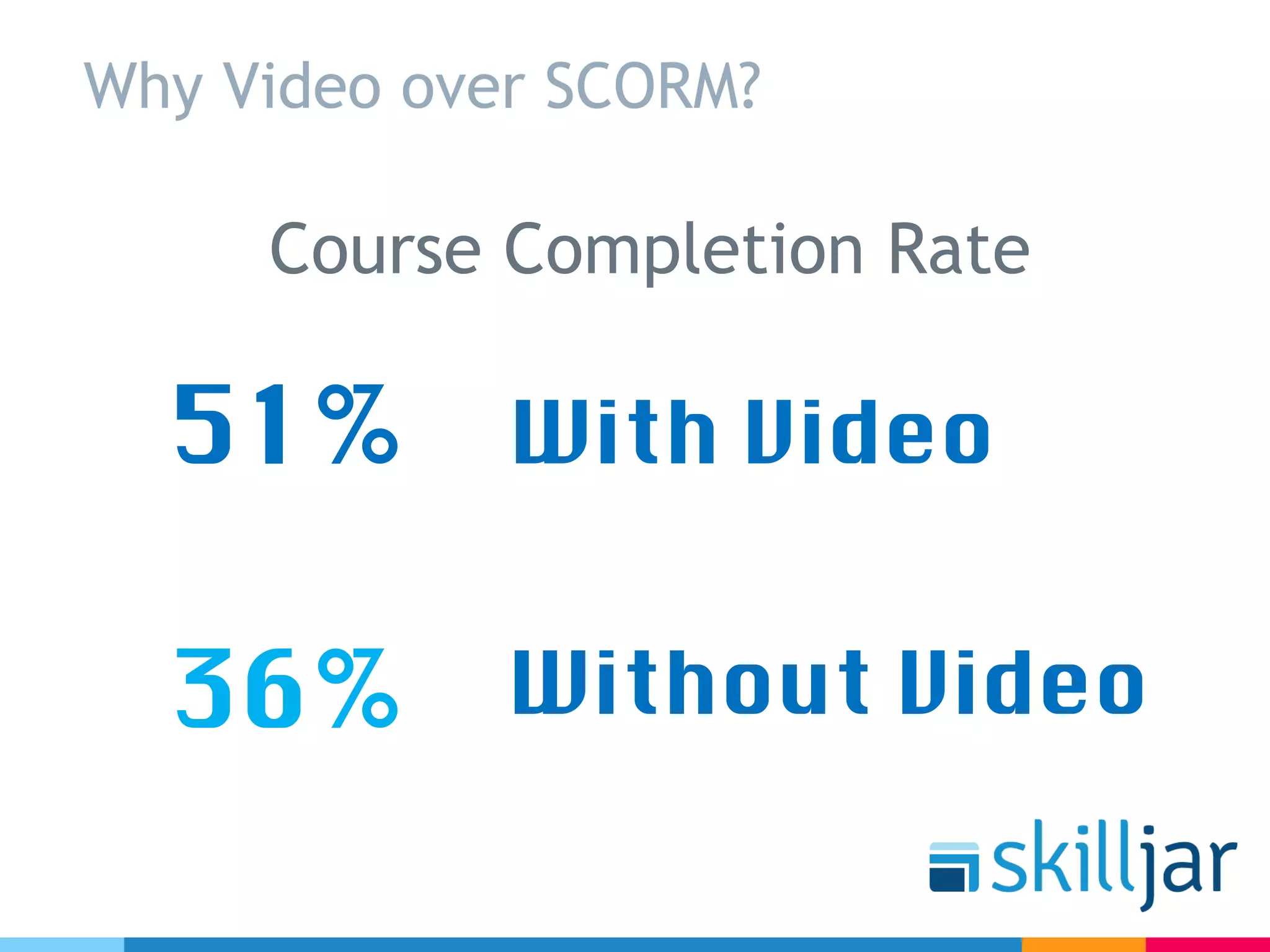
Why Video over SCORM?
51%
36%
Course Completion Rate
With Video
Without Video
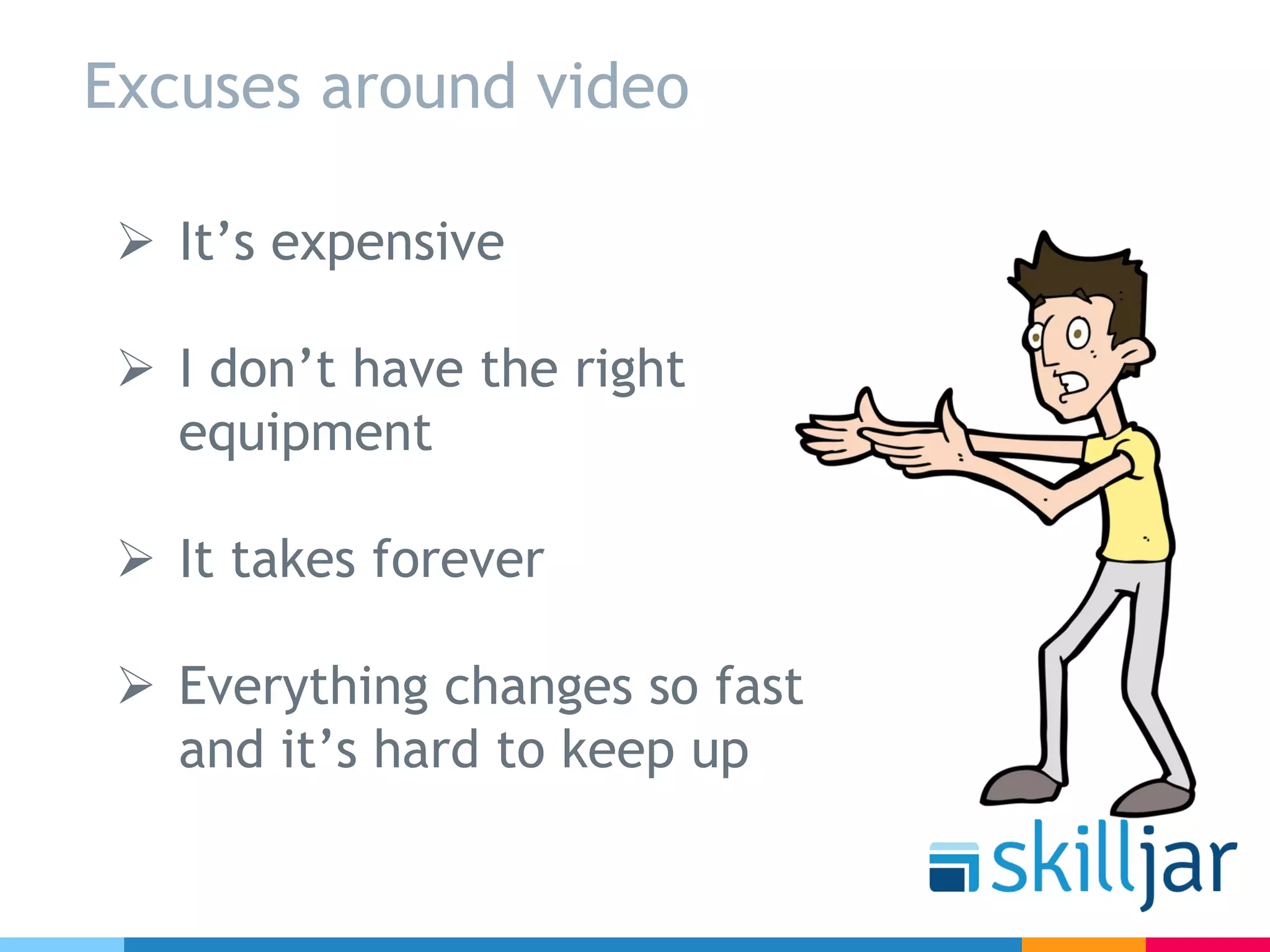
Excuses around video
Ø It’s expensive
Ø I don’t have the right
equipment
Ø It takes forever
Ø Everything changes so fast
and it’s hard to keep up
Producing Software Tutorials Can be:
Fun
Easy
Inexpensive
Manageable
Ø Resources and materials
Ø Step by Step process for
creating video
Ø Planning
Ø Tactical tips and tricks
Agenda
What You Need
Ø Microphone
Ø Editing software
Ø Quiet, carpeted space
Ø Time
Ø Voice
Costs are minimal!
What You Don’t Need
Ø A studio
Ø A voice actor
Ø A professional editor
Ø Expensive equipment
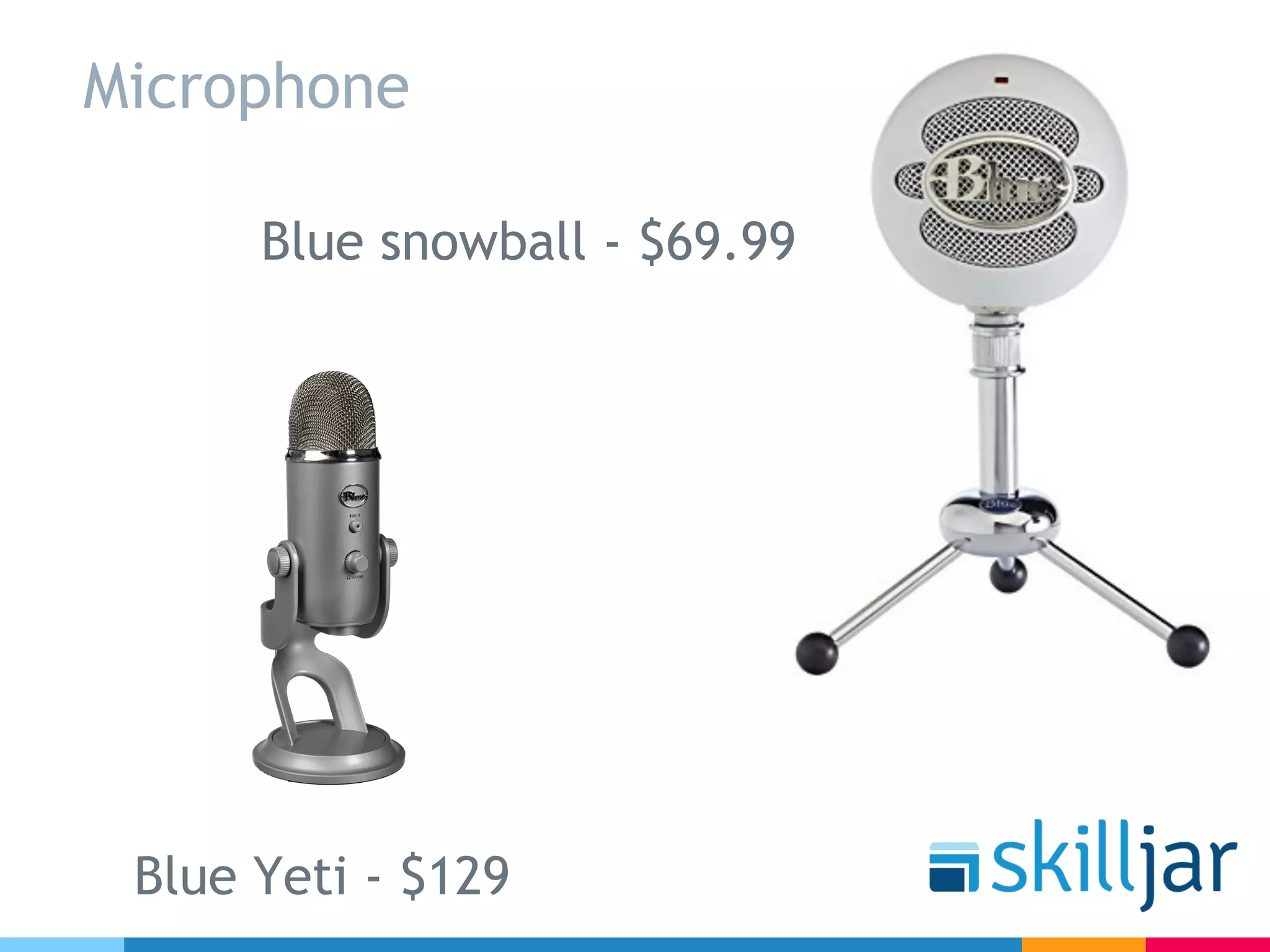
Microphone
Blue snowball - $69.99
Blue Yeti - $129
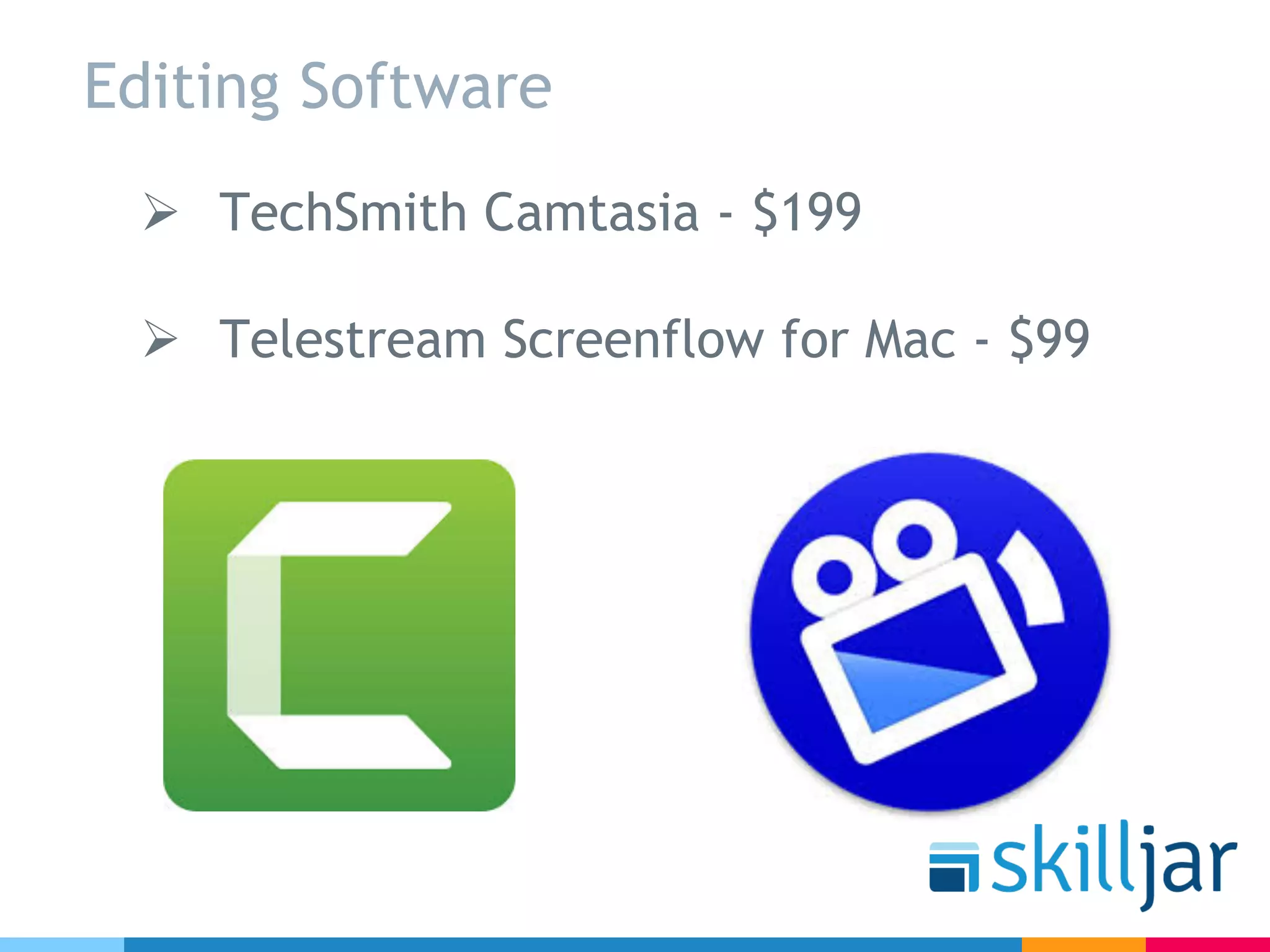
Editing Software
Ø TechSmith Camtasia - $199
Ø Telestream Screenflow for Mac - $99
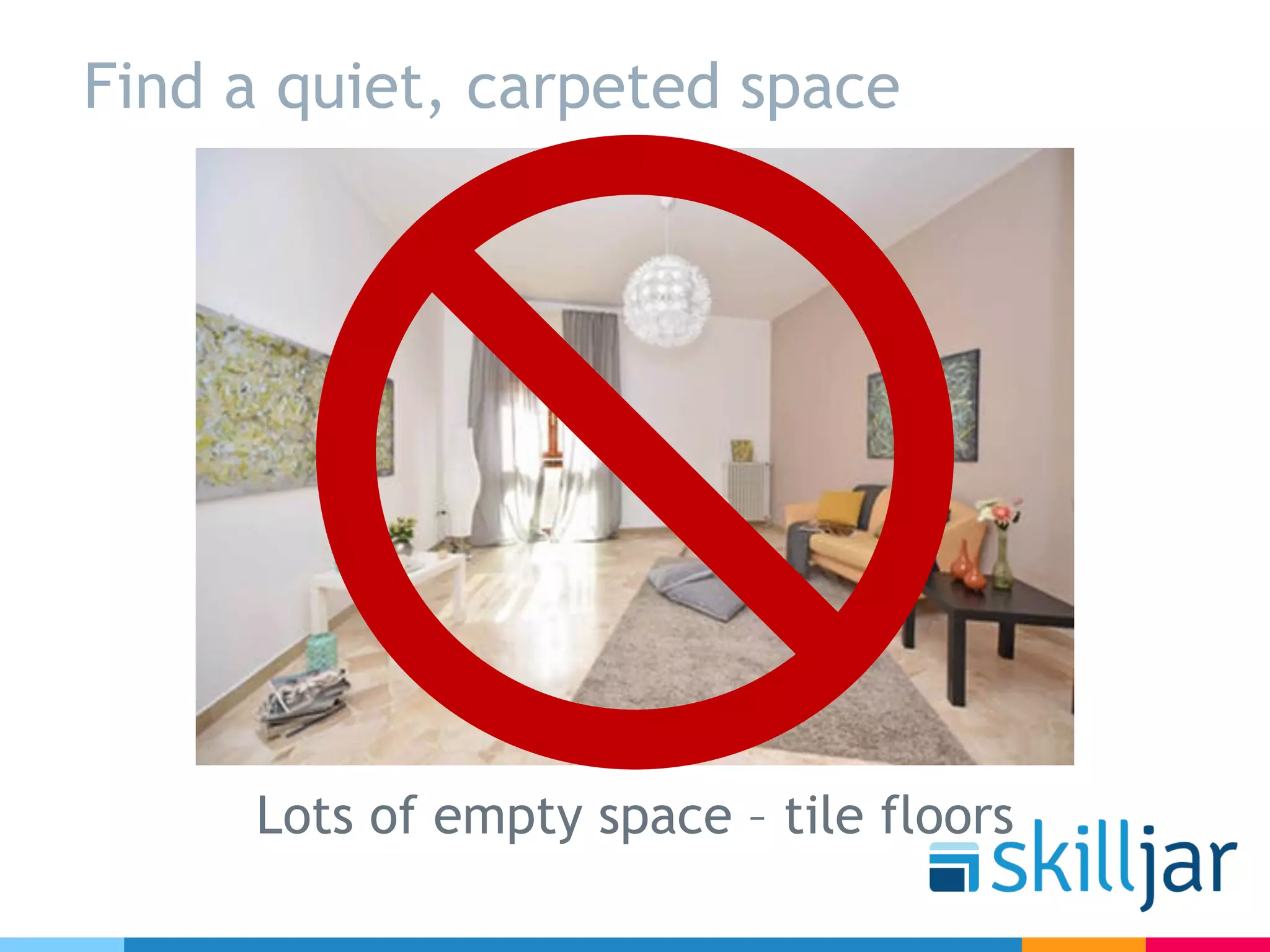
Find a quiet, carpeted space
Lots of empty space – tile floors
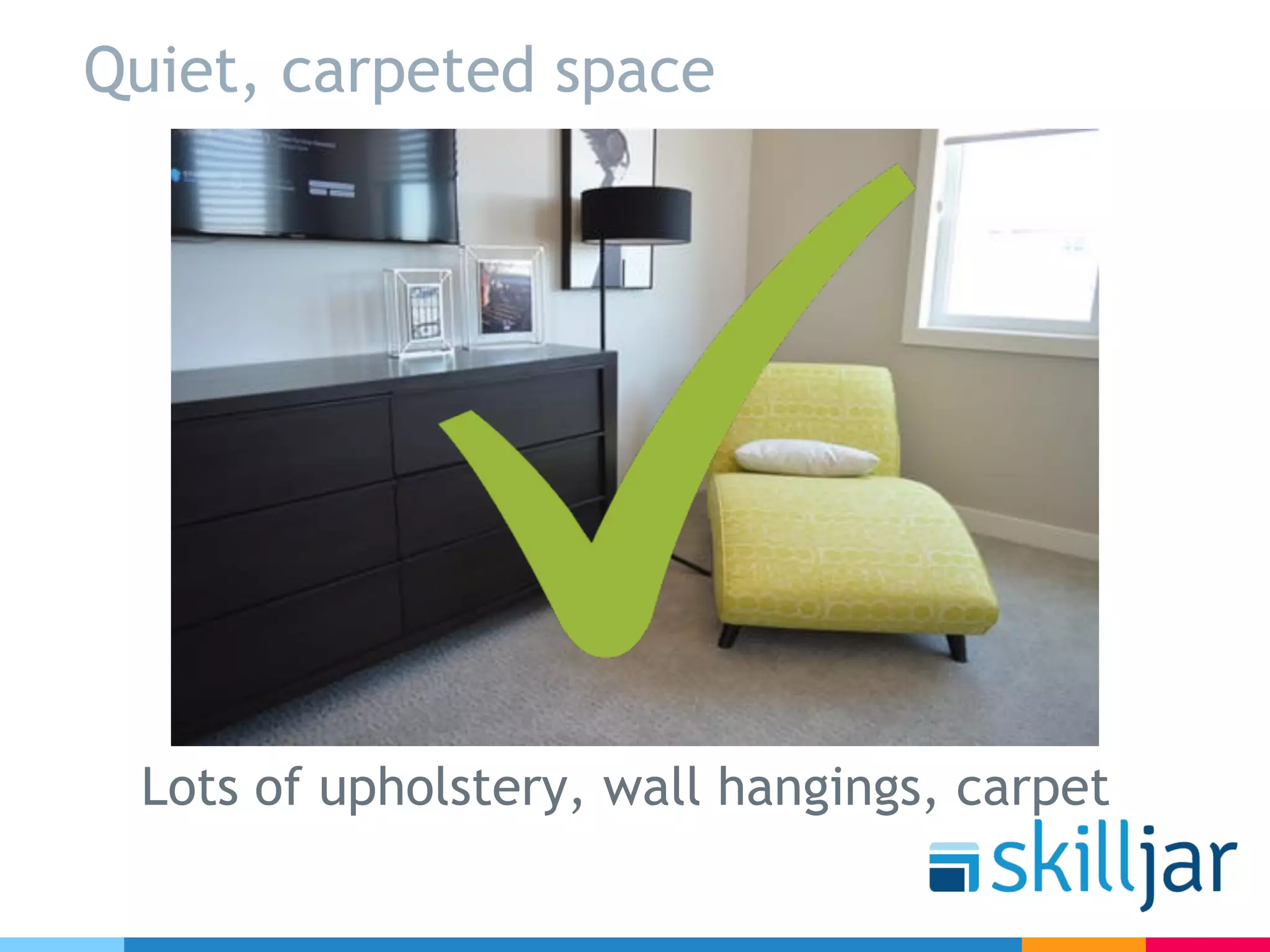
Quiet, carpeted space
Lots of upholstery, wall hangings, carpet
Time
Ø Rule of video: It will always
take longer than you think it
will.
Ø Budget more time than you
think you’ll need.
Time
Being highly organized
will save you time later.
Time = Money
Voice
Ø Your voice is most likely fine
for a software tutorial!
Ø Get used to it and get
comfortable recording.
Ø Slow and steady!
Order of Operations
1. Script
2. Storyboard
3. Collect Assets
4. Practice and Record Audio
5. Edit
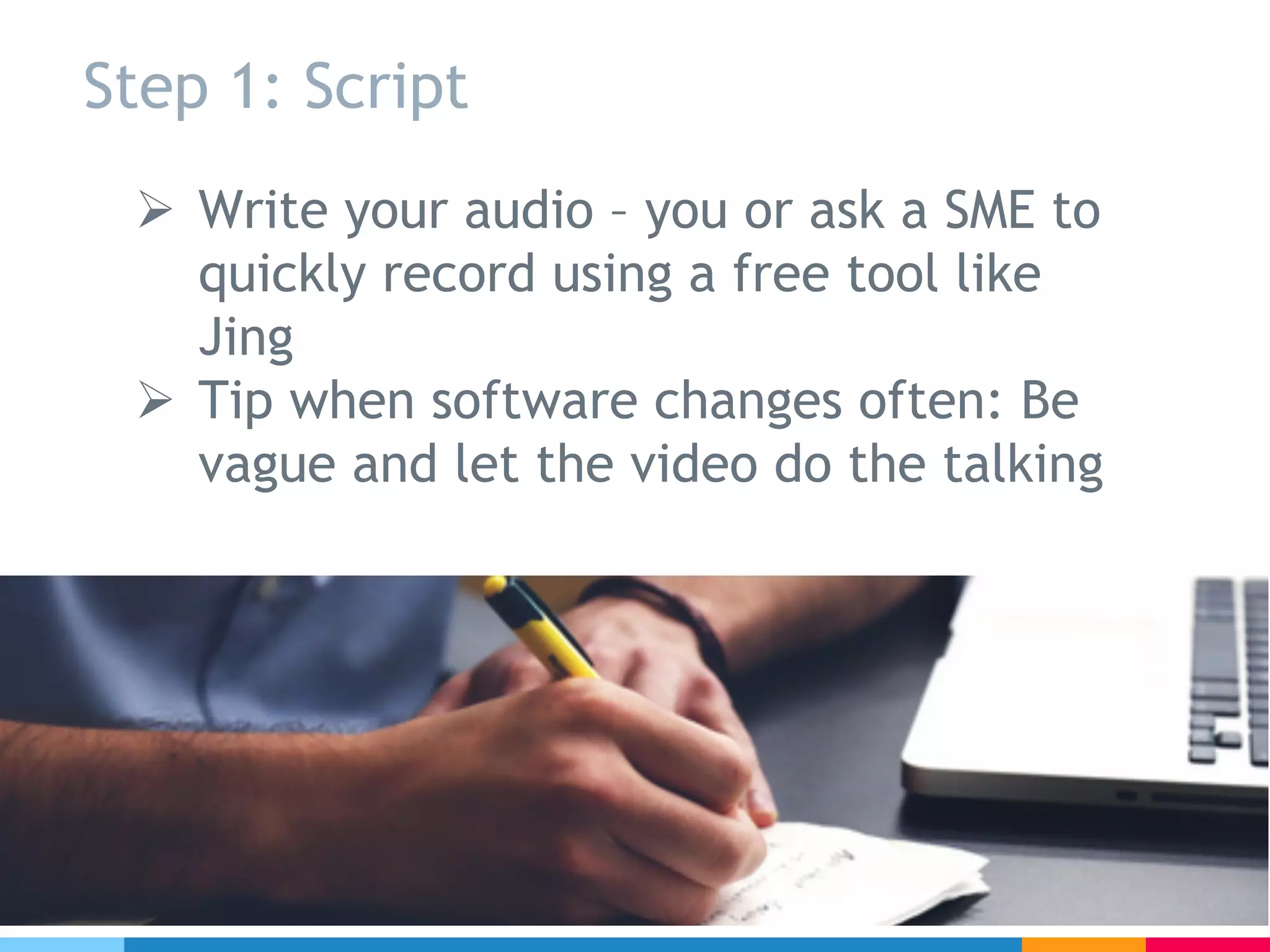
Step 1: Script
Ø Write your audio – you or ask a SME to
quickly record using a free tool like
Jing
Ø Tip when software changes often: Be
vague and let the video do the talking
Step 2: Storyboard
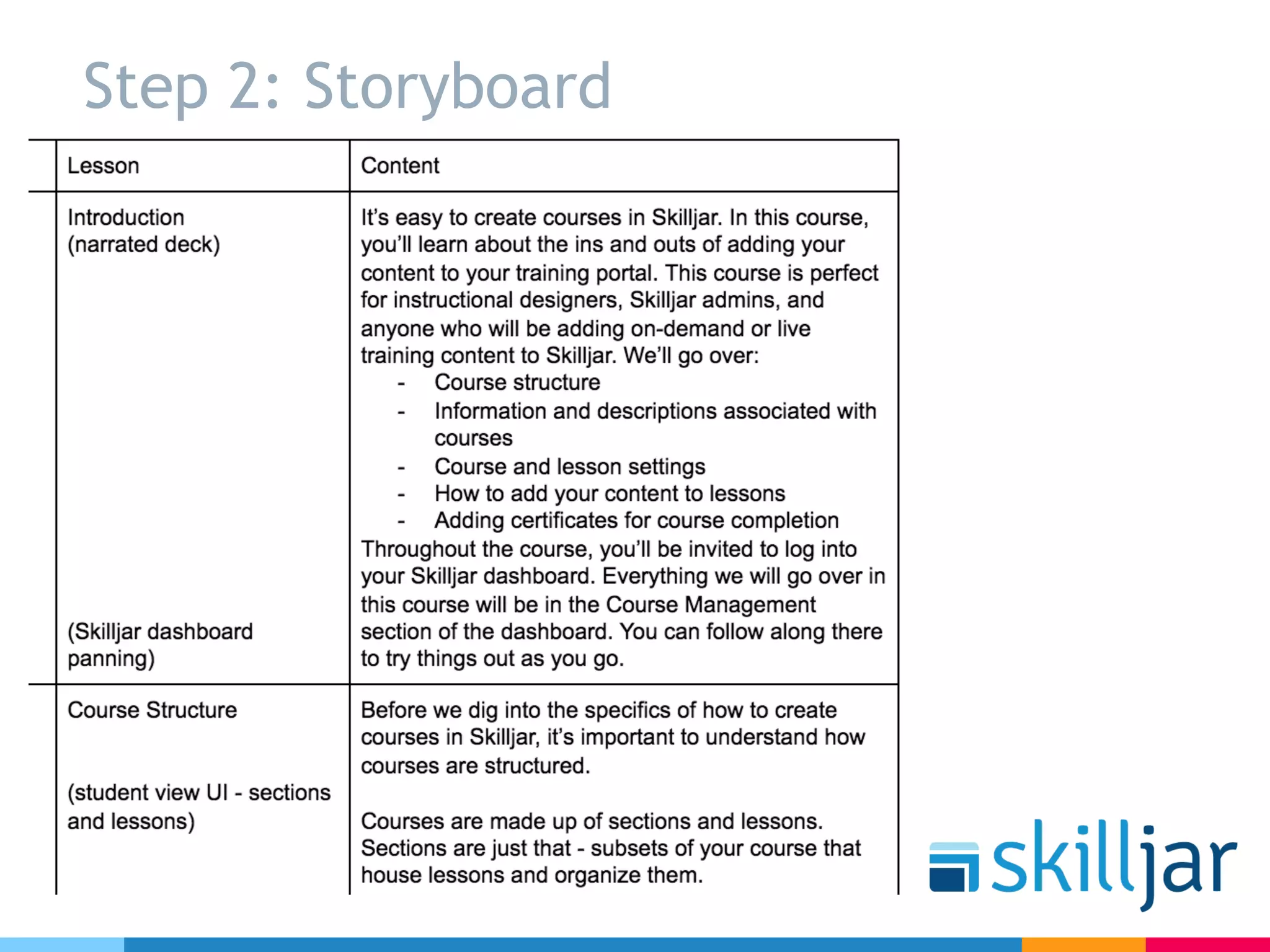
Ø Decide what will be on the screen for each
part of the script
Ø Remember you don’t actually have to have
these assets yet
Ø Tip: Use screen shots rather than a moving
screen capture
Step 2: Storyboard
Step 3: Collect Assets
Ø Collect everything you need for the visuals.
Ø Tip: stay organized!
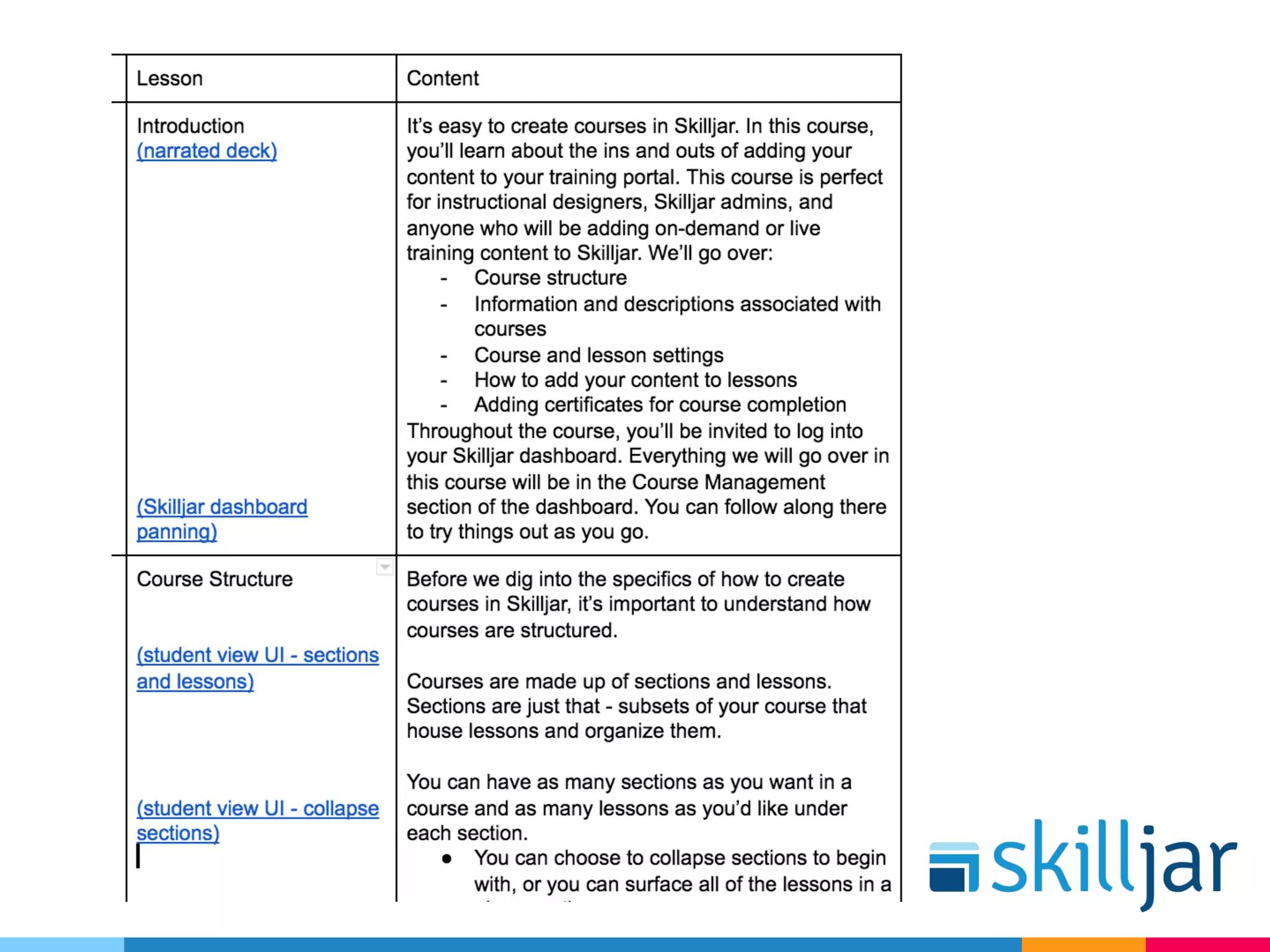
Ø Now, go back to your storyboard and
hyperlink each piece of text in the left
column with the file location
Step 4: Practice and Record Audio
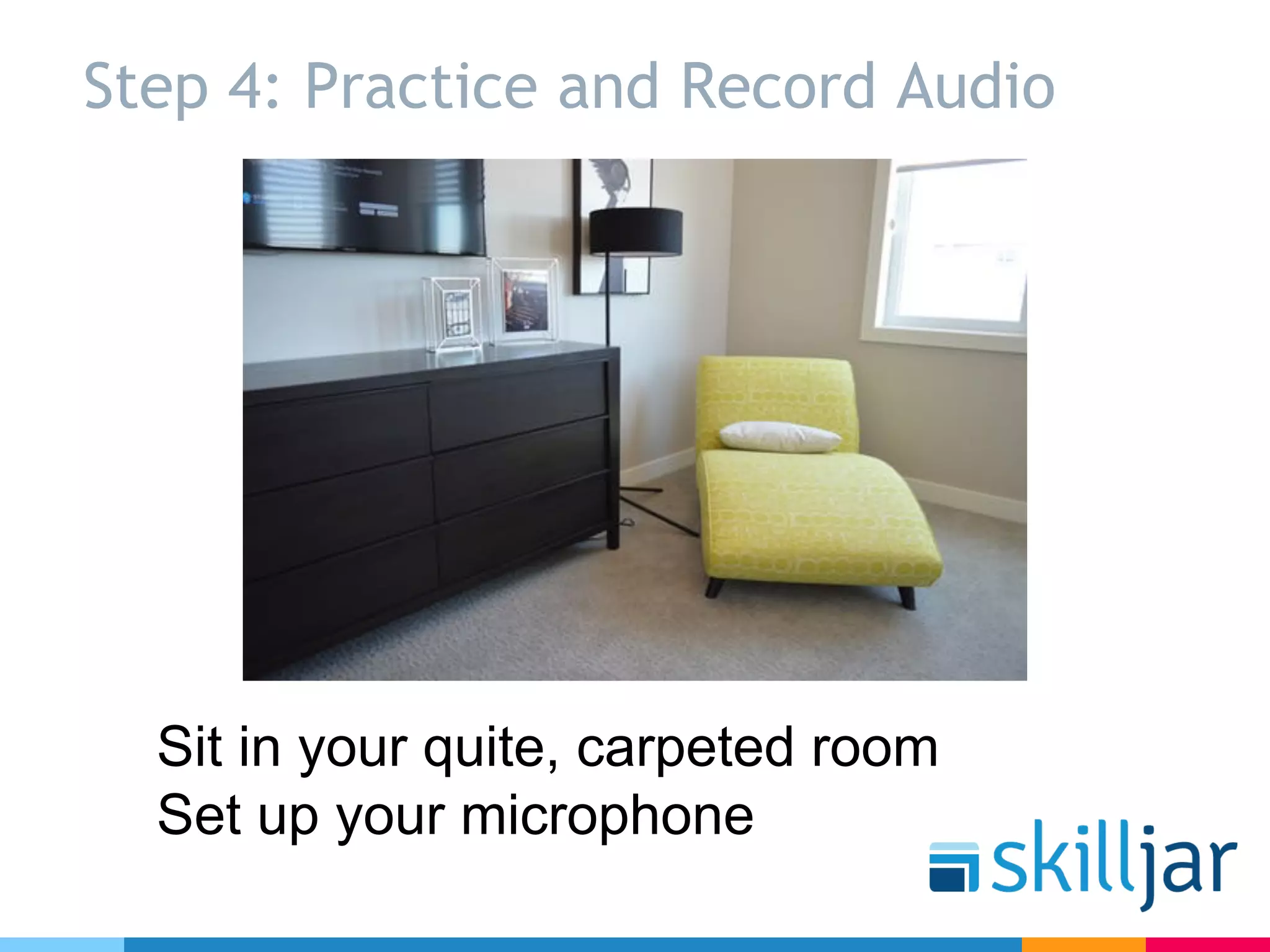
Sit in your quite, carpeted room
Set up your microphone
Step 4: Practice and Record Audio
Ø Use your editing program to record voice
Ø Before you record - Practice
Ø Tip: If you stumble, don’t stop the
recording (by the way, you’ll stumble less if
you practice)
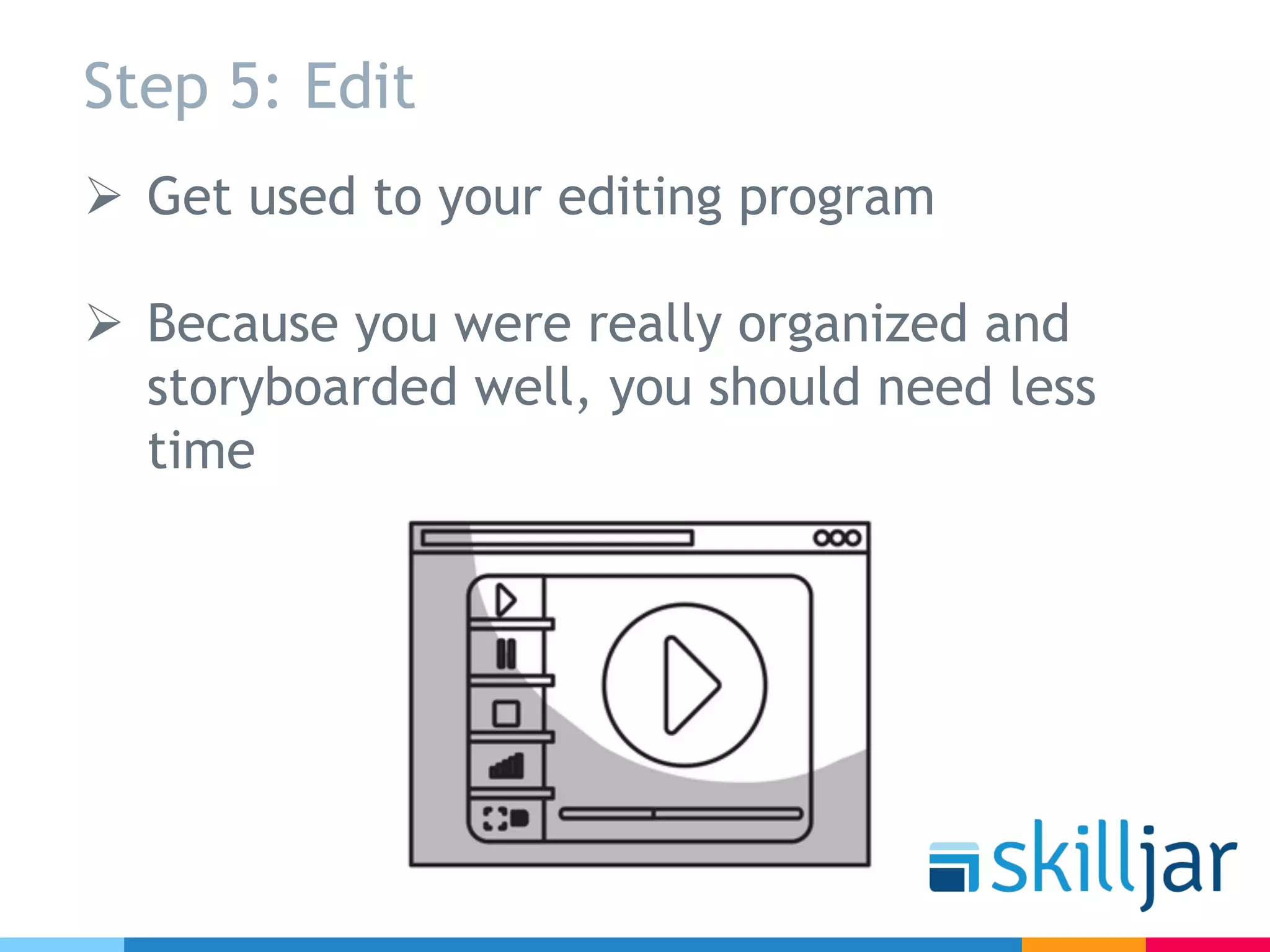
Step 5: Edit
Ø Get used to your editing program
Ø Because you were really organized and
storyboarded well, you should need less
time
Other Tips
Ø Free or very inexpensive design
and stock photos: Pexels, Canva
Ø TechSmith: Tips for Creating
Engaging Videos
Ø Analytics – LMS, xAPI, Wistia,
YouTube
Takeaways
1. Five steps!
2. Stay organized.
3. Keep audio to a minimum.
4. Good tutorials don’t have to
cost a lot to produce.

5 Steps to High Quality Software Tutorials

  • 1.
    5 Steps toHigh Quality Software Tutorials Linda Schwaber-Cohen, Skilljar Originally presented at FocusOn Learning
  • 2.
    Why Video overSCORM? 34% 53% Course Completion Rate With SCORM Without SCORM
  • 3.
    Why Video overSCORM? 51% 36% Course Completion Rate With Video Without Video
  • 4.
    Excuses around video ØIt’s expensive Ø I don’t have the right equipment Ø It takes forever Ø Everything changes so fast and it’s hard to keep up
  • 5.
    Producing Software TutorialsCan be: Fun Easy Inexpensive Manageable
  • 6.
    Ø Resources andmaterials Ø Step by Step process for creating video Ø Planning Ø Tactical tips and tricks Agenda
  • 7.
    What You Need ØMicrophone Ø Editing software Ø Quiet, carpeted space Ø Time Ø Voice Costs are minimal!
  • 8.
    What You Don’tNeed Ø A studio Ø A voice actor Ø A professional editor Ø Expensive equipment
  • 9.
    Microphone Blue snowball -$69.99 Blue Yeti - $129
  • 10.
    Editing Software Ø TechSmithCamtasia - $199 Ø Telestream Screenflow for Mac - $99
  • 11.
    Find a quiet,carpeted space Lots of empty space – tile floors
  • 12.
    Quiet, carpeted space Lotsof upholstery, wall hangings, carpet
  • 13.
    Time Ø Rule ofvideo: It will always take longer than you think it will. Ø Budget more time than you think you’ll need.
  • 14.
    Time Being highly organized willsave you time later. Time = Money
  • 15.
    Voice Ø Your voiceis most likely fine for a software tutorial! Ø Get used to it and get comfortable recording. Ø Slow and steady!
  • 16.
    Order of Operations 1.Script 2. Storyboard 3. Collect Assets 4. Practice and Record Audio 5. Edit
  • 17.
    Step 1: Script ØWrite your audio – you or ask a SME to quickly record using a free tool like Jing Ø Tip when software changes often: Be vague and let the video do the talking
  • 18.
    Step 2: Storyboard ØDecide what will be on the screen for each part of the script Ø Remember you don’t actually have to have these assets yet Ø Tip: Use screen shots rather than a moving screen capture
  • 19.
  • 20.
    Step 3: CollectAssets Ø Collect everything you need for the visuals. Ø Tip: stay organized! Ø Now, go back to your storyboard and hyperlink each piece of text in the left column with the file location
  • 22.
    Step 4: Practiceand Record Audio Sit in your quite, carpeted room Set up your microphone
  • 23.
    Step 4: Practiceand Record Audio Ø Use your editing program to record voice Ø Before you record - Practice Ø Tip: If you stumble, don’t stop the recording (by the way, you’ll stumble less if you practice)
  • 24.
    Step 5: Edit ØGet used to your editing program Ø Because you were really organized and storyboarded well, you should need less time
  • 25.
    Other Tips Ø Freeor very inexpensive design and stock photos: Pexels, Canva Ø TechSmith: Tips for Creating Engaging Videos Ø Analytics – LMS, xAPI, Wistia, YouTube
  • 26.
    Takeaways 1. Five steps! 2.Stay organized. 3. Keep audio to a minimum. 4. Good tutorials don’t have to cost a lot to produce.