Primate Evolution
Common Ancestor
• A common ancestor is the ancestor of
two or more species.
• Shared derived characteristics are traits
that species inherited from a common
ancestor.
Classification
Phylogenetics tries to trace the origins
and ancestry of various type or
organisms.
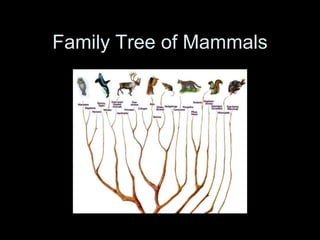
Family Tree of Mammals
Linnaean Classification
• Kingdom
• Phylum
• Class
• Order
• Family
• Genus
• Species
Binomial Nomeclature
• All organisms are given a binomial (two-
name) designation. This includes their
genus and species.
• Homo sapiens = Humans
• Felis catus = House cat
Animals
• Animals are the Kingdom of organisms
that:
• Are multi-cellular
• Are independently mobile
• Have sense organs
• Eat food (as apposed to
photosynthesize).
Kingdom:Animalia
Phylum: Chordata
Class: Mammalia
• Warm blooded (maintain constant body
temperature)
• Have Hair at some point in their life cycle.
• Have mammary glands (provide milk for
young)
• Give birth to live young
Kingdom:Animalia
Phylum: Chordata
Class:Mammalia
Order: Primates
• Adapted to living in trees
• Grasping Hands
• Large Brains
• Stereoscopic vision
Primates
Primates are a group of mammals that
are adapted to living in trees through
stereoscopic vision, grasping hands and
large brains.
Evolution
• Evolution is change in allele frequencies
in populations over time.
• Evolution occurs through mutation,
natural selection, gene flow and genetic
drift.
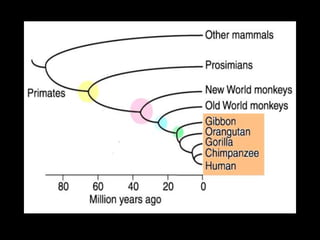
Primate Evolution
Primates emerged around 58 million
years ago and can be divided into a
number of families.
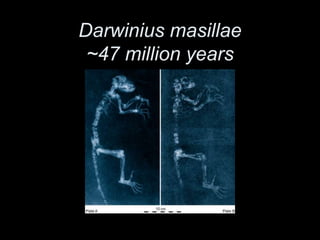
Darwinius masillae
~47 million years
Primate Evolution
Primate Families
• Prosimians
• New World Monkeys
• Old World Monkeys
• Hominoidea (Apes and Humans)
Prosimians
• Live in Africa, South and South-East
Asia (many in Madagascar)
• Have moist noses (like dogs and cats).
• Large eyes
• Limited opposability in their thumbs.
• Least “human-looking” of the primates.
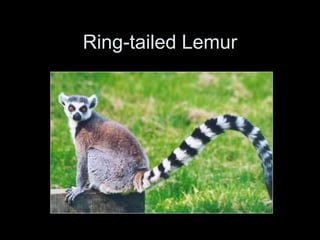
Ring-tailed Lemur
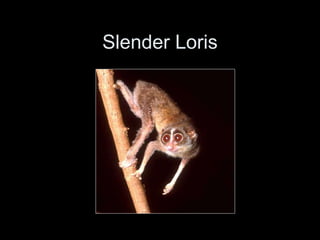
Slender Loris
New World Monkeys
• Live in the Americas (Mexico, Central
and South America)
• Have widely spaced nostrils separated
by a thick septum.
• Many have prehensile tails (they can
use their tails like an arm to grab things)
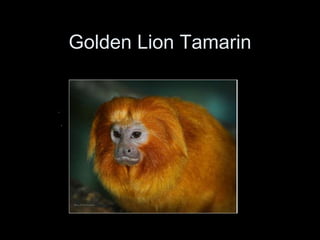
Golden Lion Tamarin
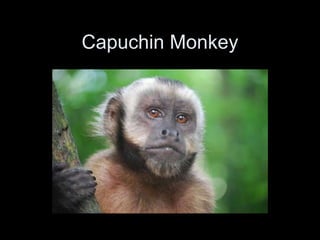
Capuchin Monkey
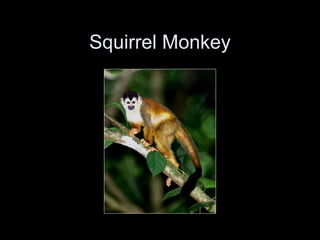
Squirrel Monkey
Old World Monkeys
• Live in Africa and Asia
• Downward facing nostrils
• Tails that aren’t prehensile
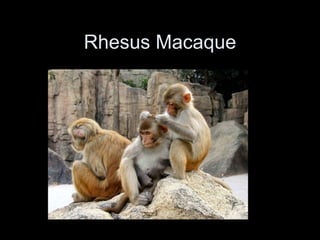
Rhesus Macaque
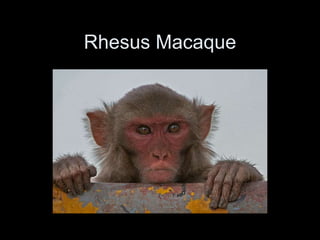
Rhesus Macaque
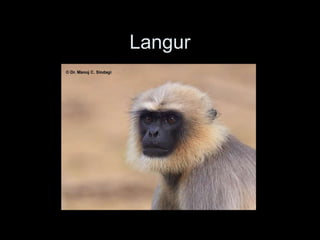
Langur
Hominoidea
Hominoidea is a category that contains
both humans and apes.
Hominoidea
• Both Apes and Humans are classified in
this group
• Tail-less primates
• Largest, most complex brains of any
primates
• Good suspensory climbers
Great Apes
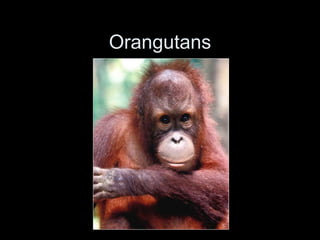
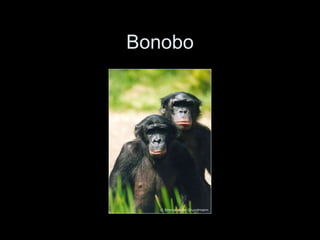
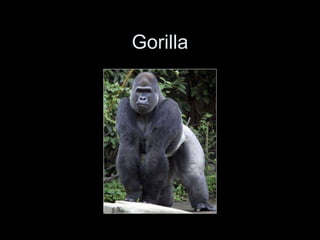
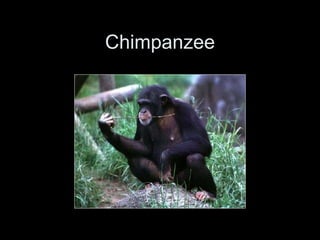
There are four members of Hominidae
that are commonly called the Great
Apes.
Orangutans
Bonobo
Gorilla
Chimpanzee
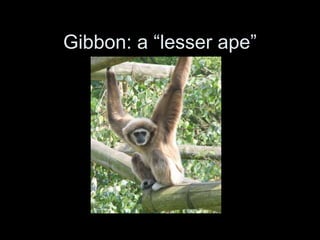
Gibbon: a “lesser ape”
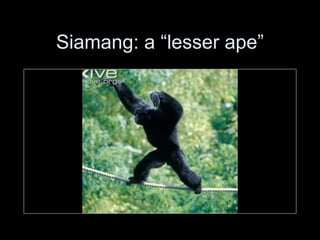
Siamang: a “lesser ape”
Chimpanzees
• Of all extant primates, we share the
most similarities genetically with
chimps.
• Our DNA sequences are more than
98% identical with those of chimps.

5 Primates