




Inquiry Lesson Model
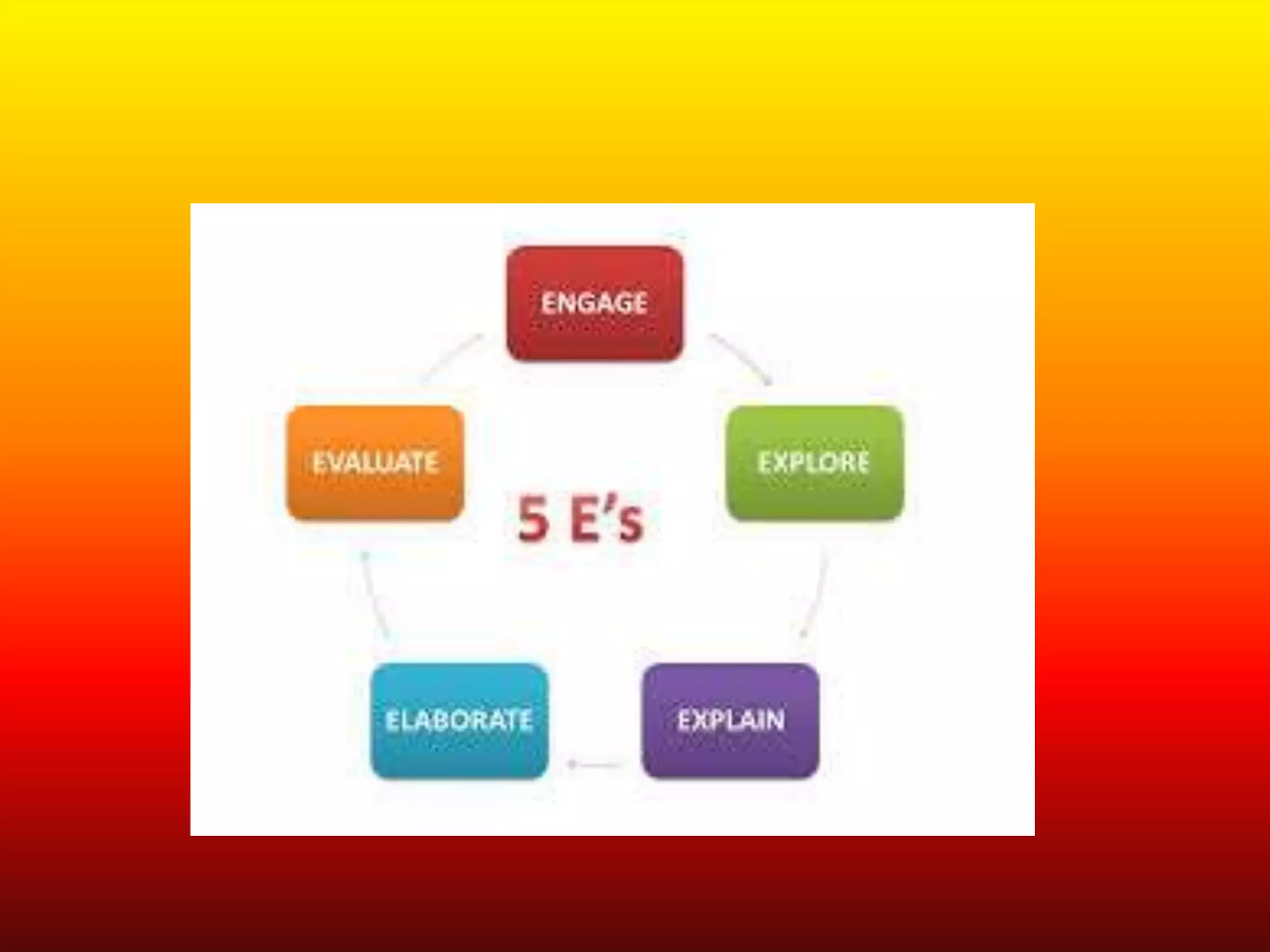
INTRODUCTION TO THE 5Es
Engagement
• Object, event or question used to engage
students.
• Connections facilitated between what
students know and can do.
Exploration
• Objects and phenomena are explored.
• Hands-on
activities
with
guidance.
Explanation
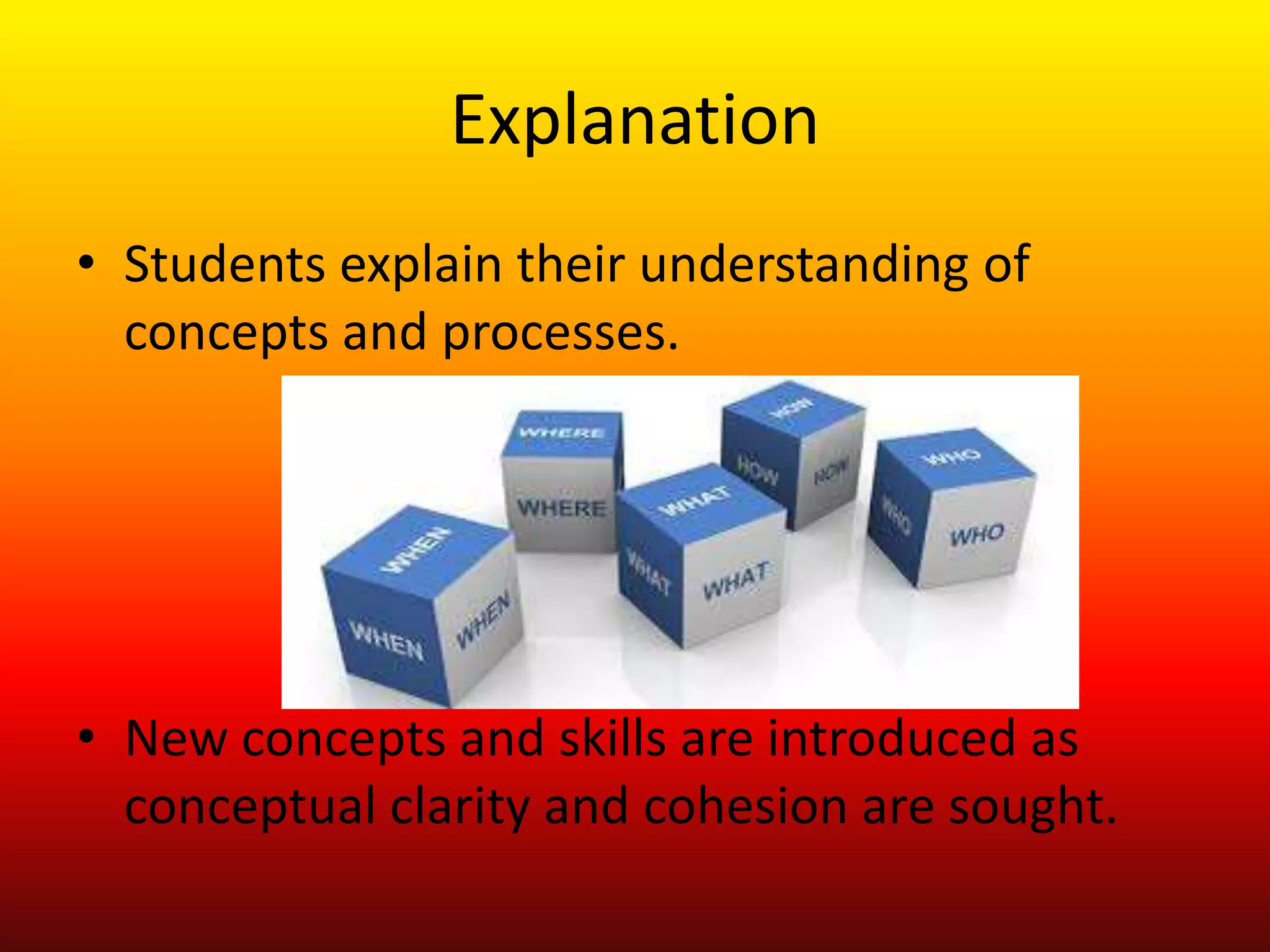
• Students explain their understanding of
concepts and processes.
• New concepts and skills are introduced as
conceptual clarity and cohesion are sought.
Elaboration
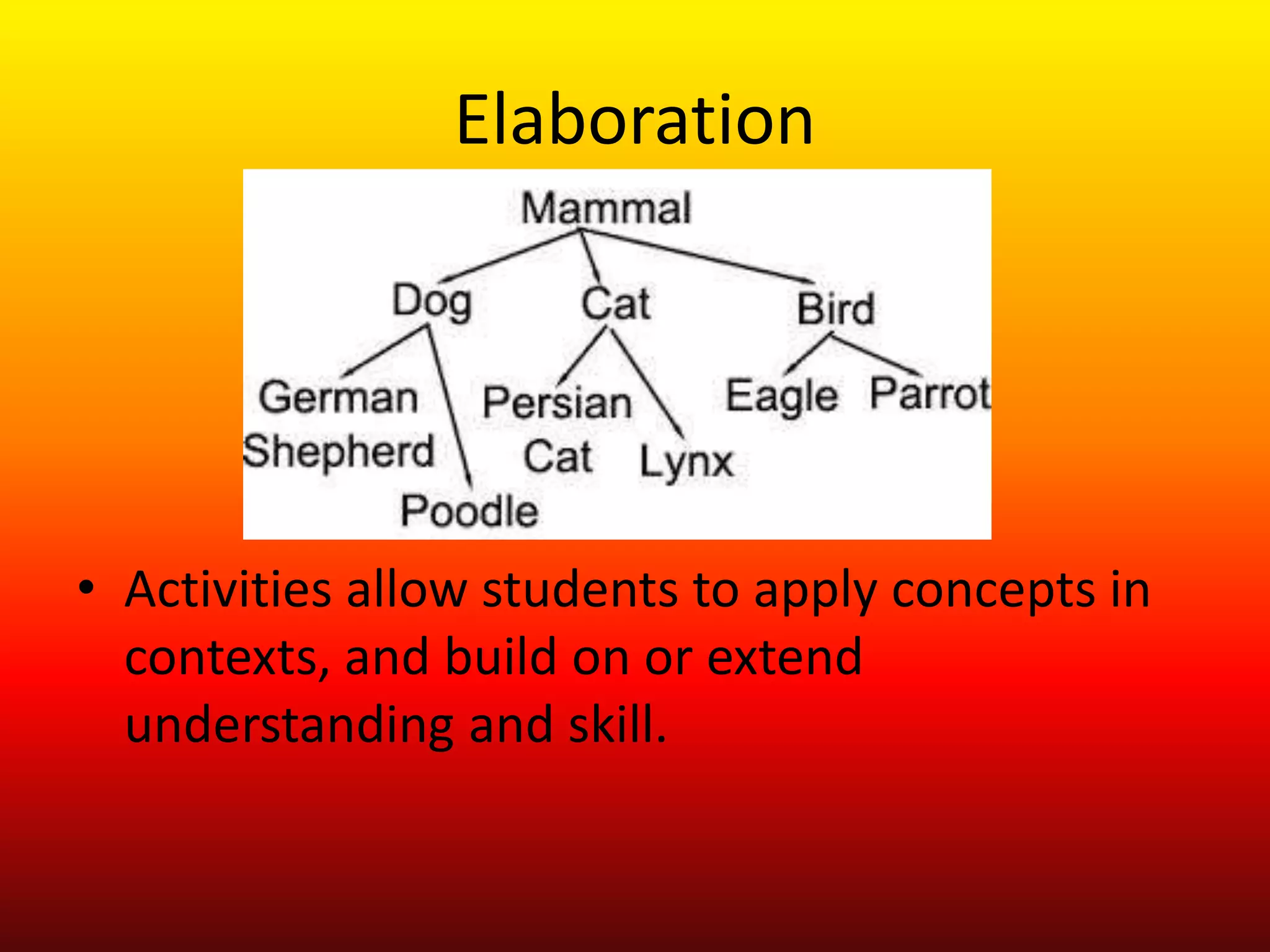
• Activities allow students to apply concepts in
contexts, and build on or extend
understanding and skill.
Evaluation
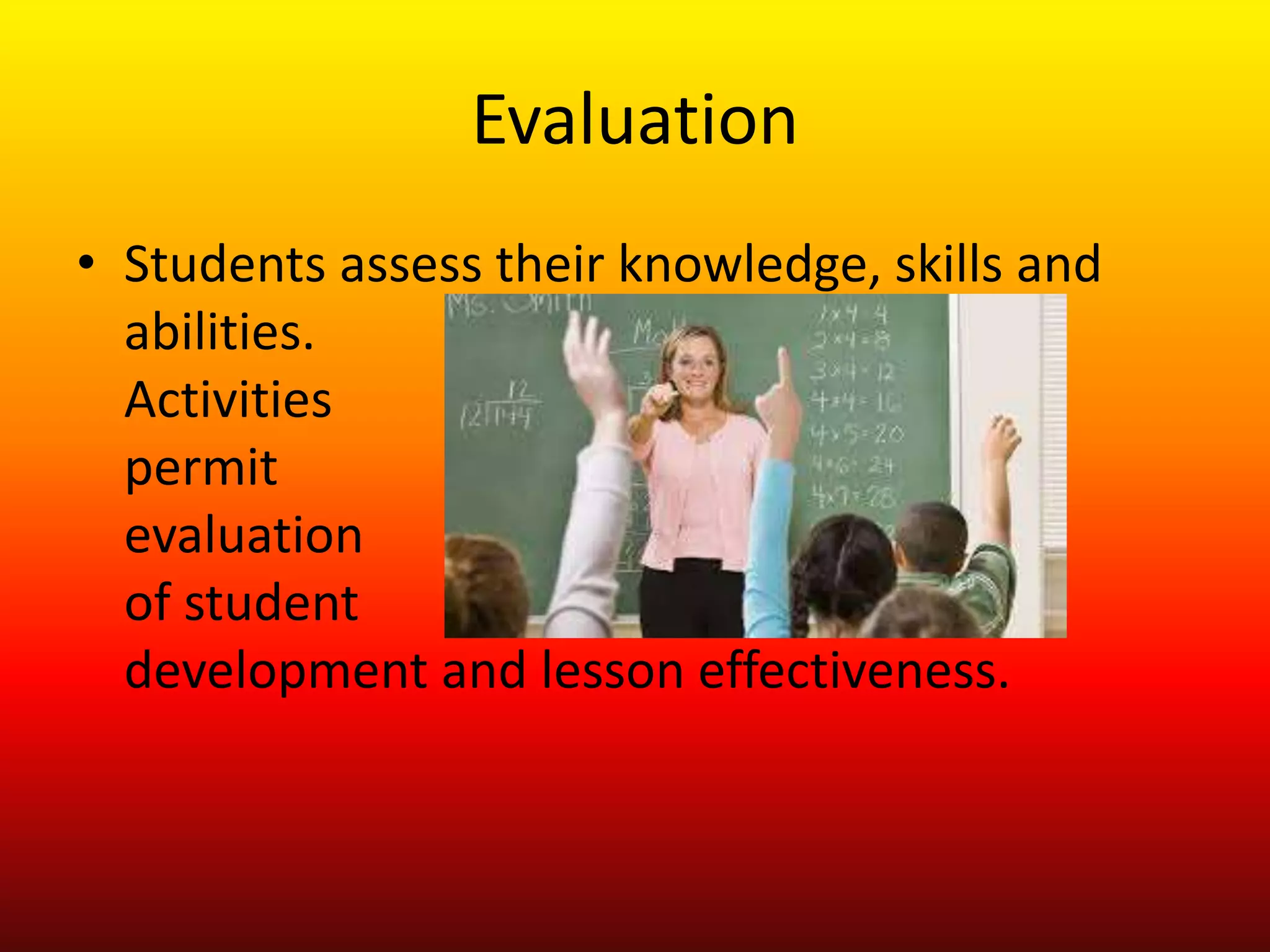
• Students assess their knowledge, skills and
abilities.
Activities
permit
evaluation
of student
development and lesson effectiveness.
BUT, WAIT!
I do all those things, don’t I?
Do we, as ‘teachers’ really do these things as
well as we believe?
• Such is the case in the use of the 5E model.
• Teachers feel they do the model and do it
well; but, on examination by a 3rd party it is
often demonstrated that not all tasks are done
in accordance to the model.
• This is not a bad thing as it provides the
teacher with the chance to reevaluate their
usage of the model and develop their
proficiency in using it correctly.
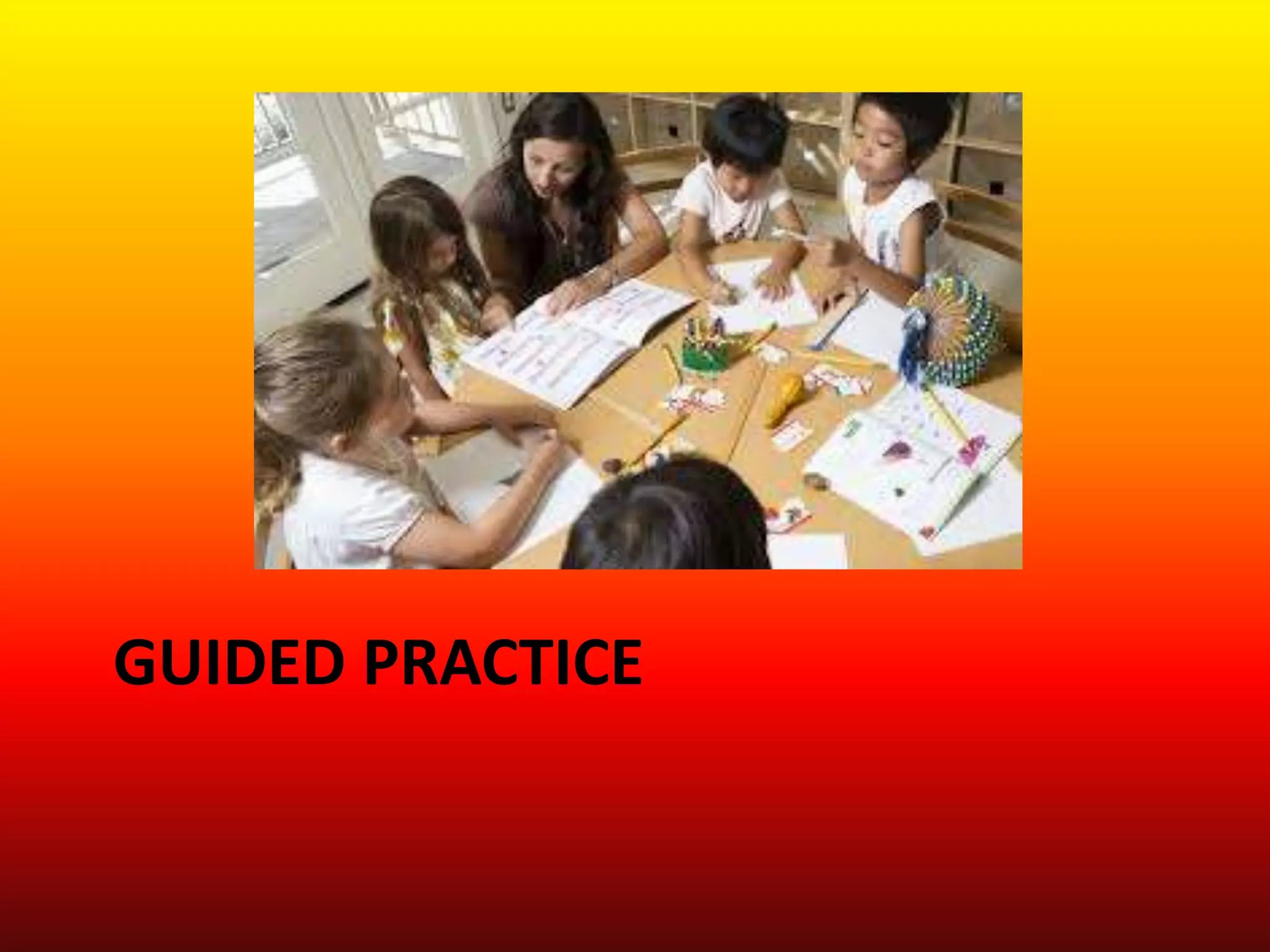
GUIDED PRACTICE
Engagement
• On a piece of paper write down 3 ways you
use engagement in your daily lessons.
• Explain to a colleague why you believe
“engagement” is important to the lesson
model.
• Explain to a colleague why you believe
“engagement” is not important to the lesson
model.
What do you want to tell others?
• What do you believe is necessary for others to
know about your use of “engagement”?
• What do you wish others would STOP telling
you about the use of “engagement”?
• Reconciliation – how can you reconcile what
you stated above with the way you use
“engagement” in the lesson model?
Exploration
• On a piece of paper write down 3 ways you
use “exploration” in your daily lessons.
• Explain to a colleague why you believe
“exploration” is important to the lesson
model.
• Explain to a colleague why you believe
“exploration” is not important to the lesson
model.
What do you want to tell others?
• What do you believe is necessary for others to
know about your use of “exploration” ?
• What do you wish others would STOP telling
you about the use of “exploration” ?
• Reconciliation – how can you reconcile what
you stated above with the way you use
“exploration” in the lesson model?
Explanation
• On a piece of paper write down 3 ways you
use “explanation” in your daily lessons.
• Explain to a colleague why you believe
“explanation” is important to the lesson
model.
• Explain to a colleague why you believe
“explanation” is not important to the lesson
model.
What do you want to tell others?
• What do you believe is necessary for others to
know about your use of “explanation” ?
• What do you wish others would STOP telling
you about the use of “explanation” ?
• Reconciliation – how can you reconcile what
you stated above with the way you use
“explanation” in the lesson model?
Elaboration
• On a piece of paper write down 3 ways you
use “elaboration” in your daily lessons.
• Explain to a colleague why you believe
“elaboration” is important to the lesson
model.
• Explain to a colleague why you believe
“elaboration” is not important to the lesson
model.
What do you want to tell others?
• What do you believe is necessary for others to
know about your use of “elaboration” ?
• What do you wish others would STOP telling
you about the use of “elaboration” ?
• Reconciliation – how can you reconcile what
you stated above with the way you use
“elaboration” in the lesson model?
Evaluation
• On a piece of paper write down 3 ways you
use “evaluation” in your daily lessons.
• Explain to a colleague why you believe
“evaluation” is important to the lesson model.
• Explain to a colleague why you believe
““evaluation” is not important to the lesson
model.
What do you want to tell others?
• What do you believe is necessary for others to
know about your use of “evaluation” ?
• What do you wish others would STOP telling
you about the use of “evaluation” ?
• Reconciliation – how can you reconcile what
you stated above with the way you use
“evaluation” in the lesson model?
… Debrief …
What did …
• The self-examination tell you about your use
of the 5E system?
• The mirroring of thoughts off a colleague tell
you about your use of the 5E system?
• Did any of your thoughts or preconceived
ideas change as a result of the sharing?
• Do you see the value of a system, like the 5E
system, for use in your classes?
FROM HERE ….. WHERE?
We are at a crossroads …
Where from here?
• Reflection! Reflection! Reflection!
References
• Dr. Jane A. Stallings, (1974) Allocated Time
Studies, recipient of the Ball State University
Teachers College Outstanding Alumni Award
Recipients, retired Dean, Texas A&M College
of Education, past Curriculum & Instruction
Chair, University of Houston

5 e lesson_model

  • 1.
  • 2.
  • 4.
    Engagement • Object, eventor question used to engage students. • Connections facilitated between what students know and can do.
  • 5.
    Exploration • Objects andphenomena are explored. • Hands-on activities with guidance.
  • 6.
    Explanation • Students explaintheir understanding of concepts and processes. • New concepts and skills are introduced as conceptual clarity and cohesion are sought.
  • 7.
    Elaboration • Activities allowstudents to apply concepts in contexts, and build on or extend understanding and skill.
  • 8.
    Evaluation • Students assesstheir knowledge, skills and abilities. Activities permit evaluation of student development and lesson effectiveness.
  • 9.
    BUT, WAIT! I doall those things, don’t I?
  • 10.
    Do we, as‘teachers’ really do these things as well as we believe?
  • 11.
    • Such isthe case in the use of the 5E model. • Teachers feel they do the model and do it well; but, on examination by a 3rd party it is often demonstrated that not all tasks are done in accordance to the model. • This is not a bad thing as it provides the teacher with the chance to reevaluate their usage of the model and develop their proficiency in using it correctly.
  • 12.
  • 13.
    Engagement • On apiece of paper write down 3 ways you use engagement in your daily lessons. • Explain to a colleague why you believe “engagement” is important to the lesson model. • Explain to a colleague why you believe “engagement” is not important to the lesson model.
  • 14.
    What do youwant to tell others? • What do you believe is necessary for others to know about your use of “engagement”? • What do you wish others would STOP telling you about the use of “engagement”? • Reconciliation – how can you reconcile what you stated above with the way you use “engagement” in the lesson model?
  • 15.
    Exploration • On apiece of paper write down 3 ways you use “exploration” in your daily lessons. • Explain to a colleague why you believe “exploration” is important to the lesson model. • Explain to a colleague why you believe “exploration” is not important to the lesson model.
  • 16.
    What do youwant to tell others? • What do you believe is necessary for others to know about your use of “exploration” ? • What do you wish others would STOP telling you about the use of “exploration” ? • Reconciliation – how can you reconcile what you stated above with the way you use “exploration” in the lesson model?
  • 17.
    Explanation • On apiece of paper write down 3 ways you use “explanation” in your daily lessons. • Explain to a colleague why you believe “explanation” is important to the lesson model. • Explain to a colleague why you believe “explanation” is not important to the lesson model.
  • 18.
    What do youwant to tell others? • What do you believe is necessary for others to know about your use of “explanation” ? • What do you wish others would STOP telling you about the use of “explanation” ? • Reconciliation – how can you reconcile what you stated above with the way you use “explanation” in the lesson model?
  • 19.
    Elaboration • On apiece of paper write down 3 ways you use “elaboration” in your daily lessons. • Explain to a colleague why you believe “elaboration” is important to the lesson model. • Explain to a colleague why you believe “elaboration” is not important to the lesson model.
  • 20.
    What do youwant to tell others? • What do you believe is necessary for others to know about your use of “elaboration” ? • What do you wish others would STOP telling you about the use of “elaboration” ? • Reconciliation – how can you reconcile what you stated above with the way you use “elaboration” in the lesson model?
  • 21.
    Evaluation • On apiece of paper write down 3 ways you use “evaluation” in your daily lessons. • Explain to a colleague why you believe “evaluation” is important to the lesson model. • Explain to a colleague why you believe ““evaluation” is not important to the lesson model.
  • 22.
    What do youwant to tell others? • What do you believe is necessary for others to know about your use of “evaluation” ? • What do you wish others would STOP telling you about the use of “evaluation” ? • Reconciliation – how can you reconcile what you stated above with the way you use “evaluation” in the lesson model?
  • 23.
  • 24.
    What did … •The self-examination tell you about your use of the 5E system? • The mirroring of thoughts off a colleague tell you about your use of the 5E system? • Did any of your thoughts or preconceived ideas change as a result of the sharing? • Do you see the value of a system, like the 5E system, for use in your classes?
  • 25.
  • 26.
    We are ata crossroads …
  • 27.
    Where from here? •Reflection! Reflection! Reflection!
  • 28.
    References • Dr. JaneA. Stallings, (1974) Allocated Time Studies, recipient of the Ball State University Teachers College Outstanding Alumni Award Recipients, retired Dean, Texas A&M College of Education, past Curriculum & Instruction Chair, University of Houston