Constructivism: Visual Arts Education  Presentation by Jessica Arriaga  University of Texas at Brownsville Spring 2011
Theoretical Foundation
Constructivist Theory Persons, Behaviors and Environments Interact in Reciprocal Fashion  Constructivist Classroom  Community of Learners Activity  Discourse  Reflection
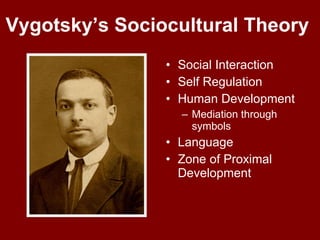
Vygotsky’s Sociocultural Theory  Social Interaction Self Regulation Human Development Mediation through symbols Language Zone of Proximal Development
Lesson Plan
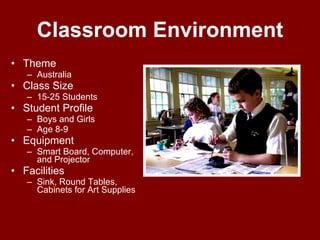
Classroom Environment Theme Australia  Class Size 15-25 Students Student Profile Boys and Girls  Age 8-9 Equipment Smart Board, Computer, and Projector Facilities Sink, Round Tables, Cabinets for Art Supplies
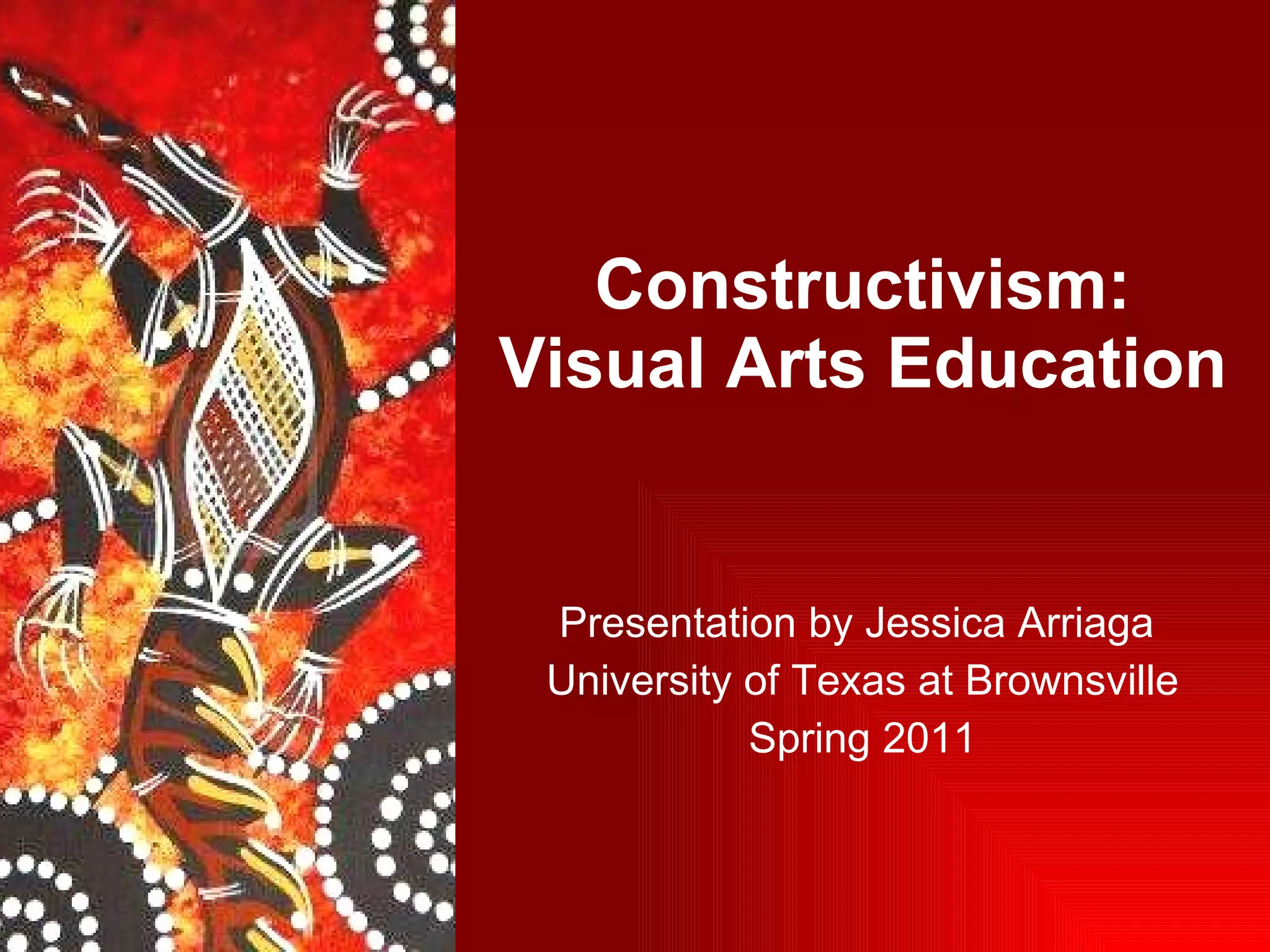
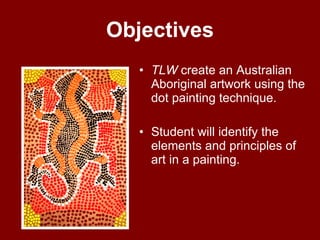
Objectives TLW  create an Australian Aboriginal artwork using the dot painting technique. Student will identify the elements and principles of art in a painting.
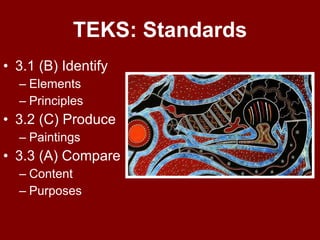
TEKS: Standards 3.1   (B) Identify  Elements Principles 3.2 (C) Produce  Paintings 3.3 (A) Compare  Content Purposes
Introduction of the Lesson Focusing Activity Discovery Atlas  Connection to prior Knowledge  Nature  Relevance of the Lesson  http://videos.howstuffworks.com/discovery/29126-discovery-atlas-australia-revealed-aboriginal-painting-video.htm
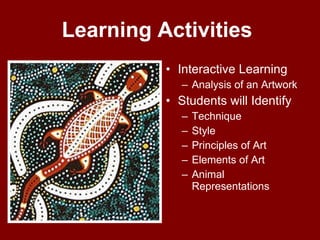
Learning Activities   Interactive Learning Analysis of an Artwork Students will Identify Technique Style Principles of Art Elements of Art Animal Representations
Guided Practice  Students Shares Experiences Basis of Painting Techniques and procedures  Student Shares Ideas Provide possible solutions and answers  Problem Solving/ Painting
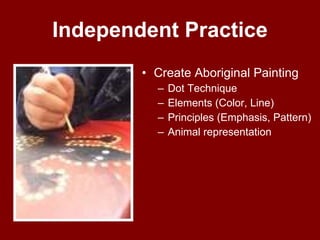
Independent Practice Create Aboriginal Painting  Dot Technique Elements (Color, Line) Principles (Emphasis, Pattern)  Animal representation
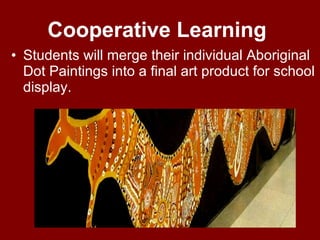
Cooperative Learning   Students will merge their individual Aboriginal Dot Paintings into a final art product for school display.
Facilitating Activities Flexible Assessment  Emphasize strengths rather than weakness Scaffolding  Learning Activities Positive Interaction  Verbalization Concept of ZPD
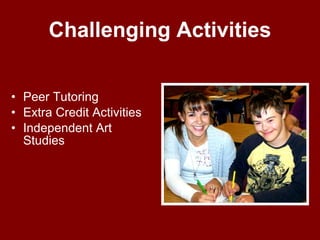
Challenging Activities Peer Tutoring  Extra Credit Activities Independent Art Studies
Closure  Summary/ Questions Where do they get their paint from? What do the colors in the flag symbolize for the aboriginals? Why is art important for the Australian Aboriginals?
Assessment  Dynamic Assessment Artistic Portfolios Student participation in evaluation  Measurement of professional growth Reflection
Further Exploration: Aboriginal Art  Traditional Aboriginal Art Symbols http://www.aboriginalartonline.com/culture/symbols.php   Aboriginal Art Gallery  http:// www.aboriginalaustralia.com /catalog/   Animated Dreamtime Stories from Australia http://www.abc.net.au/dustechoes/dustEchoesFlash.htm
Implications for Teaching
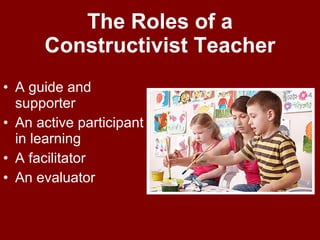
The Roles of a Constructivist Teacher A guide and supporter An active participant in learning  A facilitator An evaluator
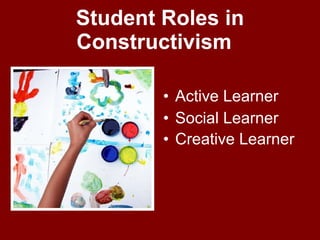
Student Roles in Constructivism  Active Learner Social Learner Creative Learner
Teacher- Child Discourse  Be Sensitive to student Knowledge Arrange Center Based Activities Promote different Strategies & Solutions Use ongoing Assessment/ Dynamic Encourage Children to tackle tasks within ZPD Enrich Communication
References Schunk, D. H. (2008). Learning theories: an educational perspective (5th ed.). Upper Saddle River, N.J.: Pearson/Merrill Prentice Hall.  Simpson, J. (1996). Constructivism and Connection Making in Art Education.  Art Education , 49(1), 53-59. Retrieved from EBSCO host .

Lesson plan

  • 1.
    Constructivism: Visual ArtsEducation Presentation by Jessica Arriaga University of Texas at Brownsville Spring 2011
  • 2.
  • 3.
    Constructivist Theory Persons,Behaviors and Environments Interact in Reciprocal Fashion Constructivist Classroom Community of Learners Activity Discourse Reflection
  • 4.
    Vygotsky’s Sociocultural Theory Social Interaction Self Regulation Human Development Mediation through symbols Language Zone of Proximal Development
  • 5.
  • 6.
    Classroom Environment ThemeAustralia Class Size 15-25 Students Student Profile Boys and Girls Age 8-9 Equipment Smart Board, Computer, and Projector Facilities Sink, Round Tables, Cabinets for Art Supplies
  • 7.
    Objectives TLW create an Australian Aboriginal artwork using the dot painting technique. Student will identify the elements and principles of art in a painting.
  • 8.
    TEKS: Standards 3.1 (B) Identify Elements Principles 3.2 (C) Produce Paintings 3.3 (A) Compare Content Purposes
  • 9.
    Introduction of theLesson Focusing Activity Discovery Atlas Connection to prior Knowledge Nature Relevance of the Lesson http://videos.howstuffworks.com/discovery/29126-discovery-atlas-australia-revealed-aboriginal-painting-video.htm
  • 10.
    Learning Activities Interactive Learning Analysis of an Artwork Students will Identify Technique Style Principles of Art Elements of Art Animal Representations
  • 11.
    Guided Practice Students Shares Experiences Basis of Painting Techniques and procedures Student Shares Ideas Provide possible solutions and answers Problem Solving/ Painting
  • 12.
    Independent Practice CreateAboriginal Painting Dot Technique Elements (Color, Line) Principles (Emphasis, Pattern) Animal representation
  • 13.
    Cooperative Learning Students will merge their individual Aboriginal Dot Paintings into a final art product for school display.
  • 14.
    Facilitating Activities FlexibleAssessment Emphasize strengths rather than weakness Scaffolding Learning Activities Positive Interaction Verbalization Concept of ZPD
  • 15.
    Challenging Activities PeerTutoring Extra Credit Activities Independent Art Studies
  • 16.
    Closure Summary/Questions Where do they get their paint from? What do the colors in the flag symbolize for the aboriginals? Why is art important for the Australian Aboriginals?
  • 17.
    Assessment DynamicAssessment Artistic Portfolios Student participation in evaluation Measurement of professional growth Reflection
  • 18.
    Further Exploration: AboriginalArt Traditional Aboriginal Art Symbols http://www.aboriginalartonline.com/culture/symbols.php Aboriginal Art Gallery http:// www.aboriginalaustralia.com /catalog/ Animated Dreamtime Stories from Australia http://www.abc.net.au/dustechoes/dustEchoesFlash.htm
  • 19.
  • 20.
    The Roles ofa Constructivist Teacher A guide and supporter An active participant in learning A facilitator An evaluator
  • 21.
    Student Roles inConstructivism Active Learner Social Learner Creative Learner
  • 22.
    Teacher- Child Discourse Be Sensitive to student Knowledge Arrange Center Based Activities Promote different Strategies & Solutions Use ongoing Assessment/ Dynamic Encourage Children to tackle tasks within ZPD Enrich Communication
  • 23.
    References Schunk, D.H. (2008). Learning theories: an educational perspective (5th ed.). Upper Saddle River, N.J.: Pearson/Merrill Prentice Hall. Simpson, J. (1996). Constructivism and Connection Making in Art Education.  Art Education , 49(1), 53-59. Retrieved from EBSCO host .

Editor's Notes

  • #9 3.1 (B) identify art elements such as color, and line, and art principles such as emphasis, and pattern in artwork. 3.2 (C) Produce Paintings 3.3 (A) compare content in artworks from the past and present for various purposes such as telling stories and documenting history and traditions.
  • #18 Dynamic Assessment differs from traditional assessment in that it focuses on process rather than product. Dynamic Assessment focuses on the assesor’s discovery of how to facilitate the child's learning rather than on the child demonstrating ability to the assessor. Students gain understanding from participating in evaluating their own work. Portfolios are now being used not just in fine arts but throughout the curriculum. Files of work with clear objectives to be met are saved and reviewed regularly as concepts are mastered and tasks become more complex with such mastery. Portfolios have been artists critical files for years. They have been utilized to review past work and as measures of professional growth. Using portfolios in the art room, for more than storage purposes, allows both teachers and students to reflect on and constantly review work over time toward those same ends. Individuals ca be asked to speak about or write about their work, revealing the pattern connections made from one task to another. Having students revisit works used in a motivational discussion prior to doing their artwork and/or examine other planning studies, such as sketches, can reveal the levels of understanding that have been achieve through the art making process. Instead of being judged as one among many, a person’s work is evaluated according to individual progress. Such a procedure does several positive things. It alleviates fear of failure, of being measured against the class “artist” or perceived peer “brain”. It validates the notion that everyone is capable of having good ideas and developing acceptable levels of technical skills to visual expression to be an alternative or complement to verbal expression. In the student centered lesson plan the responsibility for demonstrating learning is in the hands of the learner.
  • #21 A guide and supporter, who helps children organize their questions and ideas and translate them into manageable activities within their zone of proximal development. Ensuring that each child experiences academic success An active participant in learning, who explores, experiments and collaborates with children A facilitator who consciously plans the environment and the curriculum to promote student’s learning An evaluator who monitors children’s individual and collective development Teachers who use a Vygotskian framework become risk takers and problem solvers in their own instructional practice Knowing one’s students; considering how to carefully guide them through the “zone of proximal development” and connecting what has been decided that students need to know with what they already do know; helping them to want to know more is what the constructivist teacher does.