4G Technology
Presented By
ASHALATA MAJHEE
106F1A0504
B.TECH(CSE)
4TH
YEAR-1ST
SEM
INTRODUCTION
COMPARISON OF 1G,2G AND 3G TECHNOLOGY
REASONS FOR NEW RESEARCH
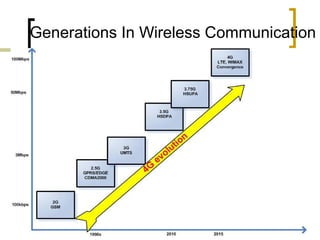
GENERATIONS IN WIRELESS COMMUNICATION
WHAT IS 4G
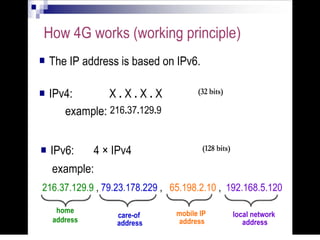
WORKING PRINCIPLE
APPLICATION
CONCLUSION
INTRODUCTION
 4G is not one defined technology or
standard, but rather a collection of
technologies at creating fully packet-
switched networks optimized for data.
 4G Networks are projected to provide speed
of 100Mbps while moving and 1Gbps while
stationary.
1G Technology
 1G refers to the first-generation of
wireless telephone technology was
developed in 1970’s.
 Analog signals is used
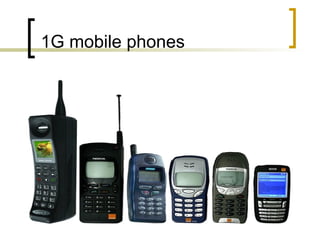
1G mobile phones
2G Technology
 Around 1980’s
 Better quality & capacity - More people
could use their phones at the same
time
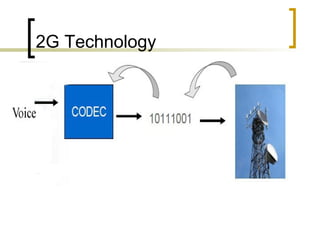
 Digital Signals – consist of 0’s & 1’s
2G Technology
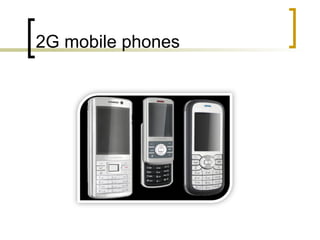
2G mobile phones
3G Technology
 Large capacity and broadband capabilities
 Allows the transmission of 384kbps for
mobile systems and up to 2Mbps for
stationary.
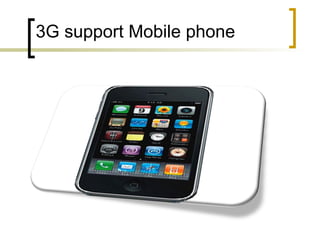
3G support Mobile phone
Reasons for New Research
 Even though 3G has successfully been
introduced to mobile users, there are some
issues that are debated by 3G providers and
users.
 High input fees for the 3G service licenses
 Great differences in the licensing terms
 3G phones are expensive
Generations In Wireless Communication
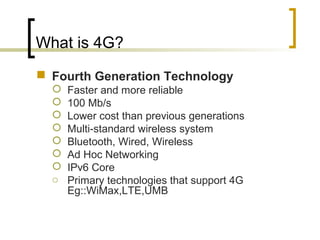
What is 4G?
 Fourth Generation Technology
 Faster and more reliable
 100 Mb/s
 Lower cost than previous generations
 Multi-standard wireless system
 Bluetooth, Wired, Wireless
 Ad Hoc Networking
 IPv6 Core
o Primary technologies that support 4G
Eg::WiMax,LTE,UMB
Applications:-
virtual presence
virtual navigation
Tele-geo processing
Tele-medicine and education
crisis management
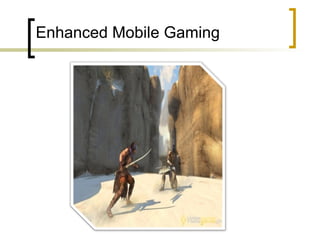
Enhanced Mobile Gaming
 Experience enhance wireless capabilities
that deliver mobile gaming interaction
with less than five seconds
 Play online multi player games while
traveling at high speeds or sitting outside
Enhanced Mobile Gaming
Broadband access in Remote
location
 4G will provide a wireless alternative
for broadband access
 It will provide first opportunity for
broadband access in remote locations
without an infrastructure to support
cable
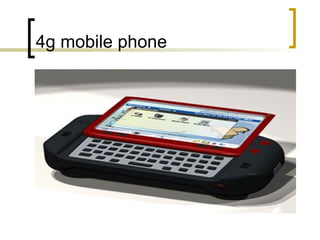
4g mobile phone
CONCLUSION:
 4G is not a final solution in mobile
communication…..The research is
going on…
 Now a days 5G (5th generation
mobile networks or 5th generation
wireless systems) is a name used in
some research papers and projects
 We can expect ‘NEW’ within some
months
THANK YOU !!!
ANY QUERIES??

4 g technology

  • 1.
    4G Technology Presented By ASHALATAMAJHEE 106F1A0504 B.TECH(CSE) 4TH YEAR-1ST SEM
  • 2.
    INTRODUCTION COMPARISON OF 1G,2GAND 3G TECHNOLOGY REASONS FOR NEW RESEARCH GENERATIONS IN WIRELESS COMMUNICATION WHAT IS 4G WORKING PRINCIPLE APPLICATION CONCLUSION
  • 3.
    INTRODUCTION  4G isnot one defined technology or standard, but rather a collection of technologies at creating fully packet- switched networks optimized for data.  4G Networks are projected to provide speed of 100Mbps while moving and 1Gbps while stationary.
  • 4.
    1G Technology  1Grefers to the first-generation of wireless telephone technology was developed in 1970’s.  Analog signals is used
  • 5.
  • 6.
    2G Technology  Around1980’s  Better quality & capacity - More people could use their phones at the same time  Digital Signals – consist of 0’s & 1’s
  • 7.
  • 8.
  • 9.
    3G Technology  Largecapacity and broadband capabilities  Allows the transmission of 384kbps for mobile systems and up to 2Mbps for stationary.
  • 10.
  • 11.
    Reasons for NewResearch  Even though 3G has successfully been introduced to mobile users, there are some issues that are debated by 3G providers and users.  High input fees for the 3G service licenses  Great differences in the licensing terms  3G phones are expensive
  • 12.
  • 14.
    What is 4G? Fourth Generation Technology  Faster and more reliable  100 Mb/s  Lower cost than previous generations  Multi-standard wireless system  Bluetooth, Wired, Wireless  Ad Hoc Networking  IPv6 Core o Primary technologies that support 4G Eg::WiMax,LTE,UMB
  • 16.
    Applications:- virtual presence virtual navigation Tele-geoprocessing Tele-medicine and education crisis management
  • 17.
    Enhanced Mobile Gaming Experience enhance wireless capabilities that deliver mobile gaming interaction with less than five seconds  Play online multi player games while traveling at high speeds or sitting outside
  • 18.
  • 19.
    Broadband access inRemote location  4G will provide a wireless alternative for broadband access  It will provide first opportunity for broadband access in remote locations without an infrastructure to support cable
  • 20.
  • 21.
    CONCLUSION:  4G isnot a final solution in mobile communication…..The research is going on…  Now a days 5G (5th generation mobile networks or 5th generation wireless systems) is a name used in some research papers and projects  We can expect ‘NEW’ within some months
  • 22.