Performance and rewards
Creating an engaged and motivated culture in the
third sector when times are tough
Kimberly Bradshaw
Managing Director
Buzzacott HR Consultancy
Contents
 Setting the scene
 Motivation
– What is it, why do we need motivated employees, what
motivates people?
 Engagement
– What is it, why do we need engaged employees, what engages
people?
 What can you do?
 Conclusion
Employee relations in challenging times
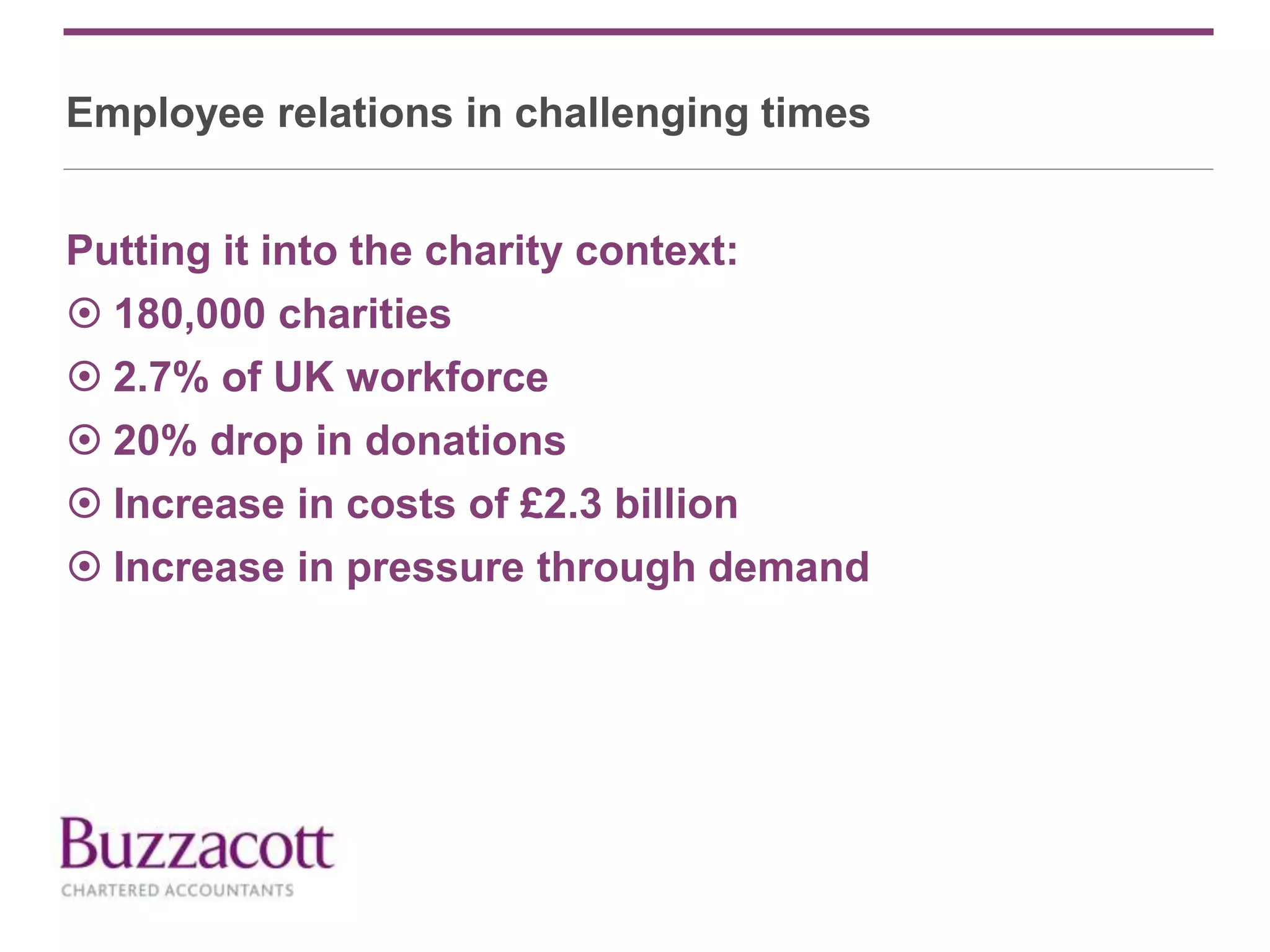
Putting it into the charity context:
 180,000 charities
 2.7% of UK workforce
 20% drop in donations
 Increase in costs of £2.3 billion
 Increase in pressure through demand
Employee relations in challenging times
 Employee buy-in is key
 Higher levels of job satisfaction and motivation
 Environment more open to influence
 Roles more flexible
 Strong value-based purpose – make the world better
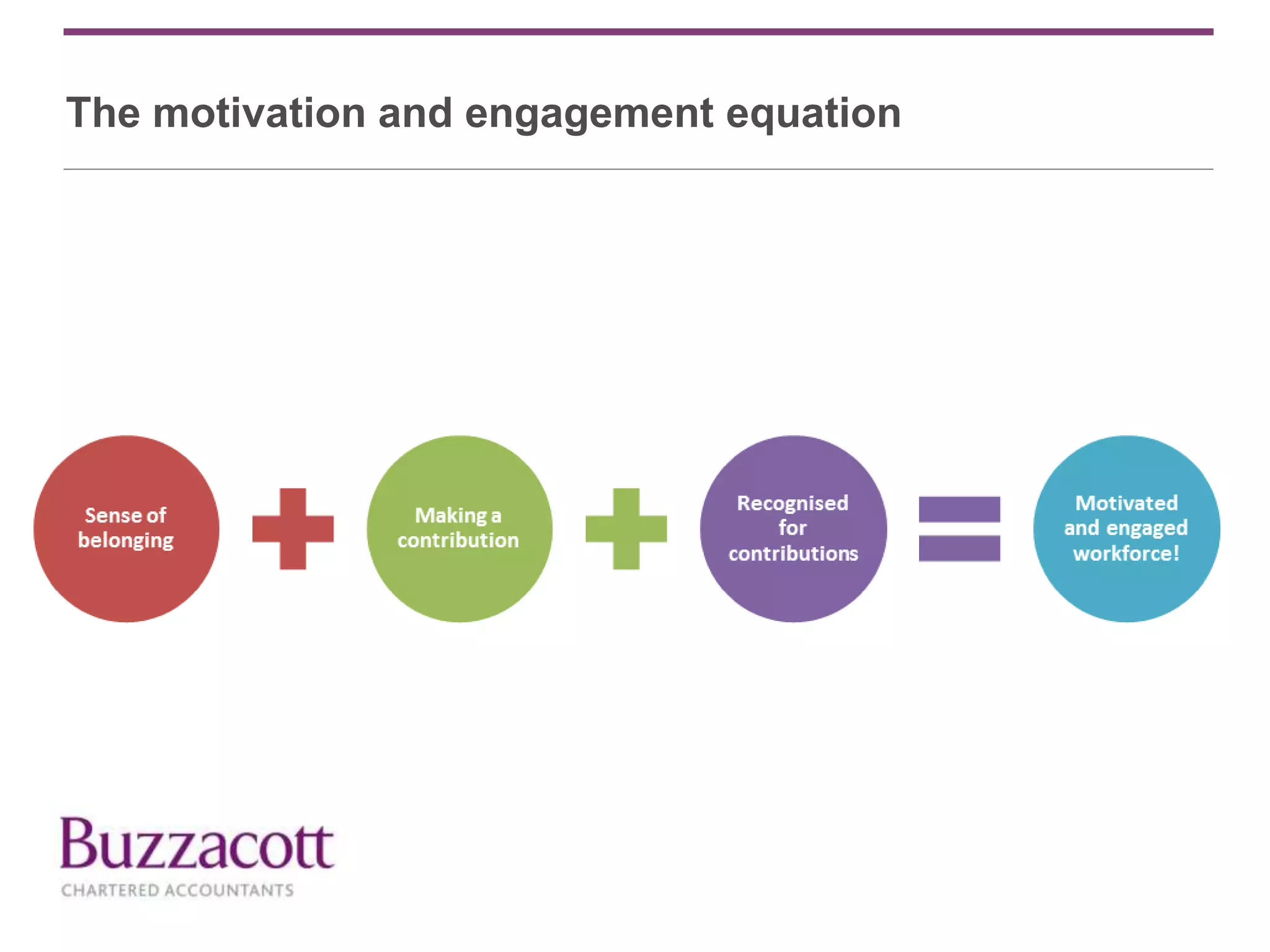
The motivation and engagement equation
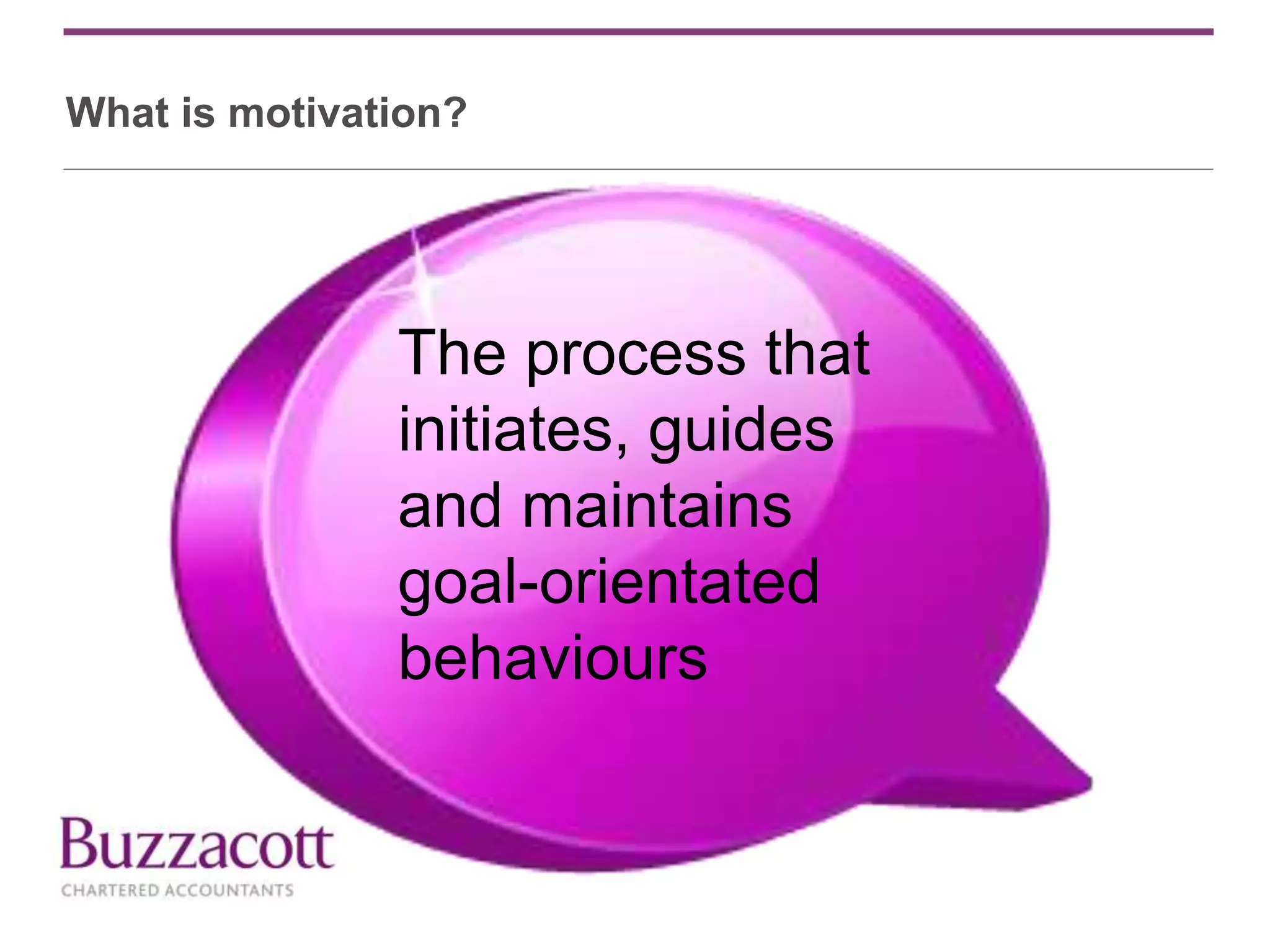
What is motivation?
The process that
initiates, guides
and maintains
goal-orientated
behaviours
Why do we need motivated employees?
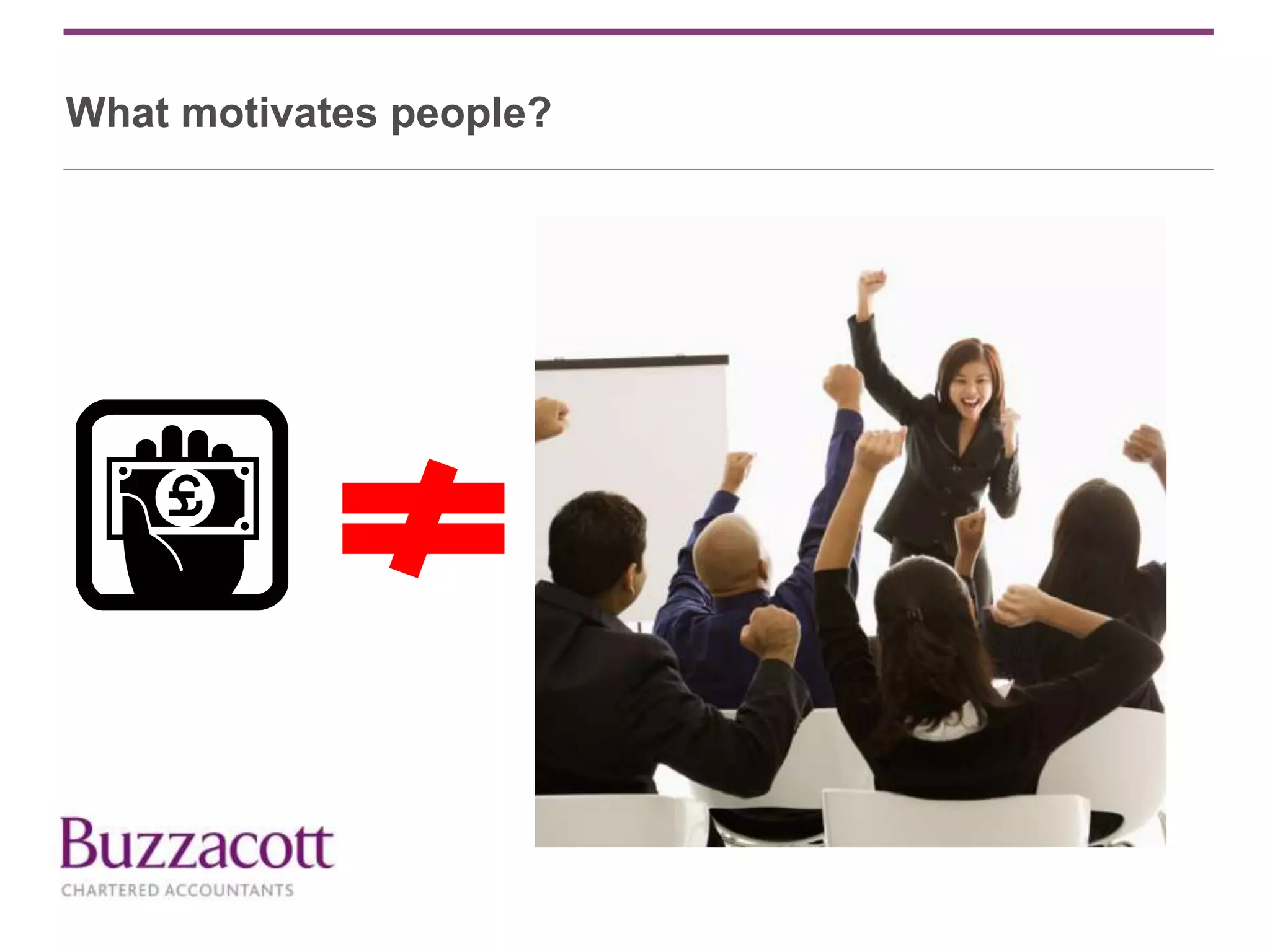
What motivates people?
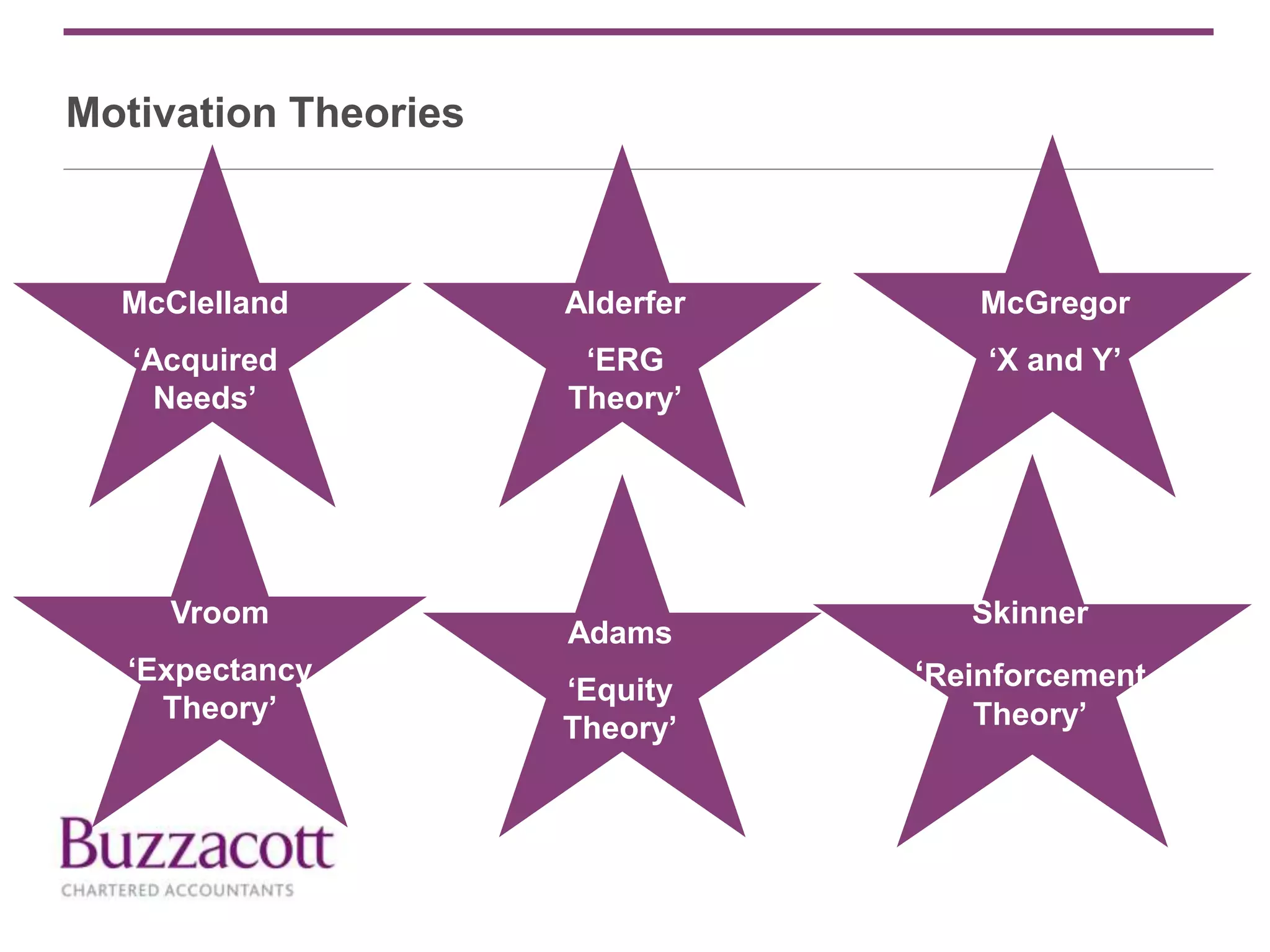
Motivation Theories
McClelland
‘Acquired
Needs’
Alderfer
‘ERG
Theory’
McGregor
‘X and Y’
Vroom
‘Expectancy
Theory’
Skinner
‘Reinforcement
Theory’
Adams
‘Equity
Theory’
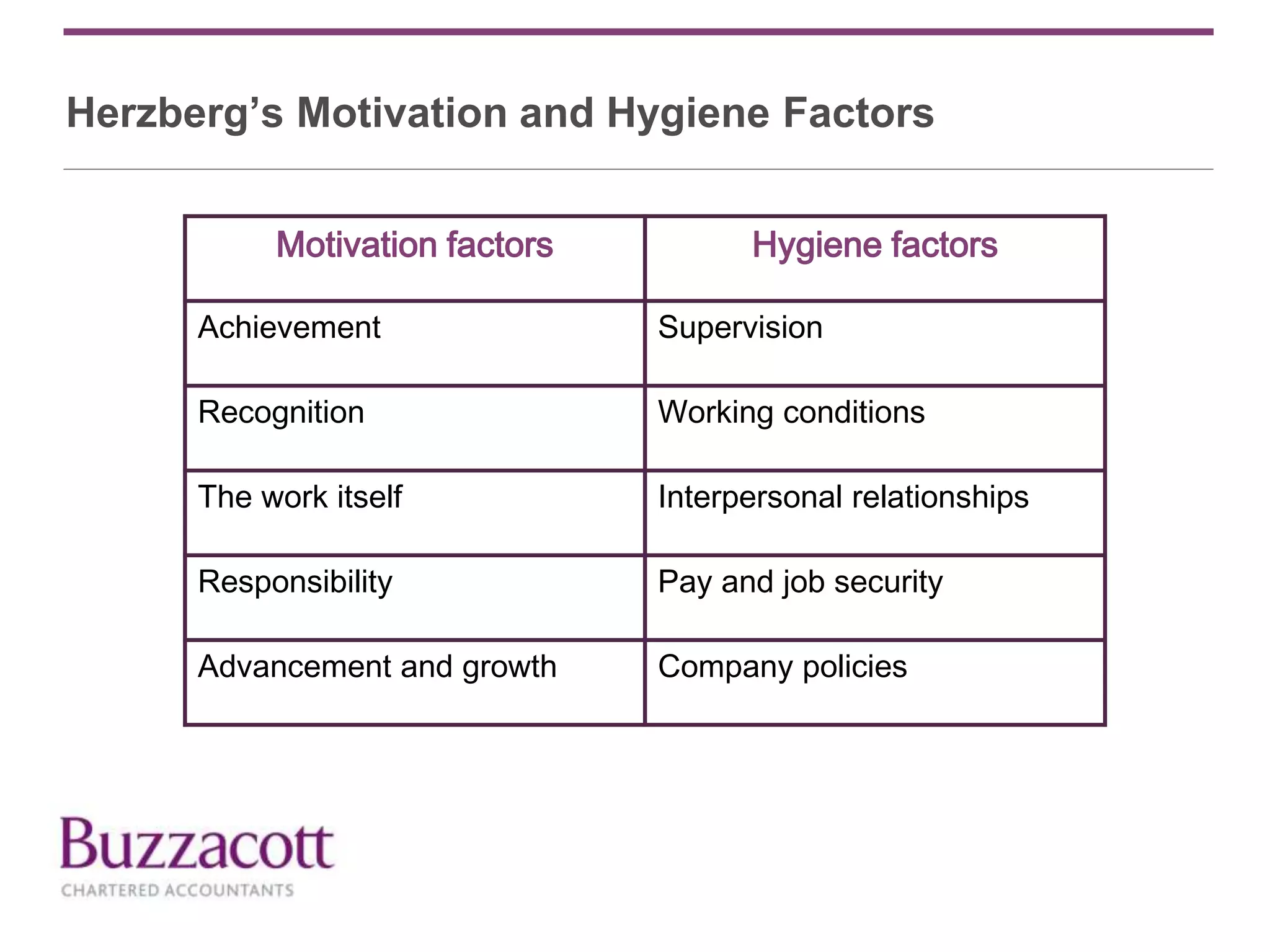
Herzberg’s Motivation and Hygiene Factors
Motivation factors Hygiene factors
Achievement Supervision
Recognition Working conditions
The work itself Interpersonal relationships
Responsibility Pay and job security
Advancement and growth Company policies
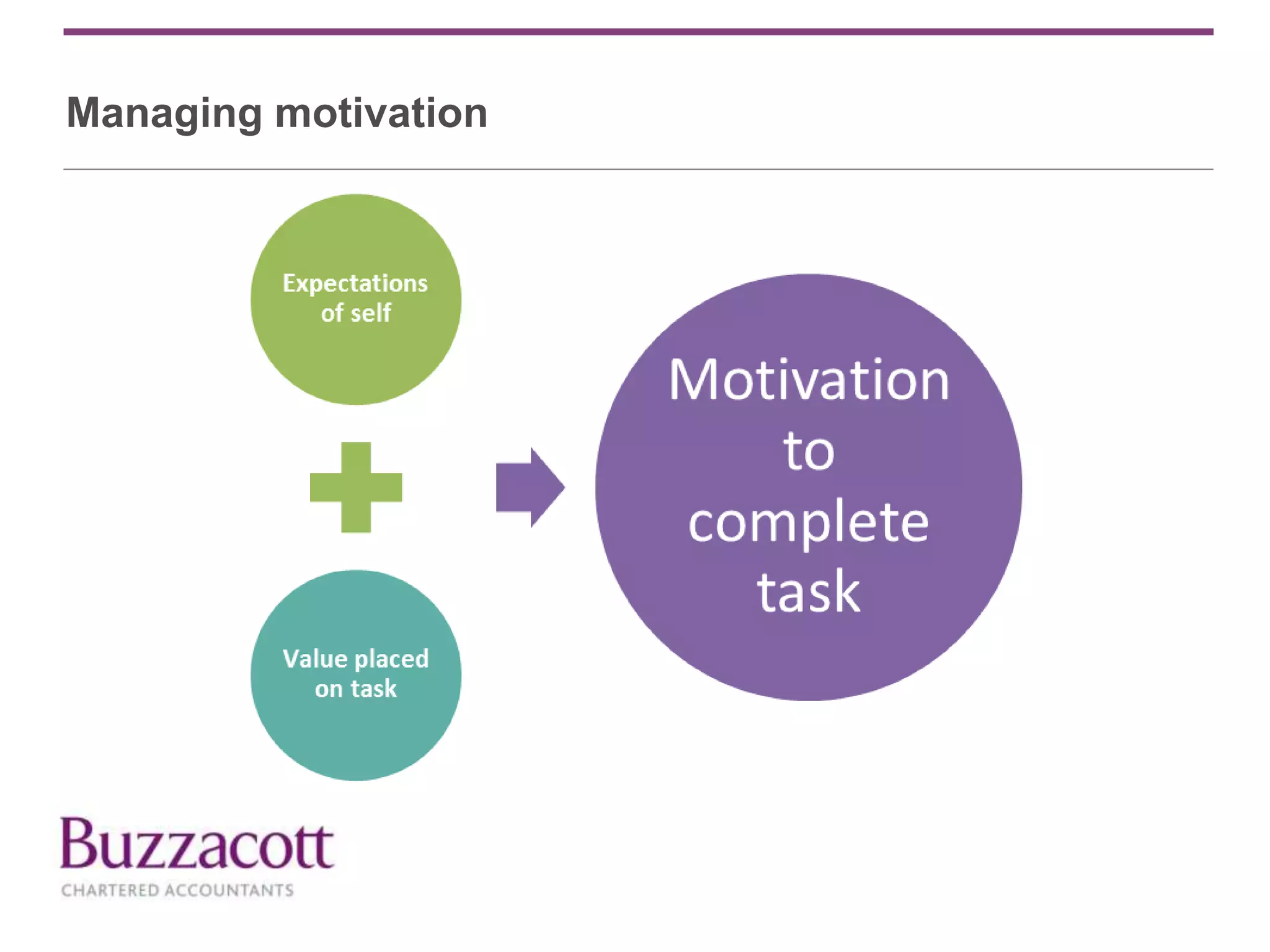
Managing motivation
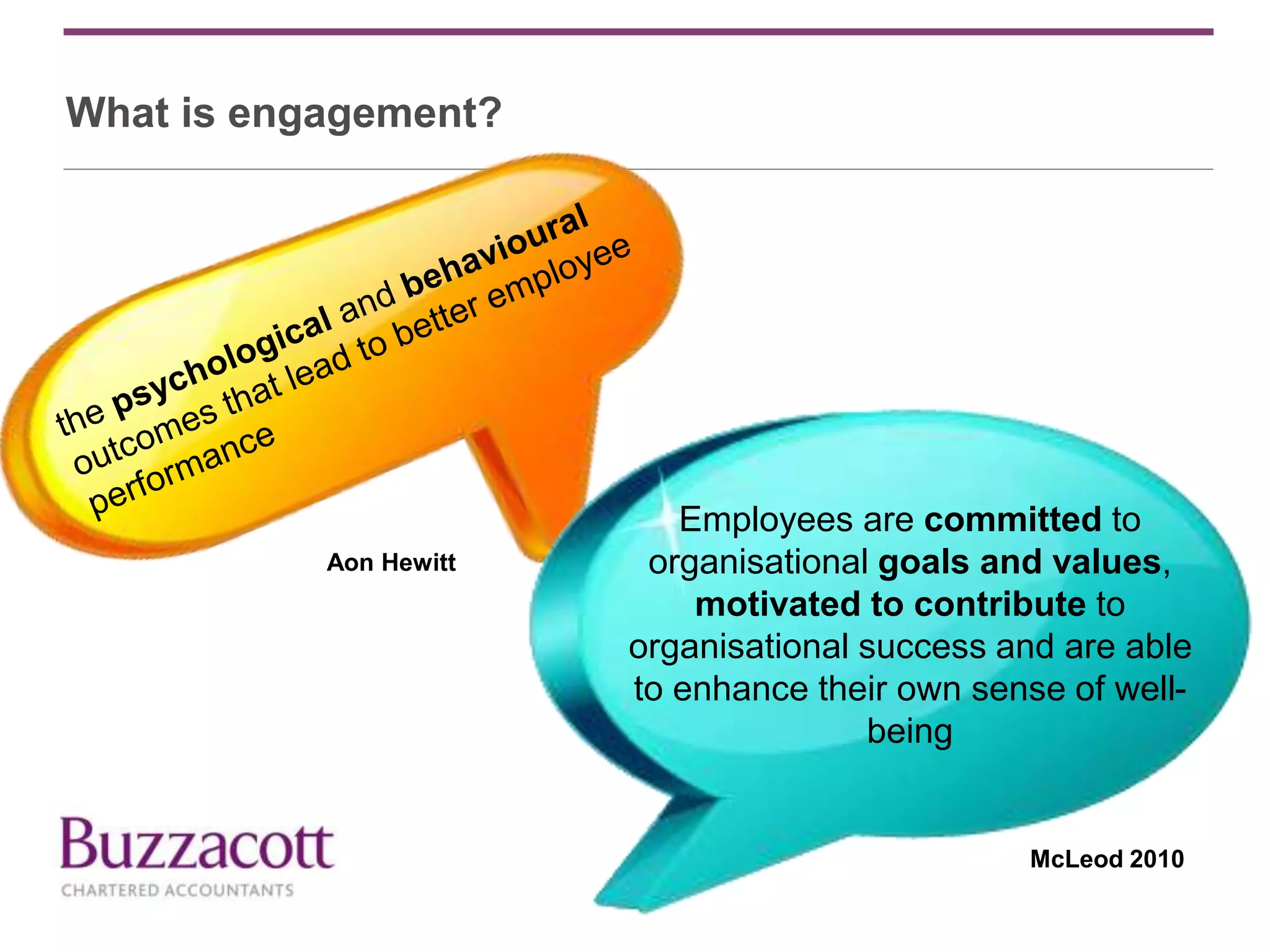
What is engagement?
Aon Hewitt
Employees are committed to
organisational goals and values,
motivated to contribute to
organisational success and are able
to enhance their own sense of well-
being
McLeod 2010
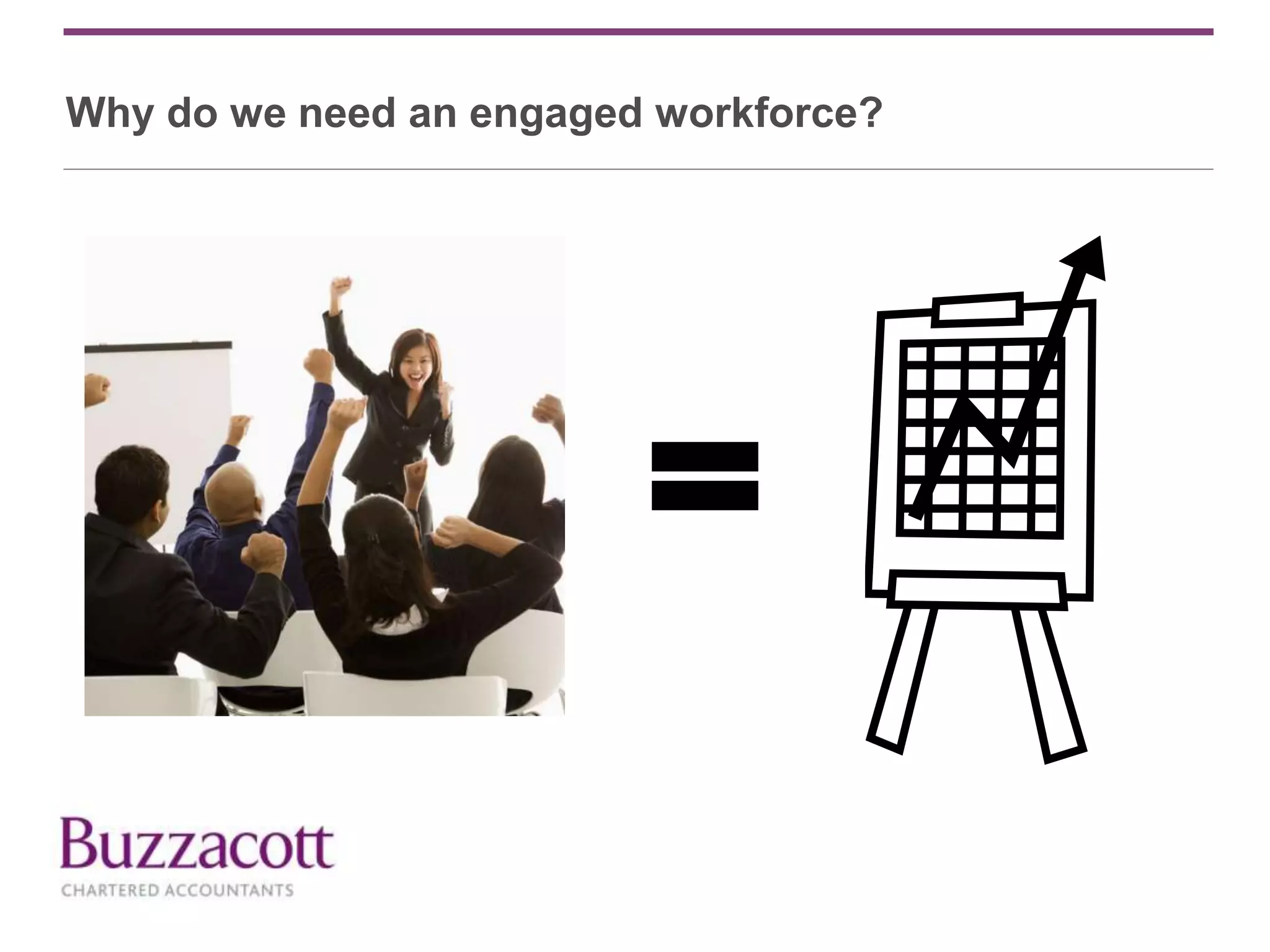
Why do we need an engaged workforce?
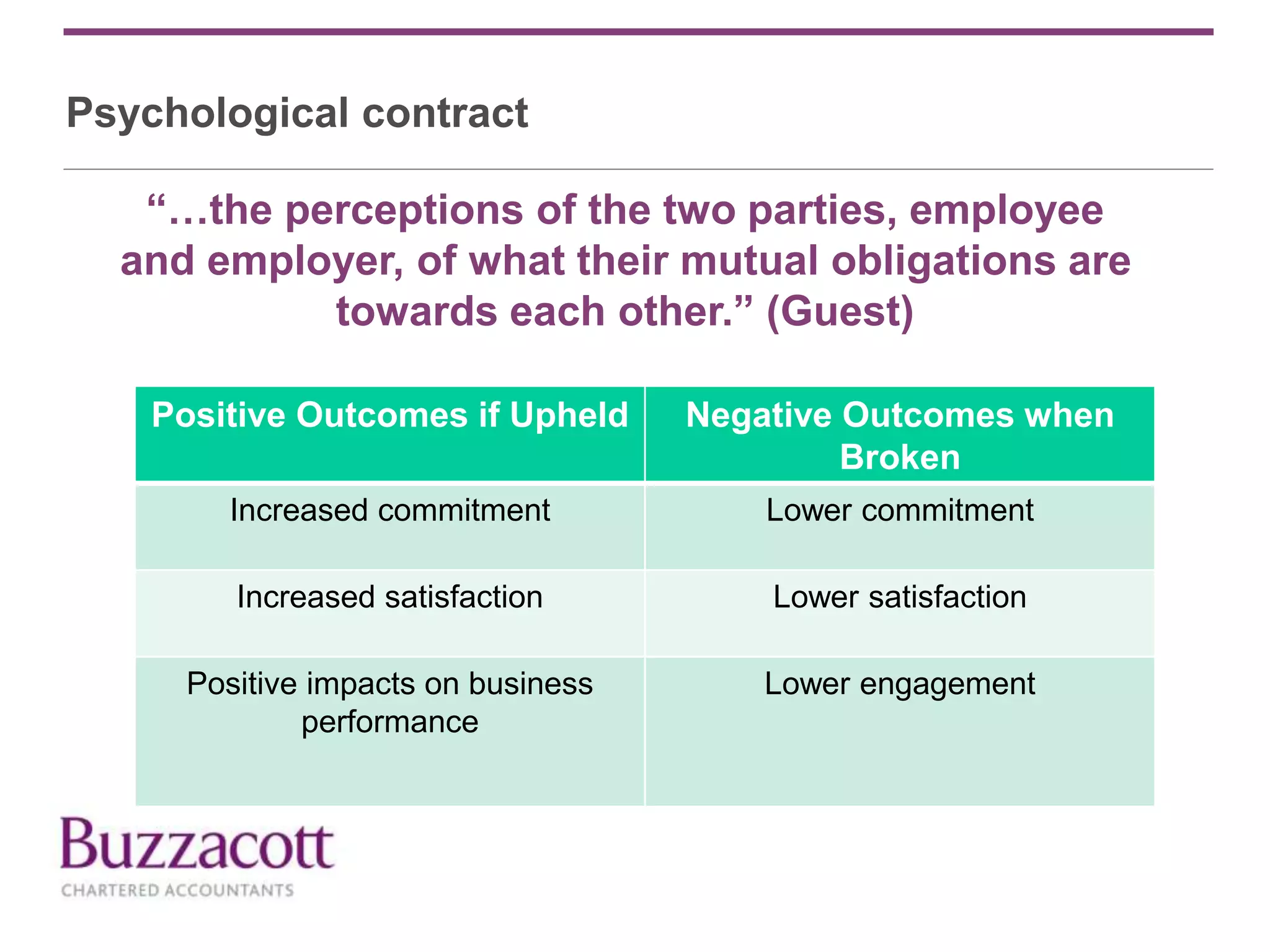
Psychological contract
Positive Outcomes if Upheld Negative Outcomes when
Broken
Increased commitment Lower commitment
Increased satisfaction Lower satisfaction
Positive impacts on business
performance
Lower engagement
“…the perceptions of the two parties, employee
and employer, of what their mutual obligations are
towards each other.” (Guest)
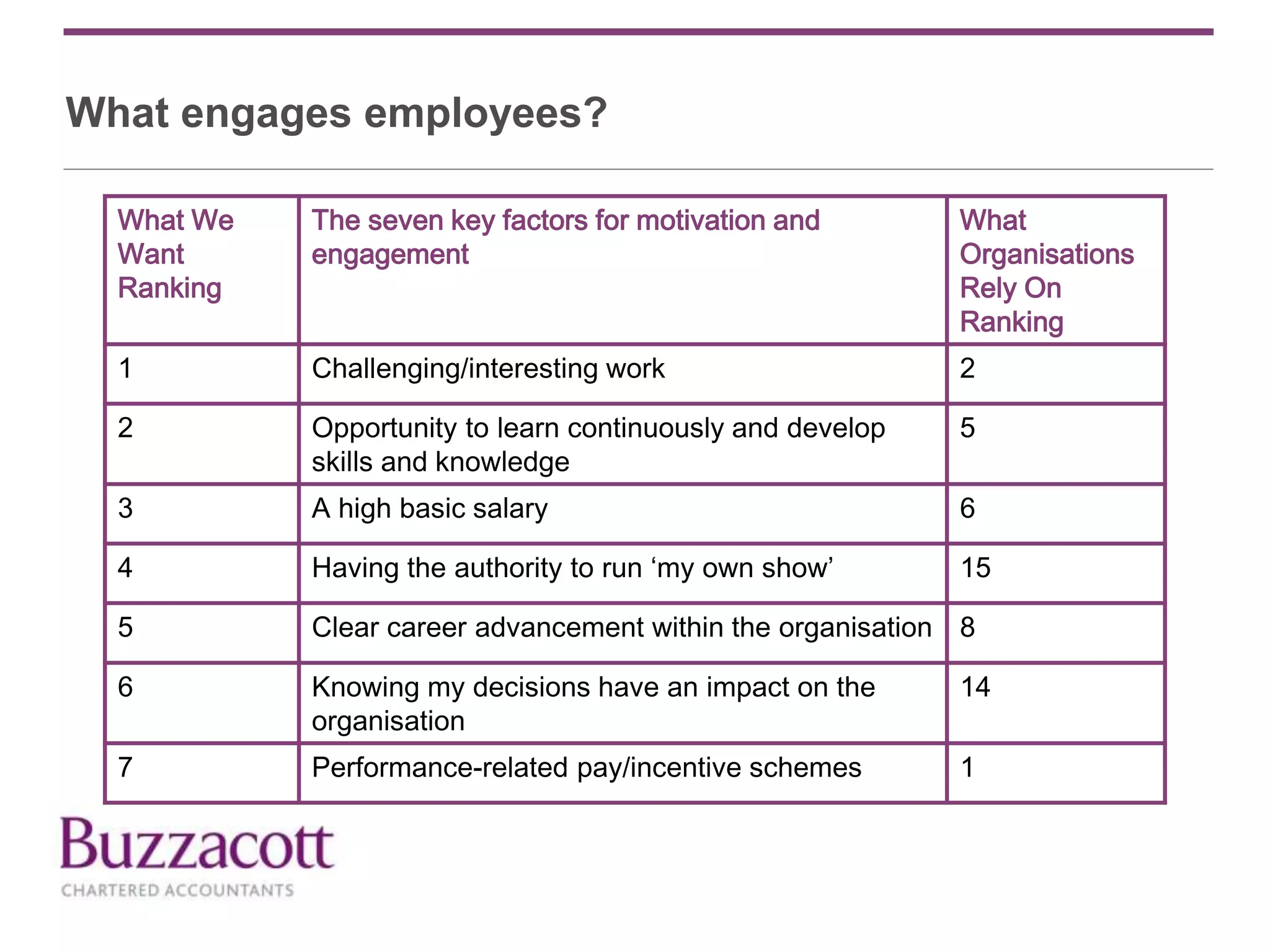
What engages employees?
What We
Want
Ranking
The seven key factors for motivation and
engagement
What
Organisations
Rely On
Ranking
1 Challenging/interesting work 2
2 Opportunity to learn continuously and develop
skills and knowledge
5
3 A high basic salary 6
4 Having the authority to run ‘my own show’ 15
5 Clear career advancement within the organisation 8
6 Knowing my decisions have an impact on the
organisation
14
7 Performance-related pay/incentive schemes 1
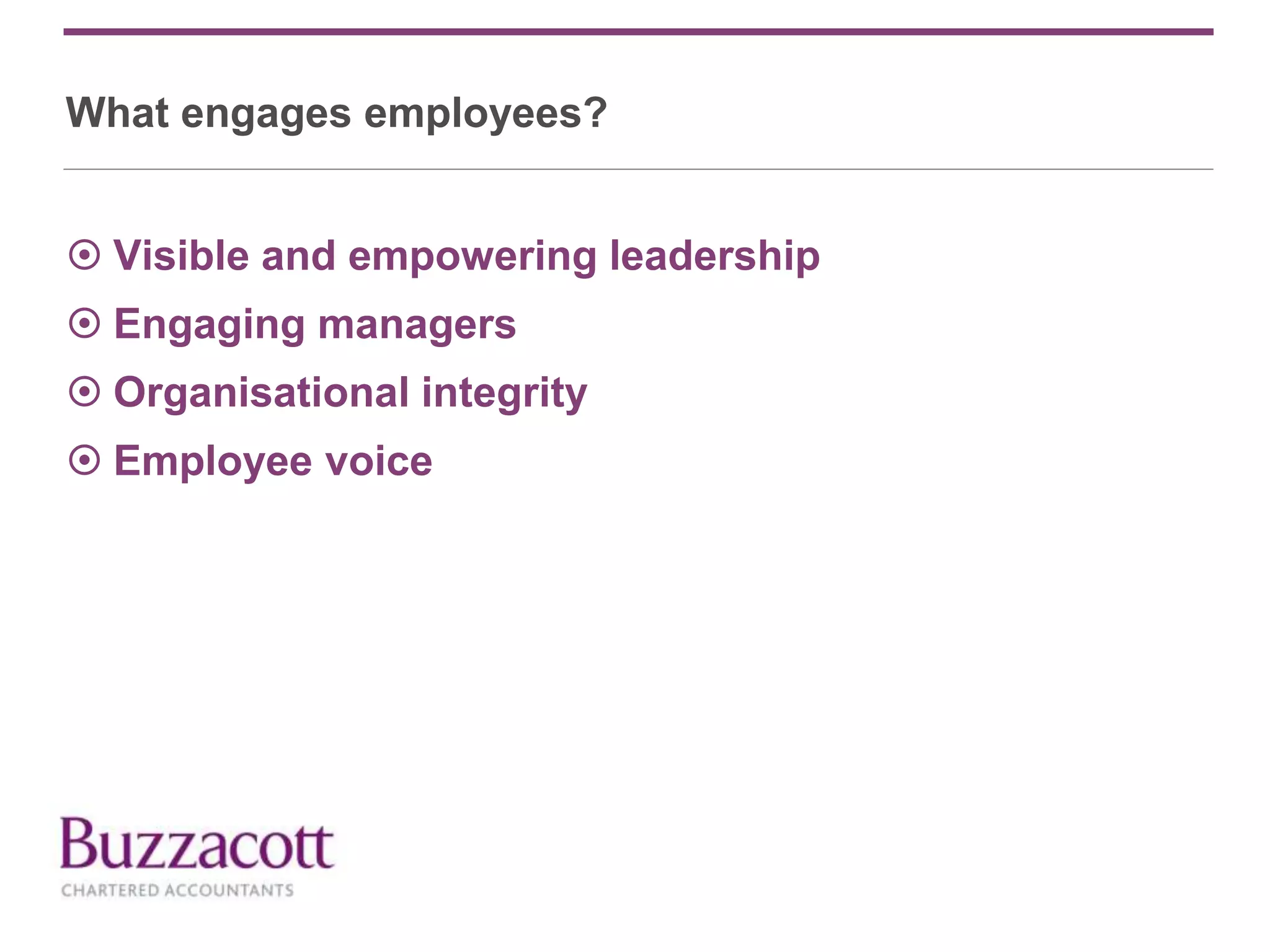
What engages employees?
 Visible and empowering leadership
 Engaging managers
 Organisational integrity
 Employee voice
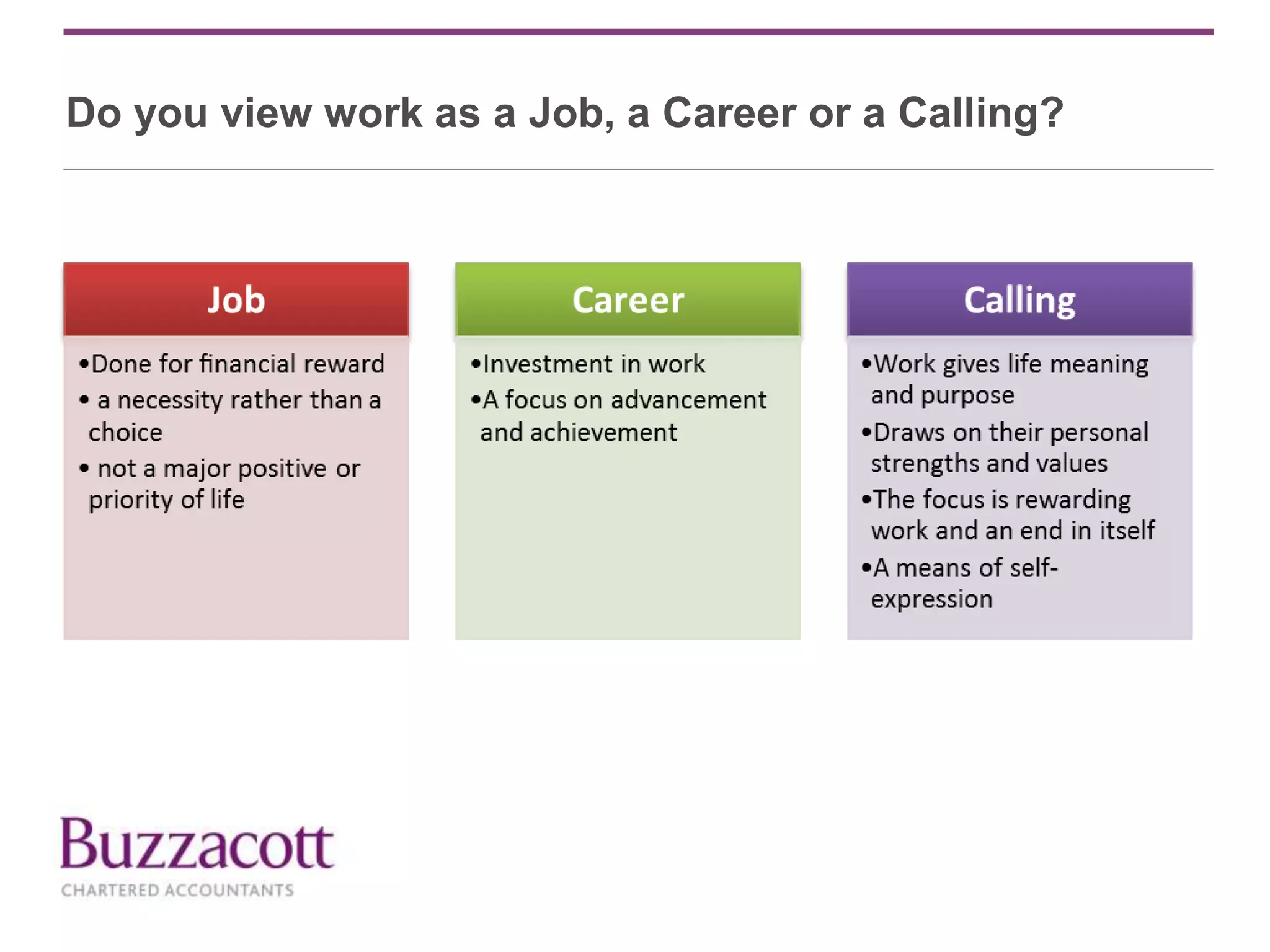
Do you view work as a Job, a Career or a Calling?
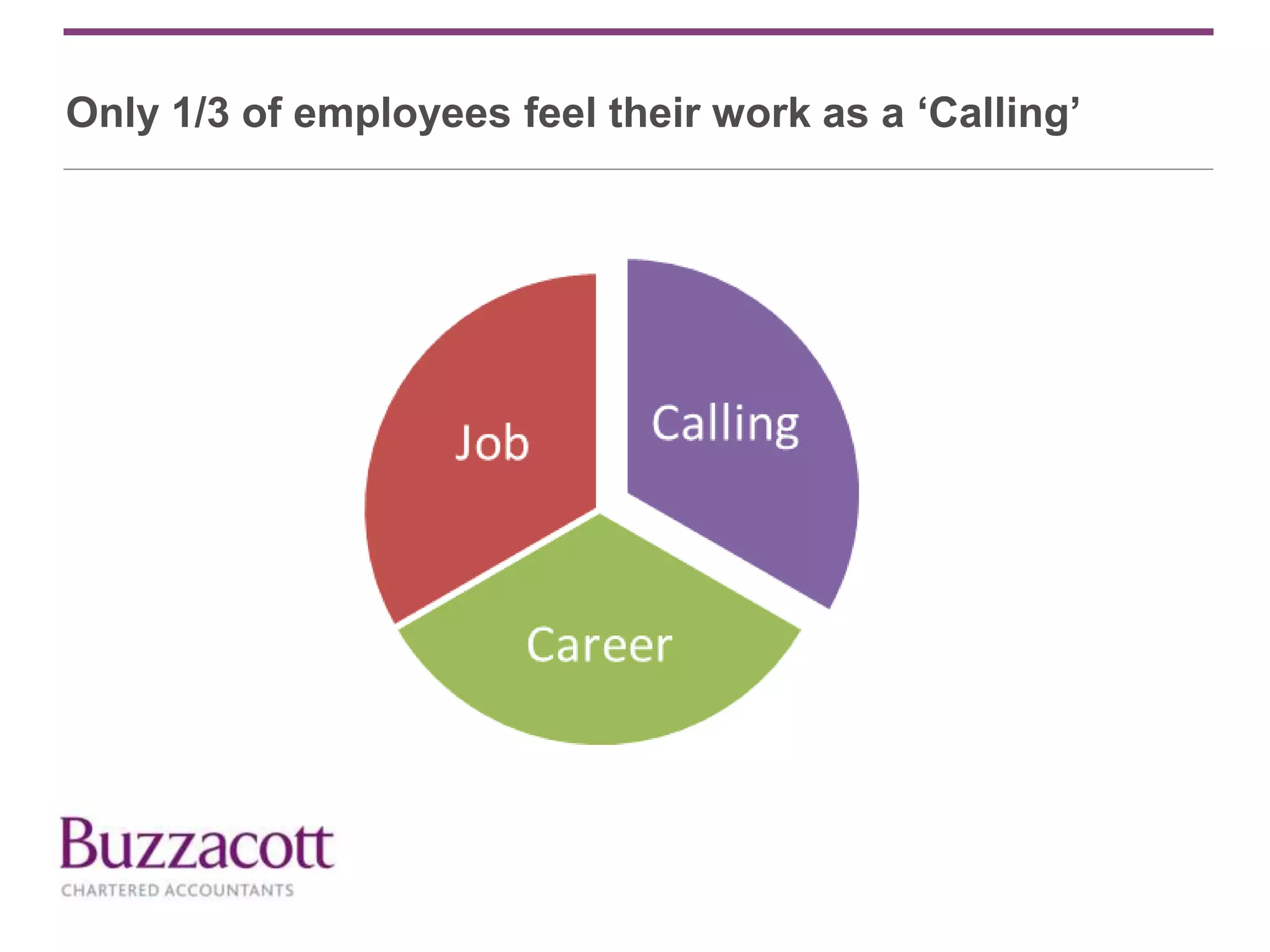
Only 1/3 of employees feel their work as a ‘Calling’
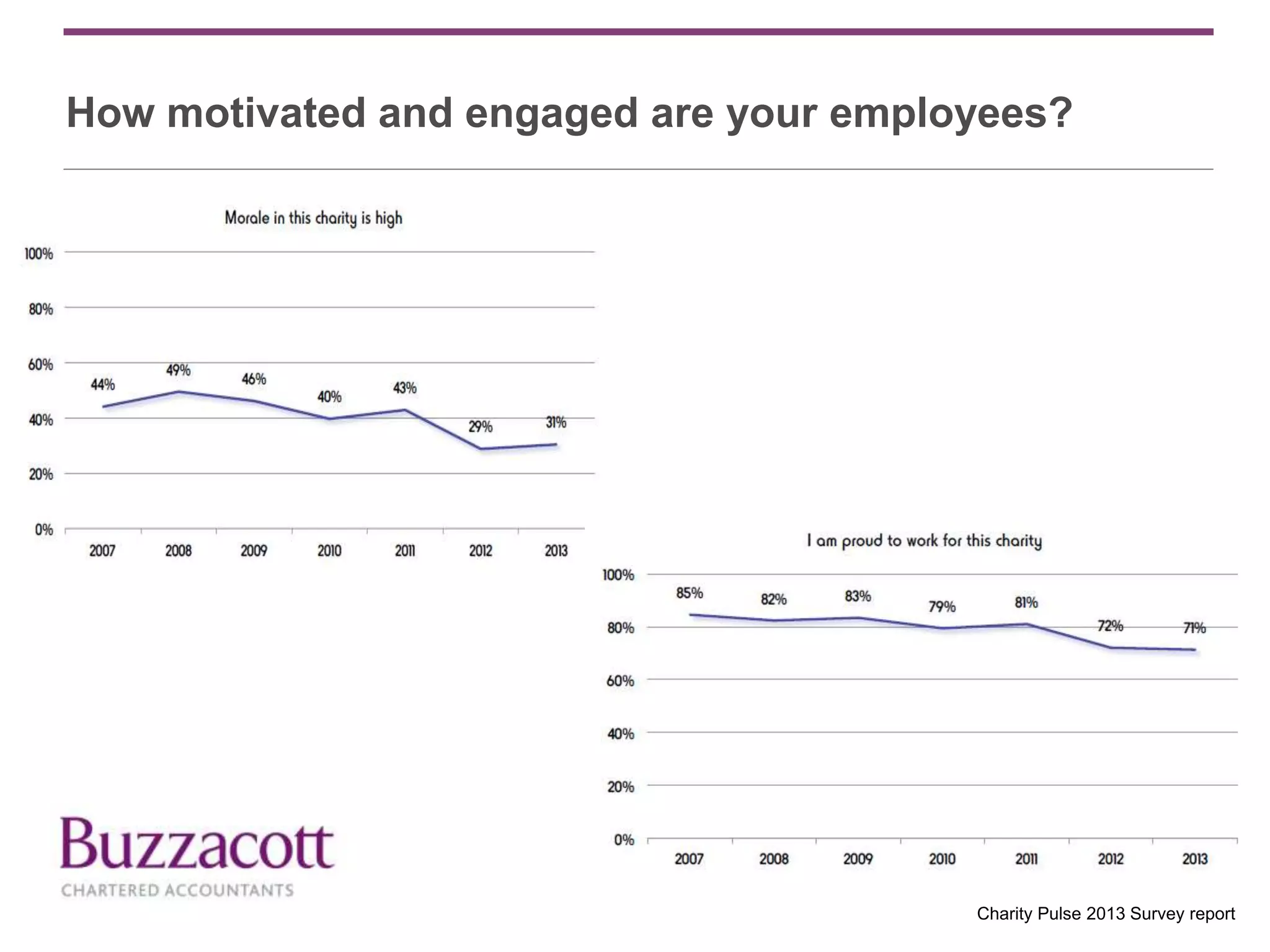
How motivated and engaged are your employees?
Charity Pulse 2013 Survey report
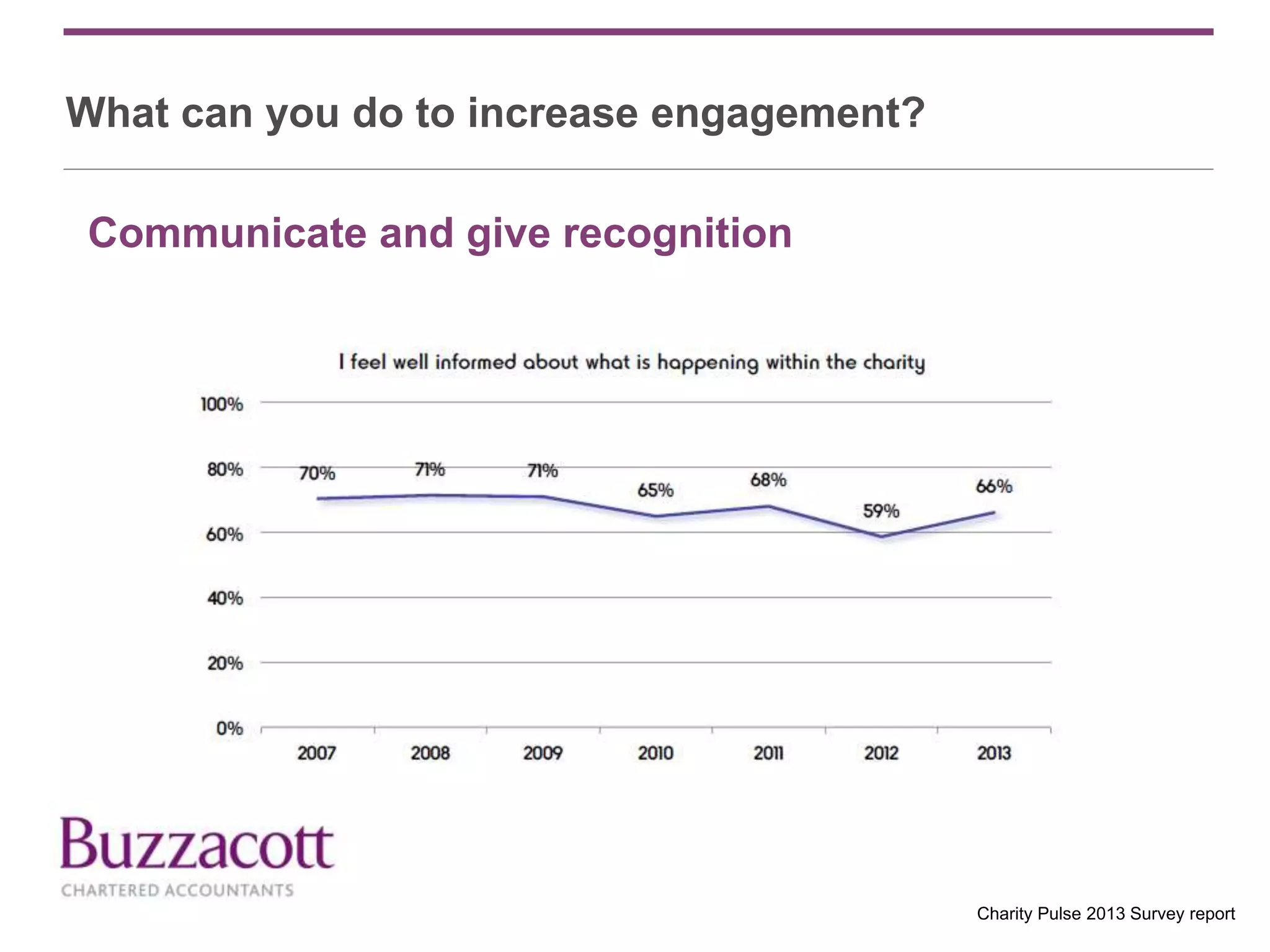
What can you do to increase engagement?
Communicate and give recognition
Charity Pulse 2013 Survey report
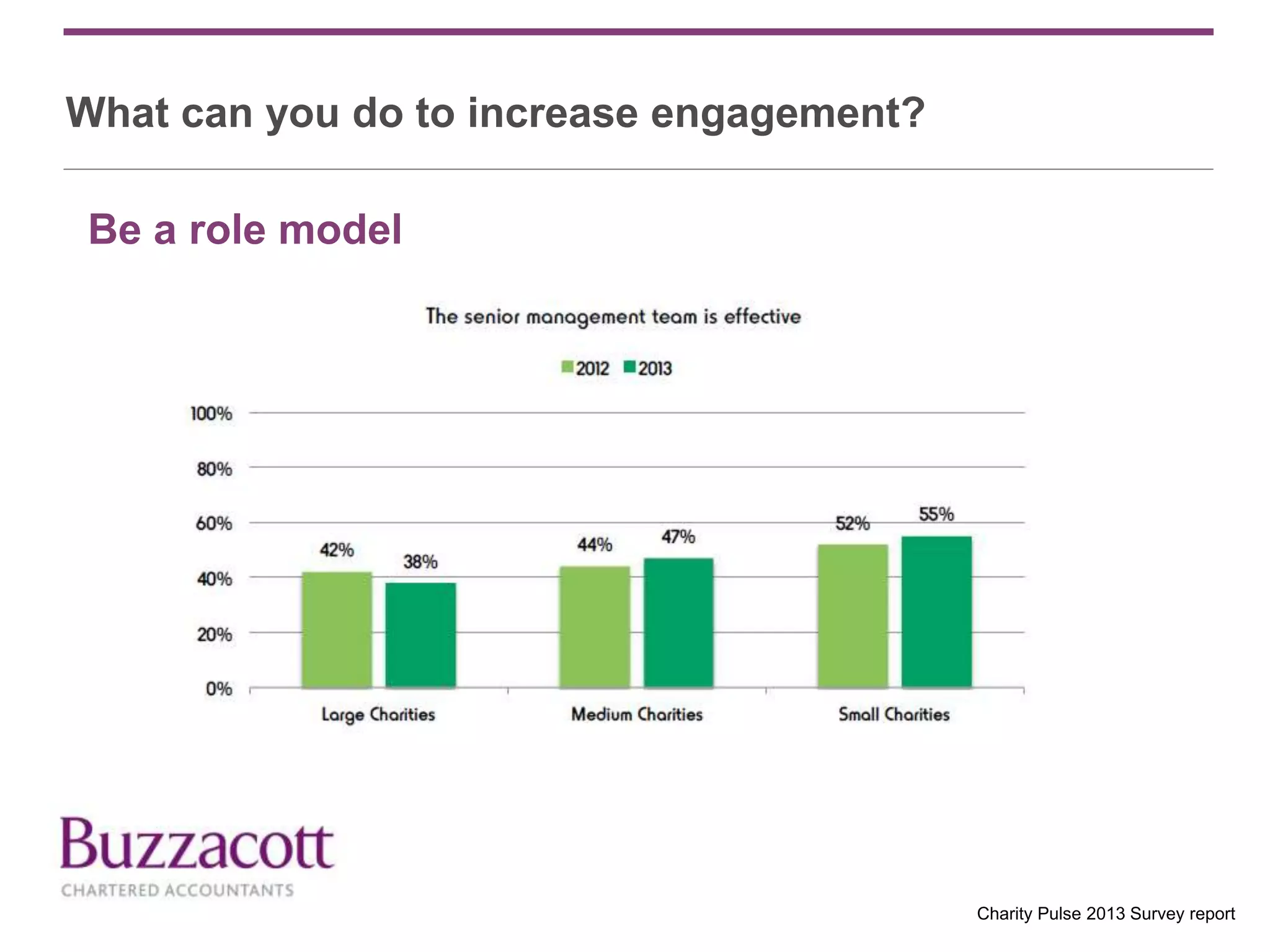
What can you do to increase engagement?
Be a role model
Charity Pulse 2013 Survey report
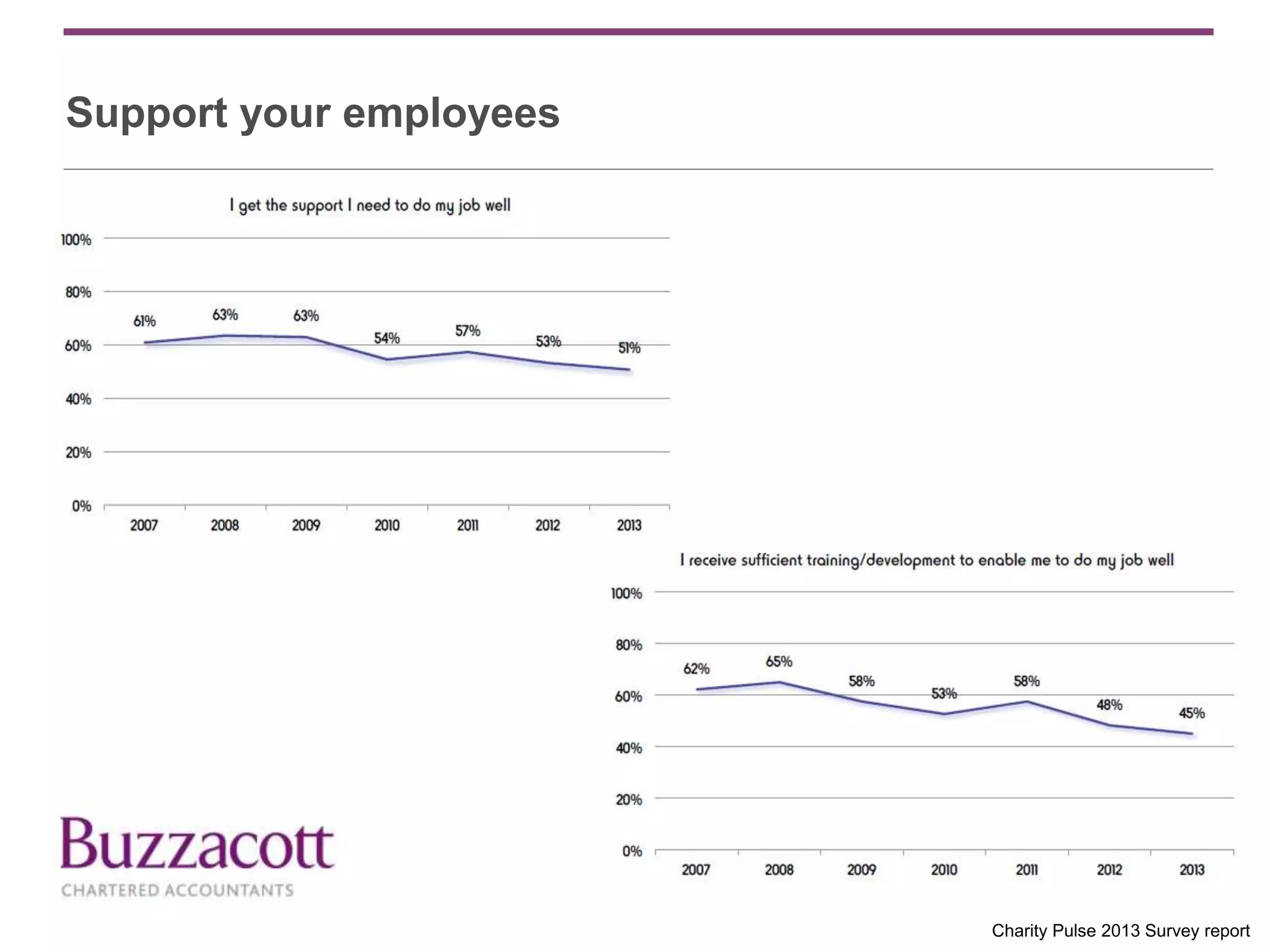
Support your employees
Charity Pulse 2013 Survey report
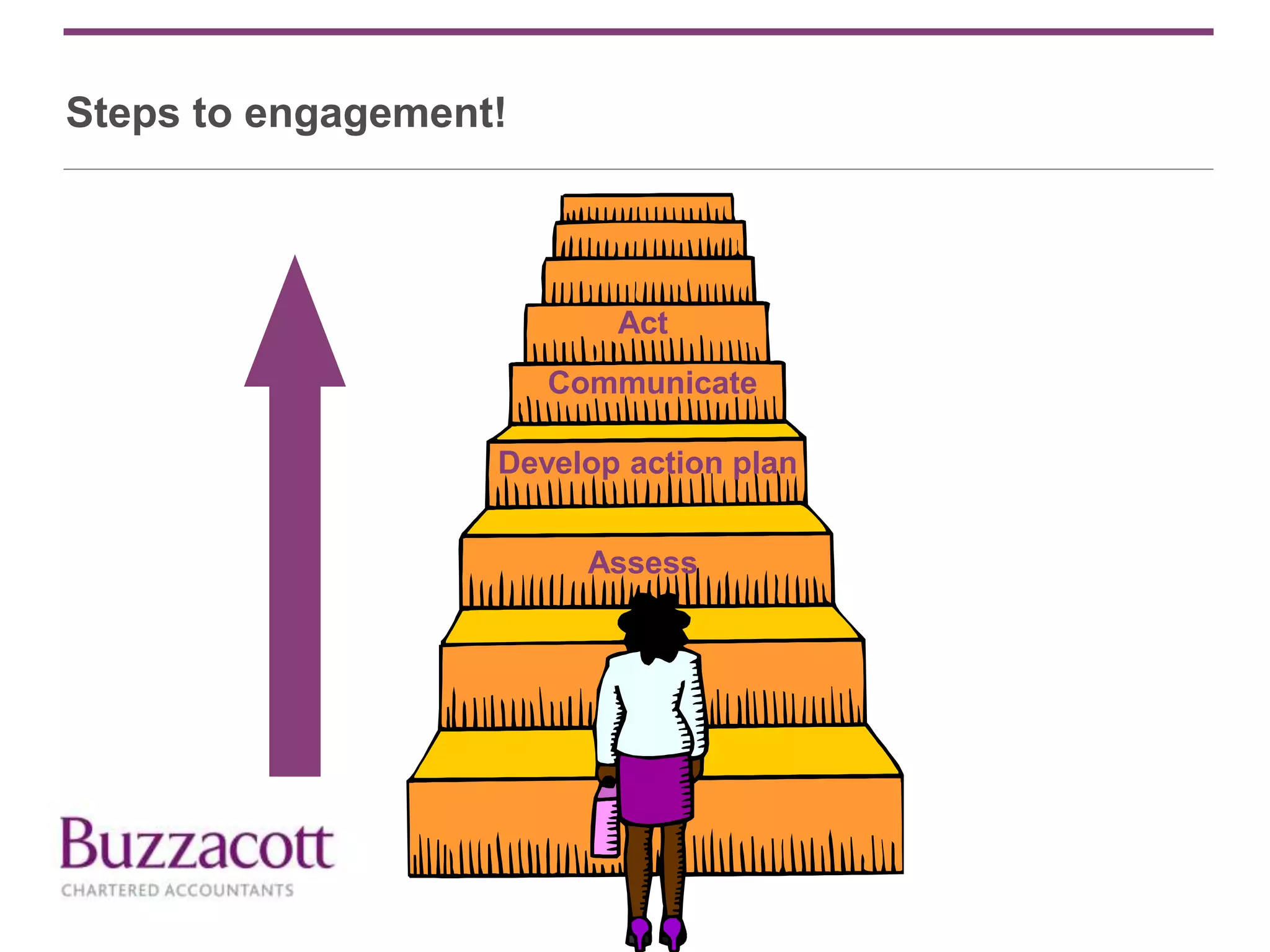
Assess
Develop action plan
Communicate
Act
Steps to engagement!
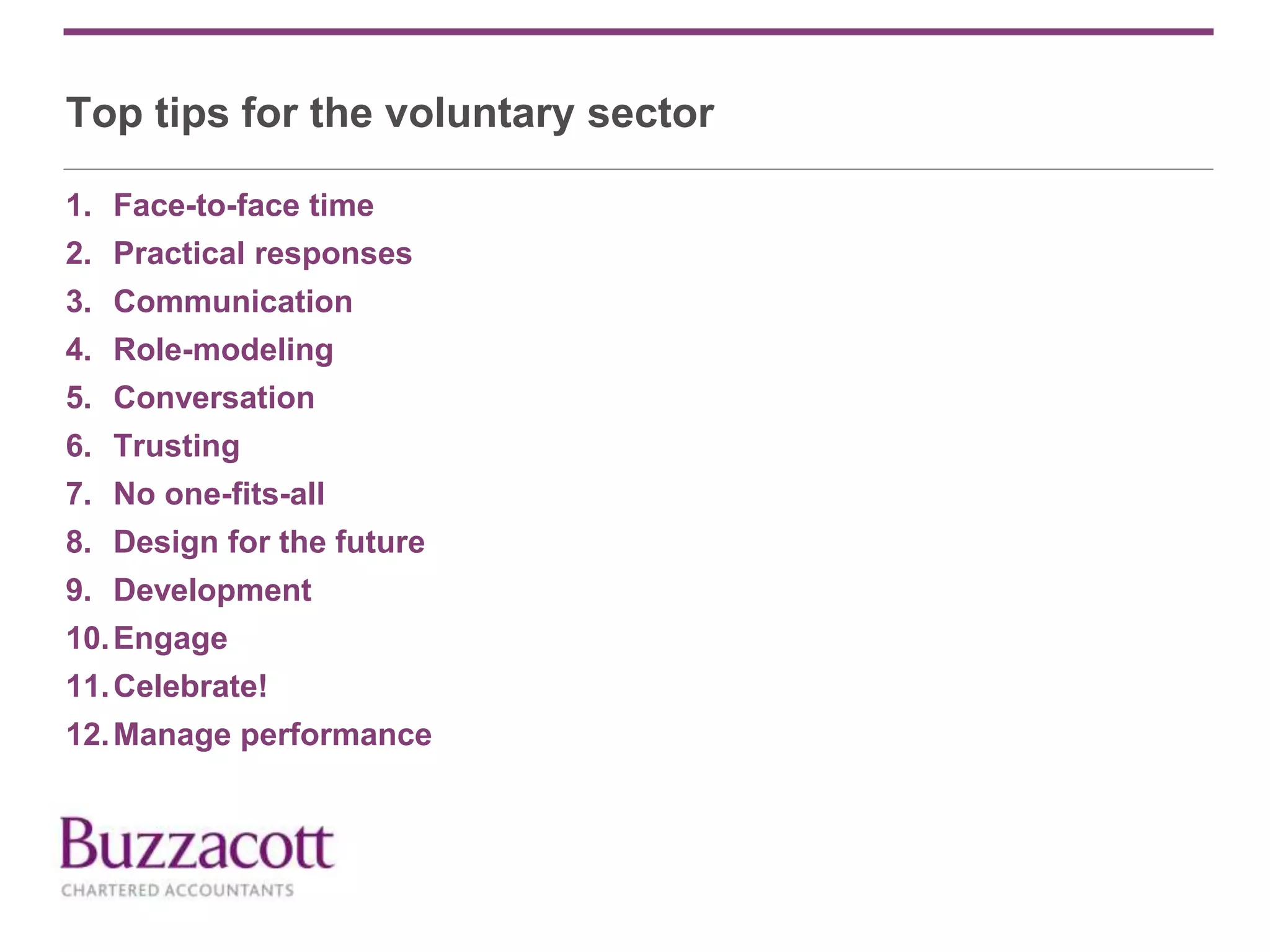
Top tips for the voluntary sector
1. Face-to-face time
2. Practical responses
3. Communication
4. Role-modeling
5. Conversation
6. Trusting
7. No one-fits-all
8. Design for the future
9. Development
10.Engage
11.Celebrate!
12.Manage performance
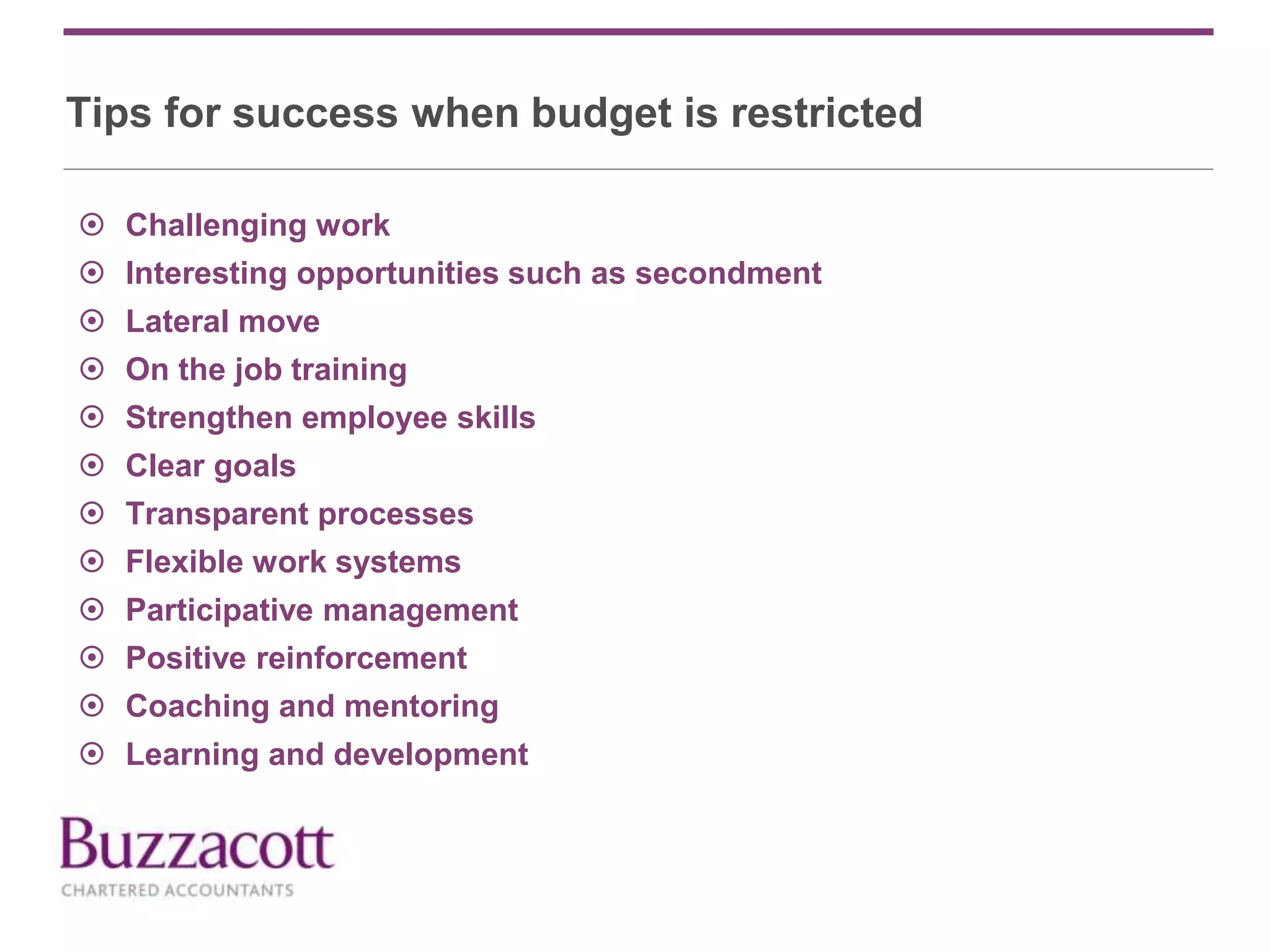
Tips for success when budget is restricted
 Challenging work
 Interesting opportunities such as secondment
 Lateral move
 On the job training
 Strengthen employee skills
 Clear goals
 Transparent processes
 Flexible work systems
 Participative management
 Positive reinforcement
 Coaching and mentoring
 Learning and development
What have we covered…
 Motivation
– What is it?
– Why do we need motivated employees?
– What motivates people?
• Monetary vs. non monetary factors
– Theories of motivation
• Herzberg’s Motivation and Hygiene Factors
– Managing motivation
What have we covered…
 Engagement
– What is it?
– Why do we need engaged employees?
– What engages people?
– Psychological contract
– Job, Career or Calling?
 What can you do?
– Steps to engagement
– Top tips for the voluntary sector
– Tips for success when budget is restricted
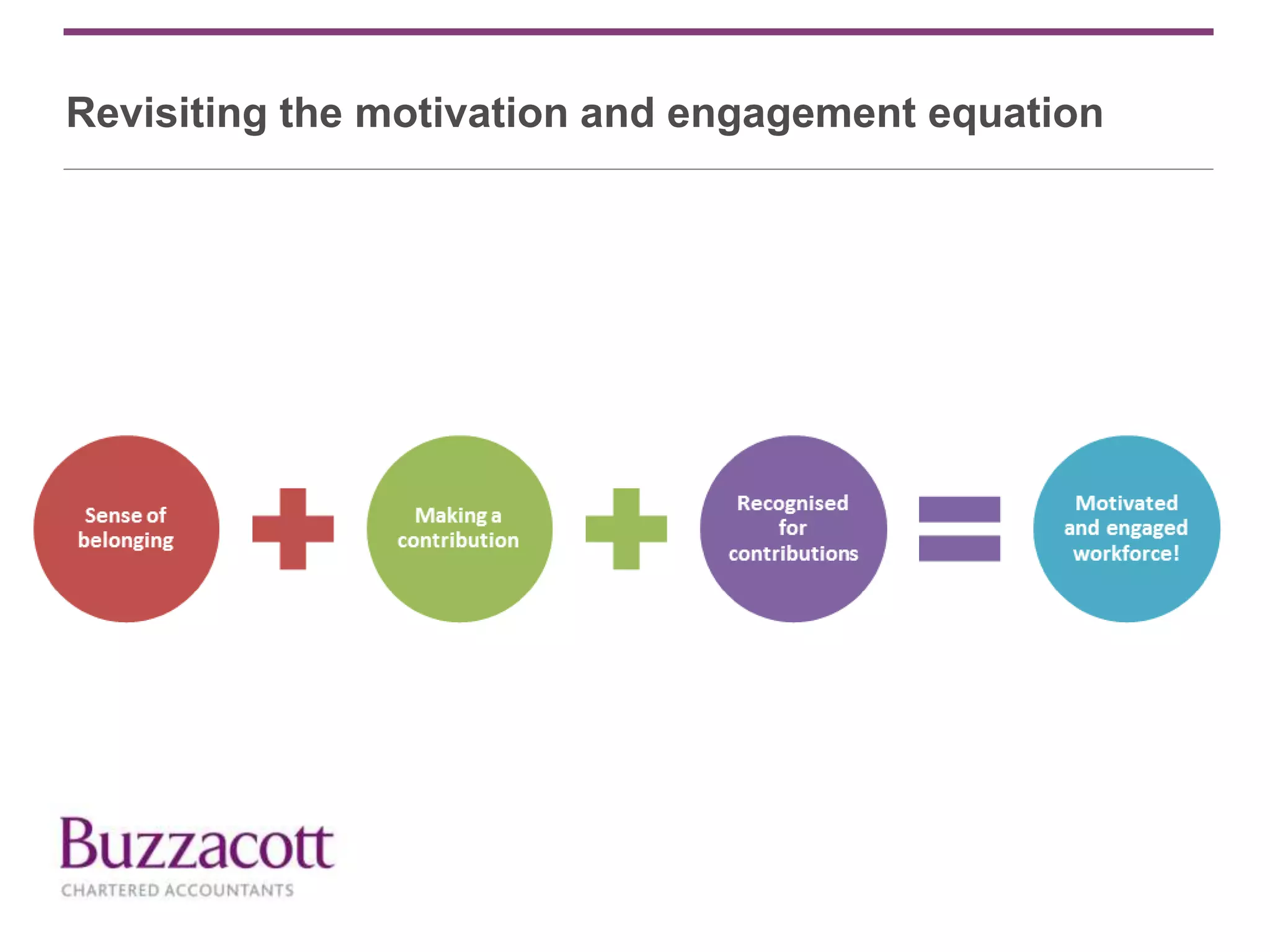
Revisiting the motivation and engagement equation
Thank you
Questions?

4D – PERFORMANCE AND REWARDS

  • 1.
    Performance and rewards Creatingan engaged and motivated culture in the third sector when times are tough Kimberly Bradshaw Managing Director Buzzacott HR Consultancy
  • 2.
    Contents  Setting thescene  Motivation – What is it, why do we need motivated employees, what motivates people?  Engagement – What is it, why do we need engaged employees, what engages people?  What can you do?  Conclusion
  • 3.
    Employee relations inchallenging times Putting it into the charity context:  180,000 charities  2.7% of UK workforce  20% drop in donations  Increase in costs of £2.3 billion  Increase in pressure through demand
  • 4.
    Employee relations inchallenging times  Employee buy-in is key  Higher levels of job satisfaction and motivation  Environment more open to influence  Roles more flexible  Strong value-based purpose – make the world better
  • 5.
    The motivation andengagement equation
  • 6.
    What is motivation? Theprocess that initiates, guides and maintains goal-orientated behaviours
  • 7.
    Why do weneed motivated employees?
  • 8.
  • 9.
    Motivation Theories McClelland ‘Acquired Needs’ Alderfer ‘ERG Theory’ McGregor ‘X andY’ Vroom ‘Expectancy Theory’ Skinner ‘Reinforcement Theory’ Adams ‘Equity Theory’
  • 10.
    Herzberg’s Motivation andHygiene Factors Motivation factors Hygiene factors Achievement Supervision Recognition Working conditions The work itself Interpersonal relationships Responsibility Pay and job security Advancement and growth Company policies
  • 11.
  • 12.
    What is engagement? AonHewitt Employees are committed to organisational goals and values, motivated to contribute to organisational success and are able to enhance their own sense of well- being McLeod 2010
  • 13.
    Why do weneed an engaged workforce?
  • 14.
    Psychological contract Positive Outcomesif Upheld Negative Outcomes when Broken Increased commitment Lower commitment Increased satisfaction Lower satisfaction Positive impacts on business performance Lower engagement “…the perceptions of the two parties, employee and employer, of what their mutual obligations are towards each other.” (Guest)
  • 15.
    What engages employees? WhatWe Want Ranking The seven key factors for motivation and engagement What Organisations Rely On Ranking 1 Challenging/interesting work 2 2 Opportunity to learn continuously and develop skills and knowledge 5 3 A high basic salary 6 4 Having the authority to run ‘my own show’ 15 5 Clear career advancement within the organisation 8 6 Knowing my decisions have an impact on the organisation 14 7 Performance-related pay/incentive schemes 1
  • 16.
    What engages employees? Visible and empowering leadership  Engaging managers  Organisational integrity  Employee voice
  • 17.
    Do you viewwork as a Job, a Career or a Calling?
  • 18.
    Only 1/3 ofemployees feel their work as a ‘Calling’
  • 19.
    How motivated andengaged are your employees? Charity Pulse 2013 Survey report
  • 20.
    What can youdo to increase engagement? Communicate and give recognition Charity Pulse 2013 Survey report
  • 21.
    What can youdo to increase engagement? Be a role model Charity Pulse 2013 Survey report
  • 22.
    Support your employees CharityPulse 2013 Survey report
  • 23.
  • 24.
    Top tips forthe voluntary sector 1. Face-to-face time 2. Practical responses 3. Communication 4. Role-modeling 5. Conversation 6. Trusting 7. No one-fits-all 8. Design for the future 9. Development 10.Engage 11.Celebrate! 12.Manage performance
  • 25.
    Tips for successwhen budget is restricted  Challenging work  Interesting opportunities such as secondment  Lateral move  On the job training  Strengthen employee skills  Clear goals  Transparent processes  Flexible work systems  Participative management  Positive reinforcement  Coaching and mentoring  Learning and development
  • 26.
    What have wecovered…  Motivation – What is it? – Why do we need motivated employees? – What motivates people? • Monetary vs. non monetary factors – Theories of motivation • Herzberg’s Motivation and Hygiene Factors – Managing motivation
  • 27.
    What have wecovered…  Engagement – What is it? – Why do we need engaged employees? – What engages people? – Psychological contract – Job, Career or Calling?  What can you do? – Steps to engagement – Top tips for the voluntary sector – Tips for success when budget is restricted
  • 28.
    Revisiting the motivationand engagement equation
  • 29.