Growing sustainably: increasing
revenue and social impact
- how a charitable social enterprise is
achieving its ambitious growth plans
Introductions
• Tim Willis
• Chair of Trustees of London Early Years Foundation
• Neil Fenton
• LEYF Director of Finance and Social Investment
2
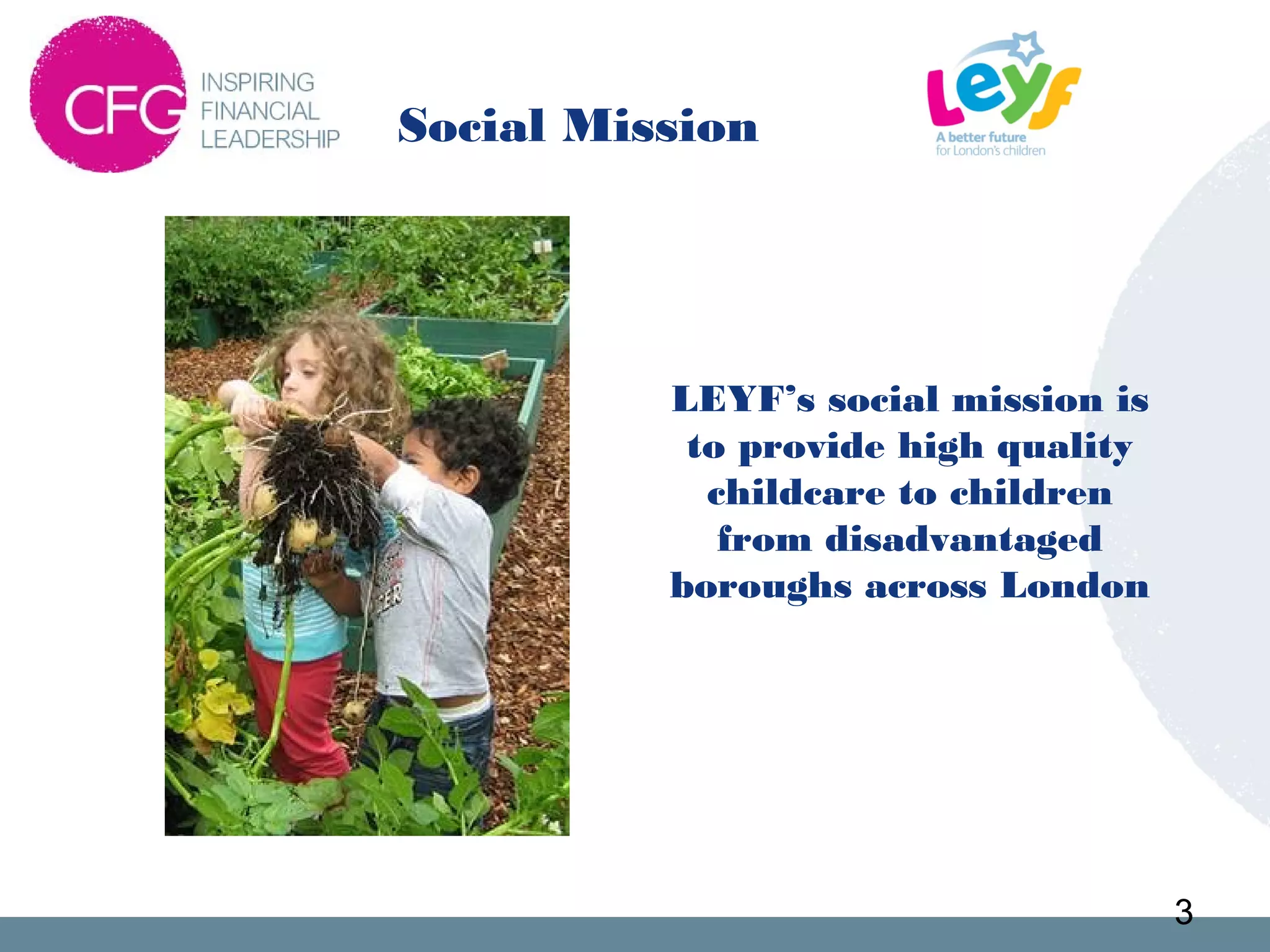
LEYF’s social mission is
to provide high quality
childcare to children
from disadvantaged
boroughs across London
Social Mission
3
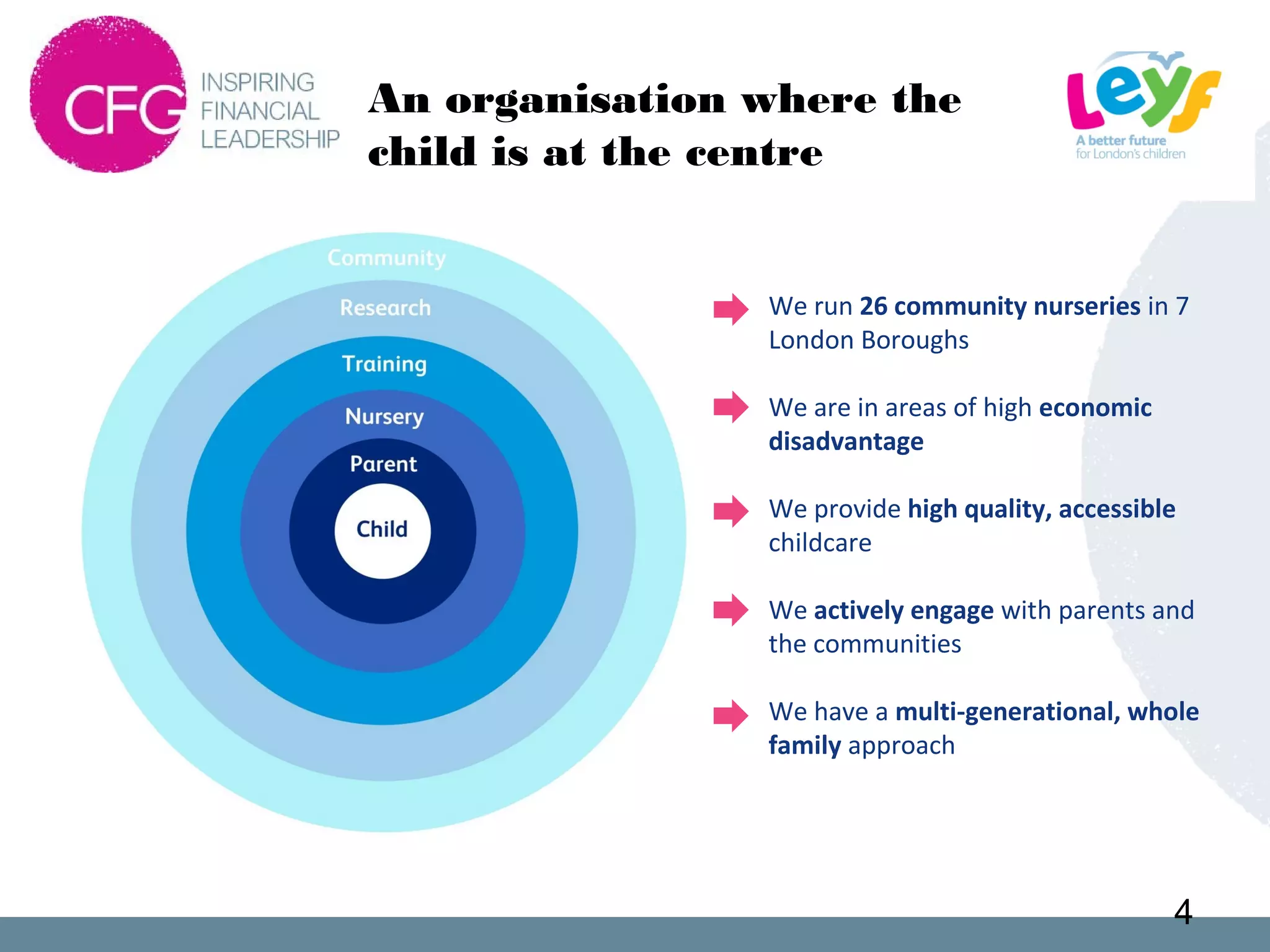
An organisation where the
child is at the centre
We run 26 community nurseries in 7
London Boroughs
We are in areas of high economic
disadvantage
We provide high quality, accessible
childcare
We actively engage with parents and
the communities
We have a multi-generational, whole
family approach
4
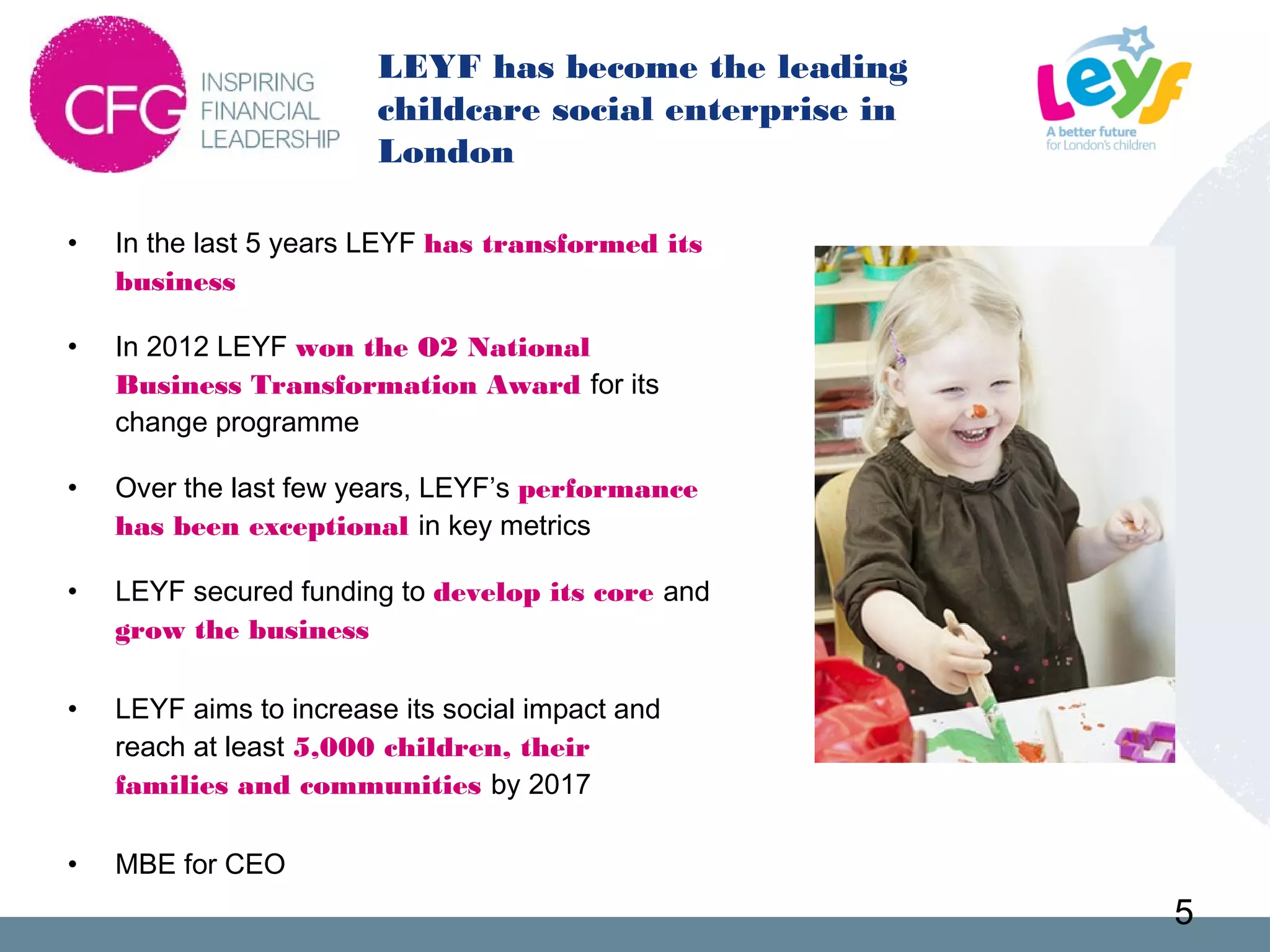
• In the last 5 years LEYF has transformed its
business
• In 2012 LEYF won the O2 National
Business Transformation Award for its
change programme
• Over the last few years, LEYF’s performance
has been exceptional in key metrics
• LEYF secured funding to develop its core and
grow the business
• LEYF aims to increase its social impact and
reach at least 5,000 children, their
families and communities by 2017
• MBE for CEO
LEYF has become the leading
childcare social enterprise in
London
5
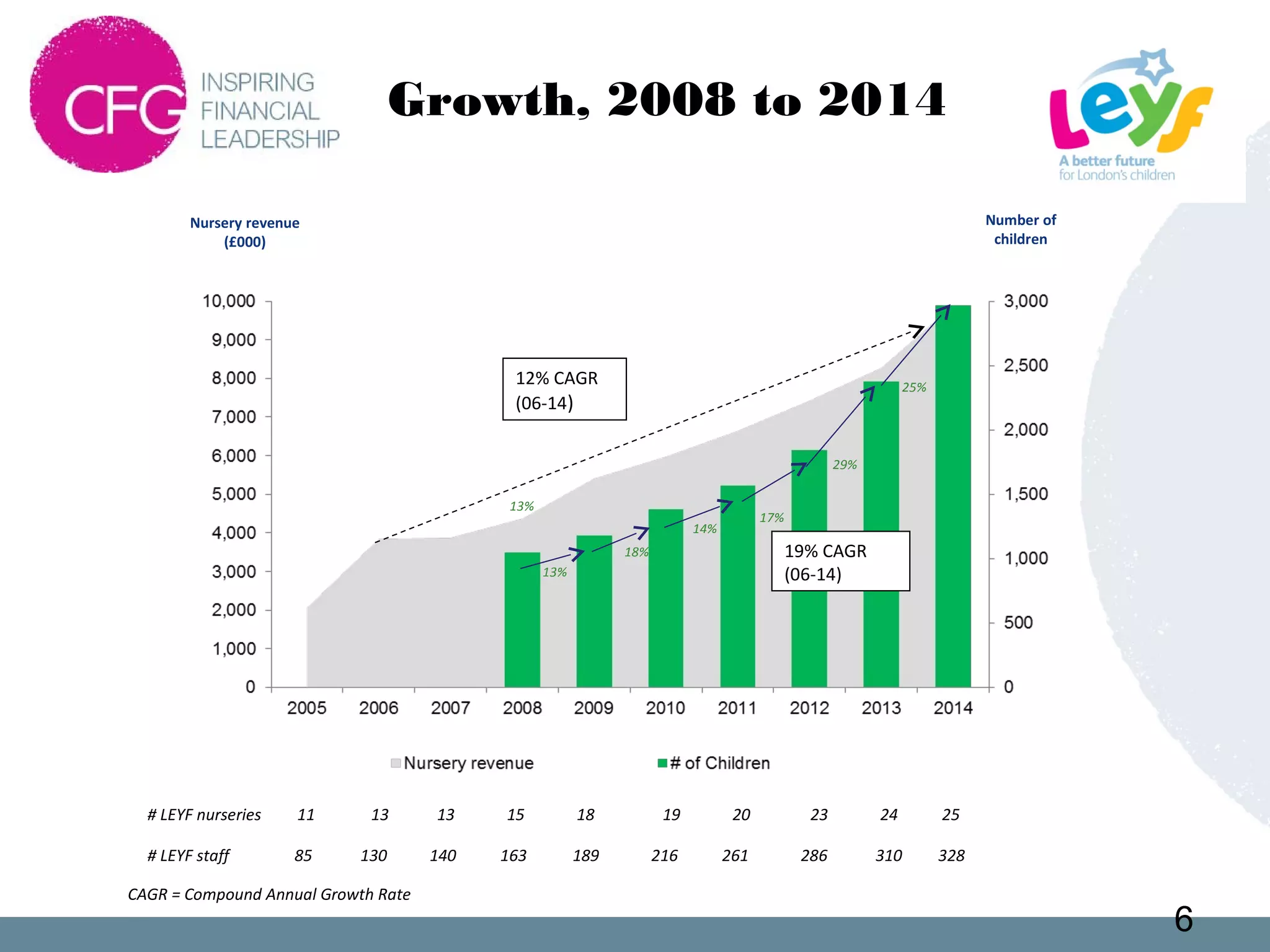
Growth, 2008 to 2014
Number of
children
Nursery revenue
(£000)
12% CAGR
(06-14)
19% CAGR
(06-14)
CAGR = Compound Annual Growth Rate
6
# LEYF staff 85 130 140 163 189 216 261 286 310 328
# LEYF nurseries 11 13 13 15 18 19 20 23 24 25
13%
18%
14%
17%
25%
29%
13%
Future ambitions
• Strategic objectives are growth,
financial sustainability, excellence in
childcare and high quality staff
• Grow to 56 settings by 2017
• Maintain a balance of nurseries from
“disadvantaged” to full fee-paying
• Maintain the model that adds social
value through more than just
childcare for the disadvantaged
7
Strategic challenges
- governance
• Having the right board of
trustees
• Creating space for truly
strategic discussions
• Being flexible about decision-
making processes
• Dealing with disagreements,
concerns between trustees
and exec/non-execs
8
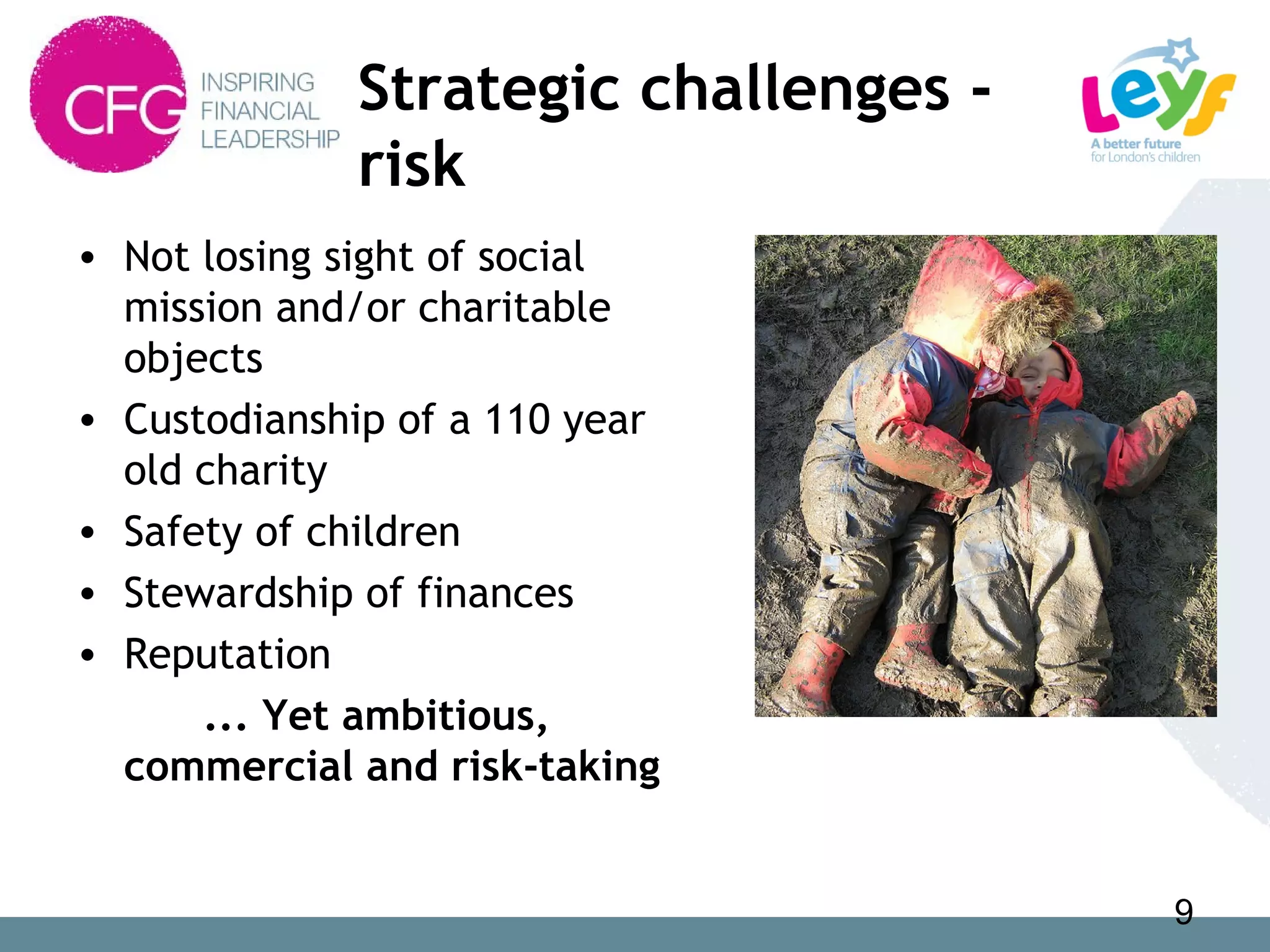
Strategic challenges -
risk
• Not losing sight of social
mission and/or charitable
objects
• Custodianship of a 110 year
old charity
• Safety of children
• Stewardship of finances
• Reputation
... Yet ambitious,
commercial and risk-taking
9
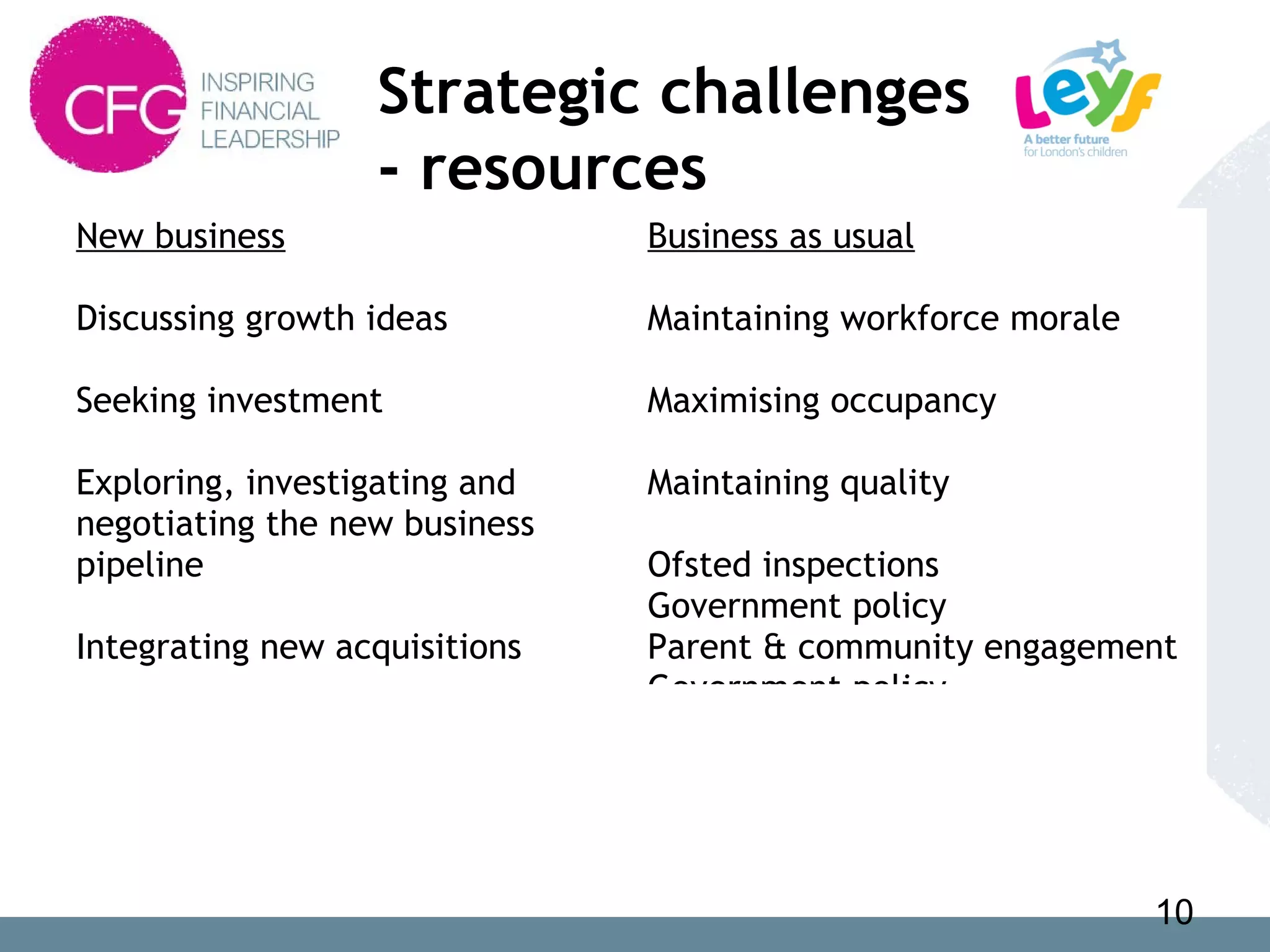
Strategic challenges
- resources
New business
Discussing growth ideas
Seeking investment
Exploring, investigating and
negotiating the new business
pipeline
Integrating new acquisitions
Business as usual
Maintaining workforce morale
Maximising occupancy
Maintaining quality
Ofsted inspections
Government policy
Parent & community engagement
Government policy
10
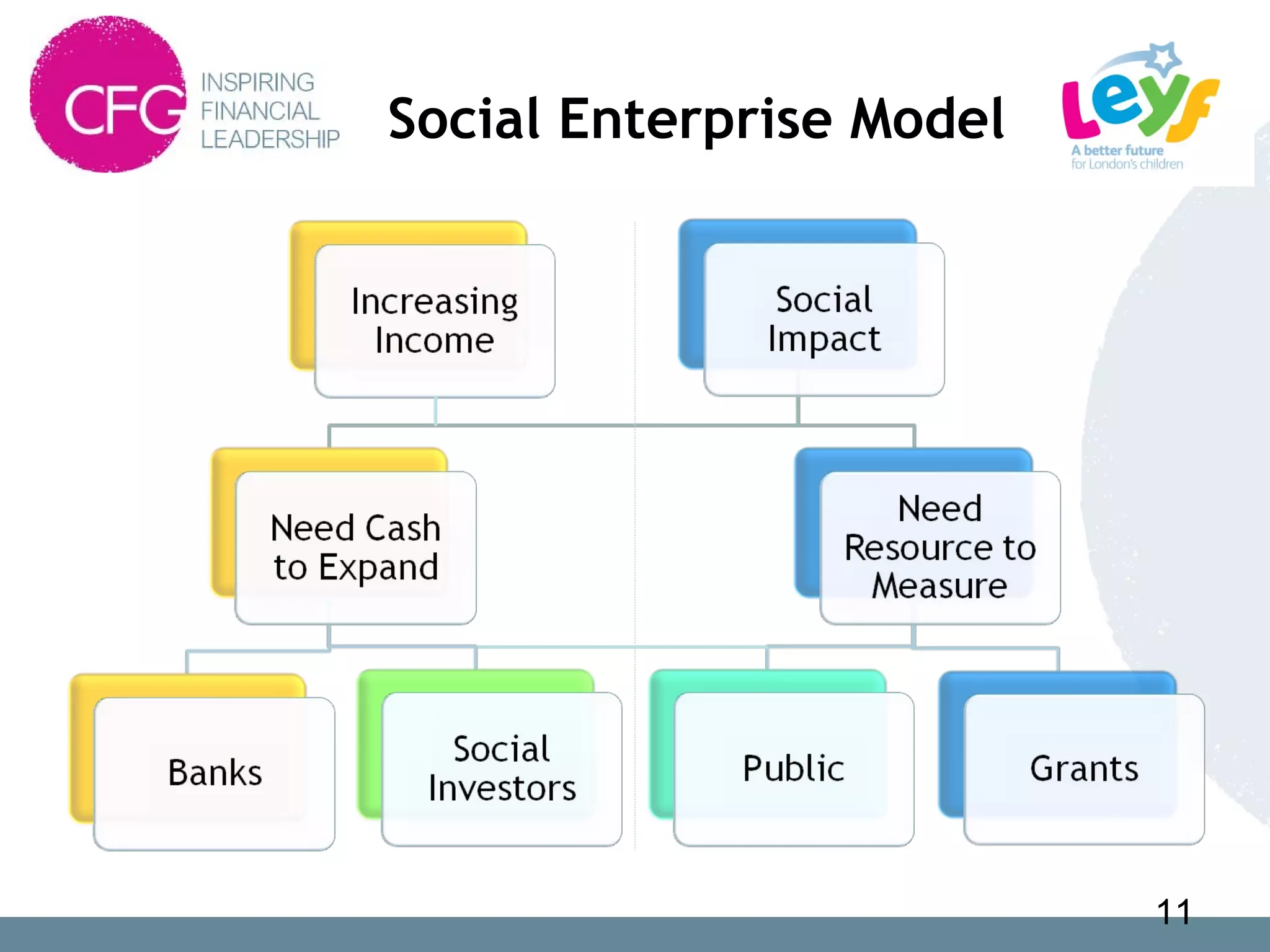
Social Enterprise Model
11
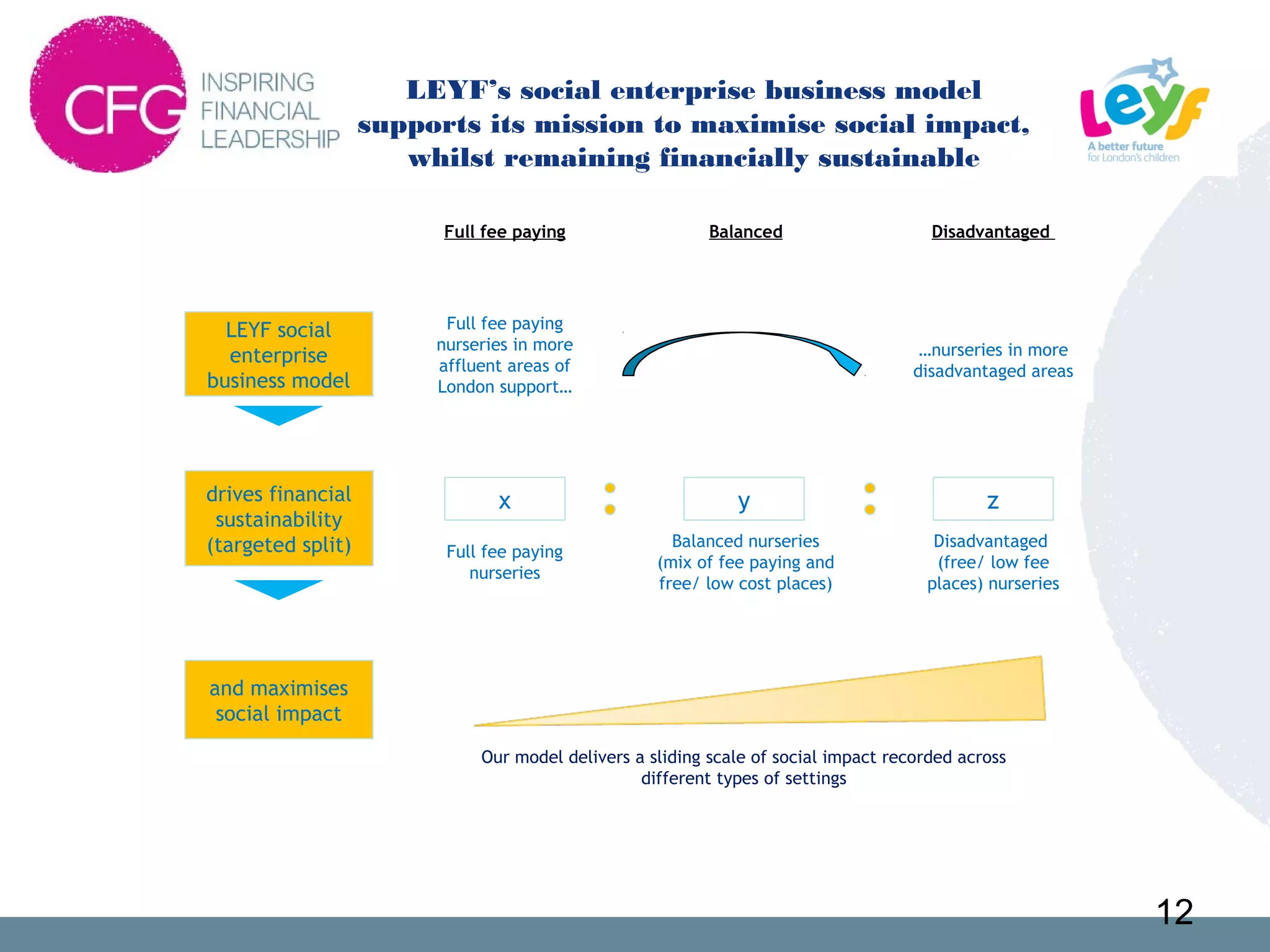
LEYF’s social enterprise business model
supports its mission to maximise social impact,
whilst remaining financially sustainable
and maximises
social impact
Full fee paying
nurseries
Balanced nurseries
(mix of fee paying and
free/ low cost places)
Disadvantaged
(free/ low fee
places) nurseries
x y z
LEYF social
enterprise
business model
Full
…nurseries in more
disadvantaged areas
Full fee paying
nurseries in more
affluent areas of
London support…
Our model delivers a sliding scale of social impact recorded across
different types of settings
drives financial
sustainability
(targeted split)
Full fee paying Balanced Disadvantaged
12
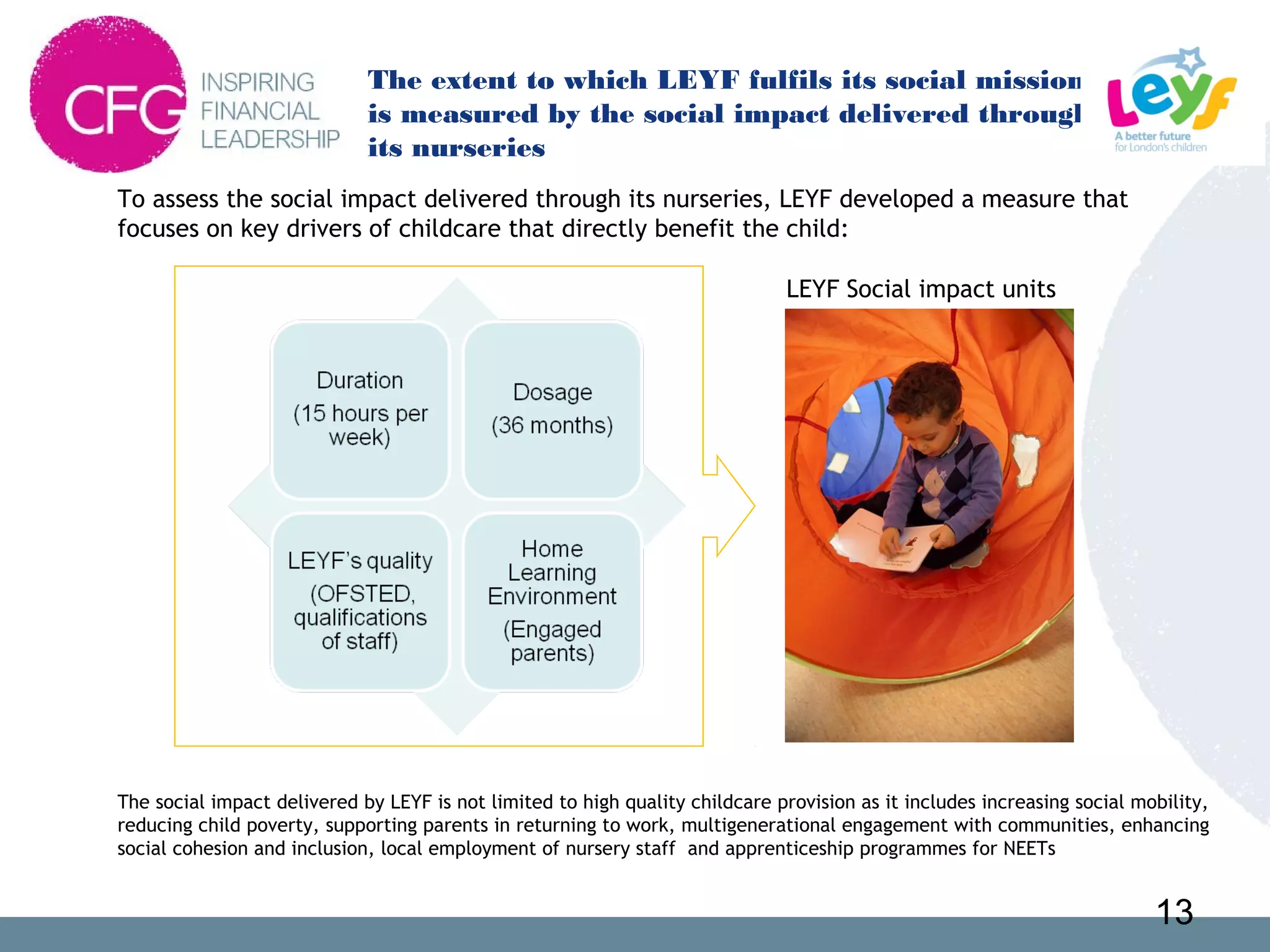
The extent to which LEYF fulfils its social mission
is measured by the social impact delivered through
its nurseries
To assess the social impact delivered through its nurseries, LEYF developed a measure that
focuses on key drivers of childcare that directly benefit the child:
The social impact delivered by LEYF is not limited to high quality childcare provision as it includes increasing social mobility,
reducing child poverty, supporting parents in returning to work, multigenerational engagement with communities, enhancing
social cohesion and inclusion, local employment of nursery staff and apprenticeship programmes for NEETs
LEYF Social impact units
13
Investing in Social Enterprise
- Issues
•Lack of understanding in the investor community
•Avenues of investment are limited and expensive
•How do you determine the market value of an SE?
•No market for trading equity
•SE’s profits are reinvested into pursuing their social aims
•How do you measure Social Impact?
•Often limited securable assets
•Governance
14
Questions
• In a heavily regulated environment, if the best way to maintain and enhance
quality is by an obsessive focus on business as usual, how can you find the
time, energy and funding for significant growth, without compromising
quality?
• How do you minimise risk to the charity and achieve ambitious commercial
growth, funded by borrowing? Can the charity model cope?
• How does a charity with trustees, a constitution and board/committees best
make quick decisions in a commercial environment?
• Is the comprehensive and universal measurement of social Impact the Holy
Grail of charities and social enterprises?
15

1C – GROWING SUSTAINABILITY: INCREASING INCOME AND SOCIAL IMPACT: LEYF STORY SO FAR

  • 1.
    Growing sustainably: increasing revenueand social impact - how a charitable social enterprise is achieving its ambitious growth plans
  • 2.
    Introductions • Tim Willis •Chair of Trustees of London Early Years Foundation • Neil Fenton • LEYF Director of Finance and Social Investment 2
  • 3.
    LEYF’s social missionis to provide high quality childcare to children from disadvantaged boroughs across London Social Mission 3
  • 4.
    An organisation wherethe child is at the centre We run 26 community nurseries in 7 London Boroughs We are in areas of high economic disadvantage We provide high quality, accessible childcare We actively engage with parents and the communities We have a multi-generational, whole family approach 4
  • 5.
    • In thelast 5 years LEYF has transformed its business • In 2012 LEYF won the O2 National Business Transformation Award for its change programme • Over the last few years, LEYF’s performance has been exceptional in key metrics • LEYF secured funding to develop its core and grow the business • LEYF aims to increase its social impact and reach at least 5,000 children, their families and communities by 2017 • MBE for CEO LEYF has become the leading childcare social enterprise in London 5
  • 6.
    Growth, 2008 to2014 Number of children Nursery revenue (£000) 12% CAGR (06-14) 19% CAGR (06-14) CAGR = Compound Annual Growth Rate 6 # LEYF staff 85 130 140 163 189 216 261 286 310 328 # LEYF nurseries 11 13 13 15 18 19 20 23 24 25 13% 18% 14% 17% 25% 29% 13%
  • 7.
    Future ambitions • Strategicobjectives are growth, financial sustainability, excellence in childcare and high quality staff • Grow to 56 settings by 2017 • Maintain a balance of nurseries from “disadvantaged” to full fee-paying • Maintain the model that adds social value through more than just childcare for the disadvantaged 7
  • 8.
    Strategic challenges - governance •Having the right board of trustees • Creating space for truly strategic discussions • Being flexible about decision- making processes • Dealing with disagreements, concerns between trustees and exec/non-execs 8
  • 9.
    Strategic challenges - risk •Not losing sight of social mission and/or charitable objects • Custodianship of a 110 year old charity • Safety of children • Stewardship of finances • Reputation ... Yet ambitious, commercial and risk-taking 9
  • 10.
    Strategic challenges - resources Newbusiness Discussing growth ideas Seeking investment Exploring, investigating and negotiating the new business pipeline Integrating new acquisitions Business as usual Maintaining workforce morale Maximising occupancy Maintaining quality Ofsted inspections Government policy Parent & community engagement Government policy 10
  • 11.
  • 12.
    LEYF’s social enterprisebusiness model supports its mission to maximise social impact, whilst remaining financially sustainable and maximises social impact Full fee paying nurseries Balanced nurseries (mix of fee paying and free/ low cost places) Disadvantaged (free/ low fee places) nurseries x y z LEYF social enterprise business model Full …nurseries in more disadvantaged areas Full fee paying nurseries in more affluent areas of London support… Our model delivers a sliding scale of social impact recorded across different types of settings drives financial sustainability (targeted split) Full fee paying Balanced Disadvantaged 12
  • 13.
    The extent towhich LEYF fulfils its social mission is measured by the social impact delivered through its nurseries To assess the social impact delivered through its nurseries, LEYF developed a measure that focuses on key drivers of childcare that directly benefit the child: The social impact delivered by LEYF is not limited to high quality childcare provision as it includes increasing social mobility, reducing child poverty, supporting parents in returning to work, multigenerational engagement with communities, enhancing social cohesion and inclusion, local employment of nursery staff and apprenticeship programmes for NEETs LEYF Social impact units 13
  • 14.
    Investing in SocialEnterprise - Issues •Lack of understanding in the investor community •Avenues of investment are limited and expensive •How do you determine the market value of an SE? •No market for trading equity •SE’s profits are reinvested into pursuing their social aims •How do you measure Social Impact? •Often limited securable assets •Governance 14
  • 15.
    Questions • In aheavily regulated environment, if the best way to maintain and enhance quality is by an obsessive focus on business as usual, how can you find the time, energy and funding for significant growth, without compromising quality? • How do you minimise risk to the charity and achieve ambitious commercial growth, funded by borrowing? Can the charity model cope? • How does a charity with trustees, a constitution and board/committees best make quick decisions in a commercial environment? • Is the comprehensive and universal measurement of social Impact the Holy Grail of charities and social enterprises? 15