Oral communication
Vardhman & Vardhman
“PRIDE” model for effective
communication.
 P = Purpose of the communication
 R = Receiver Roles
 I = Impact desired
 D = Design of the communication
 E = Execution of the communication
Oral Communication (unit-2)
Oral Communication includes-
 Face to Face Conversation.
 Telephonic Conversation
 Oral Communication includes-
 Lecturers
 Speech
 Group discussion
 Social gatherings
 Interview
 Conference & Meeting
MERITS
 Facial expressions and gestures make
communication effective
 It is the best medium for discussions as
negotiation, interview, counseling etc.
 Communicator can get known the reaction of
message on receiver through his gestures &
expressions & tone
MERITS
 It provides immediate feedback.
 It save time & efforts.
 Listener can get immediate clarification of any
doubt in his mind.
LIMITATION-
 It is not possible while dealing a large group.
 It is ineffective when listener is not attentive and
different perceptions
 It can not retain for longer time as permanent
record.
 It is less effective if communicator has no convict
on himself
 Interact freely on Phone.
 It eliminates the barriers between physically
disposed persons.
 We can get immediate / quick feed back. At a time
we can talk one person effectively
 Long discussions are not possible
 Expensive and less effective
Merits of Telephonic Conversation-
LIMITATION-
 Technical problem distract telephone network if
device is not working well
 In case of mobile phone signal problem become
barrier to communication
 Ring tone disturb others anytime any where even
is classroom, meetings, silence zone, conferences
etc
Principles of Successful
Oral Communication
 Clarity of expression
 Make communication a two-way process
 Develop trust by creating listeners interest
 Be precise, avoid hackneyed
 Avoid communication overload, easy flow
 Overcoming barriers (time, distance &
noise)
 Timely feedback
 Communication & Listening Skills
 Correct choice of medium
 Strong conviction
 Sequence, coherence and consistency in
contents
 Economical, Accurate, Empathetic
 Identify barriers & try to rectify the
problem
 Go for appropriate body language
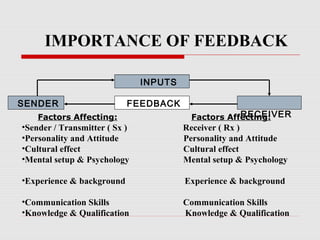
IMPORTANCE OF FEEDBACK
Factors Affecting: Factors Affecting:
•Sender / Transmitter ( Sx ) Receiver ( Rx )
•Personality and Attitude Personality and Attitude
•Cultural effect Cultural effect
•Mental setup & Psychology Mental setup & Psychology
•Experience & background Experience & background
•Communication Skills Communication Skills
•Knowledge & Qualification Knowledge & Qualification
FEEDBACK
RECEIVER
SENDER
INPUTS
Nonverbal/ pictorial Communication
 Pictures
 Posters
 Banners
 Film clips
 Slides
 Gestures
Nonverbal/ pictorial Communication
MERITS-
 It is very effective in use in silent zone
 It eliminates differential perceptions
 It is effective when emotions take place
Nonverbal/ pictorial Communication
LIMITATION-
 It is ineffective particular for illiterate persons
 It is not possible in each and every situation
 It cannot be use for lengthy conversation
Non Verbal Communication
 It covers all external stimuli other than
spoken or written words and including
characteristics of appearance, voice and use of
space and time.
 Kinesics- It is study of the role of body
movements such as winking and shrugging in
communication
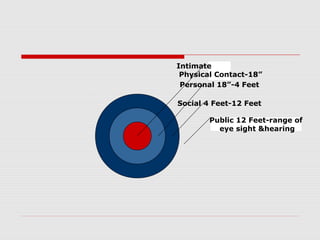
 Proxemics-It is also called space language
which subject the deals with the way people
use physical space to communicate.
Social 4 Feet-12 Feet
Personal 18”-4 Feet
Intimate
Physical Contact-18”
Public 12 Feet-range of
eye sight &hearing
Non Verbal Communication
 Chronemics or Distance language-The
subject that deals with the way people
use time dimension or time language
 Paralanguage- The non verbal factors
like tone of voice, the speed of delivery,
the degree of loudness or softness, and
the pitch of voice which affect the
spoken words called paralanguage

35532641 oral-communication

  • 1.
  • 2.
    Vardhman & Vardhman “PRIDE”model for effective communication.  P = Purpose of the communication  R = Receiver Roles  I = Impact desired  D = Design of the communication  E = Execution of the communication
  • 3.
    Oral Communication (unit-2) OralCommunication includes-  Face to Face Conversation.  Telephonic Conversation
  • 4.
     Oral Communicationincludes-  Lecturers  Speech  Group discussion  Social gatherings  Interview  Conference & Meeting
  • 5.
    MERITS  Facial expressionsand gestures make communication effective  It is the best medium for discussions as negotiation, interview, counseling etc.  Communicator can get known the reaction of message on receiver through his gestures & expressions & tone
  • 6.
    MERITS  It providesimmediate feedback.  It save time & efforts.  Listener can get immediate clarification of any doubt in his mind.
  • 7.
    LIMITATION-  It isnot possible while dealing a large group.  It is ineffective when listener is not attentive and different perceptions  It can not retain for longer time as permanent record.  It is less effective if communicator has no convict on himself
  • 8.
     Interact freelyon Phone.  It eliminates the barriers between physically disposed persons.  We can get immediate / quick feed back. At a time we can talk one person effectively  Long discussions are not possible  Expensive and less effective Merits of Telephonic Conversation-
  • 9.
    LIMITATION-  Technical problemdistract telephone network if device is not working well  In case of mobile phone signal problem become barrier to communication  Ring tone disturb others anytime any where even is classroom, meetings, silence zone, conferences etc
  • 10.
    Principles of Successful OralCommunication  Clarity of expression  Make communication a two-way process  Develop trust by creating listeners interest  Be precise, avoid hackneyed  Avoid communication overload, easy flow  Overcoming barriers (time, distance & noise)  Timely feedback
  • 11.
     Communication &Listening Skills  Correct choice of medium  Strong conviction  Sequence, coherence and consistency in contents  Economical, Accurate, Empathetic  Identify barriers & try to rectify the problem  Go for appropriate body language
  • 12.
    IMPORTANCE OF FEEDBACK FactorsAffecting: Factors Affecting: •Sender / Transmitter ( Sx ) Receiver ( Rx ) •Personality and Attitude Personality and Attitude •Cultural effect Cultural effect •Mental setup & Psychology Mental setup & Psychology •Experience & background Experience & background •Communication Skills Communication Skills •Knowledge & Qualification Knowledge & Qualification FEEDBACK RECEIVER SENDER INPUTS
  • 13.
    Nonverbal/ pictorial Communication Pictures  Posters  Banners  Film clips  Slides  Gestures
  • 14.
    Nonverbal/ pictorial Communication MERITS- It is very effective in use in silent zone  It eliminates differential perceptions  It is effective when emotions take place
  • 15.
    Nonverbal/ pictorial Communication LIMITATION- It is ineffective particular for illiterate persons  It is not possible in each and every situation  It cannot be use for lengthy conversation
  • 16.
    Non Verbal Communication It covers all external stimuli other than spoken or written words and including characteristics of appearance, voice and use of space and time.  Kinesics- It is study of the role of body movements such as winking and shrugging in communication  Proxemics-It is also called space language which subject the deals with the way people use physical space to communicate.
  • 17.
    Social 4 Feet-12Feet Personal 18”-4 Feet Intimate Physical Contact-18” Public 12 Feet-range of eye sight &hearing
  • 18.
    Non Verbal Communication Chronemics or Distance language-The subject that deals with the way people use time dimension or time language  Paralanguage- The non verbal factors like tone of voice, the speed of delivery, the degree of loudness or softness, and the pitch of voice which affect the spoken words called paralanguage