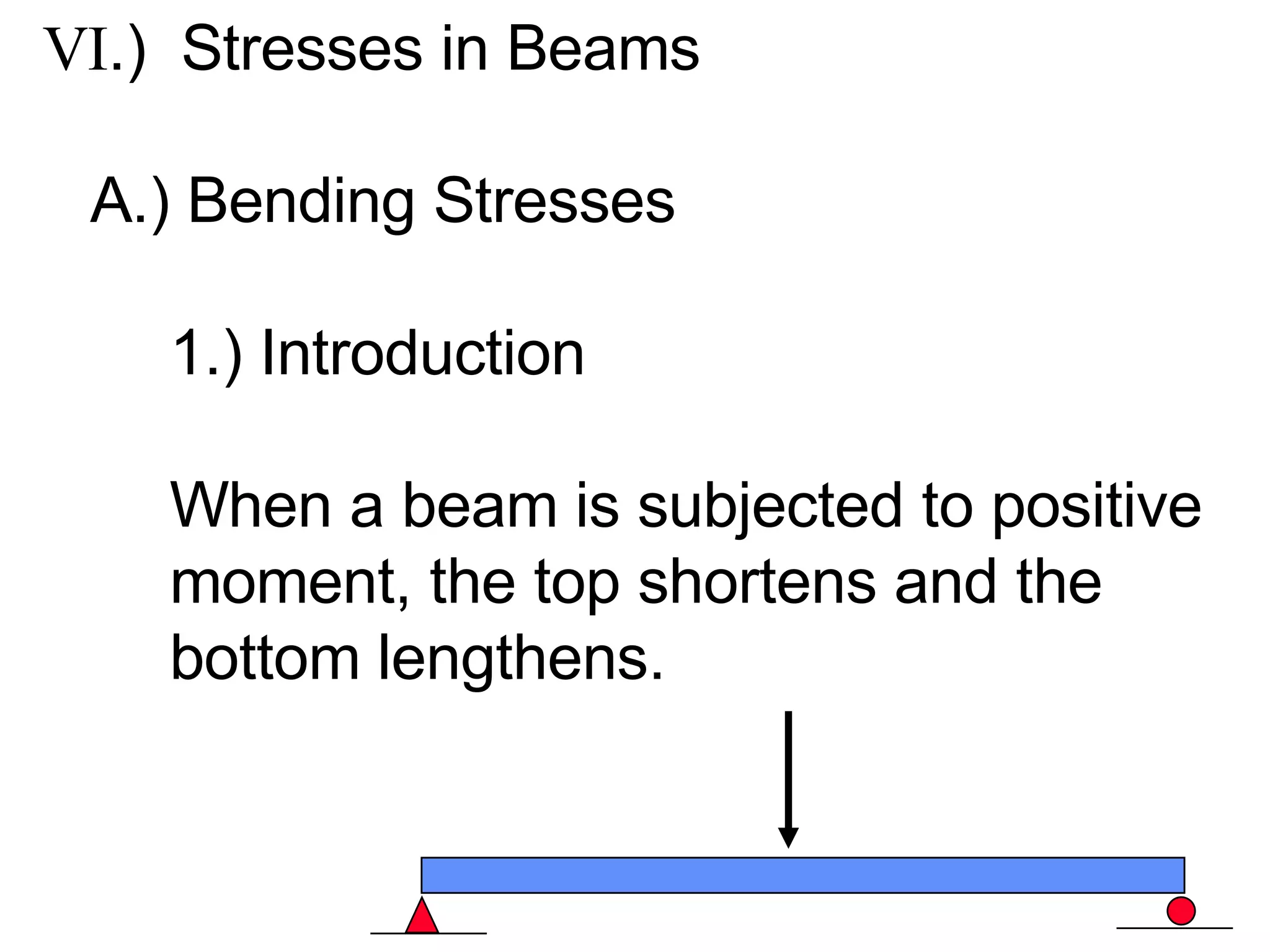
VI .)  Stresses in Beams A.) Bending Stresses 1.) Introduction When a beam is subjected to positive  moment, the top shortens and the  bottom lengthens.
 
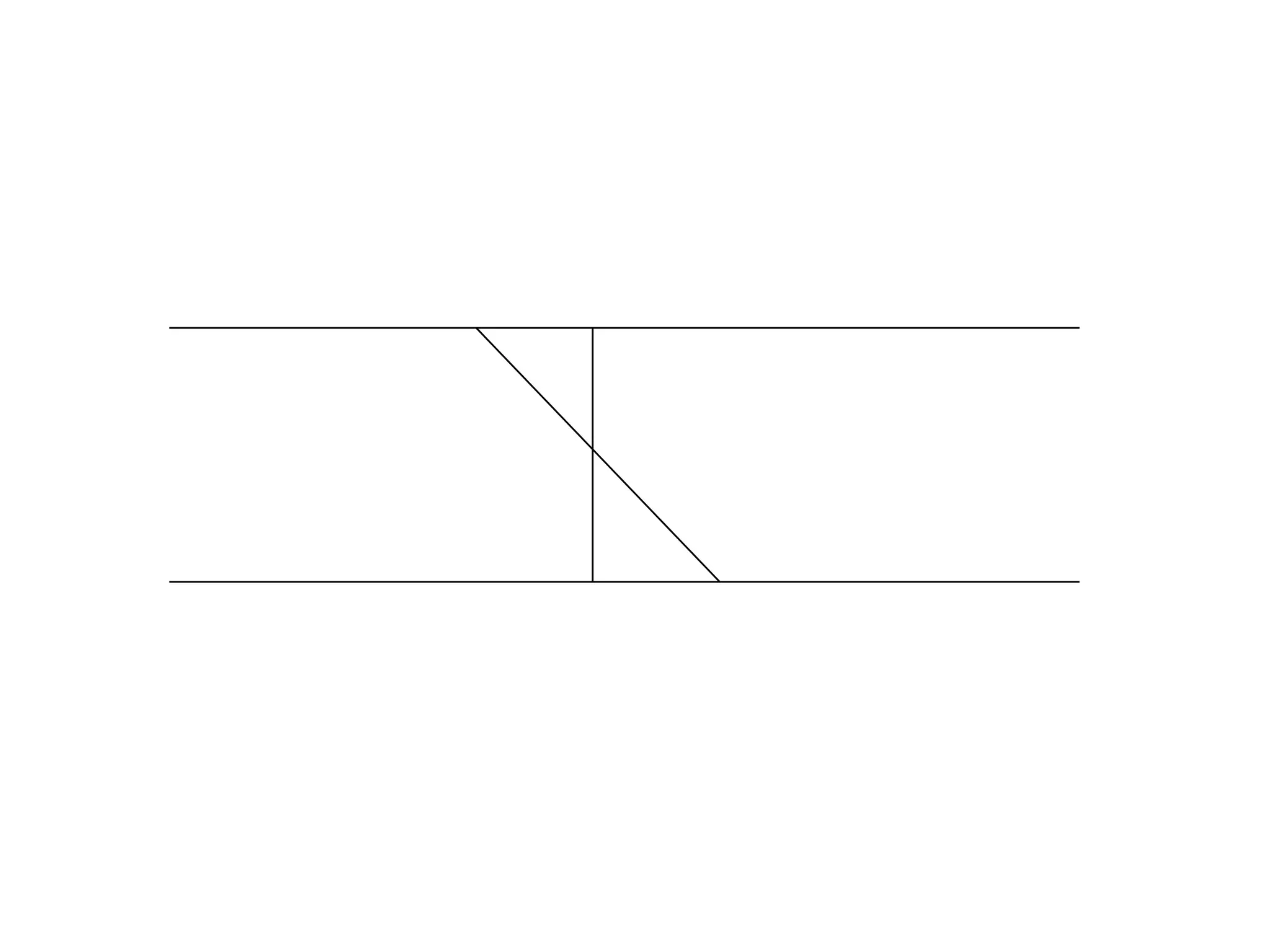
The bending strains are zero at the neutral axis. The bending strains increase proportionately with the distance from the neutral axis.   The maximum strains occur at the top and bottom of the beam (outer fibers)
Since stress is directly related to strain    =   E),  bending  stress  is also zero at the neutral axis and increases with the distance from the neutral axis. The maximum bending stresses occur at the top and bottom of the beam (outer fibers)
2.)  The Flexure Formula  b  =  My   I   b   = Bending stress at a distance “y”    from the neutral axis (ksi). y  = distance from the neutral axis (in). M   = Moment at a given cross-section of    a beam (k-in). I  = Moment of inertia of the cross-   section (in 4 ).   N.A. y
3.)  Maximum Bending Stress  b,max  =  Mc   I  b,max  = Maximum bending stress at a  given cross-section (ksi). c  =  Distance from N.A. to the  outer fibers of cross-section (in) M,  I  =  as defined before. N.A. c top c bot y
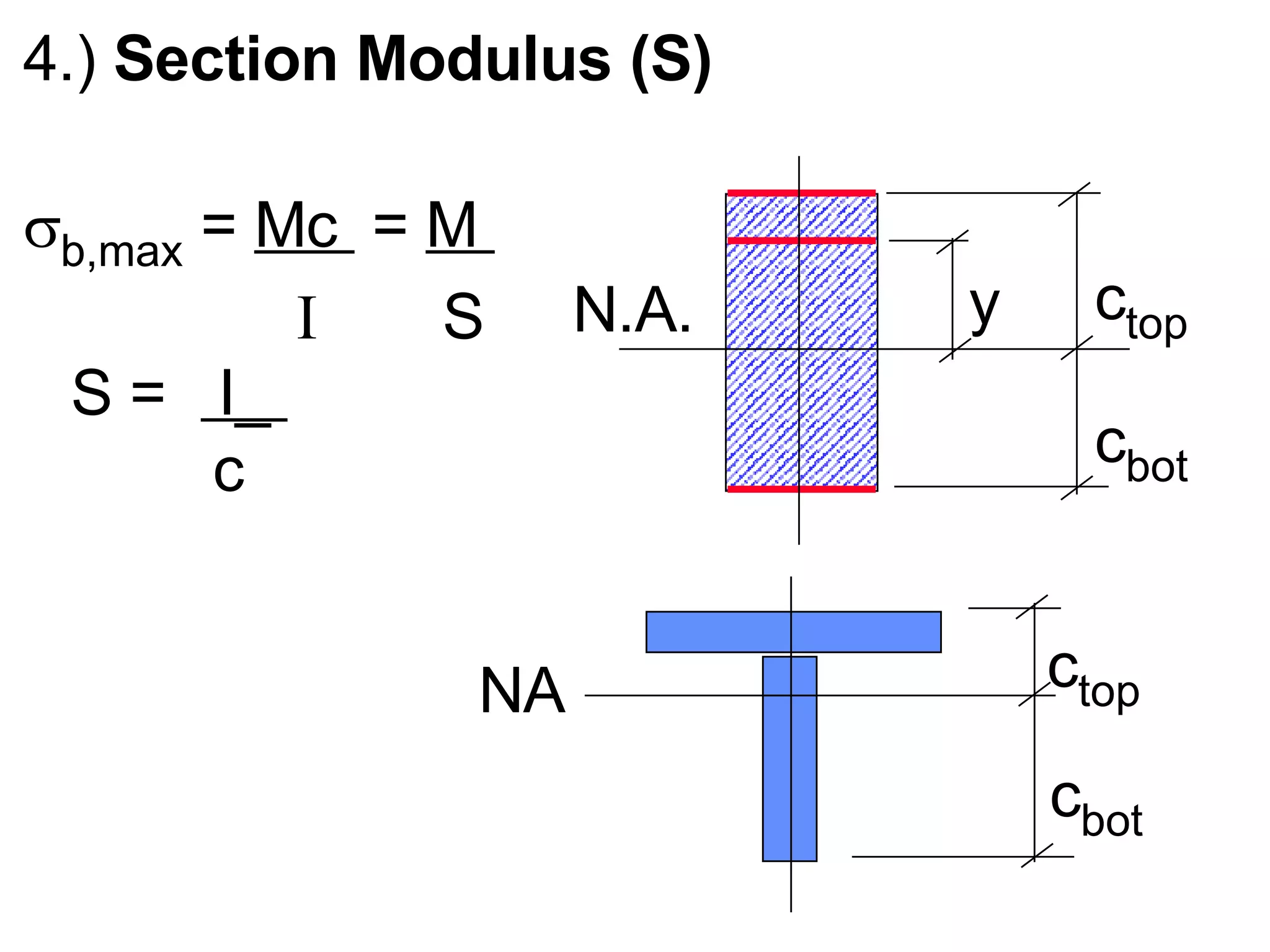
4.)  Section Modulus (S)  b,max  =  Mc  =  M    I  S S =  I_    c N.A. c top c bot y NA c top c bot
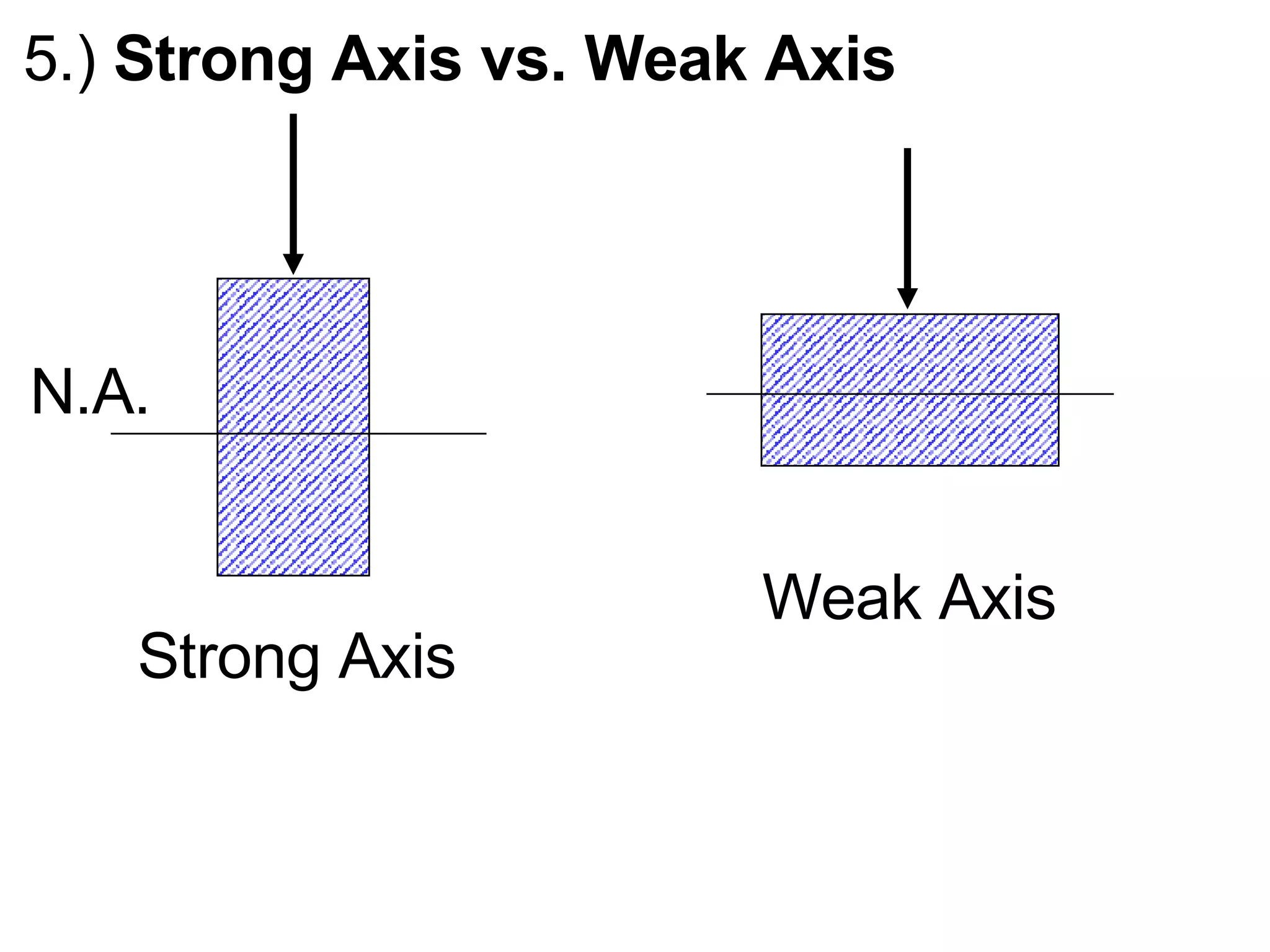
5.)  Strong Axis vs. Weak Axis Strong Axis N.A. Weak Axis
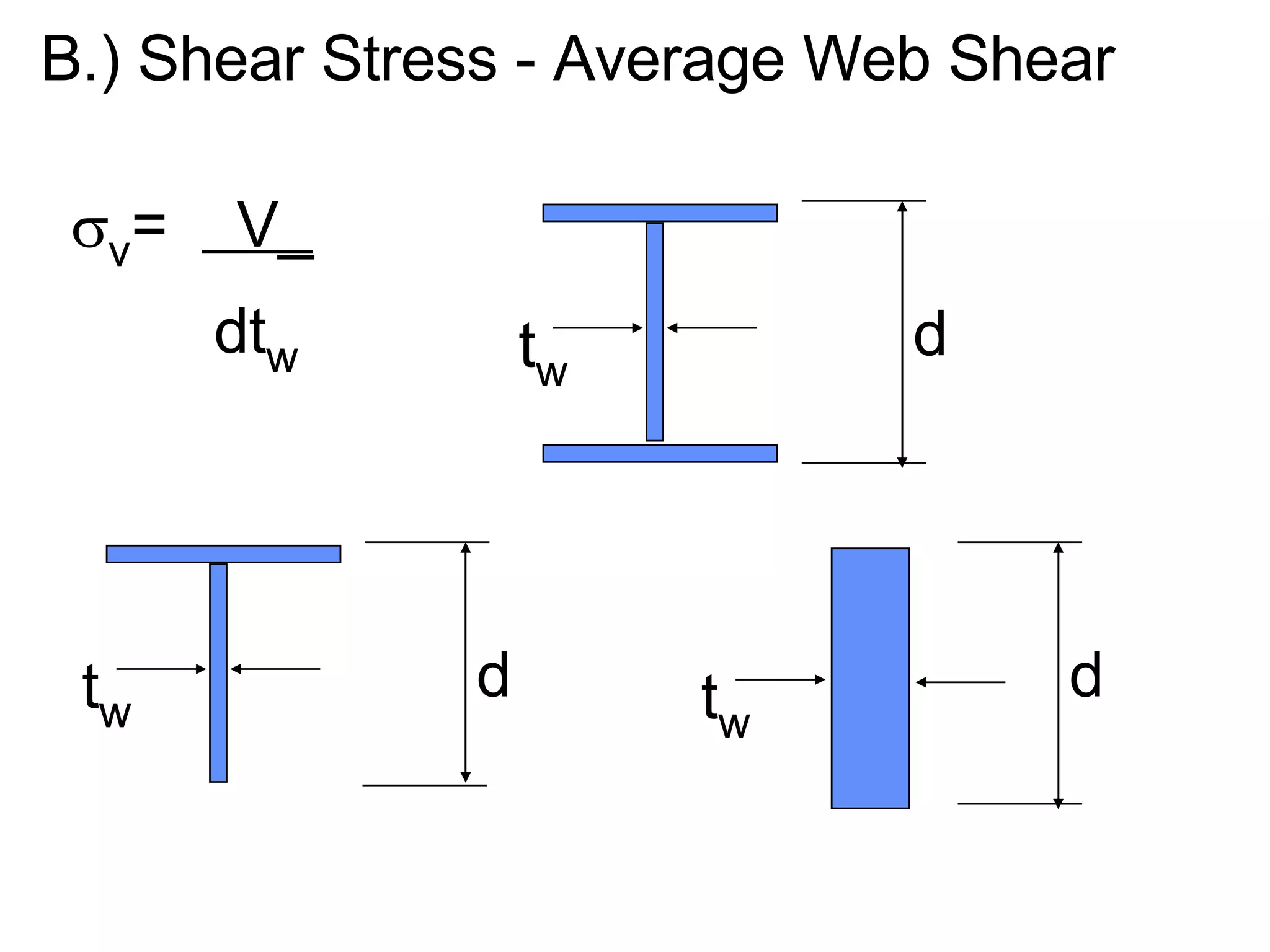
B.) Shear Stress - Average Web Shear  v =  V_ dt w d t w d t w d t w
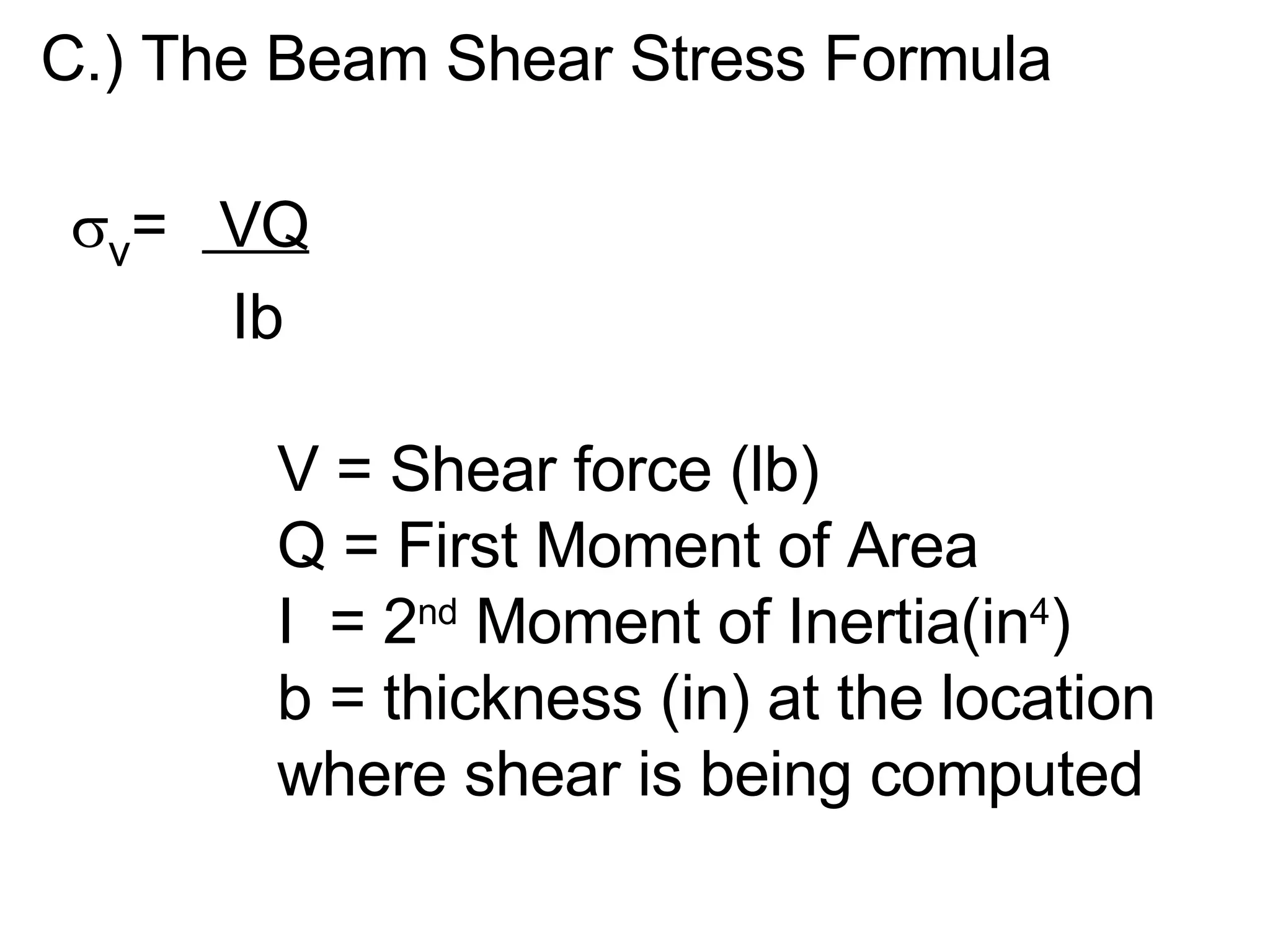
C.) The Beam Shear Stress Formula  v =  VQ Ib V = Shear force (lb) Q = First Moment of Area I  = 2 nd  Moment of Inertia(in 4 ) b = thickness (in) at the location  where shear is being computed
C.) The Beam Shear Stress Formula Q = First Moment about the neutral axis of the area between the horizontal plane where the shear is to be calculated and the top or bottom of the beam. Plane where shear Is being computed Neutral axis y Q = Ay
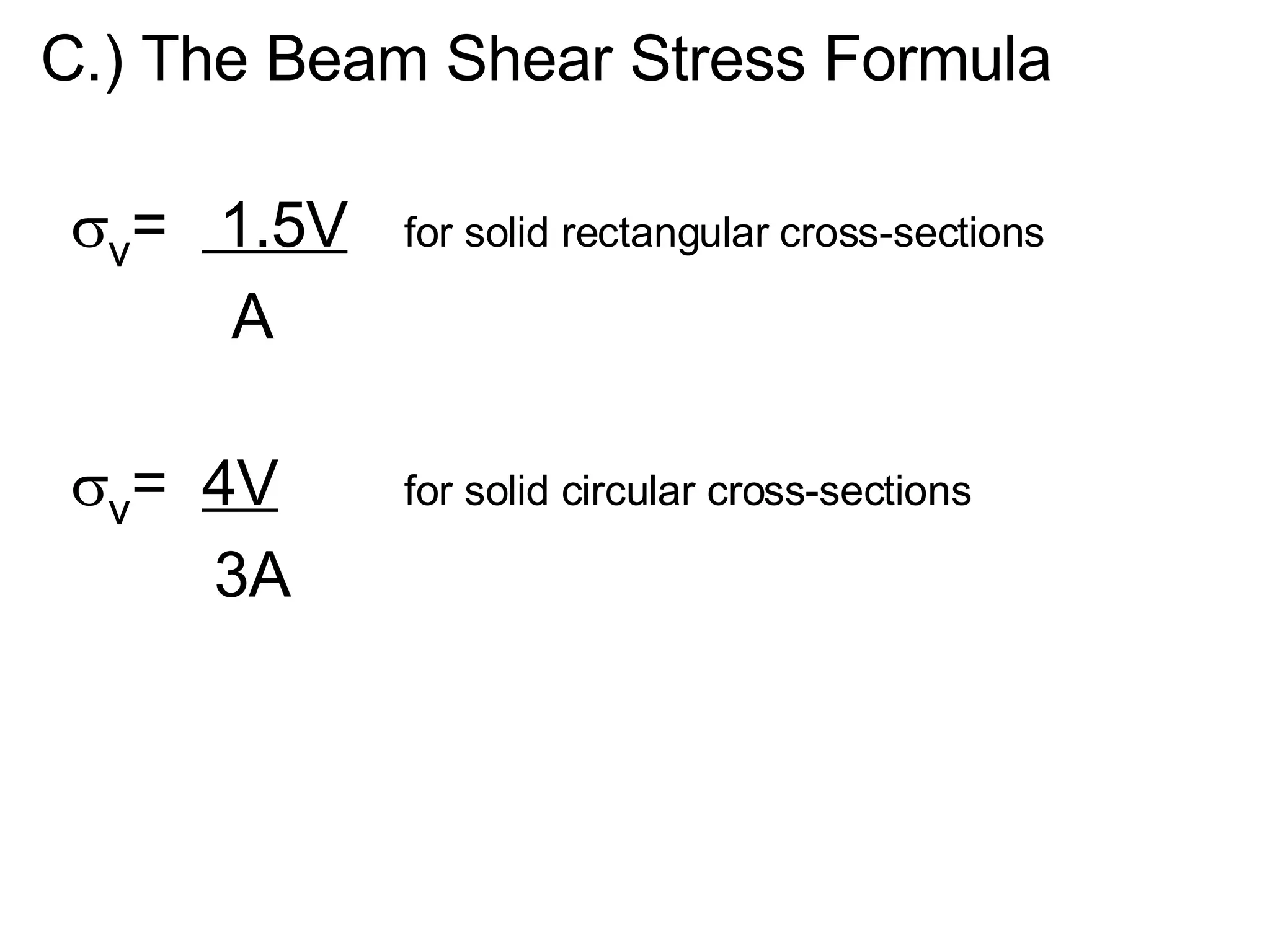
C.) The Beam Shear Stress Formula  v =  1.5V for solid rectangular cross-sections A  v =  4V for solid circular cross-sections 3A
 

311 Ch14 Version2

  • 1.
    VI .) Stresses in Beams A.) Bending Stresses 1.) Introduction When a beam is subjected to positive moment, the top shortens and the bottom lengthens.
  • 2.
  • 3.
    The bending strainsare zero at the neutral axis. The bending strains increase proportionately with the distance from the neutral axis. The maximum strains occur at the top and bottom of the beam (outer fibers)
  • 4.
    Since stress isdirectly related to strain  =  E), bending stress is also zero at the neutral axis and increases with the distance from the neutral axis. The maximum bending stresses occur at the top and bottom of the beam (outer fibers)
  • 5.
    2.) TheFlexure Formula  b = My I   b = Bending stress at a distance “y” from the neutral axis (ksi). y = distance from the neutral axis (in). M = Moment at a given cross-section of a beam (k-in). I = Moment of inertia of the cross- section (in 4 ). N.A. y
  • 6.
    3.) MaximumBending Stress  b,max = Mc I  b,max = Maximum bending stress at a given cross-section (ksi). c = Distance from N.A. to the outer fibers of cross-section (in) M, I = as defined before. N.A. c top c bot y
  • 7.
    4.) SectionModulus (S)  b,max = Mc = M I S S = I_ c N.A. c top c bot y NA c top c bot
  • 8.
    5.) StrongAxis vs. Weak Axis Strong Axis N.A. Weak Axis
  • 9.
    B.) Shear Stress- Average Web Shear  v = V_ dt w d t w d t w d t w
  • 10.
    C.) The BeamShear Stress Formula  v = VQ Ib V = Shear force (lb) Q = First Moment of Area I = 2 nd Moment of Inertia(in 4 ) b = thickness (in) at the location where shear is being computed
  • 11.
    C.) The BeamShear Stress Formula Q = First Moment about the neutral axis of the area between the horizontal plane where the shear is to be calculated and the top or bottom of the beam. Plane where shear Is being computed Neutral axis y Q = Ay
  • 12.
    C.) The BeamShear Stress Formula  v = 1.5V for solid rectangular cross-sections A  v = 4V for solid circular cross-sections 3A
  • 13.