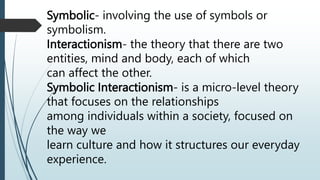
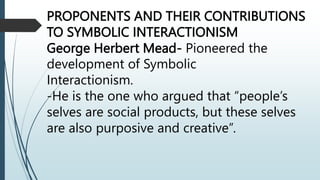
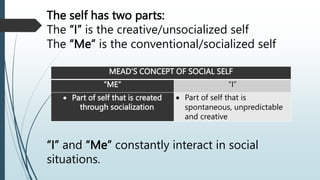
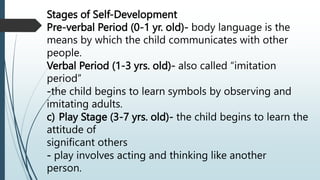
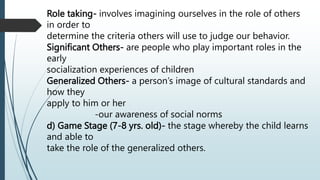
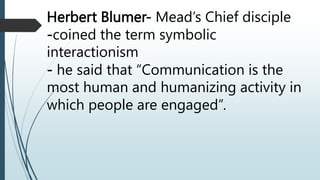
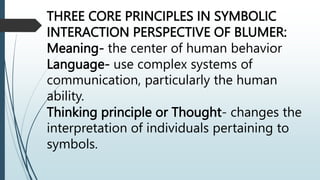
Symbolic interactionism is a micro-level sociological theory that focuses on how individuals interact and how these interactions shape people's selves. George Herbert Mead was influential in developing this perspective, arguing that people's selves are social products that are purposeful and creative. He described the "I" as the spontaneous self and the "Me" as the conventional, socialized self. Other key figures who contributed include Herbert Blumer, who coined the term "symbolic interactionism," and Erving Goffman, who viewed social life as dramatic performances with front stage and back stage elements.