RESEARCH HYPOTHESIS
DEFINITION
• It is a tentative prediction or explanation of
the relationship between two or more
variables.
According to Polite and beck define hypothesis
as a statement of researcher’s expectations
about the relationship between variables under
investigation.
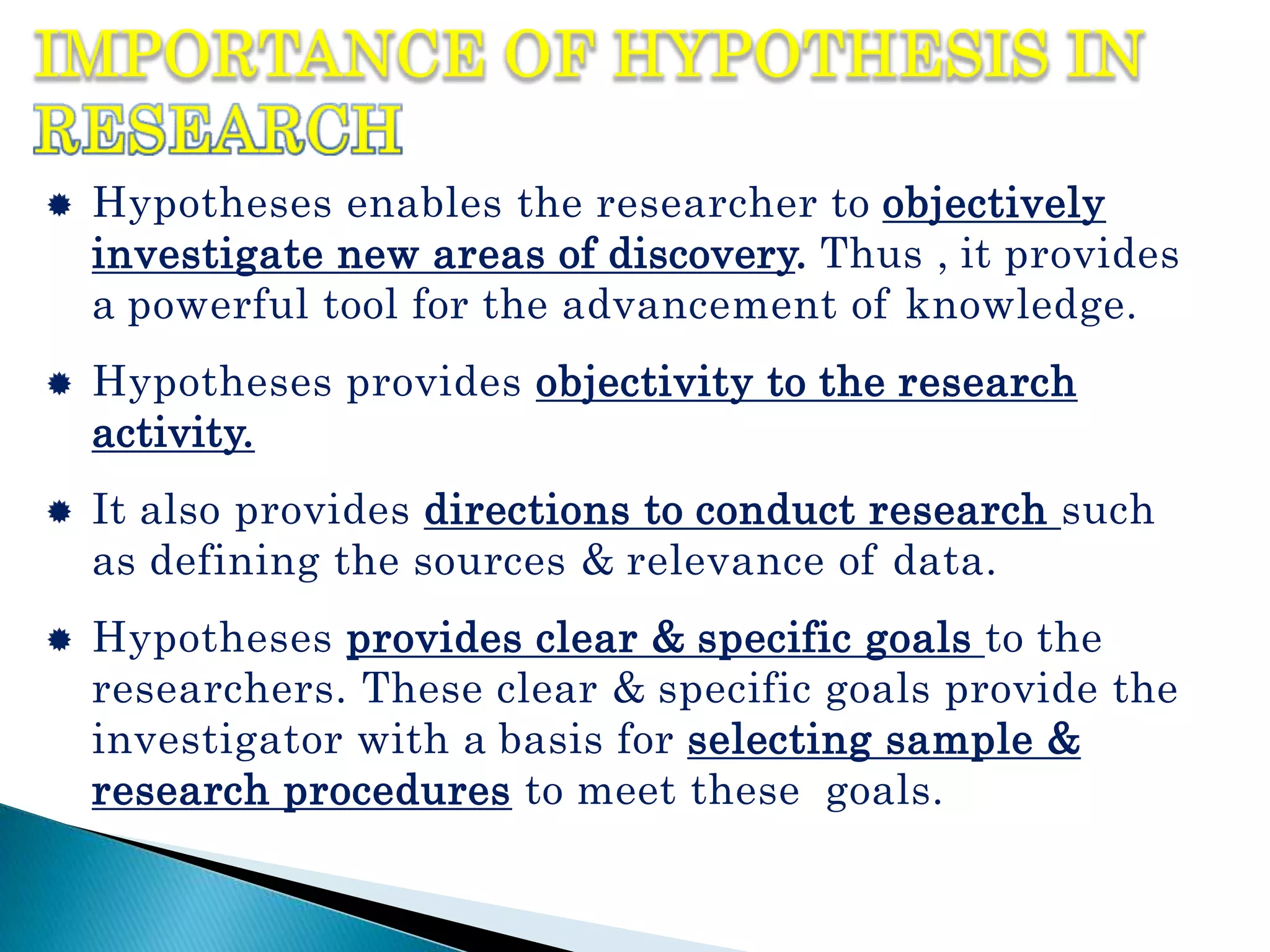
 Hypotheses enables the researcher to objectively
investigate new areas of discovery. Thus , it provides
a powerful tool for the advancement of knowledge.
 Hypotheses provides objectivity to the research
activity.
 It also provides directions to conduct research such
as defining the sources & relevance of data.
 Hypotheses provides clear & specific goals to the
researchers. These clear & specific goals provide the
investigator with a basis for selecting sample &
research procedures to meet these goals.
 Hypotheses provides link between theories &
actual practical research.
 It provides a bridge between theory & reality.
 A hypothesis suggests which type of research is
likely to be most appropriate.
 It stimulates the thinking process of researcher
as the researcher forms the hypothesis by
anticipating the outcome.
 It also determines the most appropriate
research designs & techniques of data
analysis.
 Hypotheses provides understanding to the
researchers about what expect from the
results of the research study.
 It serves as framework for drawing
conclusions of a research study.
SOURCES OF HYPOTHESIS
• Theoretical or conceptual framework
• Previous research findings
• Real life experiences
• Academic literature.
TYPES OF HYPOTHESIS
• SIMPLE AND COMPLEX HYPOTHESIS
• ASSOCIATIVE AND CASUAL HYPOTHESIS
• DIRECTIONAL AND NON DIRECTIONAL
HYPOTHESIS
• NULL (H0) AND RESEARCH HYPOTHESIS (H1)
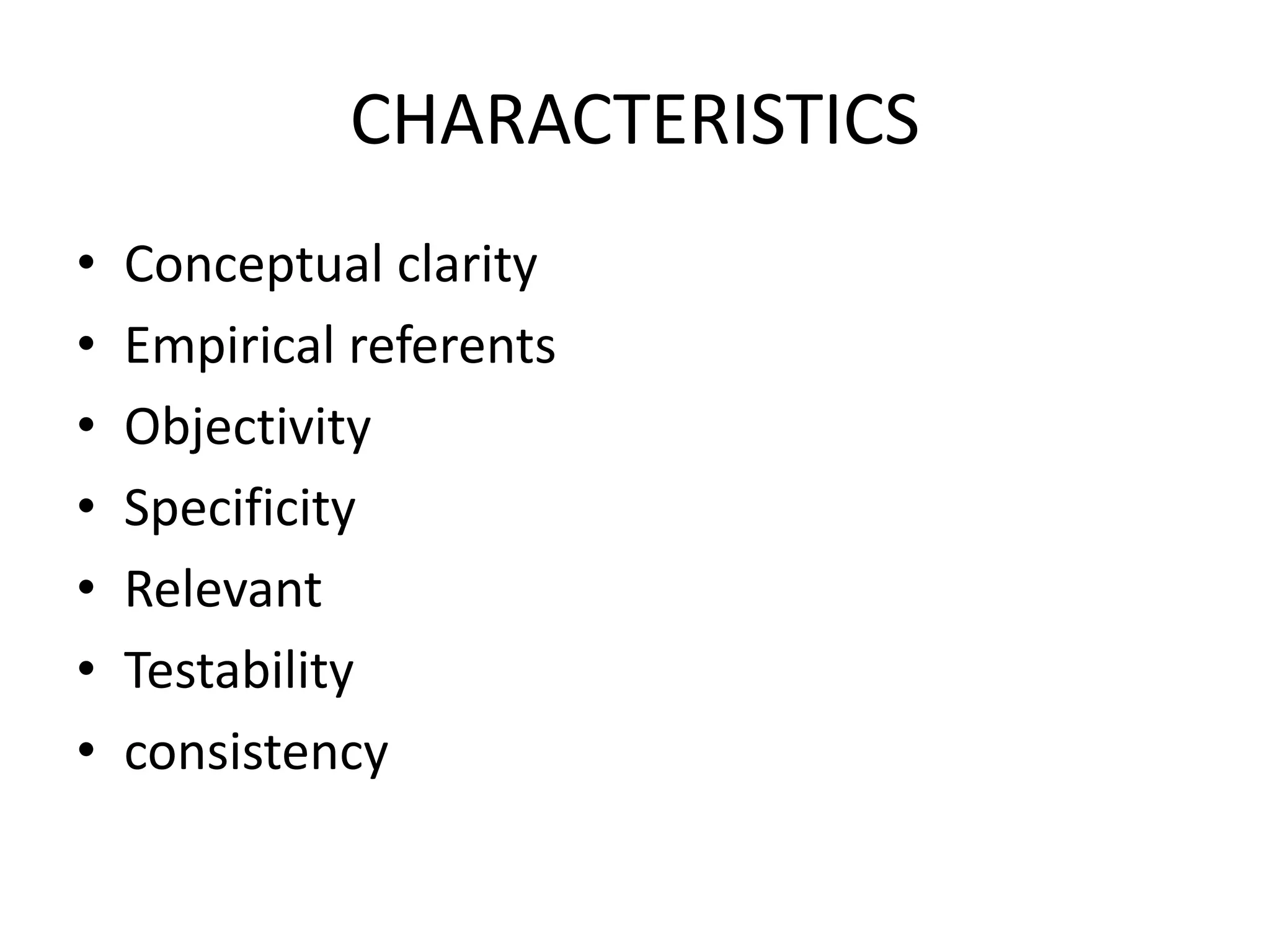
CHARACTERISTICS
• Conceptual clarity
• Empirical referents
• Objectivity
• Specificity
• Relevant
• Testability
• consistency
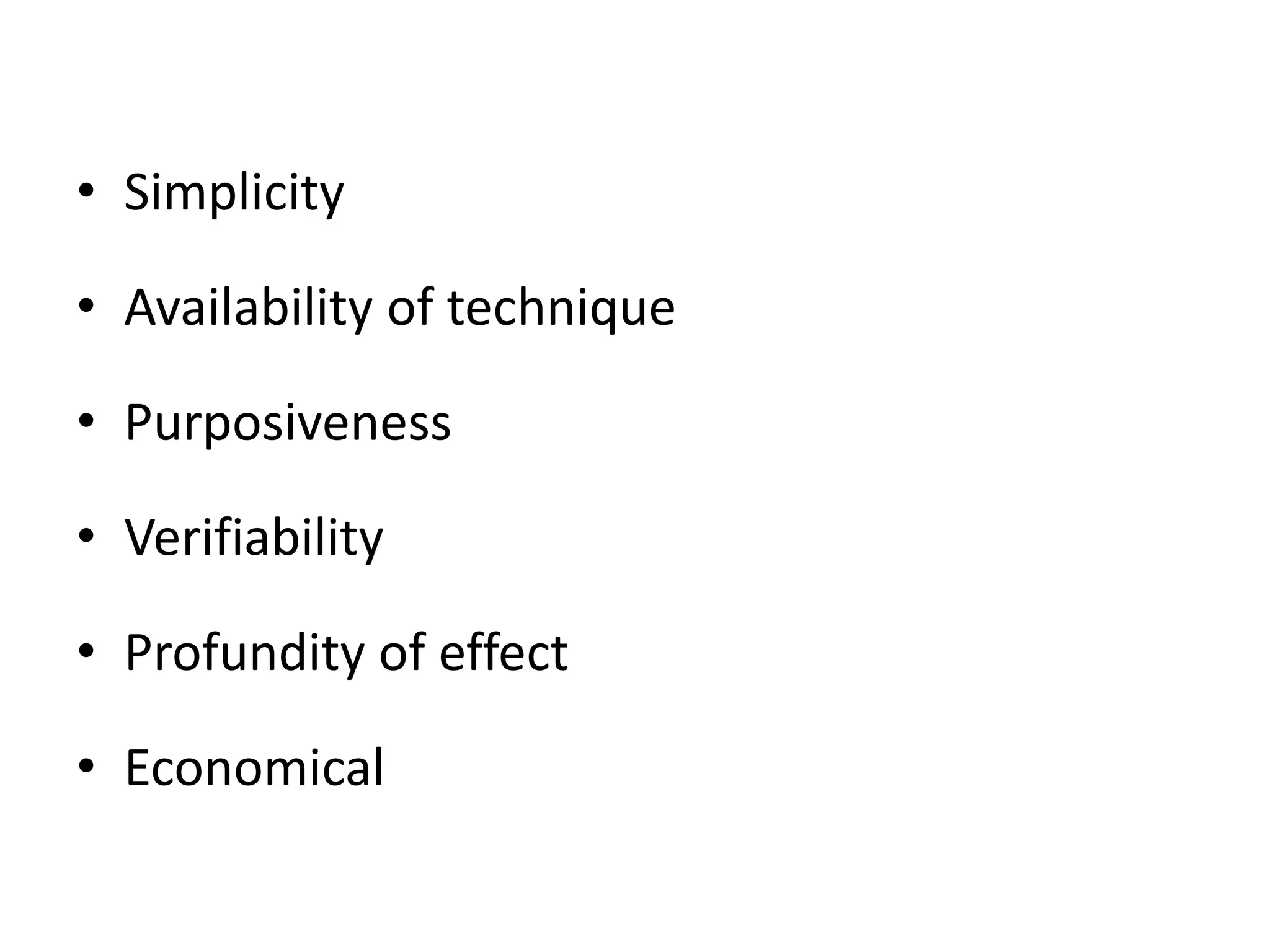
• Simplicity
• Availability of technique
• Purposiveness
• Verifiability
• Profundity of effect
• Economical
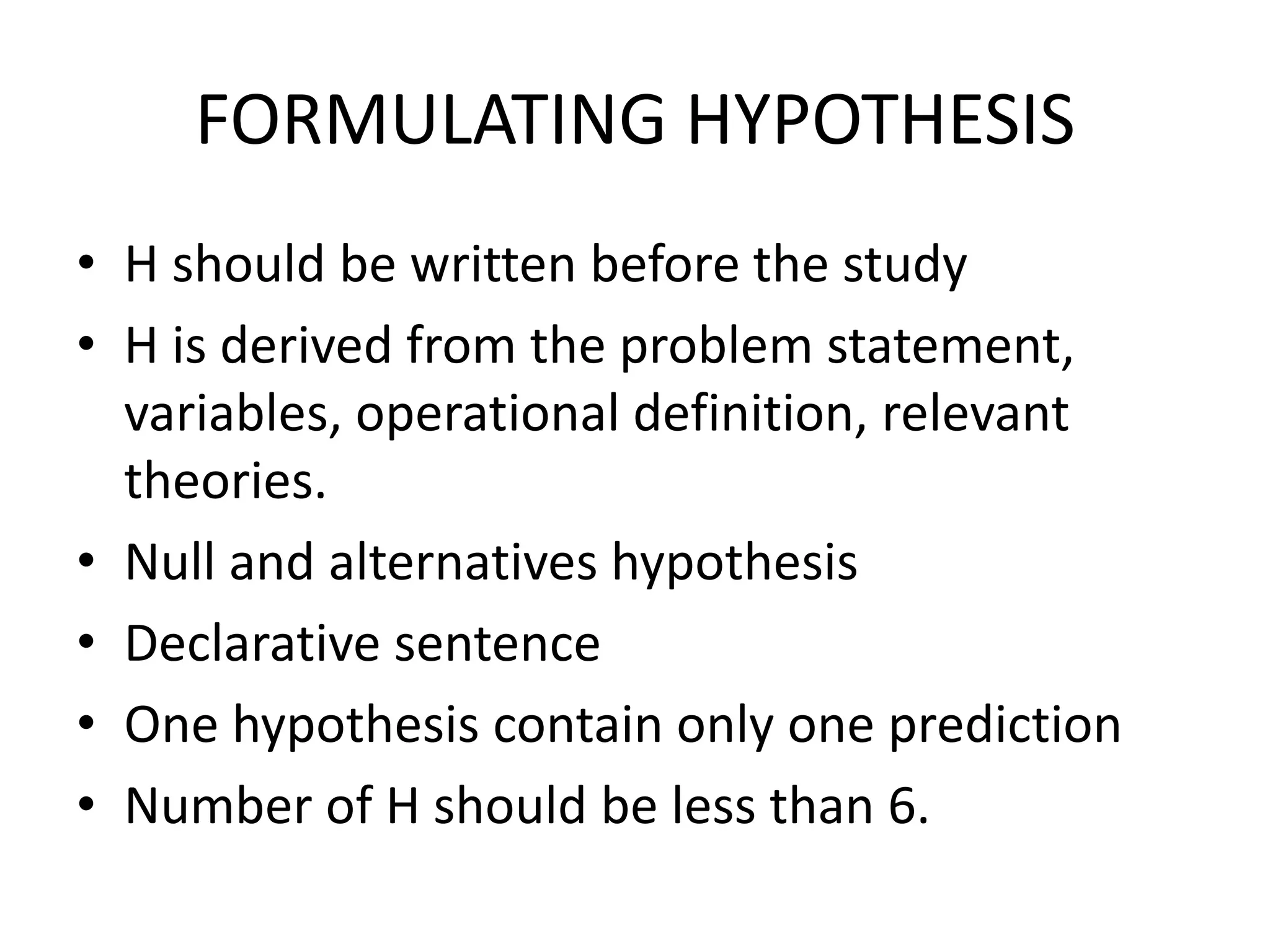
FORMULATING HYPOTHESIS
• H should be written before the study
• H is derived from the problem statement,
variables, operational definition, relevant
theories.
• Null and alternatives hypothesis
• Declarative sentence
• One hypothesis contain only one prediction
• Number of H should be less than 6.
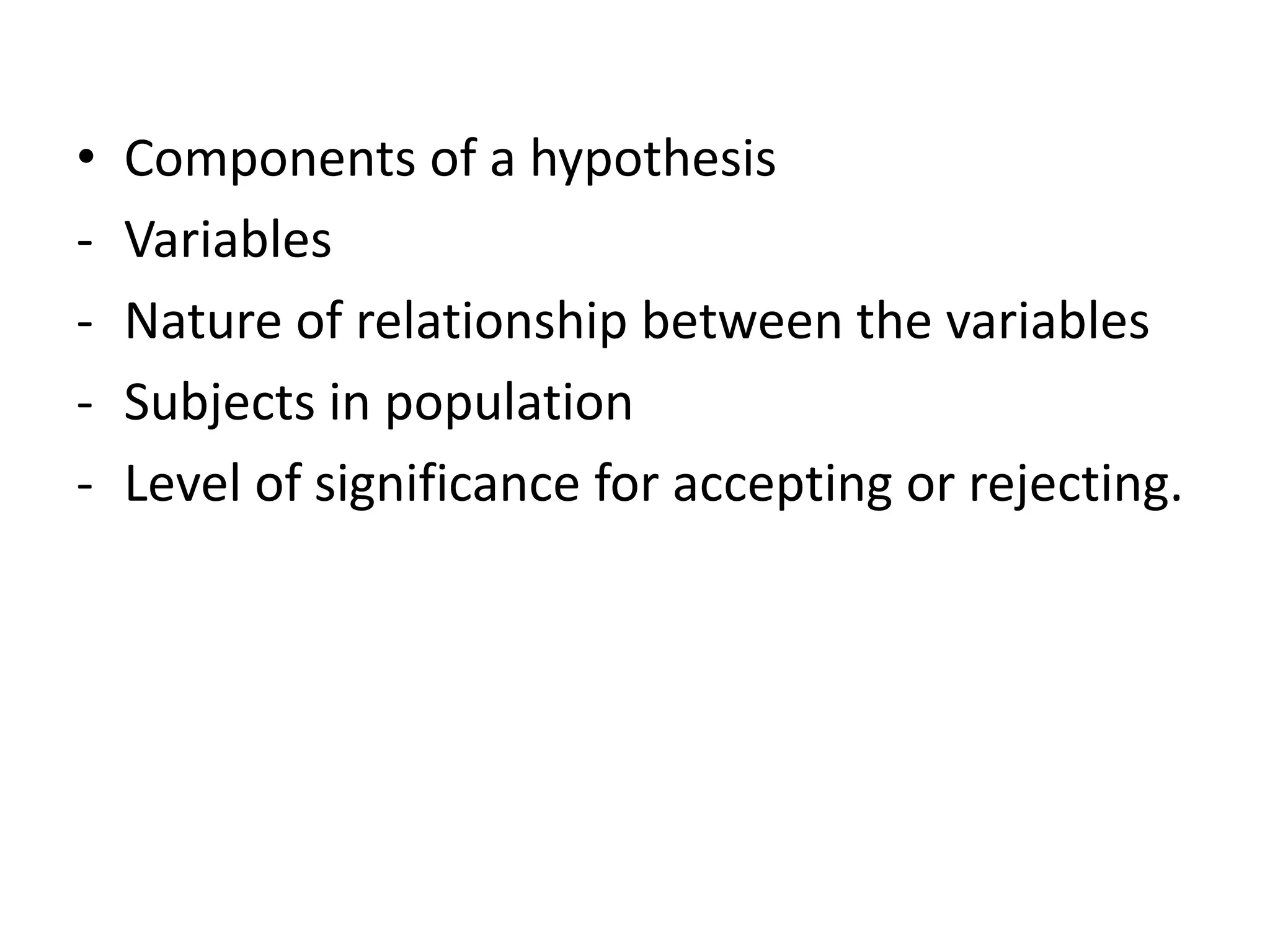
• Components of a hypothesis
- Variables
- Nature of relationship between the variables
- Subjects in population
- Level of significance for accepting or rejecting.

3. RESEARCH HYPOTHESIS.pptx

  • 1.
  • 2.
    DEFINITION • It isa tentative prediction or explanation of the relationship between two or more variables.
  • 3.
    According to Politeand beck define hypothesis as a statement of researcher’s expectations about the relationship between variables under investigation.
  • 4.
     Hypotheses enablesthe researcher to objectively investigate new areas of discovery. Thus , it provides a powerful tool for the advancement of knowledge.  Hypotheses provides objectivity to the research activity.  It also provides directions to conduct research such as defining the sources & relevance of data.  Hypotheses provides clear & specific goals to the researchers. These clear & specific goals provide the investigator with a basis for selecting sample & research procedures to meet these goals.
  • 5.
     Hypotheses provideslink between theories & actual practical research.  It provides a bridge between theory & reality.  A hypothesis suggests which type of research is likely to be most appropriate.  It stimulates the thinking process of researcher as the researcher forms the hypothesis by anticipating the outcome.
  • 6.
     It alsodetermines the most appropriate research designs & techniques of data analysis.  Hypotheses provides understanding to the researchers about what expect from the results of the research study.  It serves as framework for drawing conclusions of a research study.
  • 7.
    SOURCES OF HYPOTHESIS •Theoretical or conceptual framework • Previous research findings • Real life experiences • Academic literature.
  • 8.
    TYPES OF HYPOTHESIS •SIMPLE AND COMPLEX HYPOTHESIS • ASSOCIATIVE AND CASUAL HYPOTHESIS • DIRECTIONAL AND NON DIRECTIONAL HYPOTHESIS • NULL (H0) AND RESEARCH HYPOTHESIS (H1)
  • 9.
    CHARACTERISTICS • Conceptual clarity •Empirical referents • Objectivity • Specificity • Relevant • Testability • consistency
  • 10.
    • Simplicity • Availabilityof technique • Purposiveness • Verifiability • Profundity of effect • Economical
  • 11.
    FORMULATING HYPOTHESIS • Hshould be written before the study • H is derived from the problem statement, variables, operational definition, relevant theories. • Null and alternatives hypothesis • Declarative sentence • One hypothesis contain only one prediction • Number of H should be less than 6.
  • 12.
    • Components ofa hypothesis - Variables - Nature of relationship between the variables - Subjects in population - Level of significance for accepting or rejecting.