Learning through
project-based learning
Marjolein Schaddelee
marje.schaddelee@op.ac.nz
NTLT Conference 2013
Project-based learning (PBL)
- Why?
- How?
- What do the students think?
- Outcomes and changes….
Why PBL?
WHY PBL?
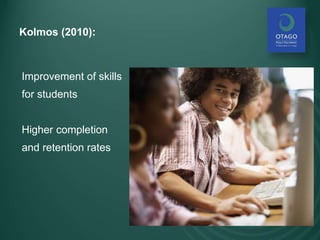
Kolmos (2010):
Improvement of skills
for students
Higher completion
and retention rates
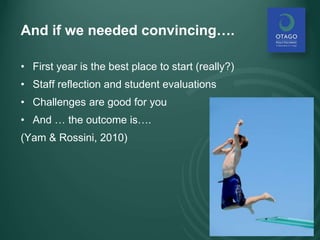
And if we needed convincing….
• First year is the best place to start (really?)
• Staff reflection and student evaluations
• Challenges are good for you
• And … the outcome is….
(Yam & Rossini, 2010)
How do we make it work?
Planning: 5 interdisciplinary projects – 1 year – 8 papers
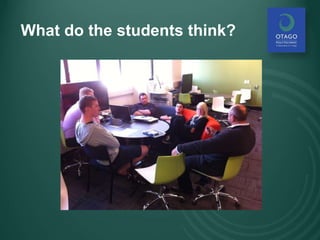
What do the students think?
What was working well in 2012
• “being helpful & friendly it’s ideal”
• “having Friday off”
• “working in groups”
• “The feedback we get from our work is great and I can
learn a lot from it”
• “The course hours are good, it gives us time to work in
our groups out of class”
• “meeting with mentors is good”
• ”working with different businesses”
What were the issues in 2012
• “ …we feel we have been chucked in it”
• “Be more organised”
• “ …use Moodle as a medium…”
• “keeping groups the same”
• “The disorganisation and miss-communication between
management & lecturers”
• “we are getting a bit sick of one another”
• “understanding the questions”
• “stop treating us like guinea pigs”
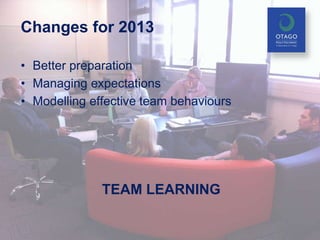
Changes for 2013
• Better preparation
• Managing expectations
• Modelling effective team behaviours
TEAM LEARNING
Student perceptions 2013
the story so far….
• “Moodle”
• “Talk us through how to answer questions”
• “helpful teachers” and “extra care”
• “having a mentor”
• “use of activity where we apply what we are learning to
something”
• “less group work, more individual assignment”
• “couches, pizza”
What did we learn?
• Having a committed team
• Generosity of skills and contributions
• Making decisions by consensus
• ‘Interdisciplinary’ is not an easy option
• Even a self-managing team needs a coordinator
AND THE TEAM IS STILL LEARNING….
More work to do….
• Peer assessment?
• Improvement of skills?
• Completion and retention?
• Benefits worth the costs?
References
Biggs, J. (1999). What the student does: Teaching for enhanced learning. Higher Education Research &
Development, 18(1), 57-75.
Kolmos, A. (2010). Premises for changing to PBL. International Journal for the Scholarship of Teaching
and Learning, 4(1), 1-7.
Michaelsen L.K., Knight A.B. & Fink L.D. (Eds). (2004). Team-based learning: A transformative use of
small groups in college teaching. Sterling, VA, USA: Stylus.
Smith Ducoffe, S.J., Tromley, C.L. & Tucker, M. (2006). Interdisciplinary, team-taught, undergraduate
business courses: The impact of integration. Journal of Management Education, 30(2), 276-294.
Thomas, J.W. (2000). A review of research on project-based learning. Retrieved from
http://www.bie.org/images/uploads/general/9d06758fd346969cb63653d00dca55c0.pdf
Yam, L.H.S. & Rossini, P. (2010). Implementing a project-based learning approach in an introductory
property course. 16th Pacific Rim Real Estate Society Conference, Wellington, New Zealand,
January 2010.

3 marjolein schaddelee

  • 1.
    Learning through project-based learning MarjoleinSchaddelee marje.schaddelee@op.ac.nz NTLT Conference 2013
  • 2.
    Project-based learning (PBL) -Why? - How? - What do the students think? - Outcomes and changes….
  • 3.
  • 4.
    Kolmos (2010): Improvement ofskills for students Higher completion and retention rates
  • 5.
    And if weneeded convincing…. • First year is the best place to start (really?) • Staff reflection and student evaluations • Challenges are good for you • And … the outcome is…. (Yam & Rossini, 2010)
  • 6.
    How do wemake it work? Planning: 5 interdisciplinary projects – 1 year – 8 papers
  • 7.
    What do thestudents think?
  • 8.
    What was workingwell in 2012 • “being helpful & friendly it’s ideal” • “having Friday off” • “working in groups” • “The feedback we get from our work is great and I can learn a lot from it” • “The course hours are good, it gives us time to work in our groups out of class” • “meeting with mentors is good” • ”working with different businesses”
  • 9.
    What were theissues in 2012 • “ …we feel we have been chucked in it” • “Be more organised” • “ …use Moodle as a medium…” • “keeping groups the same” • “The disorganisation and miss-communication between management & lecturers” • “we are getting a bit sick of one another” • “understanding the questions” • “stop treating us like guinea pigs”
  • 10.
    Changes for 2013 •Better preparation • Managing expectations • Modelling effective team behaviours TEAM LEARNING
  • 11.
    Student perceptions 2013 thestory so far…. • “Moodle” • “Talk us through how to answer questions” • “helpful teachers” and “extra care” • “having a mentor” • “use of activity where we apply what we are learning to something” • “less group work, more individual assignment” • “couches, pizza”
  • 12.
    What did welearn? • Having a committed team • Generosity of skills and contributions • Making decisions by consensus • ‘Interdisciplinary’ is not an easy option • Even a self-managing team needs a coordinator AND THE TEAM IS STILL LEARNING….
  • 13.
    More work todo…. • Peer assessment? • Improvement of skills? • Completion and retention? • Benefits worth the costs?
  • 14.
    References Biggs, J. (1999).What the student does: Teaching for enhanced learning. Higher Education Research & Development, 18(1), 57-75. Kolmos, A. (2010). Premises for changing to PBL. International Journal for the Scholarship of Teaching and Learning, 4(1), 1-7. Michaelsen L.K., Knight A.B. & Fink L.D. (Eds). (2004). Team-based learning: A transformative use of small groups in college teaching. Sterling, VA, USA: Stylus. Smith Ducoffe, S.J., Tromley, C.L. & Tucker, M. (2006). Interdisciplinary, team-taught, undergraduate business courses: The impact of integration. Journal of Management Education, 30(2), 276-294. Thomas, J.W. (2000). A review of research on project-based learning. Retrieved from http://www.bie.org/images/uploads/general/9d06758fd346969cb63653d00dca55c0.pdf Yam, L.H.S. & Rossini, P. (2010). Implementing a project-based learning approach in an introductory property course. 16th Pacific Rim Real Estate Society Conference, Wellington, New Zealand, January 2010.