Putting the Passion in PBL
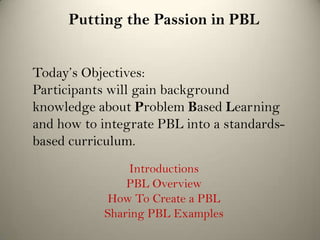
Today’s Objectives:
Participants will gain background
knowledge about Problem Based Learning
and how to integrate PBL into a standardsbased curriculum.
Introductions
PBL Overview
How To Create a PBL
Sharing PBL Examples
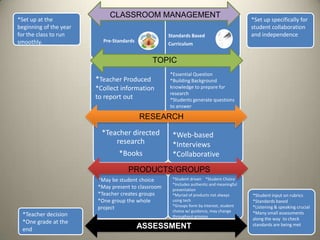
*Set up at the
beginning of the year
for the class to run
smoothly.

CLASSROOM MANAGEMENT
Standards Based

Pre-Standards

*Set up specifically for
student collaboration
and independence

Curriculum

TOPIC
*Teacher Produced
*Collect information
to report out

*Essential Question
*Building Background
knowledge to prepare for
research
*Students generate questions
to answer

RESEARCH
*Teacher directed
*Web-based
research
*Interviews
*Books RESEARCH
*Collaborative
PRODUCTS/GROUPS
*Student driven *Student Choice
*May be student choice
*Includes authentic and meaningful
*May present to classroom
presentation
*Teacher creates groups
PRODUCTS of products not always
*Myriad
using tech
*One group the whole
*Groups form by interest, student
project

*Teacher decision
*One grade at the
end

choice w/ guidance, may change
throughout process

ASSESSMENT

*Student input on rubrics
*Standards based
*Listening & speaking crucial
*Many small assessments
along the way to check
standards are being met
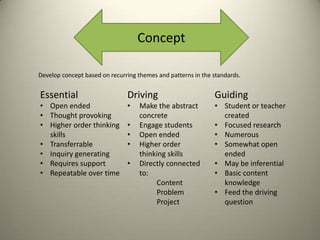
Concept
Develop concept based on recurring themes and patterns in the standards.

Essential

Driving

Guiding

• Open ended
• Thought provoking
• Higher order thinking
skills
• Transferrable
• Inquiry generating
• Requires support
• Repeatable over time

•

• Student or teacher
created
• Focused research
• Numerous
• Somewhat open
ended
• May be inferential
• Basic content
knowledge
• Feed the driving
question

•
•
•
•

Make the abstract
concrete
Engage students
Open ended
Higher order
thinking skills
Directly connected
to:
Content
Problem
Project
Turn and Talk:
Think about the standards you are currently using,
what overarching concepts and essential questions
can you envision?
Second Grade: Structure and Properties of
Matter
Concept: Change
Essential Question: How does matter change?

Based on these big ideas what
would you use as driving and guiding questions in this
unit?
Teaching

• Explicit content knowledge
• Skills to be assessed

Building Background Knowledge-For example “Life Cycles”
SIOP Strategy for Background Knowledge
RESEARCH
•

Web-based research. Use text and web resources
responsibly

•

Collaborative- teams of students with similar questions
can work together to gather information and data

•

Use community members and other experts-have a
bank of experts on hand for the school or classroom
that can be used throughout the year for different
projects
Community Fair Clip
Surveys and interviews-students gain knowledge about
the topic by creating surveys and interview questions

•
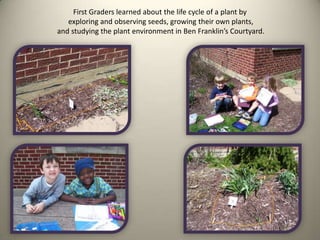
First Graders learned about the life cycle of a plant by
exploring and observing seeds, growing their own plants,
and studying the plant environment in Ben Franklin’s Courtyard.
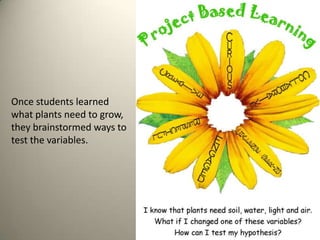
Once students learned
what plants need to grow,
they brainstormed ways to
test the variables.
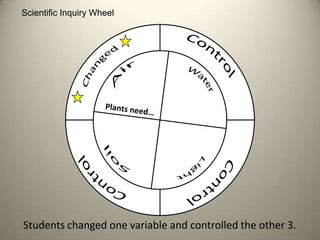
Scientific Inquiry Wheel

Inquiry wheel

Students changed one variable and controlled the other 3.
PRODUCTS AND GROUPING

Student Grouping:
• Interest Based
• Product Based
• Reflection on collaboration is
ongoing using daily updates and a
final collaboration rubric
PRODUCTS AND GROUPING

EAB Final Presentation- iMovie

Student Driven Products-Not always
tech based

Authentic Presentations to more
than just peers
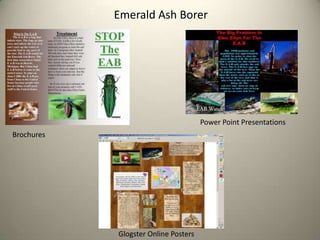
Emerald Ash Borer

Power Point Presentations

Brochures

Glogster Online Posters
Turn and Talk: What type of final presentations or
products would be most beneficial for your students
to be a part of?
ASSESSMENT
Standards Based
• Short Quizzes along the way
• Assess while teaching background
knowledge
• Rubrics created with students using
standards
Listening and Speaking Standards can be
assessed with final presentations
Deconstruction Example
• What aspects of Problem Based
Learning do you still have questions
about?
Basic Info
• Sarah Rodriguez
– srodriguez@d41.org

• Stacy Slater
– sslater@d41.org

• Slide Share
– http://www.slideshare.net/stacyslater18/puttingthe-passion-in-pbl

Putting the Passion in PBL: October 2013 Illinois Science Conference

  • 1.
  • 2.
    Putting the Passionin PBL Today’s Objectives: Participants will gain background knowledge about Problem Based Learning and how to integrate PBL into a standardsbased curriculum. Introductions PBL Overview How To Create a PBL Sharing PBL Examples
  • 3.
    *Set up atthe beginning of the year for the class to run smoothly. CLASSROOM MANAGEMENT Standards Based Pre-Standards *Set up specifically for student collaboration and independence Curriculum TOPIC *Teacher Produced *Collect information to report out *Essential Question *Building Background knowledge to prepare for research *Students generate questions to answer RESEARCH *Teacher directed *Web-based research *Interviews *Books RESEARCH *Collaborative PRODUCTS/GROUPS *Student driven *Student Choice *May be student choice *Includes authentic and meaningful *May present to classroom presentation *Teacher creates groups PRODUCTS of products not always *Myriad using tech *One group the whole *Groups form by interest, student project *Teacher decision *One grade at the end choice w/ guidance, may change throughout process ASSESSMENT *Student input on rubrics *Standards based *Listening & speaking crucial *Many small assessments along the way to check standards are being met
  • 4.
    Concept Develop concept basedon recurring themes and patterns in the standards. Essential Driving Guiding • Open ended • Thought provoking • Higher order thinking skills • Transferrable • Inquiry generating • Requires support • Repeatable over time • • Student or teacher created • Focused research • Numerous • Somewhat open ended • May be inferential • Basic content knowledge • Feed the driving question • • • • Make the abstract concrete Engage students Open ended Higher order thinking skills Directly connected to: Content Problem Project
  • 5.
    Turn and Talk: Thinkabout the standards you are currently using, what overarching concepts and essential questions can you envision?
  • 6.
    Second Grade: Structureand Properties of Matter Concept: Change Essential Question: How does matter change? Based on these big ideas what would you use as driving and guiding questions in this unit?
  • 7.
    Teaching • Explicit contentknowledge • Skills to be assessed Building Background Knowledge-For example “Life Cycles” SIOP Strategy for Background Knowledge
  • 8.
    RESEARCH • Web-based research. Usetext and web resources responsibly • Collaborative- teams of students with similar questions can work together to gather information and data • Use community members and other experts-have a bank of experts on hand for the school or classroom that can be used throughout the year for different projects Community Fair Clip Surveys and interviews-students gain knowledge about the topic by creating surveys and interview questions •
  • 9.
    First Graders learnedabout the life cycle of a plant by exploring and observing seeds, growing their own plants, and studying the plant environment in Ben Franklin’s Courtyard.
  • 10.
    Once students learned whatplants need to grow, they brainstormed ways to test the variables.
  • 11.
    Scientific Inquiry Wheel Inquirywheel Students changed one variable and controlled the other 3.
  • 12.
    PRODUCTS AND GROUPING StudentGrouping: • Interest Based • Product Based • Reflection on collaboration is ongoing using daily updates and a final collaboration rubric
  • 13.
    PRODUCTS AND GROUPING EABFinal Presentation- iMovie Student Driven Products-Not always tech based Authentic Presentations to more than just peers
  • 14.
    Emerald Ash Borer PowerPoint Presentations Brochures Glogster Online Posters
  • 15.
    Turn and Talk:What type of final presentations or products would be most beneficial for your students to be a part of?
  • 16.
    ASSESSMENT Standards Based • ShortQuizzes along the way • Assess while teaching background knowledge • Rubrics created with students using standards Listening and Speaking Standards can be assessed with final presentations Deconstruction Example
  • 17.
    • What aspectsof Problem Based Learning do you still have questions about?
  • 18.
    Basic Info • SarahRodriguez – srodriguez@d41.org • Stacy Slater – sslater@d41.org • Slide Share – http://www.slideshare.net/stacyslater18/puttingthe-passion-in-pbl

Editor's Notes