H05 — INSTRUCTIONAL 
LEADERSHIP IN AN 
ONLINE ENVIRONMENT 
EXAMINE THE ROLE OF THE PRINCIPAL AS AN INSTRUCTIONAL LEADER IN AN ONLINE ENVIRONMENT. 
SEE HOW AN ONLINE ENVIRONMENT AND FLIPPED CLASSROOMS CAN GIVE A PRINCIPAL DEEPER 
INSIGHT INTO A CLASSROOM. CREATE A WALK-THROUGH INSTRUMENT FOR ONLINE CLASSES AND 
DESIGN A PROFESSIONAL DEVELOPMENT PLAN FOR A NEW ONLINE TEACHER.
Our goals 
 To have a deeper understanding of how to evaluate an online 
course. 
 To become aware of instruments that are already widely used. 
 Create a walkthrough instrument for online classes. 
 Design a professional development plan for a new teacher. 
 Go ahead and go to http://tops.btcs.org/Horne_LF.html
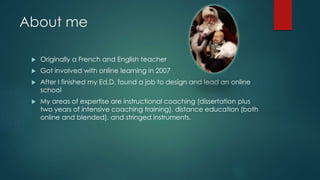
About me 
 Originally a French and English teacher 
 Got involved with online learning in 2007 
 After I finished my Ed.D. found a job to design and lead an online 
school 
 My areas of expertise are instructional coaching (dissertation plus 
two years of intensive coaching training), distance education (both 
online and blended), and stringed instruments.
About TOPS 
 Established in 2012 
 Statewide Virtual School in TN 
 We’re part of Bristol, TN City Schools 
 Our content is all homemade – we don’t use a 3rd party 
 We use Canvas as our LMS (if you don’t know what this means, ask) 
 Student population: 250
My beliefs 
 Online learning can be equal to or better than traditional B&M 
learning. 
 Teachers (as human beings) are our most important and valuable 
resource and should be treasured. 
 Students are our clients and shouldn’t be taken for granted. (In my 
school, none of them are compelled to be there.) 
 How a teacher designs work is causal to learning as opposed to 
teacher performance. 
 A growth mindset applies universally, not only to students. 
 Evaluations should be solely focused on improving practice. 
 Teachers know more than I do about their subjects, their students, 
how to teach them, what students have a hard time learning, and 
why their subject is important.
Evaluating B&M classrooms versus 
online courses 
B&M 
 90 minutes of instruction 
 Daily lesson plans 
 Student work if requested (usual in 
paper-pencil format) 
 For most teachers, less than 1% of 
the time they spend in the 
classroom. 
Online 
 The entire course 
 All student work 
 All teacher feedback 
 All student discussions 
 For all teachers, 100% of what they 
do in the classroom.
Discussion: Why do we do 
evaluations/walkthroughs? 
 What do we hope to gain? 
 What are your teachers’ perceptions of them? 
 What’s your process? 
 My purpose is to help the teacher figure out what needs to be 
better. 
 There are some basics that must be there. After that, it depends on 
the subject and most importantly, the students.
Let’s compare what Learning 
Matters and iNACOL rubrics 
 What’s similar? 
 What’s different? 
 Do you think anything should be added? 
 Do you think anything should be taken away?
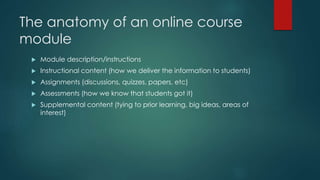
The anatomy of an online course 
module 
 Module description/instructions 
 Instructional content (how we deliver the information to students) 
 Assignments (discussions, quizzes, papers, etc) 
 Assessments (how we know that students got it) 
 Supplemental content (tying to prior learning, big ideas, areas of 
interest)
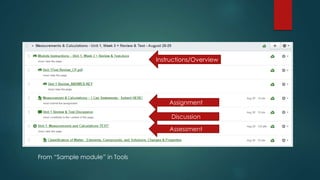
Instructions/Overview 
Assignment 
Discussion 
Assessment 
From “Sample module” in Tools
Where to start… 
 Instructions 
 Information 
 Assignments 
 Assessments 
 Collaboration
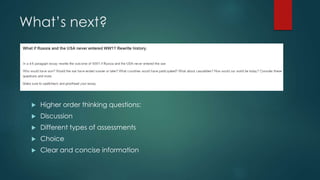
What’s next? 
 Higher order thinking questions: 
 Discussion 
 Different types of assessments 
 Choice 
 Clear and concise information
And finally… 
 Student work 
 Academic feedback 
 Evidence of engagement 
 Responses to student performance 
 Student progress over time
Creating your instrument 
 What is important and manageable? 
 Where will teachers benefit from feedback versus a checkmark? 
 Do a walkthrough inventory of your entire school. 
 Involve teachers in this process. 
 What patterns do you see? 
 What does everyone do? 
 Do you need to create policies that standardize certain elements? 
 What do you think I focused on after the first round of walkthroughs?
After walkthroughs 
 Something positive 
 “What I like” 
 Shoutouts 
 Recognition 
 Great job! 
 Coaching 
 Follow up 
 One on one help 
 Play matchmaker with teachers to help one another
Professional Development 
 How do you think this drives my PD plan?

Learning Forward Presentation

  • 1.
    H05 — INSTRUCTIONAL LEADERSHIP IN AN ONLINE ENVIRONMENT EXAMINE THE ROLE OF THE PRINCIPAL AS AN INSTRUCTIONAL LEADER IN AN ONLINE ENVIRONMENT. SEE HOW AN ONLINE ENVIRONMENT AND FLIPPED CLASSROOMS CAN GIVE A PRINCIPAL DEEPER INSIGHT INTO A CLASSROOM. CREATE A WALK-THROUGH INSTRUMENT FOR ONLINE CLASSES AND DESIGN A PROFESSIONAL DEVELOPMENT PLAN FOR A NEW ONLINE TEACHER.
  • 2.
    Our goals To have a deeper understanding of how to evaluate an online course.  To become aware of instruments that are already widely used.  Create a walkthrough instrument for online classes.  Design a professional development plan for a new teacher.  Go ahead and go to http://tops.btcs.org/Horne_LF.html
  • 3.
    About me Originally a French and English teacher  Got involved with online learning in 2007  After I finished my Ed.D. found a job to design and lead an online school  My areas of expertise are instructional coaching (dissertation plus two years of intensive coaching training), distance education (both online and blended), and stringed instruments.
  • 4.
    About TOPS Established in 2012  Statewide Virtual School in TN  We’re part of Bristol, TN City Schools  Our content is all homemade – we don’t use a 3rd party  We use Canvas as our LMS (if you don’t know what this means, ask)  Student population: 250
  • 5.
    My beliefs Online learning can be equal to or better than traditional B&M learning.  Teachers (as human beings) are our most important and valuable resource and should be treasured.  Students are our clients and shouldn’t be taken for granted. (In my school, none of them are compelled to be there.)  How a teacher designs work is causal to learning as opposed to teacher performance.  A growth mindset applies universally, not only to students.  Evaluations should be solely focused on improving practice.  Teachers know more than I do about their subjects, their students, how to teach them, what students have a hard time learning, and why their subject is important.
  • 6.
    Evaluating B&M classroomsversus online courses B&M  90 minutes of instruction  Daily lesson plans  Student work if requested (usual in paper-pencil format)  For most teachers, less than 1% of the time they spend in the classroom. Online  The entire course  All student work  All teacher feedback  All student discussions  For all teachers, 100% of what they do in the classroom.
  • 7.
    Discussion: Why dowe do evaluations/walkthroughs?  What do we hope to gain?  What are your teachers’ perceptions of them?  What’s your process?  My purpose is to help the teacher figure out what needs to be better.  There are some basics that must be there. After that, it depends on the subject and most importantly, the students.
  • 8.
    Let’s compare whatLearning Matters and iNACOL rubrics  What’s similar?  What’s different?  Do you think anything should be added?  Do you think anything should be taken away?
  • 9.
    The anatomy ofan online course module  Module description/instructions  Instructional content (how we deliver the information to students)  Assignments (discussions, quizzes, papers, etc)  Assessments (how we know that students got it)  Supplemental content (tying to prior learning, big ideas, areas of interest)
  • 10.
    Instructions/Overview Assignment Discussion Assessment From “Sample module” in Tools
  • 11.
    Where to start…  Instructions  Information  Assignments  Assessments  Collaboration
  • 12.
    What’s next? Higher order thinking questions:  Discussion  Different types of assessments  Choice  Clear and concise information
  • 13.
    And finally… Student work  Academic feedback  Evidence of engagement  Responses to student performance  Student progress over time
  • 14.
    Creating your instrument  What is important and manageable?  Where will teachers benefit from feedback versus a checkmark?  Do a walkthrough inventory of your entire school.  Involve teachers in this process.  What patterns do you see?  What does everyone do?  Do you need to create policies that standardize certain elements?  What do you think I focused on after the first round of walkthroughs?
  • 15.
    After walkthroughs Something positive  “What I like”  Shoutouts  Recognition  Great job!  Coaching  Follow up  One on one help  Play matchmaker with teachers to help one another
  • 16.
    Professional Development How do you think this drives my PD plan?