Project-Based
Learning (PBL)
Project-Based Learning (PBL) is an engaging educational approach that
centers on real-world projects. It empowers learners to develop critical
thinking, problem-solving, and collaboration skills while applying
knowledge in meaningful contexts.
by Dr Ruel Nepuscua
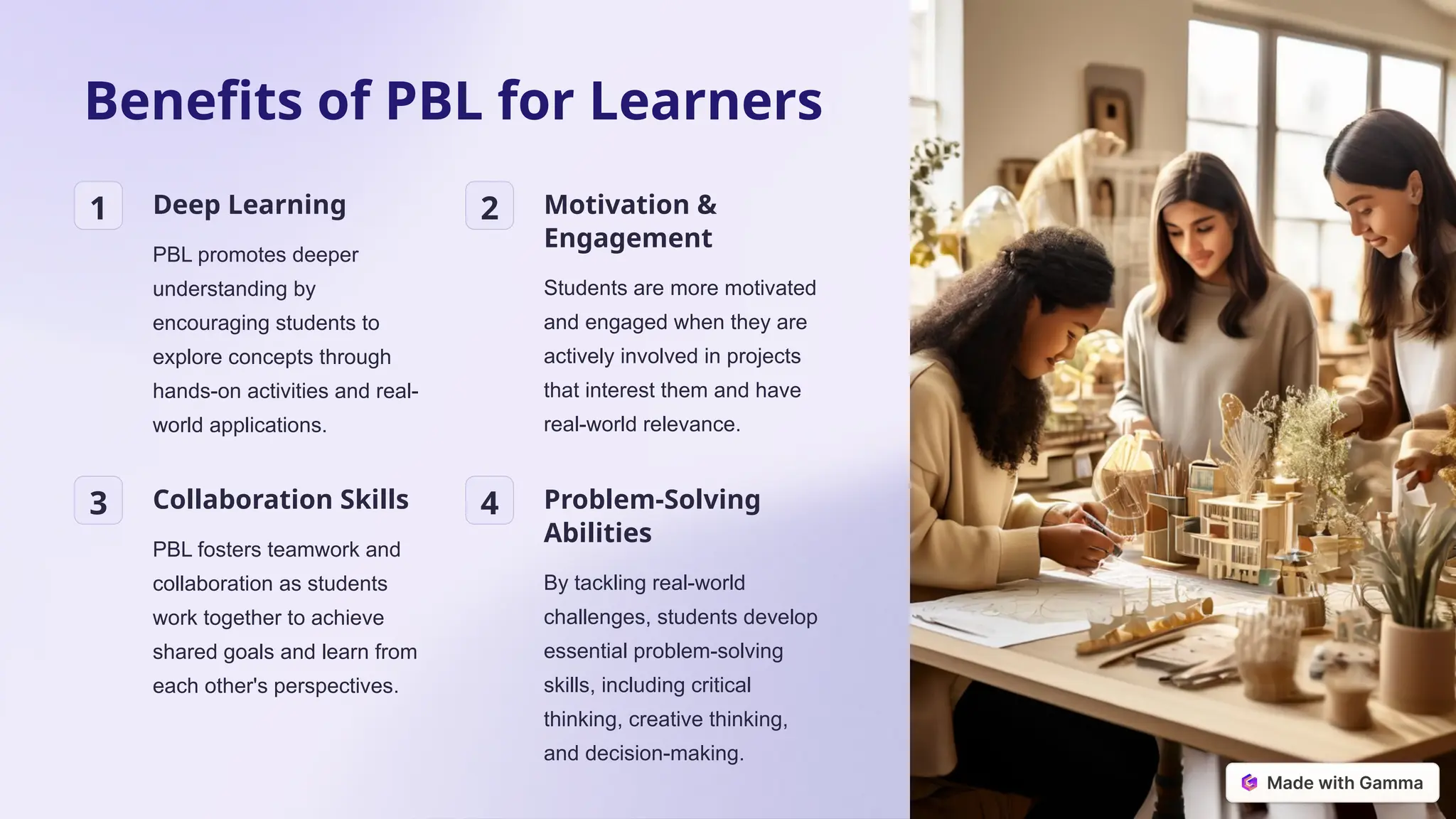
Benefits of PBL for Learners
1 Deep Learning
PBL promotes deeper
understanding by
encouraging students to
explore concepts through
hands-on activities and real-
world applications.
2 Motivation &
Engagement
Students are more motivated
and engaged when they are
actively involved in projects
that interest them and have
real-world relevance.
3 Collaboration Skills
PBL fosters teamwork and
collaboration as students
work together to achieve
shared goals and learn from
each other's perspectives.
4 Problem-Solving
Abilities
By tackling real-world
challenges, students develop
essential problem-solving
skills, including critical
thinking, creative thinking,
and decision-making.
Key Components of Effective PBL
Driving Question
A central question that guides the
project and provides a clear focus for
learning. It should be relevant,
engaging, and open-ended.
Authentic Tasks
Activities that mimic real-world
challenges, providing students with
opportunities to apply their
knowledge and skills in meaningful
ways.
Student Voice & Choice
Students should have a say in
shaping the project, making choices
about the investigation, research, and
presentation of their work.
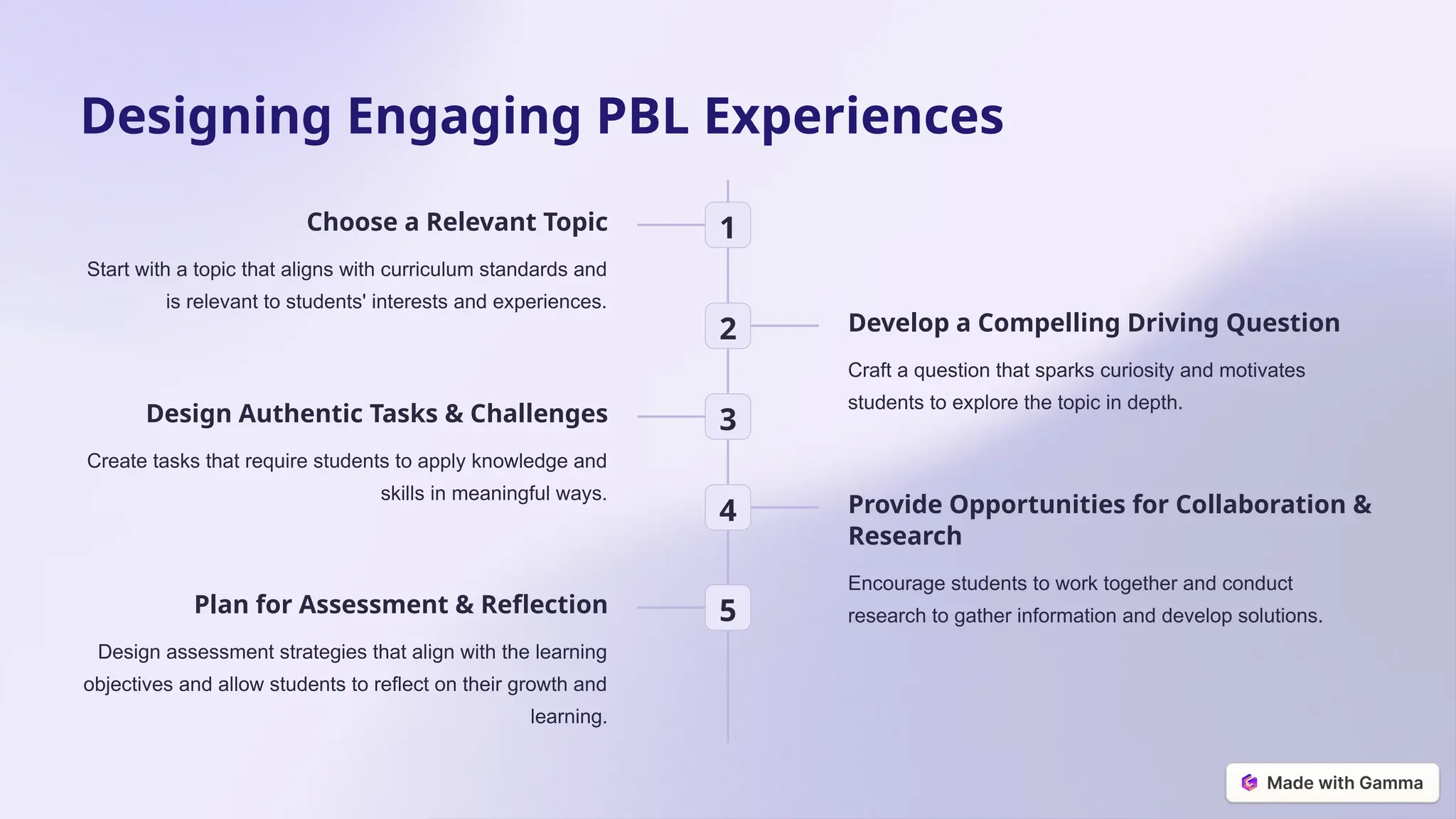
Designing Engaging PBL Experiences
1
Choose a Relevant Topic
Start with a topic that aligns with curriculum standards and
is relevant to students' interests and experiences.
2 Develop a Compelling Driving Question
Craft a question that sparks curiosity and motivates
students to explore the topic in depth.
3
Design Authentic Tasks & Challenges
Create tasks that require students to apply knowledge and
skills in meaningful ways.
4 Provide Opportunities for Collaboration &
Research
Encourage students to work together and conduct
research to gather information and develop solutions.
5
Plan for Assessment & Reflection
Design assessment strategies that align with the learning
objectives and allow students to reflect on their growth and
learning.
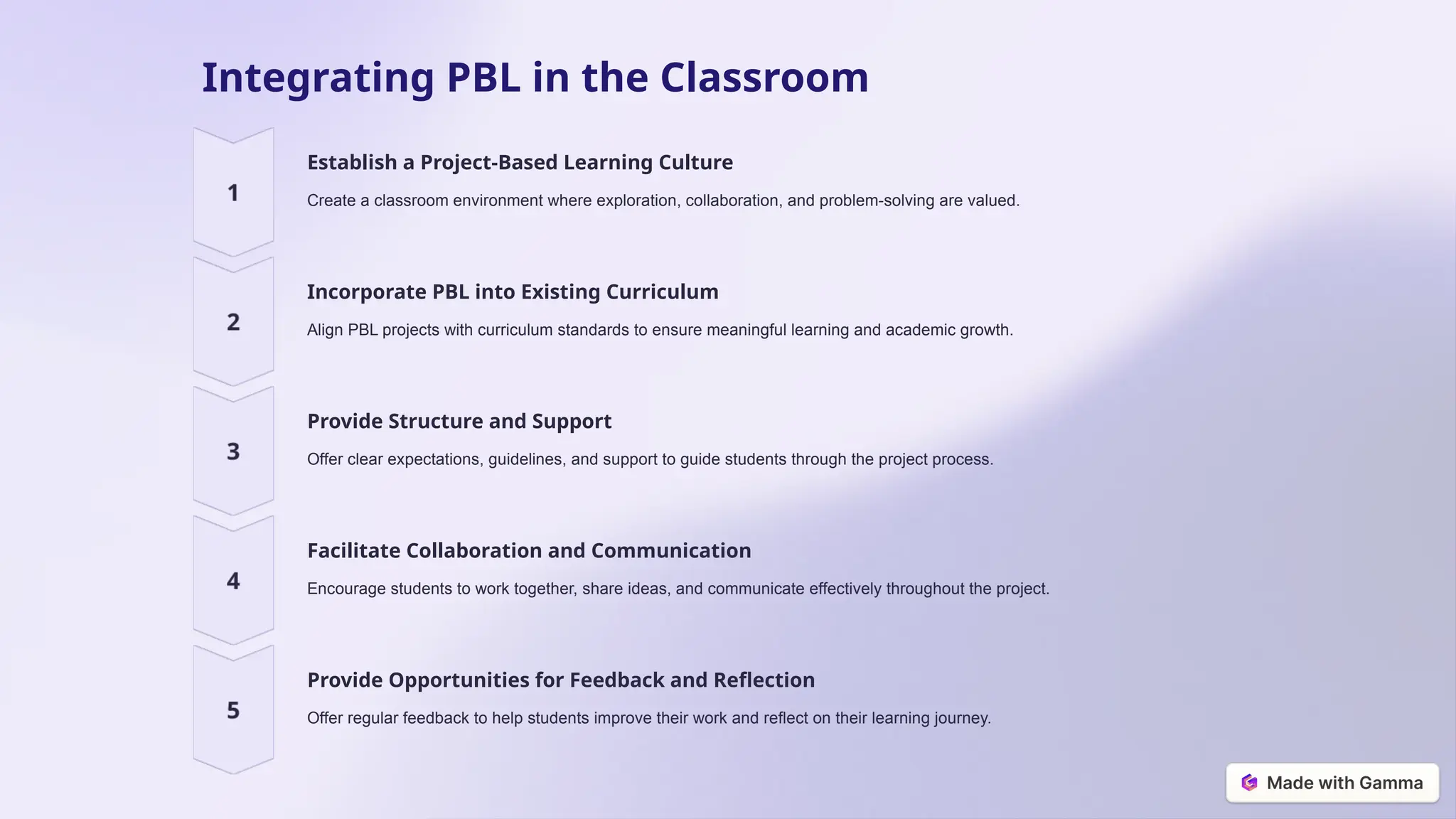
Integrating PBL in the Classroom
Establish a Project-Based Learning Culture
Create a classroom environment where exploration, collaboration, and problem-solving are valued.
Incorporate PBL into Existing Curriculum
Align PBL projects with curriculum standards to ensure meaningful learning and academic growth.
Provide Structure and Support
Offer clear expectations, guidelines, and support to guide students through the project process.
Facilitate Collaboration and Communication
Encourage students to work together, share ideas, and communicate effectively throughout the project.
Provide Opportunities for Feedback and Reflection
Offer regular feedback to help students improve their work and reflect on their learning journey.
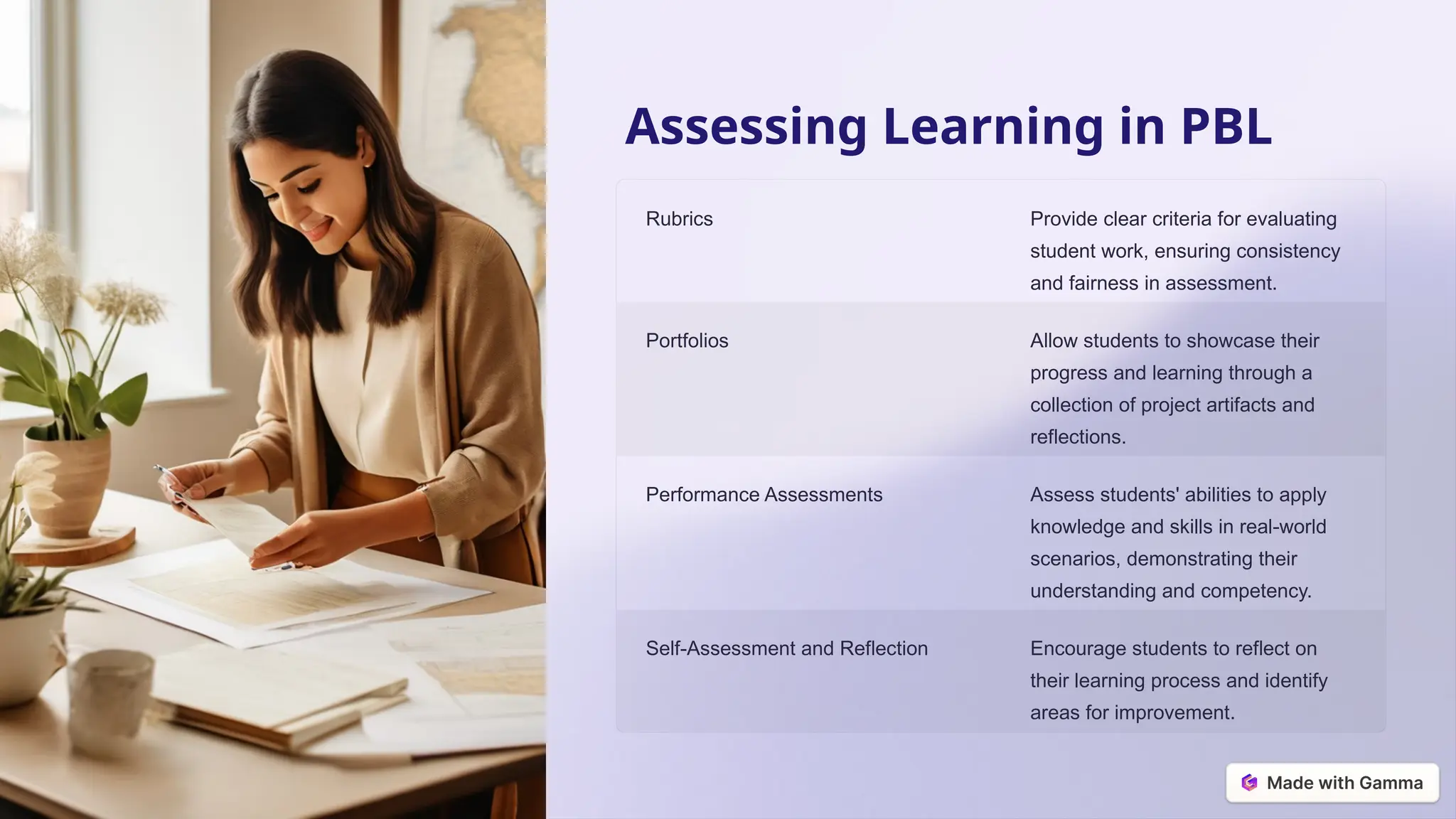
Assessing Learning in PBL
Rubrics Provide clear criteria for evaluating
student work, ensuring consistency
and fairness in assessment.
Portfolios Allow students to showcase their
progress and learning through a
collection of project artifacts and
reflections.
Performance Assessments Assess students' abilities to apply
knowledge and skills in real-world
scenarios, demonstrating their
understanding and competency.
Self-Assessment and Reflection Encourage students to reflect on
their learning process and identify
areas for improvement.
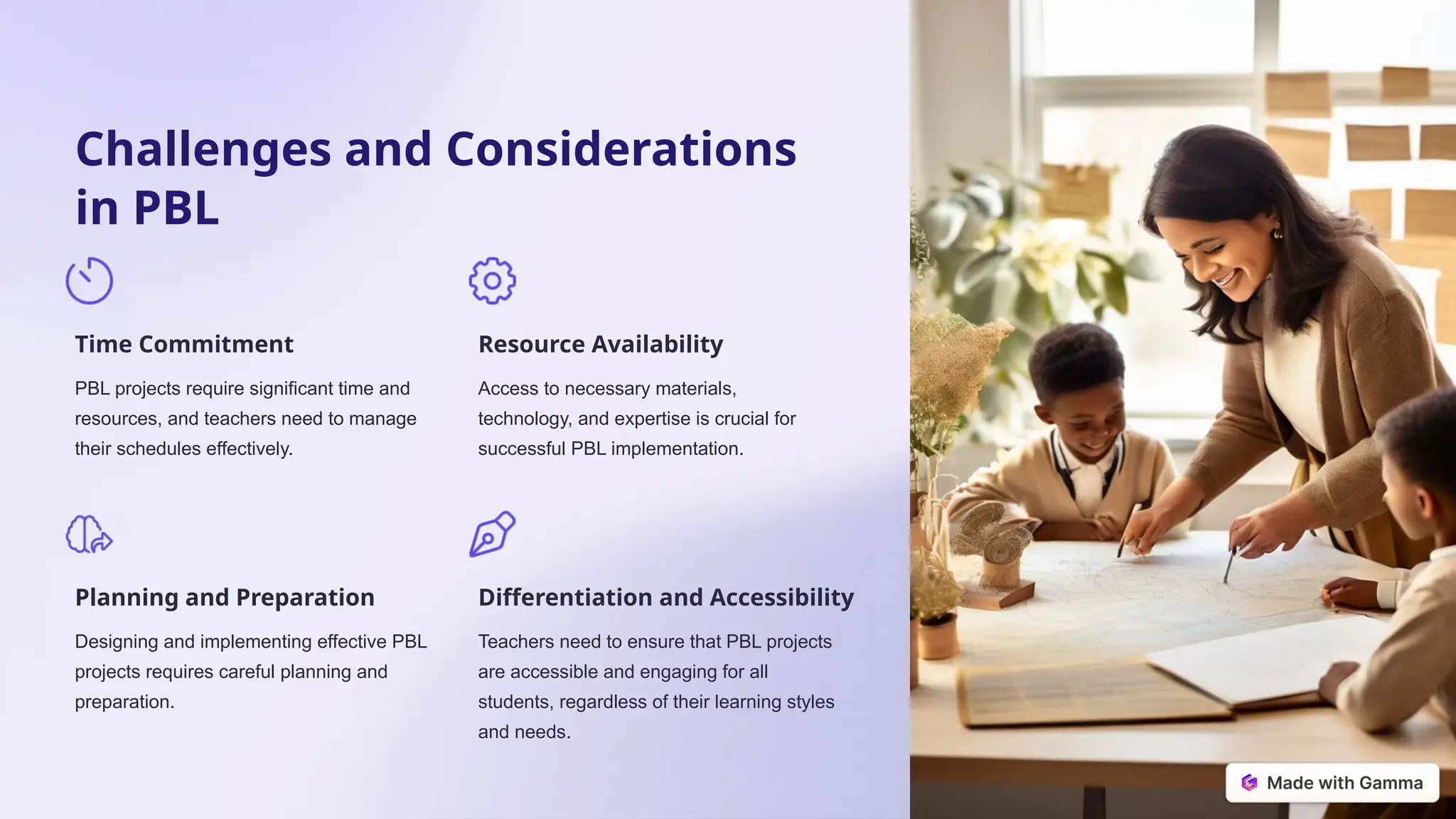
Challenges and Considerations
in PBL
Time Commitment
PBL projects require significant time and
resources, and teachers need to manage
their schedules effectively.
Resource Availability
Access to necessary materials,
technology, and expertise is crucial for
successful PBL implementation.
Planning and Preparation
Designing and implementing effective PBL
projects requires careful planning and
preparation.
Differentiation and Accessibility
Teachers need to ensure that PBL projects
are accessible and engaging for all
students, regardless of their learning styles
and needs.
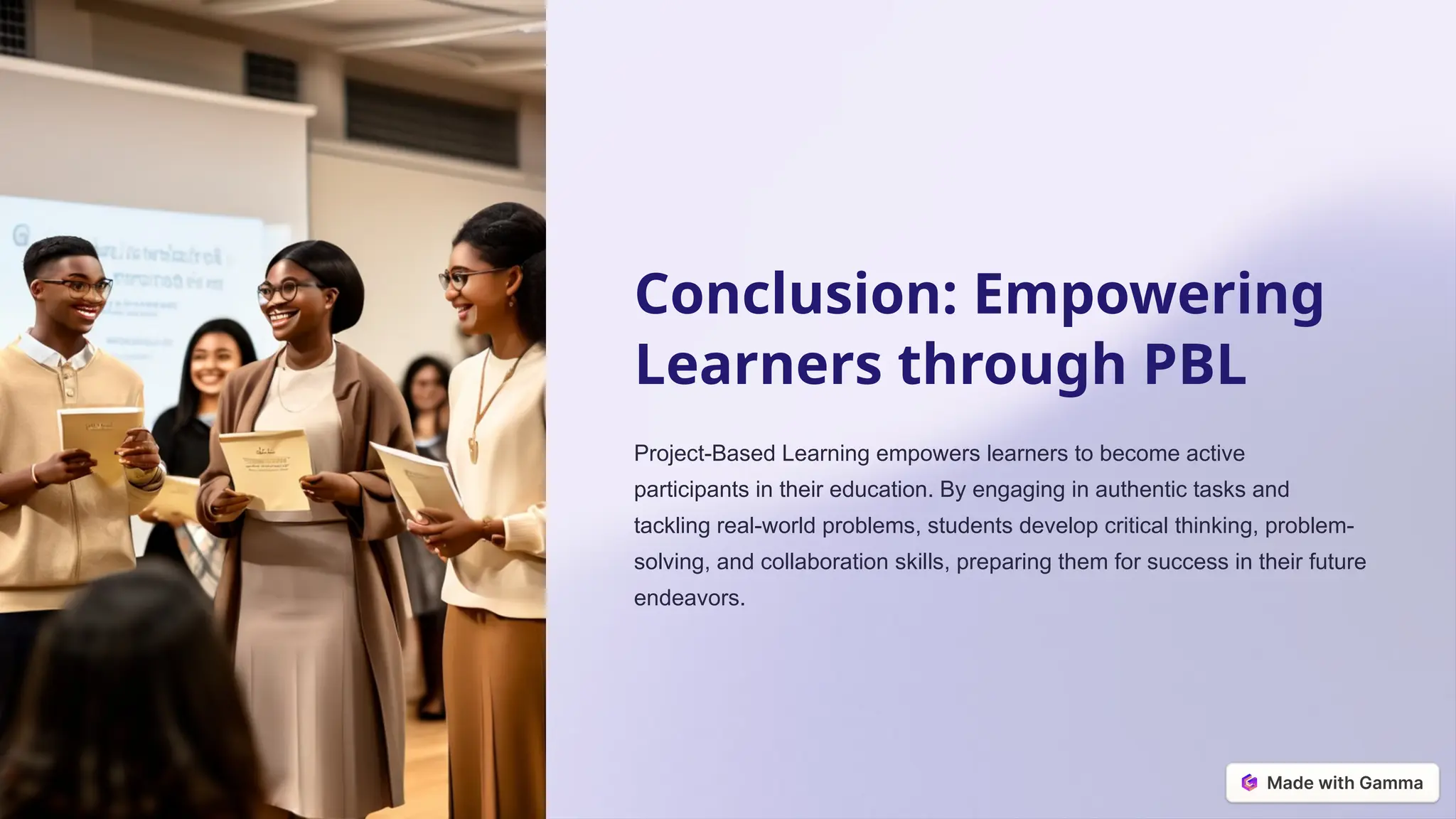
Conclusion: Empowering
Learners through PBL
Project-Based Learning empowers learners to become active
participants in their education. By engaging in authentic tasks and
tackling real-world problems, students develop critical thinking, problem-
solving, and collaboration skills, preparing them for success in their future
endeavors.

Project-Based-Learning-PBL DepEd Technology and Livelihood Education

  • 1.
    Project-Based Learning (PBL) Project-Based Learning(PBL) is an engaging educational approach that centers on real-world projects. It empowers learners to develop critical thinking, problem-solving, and collaboration skills while applying knowledge in meaningful contexts. by Dr Ruel Nepuscua
  • 2.
    Benefits of PBLfor Learners 1 Deep Learning PBL promotes deeper understanding by encouraging students to explore concepts through hands-on activities and real- world applications. 2 Motivation & Engagement Students are more motivated and engaged when they are actively involved in projects that interest them and have real-world relevance. 3 Collaboration Skills PBL fosters teamwork and collaboration as students work together to achieve shared goals and learn from each other's perspectives. 4 Problem-Solving Abilities By tackling real-world challenges, students develop essential problem-solving skills, including critical thinking, creative thinking, and decision-making.
  • 3.
    Key Components ofEffective PBL Driving Question A central question that guides the project and provides a clear focus for learning. It should be relevant, engaging, and open-ended. Authentic Tasks Activities that mimic real-world challenges, providing students with opportunities to apply their knowledge and skills in meaningful ways. Student Voice & Choice Students should have a say in shaping the project, making choices about the investigation, research, and presentation of their work.
  • 4.
    Designing Engaging PBLExperiences 1 Choose a Relevant Topic Start with a topic that aligns with curriculum standards and is relevant to students' interests and experiences. 2 Develop a Compelling Driving Question Craft a question that sparks curiosity and motivates students to explore the topic in depth. 3 Design Authentic Tasks & Challenges Create tasks that require students to apply knowledge and skills in meaningful ways. 4 Provide Opportunities for Collaboration & Research Encourage students to work together and conduct research to gather information and develop solutions. 5 Plan for Assessment & Reflection Design assessment strategies that align with the learning objectives and allow students to reflect on their growth and learning.
  • 5.
    Integrating PBL inthe Classroom Establish a Project-Based Learning Culture Create a classroom environment where exploration, collaboration, and problem-solving are valued. Incorporate PBL into Existing Curriculum Align PBL projects with curriculum standards to ensure meaningful learning and academic growth. Provide Structure and Support Offer clear expectations, guidelines, and support to guide students through the project process. Facilitate Collaboration and Communication Encourage students to work together, share ideas, and communicate effectively throughout the project. Provide Opportunities for Feedback and Reflection Offer regular feedback to help students improve their work and reflect on their learning journey.
  • 6.
    Assessing Learning inPBL Rubrics Provide clear criteria for evaluating student work, ensuring consistency and fairness in assessment. Portfolios Allow students to showcase their progress and learning through a collection of project artifacts and reflections. Performance Assessments Assess students' abilities to apply knowledge and skills in real-world scenarios, demonstrating their understanding and competency. Self-Assessment and Reflection Encourage students to reflect on their learning process and identify areas for improvement.
  • 7.
    Challenges and Considerations inPBL Time Commitment PBL projects require significant time and resources, and teachers need to manage their schedules effectively. Resource Availability Access to necessary materials, technology, and expertise is crucial for successful PBL implementation. Planning and Preparation Designing and implementing effective PBL projects requires careful planning and preparation. Differentiation and Accessibility Teachers need to ensure that PBL projects are accessible and engaging for all students, regardless of their learning styles and needs.
  • 8.
    Conclusion: Empowering Learners throughPBL Project-Based Learning empowers learners to become active participants in their education. By engaging in authentic tasks and tackling real-world problems, students develop critical thinking, problem- solving, and collaboration skills, preparing them for success in their future endeavors.