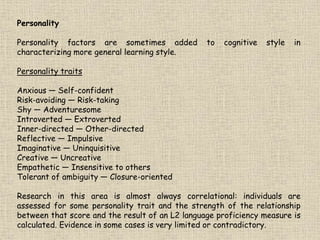
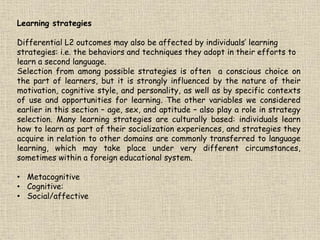
There are several factors that can influence differences in how successfully learners acquire a second language. Psychological factors within the individual include age, sex, aptitude, motivation, cognitive styles, personality, and learning strategies. Age does not necessarily determine success, as both children and adults can be successful learners. While research on sex differences is mixed, some studies have found women outperform men in certain language tasks. Aptitude, motivation, and learning strategies adopted by the individual also impact success. Cognitive styles and personality traits interact with social and learning contexts in complex ways to influence outcomes.