Reported by:
Born Gervie P. Clet
3 DIFFERENT TYPES OF
EDUCATIONAL TECHNOLOGY
Objectives of the lesson
At the end of the lesson, the learners would be able to:
distinguish Synchronous and Asynchronous learning; and
 appreciate the importance of computer technology in this two
types of learning.
- is the effective use of
technological tools in learning. As a Concept, it concerns
an array of tools, such as media, machines and networking
hardware, as well as considering underlying theoretical
perspectives for their effective application.
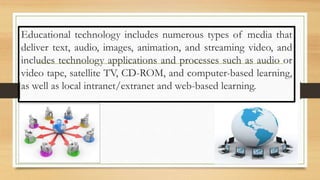
Educational technology includes numerous types of media that
deliver text, audio, images, animation, and streaming video, and
includes technology applications and processes such as audio or
video tape, satellite TV, CD-ROM, and computer-based learning,
as well as local intranet/extranet and web-based learning.
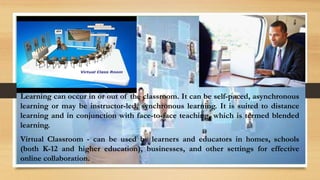
Learning can occur in or out of the classroom. It can be self-paced, asynchronous
learning or may be instructor-led, synchronous learning. It is suited to distance
learning and in conjunction with face-to-face teaching, which is termed blended
learning.
Virtual Classroom - can be used by learners and educators in homes, schools
(both K-12 and higher education), businesses, and other settings for effective
online collaboration.
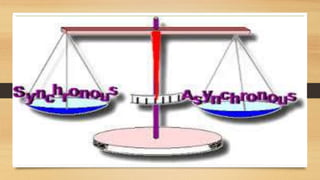
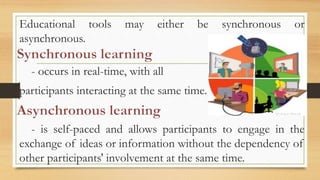
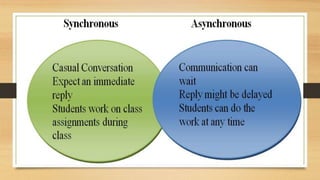
Educational tools may either be synchronous or
asynchronous.
- occurs in real-time, with all
participants interacting at the same time.
- is self-paced and allows participants to engage in the
exchange of ideas or information without the dependency of
other participants′ involvement at the same time.
- refers to the exchange of ideas and information with one
or more participants during the same period.
Examples: face-to-face discussion, online real-time live teacher
instruction and feedback, Skype conversations, and chat rooms
or virtual classroom where everyone is online and working
collaboratively at the same time.
Since students are working collaboratively, synchronized learning
helps students create an open mind because they have to listen and
learn from their peers. Synchronized learning fosters online
awareness and improves many students writing skills.
Since students are working collaboratively, synchronized
learning helps students create an open mind because they
have to listen and learn from their peers. Synchronized
learning fosters online awareness and improves many
students writing skills.
- may use technologies such as email, blogs, wіkis, and
discussion boards, as well as web-supported textbooks, hypertext
documents, audio, video courses, and social networking using
web.
In asynchronous online courses, students proceed at their own
pace. If they need to listen to a lecture a second time, or think
about a question for a while, they may do so without fearing that
they will hold back the rest of the class.
Through online courses, students can earn their
diplomas more quickly, or repeat failed courses without
the embarrassment of being in a class with younger
students. Students have access to an incredible variety of
enrichment courses in online learning, and can participate
in college courses, internships, sports, or work and still
graduate with their class.
https://www.google.com.ph/search?espv=2&biw=1366&bih=613&tbm=isch&sa=1&q
Synchronousandasynchronous/Braincert.com
3 different types of educational technology

3 different types of educational technology

  • 1.
    Reported by: Born GervieP. Clet 3 DIFFERENT TYPES OF EDUCATIONAL TECHNOLOGY
  • 2.
    Objectives of thelesson At the end of the lesson, the learners would be able to: distinguish Synchronous and Asynchronous learning; and  appreciate the importance of computer technology in this two types of learning.
  • 3.
    - is theeffective use of technological tools in learning. As a Concept, it concerns an array of tools, such as media, machines and networking hardware, as well as considering underlying theoretical perspectives for their effective application.
  • 4.
    Educational technology includesnumerous types of media that deliver text, audio, images, animation, and streaming video, and includes technology applications and processes such as audio or video tape, satellite TV, CD-ROM, and computer-based learning, as well as local intranet/extranet and web-based learning.
  • 6.
    Learning can occurin or out of the classroom. It can be self-paced, asynchronous learning or may be instructor-led, synchronous learning. It is suited to distance learning and in conjunction with face-to-face teaching, which is termed blended learning. Virtual Classroom - can be used by learners and educators in homes, schools (both K-12 and higher education), businesses, and other settings for effective online collaboration.
  • 7.
    Educational tools mayeither be synchronous or asynchronous. - occurs in real-time, with all participants interacting at the same time. - is self-paced and allows participants to engage in the exchange of ideas or information without the dependency of other participants′ involvement at the same time.
  • 9.
    - refers tothe exchange of ideas and information with one or more participants during the same period. Examples: face-to-face discussion, online real-time live teacher instruction and feedback, Skype conversations, and chat rooms or virtual classroom where everyone is online and working collaboratively at the same time. Since students are working collaboratively, synchronized learning helps students create an open mind because they have to listen and learn from their peers. Synchronized learning fosters online awareness and improves many students writing skills.
  • 10.
    Since students areworking collaboratively, synchronized learning helps students create an open mind because they have to listen and learn from their peers. Synchronized learning fosters online awareness and improves many students writing skills.
  • 11.
    - may usetechnologies such as email, blogs, wіkis, and discussion boards, as well as web-supported textbooks, hypertext documents, audio, video courses, and social networking using web. In asynchronous online courses, students proceed at their own pace. If they need to listen to a lecture a second time, or think about a question for a while, they may do so without fearing that they will hold back the rest of the class.
  • 12.
    Through online courses,students can earn their diplomas more quickly, or repeat failed courses without the embarrassment of being in a class with younger students. Students have access to an incredible variety of enrichment courses in online learning, and can participate in college courses, internships, sports, or work and still graduate with their class.
  • 14.