



 By Jack Garrity
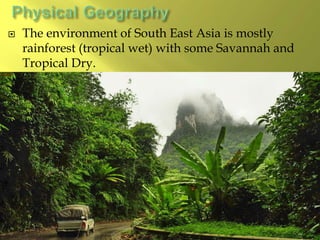
 The environment of South East Asia is mostly
rainforest (tropical wet) with some Savannah and
Tropical Dry.
 Book pages 748-750
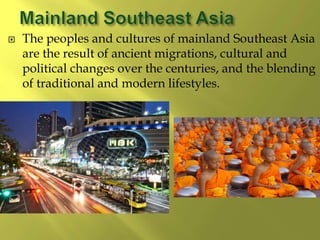
 The peoples and cultures of mainland Southeast Asia
are the result of ancient migrations, cultural and
political changes over the centuries, and the blending
of traditional and modern lifestyles.
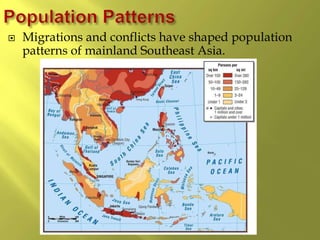
 Migrations and conflicts have shaped population
patterns of mainland Southeast Asia.
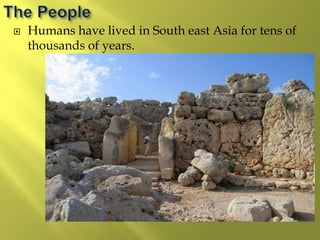
 Humans have lived in South east Asia for tens of
thousands of years.
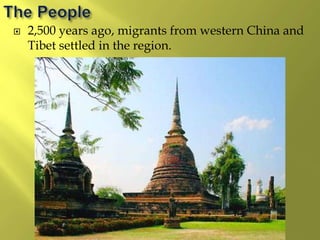
 2,500 years ago, migrants from western China and
Tibet settled in the region.
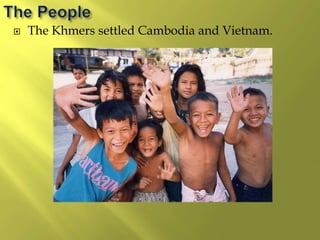
 The Khmers settled Cambodia and Vietnam.
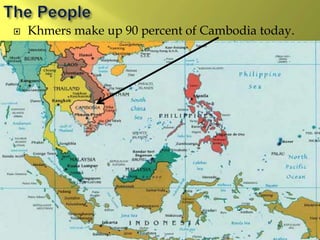
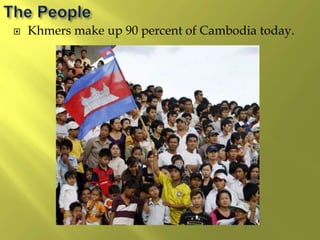
 Khmers make up 90 percent of Cambodia today.
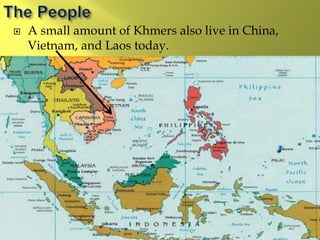
 A small amount of Khmers also live in China,
Vietnam, and Laos today.
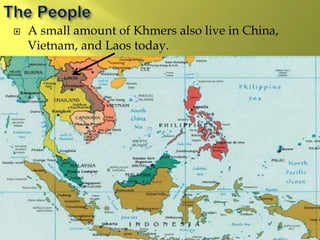
 A small amount of Khmers also live in China,
Vietnam, and Laos today.
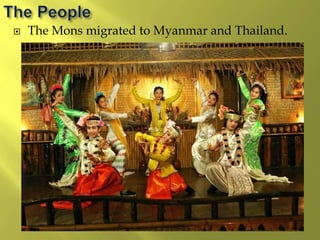
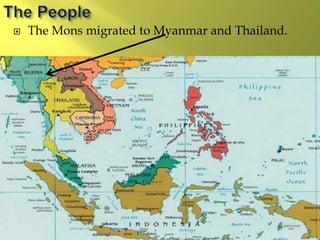
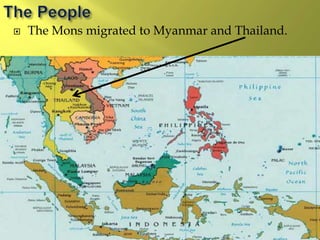
 The Mons migrated to Myanmar and Thailand.
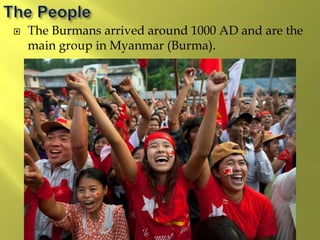
 The Burmans arrived around 1000 AD and are the
main group in Myanmar (Burma).
 The Thai people of Thailand came from south
western China.
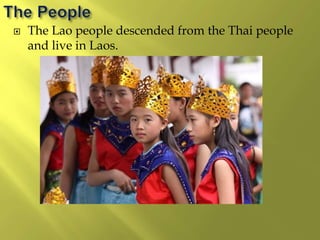
 The Lao people descended from the Thai people
and live in Laos.
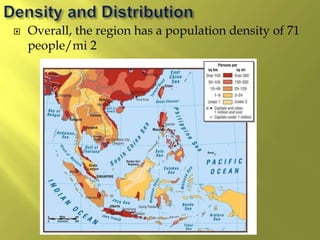
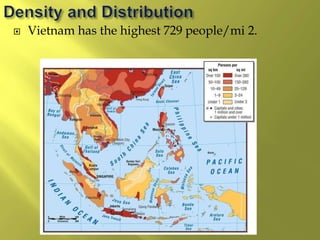
 Overall, the region has a population density of 71
people/mi 2
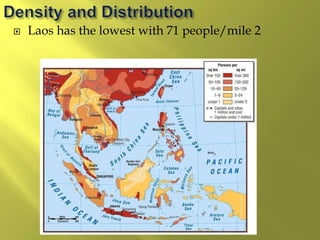
 Laos has the lowest with 71 people/mile 2
 Vietnam has the highest 729 people/mi 2.
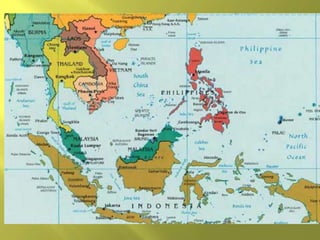
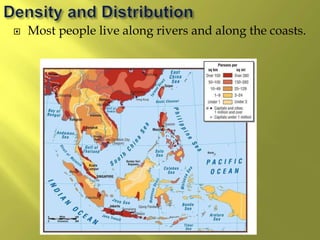
 Most people live along rivers and along the coasts.
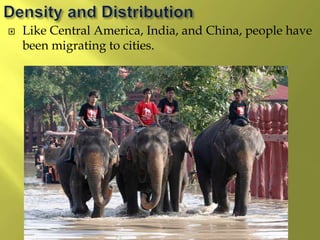
 Like Central America, India, and China, people have
been migrating to cities.
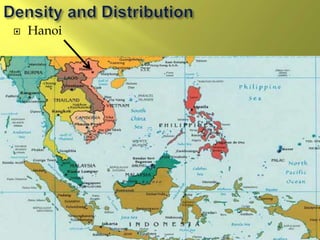
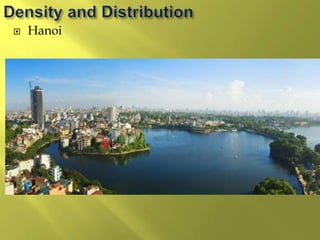
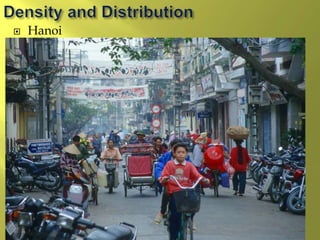
 Hanoi
 Hanoi
 Hanoi
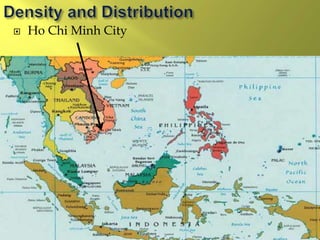
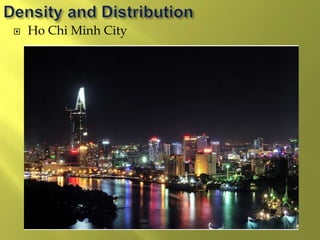
 Ho Chi Minh City
 Ho Chi Minh City
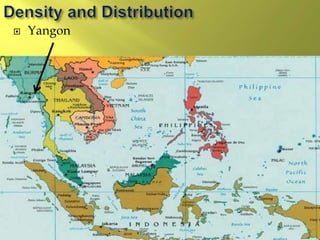
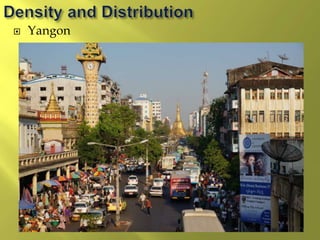
 Yangon
 Yangon
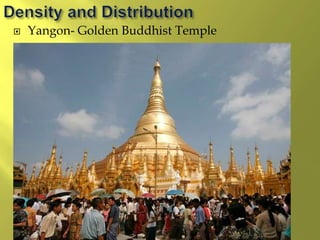
 Yangon- Golden Buddhist Temple
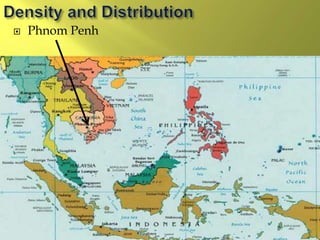
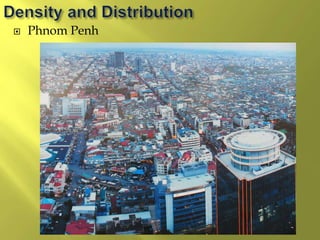
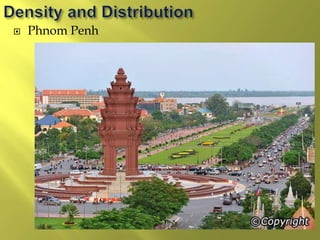
 Phnom Penh
 Phnom Penh
 Phnom Penh
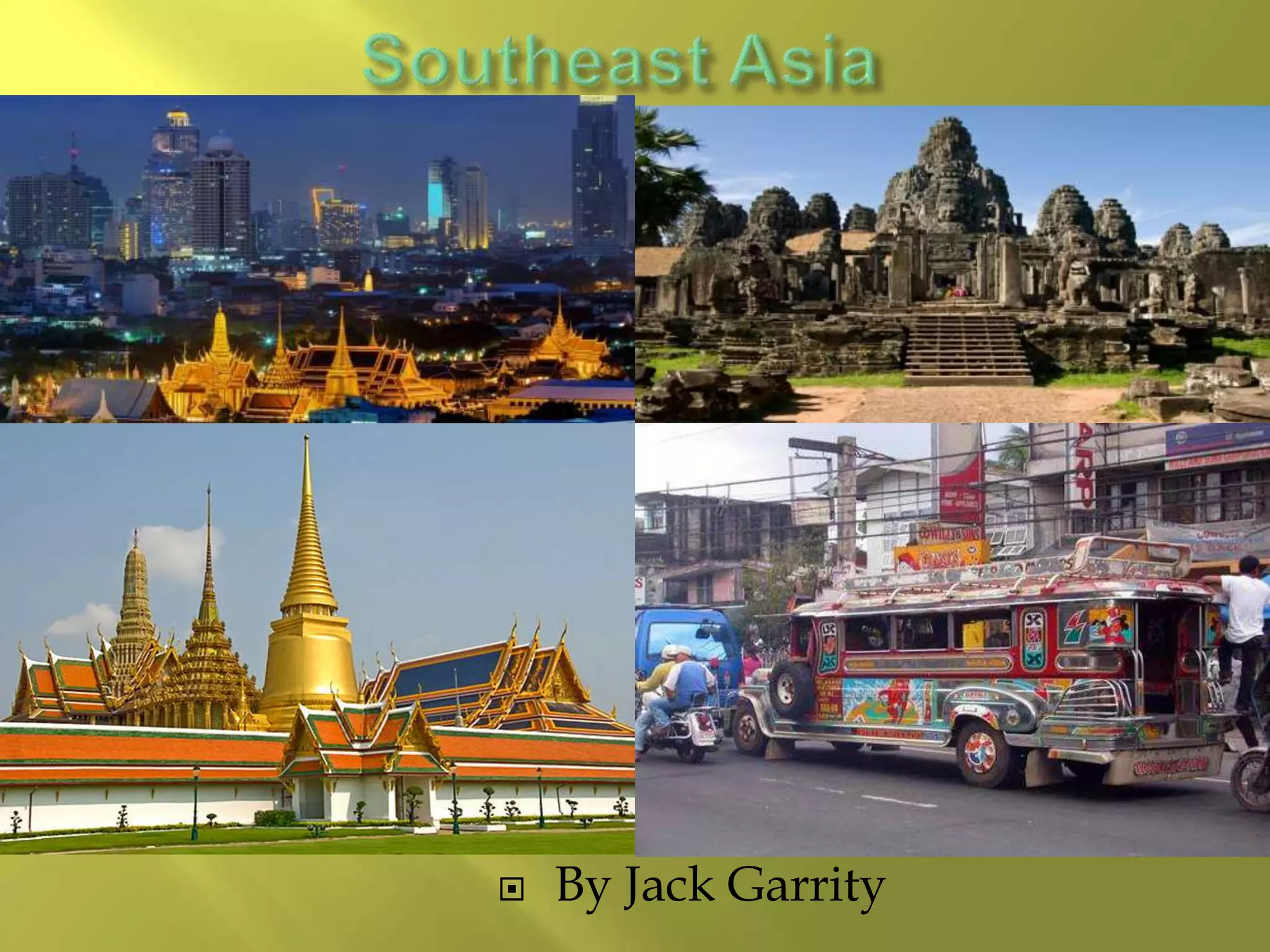
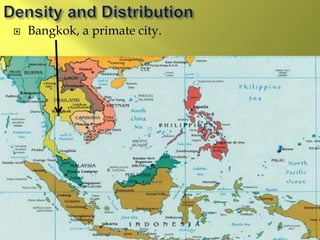
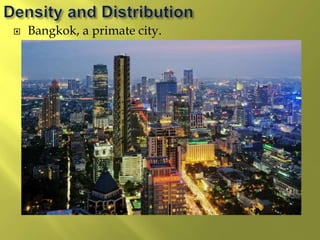
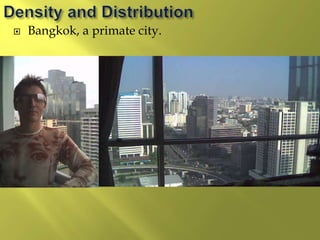
 Bangkok, a primate city.
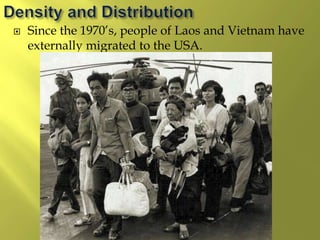
 Since the 1970’s, people of Laos and Vietnam have
externally migrated to the USA.
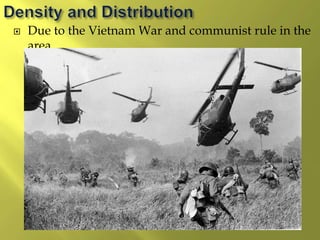
 Due to the Vietnam War and communist rule in the
area .
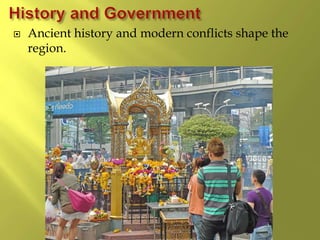
 Ancient history and modern conflicts shape the
region.
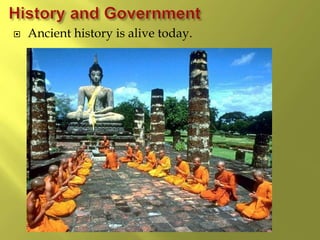
 Ancient history is alive today.
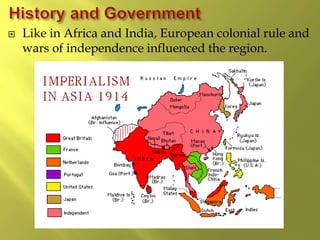
 Like in Africa and India, European colonial rule and
wars of independence influenced the region.
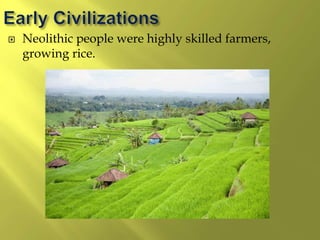
 Neolithic people were highly skilled farmers,
growing rice.
 By 3000 BCE, the Thai people used bronze, 1000
years earlier than China or Egypt.
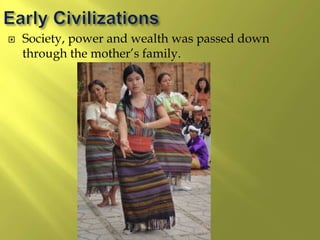
 Society, power and wealth was passed down
through the mother’s family.
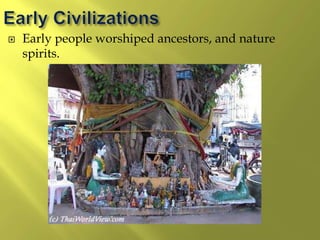
 Early people worshiped ancestors, and nature
spirits.
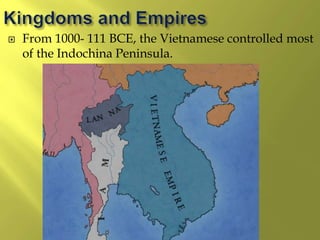
 From 1000- 111 BCE, the Vietnamese controlled most
of the Indochina Peninsula.
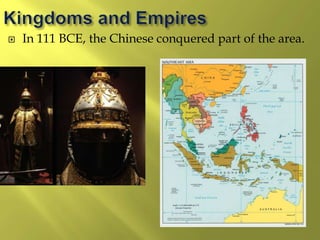
 In 111 BCE, the Chinese conquered part of the area.
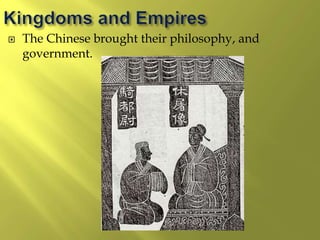
 The Chinese brought their philosophy, and
government.
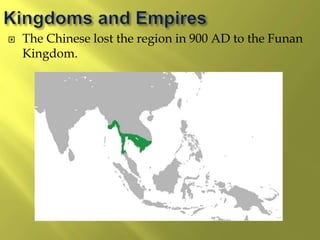
 The Chinese lost the region in 900 AD to the Funan
Kingdom.
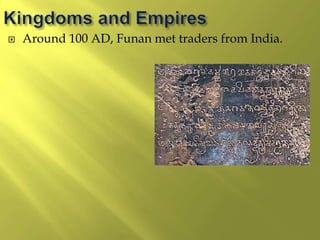
 Around 100 AD, Funan met traders from India.
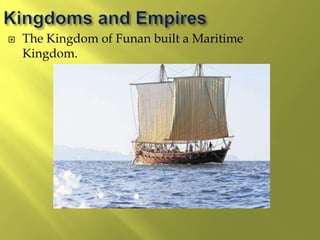
 The Kingdom of Funan built a Maritime
Kingdom.
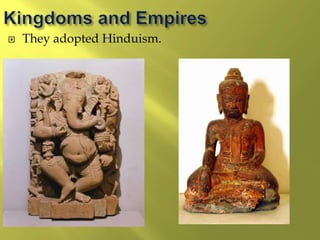
 They adopted Hinduism.
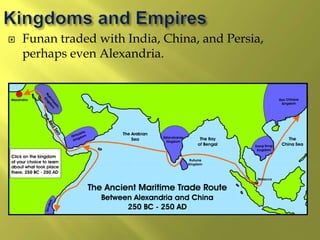
 Funan traded with India, China, and Persia,
perhaps even Alexandria.
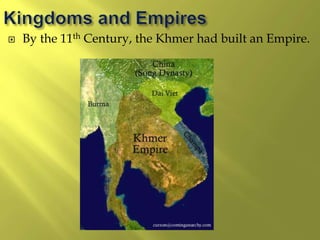
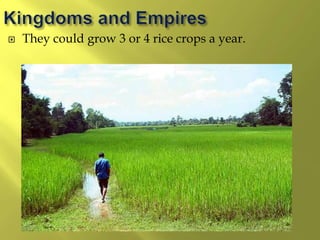
 By the 11th Century, the Khmer had built an Empire.
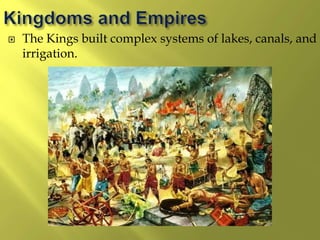
 The Kings built complex systems of lakes, canals, and
irrigation.
 They could grow 3 or 4 rice crops a year.
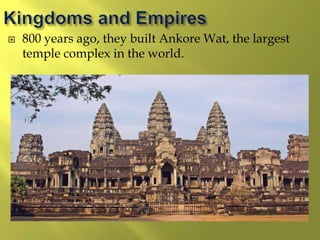
 800 years ago, they built Ankore Wat, the largest
temple complex in the world.
 Ankore Wat
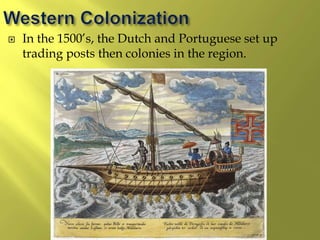
 In the 1500’s, the Dutch and Portuguese set up
trading posts then colonies in the region.
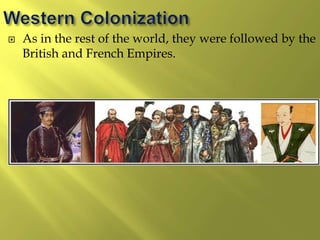
 As in the rest of the world, they were followed by the
British and French Empires.
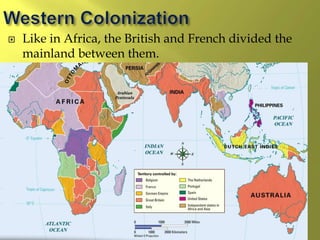
 Like in Africa, the British and French divided the
mainland between them.
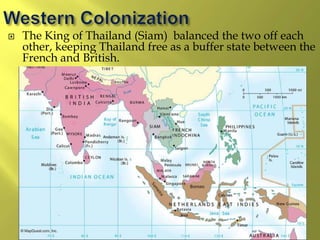
 The King of Thailand (Siam) balanced the two off each
other, keeping Thailand free as a buffer state between the
French and British.
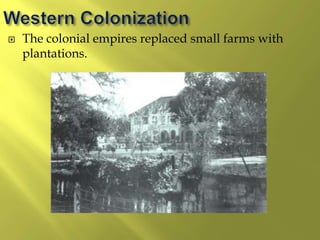
 The colonial empires replaced small farms with
plantations.
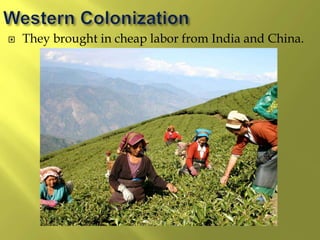
 They brought in cheap labor from India and China.
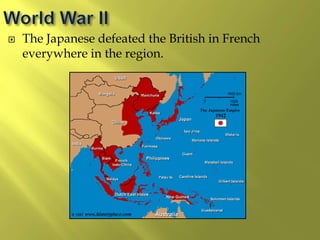
 The Japanese defeated the British in French
everywhere in the region.
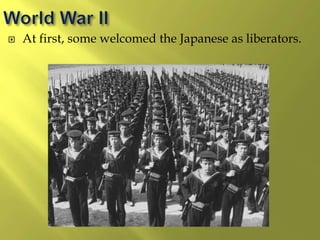
 At first, some welcomed the Japanese as liberators.
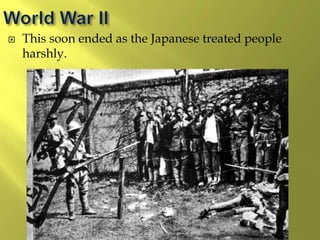
 This soon ended as the Japanese treated people
harshly.
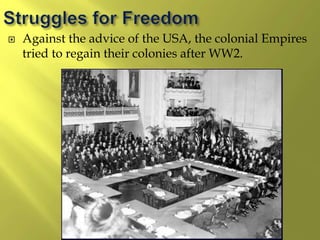
 Against the advice of the USA, the colonial Empires
tried to regain their colonies after WW2.
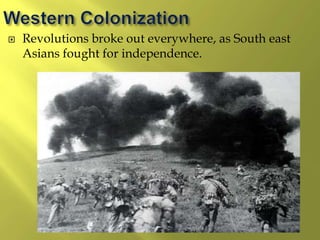
 Revolutions broke out everywhere, as South east
Asians fought for independence.
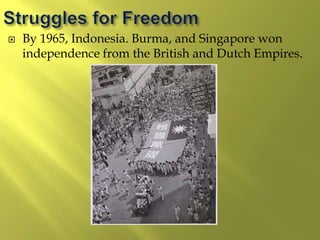
 By 1965, Indonesia. Burma, and Singapore won
independence from the British and Dutch Empires.
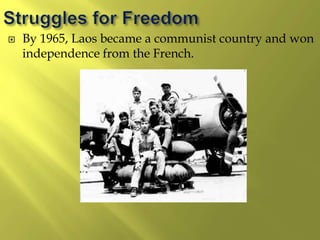
 By 1965, Laos became a communist country and won
independence from the French.
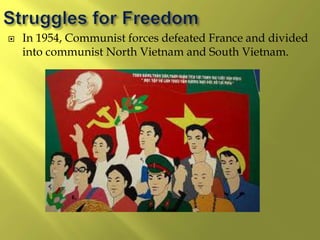
 In 1954, Communist forces defeated France and divided
into communist North Vietnam and South Vietnam.
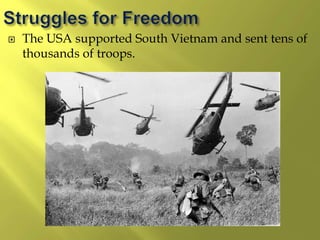
 The USA supported South Vietnam and sent tens of
thousands of troops.
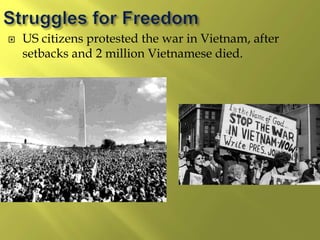
 US citizens protested the war in Vietnam, after
setbacks and 2 million Vietnamese died.
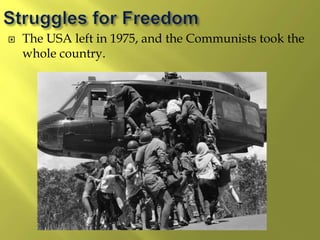
 The USA left in 1975, and the Communists took the
whole country.
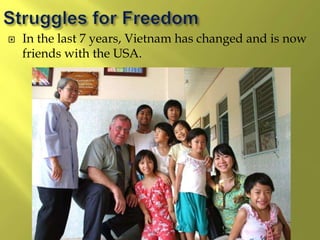
 In the last 7 years, Vietnam has changed and is now
friends with the USA.
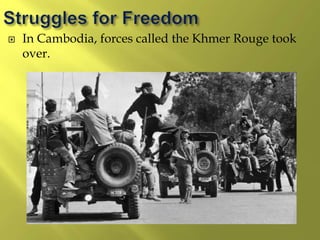
 In Cambodia, forces called the Khmer Rouge took
over.
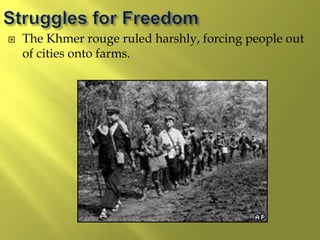
 The Khmer rouge ruled harshly, forcing people out
of cities onto farms.
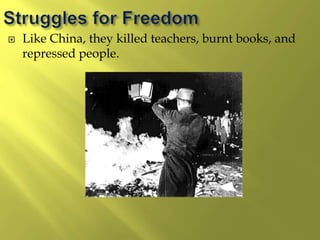
 Like China, they killed teachers, burnt books, and
repressed people.
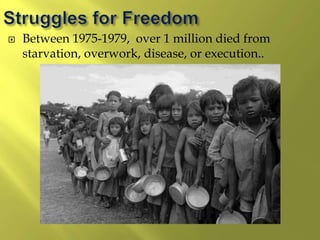
 Between 1975-1979, over 1 million died from
starvation, overwork, disease, or execution..
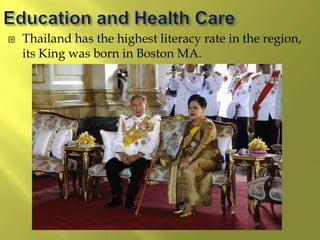
 Thailand has the highest literacy rate in the region,
its King was born in Boston MA.
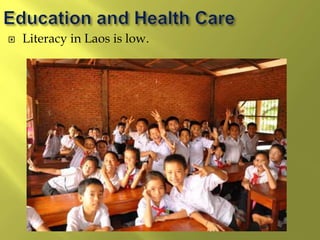
 Literacy in Laos is low.
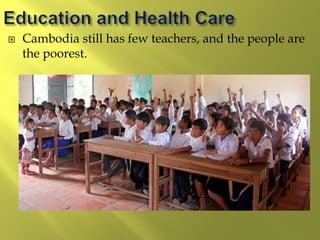
 Cambodia still has few teachers, and the people are
the poorest.
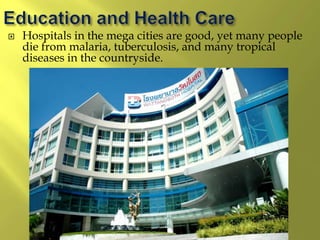
 Hospitals in the mega cities are good, yet many people
die from malaria, tuberculosis, and many tropical
diseases in the countryside.
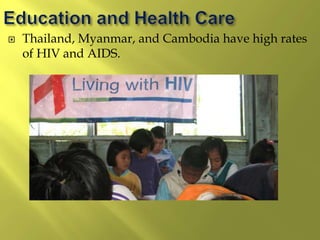
 Thailand, Myanmar, and Cambodia have high rates
of HIV and AIDS.
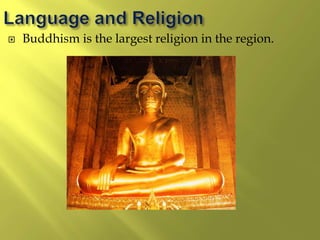
 Buddhism is the largest religion in the region.
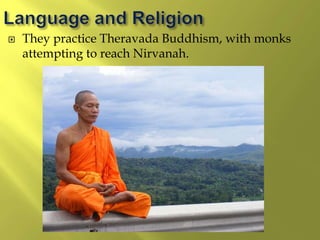
 They practice Theravada Buddhism, with monks
attempting to reach Nirvanah.
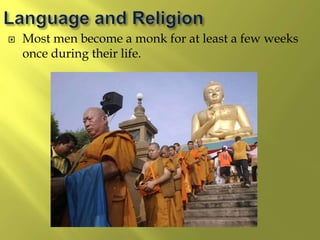
 Most men become a monk for at least a few weeks
once during their life.
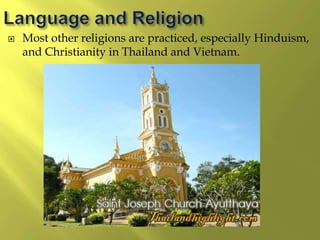
 Most other religions are practiced, especially Hinduism,
and Christianity in Thailand and Vietnam.
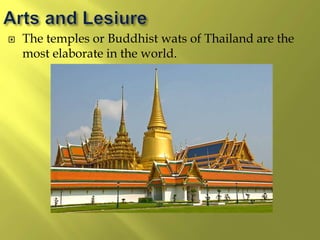
 The temples or Buddhist wats of Thailand are the
most elaborate in the world.
 Songkran (Thai New Year) is a 3 day water fight with
millions of people participating.
 Shopping malls and outdoor markets go on for city
blocks, some are not so safe.
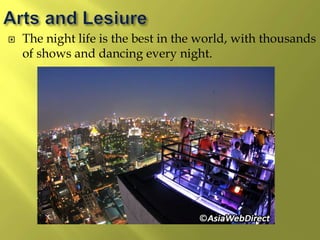
 The night life is the best in the world, with thousands
of shows and dancing every night.
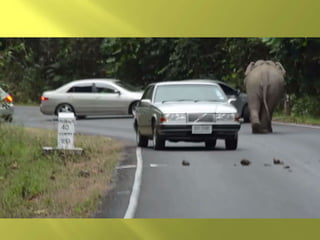
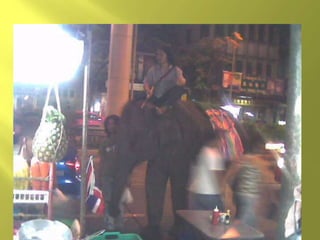
 Even Elephants have fun!
 end

2.cultural southeastasia