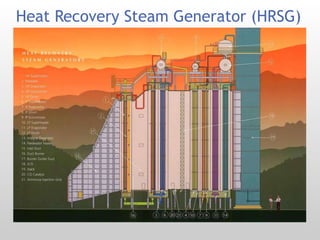
Heat Recovery Steam Generator (HRSG)
1
Introduction
 A heat recovery steam generator or HRSG is an energy
recovery heat exchanger that recovers heat from a hot gas
stream. It produces steam that can be used in a process
(cogeneration) or used to drive a steam turbine (combined
cycle).
 The exhaust gas temperature from a Gas Turbine is about
580 °C.
 Higher exhaust temperatures will reduce the efficiency of
the gas turbine.
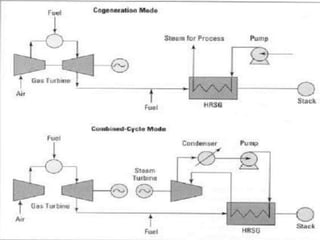
Operation Mode
 Combined Cycle Mode:-
 Power is generated via a steam
turbine generator.
 Cogeneration Mode:-
 Steam producer from the HRSG is
mainly used for process
application.
5
The HRSG consist of three main parts :
1-evaporator
2-ecnomizer
3-super heater
And anther three parts:
4-reheaters
5-deaerators
6-preheaters
Parts of HRSG:
1. Evaporator
6
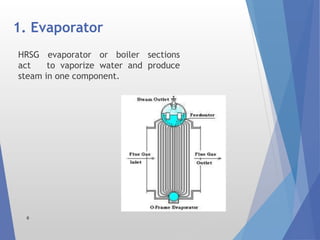
HRSG evaporator or boiler sections
act to vaporize water and produce
steam in one component.
2. Ecnomizer
7
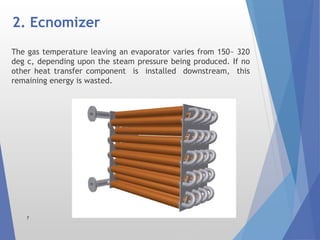
The gas temperature leaving an evaporator varies from 150~ 320
deg c, depending upon the steam pressure being produced. If no
other heat transfer component is installed downstream, this
remaining energy is wasted.
3. Super heater
8
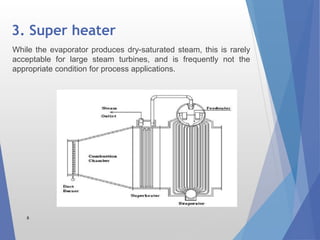
While the evaporator produces dry-saturated steam, this is rarely
acceptable for large steam turbines, and is frequently not the
appropriate condition for process applications.
4. Reheaters
 Reheaters are a heat transfer component similar to super
heaters, and are employed in advanced multi-pressure
power generation cycles.
 They accept superheated or semi-saturated steam at a low
pressure from a steam turbine after it’s first section of
expansion, and re-superheat or “reheat” the steam back
towards the original super heater's outlet temperature.
 Accordingly, reheaters are generally interspersed among the
super heater sections in the HRSG, so that the same outlet
temperatures can be achieved.
9
5. Deaerators
10
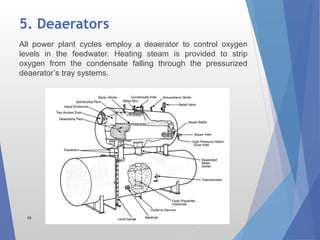
All power plant cycles employ a deaerator to control oxygen
levels in the feedwater. Heating steam is provided to strip
oxygen from the condensate falling through the pressurized
deaerator’s tray systems.
6. Preheaters
 Preheaters are located at the coolest end of the HRSG gas
path, and absorb energy from the gas stream to preheat
liquids such as condensate, makeup water, water/glycol
mixtures or proprietary heat exchange fluids.
 The most common application is to preheat condensate prior
to entry into the deaerator, which reduces the amount of
deaeration steam required.
11
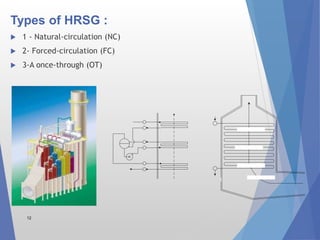
Types of HRSG :
 1 - Natural-circulation (NC)
 2- Forced-circulation (FC)
 3-A once-through (OT)
12
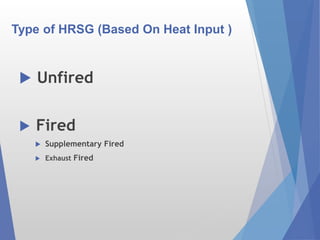
Type of HRSG (Based On Heat Input )
 Unfired
 Fired
 Supplementary Fired
 Exhaust Fired
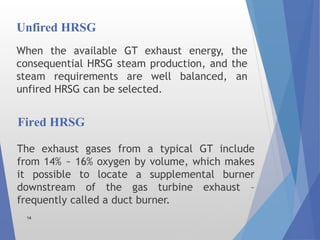
Unfired HRSG
When the available GT exhaust energy, the
consequential HRSG steam production, and the
steam requirements are well balanced, an
unfired HRSG can be selected.
14
The exhaust gases from a typical GT include
from 14% ~ 16% oxygen by volume, which makes
it possible to locate a supplemental burner
downstream of the gas turbine exhaust –
frequently called a duct burner.
Fired HRSG
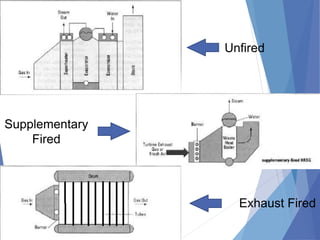
Unfired
Supplementary
Fired
Exhaust Fired
16
Types Of HRSG (Based on operation pressure)
 Single Pressure
 Multi Pressure
17
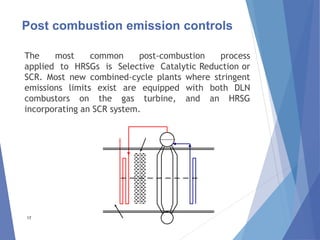
Post combustion emission controls
The most common post-combustion process
applied to HRSGs is Selective Catalytic Reduction or
SCR. Most new combined-cycle plants where stringent
emissions limits exist are equipped with both DLN
combustors on the gas turbine, and an HRSG
incorporating an SCR system.

287649737 90325-presentation-hrsg

  • 1.
    Heat Recovery SteamGenerator (HRSG) 1
  • 2.
    Introduction  A heatrecovery steam generator or HRSG is an energy recovery heat exchanger that recovers heat from a hot gas stream. It produces steam that can be used in a process (cogeneration) or used to drive a steam turbine (combined cycle).  The exhaust gas temperature from a Gas Turbine is about 580 °C.  Higher exhaust temperatures will reduce the efficiency of the gas turbine.
  • 3.
    Operation Mode  CombinedCycle Mode:-  Power is generated via a steam turbine generator.  Cogeneration Mode:-  Steam producer from the HRSG is mainly used for process application.
  • 5.
    5 The HRSG consistof three main parts : 1-evaporator 2-ecnomizer 3-super heater And anther three parts: 4-reheaters 5-deaerators 6-preheaters Parts of HRSG:
  • 6.
    1. Evaporator 6 HRSG evaporatoror boiler sections act to vaporize water and produce steam in one component.
  • 7.
    2. Ecnomizer 7 The gastemperature leaving an evaporator varies from 150~ 320 deg c, depending upon the steam pressure being produced. If no other heat transfer component is installed downstream, this remaining energy is wasted.
  • 8.
    3. Super heater 8 Whilethe evaporator produces dry-saturated steam, this is rarely acceptable for large steam turbines, and is frequently not the appropriate condition for process applications.
  • 9.
    4. Reheaters  Reheatersare a heat transfer component similar to super heaters, and are employed in advanced multi-pressure power generation cycles.  They accept superheated or semi-saturated steam at a low pressure from a steam turbine after it’s first section of expansion, and re-superheat or “reheat” the steam back towards the original super heater's outlet temperature.  Accordingly, reheaters are generally interspersed among the super heater sections in the HRSG, so that the same outlet temperatures can be achieved. 9
  • 10.
    5. Deaerators 10 All powerplant cycles employ a deaerator to control oxygen levels in the feedwater. Heating steam is provided to strip oxygen from the condensate falling through the pressurized deaerator’s tray systems.
  • 11.
    6. Preheaters  Preheatersare located at the coolest end of the HRSG gas path, and absorb energy from the gas stream to preheat liquids such as condensate, makeup water, water/glycol mixtures or proprietary heat exchange fluids.  The most common application is to preheat condensate prior to entry into the deaerator, which reduces the amount of deaeration steam required. 11
  • 12.
    Types of HRSG:  1 - Natural-circulation (NC)  2- Forced-circulation (FC)  3-A once-through (OT) 12
  • 13.
    Type of HRSG(Based On Heat Input )  Unfired  Fired  Supplementary Fired  Exhaust Fired
  • 14.
    Unfired HRSG When theavailable GT exhaust energy, the consequential HRSG steam production, and the steam requirements are well balanced, an unfired HRSG can be selected. 14 The exhaust gases from a typical GT include from 14% ~ 16% oxygen by volume, which makes it possible to locate a supplemental burner downstream of the gas turbine exhaust – frequently called a duct burner. Fired HRSG
  • 15.
  • 16.
    16 Types Of HRSG(Based on operation pressure)  Single Pressure  Multi Pressure
  • 17.
    17 Post combustion emissioncontrols The most common post-combustion process applied to HRSGs is Selective Catalytic Reduction or SCR. Most new combined-cycle plants where stringent emissions limits exist are equipped with both DLN combustors on the gas turbine, and an HRSG incorporating an SCR system.