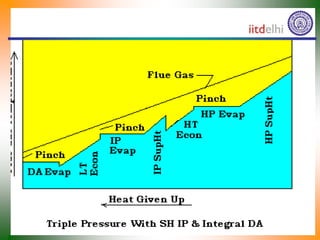
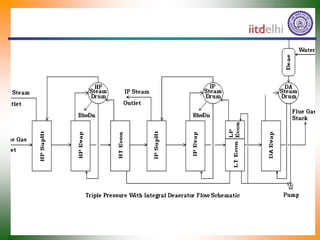
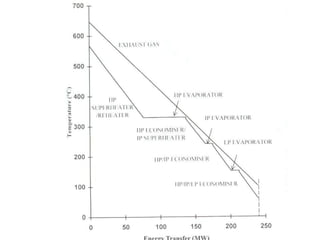
Heat Recovery SteamGenerators
P M V Subbarao
Professor
Mechanical Engineering Department
Converts Waste into Power….
CC
AIR
INLET
GAS INLET
G
HP IP LP
HRSG
STACK
CONDENSER
PUMP
TURBINE
G
T=5500C
T=8500C
T=1500C
T=500C
T=1000C
T=5000C
T=600C T=500C
T=500C
P=1bar
P=10bar
P=10bar
P=2bar
P=170bar
P=.1 bar P=1bar
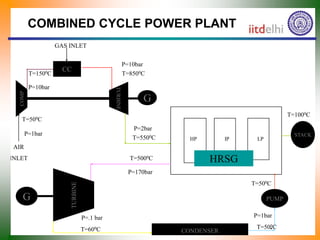
COMBINED CYCLE POWER PLANT
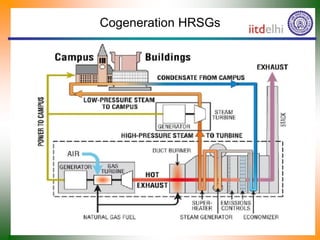
Cogeneration HRSGs
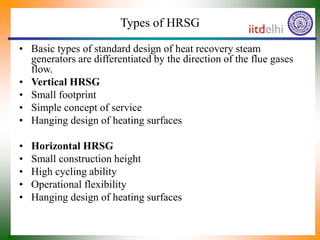
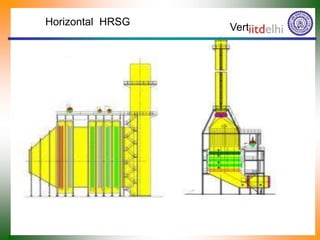
Types of HRSG
• Basic types of standard design of heat recovery steam
generators are differentiated by the direction of the flue gases
flow.
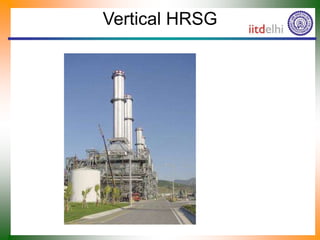
• Vertical HRSG
• Small footprint
• Simple concept of service
• Hanging design of heating surfaces
• Horizontal HRSG
• Small construction height
• High cycling ability
• Operational flexibility
• Hanging design of heating surfaces
Vertical HRSG
Horizontal HRSG
Vertical HRSG
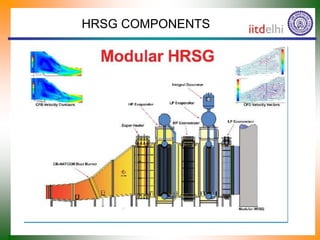
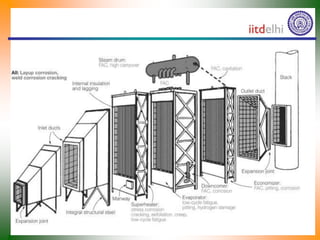
HRSG COMPONENTS
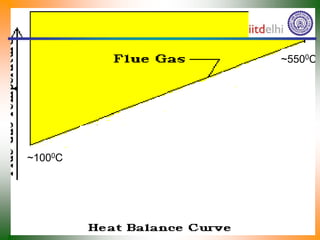
~400C
~5500C
~1000C
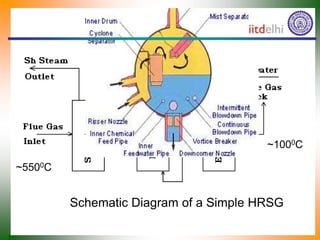
Schematic Diagram of a Simple HRSG
~5500C
~1000C
Super heater configurations
• Three basic super heater designs are:
• Horizontal Tube,
• Vertical Tube, and
• I-Frame
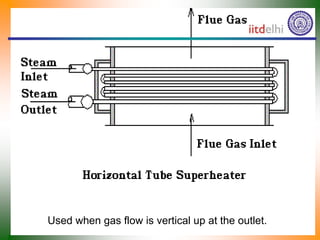
Used when gas flow is vertical up at the outlet.
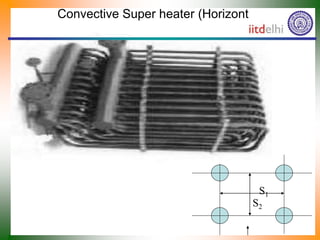
Convective Super heater (Horizontal)
S1
S2
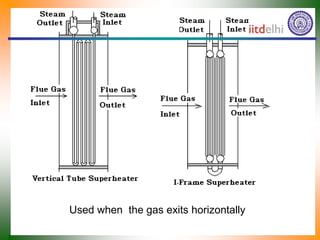
Used when the gas exits horizontally
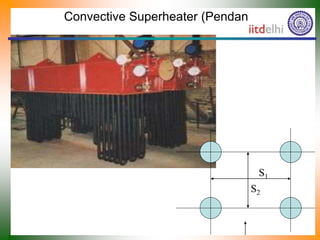
Convective Superheater (Pendant)
S1
S2
Types of Evaporator Sections
• D-Frame evaporator layout
• O-Frame evaporator layout
• A-Frame evaporator layout
• I-Frame evaporator layout
• Horizontal tube evaporator layout
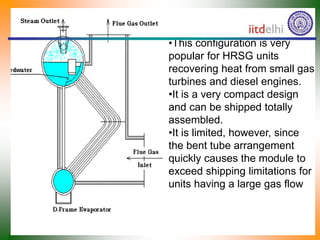
•This configuration is very
popular for HRSG units
recovering heat from small gas
turbines and diesel engines.
•It is a very compact design
and can be shipped totally
assembled.
•It is limited, however, since
the bent tube arrangement
quickly causes the module to
exceed shipping limitations for
units having a large gas flow
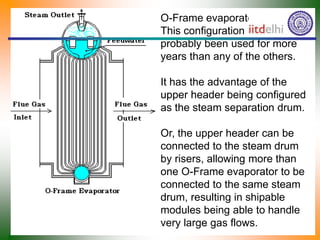
O-Frame evaporator layout.
This configuration has
probably been used for more
years than any of the others.
It has the advantage of the
upper header being configured
as the steam separation drum.
Or, the upper header can be
connected to the steam drum
by risers, allowing more than
one O-Frame evaporator to be
connected to the same steam
drum, resulting in shipable
modules being able to handle
very large gas flows.
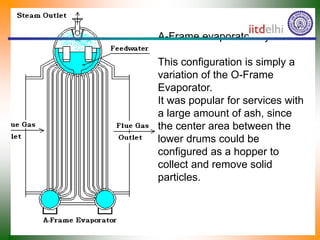
A-Frame evaporator layout.
This configuration is simply a
variation of the O-Frame
Evaporator.
It was popular for services with
a large amount of ash, since
the center area between the
lower drums could be
configured as a hopper to
collect and remove solid
particles.
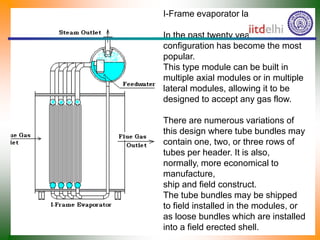
I-Frame evaporator layout.
In the past twenty years, this
configuration has become the most
popular.
This type module can be built in
multiple axial modules or in multiple
lateral modules, allowing it to be
designed to accept any gas flow.
There are numerous variations of
this design where tube bundles may
contain one, two, or three rows of
tubes per header. It is also,
normally, more economical to
manufacture,
ship and field construct.
The tube bundles may be shipped
to field installed in the modules, or
as loose bundles which are installed
into a field erected shell.
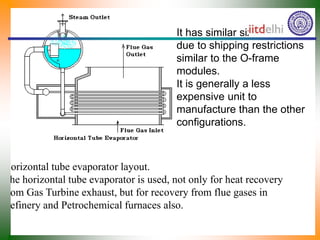
Horizontal tube evaporator layout.
The horizontal tube evaporator is used, not only for heat recovery
from Gas Turbine exhaust, but for recovery from flue gases in
Refinery and Petrochemical furnaces also.
It has similar size limitations
due to shipping restrictions
similar to the O-frame
modules.
It is generally a less
expensive unit to
manufacture than the other
configurations.
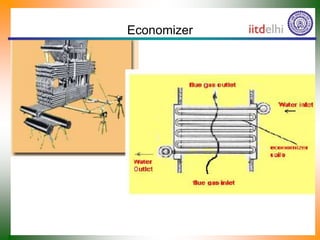
Economizer
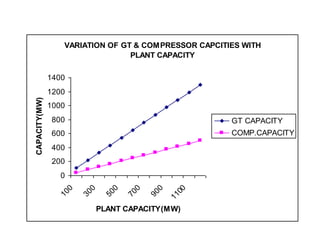
VARIATION OF GT & COMPRESSOR CAPCITIES WITH
PLANT CAPACITY
0
200
400
600
800
1000
1200
1400
1
0
0
3
0
0
5
0
0
7
0
0
9
0
0
1
1
0
0
PLANT CAPACITY(MW)
CAPACITY(MW)
GT CAPACITY
COMP.CAPACITY
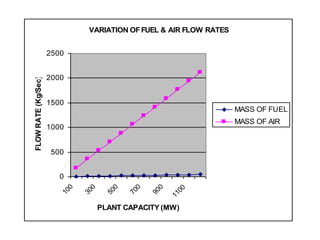
VARIATION OFFUEL & AIR FLOW RATES
0
500
1000
1500
2000
2500
1
0
0
3
0
0
5
0
0
7
0
0
9
0
0
1
1
0
0
PLANT CAPACITY (MW)
FLOW
RATE
(Kg/Sec)
MASS OF FUEL
MASS OF AIR
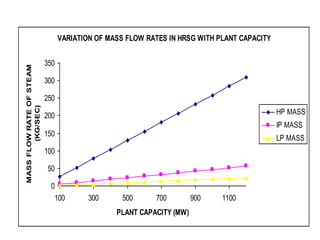
VARIATION OF MASS FLOW RATES IN HRSG WITH PLANT CAPACITY
0
50
100
150
200
250
300
350
100 300 500 700 900 1100
PLANT CAPACITY (MW)
MASS
FLOW
RATE
OF
STEAM
(KG/SEC)
HP MASS
IP MASS
LP MASS
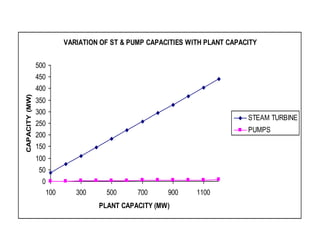
VARIATION OF ST & PUMP CAPACITIES WITH PLANT CAPACITY
0
50
100
150
200
250
300
350
400
450
500
100 300 500 700 900 1100
PLANT CAPACITY (MW)
CAPACITY
(MW)
STEAM TURBINE
PUMPS
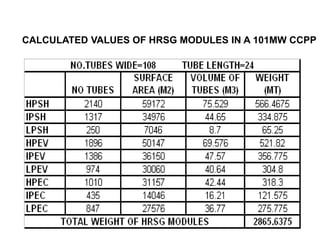
CALCULATED VALUES OF HRSG MODULES IN A 101MW CCPP
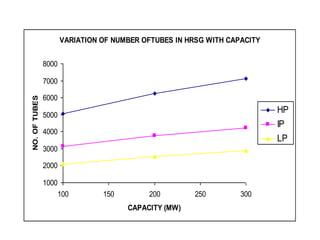
VARIATION OF NUMBER OFTUBES IN HRSG WITH CAPACITY
1000
2000
3000
4000
5000
6000
7000
8000
100 150 200 250 300
CAPACITY (MW)
NO.
OF
TUBES
HP
IP
LP
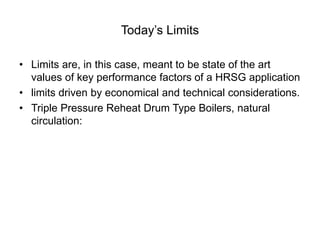
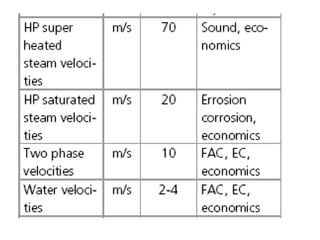
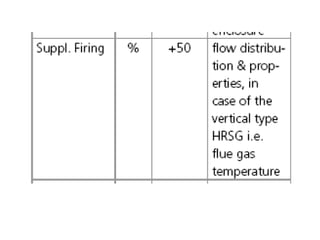
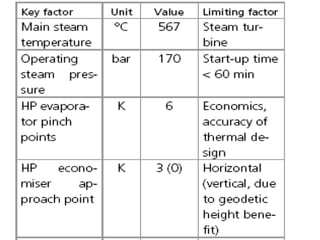
Today’s Limits
• Limits are, in this case, meant to be state of the art
values of key performance factors of a HRSG application
• limits driven by economical and technical considerations.
• Triple Pressure Reheat Drum Type Boilers, natural
circulation:
Power Generation-11-HRSG, created by IIT

Power Generation-11-HRSG, created by IIT

  • 1.
    Heat Recovery SteamGenerators PM V Subbarao Professor Mechanical Engineering Department Converts Waste into Power….
  • 2.
    CC AIR INLET GAS INLET G HP IPLP HRSG STACK CONDENSER PUMP TURBINE G T=5500C T=8500C T=1500C T=500C T=1000C T=5000C T=600C T=500C T=500C P=1bar P=10bar P=10bar P=2bar P=170bar P=.1 bar P=1bar COMBINED CYCLE POWER PLANT
  • 3.
  • 4.
    Types of HRSG •Basic types of standard design of heat recovery steam generators are differentiated by the direction of the flue gases flow. • Vertical HRSG • Small footprint • Simple concept of service • Hanging design of heating surfaces • Horizontal HRSG • Small construction height • High cycling ability • Operational flexibility • Hanging design of heating surfaces
  • 5.
  • 6.
  • 7.
  • 10.
  • 11.
    Schematic Diagram ofa Simple HRSG ~5500C ~1000C
  • 12.
    Super heater configurations •Three basic super heater designs are: • Horizontal Tube, • Vertical Tube, and • I-Frame
  • 13.
    Used when gasflow is vertical up at the outlet.
  • 14.
    Convective Super heater(Horizontal) S1 S2
  • 15.
    Used when thegas exits horizontally
  • 16.
  • 17.
    Types of EvaporatorSections • D-Frame evaporator layout • O-Frame evaporator layout • A-Frame evaporator layout • I-Frame evaporator layout • Horizontal tube evaporator layout
  • 18.
    •This configuration isvery popular for HRSG units recovering heat from small gas turbines and diesel engines. •It is a very compact design and can be shipped totally assembled. •It is limited, however, since the bent tube arrangement quickly causes the module to exceed shipping limitations for units having a large gas flow
  • 19.
    O-Frame evaporator layout. Thisconfiguration has probably been used for more years than any of the others. It has the advantage of the upper header being configured as the steam separation drum. Or, the upper header can be connected to the steam drum by risers, allowing more than one O-Frame evaporator to be connected to the same steam drum, resulting in shipable modules being able to handle very large gas flows.
  • 20.
    A-Frame evaporator layout. Thisconfiguration is simply a variation of the O-Frame Evaporator. It was popular for services with a large amount of ash, since the center area between the lower drums could be configured as a hopper to collect and remove solid particles.
  • 21.
    I-Frame evaporator layout. Inthe past twenty years, this configuration has become the most popular. This type module can be built in multiple axial modules or in multiple lateral modules, allowing it to be designed to accept any gas flow. There are numerous variations of this design where tube bundles may contain one, two, or three rows of tubes per header. It is also, normally, more economical to manufacture, ship and field construct. The tube bundles may be shipped to field installed in the modules, or as loose bundles which are installed into a field erected shell.
  • 22.
    Horizontal tube evaporatorlayout. The horizontal tube evaporator is used, not only for heat recovery from Gas Turbine exhaust, but for recovery from flue gases in Refinery and Petrochemical furnaces also. It has similar size limitations due to shipping restrictions similar to the O-frame modules. It is generally a less expensive unit to manufacture than the other configurations.
  • 23.
  • 31.
    VARIATION OF GT& COMPRESSOR CAPCITIES WITH PLANT CAPACITY 0 200 400 600 800 1000 1200 1400 1 0 0 3 0 0 5 0 0 7 0 0 9 0 0 1 1 0 0 PLANT CAPACITY(MW) CAPACITY(MW) GT CAPACITY COMP.CAPACITY
  • 32.
    VARIATION OFFUEL &AIR FLOW RATES 0 500 1000 1500 2000 2500 1 0 0 3 0 0 5 0 0 7 0 0 9 0 0 1 1 0 0 PLANT CAPACITY (MW) FLOW RATE (Kg/Sec) MASS OF FUEL MASS OF AIR
  • 33.
    VARIATION OF MASSFLOW RATES IN HRSG WITH PLANT CAPACITY 0 50 100 150 200 250 300 350 100 300 500 700 900 1100 PLANT CAPACITY (MW) MASS FLOW RATE OF STEAM (KG/SEC) HP MASS IP MASS LP MASS
  • 34.
    VARIATION OF ST& PUMP CAPACITIES WITH PLANT CAPACITY 0 50 100 150 200 250 300 350 400 450 500 100 300 500 700 900 1100 PLANT CAPACITY (MW) CAPACITY (MW) STEAM TURBINE PUMPS
  • 35.
    CALCULATED VALUES OFHRSG MODULES IN A 101MW CCPP
  • 36.
    VARIATION OF NUMBEROFTUBES IN HRSG WITH CAPACITY 1000 2000 3000 4000 5000 6000 7000 8000 100 150 200 250 300 CAPACITY (MW) NO. OF TUBES HP IP LP
  • 37.
    Today’s Limits • Limitsare, in this case, meant to be state of the art values of key performance factors of a HRSG application • limits driven by economical and technical considerations. • Triple Pressure Reheat Drum Type Boilers, natural circulation: