Level 3 Diploma in Electrical Installations (Buildings and Structures)
© 2013 City and Guilds of London Institute. All rights reserved. 1 of 11
PowerPointpresentation
Biomass
Unit 301: Understand the fundamental principles
and requirements of environmental technology
systems
Level 3 Diploma in Electrical Installations (Buildings and Structures)
© 2013 City and Guilds of London Institute. All rights reserved. 2 of 11
Biomass
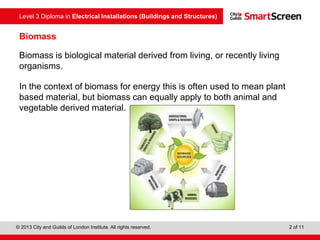
Biomass is biological material derived from living, or recently living
organisms.
In the context of biomass for energy this is often used to mean plant
based material, but biomass can equally apply to both animal and
vegetable derived material.
Level 3 Diploma in Electrical Installations (Buildings and Structures)
© 2013 City and Guilds of London Institute. All rights reserved. 3 of 11
Biomass
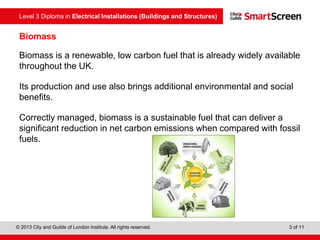
Biomass is a renewable, low carbon fuel that is already widely available
throughout the UK.
Its production and use also brings additional environmental and social
benefits.
Correctly managed, biomass is a sustainable fuel that can deliver a
significant reduction in net carbon emissions when compared with fossil
fuels.
Level 3 Diploma in Electrical Installations (Buildings and Structures)
© 2013 City and Guilds of London Institute. All rights reserved. 4 of 11
Biomass
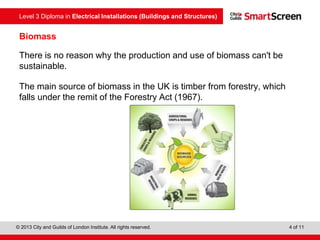
There is no reason why the production and use of biomass can't be
sustainable.
The main source of biomass in the UK is timber from forestry, which
falls under the remit of the Forestry Act (1967).
Level 3 Diploma in Electrical Installations (Buildings and Structures)
© 2013 City and Guilds of London Institute. All rights reserved. 5 of 11
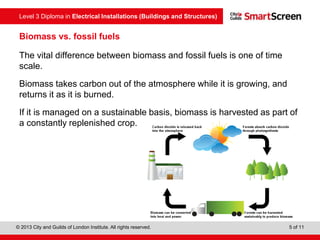
Biomass vs. fossil fuels
The vital difference between biomass and fossil fuels is one of time
scale.
Biomass takes carbon out of the atmosphere while it is growing, and
returns it as it is burned.
If it is managed on a sustainable basis, biomass is harvested as part of
a constantly replenished crop.
Level 3 Diploma in Electrical Installations (Buildings and Structures)
© 2013 City and Guilds of London Institute. All rights reserved. 6 of 11
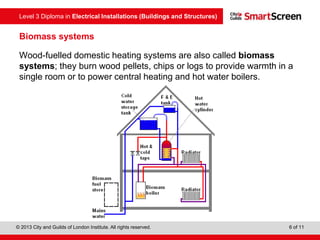
Biomass systems
Wood-fuelled domestic heating systems are also called biomass
systems; they burn wood pellets, chips or logs to provide warmth in a
single room or to power central heating and hot water boilers.
Level 3 Diploma in Electrical Installations (Buildings and Structures)
© 2013 City and Guilds of London Institute. All rights reserved. 7 of 11
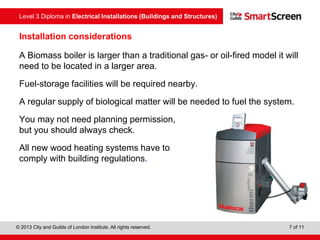
Installation considerations
A Biomass boiler is larger than a traditional gas- or oil-fired model it will
need to be located in a larger area.
Fuel-storage facilities will be required nearby.
A regular supply of biological matter will be needed to fuel the system.
You may not need planning permission,
but you should always check.
All new wood heating systems have to
comply with building regulations.
Level 3 Diploma in Electrical Installations (Buildings and Structures)
© 2013 City and Guilds of London Institute. All rights reserved. 8 of 11
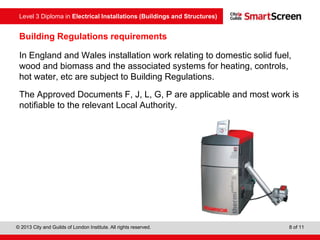
Building Regulations requirements
In England and Wales installation work relating to domestic solid fuel,
wood and biomass and the associated systems for heating, controls,
hot water, etc are subject to Building Regulations.
The Approved Documents F, J, L, G, P are applicable and most work is
notifiable to the relevant Local Authority.
Level 3 Diploma in Electrical Installations (Buildings and Structures)
© 2013 City and Guilds of London Institute. All rights reserved. 9 of 11
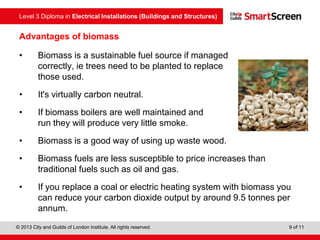
Advantages of biomass
• Biomass is a sustainable fuel source if managed
correctly, ie trees need to be planted to replace
those used.
• It's virtually carbon neutral.
• If biomass boilers are well maintained and
run they will produce very little smoke.
• Biomass is a good way of using up waste wood.
• Biomass fuels are less susceptible to price increases than
traditional fuels such as oil and gas.
• If you replace a coal or electric heating system with biomass you
can reduce your carbon dioxide output by around 9.5 tonnes per
annum.
Level 3 Diploma in Electrical Installations (Buildings and Structures)
© 2013 City and Guilds of London Institute. All rights reserved. 10 of 11
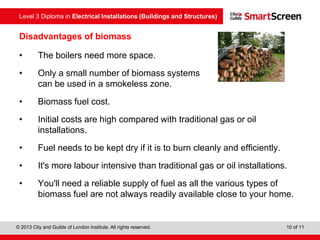
• The boilers need more space.
• Only a small number of biomass systems
can be used in a smokeless zone.
• Biomass fuel cost.
• Initial costs are high compared with traditional gas or oil
installations.
• Fuel needs to be kept dry if it is to burn cleanly and efficiently.
• It's more labour intensive than traditional gas or oil installations.
• You'll need a reliable supply of fuel as all the various types of
biomass fuel are not always readily available close to your home.
Disadvantages of biomass
Level 3 Diploma in Electrical Installations (Buildings and Structures)
© 2013 City and Guilds of London Institute. All rights reserved. 11 of 11
Any questions?

Biomass

  • 1.
    Level 3 Diplomain Electrical Installations (Buildings and Structures) © 2013 City and Guilds of London Institute. All rights reserved. 1 of 11 PowerPointpresentation Biomass Unit 301: Understand the fundamental principles and requirements of environmental technology systems
  • 2.
    Level 3 Diplomain Electrical Installations (Buildings and Structures) © 2013 City and Guilds of London Institute. All rights reserved. 2 of 11 Biomass Biomass is biological material derived from living, or recently living organisms. In the context of biomass for energy this is often used to mean plant based material, but biomass can equally apply to both animal and vegetable derived material.
  • 3.
    Level 3 Diplomain Electrical Installations (Buildings and Structures) © 2013 City and Guilds of London Institute. All rights reserved. 3 of 11 Biomass Biomass is a renewable, low carbon fuel that is already widely available throughout the UK. Its production and use also brings additional environmental and social benefits. Correctly managed, biomass is a sustainable fuel that can deliver a significant reduction in net carbon emissions when compared with fossil fuels.
  • 4.
    Level 3 Diplomain Electrical Installations (Buildings and Structures) © 2013 City and Guilds of London Institute. All rights reserved. 4 of 11 Biomass There is no reason why the production and use of biomass can't be sustainable. The main source of biomass in the UK is timber from forestry, which falls under the remit of the Forestry Act (1967).
  • 5.
    Level 3 Diplomain Electrical Installations (Buildings and Structures) © 2013 City and Guilds of London Institute. All rights reserved. 5 of 11 Biomass vs. fossil fuels The vital difference between biomass and fossil fuels is one of time scale. Biomass takes carbon out of the atmosphere while it is growing, and returns it as it is burned. If it is managed on a sustainable basis, biomass is harvested as part of a constantly replenished crop.
  • 6.
    Level 3 Diplomain Electrical Installations (Buildings and Structures) © 2013 City and Guilds of London Institute. All rights reserved. 6 of 11 Biomass systems Wood-fuelled domestic heating systems are also called biomass systems; they burn wood pellets, chips or logs to provide warmth in a single room or to power central heating and hot water boilers.
  • 7.
    Level 3 Diplomain Electrical Installations (Buildings and Structures) © 2013 City and Guilds of London Institute. All rights reserved. 7 of 11 Installation considerations A Biomass boiler is larger than a traditional gas- or oil-fired model it will need to be located in a larger area. Fuel-storage facilities will be required nearby. A regular supply of biological matter will be needed to fuel the system. You may not need planning permission, but you should always check. All new wood heating systems have to comply with building regulations.
  • 8.
    Level 3 Diplomain Electrical Installations (Buildings and Structures) © 2013 City and Guilds of London Institute. All rights reserved. 8 of 11 Building Regulations requirements In England and Wales installation work relating to domestic solid fuel, wood and biomass and the associated systems for heating, controls, hot water, etc are subject to Building Regulations. The Approved Documents F, J, L, G, P are applicable and most work is notifiable to the relevant Local Authority.
  • 9.
    Level 3 Diplomain Electrical Installations (Buildings and Structures) © 2013 City and Guilds of London Institute. All rights reserved. 9 of 11 Advantages of biomass • Biomass is a sustainable fuel source if managed correctly, ie trees need to be planted to replace those used. • It's virtually carbon neutral. • If biomass boilers are well maintained and run they will produce very little smoke. • Biomass is a good way of using up waste wood. • Biomass fuels are less susceptible to price increases than traditional fuels such as oil and gas. • If you replace a coal or electric heating system with biomass you can reduce your carbon dioxide output by around 9.5 tonnes per annum.
  • 10.
    Level 3 Diplomain Electrical Installations (Buildings and Structures) © 2013 City and Guilds of London Institute. All rights reserved. 10 of 11 • The boilers need more space. • Only a small number of biomass systems can be used in a smokeless zone. • Biomass fuel cost. • Initial costs are high compared with traditional gas or oil installations. • Fuel needs to be kept dry if it is to burn cleanly and efficiently. • It's more labour intensive than traditional gas or oil installations. • You'll need a reliable supply of fuel as all the various types of biomass fuel are not always readily available close to your home. Disadvantages of biomass
  • 11.
    Level 3 Diplomain Electrical Installations (Buildings and Structures) © 2013 City and Guilds of London Institute. All rights reserved. 11 of 11 Any questions?