
eTwinning:
towards a 21st Century Pedagogy
Anne Gilleran – pedagogical manager
eTwinning Central Support Service
Anne who?
I come from Dublin, Ireland

worked in Brussels for the
European Schoolnet since
2001
Pedagogical
manager for
eTwinning since
2005

Career:
university lecturer
school counsellor
head teacher
researcher
expert in ICT for education

I have been involved in many
projects involving schools,
teachers and school leaders
Topics of this presentation
Reflections on the educational demands
of the 21 century
– Societal demands
– Communication demands
– Curricular demand
– Teaching demands
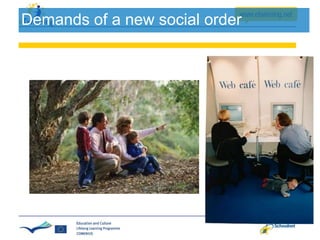
Demands of a new social order
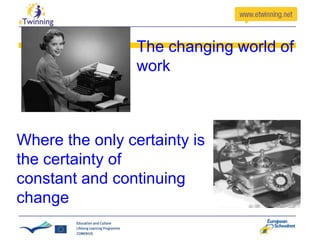
The changing world of
work

Where the only certainty is
the certainty of
constant and continuing
change
Demands of Mass Communication

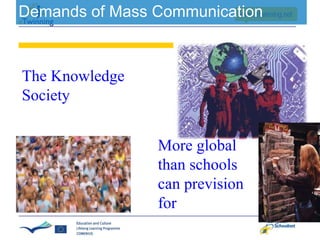
The Knowledge
Society
More global
than schools
can prevision
for
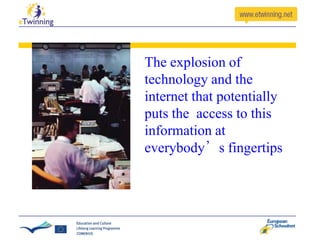
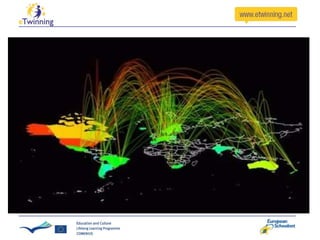
The explosion of
technology and the
internet that potentially
puts the access to this
information at
everybody’s fingertips
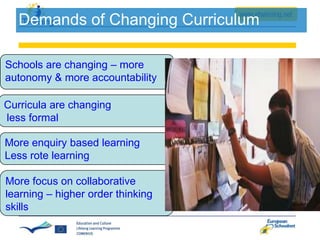
Demands of Changing Curriculum
Schools are changing – more
autonomy & more accountability
Curricula are changing
less formal
More enquiry based learning
Less rote learning
More focus on collaborative
learning – higher order thinking
skills
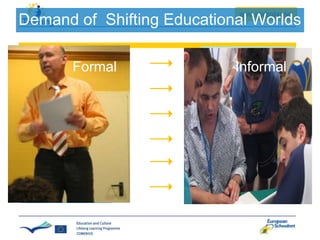
Demand of Shifting Educational Worlds
Formal

Formal

Informal

Informal

Closed

Open

Top down

Bottom up

Teaching

Learning

Consumption

Creation

Curriculum driven

Life as curriculum
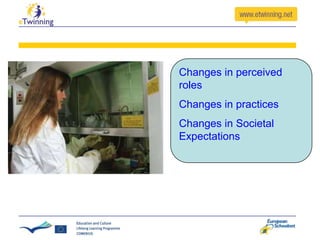
Changes in perceived
roles
Changes in practices
Changes in Societal
Expectations
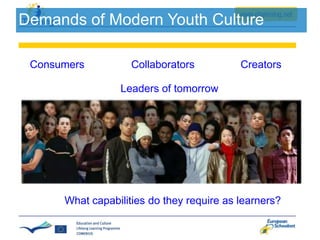
Demands of Modern Youth Culture
Consumers

Collaborators

Creators

Leaders of tomorrow

What capabilities do they require as learners?
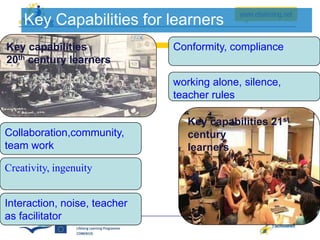
Key Capabilities for learners
Key capabilities
20th century learners

Conformity, compliance
working alone, silence,
teacher rules

Collaboration,community,
team work
Creativity, ingenuity
Interaction, noise, teacher
as facilitator

Key capabilities 21st
century
learners
The teaching context summarised
The children we teach are changing

The core values of education are going through a radical
change as the knowledge society impacts on institutions and
ways of instruction that date mainly to the 19th Century.
We (as teachers) are mostly still seen as conservative in our
methods and our views about learning.
What is necessary now in educational
thinking?

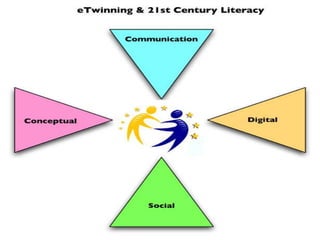
A new literacy set underpinned by competencies
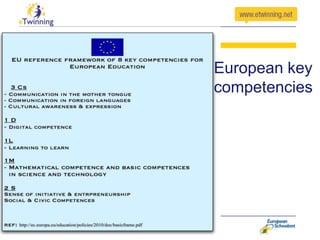
European key
competencies
Why eTwinning?
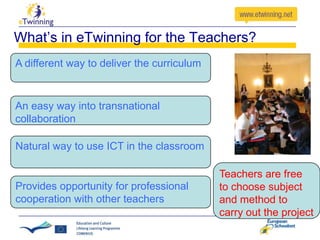
What’s in eTwinning for the Teachers?
A different way to deliver the curriculum

An easy way into transnational
collaboration
Natural way to use ICT in the classroom

Provides opportunity for professional
cooperation with other teachers

Teachers are free
to choose subject
and method to
carry out the project
What’s in eTwinning for the Pupils?
The possibility of more authentic learning

Develops a better understanding of cultures,
habits, religions
Using ICT and developing digital literacy / abilities.

Richer curriculum experience; geography, MFL,
mother tongue, other history viewpoints, different
takes on science..
The non-ICT aspects: co-operation, planning, taking
responsibility, making choices…

The play ethic: because
projects are usually
stimulating, motivating
and fun for the pupils
& teachers
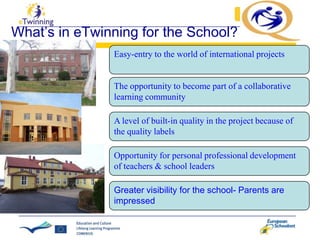
What’s in eTwinning for the School?
Easy-entry to the world of international projects

The opportunity to become part of a collaborative
learning community
A level of built-in quality in the project because of
the quality labels

Opportunity for personal professional development
of teachers & school leaders
Greater visibility for the school- Parents are
impressed
2 examples of projects
Recap
Thank you for your attention!
eTwinning portal:
www.etwinning.net
Contacts:
Anne.Gilleran@eun.org

eTwinning & 21 Century Learning

  • 1.
    eTwinning: towards a 21stCentury Pedagogy Anne Gilleran – pedagogical manager eTwinning Central Support Service
  • 2.
    Anne who? I comefrom Dublin, Ireland worked in Brussels for the European Schoolnet since 2001 Pedagogical manager for eTwinning since 2005 Career: university lecturer school counsellor head teacher researcher expert in ICT for education I have been involved in many projects involving schools, teachers and school leaders
  • 3.
    Topics of thispresentation Reflections on the educational demands of the 21 century – Societal demands – Communication demands – Curricular demand – Teaching demands
  • 4.
    Demands of anew social order
  • 5.
    The changing worldof work Where the only certainty is the certainty of constant and continuing change
  • 6.
    Demands of MassCommunication The Knowledge Society More global than schools can prevision for
  • 7.
    The explosion of technologyand the internet that potentially puts the access to this information at everybody’s fingertips
  • 9.
    Demands of ChangingCurriculum Schools are changing – more autonomy & more accountability Curricula are changing less formal More enquiry based learning Less rote learning More focus on collaborative learning – higher order thinking skills
  • 10.
    Demand of ShiftingEducational Worlds Formal Formal Informal Informal Closed Open Top down Bottom up Teaching Learning Consumption Creation Curriculum driven Life as curriculum
  • 11.
    Changes in perceived roles Changesin practices Changes in Societal Expectations
  • 12.
    Demands of ModernYouth Culture Consumers Collaborators Creators Leaders of tomorrow What capabilities do they require as learners?
  • 13.
    Key Capabilities forlearners Key capabilities 20th century learners Conformity, compliance working alone, silence, teacher rules Collaboration,community, team work Creativity, ingenuity Interaction, noise, teacher as facilitator Key capabilities 21st century learners
  • 14.
    The teaching contextsummarised The children we teach are changing The core values of education are going through a radical change as the knowledge society impacts on institutions and ways of instruction that date mainly to the 19th Century. We (as teachers) are mostly still seen as conservative in our methods and our views about learning.
  • 15.
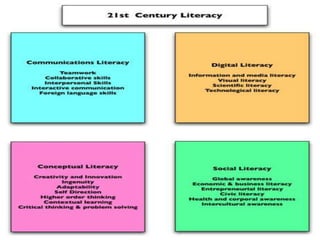
    What is necessarynow in educational thinking? A new literacy set underpinned by competencies
  • 19.
  • 21.
  • 22.
    What’s in eTwinningfor the Teachers? A different way to deliver the curriculum An easy way into transnational collaboration Natural way to use ICT in the classroom Provides opportunity for professional cooperation with other teachers Teachers are free to choose subject and method to carry out the project
  • 23.
    What’s in eTwinningfor the Pupils? The possibility of more authentic learning Develops a better understanding of cultures, habits, religions Using ICT and developing digital literacy / abilities. Richer curriculum experience; geography, MFL, mother tongue, other history viewpoints, different takes on science.. The non-ICT aspects: co-operation, planning, taking responsibility, making choices… The play ethic: because projects are usually stimulating, motivating and fun for the pupils & teachers
  • 24.
    What’s in eTwinningfor the School? Easy-entry to the world of international projects The opportunity to become part of a collaborative learning community A level of built-in quality in the project because of the quality labels Opportunity for personal professional development of teachers & school leaders Greater visibility for the school- Parents are impressed
  • 25.
    2 examples ofprojects
  • 26.
  • 29.
    Thank you foryour attention! eTwinning portal: www.etwinning.net Contacts: Anne.Gilleran@eun.org