5. Project Scope Management
Project Scope Management 
The Project Scope Management includes the processes we must 
perform to ensure that the project contains All The Work, And 
Only The Work, required to complete the construction project 
successfully. 
Primary concern is defining and controlling what is and what is not 
included in the project. 
In the project context, there are two categories of scope i.e. Product 
scope and Project scope
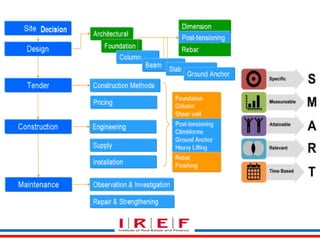
 Scope is the foundation of any real estate 
development project as it decides entire 
project management plan and strategy. 
 There are multiple streams of requirements 
like requirements from builder, requirements 
from architect and requirements from owners 
etc. 
 Requirements for each stage and each phase 
of a project are different and need to be 
fulfilled for successful project completion.
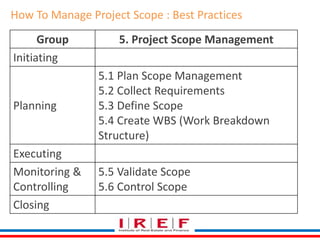
How To Manage Project Scope : Best Practices 
Group 5. Project Scope Management 
Initiating 
Planning 
5.1 Plan Scope Management 
5.2 Collect Requirements 
5.3 Define Scope 
5.4 Create WBS (Work Breakdown 
Structure) 
Executing 
Monitoring & 
Controlling 
5.5 Validate Scope 
5.6 Control Scope 
Closing
5.1 Plan Scope Management 
To define how the scope will be defined, validated 
and controlled 
A real estate company should have standard 
operating procedure for defining scope 
management of any new project 
Management should take both project 
management and product management (5Ps---) 
into account for planning scope for new property.
Scope Management Plan 
Describes how requirements will be analyzed, prioritized, 
documented and managed. 
How will be approved, maintained and changed : It is very 
difficult to change structural scope of real state project within a 
phase once the floor plan is approved. How ever changes can be 
made in non-structural areas like wall, plumbing , electrical etc. 
Hence many builders prefer phase-wise approach. 
Process that enables creation of WBS
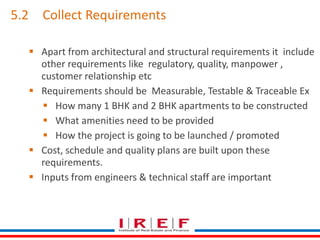
5.2 Collect Requirements 
 Apart from architectural and structural requirements it include 
other requirements like regulatory, quality, manpower , 
customer relationship etc 
 Requirements should be Measurable, Testable & Traceable Ex 
 How many 1 BHK and 2 BHK apartments to be constructed 
 What amenities need to be provided 
 How the project is going to be launched / promoted 
 Cost, schedule and quality plans are built upon these 
requirements. 
 Inputs from engineers & technical staff are important
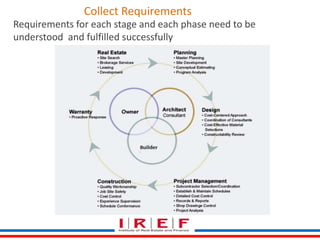
Collect Requirements 
Requirements for each stage and each phase need to be 
understood and fulfilled successfully
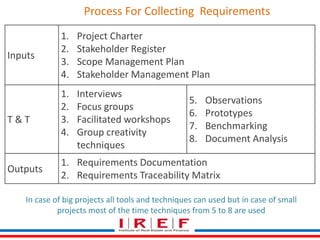
Process For Collecting Requirements 
Inputs 
1. Project Charter 
2. Stakeholder Register 
3. Scope Management Plan 
4. Stakeholder Management Plan 
T & T 
1. Interviews 
2. Focus groups 
3. Facilitated workshops 
4. Group creativity 
techniques 
5. Observations 
6. Prototypes 
7. Benchmarking 
8. Document Analysis 
Outputs 
1. Requirements Documentation 
2. Requirements Traceability Matrix 
In case of big projects all tools and techniques can used but in case of small 
projects most of the time techniques from 5 to 8 are used
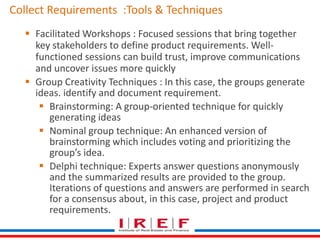
Collect Requirements :Tools & Techniques 
 Facilitated Workshops : Focused sessions that bring together 
key stakeholders to define product requirements. Well-functioned 
sessions can build trust, improve communications 
and uncover issues more quickly 
 Group Creativity Techniques : In this case, the groups generate 
ideas. identify and document requirement. 
 Brainstorming: A group-oriented technique for quickly 
generating ideas 
 Nominal group technique: An enhanced version of 
brainstorming which includes voting and prioritizing the 
group’s idea. 
 Delphi technique: Experts answer questions anonymously 
and the summarized results are provided to the group. 
Iterations of questions and answers are performed in search 
for a consensus about, in this case, project and product 
requirements.
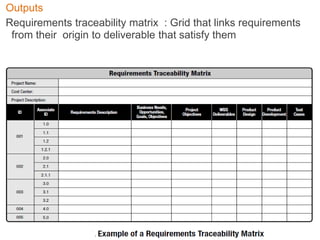
Outputs 
Requirements traceability matrix : Grid that links requirements 
from their origin to deliverable that satisfy them
5.3 Define Scope 
Scope definition produces detailed description of 
product and project. Scope statement represents 
an agreement between the project team and the 
customer. 
Avoid : 
Gold Plating: means adding features that are not included 
in the original plan but added by builder or his project 
team to please customer without proper approval. 
Scope Creep: means "uncontrolled" changes. This can be 
brought in either by the customer without formal 
approval from the builder or project team
5.3 Define Scope 
Inputs 
1. Project Charter 
2. Requirements Documentation 
3. Scope Management Plan 
4. Organizational Process Assets (Review of scope 
statements and plans for previous projects) 
T & T 
1. Expert Judgment 
2. Product Analysis 
3. Alternatives generation 
Outputs 
1. Project Scope Statement 
2. Project Documents Updates ( Do not forget to 
review and update documents related to other 
areas like cost, schedule , man power 
requirements based on scope decision)
Define Scope 
Tools & Techniques 
 Product Analysis : Product analysis is a useful tool for 
translating high-level product descriptions into tangible 
deliverables. It can be done with prototyping or with computer 
software used for simulation, 
 Alternatives Generation : Develops many potential options as 
possible in order to identify different approaches to perform 
the work of the project. Ex. Different floor plans, providing 
different amenities to differentiate your project etc
Define Scope 
Output : 
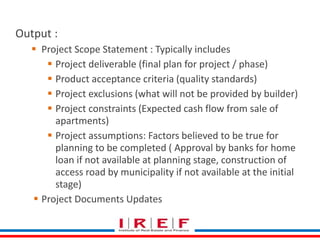
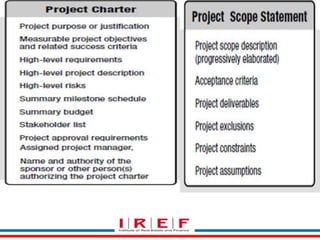
 Project Scope Statement : Typically includes 
 Project deliverable (final plan for project / phase) 
 Product acceptance criteria (quality standards) 
 Project exclusions (what will not be provided by builder) 
 Project constraints (Expected cash flow from sale of 
apartments) 
 Project assumptions: Factors believed to be true for 
planning to be completed ( Approval by banks for home 
loan if not available at planning stage, construction of 
access road by municipality if not available at the initial 
stage) 
 Project Documents Updates
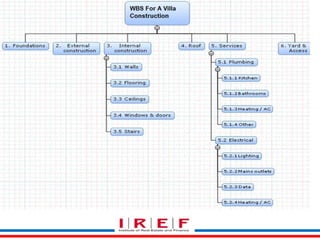
5.4 Create WBS 
The WBS or work breakdown structure takes the 
scope as outlined in the project scope statement 
and breaks it down into more manageable 
components called deliverables
Create WBS
Create WBS 
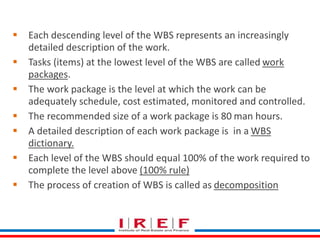
 Each descending level of the WBS represents an increasingly 
detailed description of the work. 
 Tasks (items) at the lowest level of the WBS are called work 
packages. 
 The work package is the level at which the work can be 
adequately schedule, cost estimated, monitored and controlled. 
 The recommended size of a work package is 80 man hours. 
 A detailed description of each work package is in a WBS 
dictionary. 
 Each level of the WBS should equal 100% of the work required to 
complete the level above (100% rule) 
 The process of creation of WBS is called as decomposition
Create WBS 
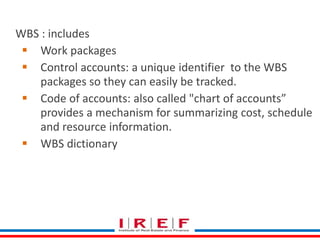
WBS : includes 
 Work packages 
 Control accounts: a unique identifier to the WBS 
packages so they can easily be tracked. 
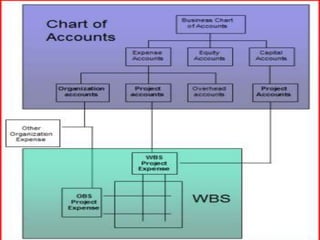
 Code of accounts: also called "chart of accounts” 
provides a mechanism for summarizing cost, schedule 
and resource information. 
 WBS dictionary
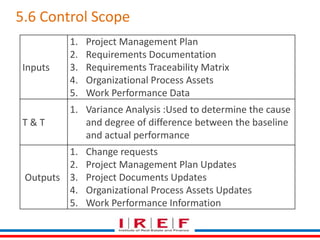
5.6 Control Scope 
The actual results are compared against the scope baseline 
and the requirements in order to ensure that all of the 
approved scope is in fact being delivered.
5.6 Control Scope 
Inputs 
1. Project Management Plan 
2. Requirements Documentation 
3. Requirements Traceability Matrix 
4. Organizational Process Assets 
5. Work Performance Data 
T & T 
1. Variance Analysis :Used to determine the cause 
and degree of difference between the baseline 
and actual performance 
Outputs 
1. Change requests 
2. Project Management Plan Updates 
3. Project Documents Updates 
4. Organizational Process Assets Updates 
5. Work Performance Information
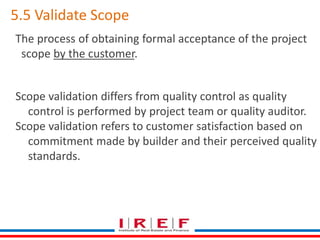
5.5 Validate Scope 
The process of obtaining formal acceptance of the project 
scope by the customer. 
Scope validation differs from quality control as quality 
control is performed by project team or quality auditor. 
Scope validation refers to customer satisfaction based on 
commitment made by builder and their perceived quality 
standards.
06 Time Management : Managing Delays 
Trainings by Vidya Bhagwat 
Next Chapter

2.05 scope management 1

  • 1.
    5. Project ScopeManagement
  • 2.
    Project Scope Management The Project Scope Management includes the processes we must perform to ensure that the project contains All The Work, And Only The Work, required to complete the construction project successfully. Primary concern is defining and controlling what is and what is not included in the project. In the project context, there are two categories of scope i.e. Product scope and Project scope
  • 3.
     Scope isthe foundation of any real estate development project as it decides entire project management plan and strategy.  There are multiple streams of requirements like requirements from builder, requirements from architect and requirements from owners etc.  Requirements for each stage and each phase of a project are different and need to be fulfilled for successful project completion.
  • 5.
    How To ManageProject Scope : Best Practices Group 5. Project Scope Management Initiating Planning 5.1 Plan Scope Management 5.2 Collect Requirements 5.3 Define Scope 5.4 Create WBS (Work Breakdown Structure) Executing Monitoring & Controlling 5.5 Validate Scope 5.6 Control Scope Closing
  • 6.
    5.1 Plan ScopeManagement To define how the scope will be defined, validated and controlled A real estate company should have standard operating procedure for defining scope management of any new project Management should take both project management and product management (5Ps---) into account for planning scope for new property.
  • 7.
    Scope Management Plan Describes how requirements will be analyzed, prioritized, documented and managed. How will be approved, maintained and changed : It is very difficult to change structural scope of real state project within a phase once the floor plan is approved. How ever changes can be made in non-structural areas like wall, plumbing , electrical etc. Hence many builders prefer phase-wise approach. Process that enables creation of WBS
  • 8.
    5.2 Collect Requirements  Apart from architectural and structural requirements it include other requirements like regulatory, quality, manpower , customer relationship etc  Requirements should be Measurable, Testable & Traceable Ex  How many 1 BHK and 2 BHK apartments to be constructed  What amenities need to be provided  How the project is going to be launched / promoted  Cost, schedule and quality plans are built upon these requirements.  Inputs from engineers & technical staff are important
  • 9.
    Collect Requirements Requirementsfor each stage and each phase need to be understood and fulfilled successfully
  • 10.
    Process For CollectingRequirements Inputs 1. Project Charter 2. Stakeholder Register 3. Scope Management Plan 4. Stakeholder Management Plan T & T 1. Interviews 2. Focus groups 3. Facilitated workshops 4. Group creativity techniques 5. Observations 6. Prototypes 7. Benchmarking 8. Document Analysis Outputs 1. Requirements Documentation 2. Requirements Traceability Matrix In case of big projects all tools and techniques can used but in case of small projects most of the time techniques from 5 to 8 are used
  • 11.
    Collect Requirements :Tools& Techniques  Facilitated Workshops : Focused sessions that bring together key stakeholders to define product requirements. Well-functioned sessions can build trust, improve communications and uncover issues more quickly  Group Creativity Techniques : In this case, the groups generate ideas. identify and document requirement.  Brainstorming: A group-oriented technique for quickly generating ideas  Nominal group technique: An enhanced version of brainstorming which includes voting and prioritizing the group’s idea.  Delphi technique: Experts answer questions anonymously and the summarized results are provided to the group. Iterations of questions and answers are performed in search for a consensus about, in this case, project and product requirements.
  • 12.
    Outputs Requirements traceabilitymatrix : Grid that links requirements from their origin to deliverable that satisfy them
  • 13.
    5.3 Define Scope Scope definition produces detailed description of product and project. Scope statement represents an agreement between the project team and the customer. Avoid : Gold Plating: means adding features that are not included in the original plan but added by builder or his project team to please customer without proper approval. Scope Creep: means "uncontrolled" changes. This can be brought in either by the customer without formal approval from the builder or project team
  • 14.
    5.3 Define Scope Inputs 1. Project Charter 2. Requirements Documentation 3. Scope Management Plan 4. Organizational Process Assets (Review of scope statements and plans for previous projects) T & T 1. Expert Judgment 2. Product Analysis 3. Alternatives generation Outputs 1. Project Scope Statement 2. Project Documents Updates ( Do not forget to review and update documents related to other areas like cost, schedule , man power requirements based on scope decision)
  • 15.
    Define Scope Tools& Techniques  Product Analysis : Product analysis is a useful tool for translating high-level product descriptions into tangible deliverables. It can be done with prototyping or with computer software used for simulation,  Alternatives Generation : Develops many potential options as possible in order to identify different approaches to perform the work of the project. Ex. Different floor plans, providing different amenities to differentiate your project etc
  • 16.
    Define Scope Output:  Project Scope Statement : Typically includes  Project deliverable (final plan for project / phase)  Product acceptance criteria (quality standards)  Project exclusions (what will not be provided by builder)  Project constraints (Expected cash flow from sale of apartments)  Project assumptions: Factors believed to be true for planning to be completed ( Approval by banks for home loan if not available at planning stage, construction of access road by municipality if not available at the initial stage)  Project Documents Updates
  • 18.
    5.4 Create WBS The WBS or work breakdown structure takes the scope as outlined in the project scope statement and breaks it down into more manageable components called deliverables
  • 19.
  • 20.
    Create WBS Each descending level of the WBS represents an increasingly detailed description of the work.  Tasks (items) at the lowest level of the WBS are called work packages.  The work package is the level at which the work can be adequately schedule, cost estimated, monitored and controlled.  The recommended size of a work package is 80 man hours.  A detailed description of each work package is in a WBS dictionary.  Each level of the WBS should equal 100% of the work required to complete the level above (100% rule)  The process of creation of WBS is called as decomposition
  • 21.
    Create WBS WBS: includes  Work packages  Control accounts: a unique identifier to the WBS packages so they can easily be tracked.  Code of accounts: also called "chart of accounts” provides a mechanism for summarizing cost, schedule and resource information.  WBS dictionary
  • 23.
    5.6 Control Scope The actual results are compared against the scope baseline and the requirements in order to ensure that all of the approved scope is in fact being delivered.
  • 24.
    5.6 Control Scope Inputs 1. Project Management Plan 2. Requirements Documentation 3. Requirements Traceability Matrix 4. Organizational Process Assets 5. Work Performance Data T & T 1. Variance Analysis :Used to determine the cause and degree of difference between the baseline and actual performance Outputs 1. Change requests 2. Project Management Plan Updates 3. Project Documents Updates 4. Organizational Process Assets Updates 5. Work Performance Information
  • 25.
    5.5 Validate Scope The process of obtaining formal acceptance of the project scope by the customer. Scope validation differs from quality control as quality control is performed by project team or quality auditor. Scope validation refers to customer satisfaction based on commitment made by builder and their perceived quality standards.
  • 26.
    06 Time Management: Managing Delays Trainings by Vidya Bhagwat Next Chapter