
PROJECT SCOPE
MANAGEMENT
PRESENTED BY,
ANOOP S NAIR
PROJECT SCOPE
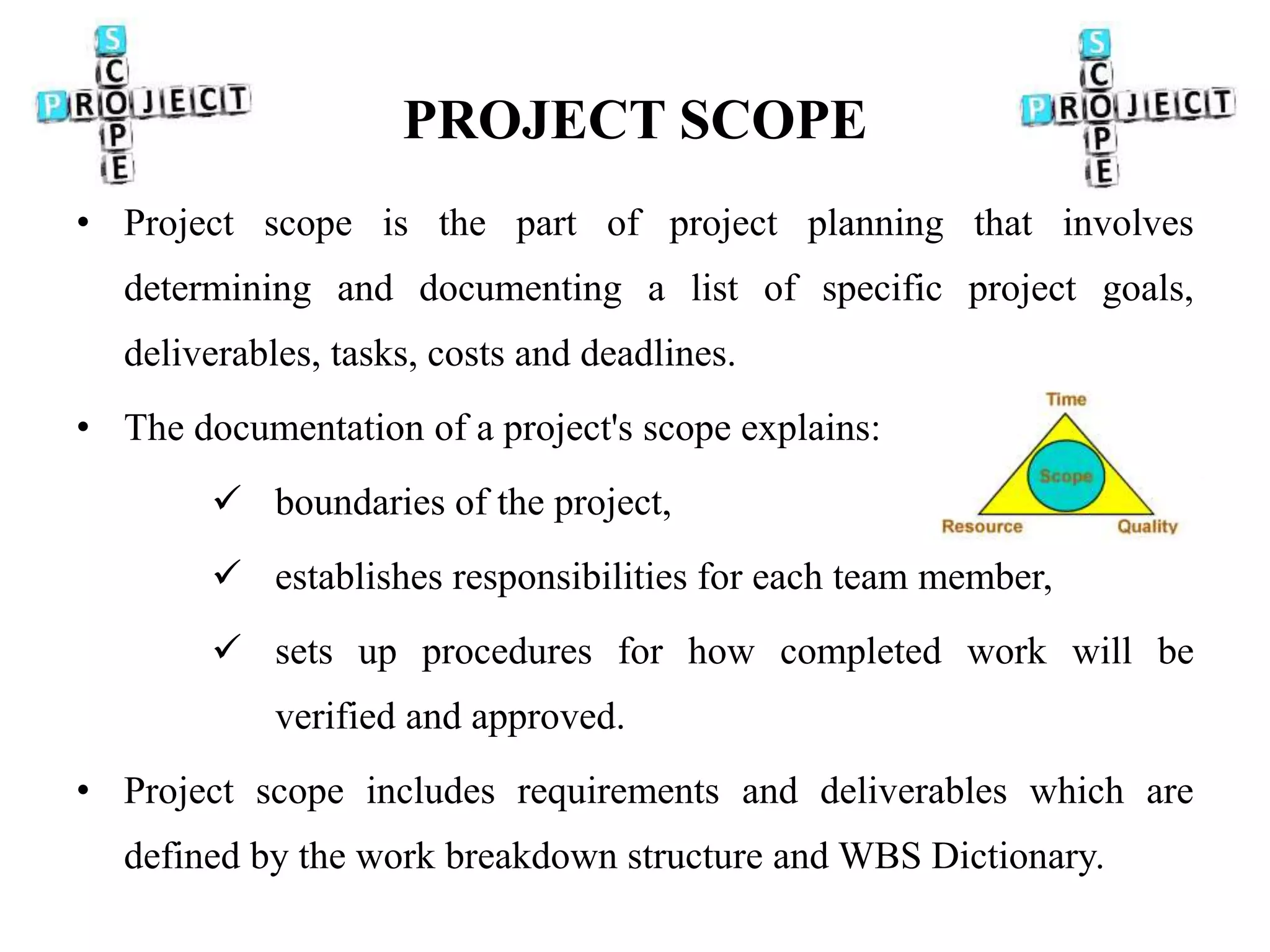
• Project scope is the part of project planning that involves
determining and documenting a list of specific project goals,
deliverables, tasks, costs and deadlines.
• The documentation of a project's scope explains:
 boundaries of the project,
 establishes responsibilities for each team member,
 sets up procedures for how completed work will be
verified and approved.
• Project scope includes requirements and deliverables which are
defined by the work breakdown structure and WBS Dictionary.
PROJECT SCOPE MANAGEMENT
• Scope management is concerned with defining and controlling
the scope of a project.
• It includes
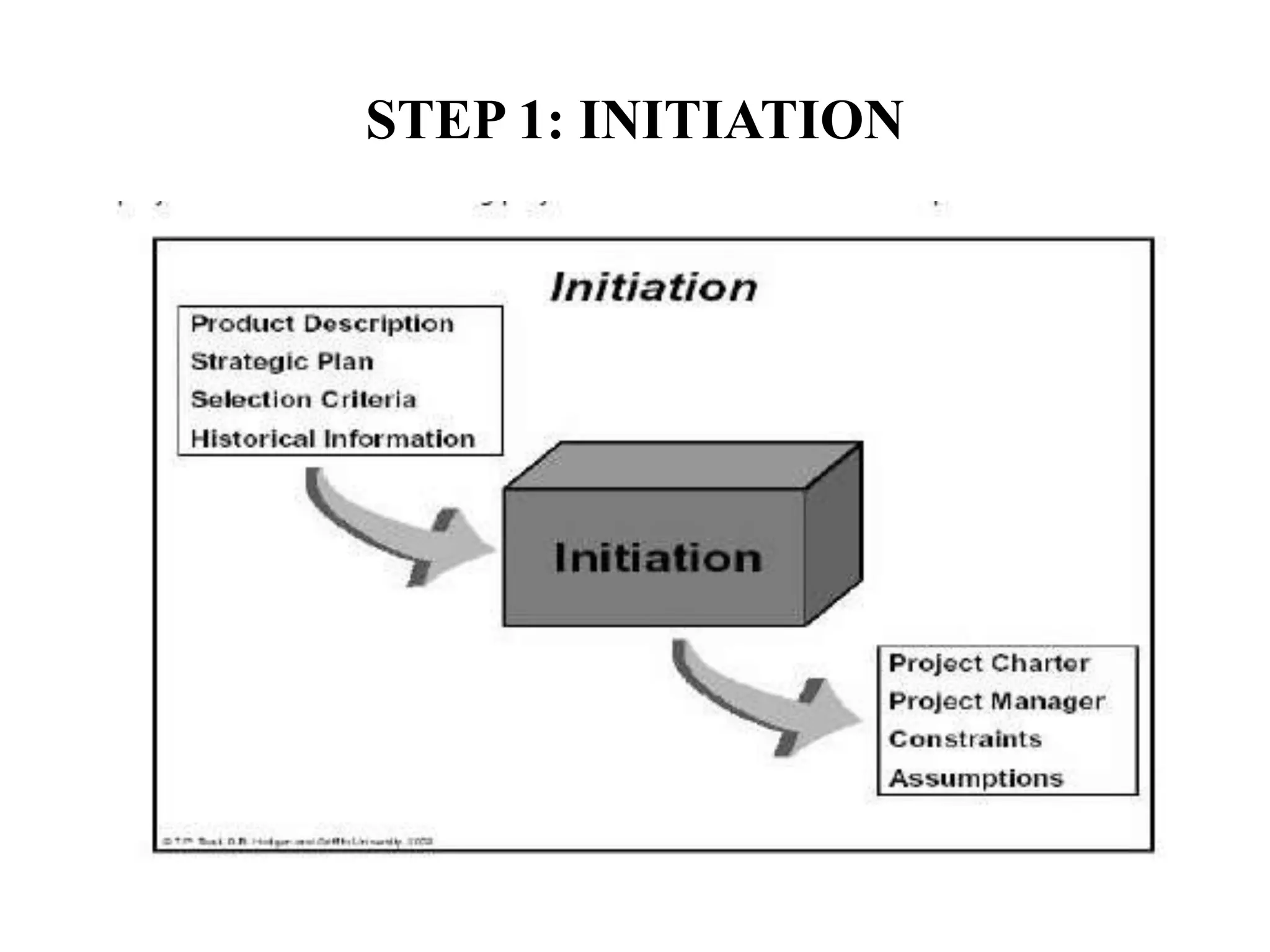
 product description,
 any known constraints and,
 assumptions.
• Project scope is defined in project charter.
 It serves as
a basis for development of Work Breakdown Structure (WBS).
 It must be verified and controlled throughout the life of
the project.
• Project scope management includes the processes required to e
nsure that the project includes all the work required to
complete the project successfully.
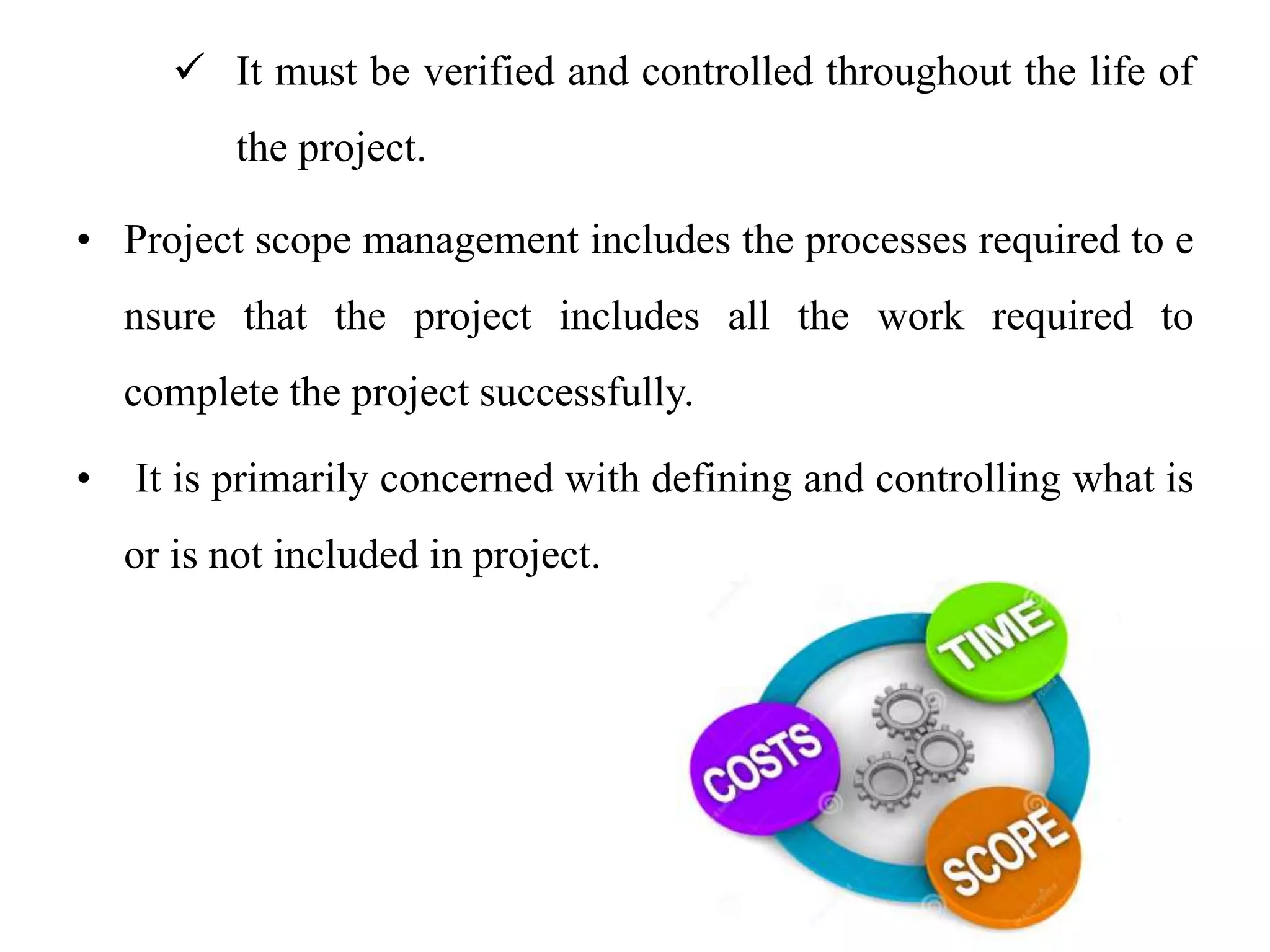
• It is primarily concerned with defining and controlling what is
or is not included in project.
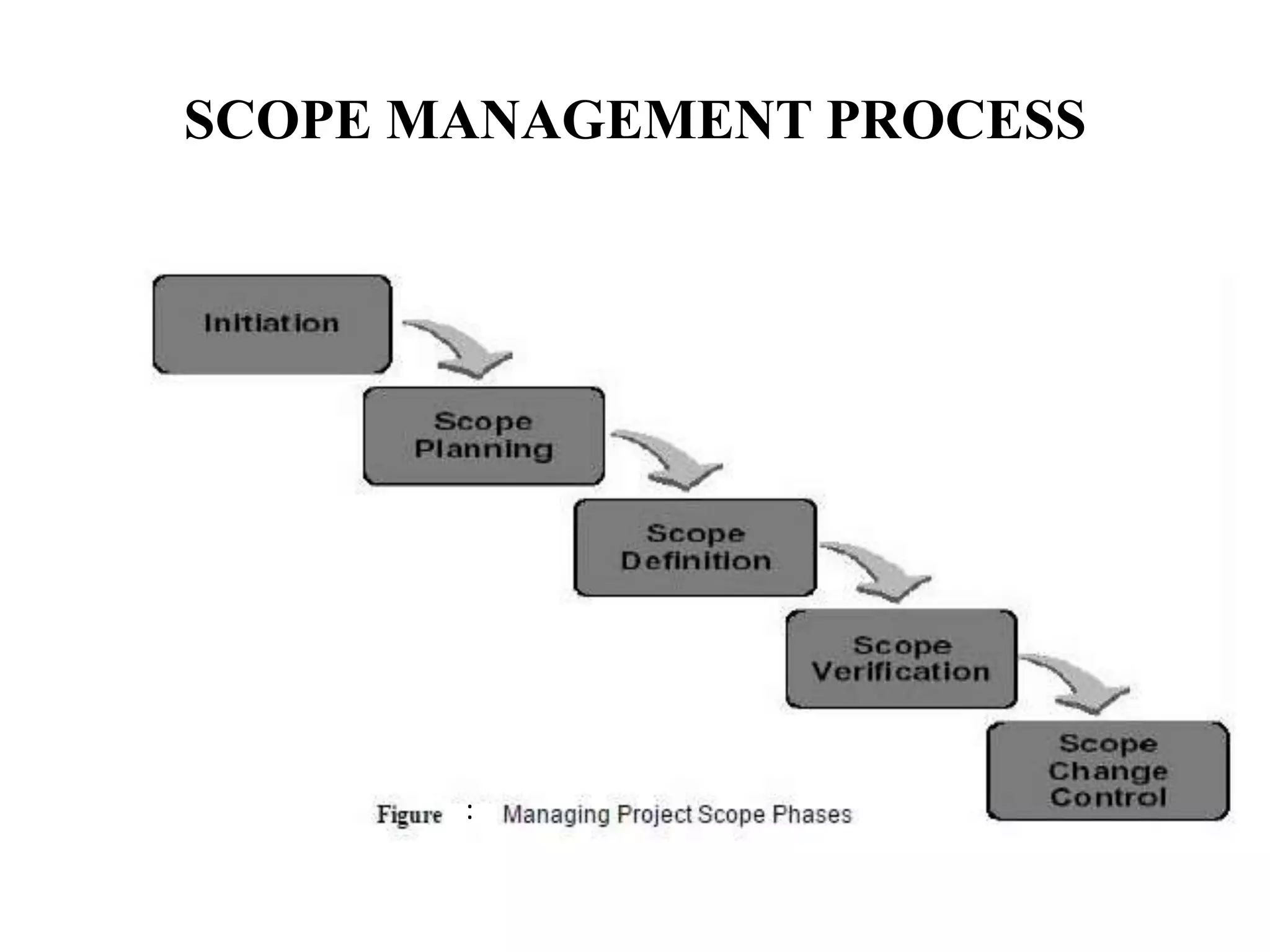
SCOPE MANAGEMENT PROCESS
:
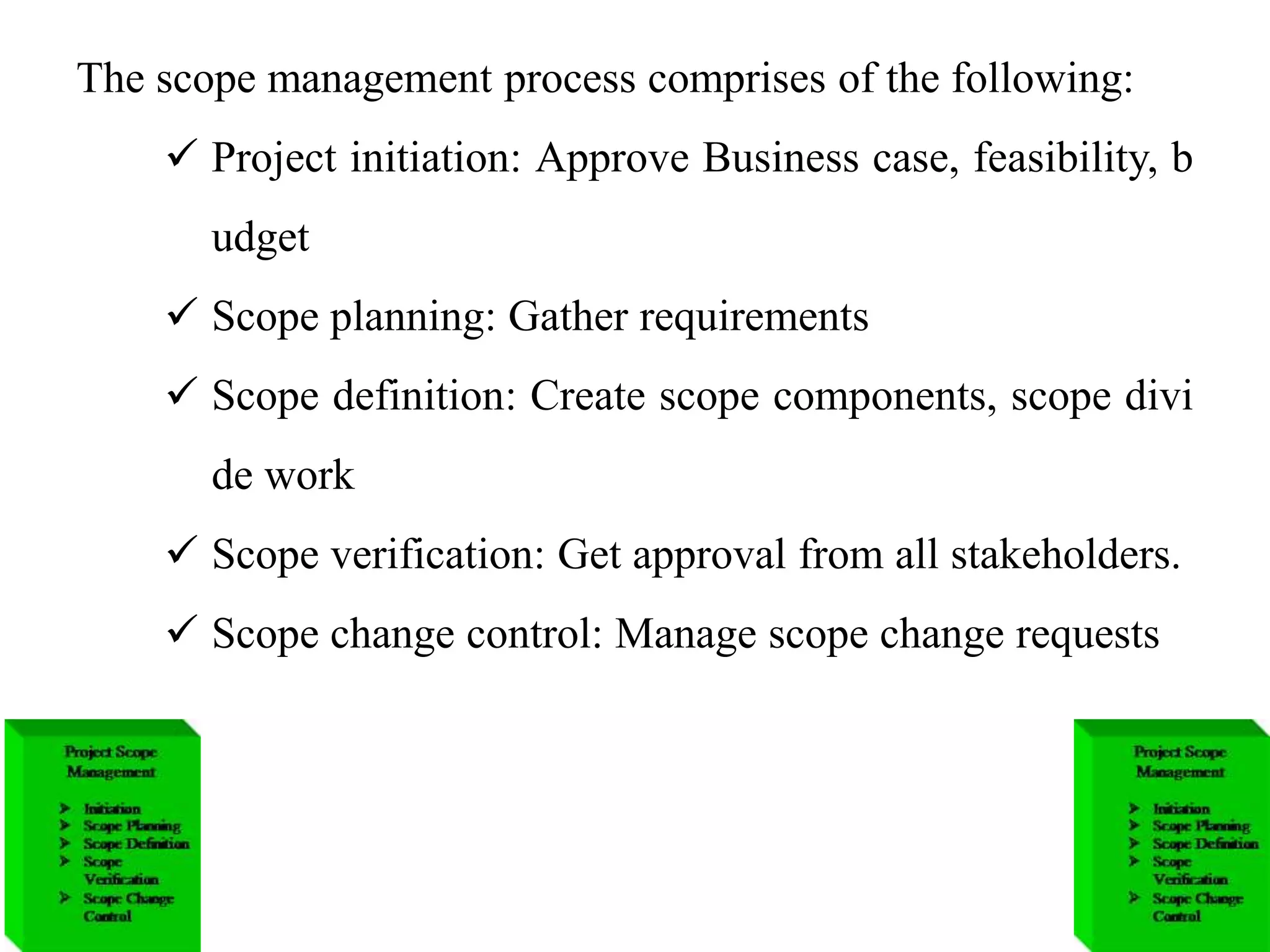
The scope management process comprises of the following:
 Project initiation: Approve Business case, feasibility, b
udget
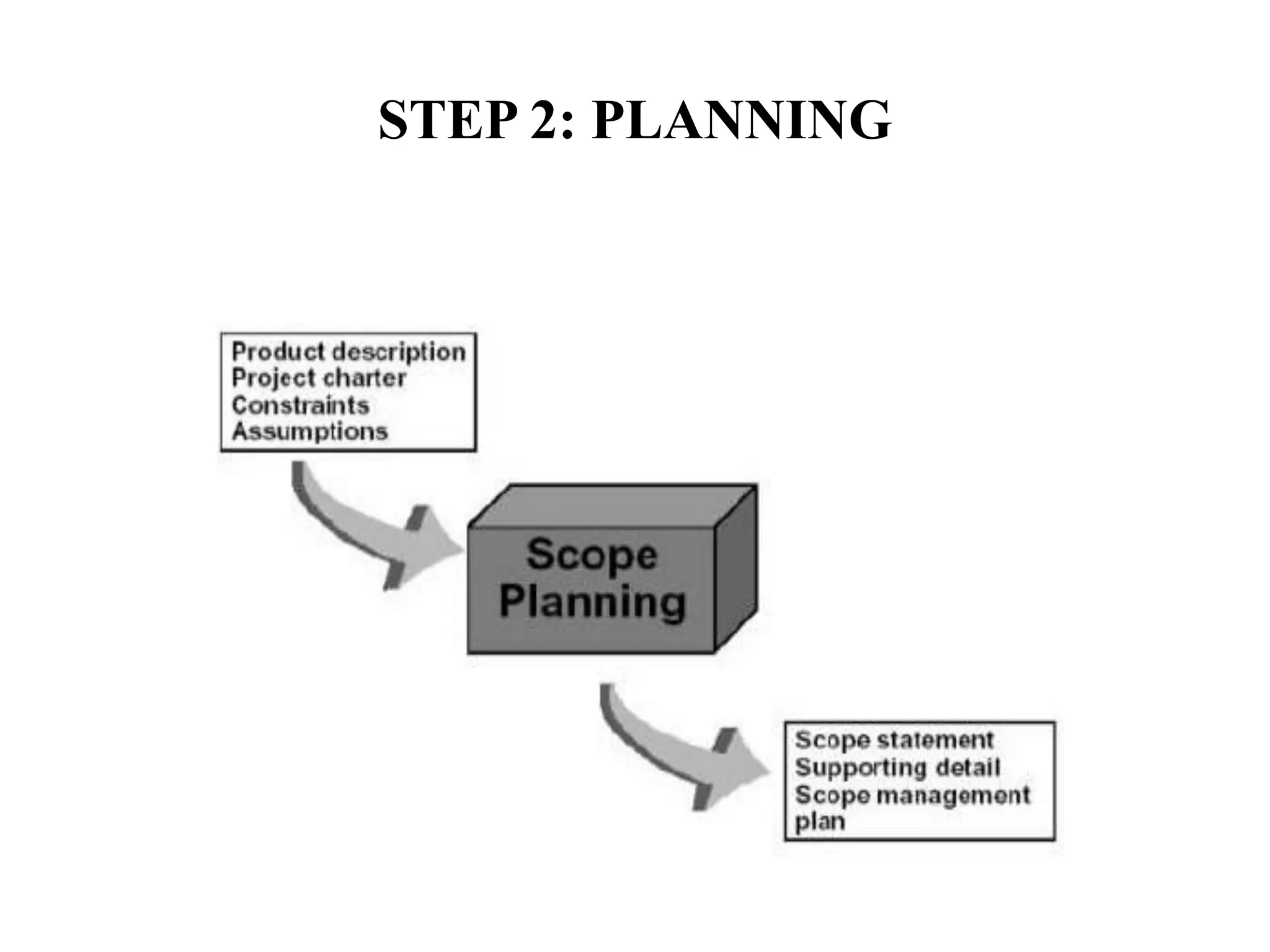
 Scope planning: Gather requirements
 Scope definition: Create scope components, scope divi
de work
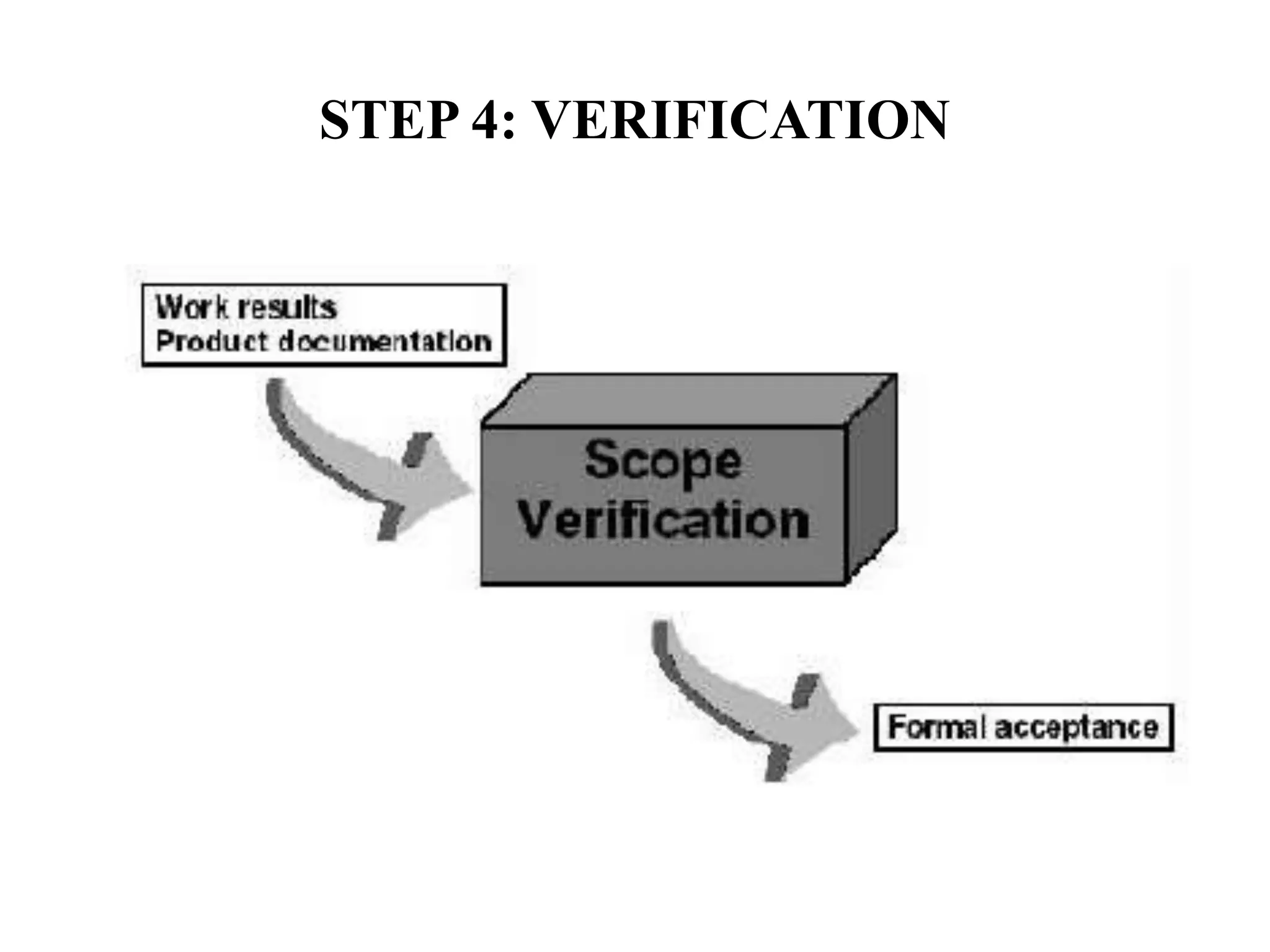
 Scope verification: Get approval from all stakeholders.
 Scope change control: Manage scope change requests
STEP 1: INITIATION
STEP 2: PLANNING
STEP 3: DEFINITION
• This involves sub-dividing major project deliverables
into smaller, more manageable components.
• The benefit of scope definition is to improve :
accuracy of estimated cost,
time, and,
 resources.
• The baseline for performance, measurement and control is defined.
• It facilitates clear responsibility and assignments.
STEP 4: VERIFICATION
STEP 5: SCOPE CHANGE CONTROL
• It defines procedures by which project scope must be changed.
• It includes:
 paperwork,
 tracking systems, and
 approval levels necessary for authorizing changes.
• Scope change control system should be integrated with
overall change control system.
• Scope change control is concerned with:
 Influencing factors which create scope changes to ensure
that changes are beneficial.
 Determining that a scope change has occurred
 Managing the actual changes when and if they occur.
Project scope management

Project scope management

  • 1.
  • 2.
    PROJECT SCOPE • Projectscope is the part of project planning that involves determining and documenting a list of specific project goals, deliverables, tasks, costs and deadlines. • The documentation of a project's scope explains:  boundaries of the project,  establishes responsibilities for each team member,  sets up procedures for how completed work will be verified and approved. • Project scope includes requirements and deliverables which are defined by the work breakdown structure and WBS Dictionary.
  • 3.
    PROJECT SCOPE MANAGEMENT •Scope management is concerned with defining and controlling the scope of a project. • It includes  product description,  any known constraints and,  assumptions. • Project scope is defined in project charter.  It serves as a basis for development of Work Breakdown Structure (WBS).
  • 4.
     It mustbe verified and controlled throughout the life of the project. • Project scope management includes the processes required to e nsure that the project includes all the work required to complete the project successfully. • It is primarily concerned with defining and controlling what is or is not included in project.
  • 5.
  • 6.
    The scope managementprocess comprises of the following:  Project initiation: Approve Business case, feasibility, b udget  Scope planning: Gather requirements  Scope definition: Create scope components, scope divi de work  Scope verification: Get approval from all stakeholders.  Scope change control: Manage scope change requests
  • 7.
  • 8.
  • 9.
    STEP 3: DEFINITION •This involves sub-dividing major project deliverables into smaller, more manageable components. • The benefit of scope definition is to improve : accuracy of estimated cost, time, and,  resources. • The baseline for performance, measurement and control is defined. • It facilitates clear responsibility and assignments.
  • 10.
  • 11.
    STEP 5: SCOPECHANGE CONTROL • It defines procedures by which project scope must be changed. • It includes:  paperwork,  tracking systems, and  approval levels necessary for authorizing changes. • Scope change control system should be integrated with overall change control system.
  • 12.
    • Scope changecontrol is concerned with:  Influencing factors which create scope changes to ensure that changes are beneficial.  Determining that a scope change has occurred  Managing the actual changes when and if they occur.