Download to read offline























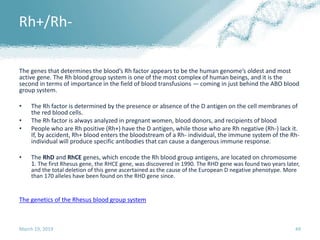
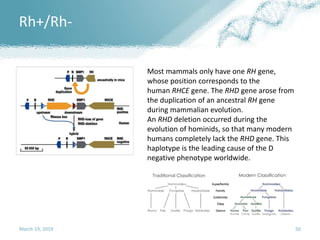
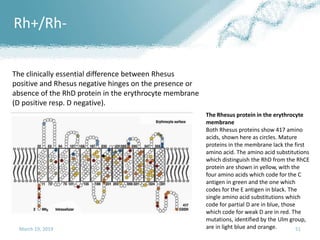
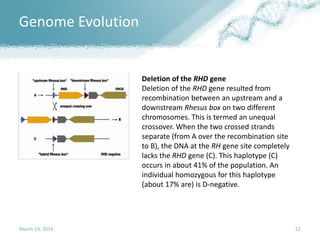


The document discusses the Rh blood group system and its clinical significance. It describes the key observations in 1939 that linked adverse reactions in mothers to stillborn fetuses and blood transfusions from fathers, indicating a relationship. This syndrome is now called hemolytic disease of the fetus and newborn. The Rh system was identified in 1940 through experiments immunizing animals with Rhesus macaque monkey red blood cells. The D antigen is the most important RBC antigen in transfusion practice, as those lacking it do not produce anti-D antibody unless exposed to D antigen through transfusion or pregnancy. Testing for D is routinely performed to ensure D-negative patients receive D-negative blood.


![Bio ontologies and semantic technologies[2]](https://cdn.slidesharecdn.com/ss_thumbnails/bioontologiesandsemantictechnologies2-180509123734-thumbnail.jpg?width=640&height=640&fit=bounds)


