28 September 2017
by
Prof. Dato’ Dr. Ho Sinn Chye
Vice-Chancellor & CEO
Assessment for Holistic
Student Learning in
Open Universities
The next transformation in
higher education is focused
on
Assessment
To cope with an emerging Pedagogy that is
being impacted by technology, industry demand
and changing student demographic!
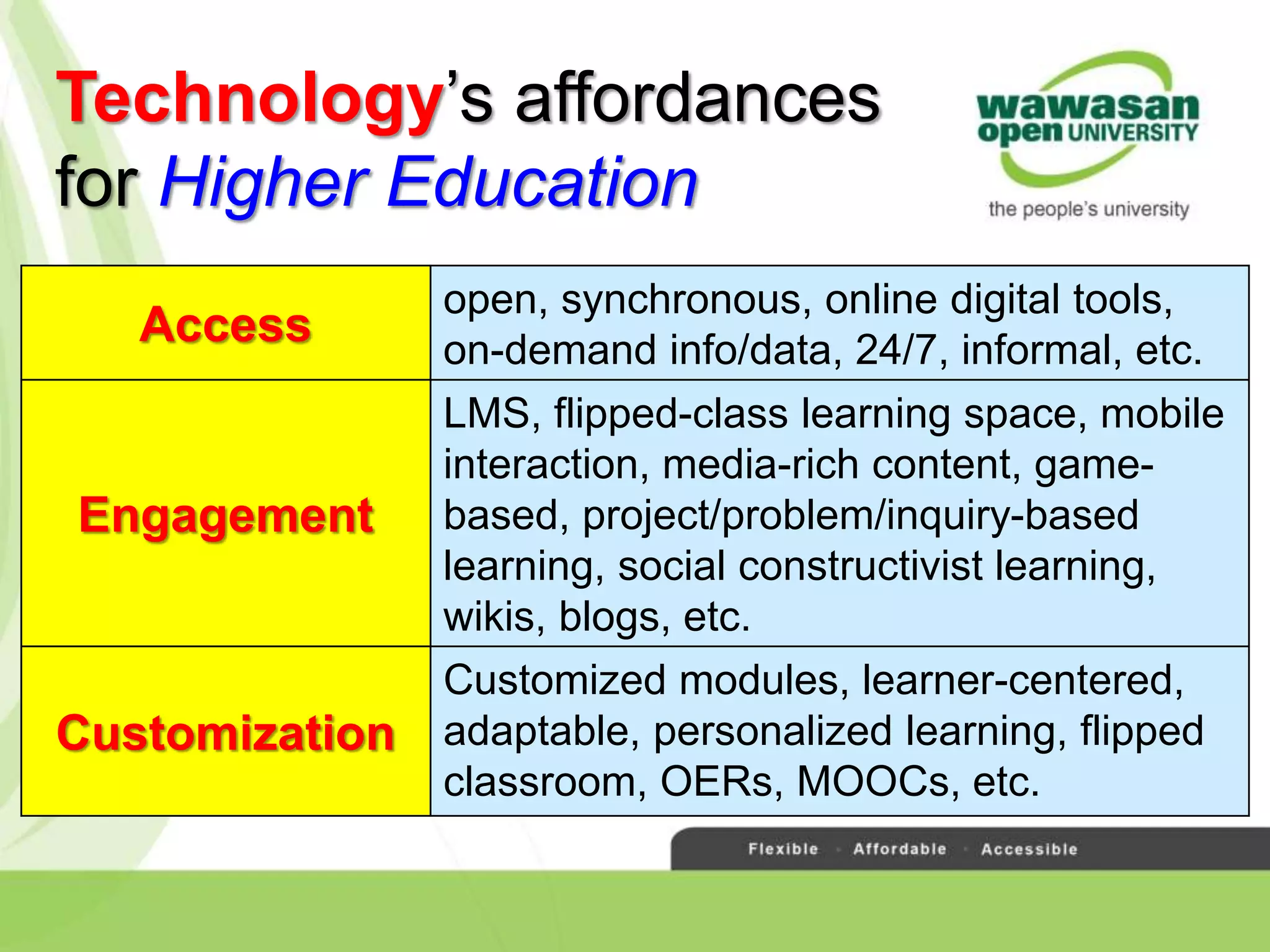
Technology’s affordances
for Higher Education
Access
open, synchronous, online digital tools,
on-demand info/data, 24/7, informal, etc.
Engagement
LMS, flipped-class learning space, mobile
interaction, media-rich content, game-
based, project/problem/inquiry-based
learning, social constructivist learning,
wikis, blogs, etc.
Customization
Customized modules, learner-centered,
adaptable, personalized learning, flipped
classroom, OERs, MOOCs, etc.
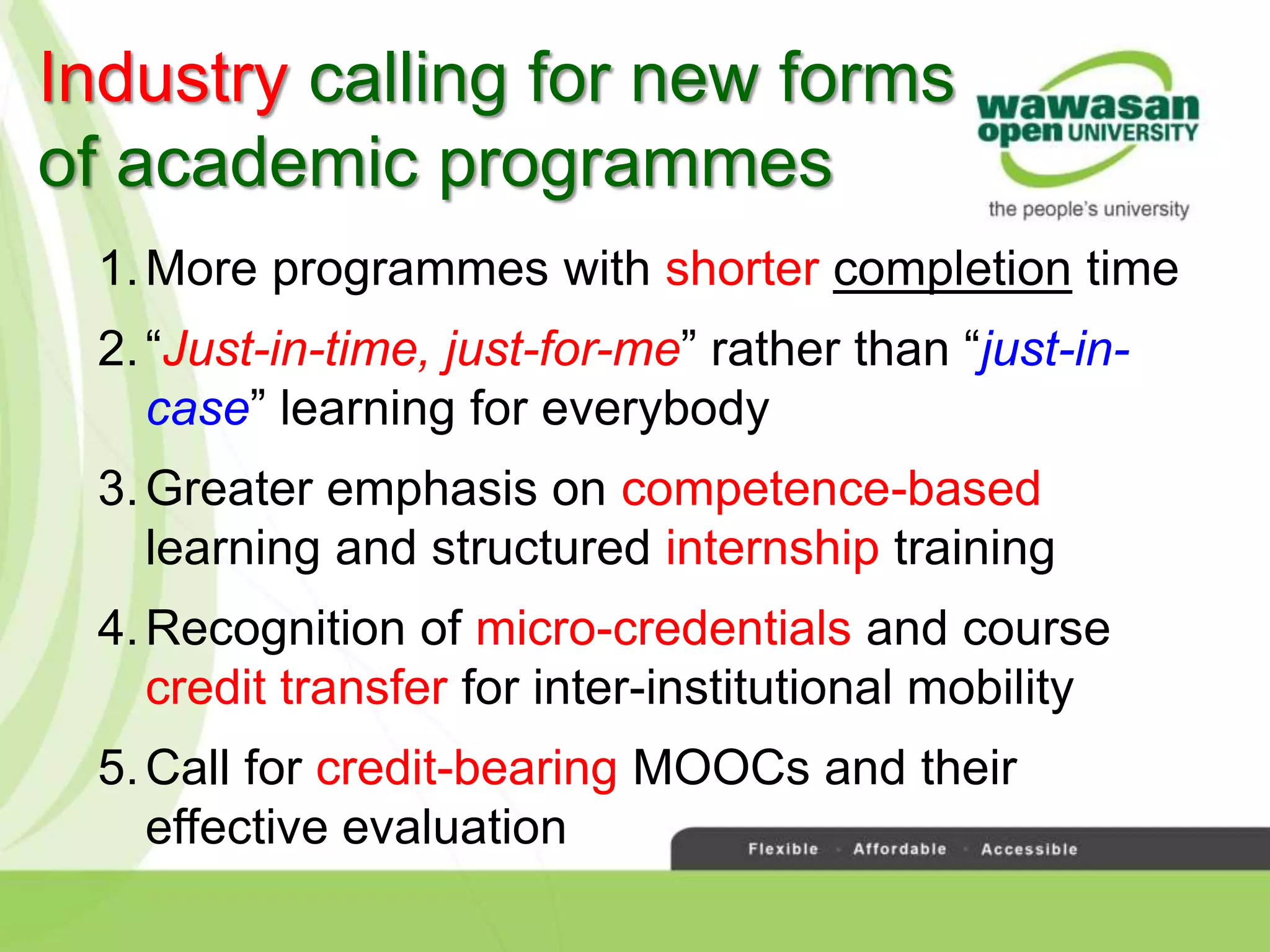
Industry calling for new forms
of academic programmes
1.More programmes with shorter completion time
2.“Just-in-time, just-for-me” rather than “just-in-
case” learning for everybody
3.Greater emphasis on competence-based
learning and structured internship training
4.Recognition of micro-credentials and course
credit transfer for inter-institutional mobility
5.Call for credit-bearing MOOCs and their
effective evaluation
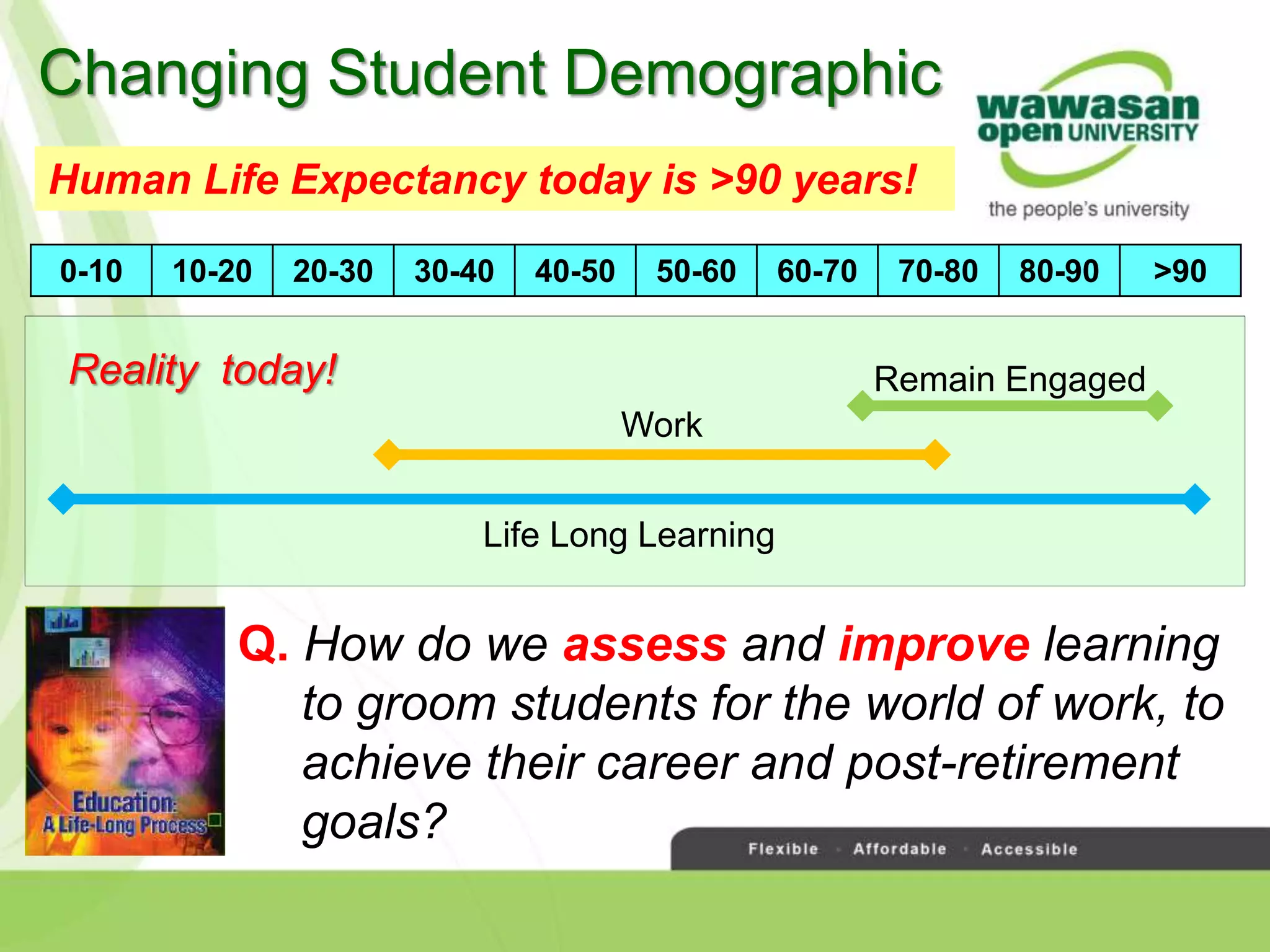
0-10 10-20 20-30 30-40 40-50 50-60 60-70 70-80 80-90 >90
Changing Student Demographic
Human Life Expectancy today is >90 years!
Life Long Learning
Work
Remain EngagedReality today!
Q. How do we assess and improve learning
to groom students for the world of work, to
achieve their career and post-retirement
goals?
What’s happening in higher
education today?
1. Changing student demographic
2. The quest for contemporary knowledge and wider
skill sets is opening up learning
3. Acceptance, hence commitment to blended,
online, technology-enhanced learning
4. Transition to flipped classroom teaching and
blended learning gives students more
opportunities for personalized learning and
competence building
1.What evidence do you have that your students
are achieving the desired learning outcomes?
2.Are the stated learning outcomes appropriate to
your programs and courses?
3.What measures and assessment management
system do you use? How efficient are these?
4.To what extent do you analyze and apply the
derived info to address deficiencies in teaching
and learning for accountability and accreditation
purposes?
We should now be asking…
What outcomes do you
measure for CPD-type
training courses?
1. Skills attainment
2. Workplace application
3. Individual behaviour change
4. Team behavioural change
5. Meeting goals or targets
The need for
reliable
assessment
tools and
validation
processes for
assurance of
learning (AoL)
Some examples…
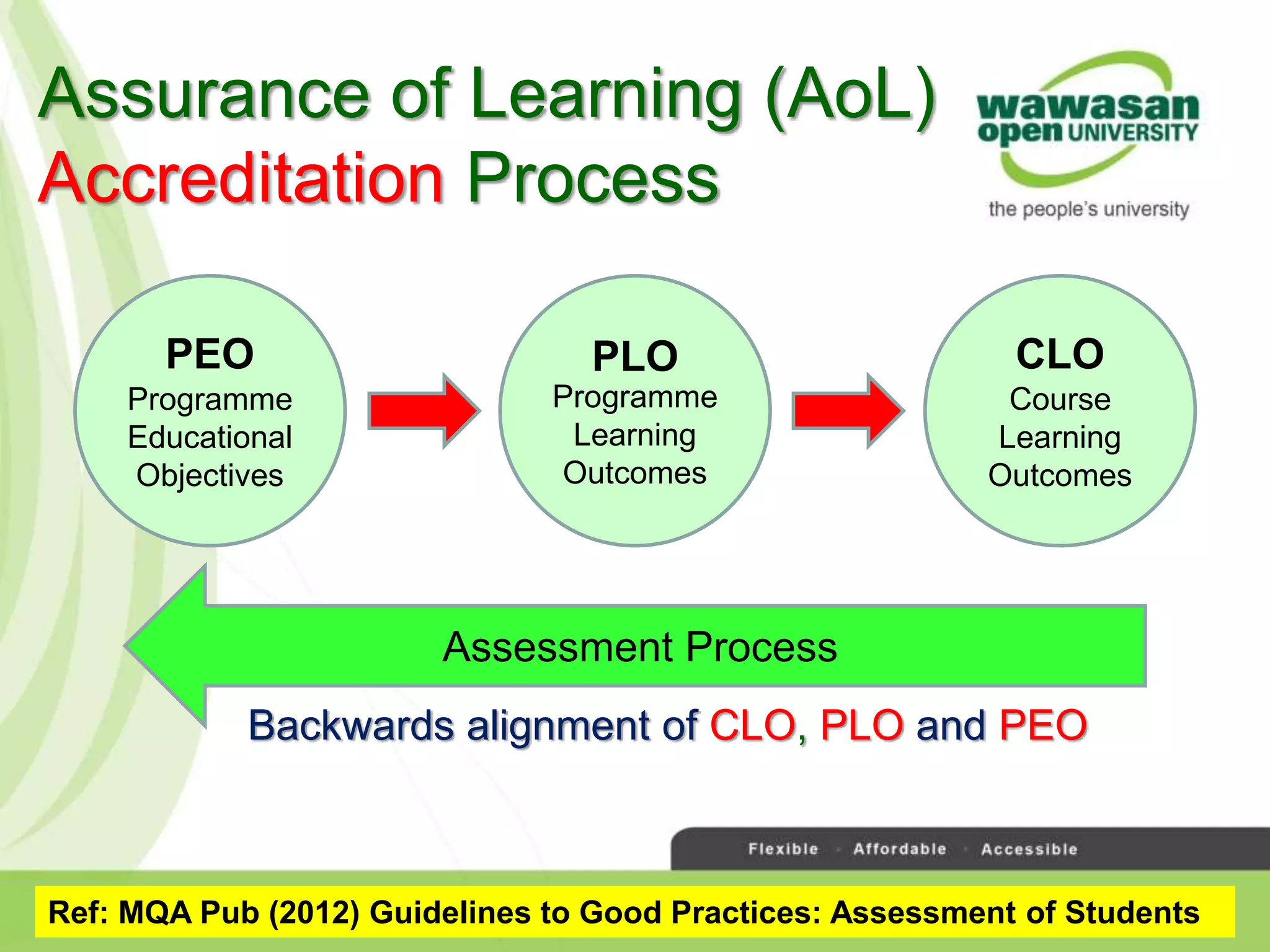
Assurance of Learning (AoL)
Accreditation Process
Ref: MQA Pub (2012) Guidelines to Good Practices: Assessment of Students
Assessment Process
PEO
Programme
Educational
Objectives
PLO
Programme
Learning
Outcomes
CLO
Course
Learning
Outcomes
Backwards alignment of CLO, PLO and PEO
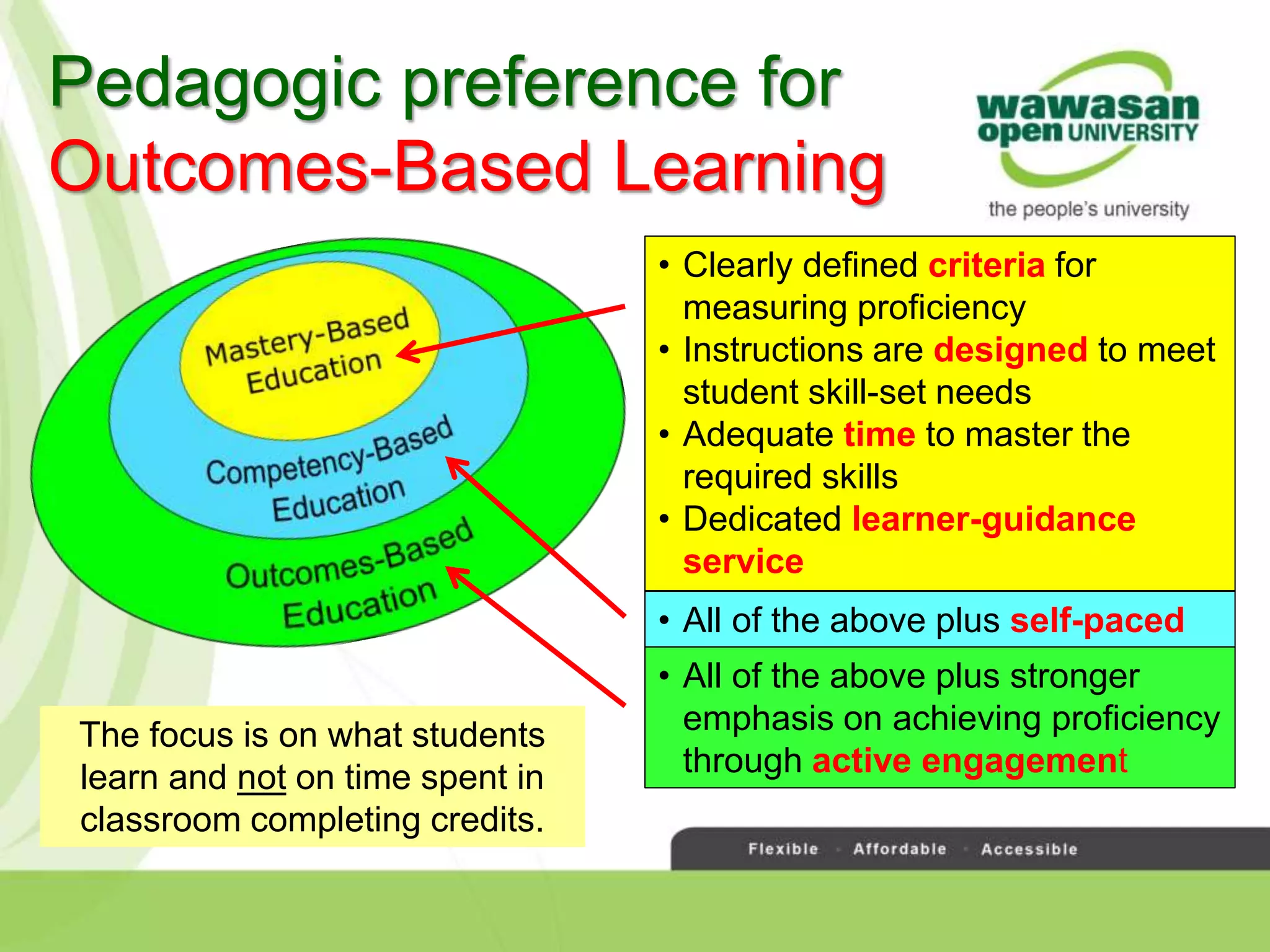
Pedagogic preference for
Outcomes-Based Learning
• Clearly defined criteria for
measuring proficiency
• Instructions are designed to meet
student skill-set needs
• Adequate time to master the
required skills
• Dedicated learner-guidance
service
• All of the above plus self-paced
• All of the above plus stronger
emphasis on achieving proficiency
through active engagement
The focus is on what students
learn and not on time spent in
classroom completing credits.
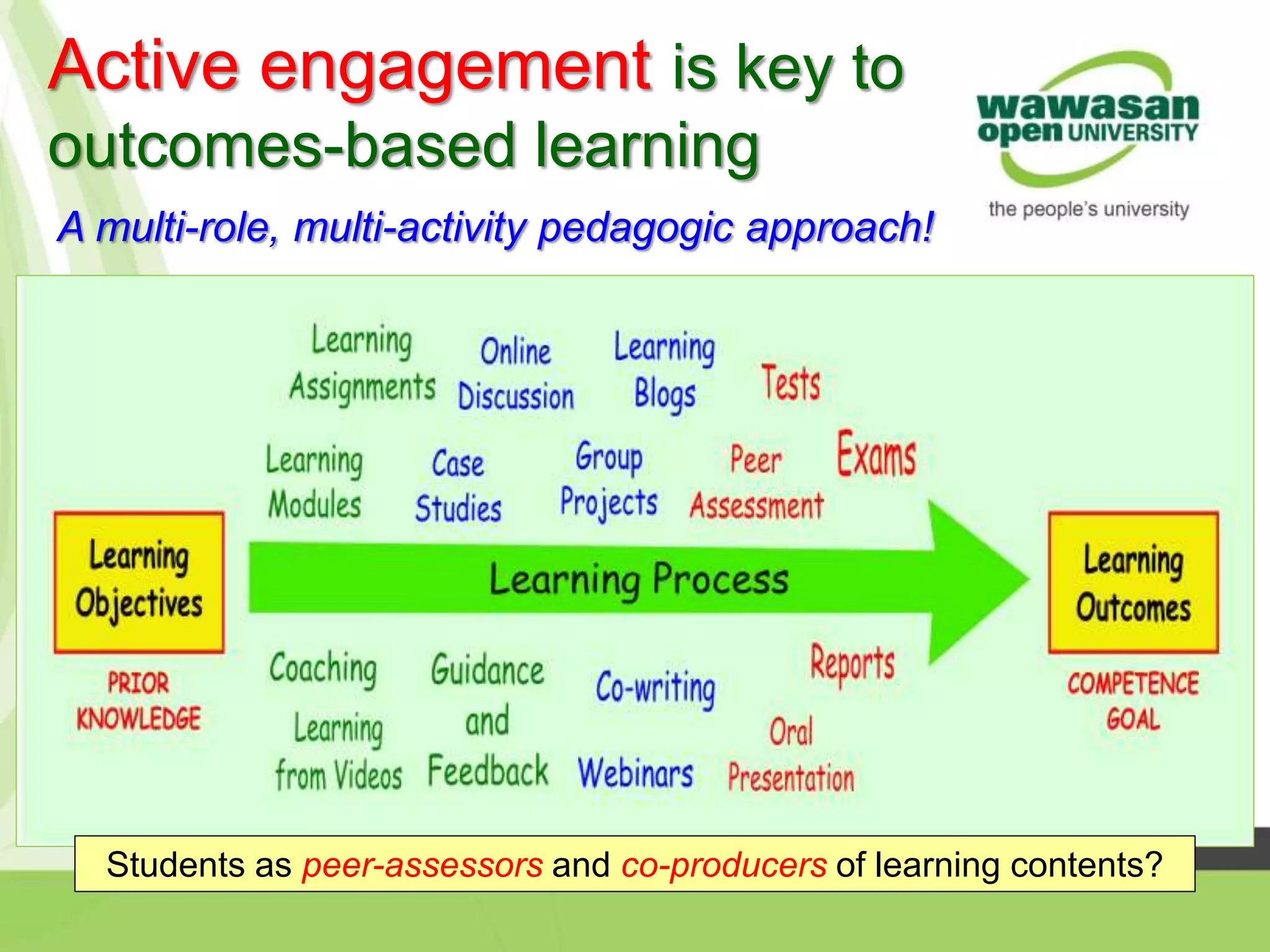
Active engagement is key to
outcomes-based learning
Students as peer-assessors and co-producers of learning contents?
A multi-role, multi-activity pedagogic approach!
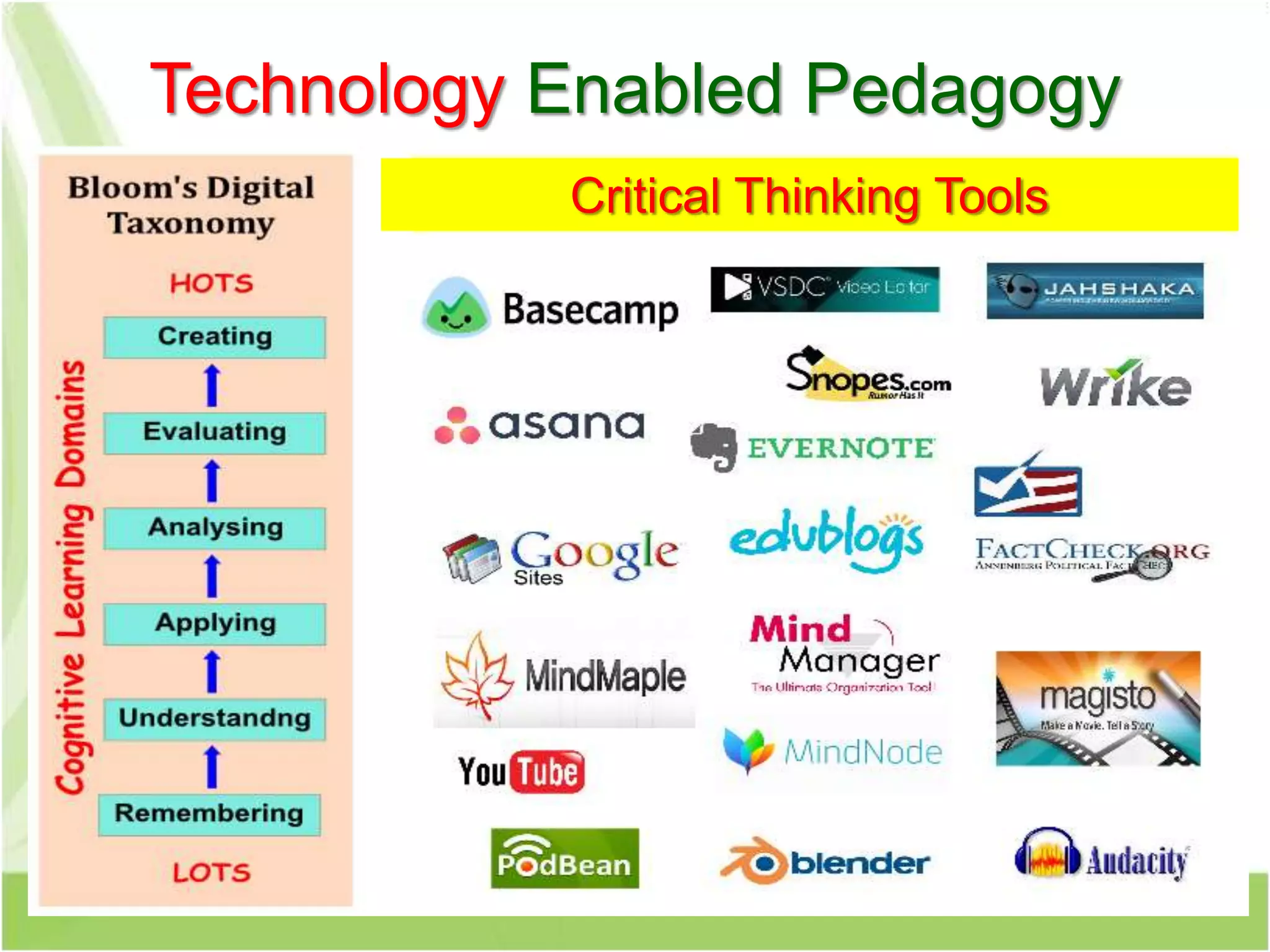
Technology Enabled Pedagogy
Critical Thinking Tools
• Impact from the redesigning of learning space
• Benchmarks for measuring learning outcomes
• Criteria and rubrics for evaluation of programme
and course learning outcomes
• Quality-assured protocols and standards for
accreditation, certification and credentialing
• Availability of data capture tools and Assessment
Management System (AMS) software
Some assessment
related challenges
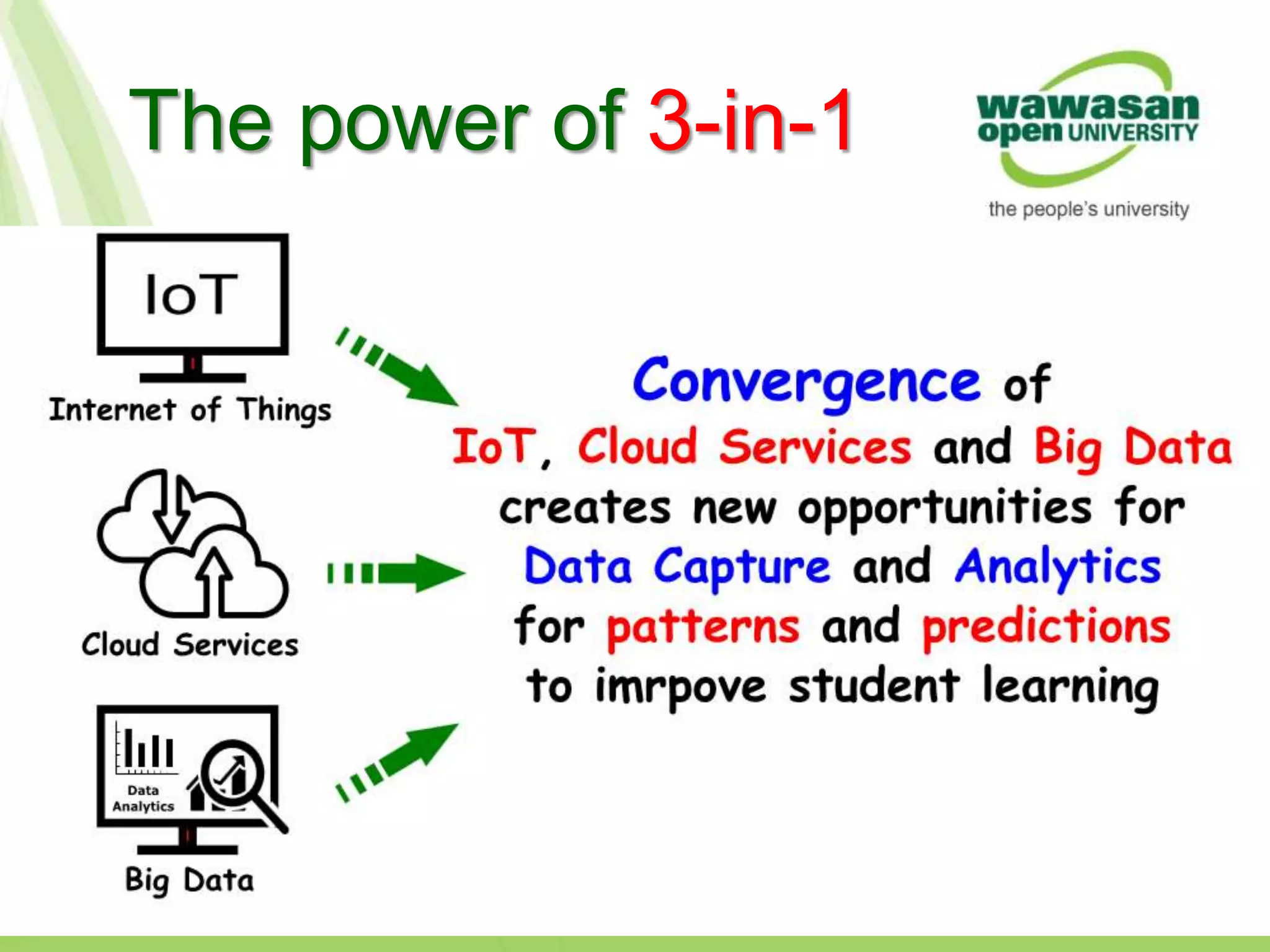
The power of 3-in-1
• A framework to recognize and validate learning
• A system that is objective, with in-built record
tracking to provide instantiated evidence of
student performance achievement
• Ability to map goals and learning outcomes,
manage online testing, generate assessment
rubrics, reports and flag alerts, etc.
• Ease of use, scalability and inter-operability, etc.
Assessment Management
System (AMS)
Technology-enabled tools
for assessment of learning
1. Online polling and quizzing tools
2. Adaptive learning (Carnegie Learning; Knewton;
Acrobatiq)
3. Algorithmic feedback tools (Turnitin; Grammarly)
4. Assessment Management Systems (Centrieva;
Ellucian; AEFIS; etc.)
5. Online exam proctoring service (e.g. Proctorio)
Role of stakeholders in
assessment
• Students must know and track his/her study
pathway diligently from admission to graduation
• Faculty must be able to design assessment
rubrics that are aligned with the curriculum,
quality standards and accreditation protocol
• Institution needs to know how programmes are
performing, benchmarked, updated and primed
for successful accreditation reviews
Assessment of Holistic Student Learning in Open Universities

Assessment of Holistic Student Learning in Open Universities

  • 1.
    28 September 2017 by Prof.Dato’ Dr. Ho Sinn Chye Vice-Chancellor & CEO Assessment for Holistic Student Learning in Open Universities
  • 2.
    The next transformationin higher education is focused on Assessment To cope with an emerging Pedagogy that is being impacted by technology, industry demand and changing student demographic!
  • 3.
    Technology’s affordances for HigherEducation Access open, synchronous, online digital tools, on-demand info/data, 24/7, informal, etc. Engagement LMS, flipped-class learning space, mobile interaction, media-rich content, game- based, project/problem/inquiry-based learning, social constructivist learning, wikis, blogs, etc. Customization Customized modules, learner-centered, adaptable, personalized learning, flipped classroom, OERs, MOOCs, etc.
  • 4.
    Industry calling fornew forms of academic programmes 1.More programmes with shorter completion time 2.“Just-in-time, just-for-me” rather than “just-in- case” learning for everybody 3.Greater emphasis on competence-based learning and structured internship training 4.Recognition of micro-credentials and course credit transfer for inter-institutional mobility 5.Call for credit-bearing MOOCs and their effective evaluation
  • 5.
    0-10 10-20 20-3030-40 40-50 50-60 60-70 70-80 80-90 >90 Changing Student Demographic Human Life Expectancy today is >90 years! Life Long Learning Work Remain EngagedReality today! Q. How do we assess and improve learning to groom students for the world of work, to achieve their career and post-retirement goals?
  • 6.
    What’s happening inhigher education today? 1. Changing student demographic 2. The quest for contemporary knowledge and wider skill sets is opening up learning 3. Acceptance, hence commitment to blended, online, technology-enhanced learning 4. Transition to flipped classroom teaching and blended learning gives students more opportunities for personalized learning and competence building
  • 7.
    1.What evidence doyou have that your students are achieving the desired learning outcomes? 2.Are the stated learning outcomes appropriate to your programs and courses? 3.What measures and assessment management system do you use? How efficient are these? 4.To what extent do you analyze and apply the derived info to address deficiencies in teaching and learning for accountability and accreditation purposes? We should now be asking…
  • 8.
    What outcomes doyou measure for CPD-type training courses? 1. Skills attainment 2. Workplace application 3. Individual behaviour change 4. Team behavioural change 5. Meeting goals or targets The need for reliable assessment tools and validation processes for assurance of learning (AoL) Some examples…
  • 9.
    Assurance of Learning(AoL) Accreditation Process Ref: MQA Pub (2012) Guidelines to Good Practices: Assessment of Students Assessment Process PEO Programme Educational Objectives PLO Programme Learning Outcomes CLO Course Learning Outcomes Backwards alignment of CLO, PLO and PEO
  • 10.
    Pedagogic preference for Outcomes-BasedLearning • Clearly defined criteria for measuring proficiency • Instructions are designed to meet student skill-set needs • Adequate time to master the required skills • Dedicated learner-guidance service • All of the above plus self-paced • All of the above plus stronger emphasis on achieving proficiency through active engagement The focus is on what students learn and not on time spent in classroom completing credits.
  • 11.
    Active engagement iskey to outcomes-based learning Students as peer-assessors and co-producers of learning contents? A multi-role, multi-activity pedagogic approach!
  • 12.
  • 13.
    • Impact fromthe redesigning of learning space • Benchmarks for measuring learning outcomes • Criteria and rubrics for evaluation of programme and course learning outcomes • Quality-assured protocols and standards for accreditation, certification and credentialing • Availability of data capture tools and Assessment Management System (AMS) software Some assessment related challenges
  • 14.
  • 15.
    • A frameworkto recognize and validate learning • A system that is objective, with in-built record tracking to provide instantiated evidence of student performance achievement • Ability to map goals and learning outcomes, manage online testing, generate assessment rubrics, reports and flag alerts, etc. • Ease of use, scalability and inter-operability, etc. Assessment Management System (AMS)
  • 16.
    Technology-enabled tools for assessmentof learning 1. Online polling and quizzing tools 2. Adaptive learning (Carnegie Learning; Knewton; Acrobatiq) 3. Algorithmic feedback tools (Turnitin; Grammarly) 4. Assessment Management Systems (Centrieva; Ellucian; AEFIS; etc.) 5. Online exam proctoring service (e.g. Proctorio)
  • 17.
    Role of stakeholdersin assessment • Students must know and track his/her study pathway diligently from admission to graduation • Faculty must be able to design assessment rubrics that are aligned with the curriculum, quality standards and accreditation protocol • Institution needs to know how programmes are performing, benchmarked, updated and primed for successful accreditation reviews

Editor's Notes