Lecture 7.   Other Nanotechnology Applications
             DNA sequencing
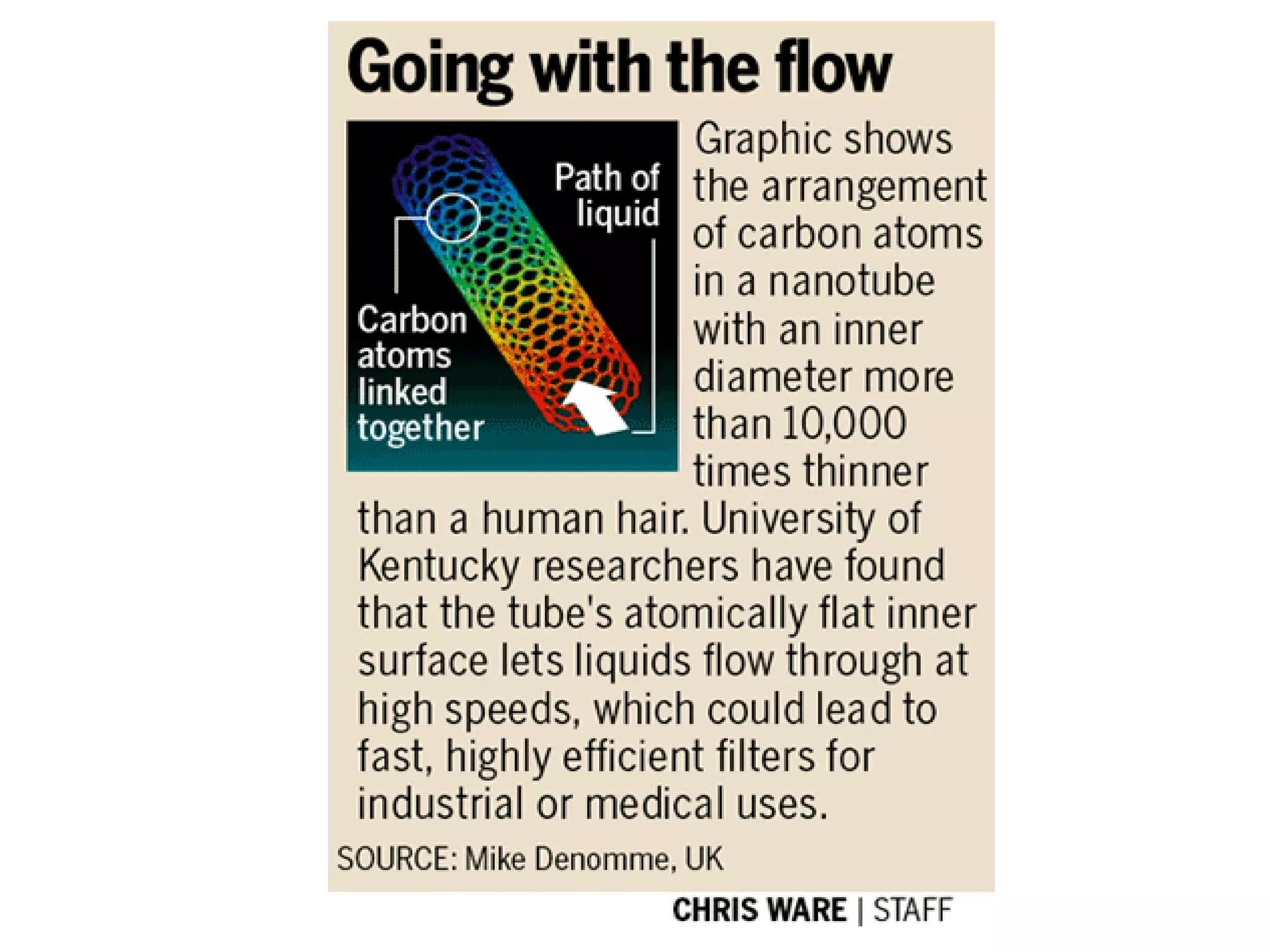
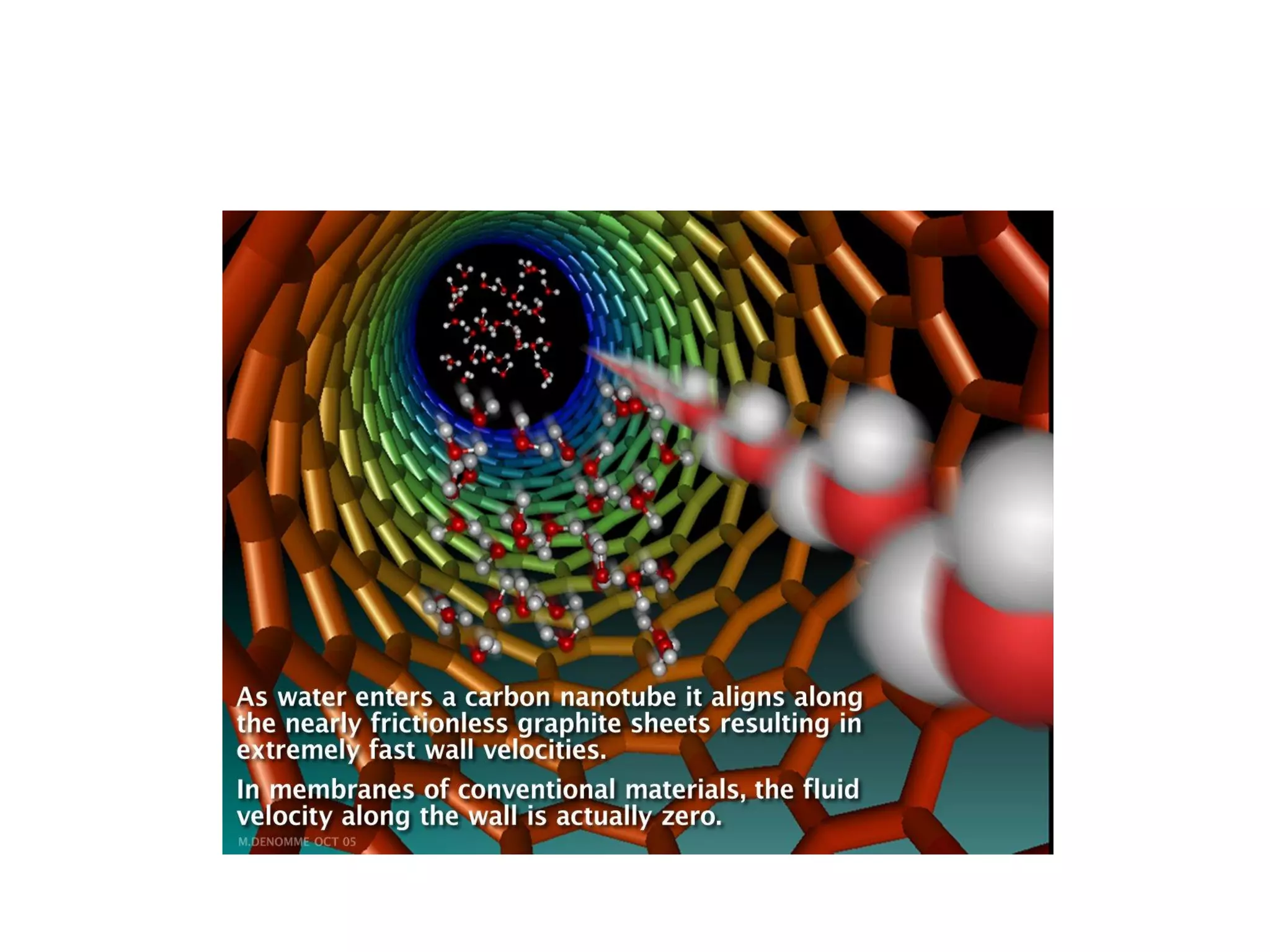
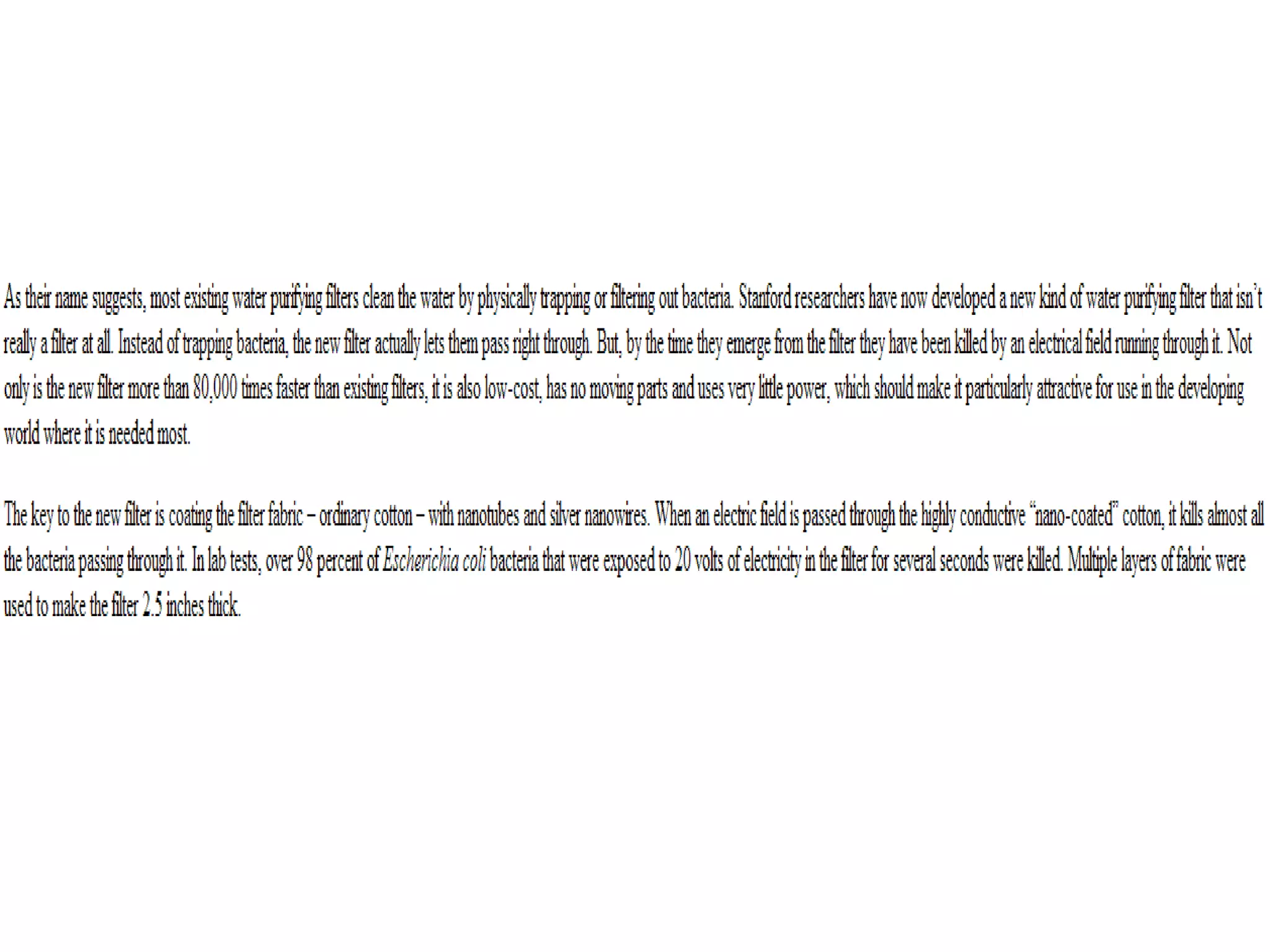
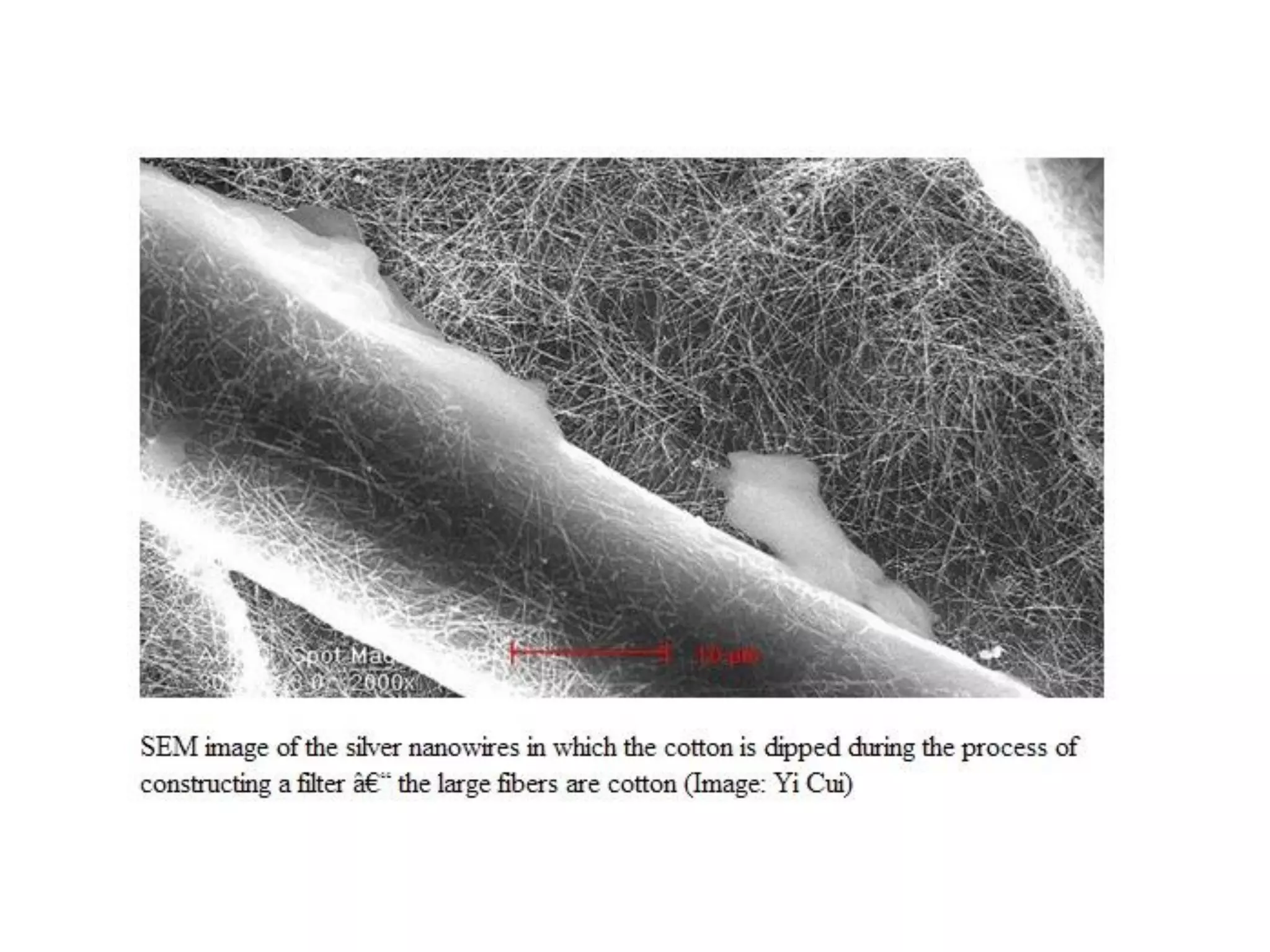
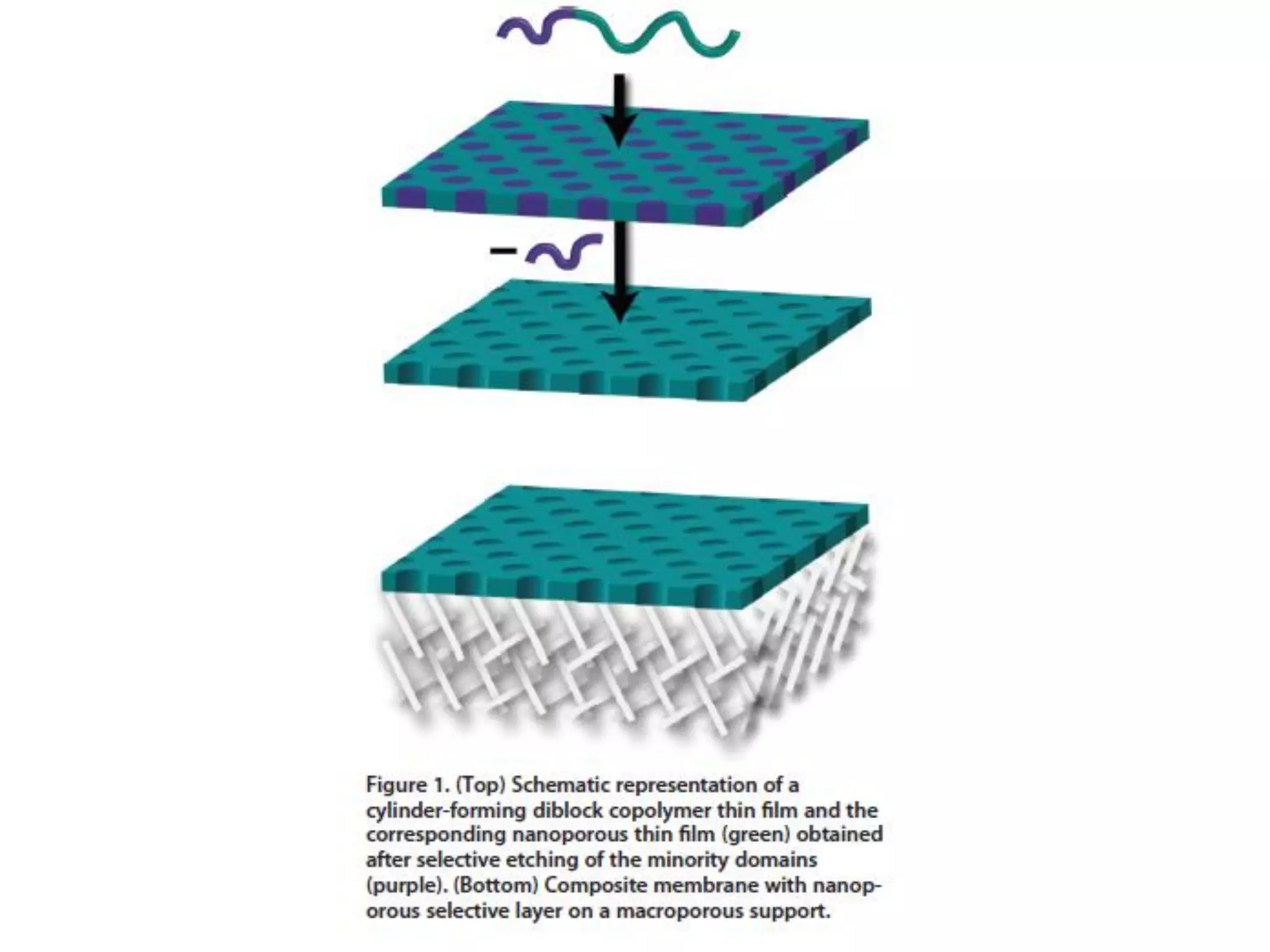
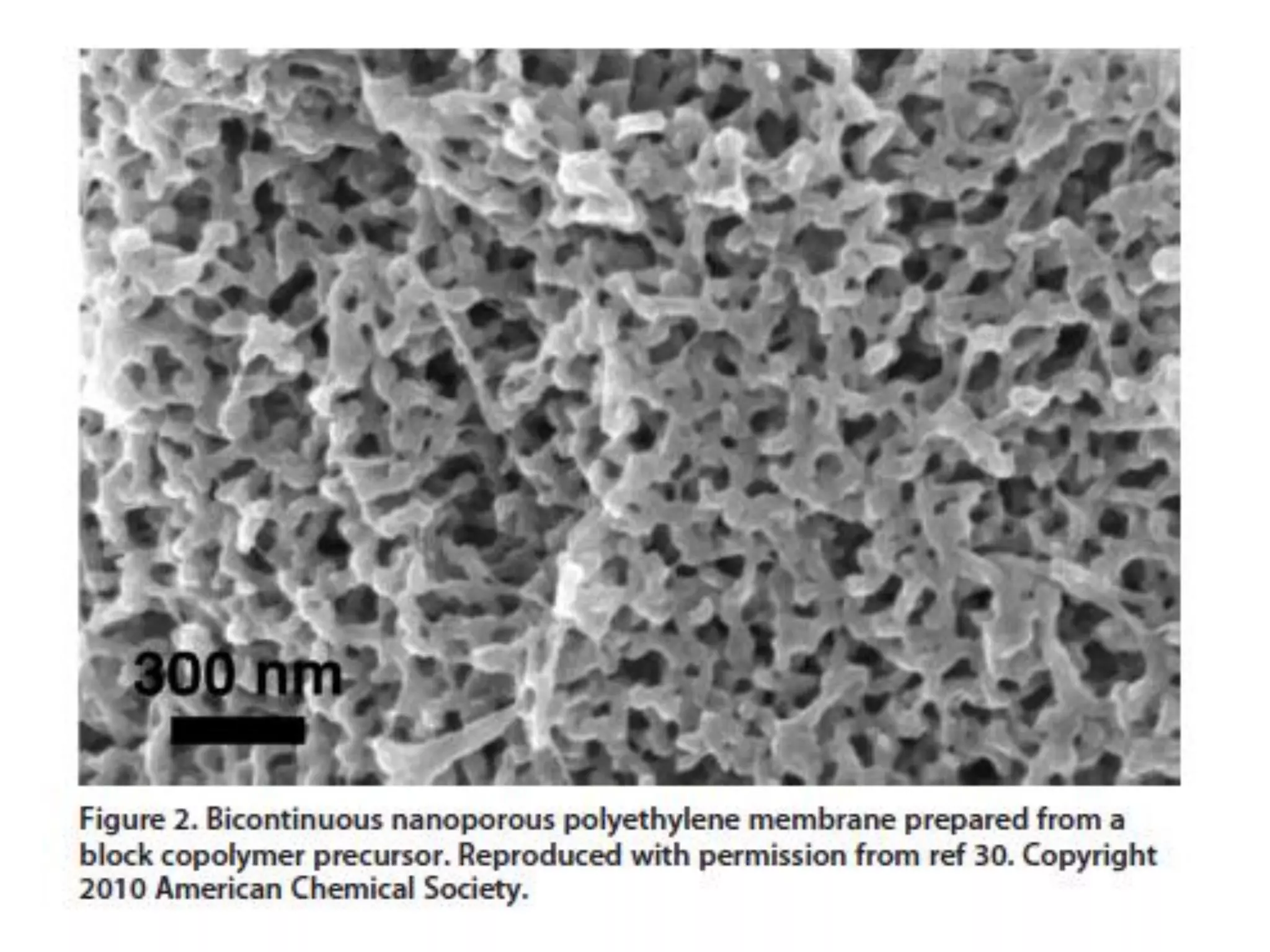
             Filtration
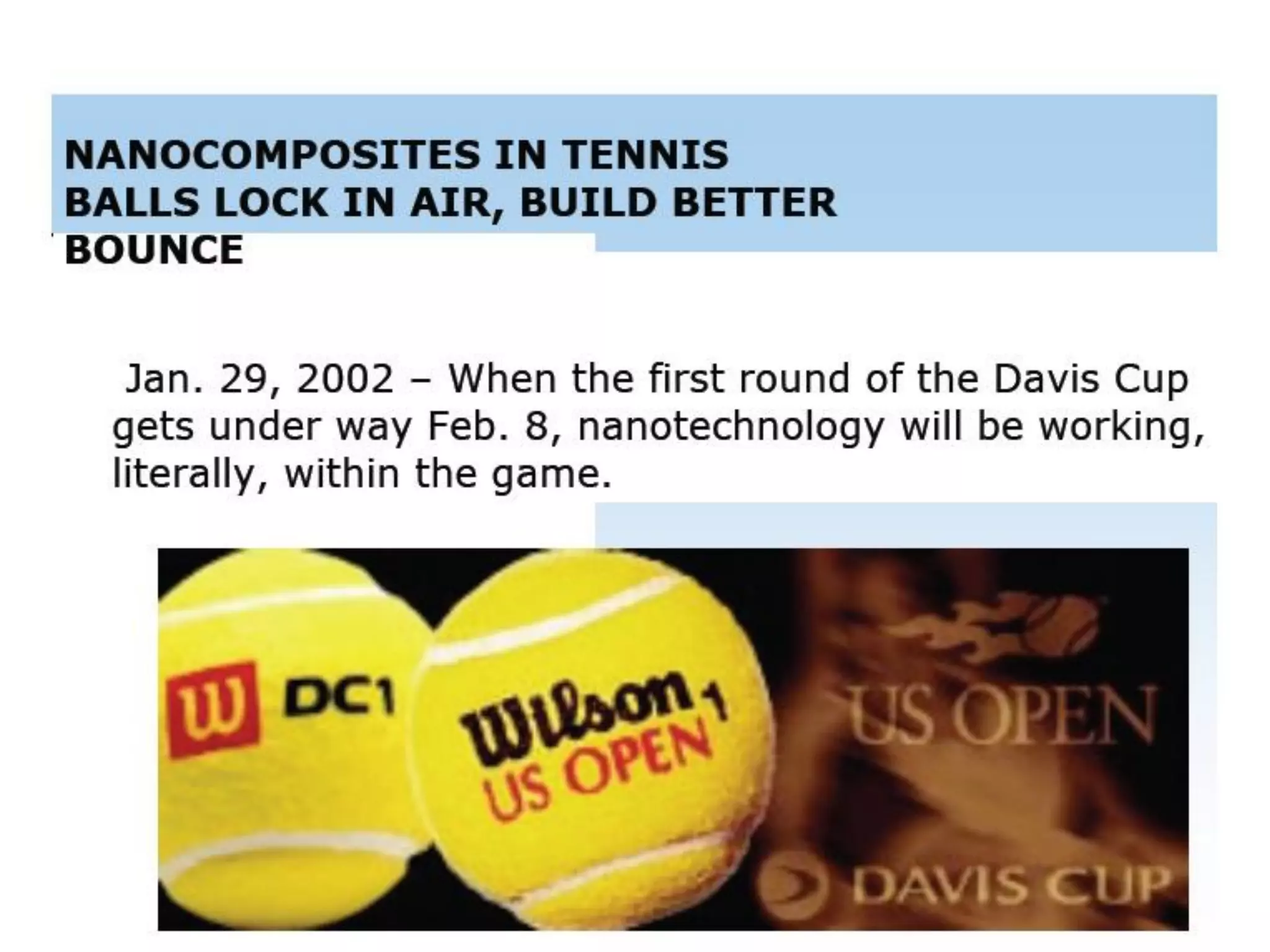
             Clothing and Sports
             Composites
             Other Nanomedicine Applications and Opportunities
             Other Nanotemplate-based Applications:
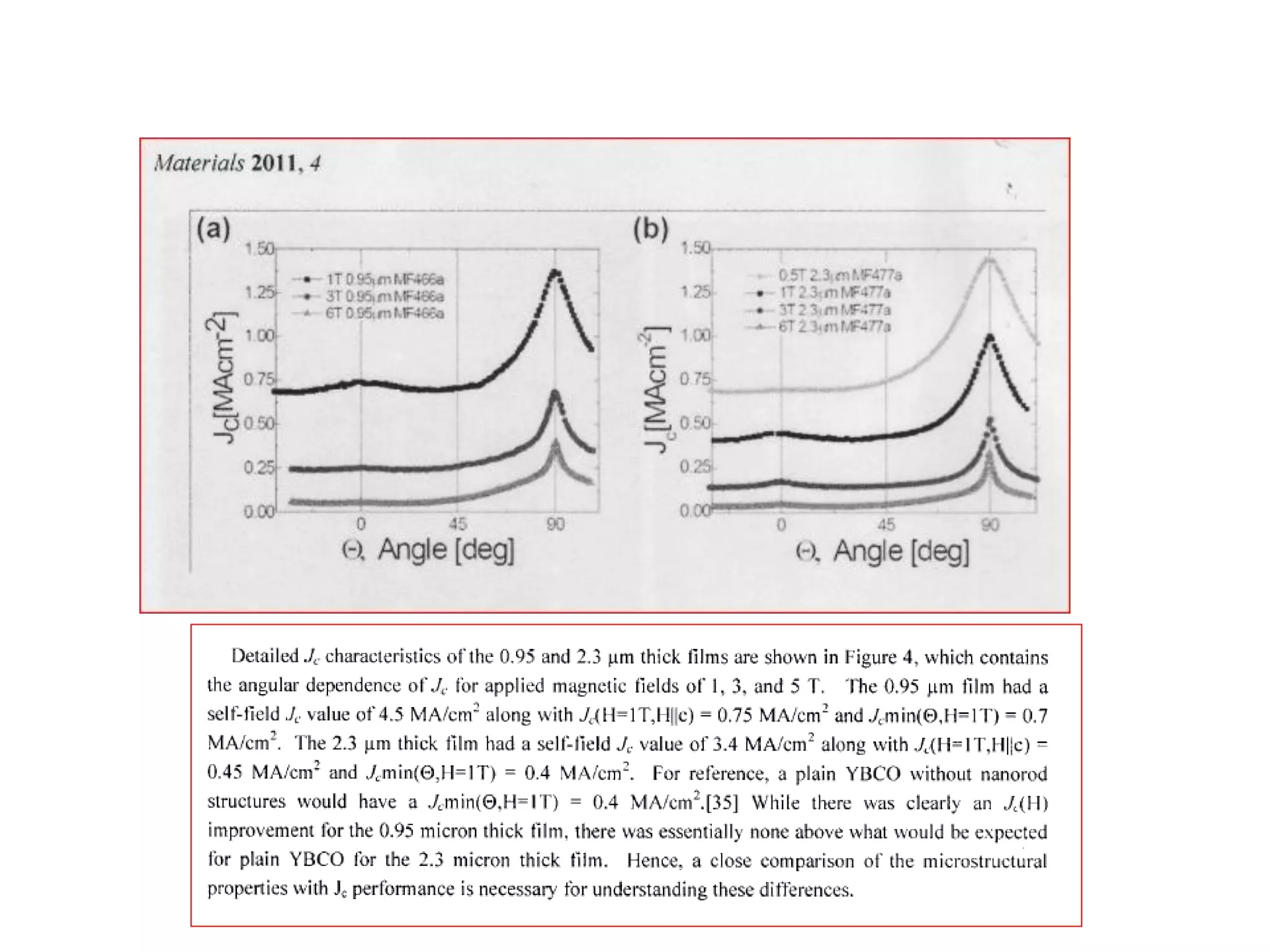
             Superconductors
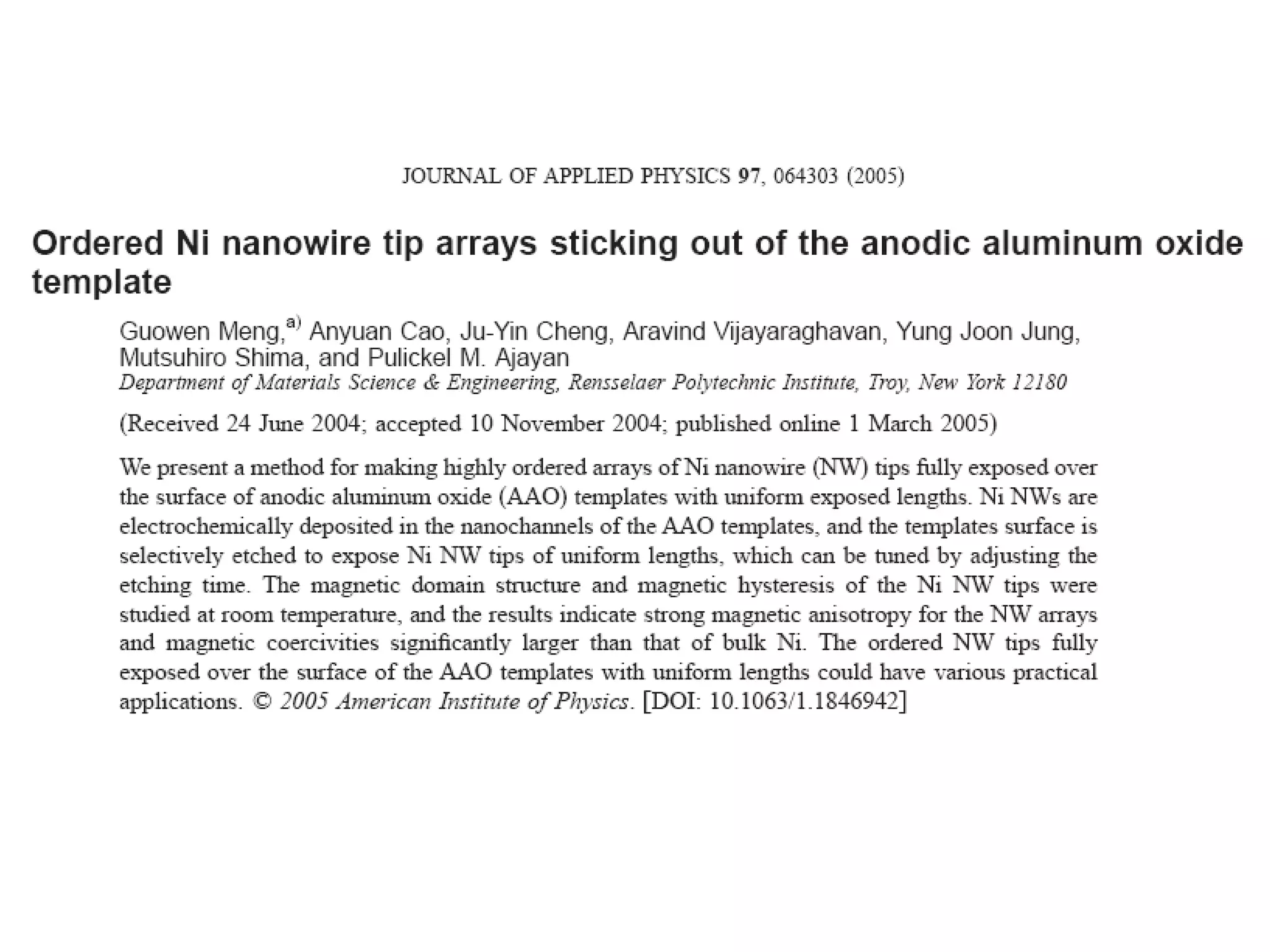
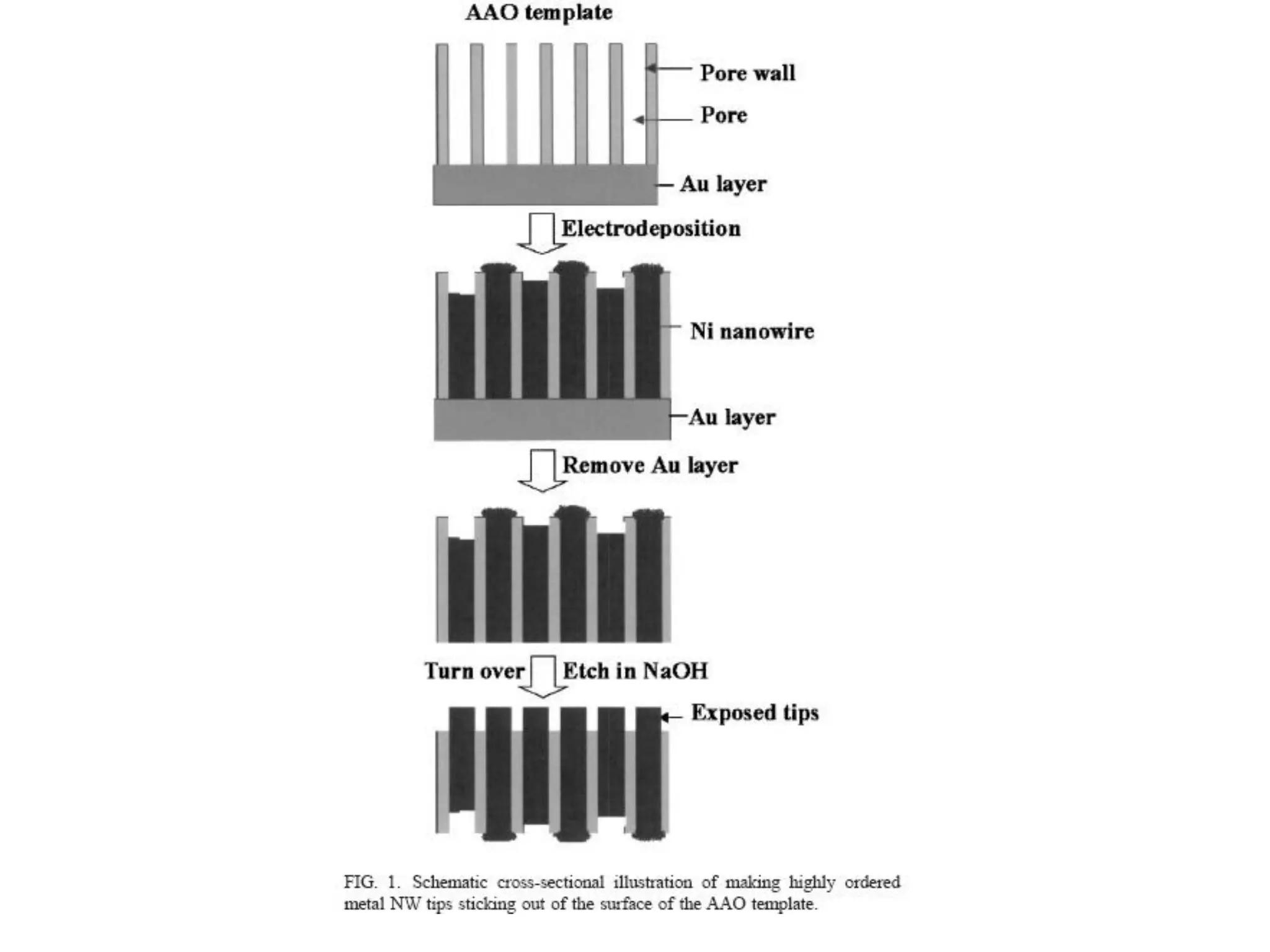
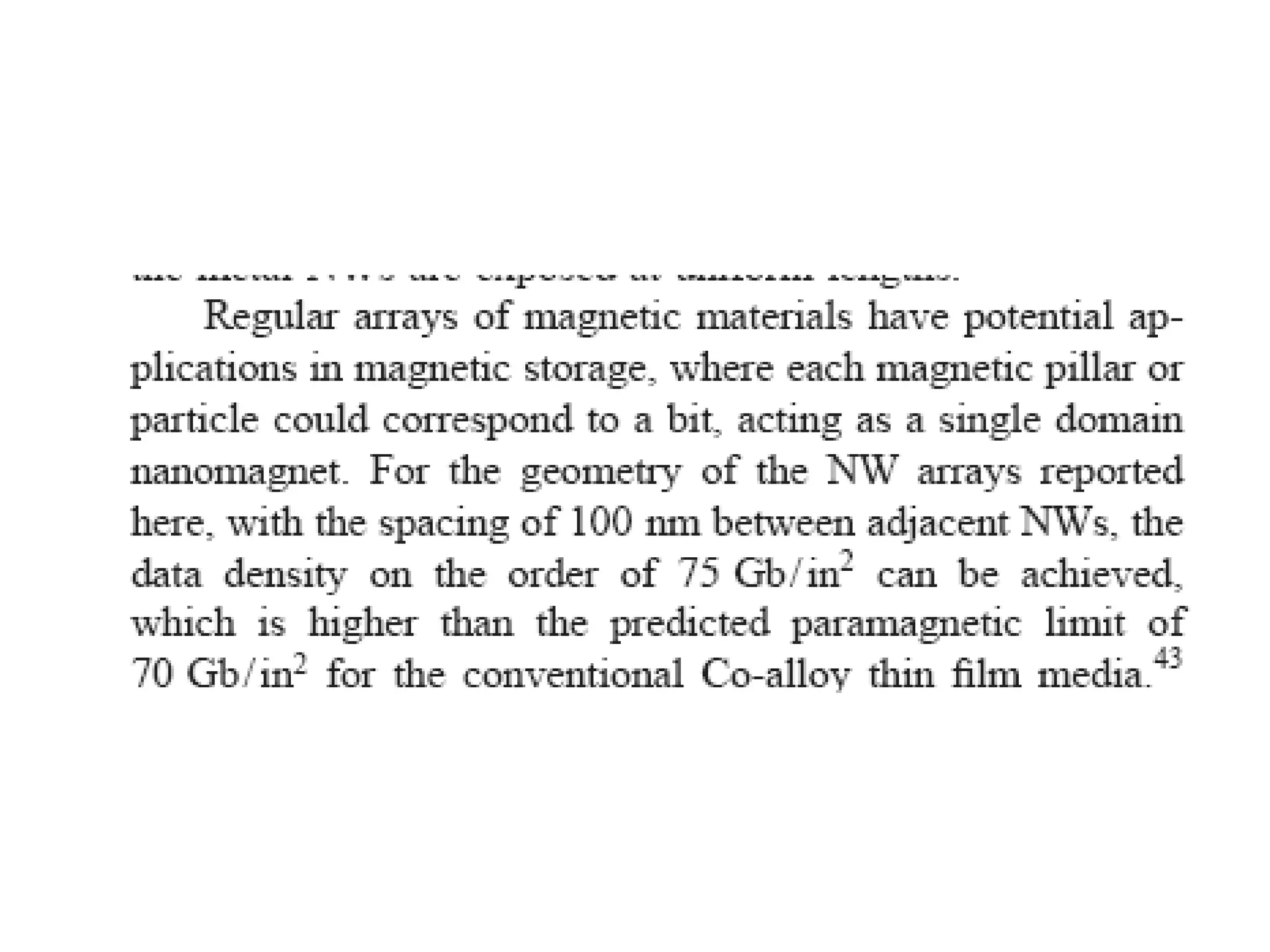
             Magnetic Nanowires
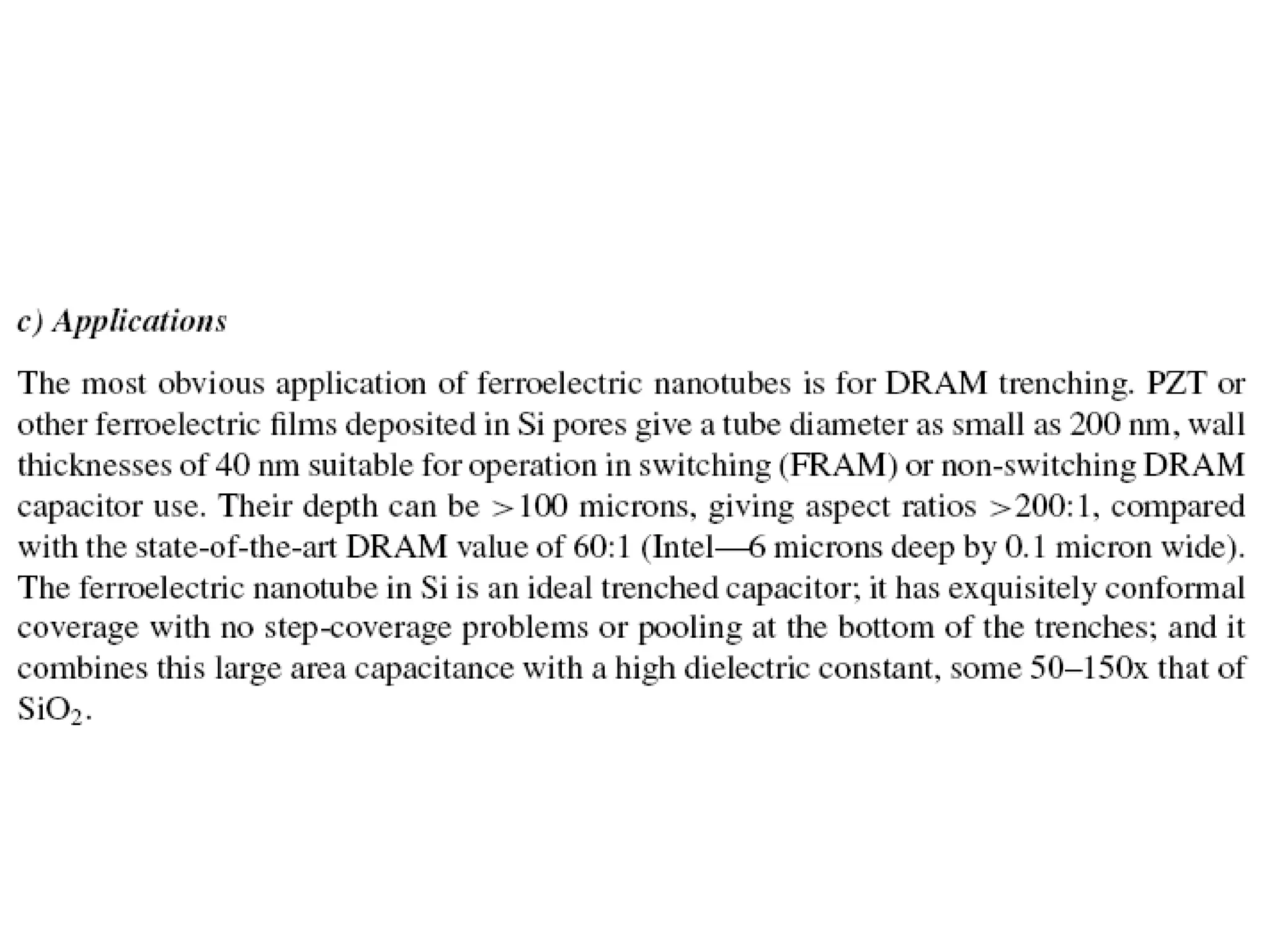
             Ferroelectrics
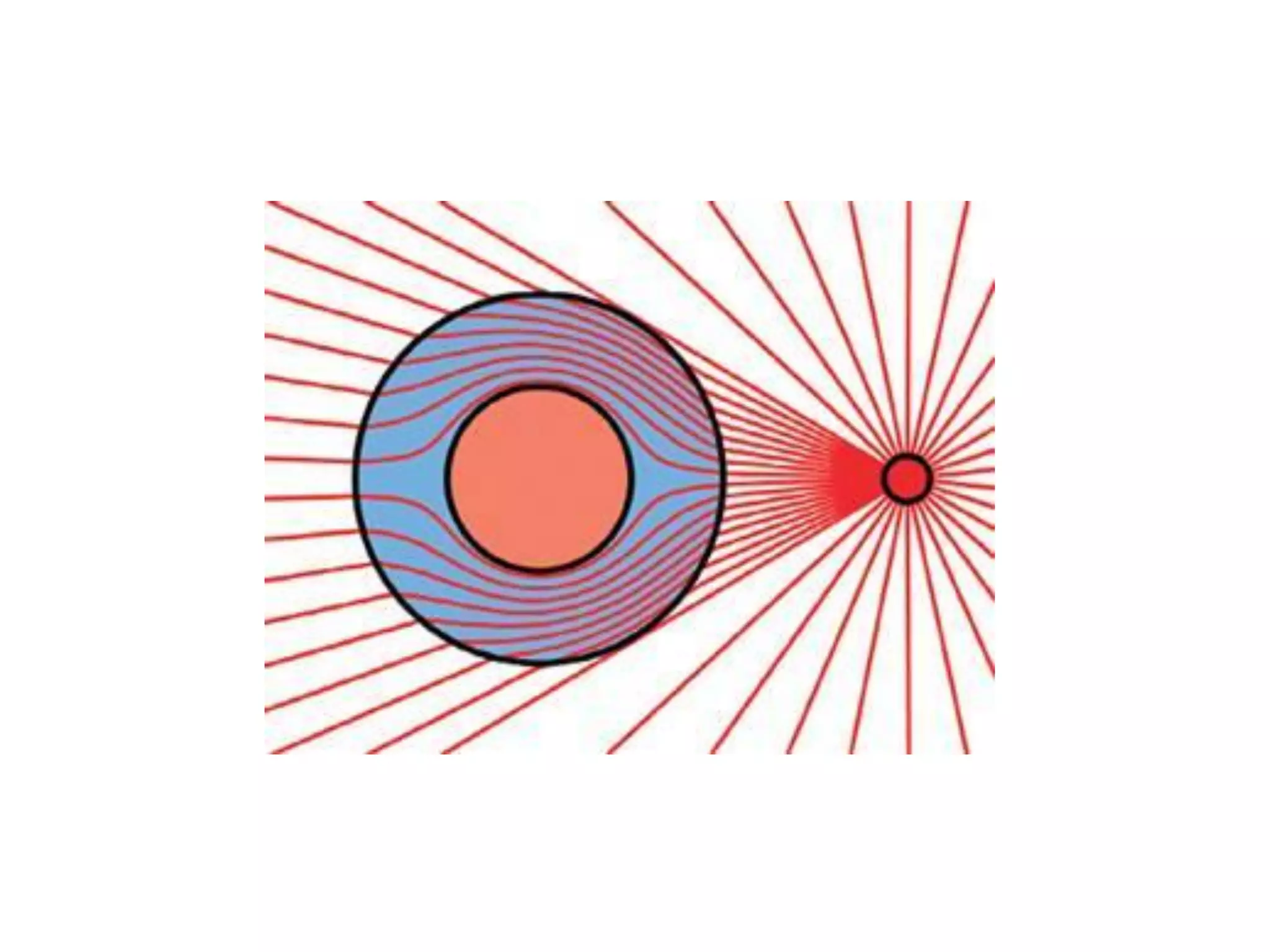
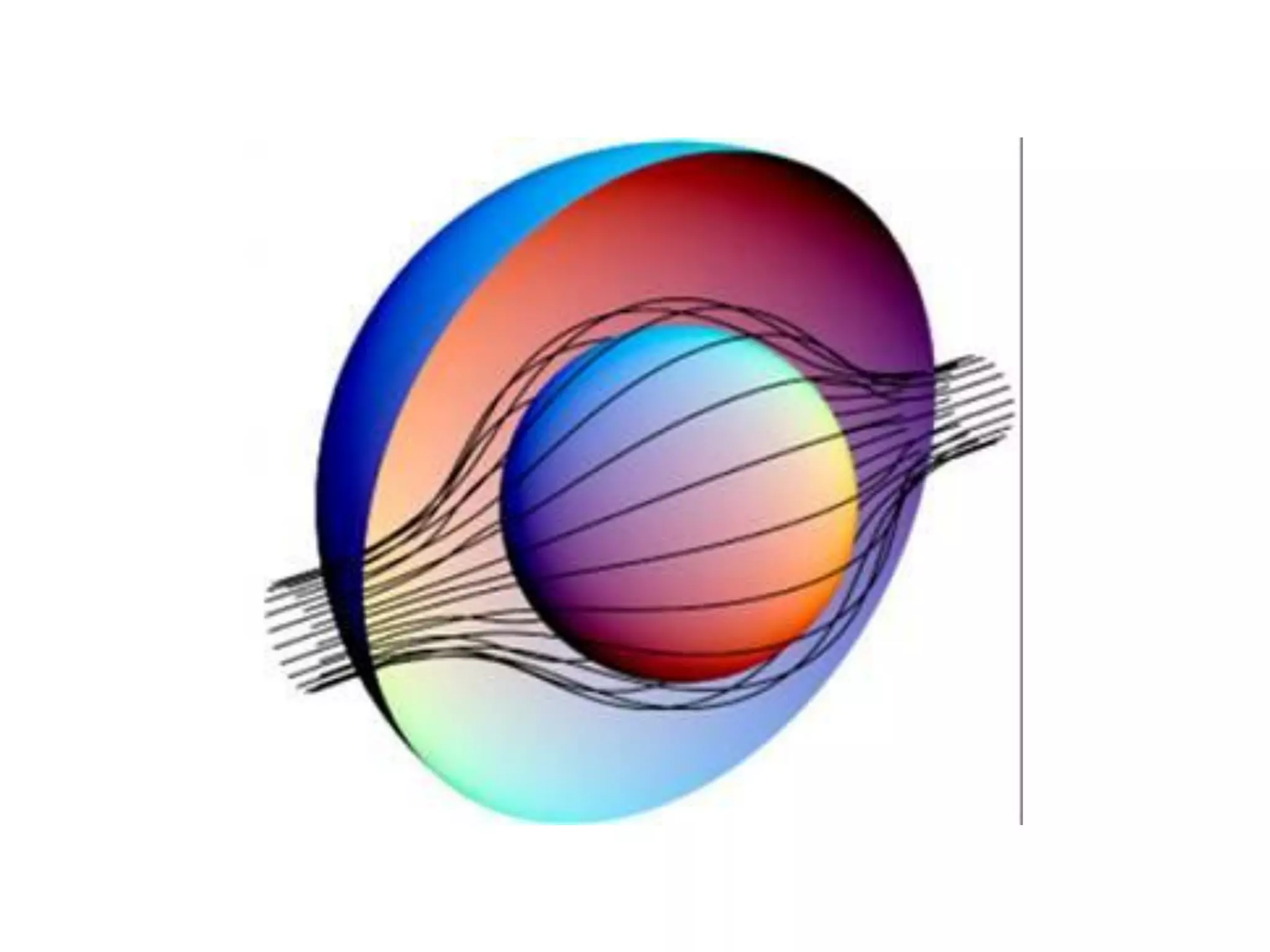
             Dielectric Nanostructures and Cloaking
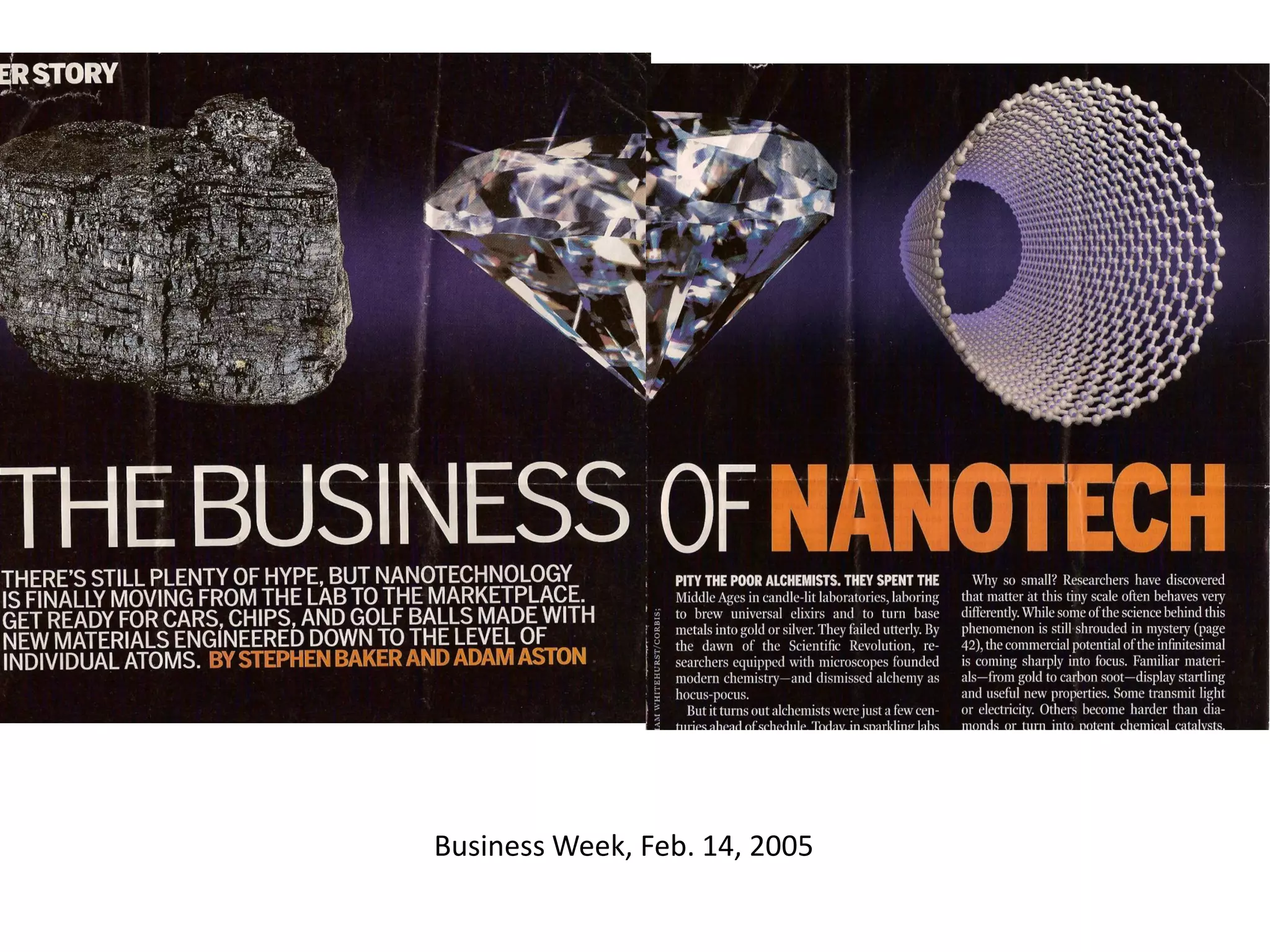
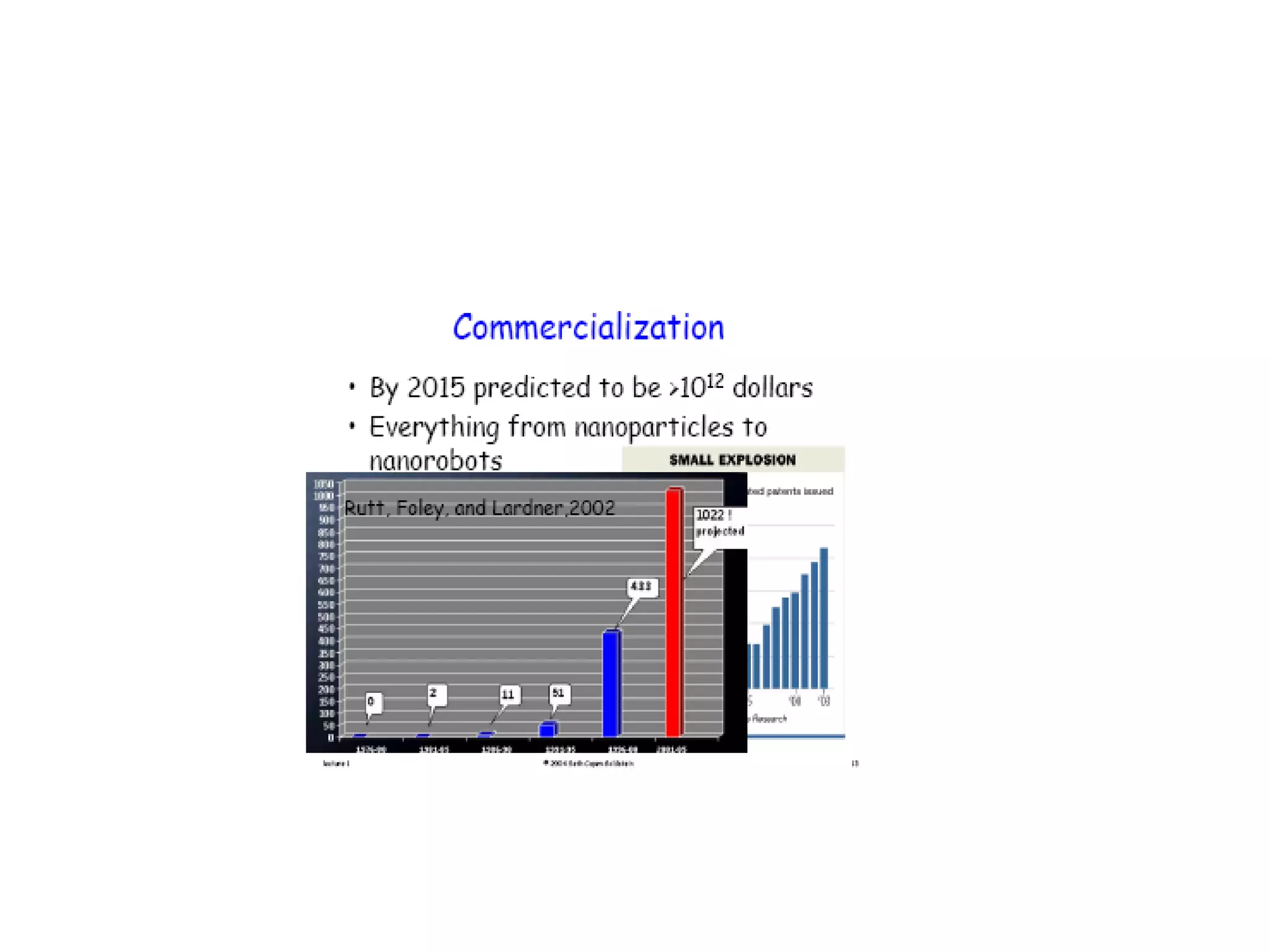
             The Business of Nanotechnology
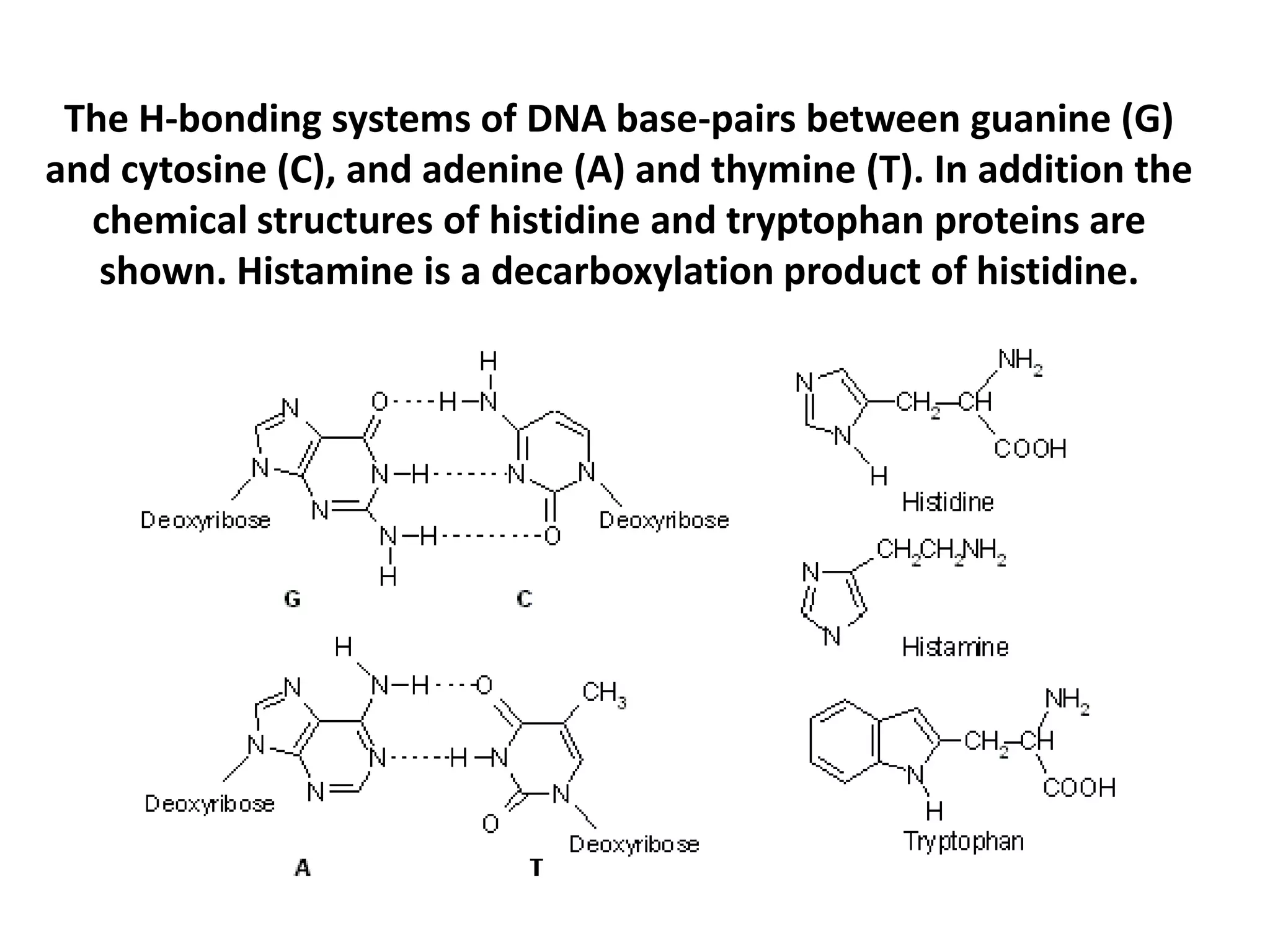
The H-bonding systems of DNA base-pairs between guanine (G)
and cytosine (C), and adenine (A) and thymine (T). In addition the
  chemical structures of histidine and tryptophan proteins are
   shown. Histamine is a decarboxylation product of histidine.
DNA Sequencing
Nanopore Technology
DNA Sequencing is at the center of the Human Genome Project, which promises
to revolutionize the Biomedical Sciences and the treatment of human diseases. NIH
posts proposal solicitations at least twice a year


 Future Sequencing Technologies are Single Molecule Approaches

 *High speed sequencing individual DNA molecules electronically by a Solid-
 state Nanopore based device
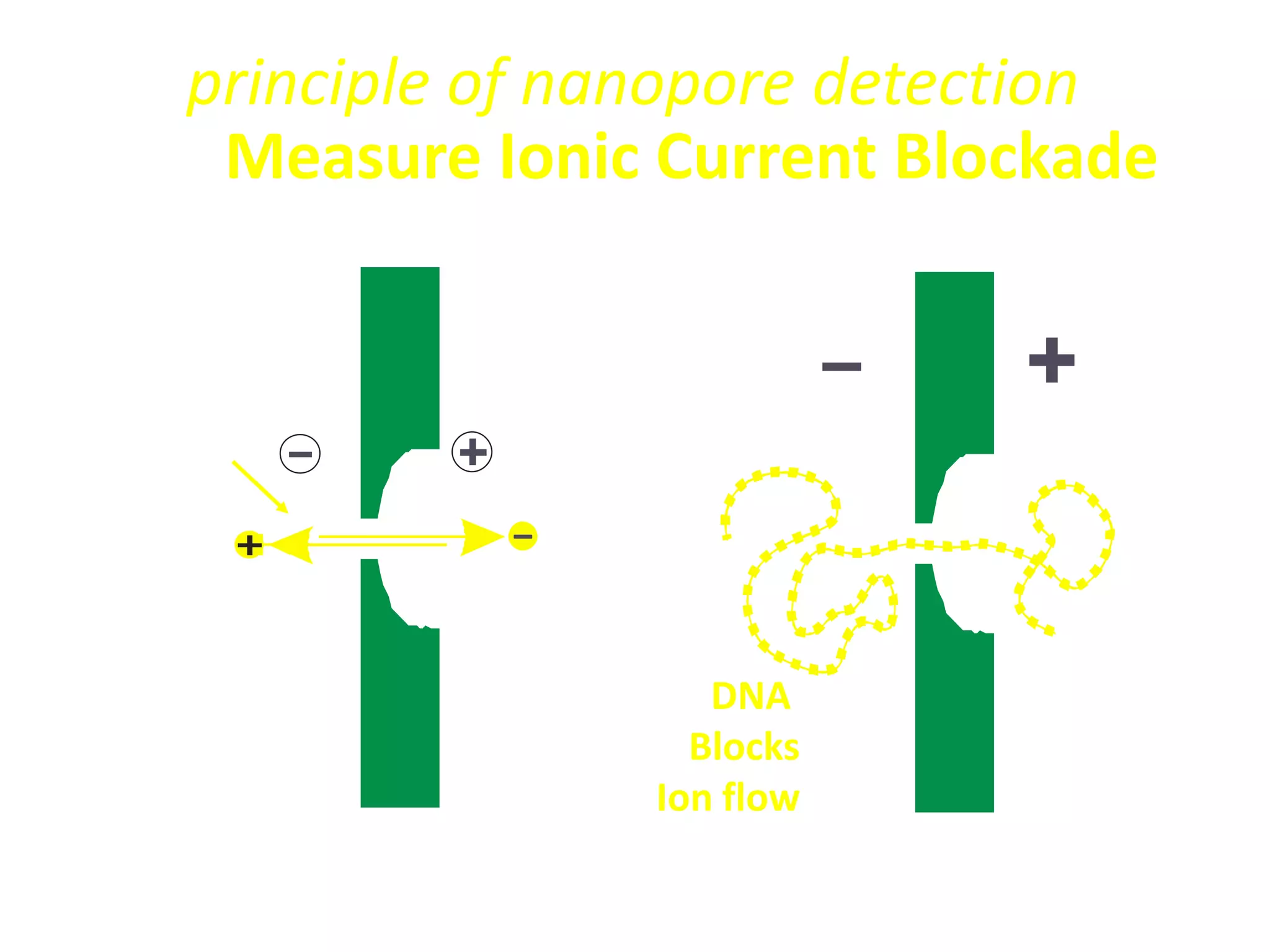
principle of nanopore detection
      Measure Ionic Current Blockade

Membrane

Ions Flow _


Nanopore
                           DNA
                          Blocks
                        Ion flow
             V
  I open       Apore
             Hm            Apore  Apore  Amolecule
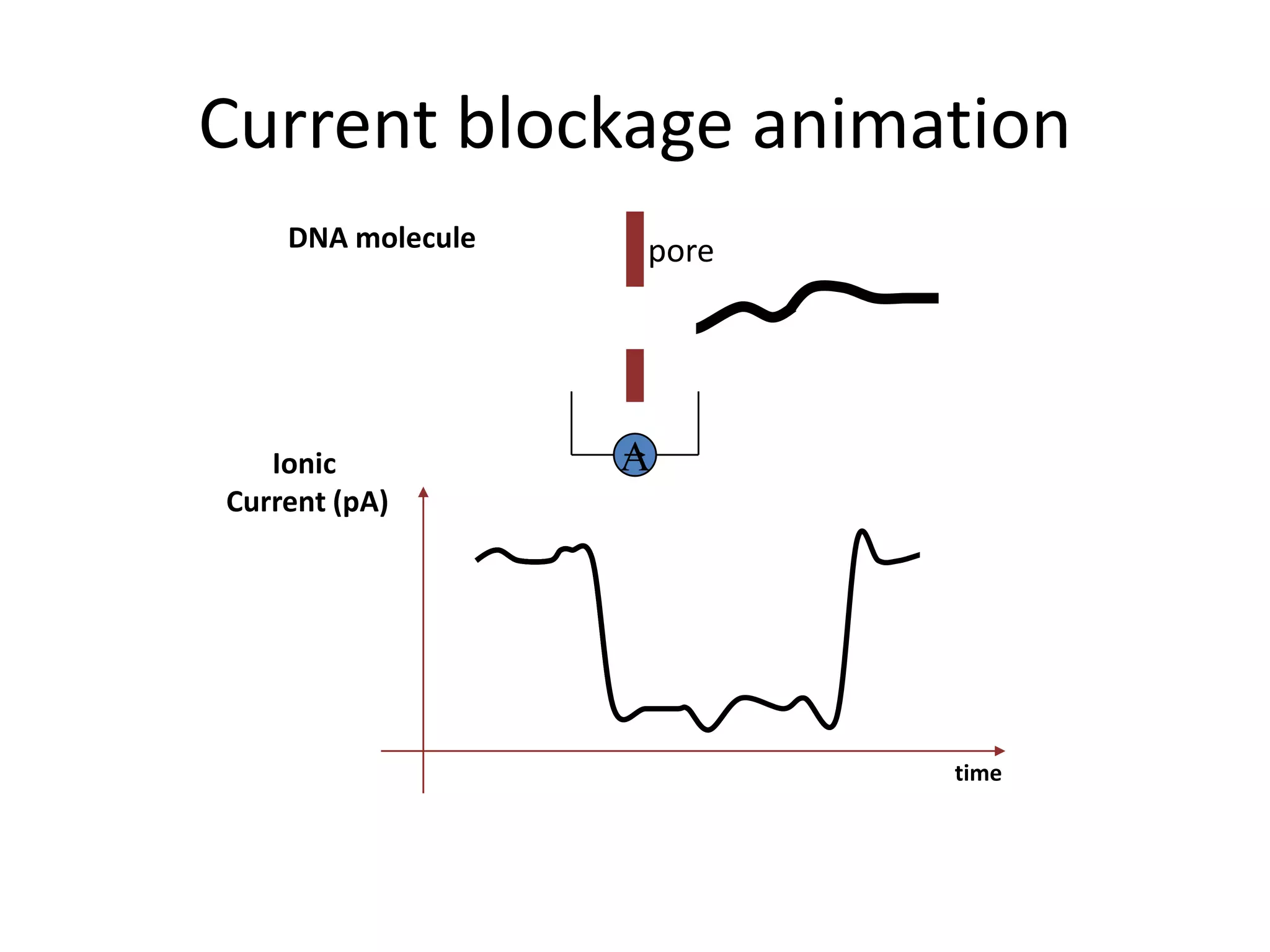
Current blockage animation
    DNA molecule   pore


   Ionic           A
Current (pA)


                          time
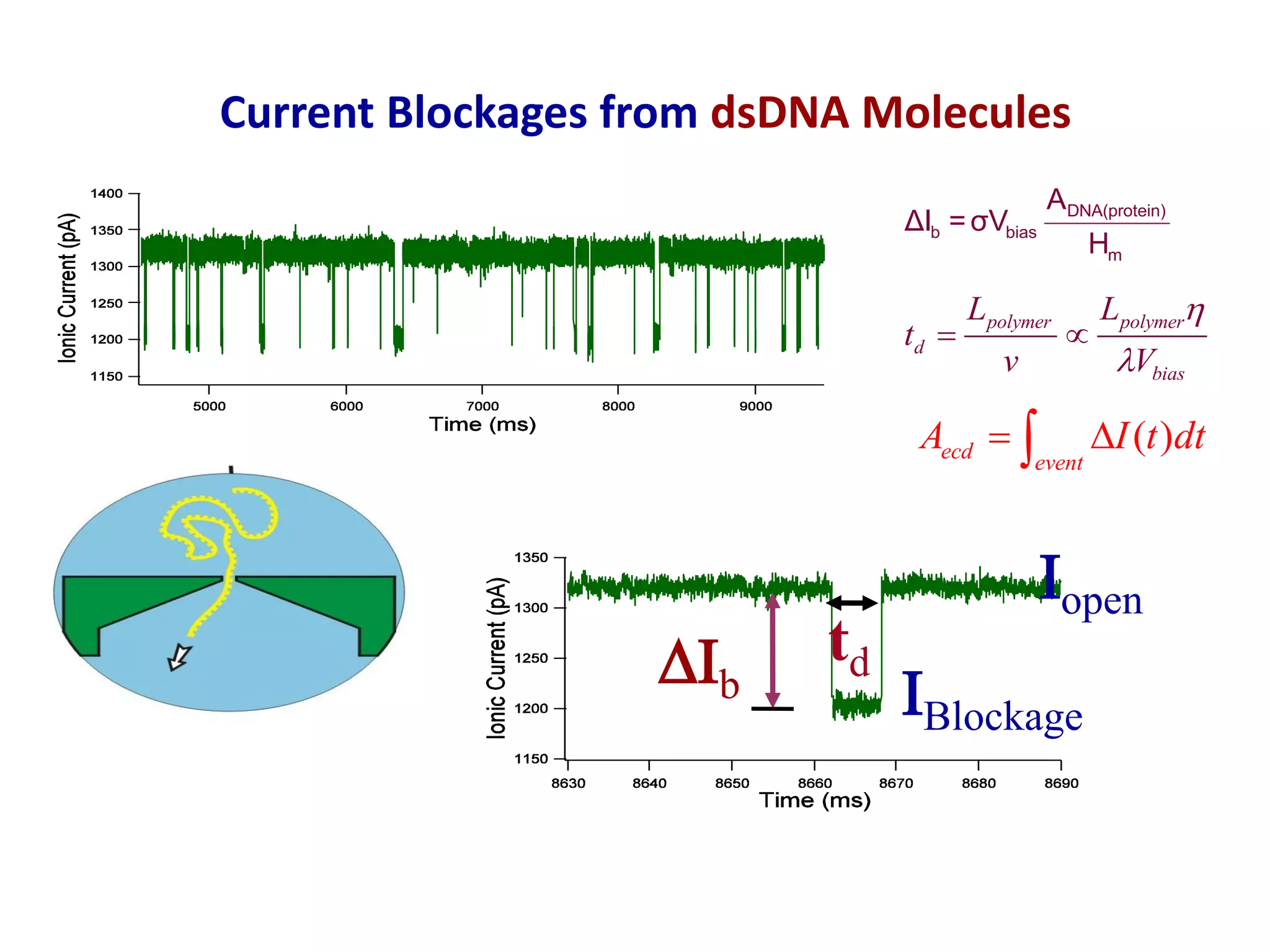
Current Blockages from dsDNA Molecules
                                               ADNA(protein)
                                ΔIb = σVbias
                                                      Hm

                                       Lpolymer       Lpolymer
                                td               
                                          v            Vbias

                                 Aecd               DI (t )dt
                                              event


                                               Iopen
                   DIb     td
                                IBlockage
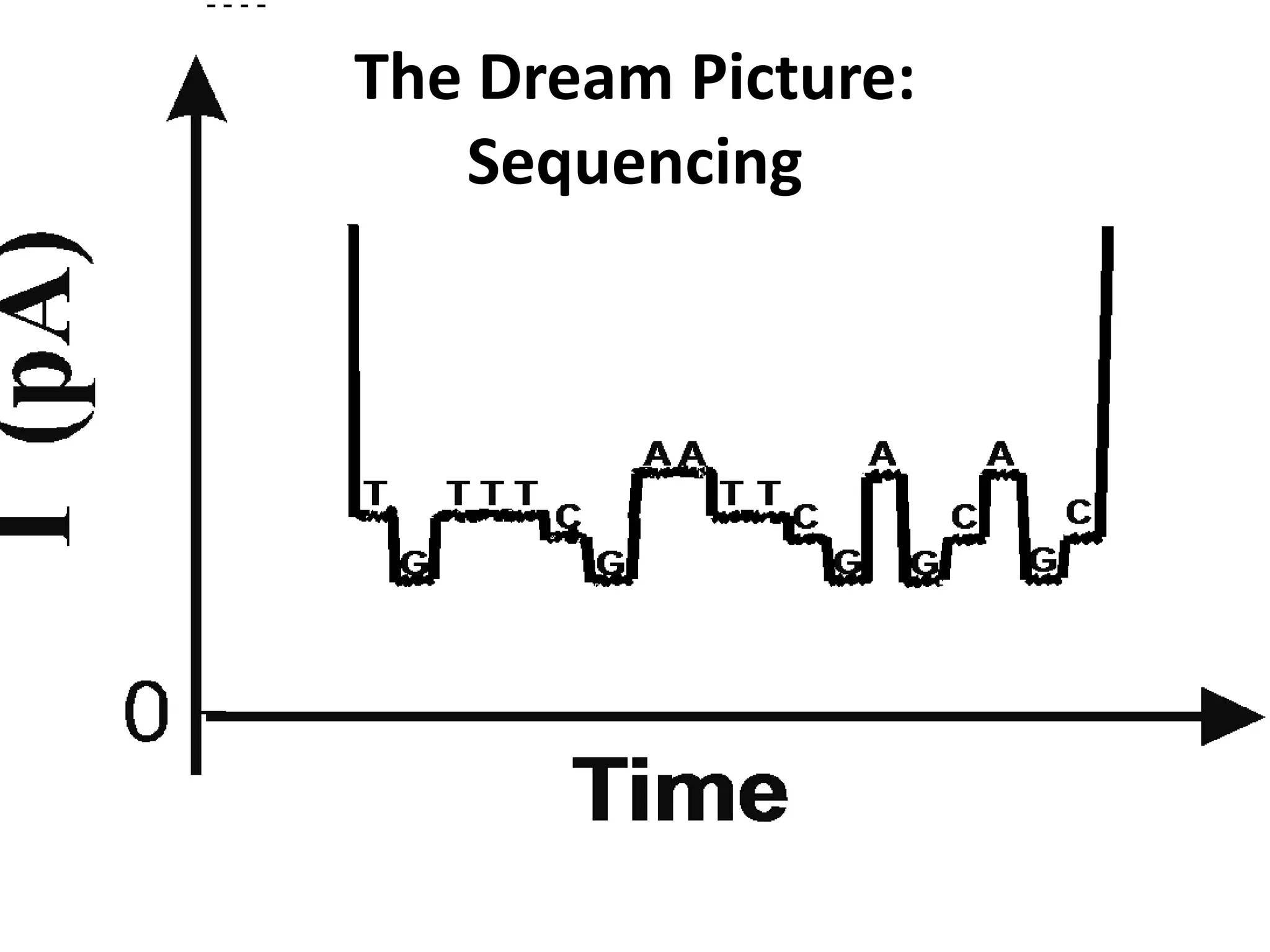
The Dream Picture:
   Sequencing
Filtration
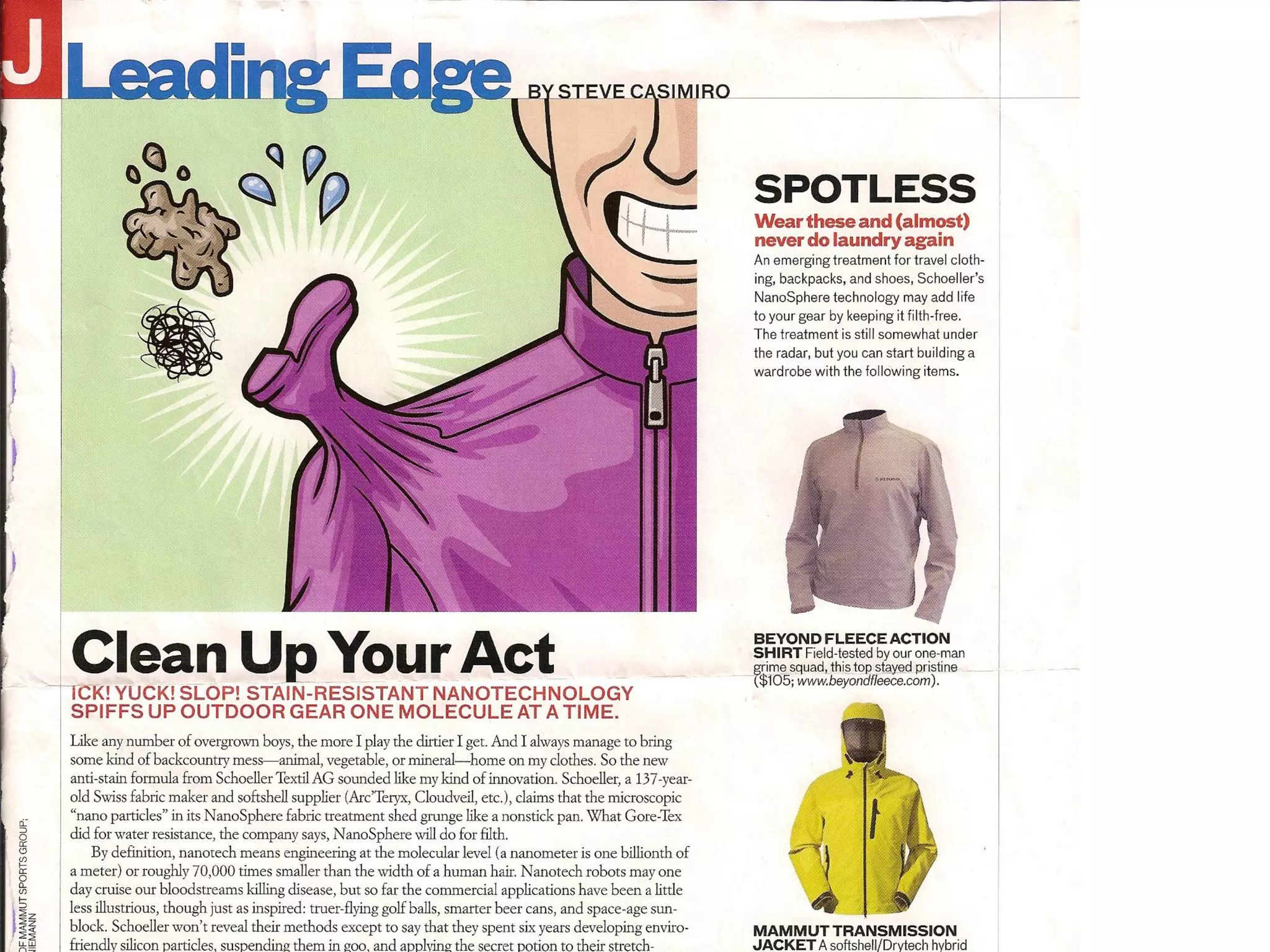
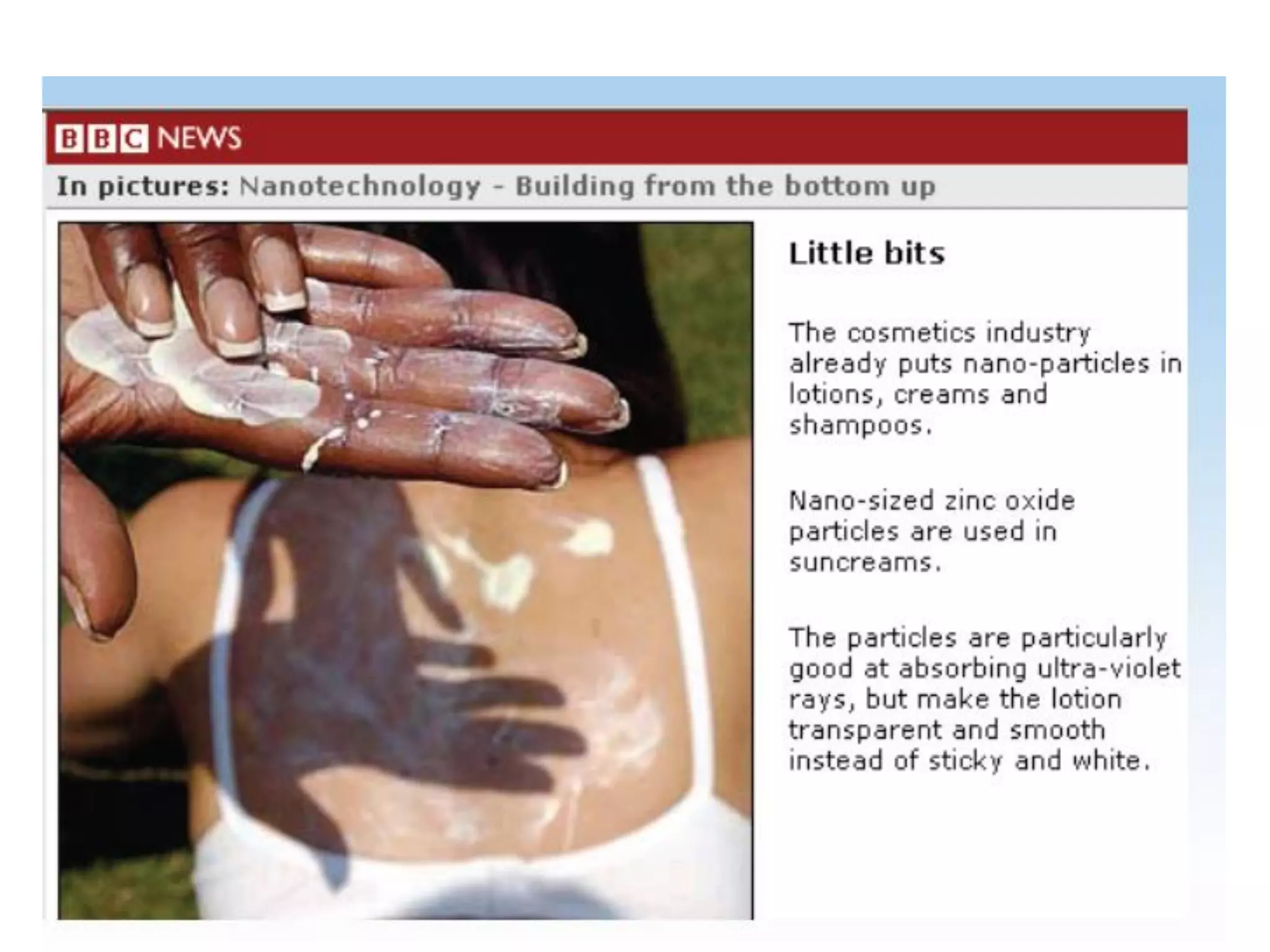
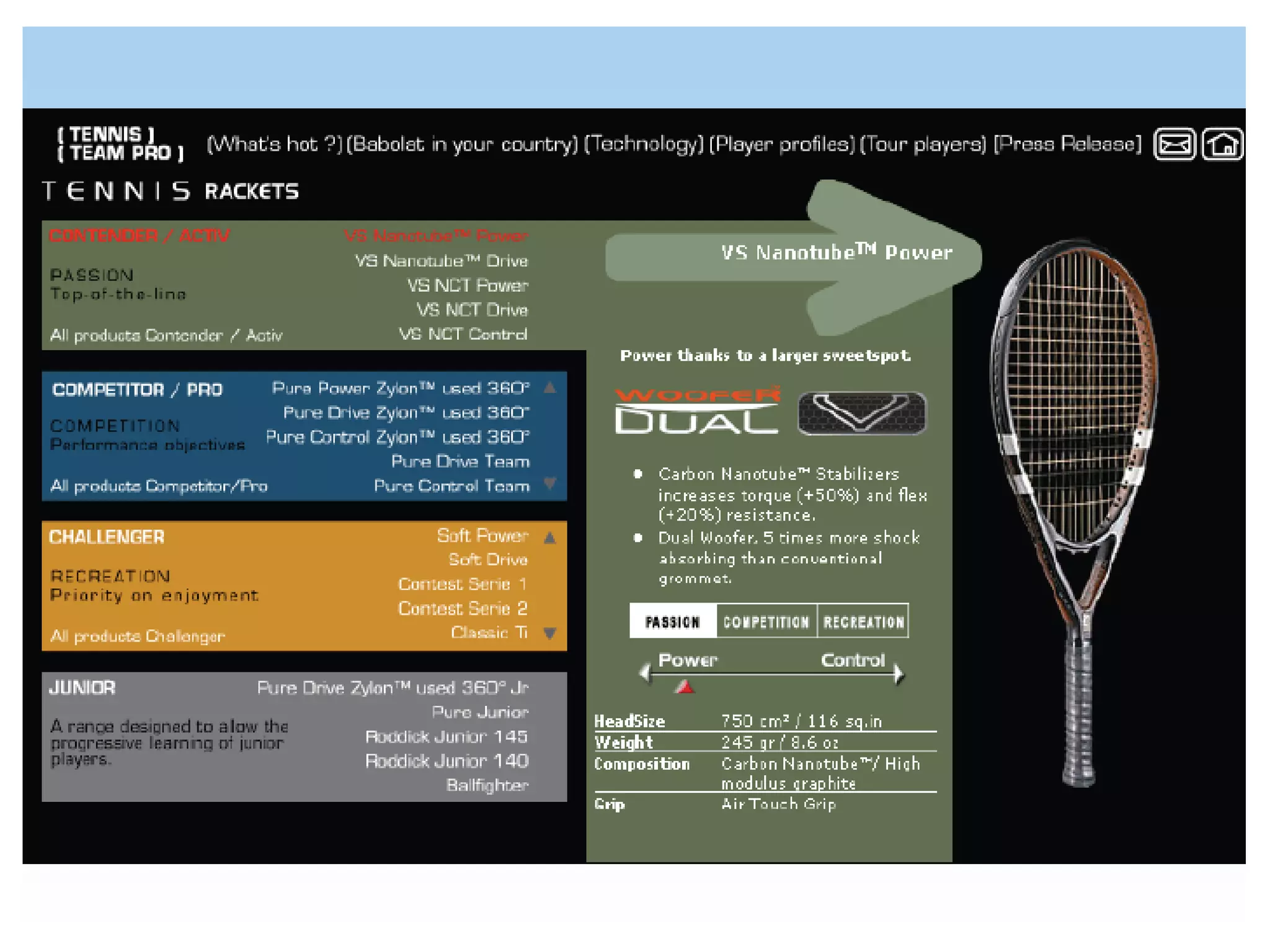
Clothing,
  Sunscreens,
       and
Sports Composites
• Other Template–based Applications
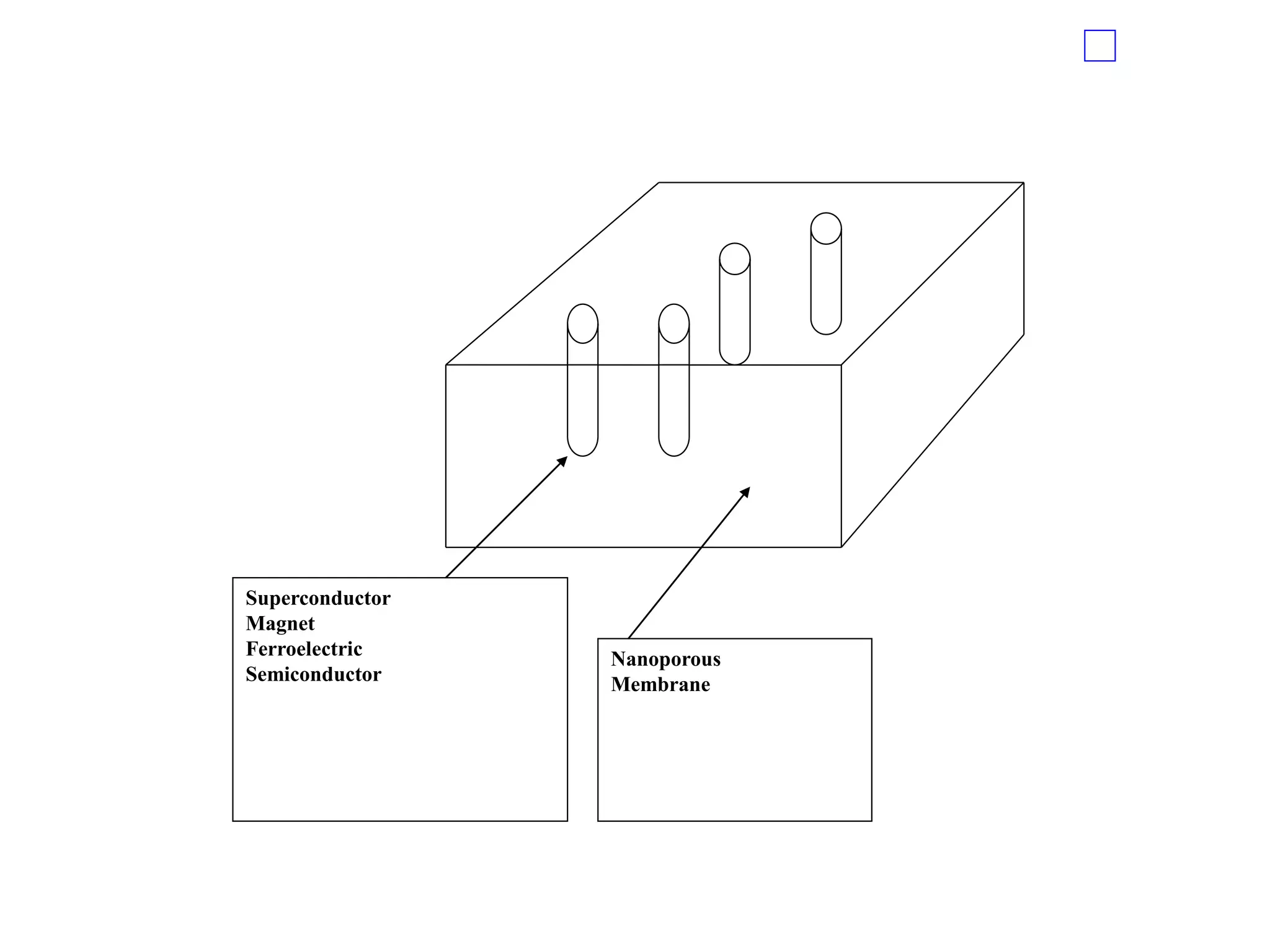
Superconductor
Magnet
Ferroelectric    Nanoporous
Semiconductor    Membrane
LowTemperature
SuperconductorNanowires
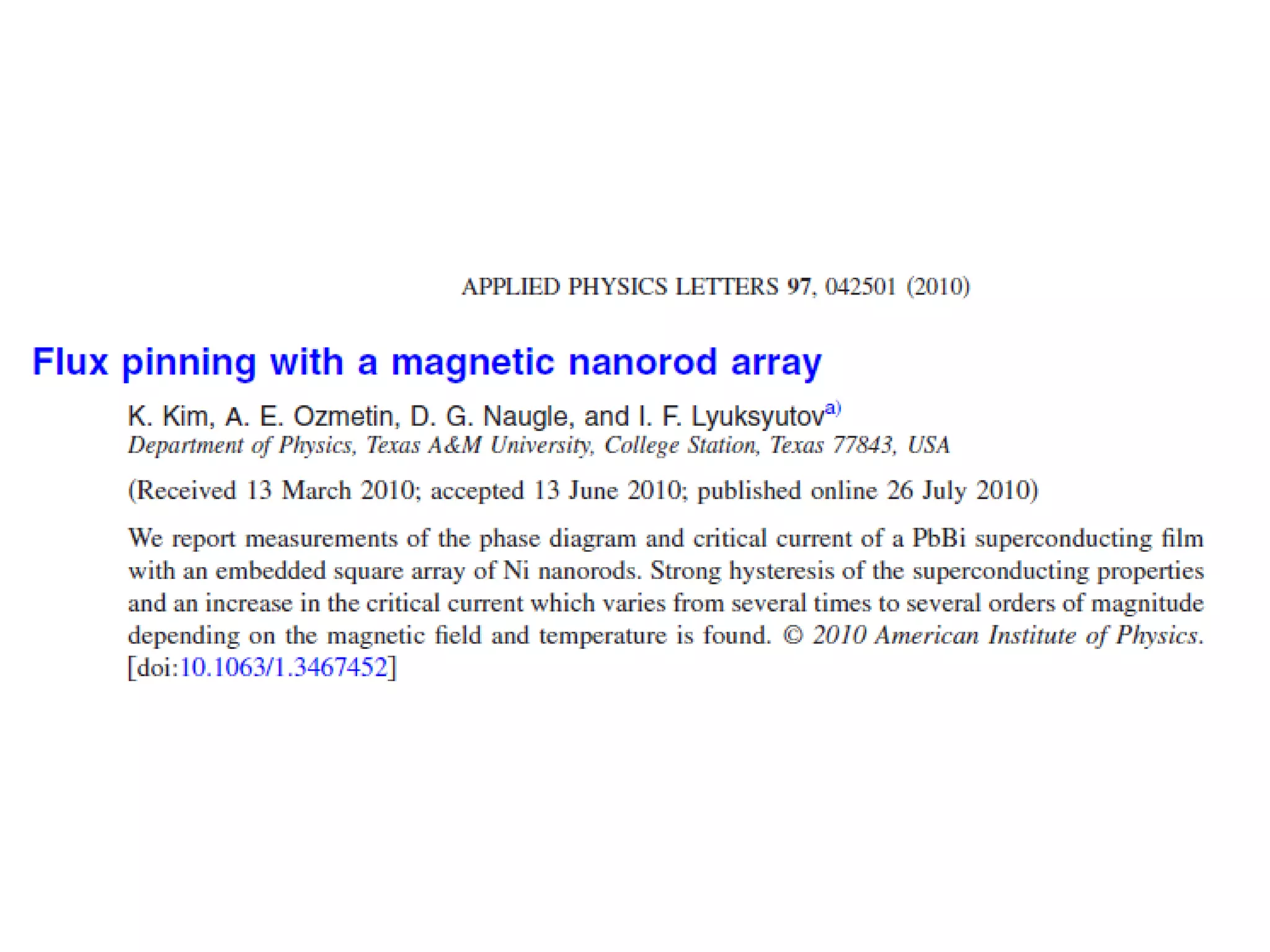
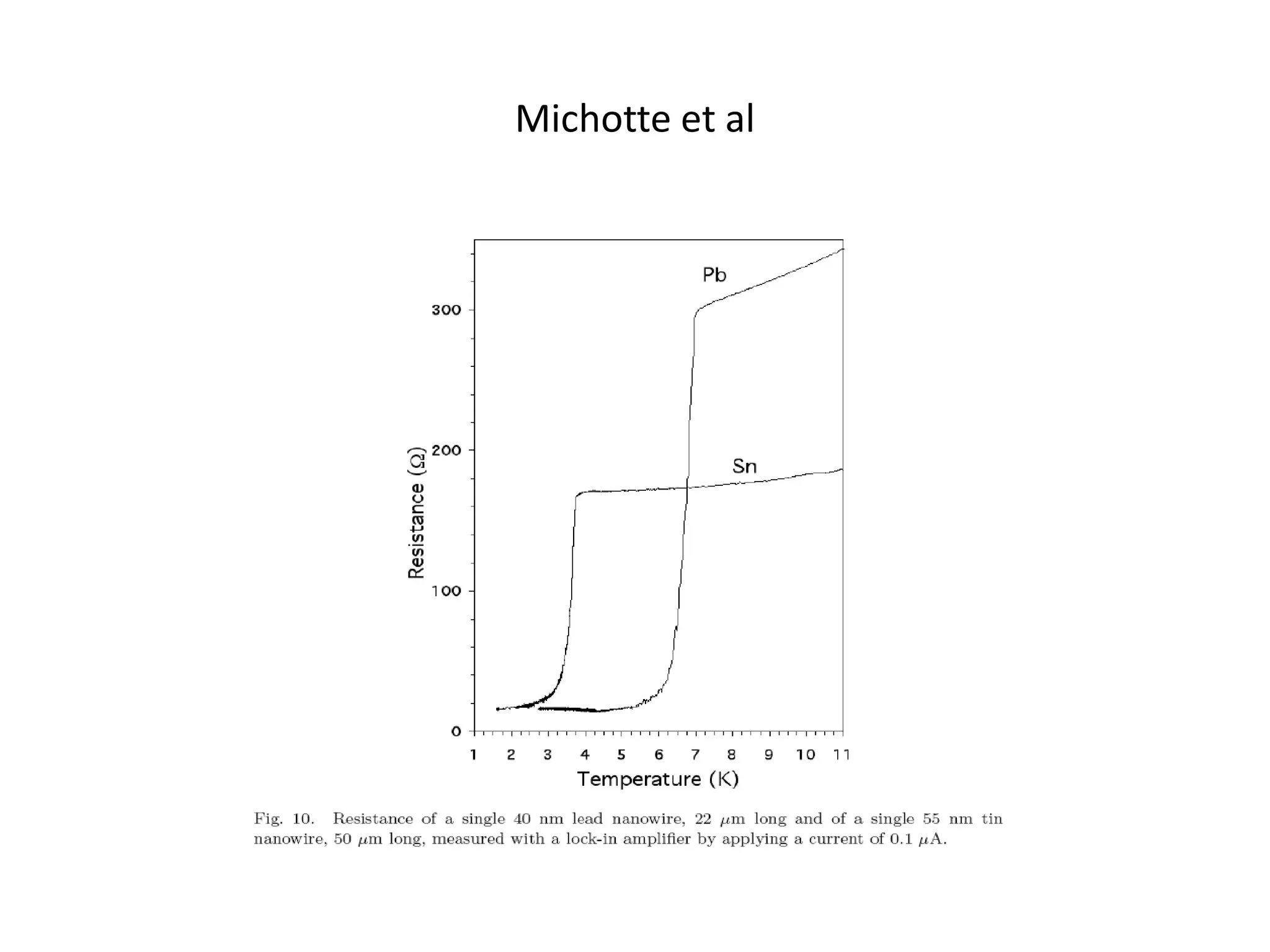
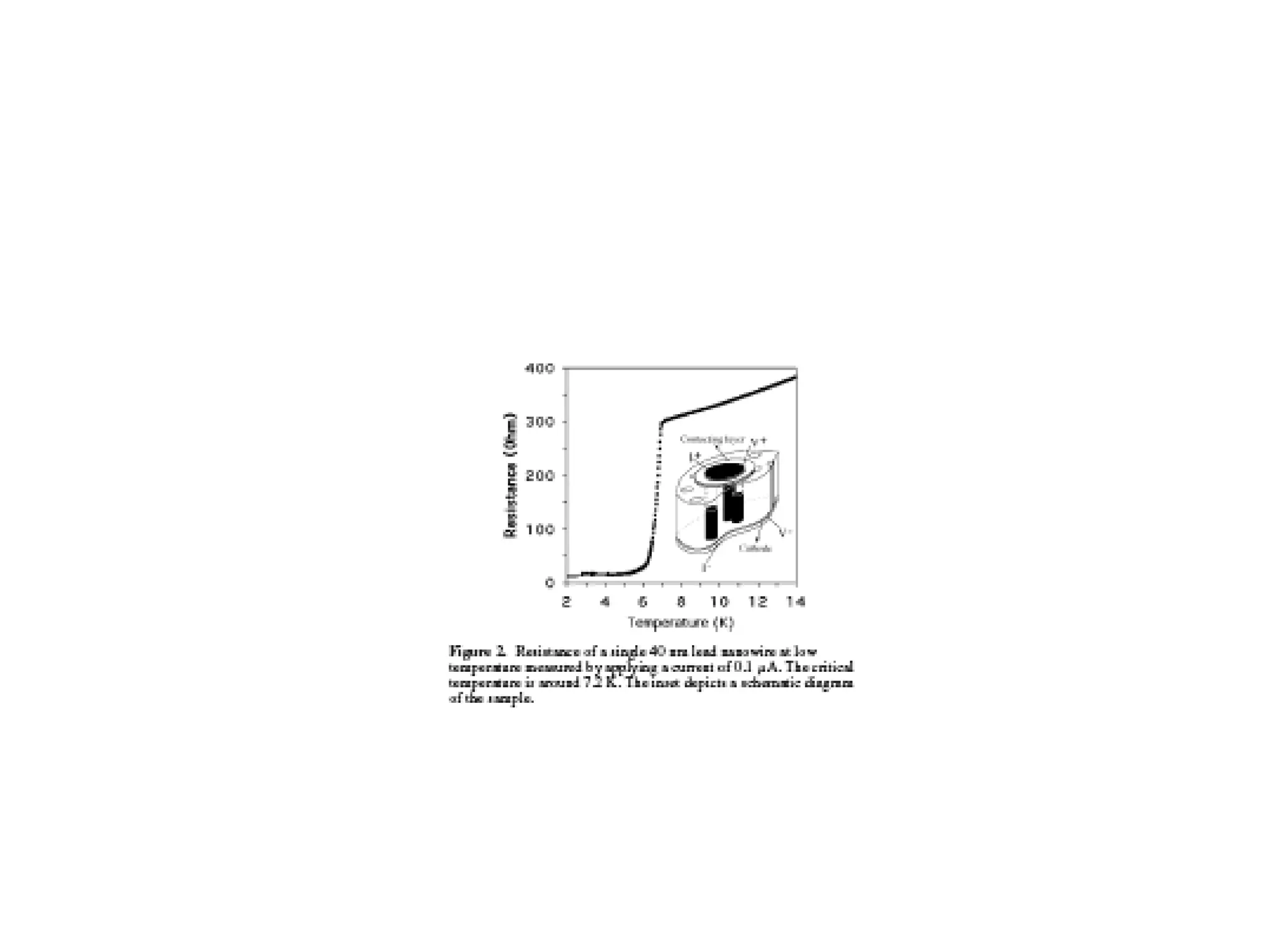
• Mesoscopic superconducting lead nanowires with high aspect
  ratio and diameter ranging from 40 to 270 nm have been
  grown by electrodeposition inside nanoporous polycarbonate
  membranes. Nanowires with a diameter less than 50 nm were
  insulators due to a poor crystal structure. The others are
  shown to be type II superconductors because of their small
  electronic mean free path, instead of being type I which is
  usual for the bulk form of lead. An increase in the
  thermodynamic critical field Hc is observed and is attributed
  to the small transversal dimension leading to an incomplete
  Meissner effect. Finally, it is demonstrated that this
  enhancement agrees with numerical simulations based on the
  Ginzburg–Landau theory.
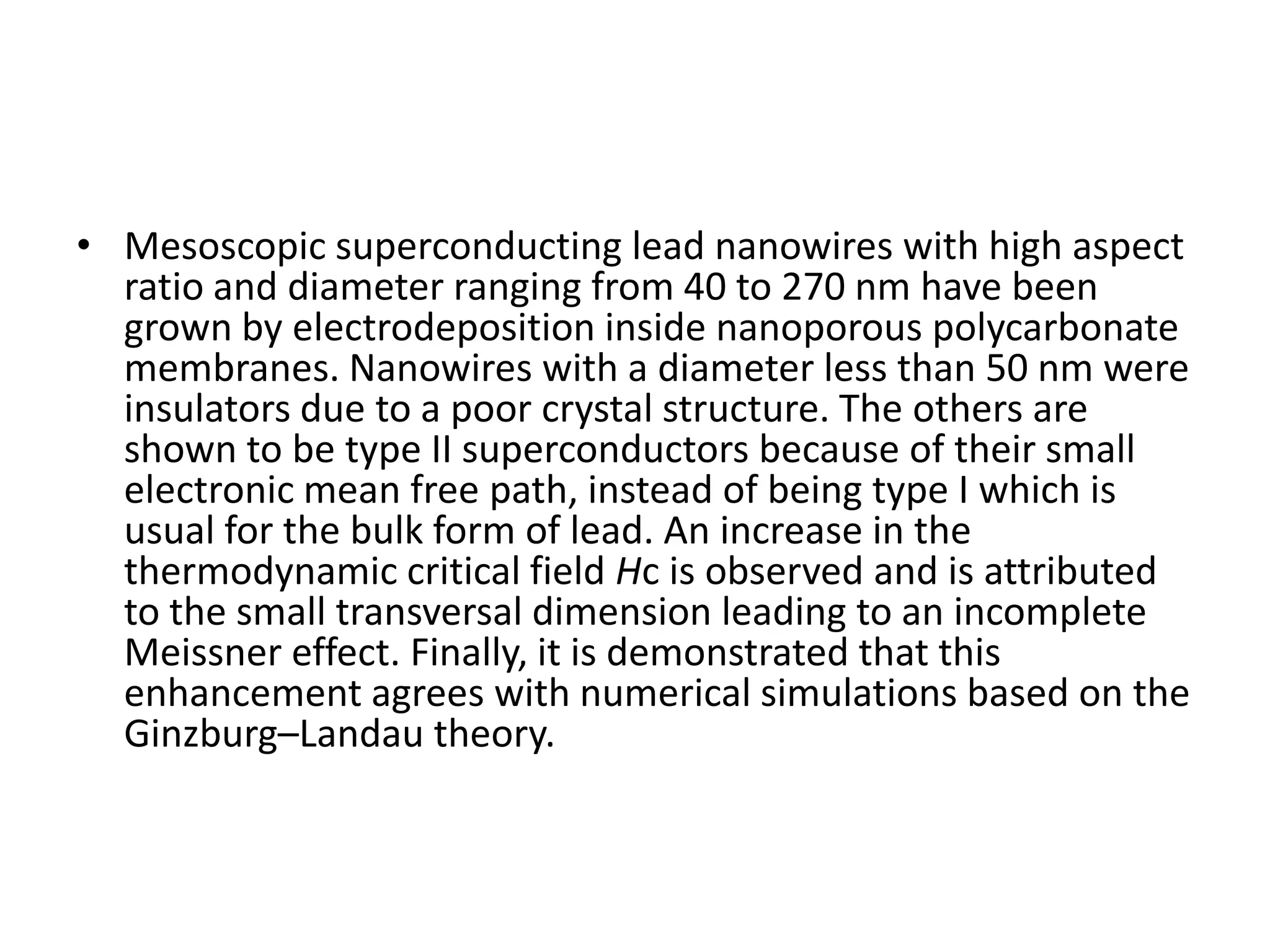
Michotte et al
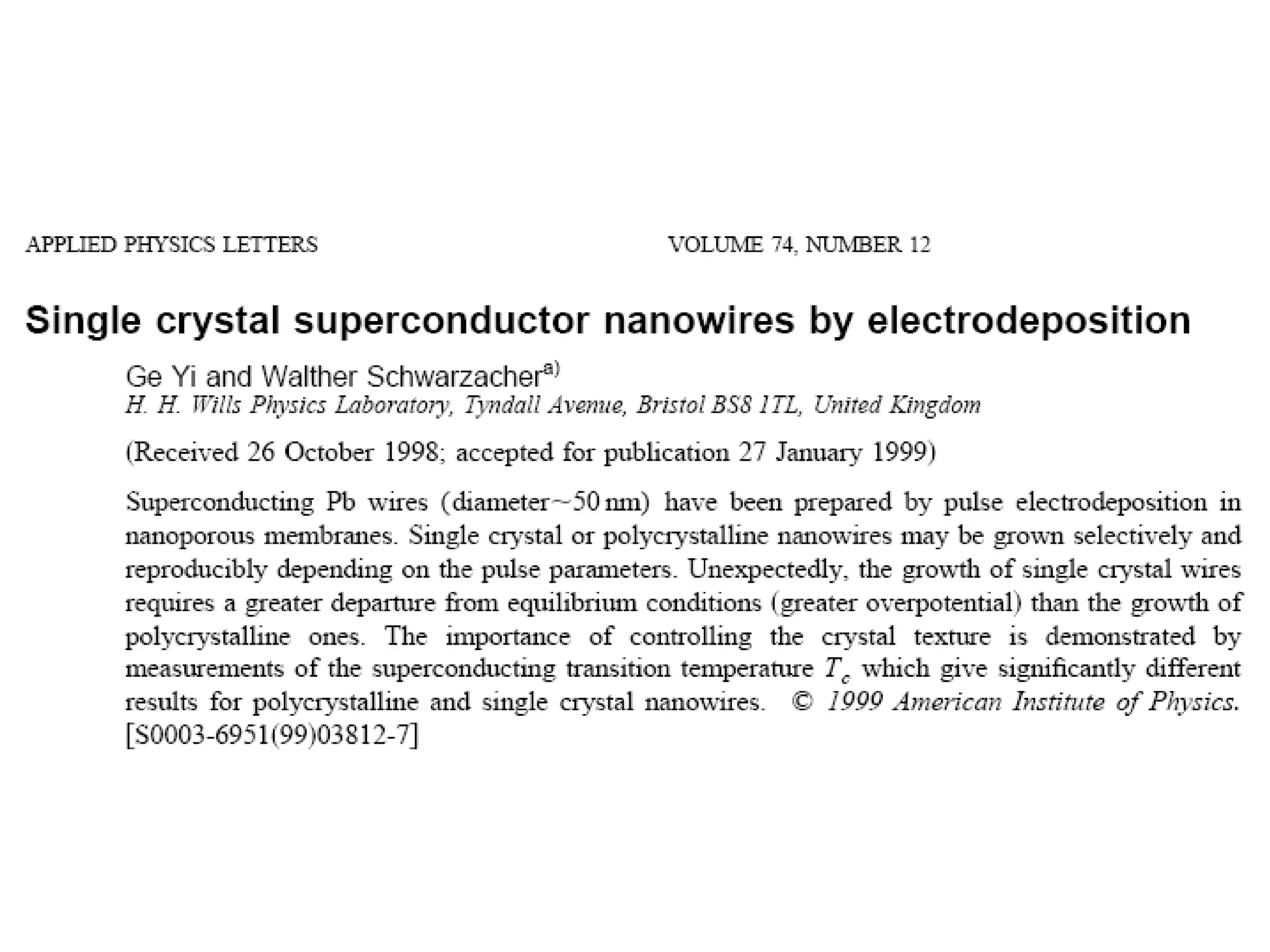
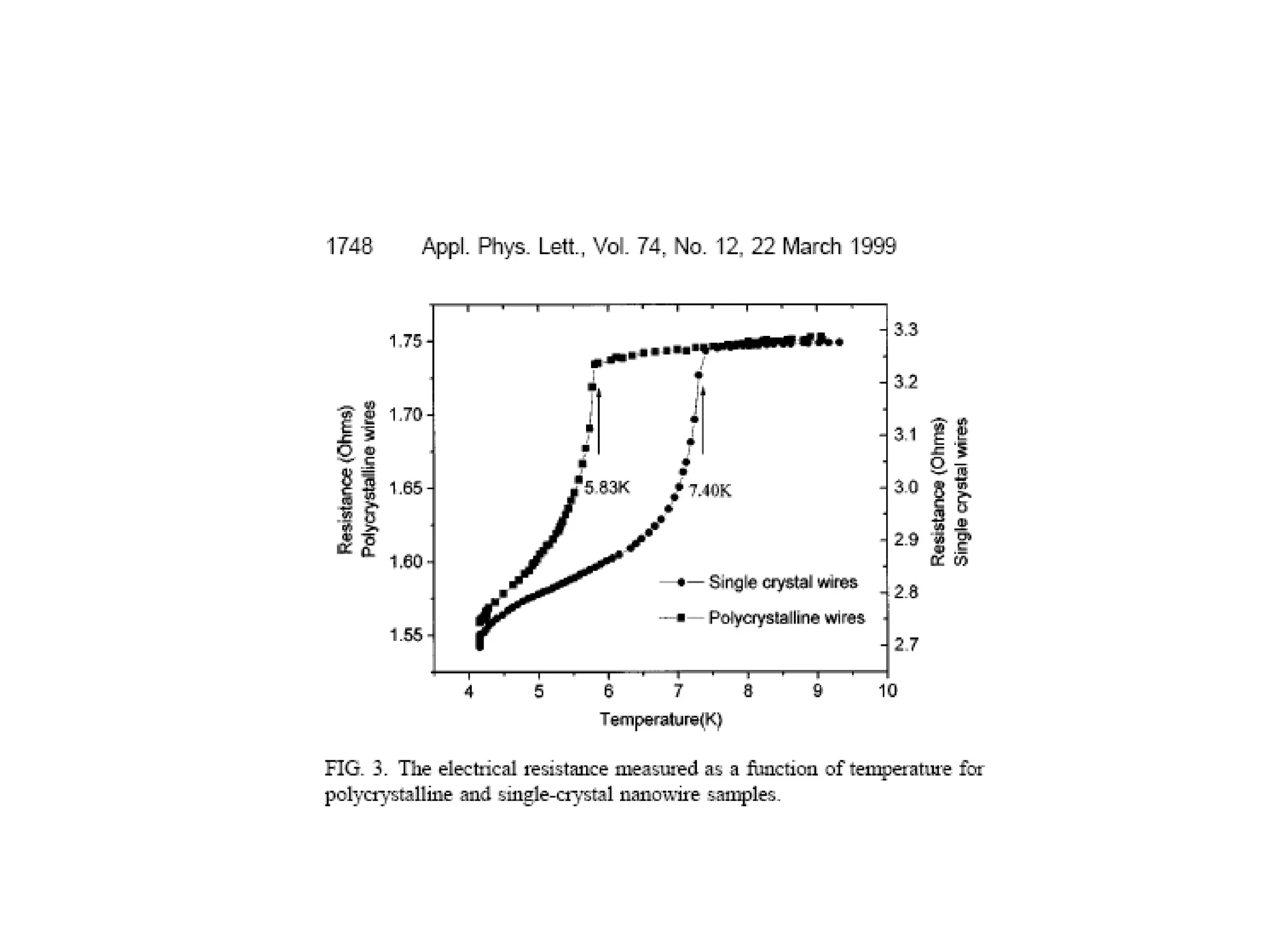
• High Temperature
Superconductor Nanowires
• Single crystalline YBa2Cu3O7−δ nanowires
  from a template-directed sol–gel route
• Xu Jian, Liu Xiaohe and Li Yadong, ,
   Department of Chemistry, Tsinghua
  University, Beijing 100084, PR China
   Department of Chemistry, Central South
  University, Changsha 410083
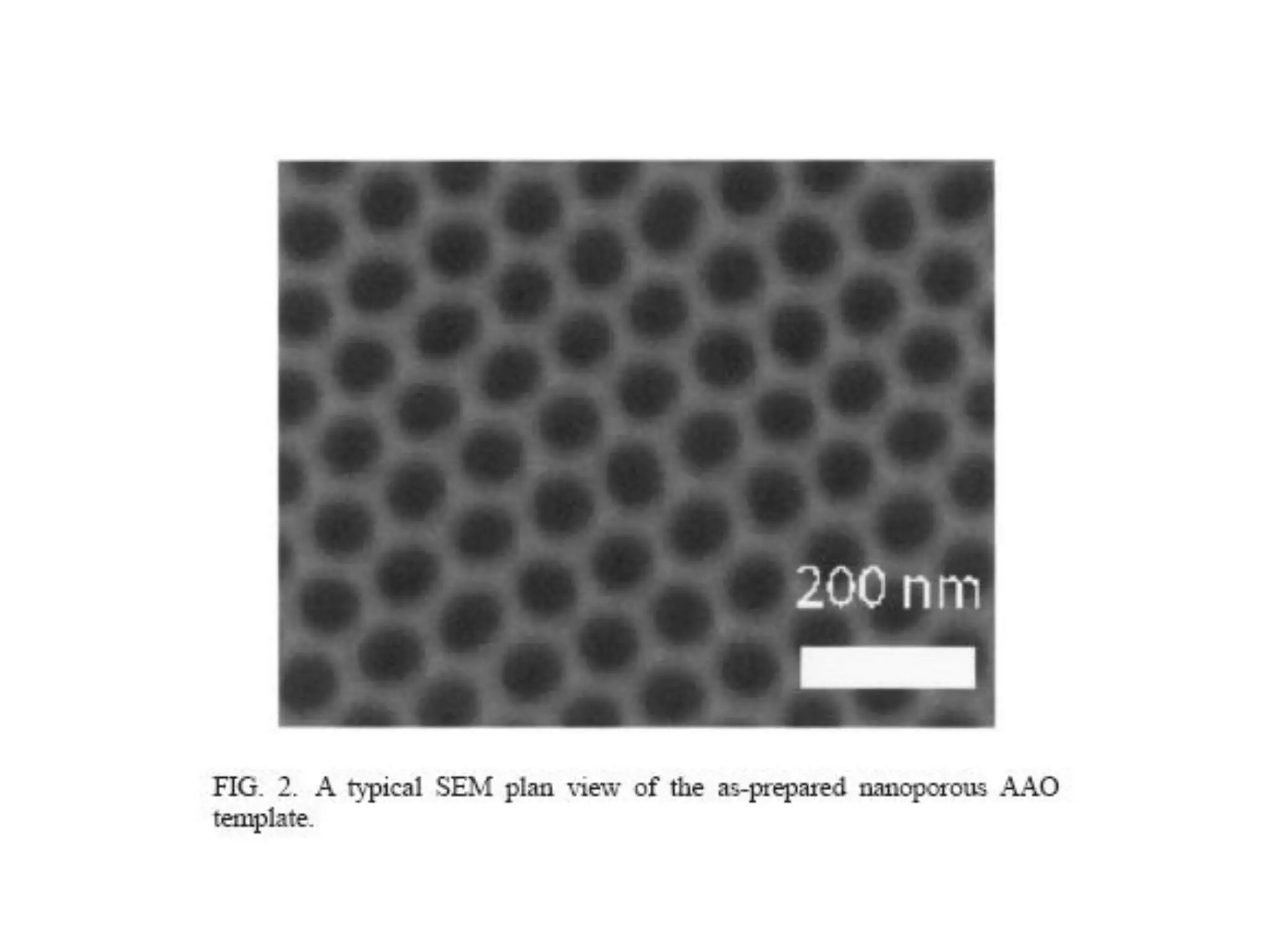
•    Preparation of anodic aluminum oxide (AAO) template
•   Porous AAO membrane was prepared using a two-step anodizing process [19].
    After degreasing in ethanol, high-purity Al foil (99.999%) was electropolished in a
    H3PO4–H2SO4–H2O (40:40:20 wt.%) solution for 5 min to reduce the surface
    roughness. The resulting Al sheet was washed with ethanol and distilled water,
    then mounted on a copper plate to serve as anode for anodization. In the first
    step, the anodizing of the Al sheet was carried out under constant voltages of 40 V
    in 0.3 M oxalic acid electrolyte for 6 h at 17 °C. Prior to the second anodization,
    first disordered porous alumina layer was removed in a mixture of H3PO4 (6 wt.%)
    and CrO3 (1.8 wt.%) at 60 °C for 3 h. The second step was following the same
    conditions as that of the first, except that the anodizing time was 3 h. A stepwise
    voltage reduction technique [28 and 29] was then utilized to thin the barrier layer.
    The as-obtained AAO membrane was immersed in 5 wt.% aqueous H3PO4 solution
    for pore widening and barrier layer dissolving, followed by washing and drying.
    Finally, the through-hole AAO membrane was detached from the Al substrate in a
    saturated HgCl2 solution for next use.
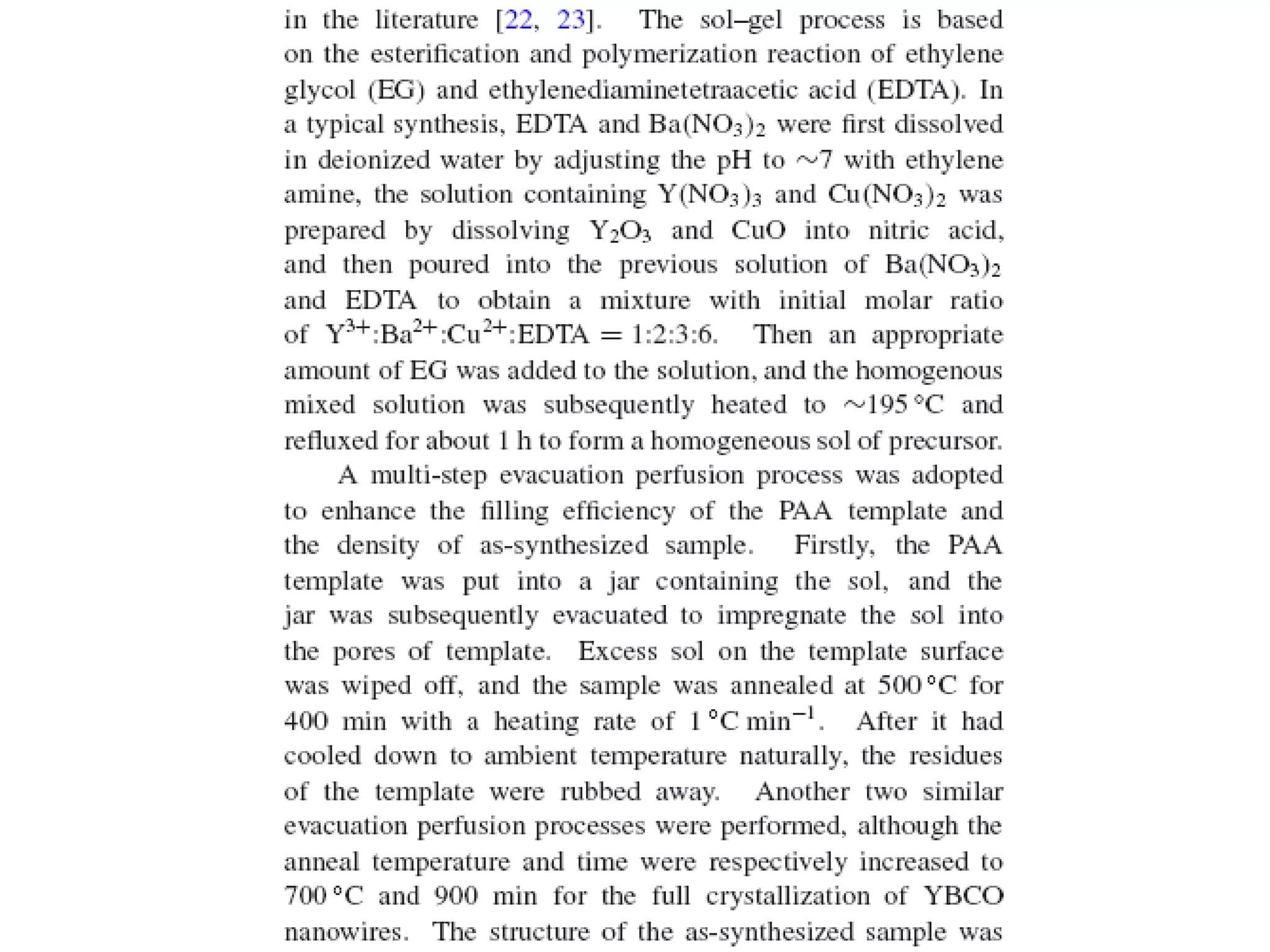
•   Sol–gel process and fabrication of YBCO nanowires
•   YBa2Cu3O7−δ sols used for template synthesis can be obtained as follows. Firstly,
    appropriate quantities of ammonia and ethylenediamine tetraacetic acid (EDTA) was added
    to copper acetate solutions. Meanwhile the solution of Ba2+ or Y3+ was prepared by
    dissolving Ba(OH)2·8H2O or Y2O3 into acetic acid solution, and then both were poured into
    the previous solution of Cu2+ to give a mixture with initial molar ratio of Y3+:Ba2+:Cu3+ =
    1:2:3. The pH of this mixture solution was adjusted to 6.5 using ammonia and glacial acetic
    acid, thus preventing crystallization of copper acetate during gelation. The obtained solution
    was hydrolyzed to form a dispersed blue colloidal particles solution (sol) at 70 °C under
    continuous stirring.
•   Then a piece of AAO membrane (φ 2 cm) was dipped into this transparent hot sol followed by
    ultrasonic treatment 10 min, and kept at ambient temperature overnight (12 h). The sol
    containing AAO membrane was gelled to shards by slow evaporation at 90 °C. To form the
    superconducting phase, the obtained gel/AAO composite was further heated at 50 °C h−1 to
    950 °C and held for 2 h in air at ambient oxygen pressure. Subsequently, the specimen was
    cooled at 50 °C h−1 to ambient temperature. Finally, the AAO membrane incorporated with
    YBCO nanowires was picked out, and rubbed away YBCO powders covering both faces of the
    membrane by polishing alumina.
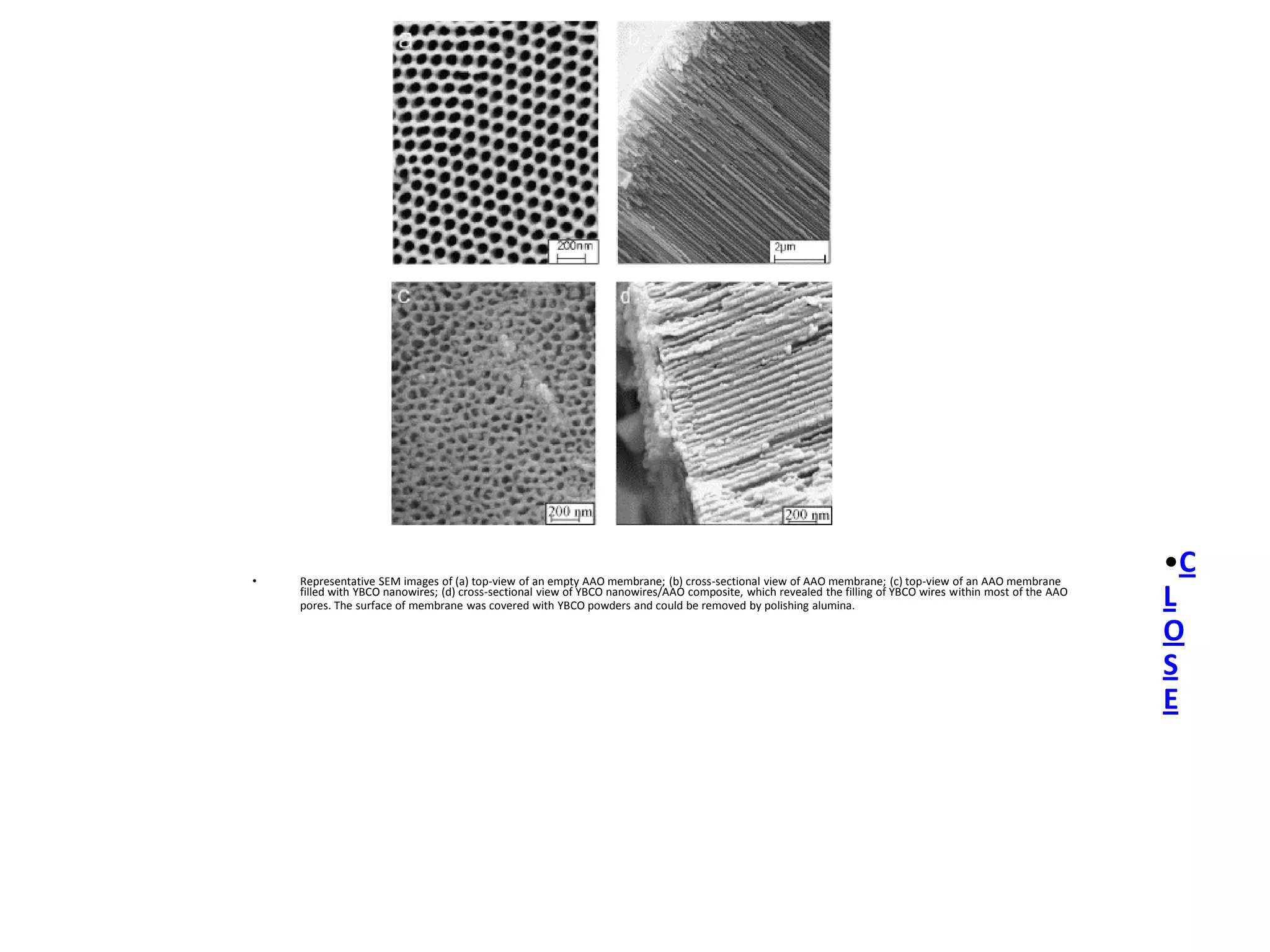
• Scanning electron microscopy (SEM) confirmed that the
  monodisperse cylindrical pores of alumina membrane were
  filled with nanowire arrays with a narrow distribution of
  diameters. The X-ray diffraction (XRD) pattern of the obtained
  nanowires was assessed as orthorhombic YBCO 123 lattice
  after heating gels at 950 °C for crystallization. As determined
  by transmission electron microscopy (TEM) and electron
  diffraction (ED) analysis, the nanowires were essentially single
  crystalline in nature. High-resolution transmission electron
  microscope (HRTEM) images further revealed the single
  crystalline nature of the as-prepared nanowires.
•   Representative SEM images of (a) top-view of an empty AAO membrane; (b) cross-sectional view of AAO membrane; (c) top-view of an AAO membrane
                                                                                                                                                            •C
    filled with YBCO nanowires; (d) cross-sectional view of YBCO nanowires/AAO composite, which revealed the filling of YBCO wires within most of the AAO
    pores. The surface of membrane was covered with YBCO powders and could be removed by polishing alumina.                                                 L
                                                                                                                                                            O
                                                                                                                                                            S
                                                                                                                                                            E
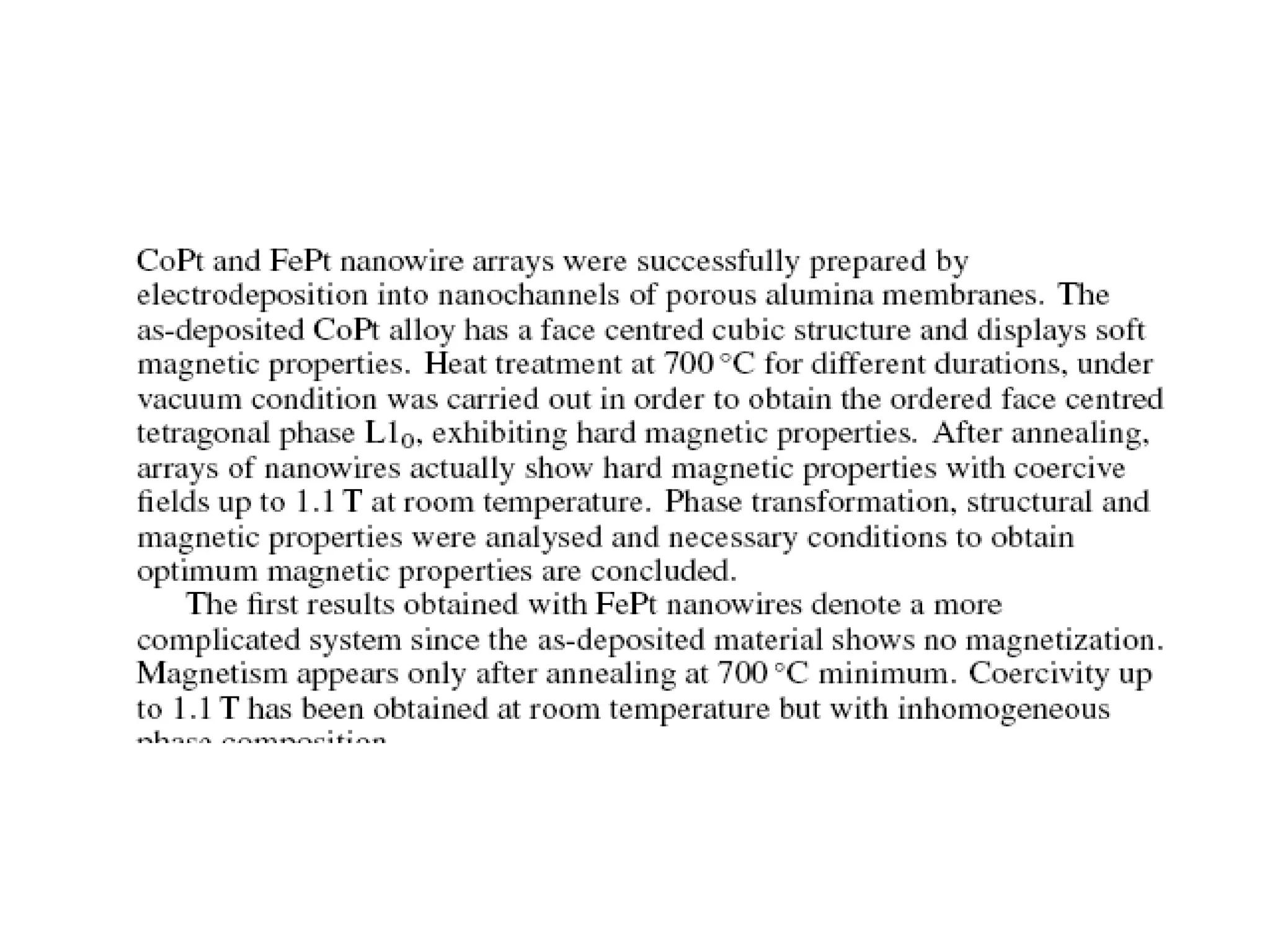
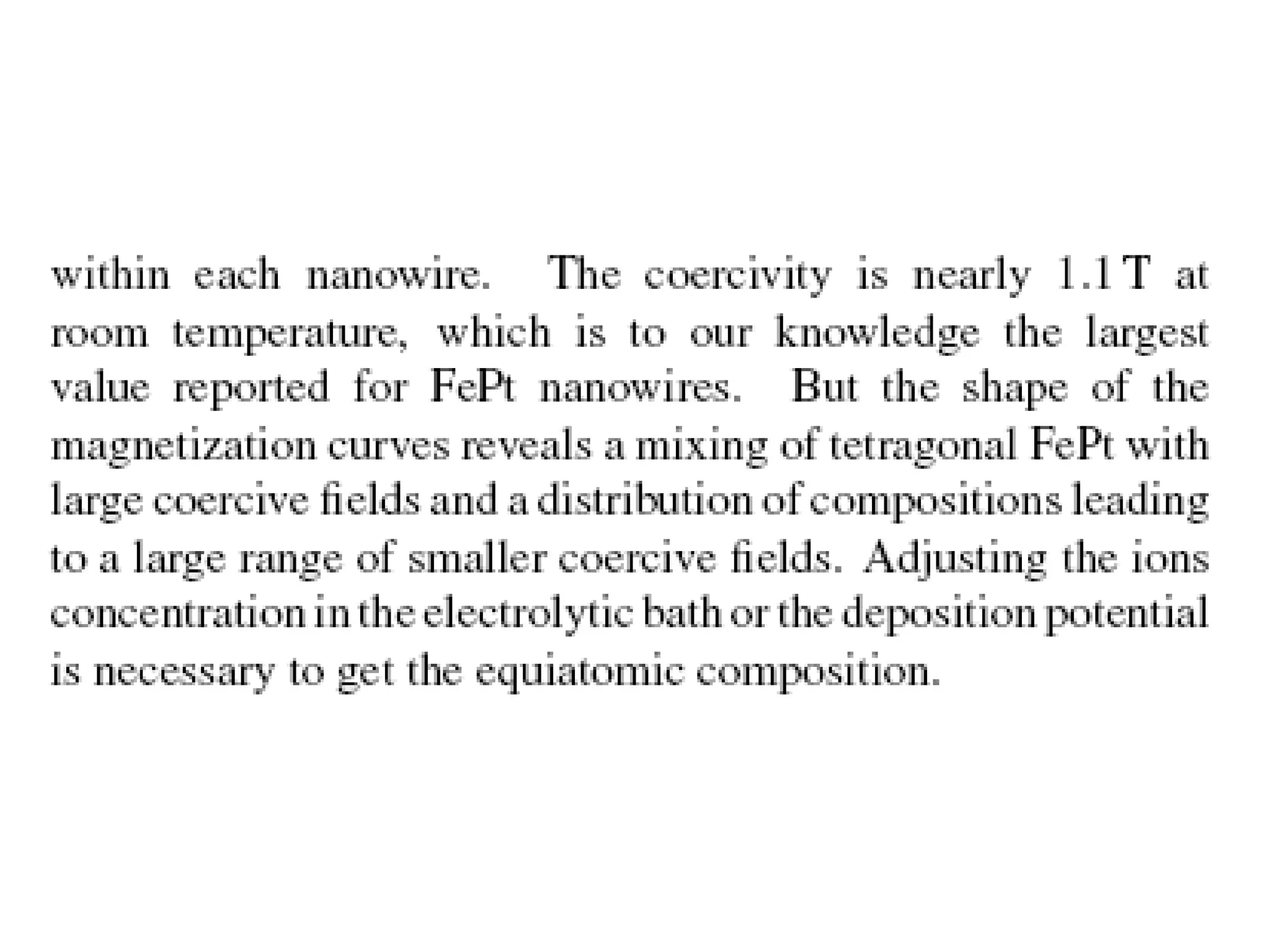
• Magnetic Nanowires
• Magnetic properties of ferromagnetic nanowires
  embedded in nanoporous alumina membranes
• M. Kröll, , a, W. J. Blaua, D. Grandjeanb, R. E.
  Benfieldb, F. Luisc, P. M. Paulusc and L. J. de Jonghc
  a Physics Department, Trinity College, Dublin, Ireland
  b Centre for Materials Research, University of Kent,
  Canterbury, UK
  c Kamerlingh Onnes Laboratorium, Universiteit
  Leiden, The Netherlands
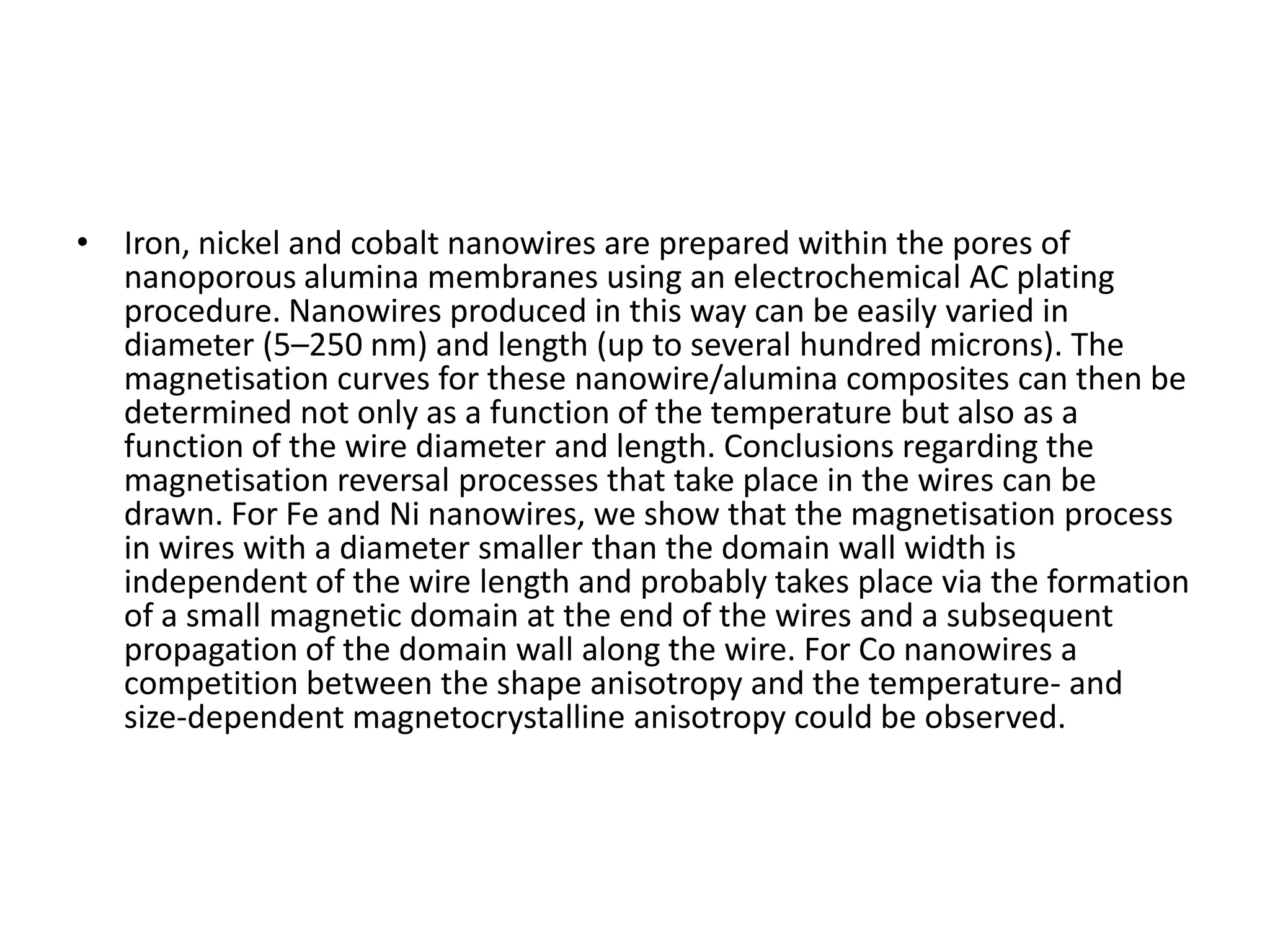
• Iron, nickel and cobalt nanowires are prepared within the pores of
  nanoporous alumina membranes using an electrochemical AC plating
  procedure. Nanowires produced in this way can be easily varied in
  diameter (5–250 nm) and length (up to several hundred microns). The
  magnetisation curves for these nanowire/alumina composites can then be
  determined not only as a function of the temperature but also as a
  function of the wire diameter and length. Conclusions regarding the
  magnetisation reversal processes that take place in the wires can be
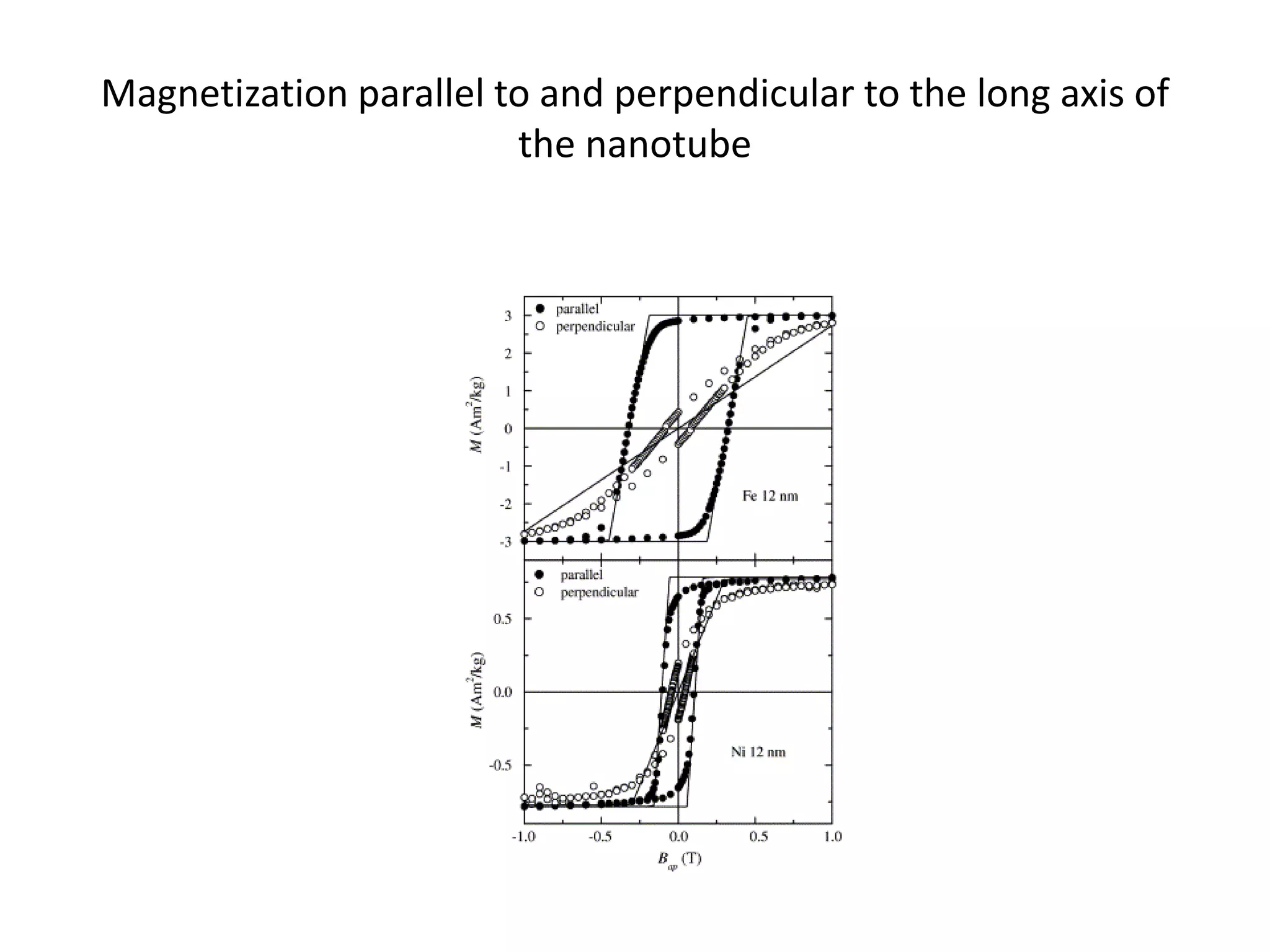
  drawn. For Fe and Ni nanowires, we show that the magnetisation process
  in wires with a diameter smaller than the domain wall width is
  independent of the wire length and probably takes place via the formation
  of a small magnetic domain at the end of the wires and a subsequent
  propagation of the domain wall along the wire. For Co nanowires a
  competition between the shape anisotropy and the temperature- and
  size-dependent magnetocrystalline anisotropy could be observed.
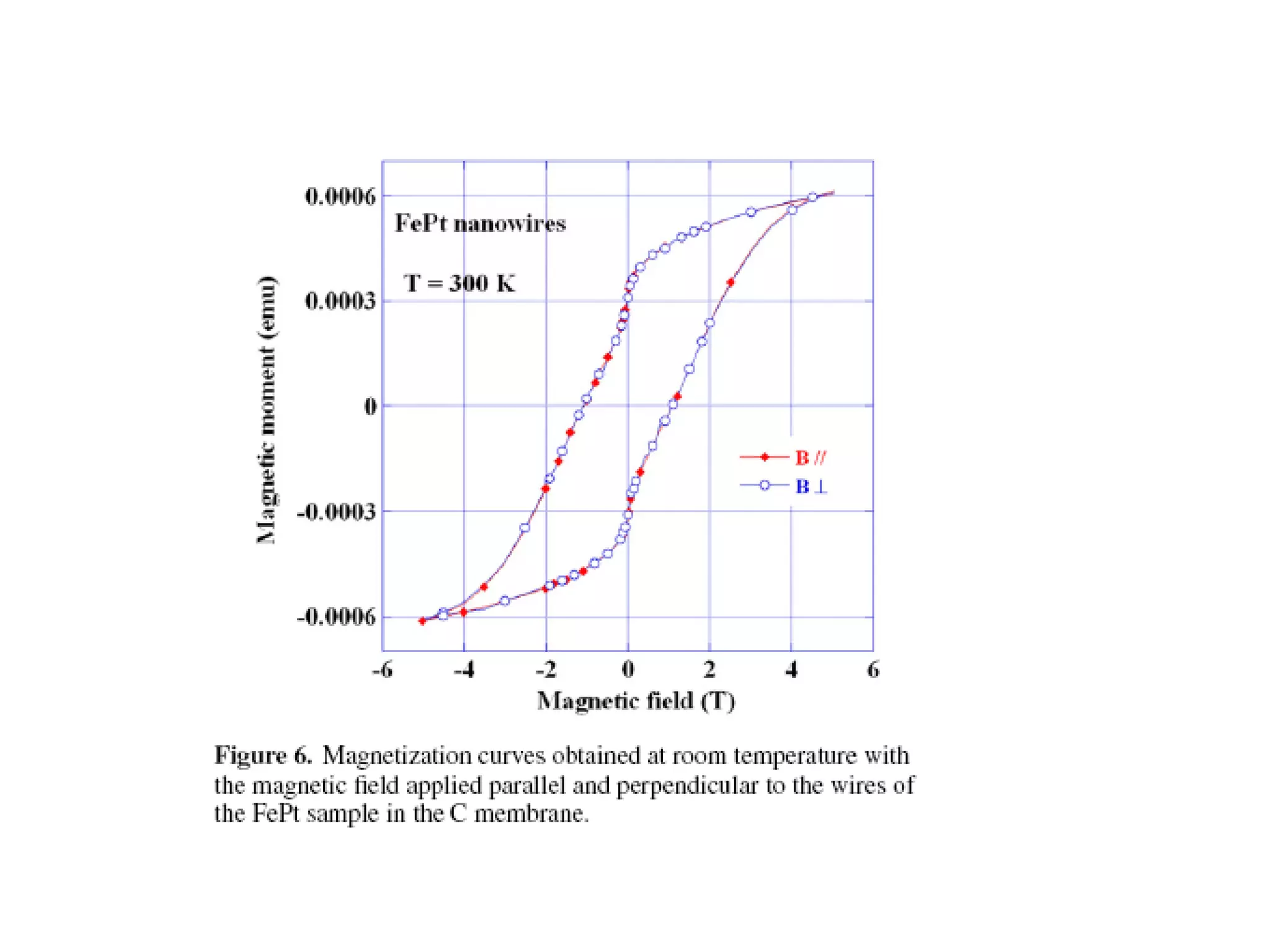
Magnetization parallel to and perpendicular to the long axis of
                        the nanotube
Ferroelectric Nanotubes
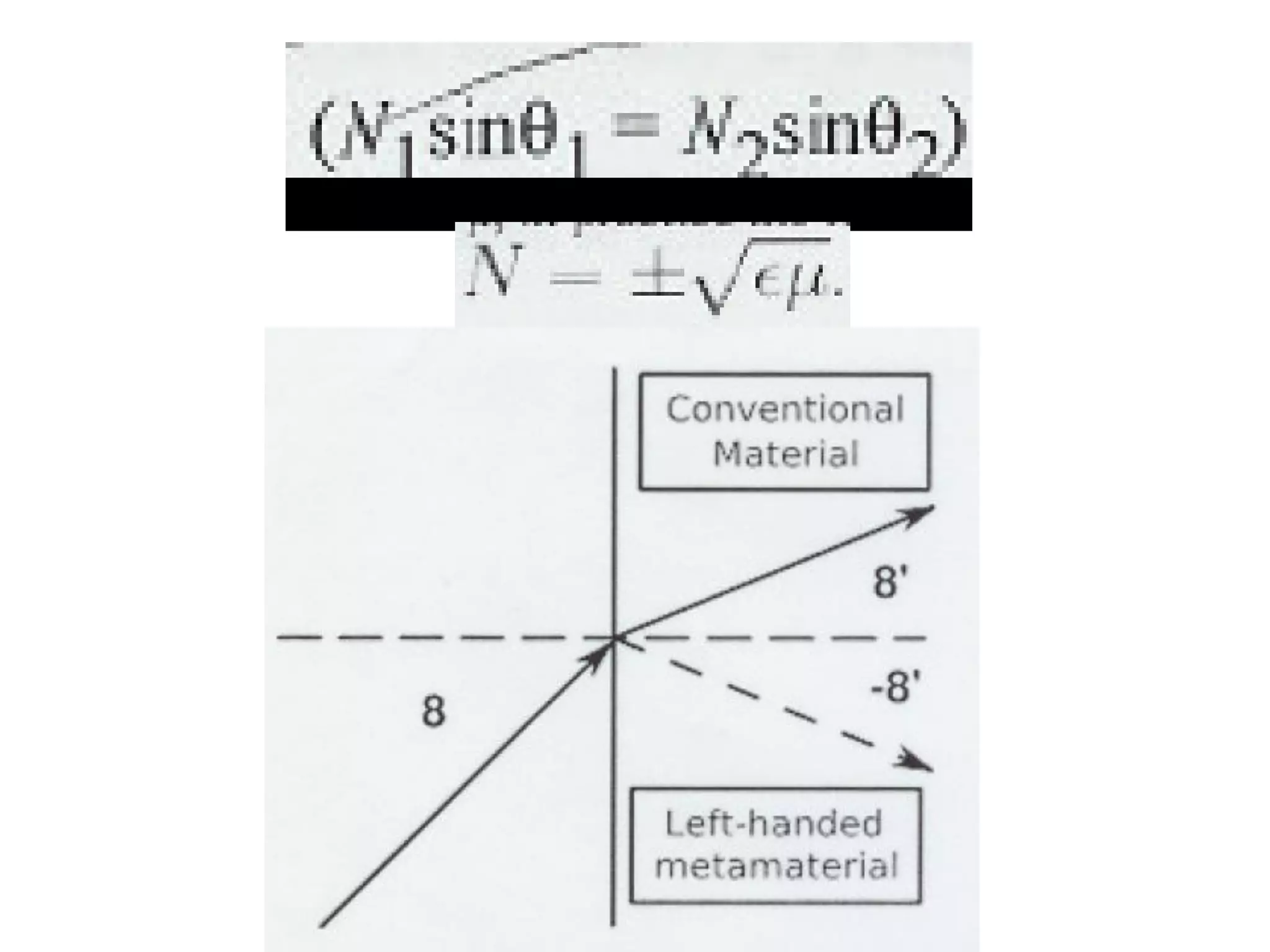
Dielectric Nanostructures – a road
                 to
Metamaterials, negative dielectric
     Constants, and cloaking
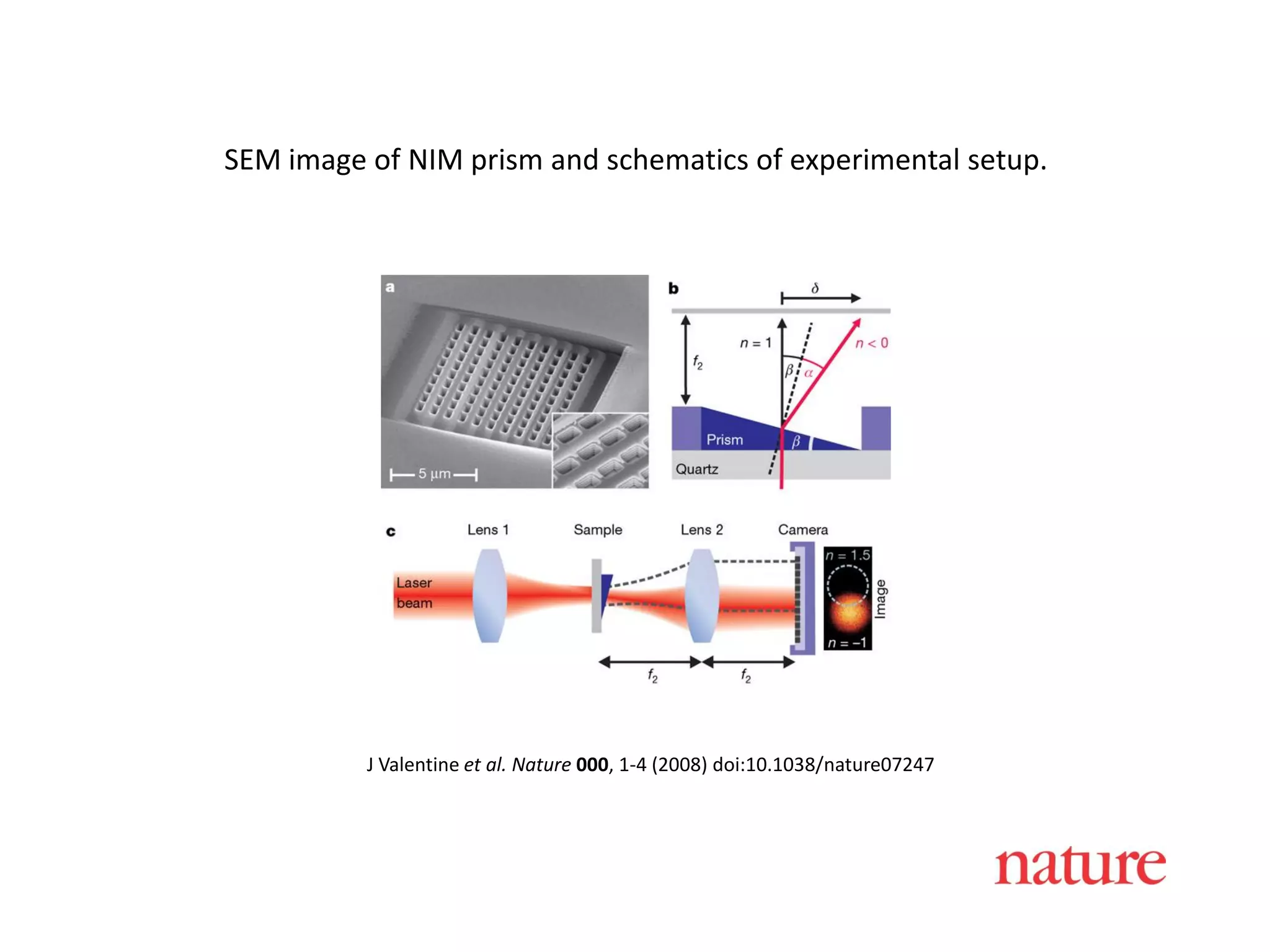
SEM image of NIM prism and schematics of experimental setup.


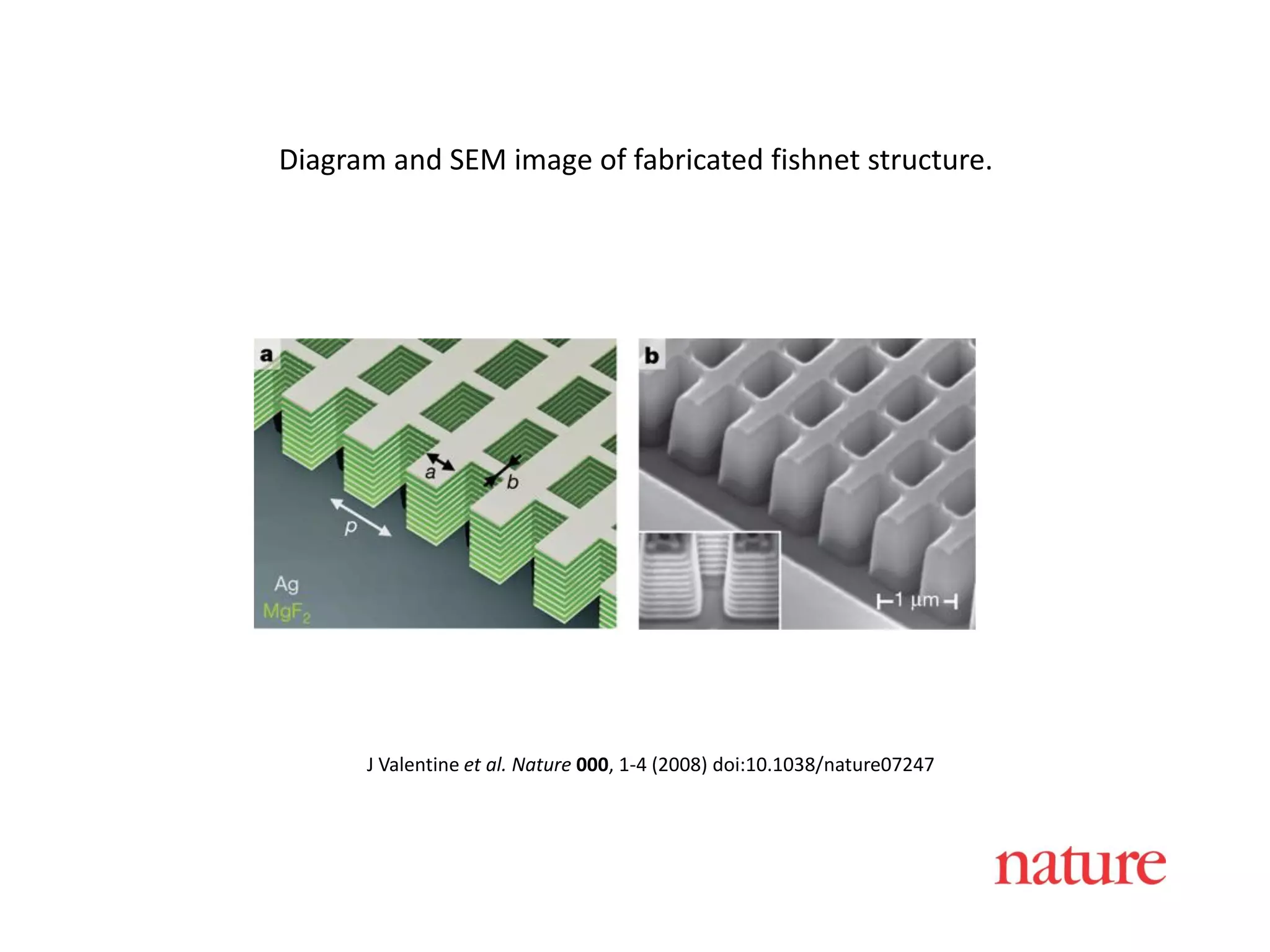
          J Valentine et al. Nature 000, 1-4 (2008) doi:10.1038/nature07247
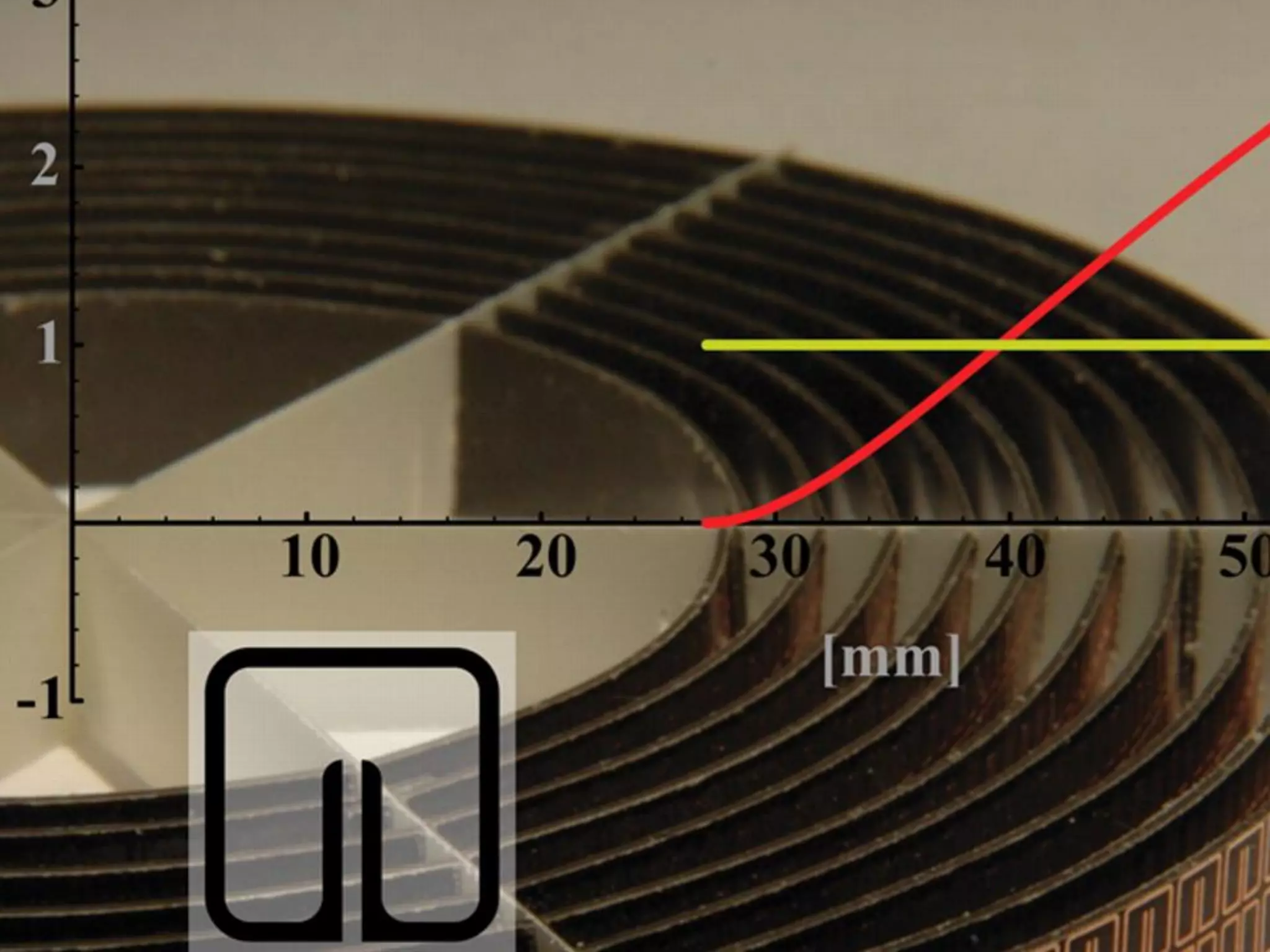
Diagram and SEM image of fabricated fishnet structure.


      J Valentine et al. Nature 000, 1-4 (2008) doi:10.1038/nature07247
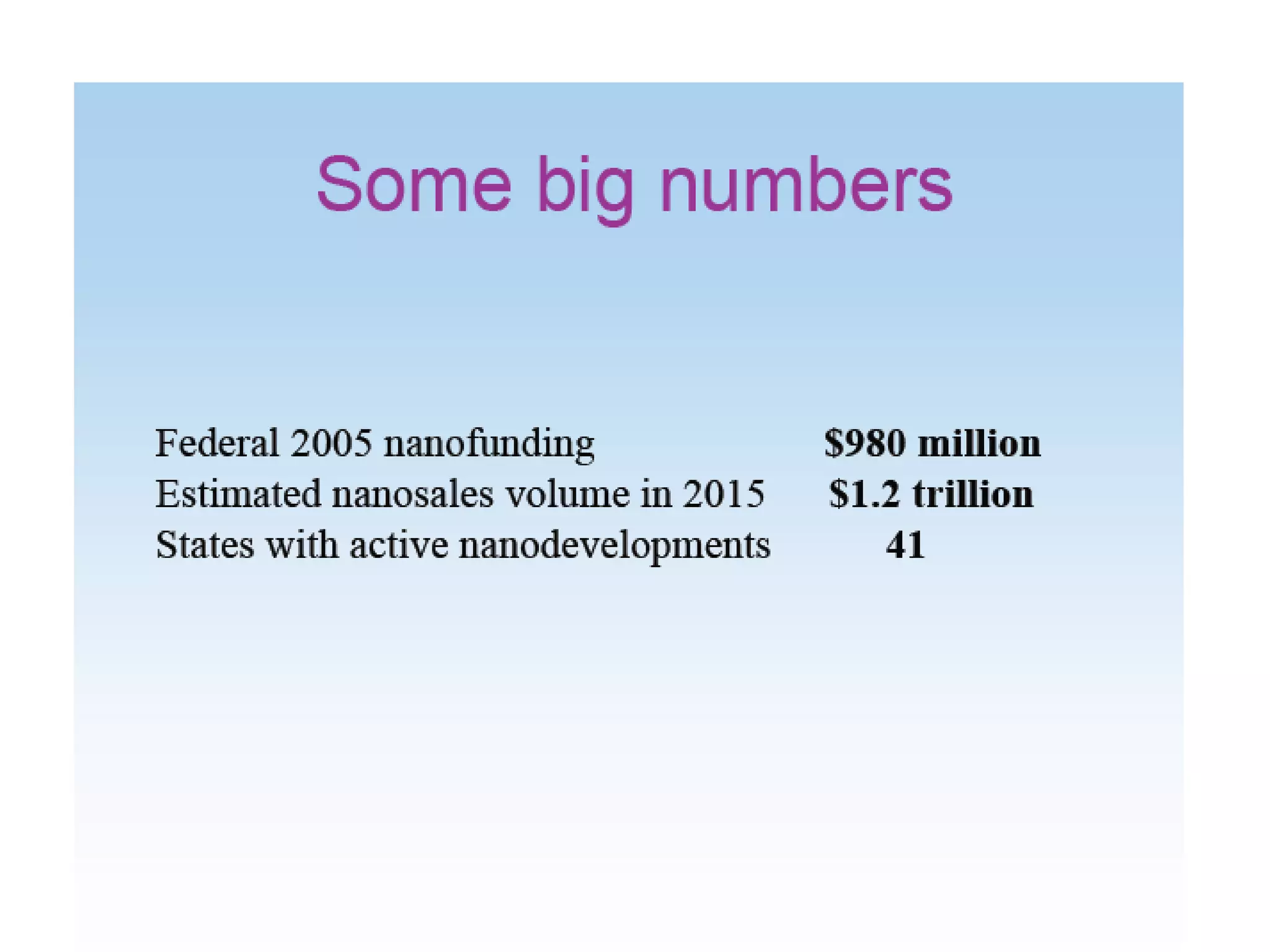
Business Week, Feb. 14, 2005
2012 tus lecture 7
2012 tus lecture 7
2012 tus lecture 7

2012 tus lecture 7

  • 1.
    Lecture 7. Other Nanotechnology Applications DNA sequencing Filtration Clothing and Sports Composites Other Nanomedicine Applications and Opportunities Other Nanotemplate-based Applications: Superconductors Magnetic Nanowires Ferroelectrics Dielectric Nanostructures and Cloaking The Business of Nanotechnology
  • 4.
    The H-bonding systemsof DNA base-pairs between guanine (G) and cytosine (C), and adenine (A) and thymine (T). In addition the chemical structures of histidine and tryptophan proteins are shown. Histamine is a decarboxylation product of histidine.
  • 5.
  • 6.
    Nanopore Technology DNA Sequencingis at the center of the Human Genome Project, which promises to revolutionize the Biomedical Sciences and the treatment of human diseases. NIH posts proposal solicitations at least twice a year Future Sequencing Technologies are Single Molecule Approaches *High speed sequencing individual DNA molecules electronically by a Solid- state Nanopore based device
  • 7.
    principle of nanoporedetection Measure Ionic Current Blockade Membrane Ions Flow _ Nanopore DNA Blocks Ion flow V I open  Apore Hm Apore  Apore  Amolecule
  • 8.
    Current blockage animation DNA molecule pore Ionic A Current (pA) time
  • 9.
    Current Blockages fromdsDNA Molecules ADNA(protein) ΔIb = σVbias Hm Lpolymer Lpolymer td   v Vbias Aecd   DI (t )dt event Iopen DIb td IBlockage
  • 10.
  • 11.
  • 23.
    Clothing, Sunscreens, and Sports Composites
  • 31.
  • 32.
    Superconductor Magnet Ferroelectric Nanoporous Semiconductor Membrane
  • 33.
  • 37.
    • Mesoscopic superconductinglead nanowires with high aspect ratio and diameter ranging from 40 to 270 nm have been grown by electrodeposition inside nanoporous polycarbonate membranes. Nanowires with a diameter less than 50 nm were insulators due to a poor crystal structure. The others are shown to be type II superconductors because of their small electronic mean free path, instead of being type I which is usual for the bulk form of lead. An increase in the thermodynamic critical field Hc is observed and is attributed to the small transversal dimension leading to an incomplete Meissner effect. Finally, it is demonstrated that this enhancement agrees with numerical simulations based on the Ginzburg–Landau theory.
  • 40.
  • 41.
  • 44.
    • Single crystallineYBa2Cu3O7−δ nanowires from a template-directed sol–gel route • Xu Jian, Liu Xiaohe and Li Yadong, , Department of Chemistry, Tsinghua University, Beijing 100084, PR China Department of Chemistry, Central South University, Changsha 410083
  • 45.
    Preparation of anodic aluminum oxide (AAO) template • Porous AAO membrane was prepared using a two-step anodizing process [19]. After degreasing in ethanol, high-purity Al foil (99.999%) was electropolished in a H3PO4–H2SO4–H2O (40:40:20 wt.%) solution for 5 min to reduce the surface roughness. The resulting Al sheet was washed with ethanol and distilled water, then mounted on a copper plate to serve as anode for anodization. In the first step, the anodizing of the Al sheet was carried out under constant voltages of 40 V in 0.3 M oxalic acid electrolyte for 6 h at 17 °C. Prior to the second anodization, first disordered porous alumina layer was removed in a mixture of H3PO4 (6 wt.%) and CrO3 (1.8 wt.%) at 60 °C for 3 h. The second step was following the same conditions as that of the first, except that the anodizing time was 3 h. A stepwise voltage reduction technique [28 and 29] was then utilized to thin the barrier layer. The as-obtained AAO membrane was immersed in 5 wt.% aqueous H3PO4 solution for pore widening and barrier layer dissolving, followed by washing and drying. Finally, the through-hole AAO membrane was detached from the Al substrate in a saturated HgCl2 solution for next use.
  • 46.
    Sol–gel process and fabrication of YBCO nanowires • YBa2Cu3O7−δ sols used for template synthesis can be obtained as follows. Firstly, appropriate quantities of ammonia and ethylenediamine tetraacetic acid (EDTA) was added to copper acetate solutions. Meanwhile the solution of Ba2+ or Y3+ was prepared by dissolving Ba(OH)2·8H2O or Y2O3 into acetic acid solution, and then both were poured into the previous solution of Cu2+ to give a mixture with initial molar ratio of Y3+:Ba2+:Cu3+ = 1:2:3. The pH of this mixture solution was adjusted to 6.5 using ammonia and glacial acetic acid, thus preventing crystallization of copper acetate during gelation. The obtained solution was hydrolyzed to form a dispersed blue colloidal particles solution (sol) at 70 °C under continuous stirring. • Then a piece of AAO membrane (φ 2 cm) was dipped into this transparent hot sol followed by ultrasonic treatment 10 min, and kept at ambient temperature overnight (12 h). The sol containing AAO membrane was gelled to shards by slow evaporation at 90 °C. To form the superconducting phase, the obtained gel/AAO composite was further heated at 50 °C h−1 to 950 °C and held for 2 h in air at ambient oxygen pressure. Subsequently, the specimen was cooled at 50 °C h−1 to ambient temperature. Finally, the AAO membrane incorporated with YBCO nanowires was picked out, and rubbed away YBCO powders covering both faces of the membrane by polishing alumina.
  • 47.
    • Scanning electronmicroscopy (SEM) confirmed that the monodisperse cylindrical pores of alumina membrane were filled with nanowire arrays with a narrow distribution of diameters. The X-ray diffraction (XRD) pattern of the obtained nanowires was assessed as orthorhombic YBCO 123 lattice after heating gels at 950 °C for crystallization. As determined by transmission electron microscopy (TEM) and electron diffraction (ED) analysis, the nanowires were essentially single crystalline in nature. High-resolution transmission electron microscope (HRTEM) images further revealed the single crystalline nature of the as-prepared nanowires.
  • 48.
    Representative SEM images of (a) top-view of an empty AAO membrane; (b) cross-sectional view of AAO membrane; (c) top-view of an AAO membrane •C filled with YBCO nanowires; (d) cross-sectional view of YBCO nanowires/AAO composite, which revealed the filling of YBCO wires within most of the AAO pores. The surface of membrane was covered with YBCO powders and could be removed by polishing alumina. L O S E
  • 52.
  • 53.
    • Magnetic propertiesof ferromagnetic nanowires embedded in nanoporous alumina membranes • M. Kröll, , a, W. J. Blaua, D. Grandjeanb, R. E. Benfieldb, F. Luisc, P. M. Paulusc and L. J. de Jonghc a Physics Department, Trinity College, Dublin, Ireland b Centre for Materials Research, University of Kent, Canterbury, UK c Kamerlingh Onnes Laboratorium, Universiteit Leiden, The Netherlands
  • 54.
    • Iron, nickeland cobalt nanowires are prepared within the pores of nanoporous alumina membranes using an electrochemical AC plating procedure. Nanowires produced in this way can be easily varied in diameter (5–250 nm) and length (up to several hundred microns). The magnetisation curves for these nanowire/alumina composites can then be determined not only as a function of the temperature but also as a function of the wire diameter and length. Conclusions regarding the magnetisation reversal processes that take place in the wires can be drawn. For Fe and Ni nanowires, we show that the magnetisation process in wires with a diameter smaller than the domain wall width is independent of the wire length and probably takes place via the formation of a small magnetic domain at the end of the wires and a subsequent propagation of the domain wall along the wire. For Co nanowires a competition between the shape anisotropy and the temperature- and size-dependent magnetocrystalline anisotropy could be observed.
  • 55.
    Magnetization parallel toand perpendicular to the long axis of the nanotube
  • 69.
  • 74.
    Dielectric Nanostructures –a road to Metamaterials, negative dielectric Constants, and cloaking
  • 78.
    SEM image ofNIM prism and schematics of experimental setup. J Valentine et al. Nature 000, 1-4 (2008) doi:10.1038/nature07247
  • 80.
    Diagram and SEMimage of fabricated fishnet structure. J Valentine et al. Nature 000, 1-4 (2008) doi:10.1038/nature07247
  • 83.