john powell
Williams Chair in Civil Rights and Civil Liberties,
                           Moritz College of Law
    Director, The Kirwan Institute for the Study of
                                  Race & Ethnicity
                        The Ohio State University


                               March 18, 2011, U.C
                               Irvine
Today, . . . with the important exception of
employment discrimination, work, livelihoods, social
provision, and the material bases of citizenship
have vanished from the constitutional landscape.
That is a scandal, for the United States is no different
from other nations: Constitutional democracy is
really impossible here . . . without some limits on
social and economic deprivation.

- William E. Forbath, “Social and Economic Rights in
the American Grain”
Critical Race Theory on
  the Non-Separation
   Between Race and
          Class
 Race, class, and the other categories of
  difference that make a difference are co-
  constitutive.
 This co-constitution operates at all scales:
  • Individual identity
  • Group identity and membership
  • Intergroup coalitions
  • Across space and over time
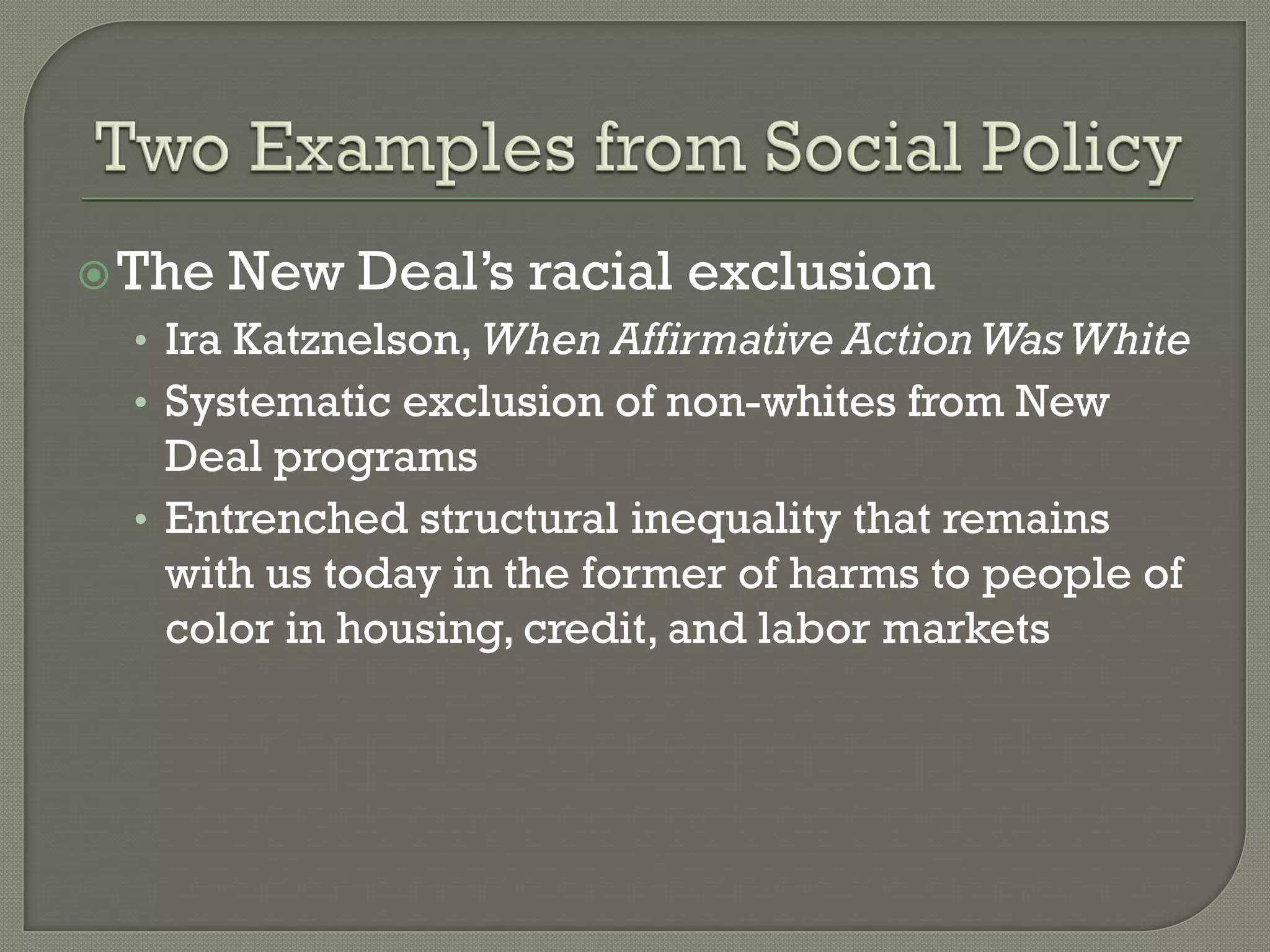
 The   New Deal’s racial exclusion
  • Ira Katznelson, When Affirmative Action Was White
  • Systematic exclusion of non-whites from New
    Deal programs
  • Entrenched structural inequality that remains
    with us today in the former of harms to people of
    color in housing, credit, and labor markets
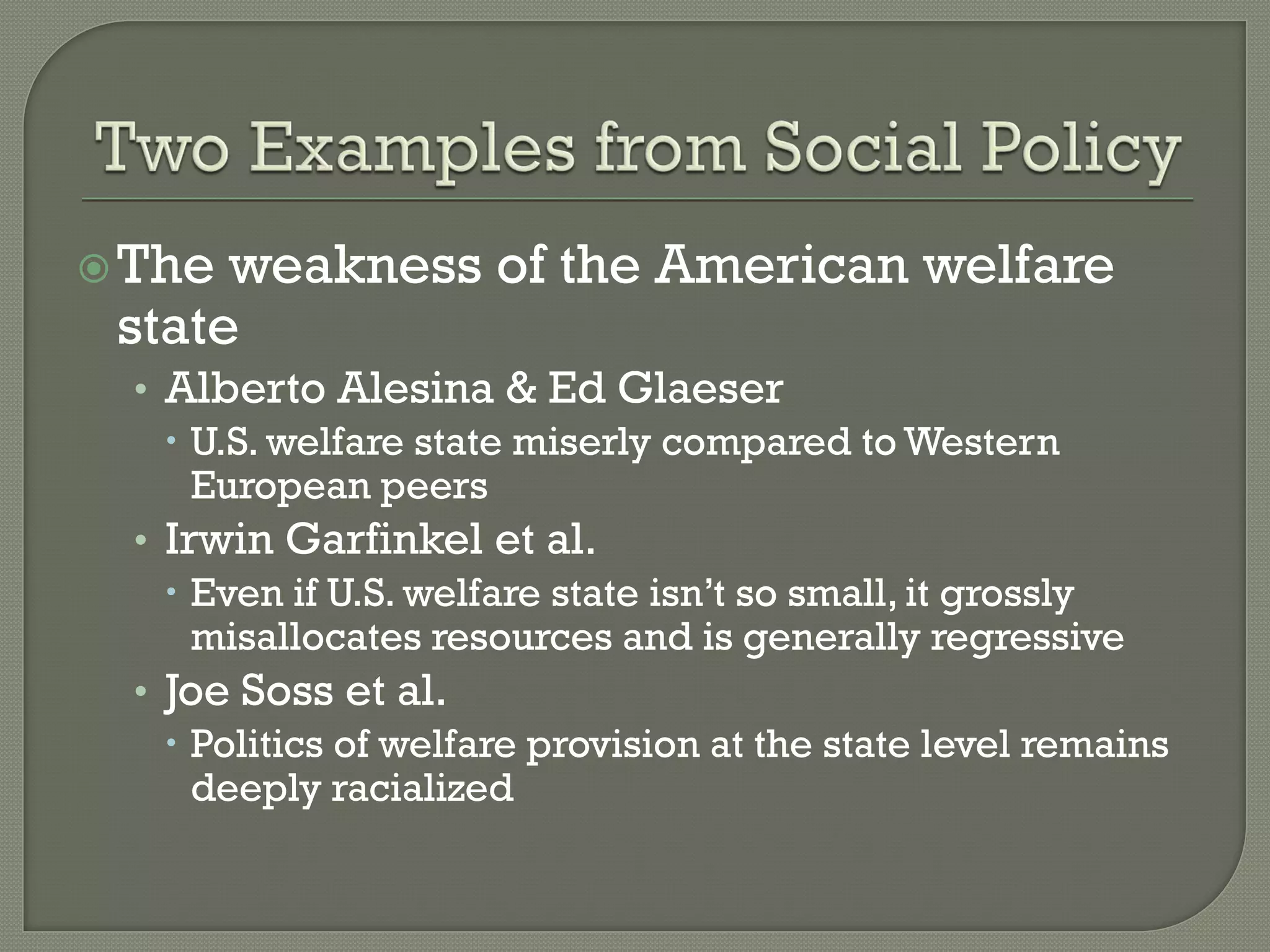
 The weakness of the American welfare
 state
  • Alberto Alesina & Ed Glaeser
     U.S. welfare state miserly compared to Western
      European peers
  • Irwin Garfinkel et al.
     Even if U.S. welfare state isn’t so small, it grossly
      misallocates resources and is generally regressive
  • Joe Soss et al.
     Politics of welfare provision at the state level remains
      deeply racialized
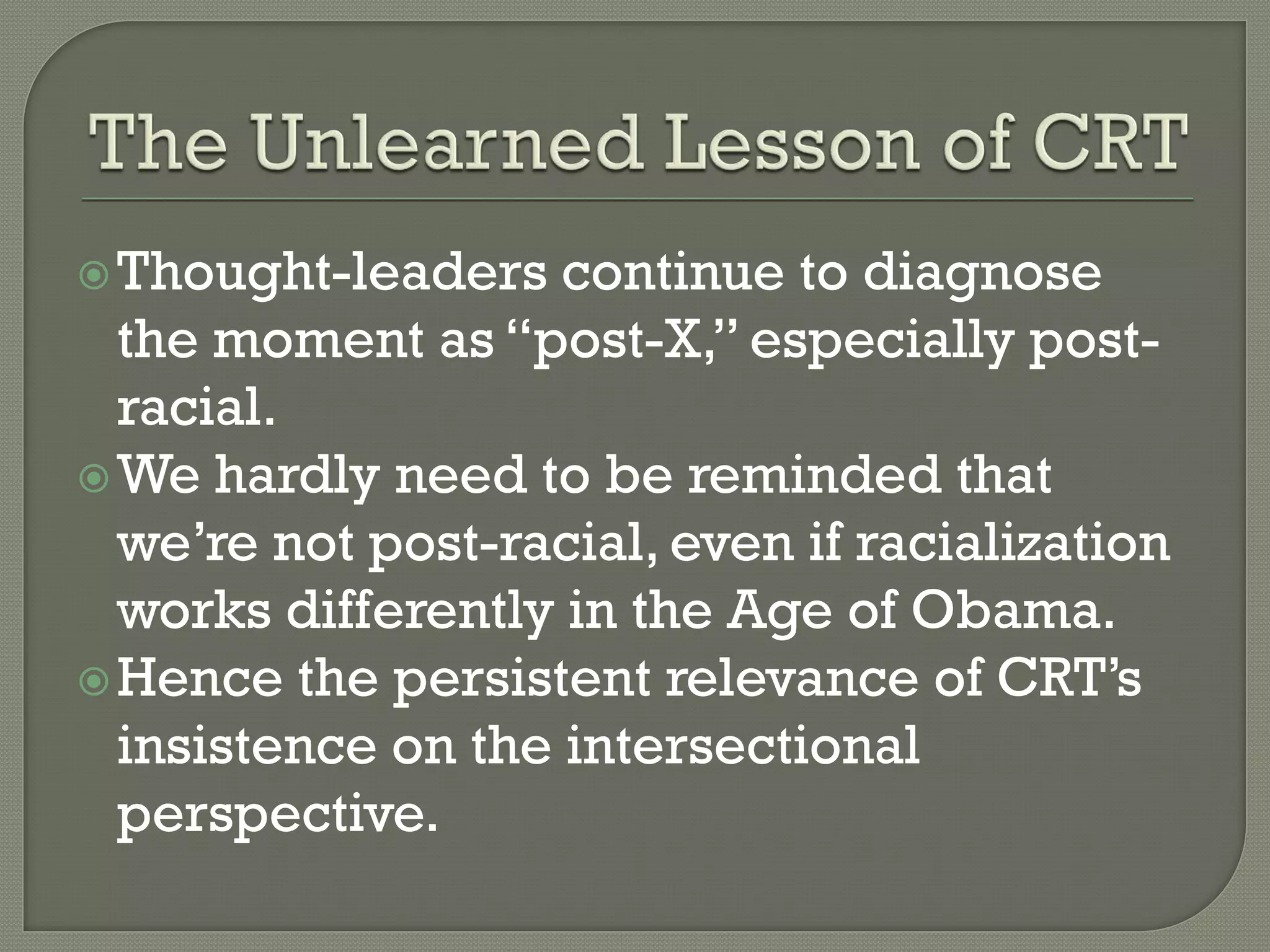
 Thought-leaders   continue to diagnose
  the moment as “post-X,” especially post-
  racial.
 We hardly need to be reminded that
  we’re not post-racial, even if racialization
  works differently in the Age of Obama.
 Hence the persistent relevance of CRT’s
  insistence on the intersectional
  perspective.
From Race and Class to
   the Structure of
     Opportunity
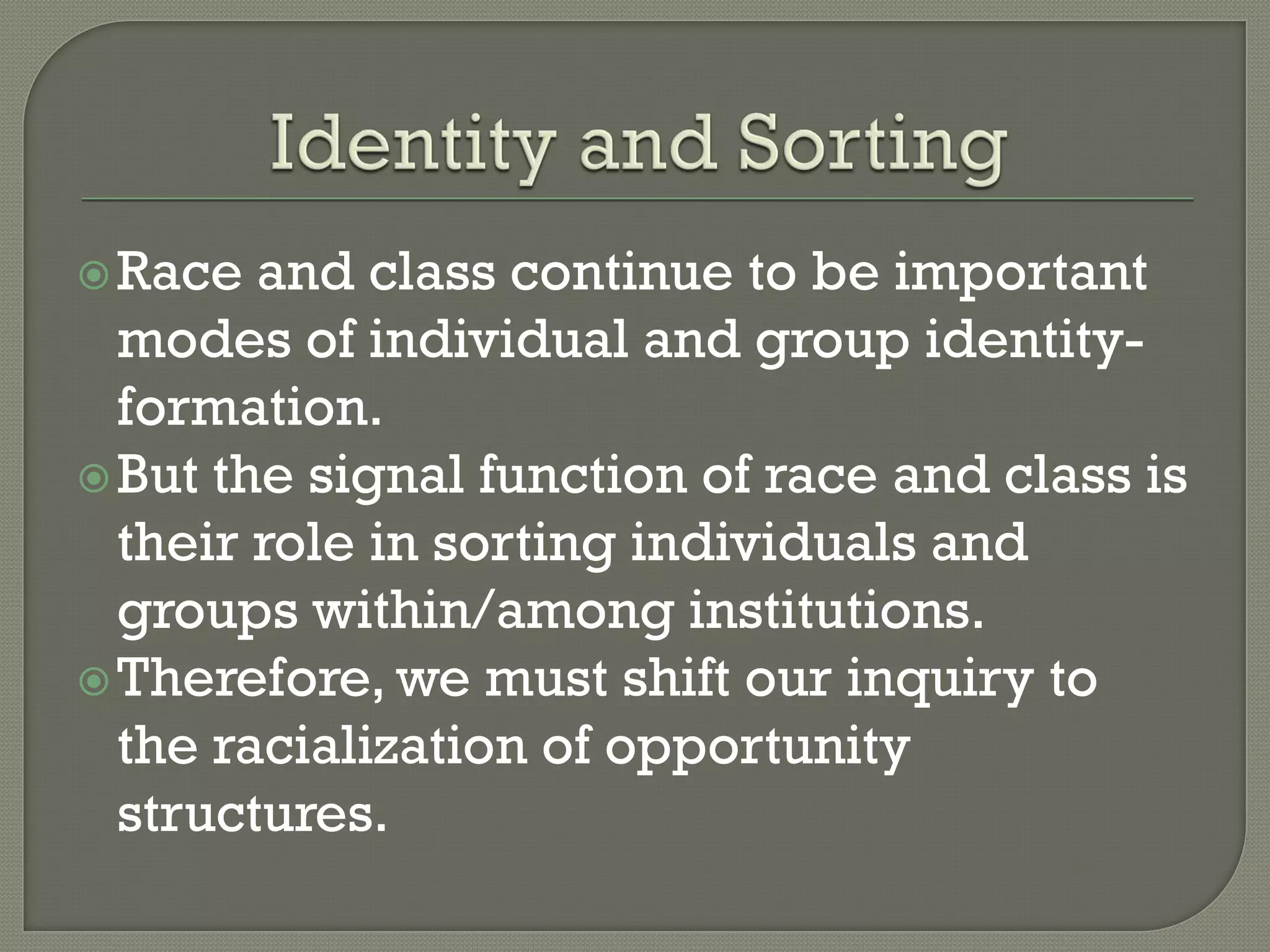
 Race  and class continue to be important
  modes of individual and group identity-
  formation.
 But the signal function of race and class is
  their role in sorting individuals and
  groups within/among institutions.
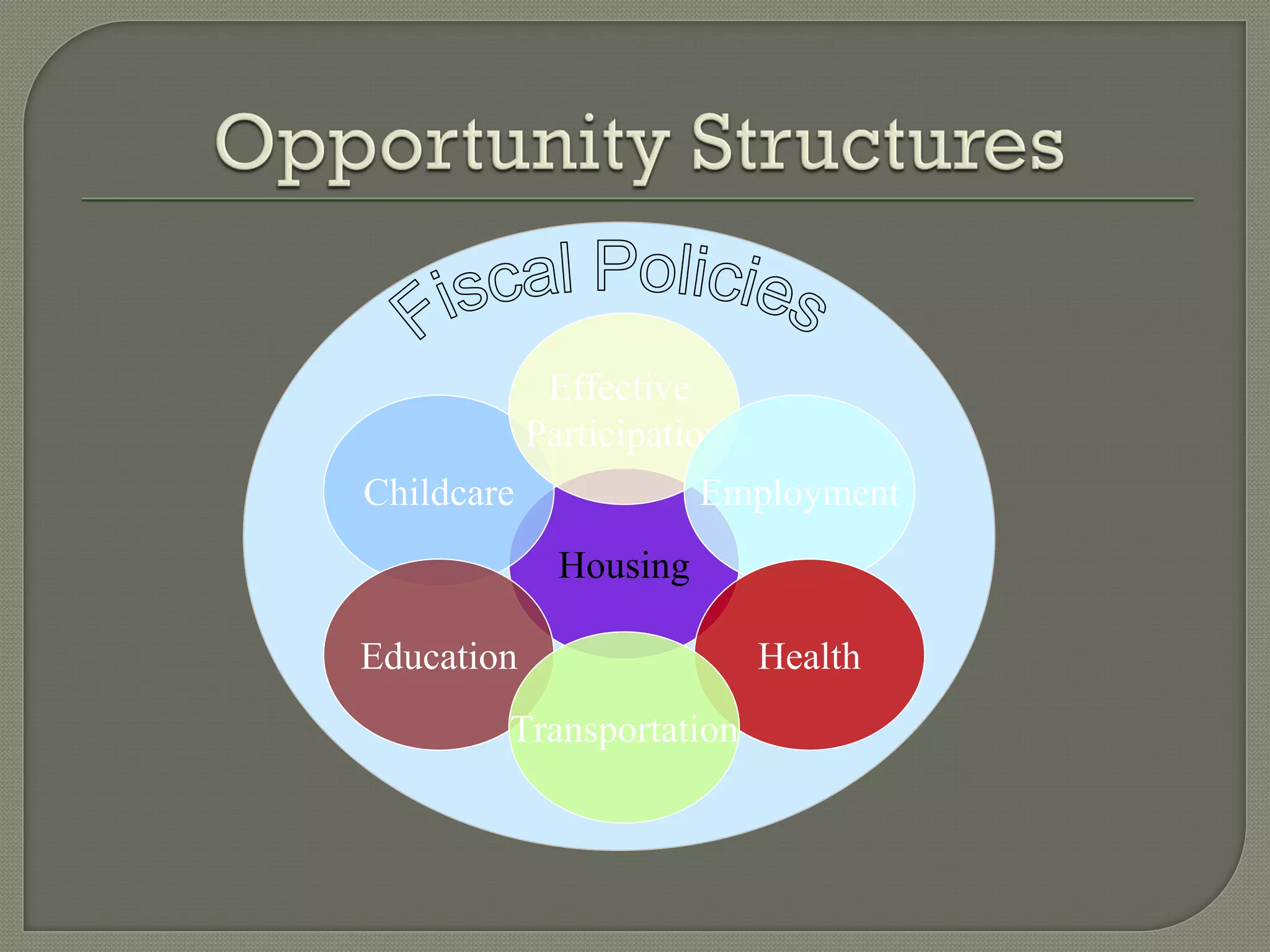
 Therefore, we must shift our inquiry to
  the racialization of opportunity
  structures.
Effective
            Participation
Childcare               Employment
              Housing

Education                   Health
        Transportation
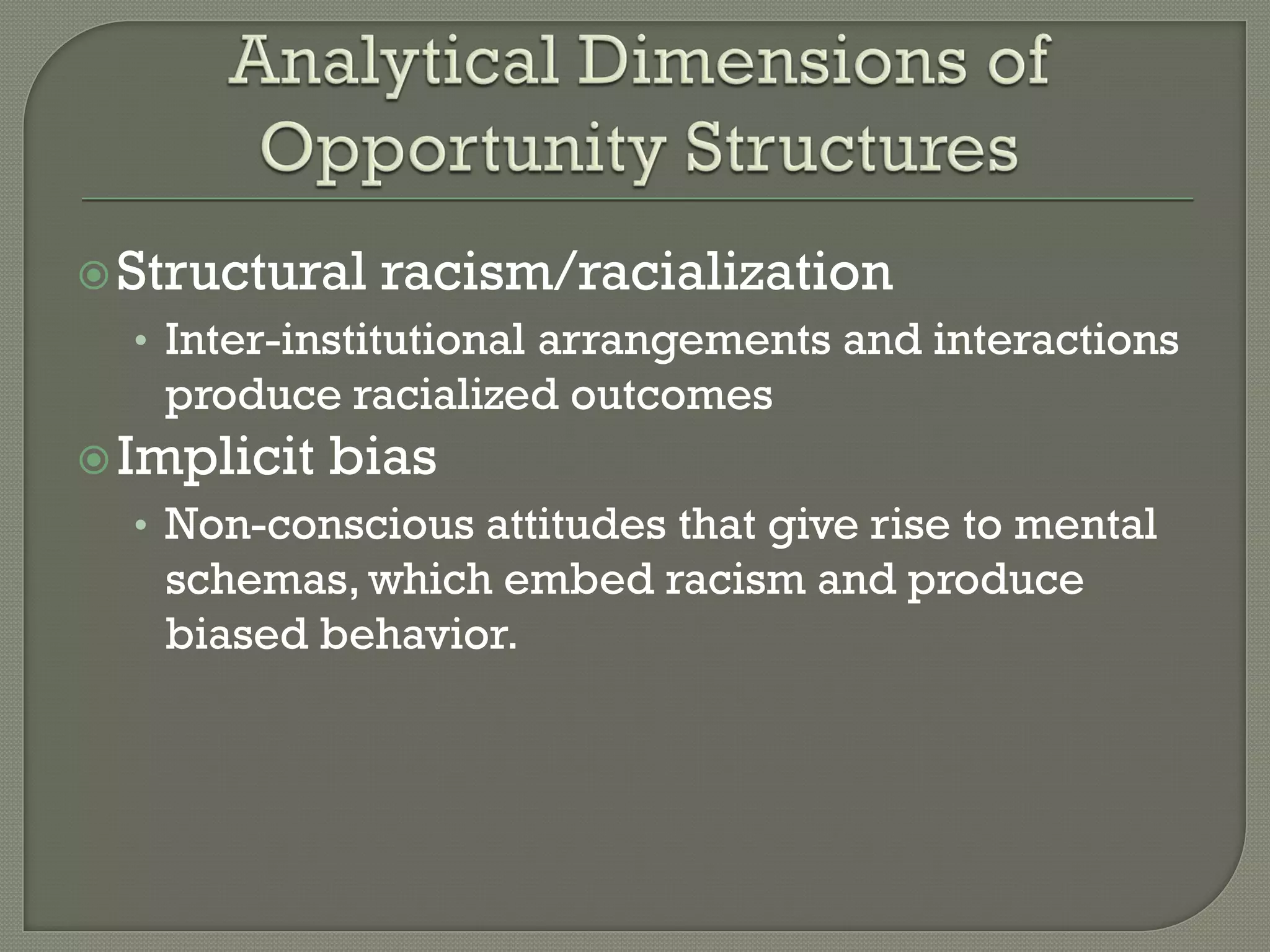
 Structural   racism/racialization
  • Inter-institutional arrangements and interactions
   produce racialized outcomes
 Implicit   bias
  • Non-conscious attitudes that give rise to mental
   schemas, which embed racism and produce
   biased behavior.
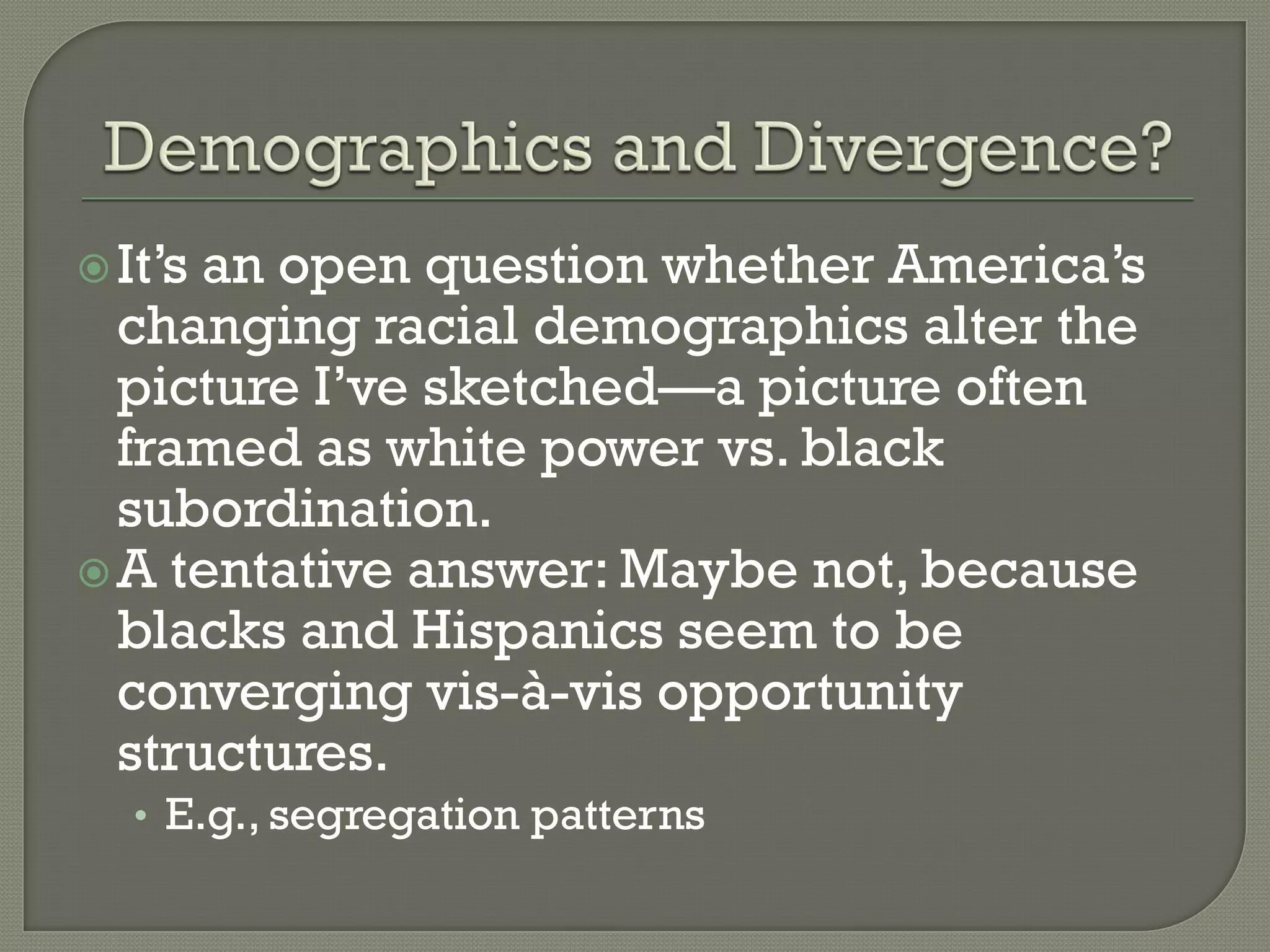
 It’san open question whether America’s
  changing racial demographics alter the
  picture I’ve sketched—a picture often
  framed as white power vs. black
  subordination.
 A tentative answer: Maybe not, because
  blacks and Hispanics seem to be
  converging vis-à-vis opportunity
  structures.
   • E.g., segregation patterns
The Dynamic Role of
  Corporate Power
 The   debate around Citizens United stages
  one way to talk about corporate power,
  i.e. the apparently zero-sum relationship
  between corporate rights and individual
  rights.
 Consider in this light the appropriation of
  the 14th Amendment to vindicate
  corporate rights rather than civil rights.
 But corporations increasingly rework how
  power shapes key domains of life.
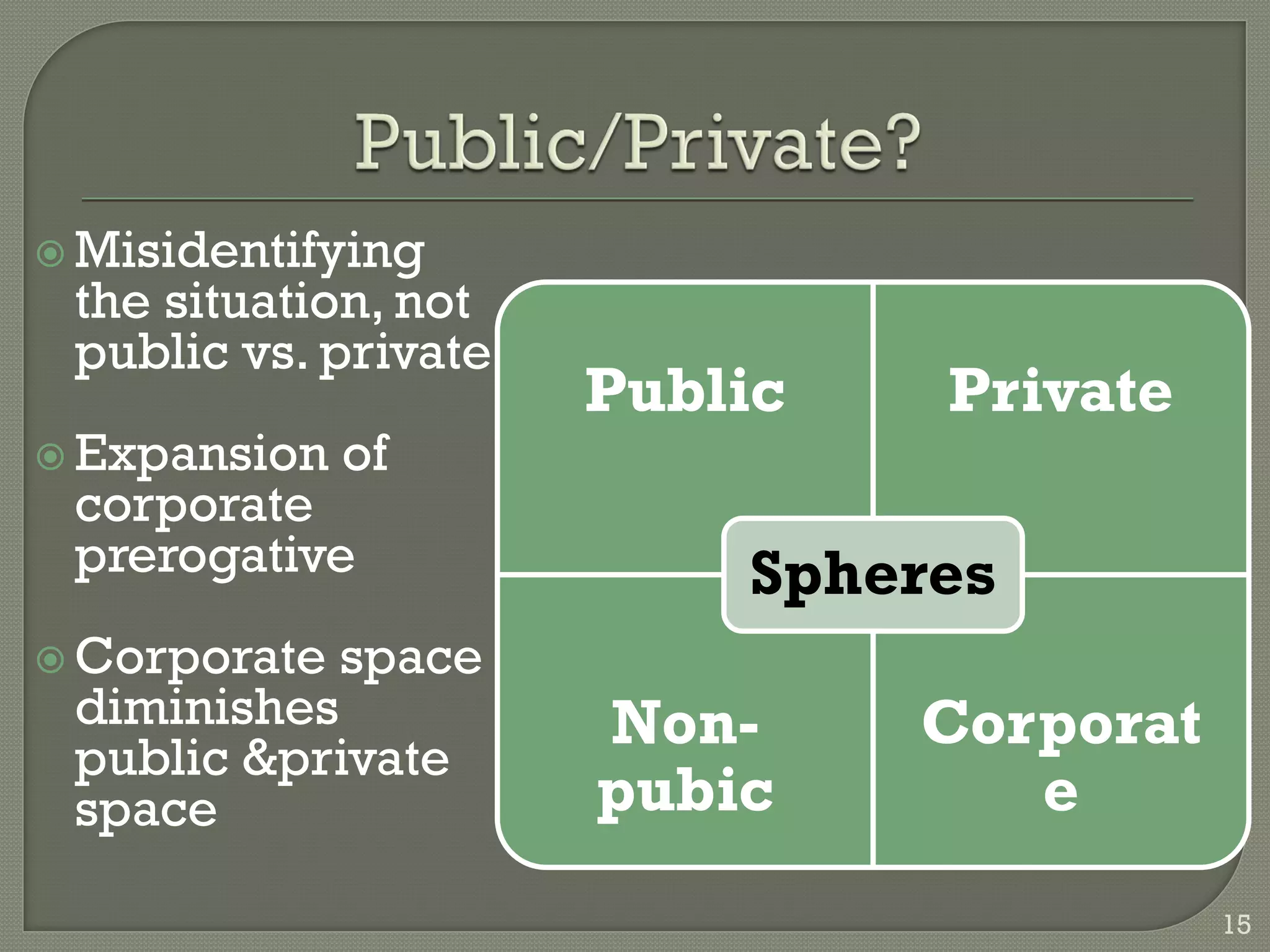
 Misidentifying
 the situation, not
 public vs. private
                      Public           Private
 Expansion   of             Private
 corporate
 prerogative               Spheres
                         Corporate
 Corporate   space
 diminishes           Non-             Corporat
 public &private
 space                pubic               e
                                                  15

Capitalism, Race, and the Struggle for Equality

  • 1.
    john powell Williams Chairin Civil Rights and Civil Liberties, Moritz College of Law Director, The Kirwan Institute for the Study of Race & Ethnicity The Ohio State University March 18, 2011, U.C Irvine
  • 2.
    Today, . .. with the important exception of employment discrimination, work, livelihoods, social provision, and the material bases of citizenship have vanished from the constitutional landscape. That is a scandal, for the United States is no different from other nations: Constitutional democracy is really impossible here . . . without some limits on social and economic deprivation. - William E. Forbath, “Social and Economic Rights in the American Grain”
  • 3.
    Critical Race Theoryon the Non-Separation Between Race and Class
  • 4.
     Race, class,and the other categories of difference that make a difference are co- constitutive.  This co-constitution operates at all scales: • Individual identity • Group identity and membership • Intergroup coalitions • Across space and over time
  • 5.
     The New Deal’s racial exclusion • Ira Katznelson, When Affirmative Action Was White • Systematic exclusion of non-whites from New Deal programs • Entrenched structural inequality that remains with us today in the former of harms to people of color in housing, credit, and labor markets
  • 6.
     The weaknessof the American welfare state • Alberto Alesina & Ed Glaeser  U.S. welfare state miserly compared to Western European peers • Irwin Garfinkel et al.  Even if U.S. welfare state isn’t so small, it grossly misallocates resources and is generally regressive • Joe Soss et al.  Politics of welfare provision at the state level remains deeply racialized
  • 7.
     Thought-leaders continue to diagnose the moment as “post-X,” especially post- racial.  We hardly need to be reminded that we’re not post-racial, even if racialization works differently in the Age of Obama.  Hence the persistent relevance of CRT’s insistence on the intersectional perspective.
  • 8.
    From Race andClass to the Structure of Opportunity
  • 9.
     Race and class continue to be important modes of individual and group identity- formation.  But the signal function of race and class is their role in sorting individuals and groups within/among institutions.  Therefore, we must shift our inquiry to the racialization of opportunity structures.
  • 10.
    Effective Participation Childcare Employment Housing Education Health Transportation
  • 11.
     Structural racism/racialization • Inter-institutional arrangements and interactions produce racialized outcomes  Implicit bias • Non-conscious attitudes that give rise to mental schemas, which embed racism and produce biased behavior.
  • 12.
     It’san openquestion whether America’s changing racial demographics alter the picture I’ve sketched—a picture often framed as white power vs. black subordination.  A tentative answer: Maybe not, because blacks and Hispanics seem to be converging vis-à-vis opportunity structures. • E.g., segregation patterns
  • 13.
    The Dynamic Roleof Corporate Power
  • 14.
     The debate around Citizens United stages one way to talk about corporate power, i.e. the apparently zero-sum relationship between corporate rights and individual rights.  Consider in this light the appropriation of the 14th Amendment to vindicate corporate rights rather than civil rights.  But corporations increasingly rework how power shapes key domains of life.
  • 15.
     Misidentifying thesituation, not public vs. private Public Private  Expansion of Private corporate prerogative Spheres Corporate  Corporate space diminishes Non- Corporat public &private space pubic e 15