Masculinity
To understand masculinity theories
and how to apply them to media
texts
STARTER:
Complete the following:
“Boys don’t… “
List some typical action films –
think about the typical roles
assigned to men and women
Representations of Gender
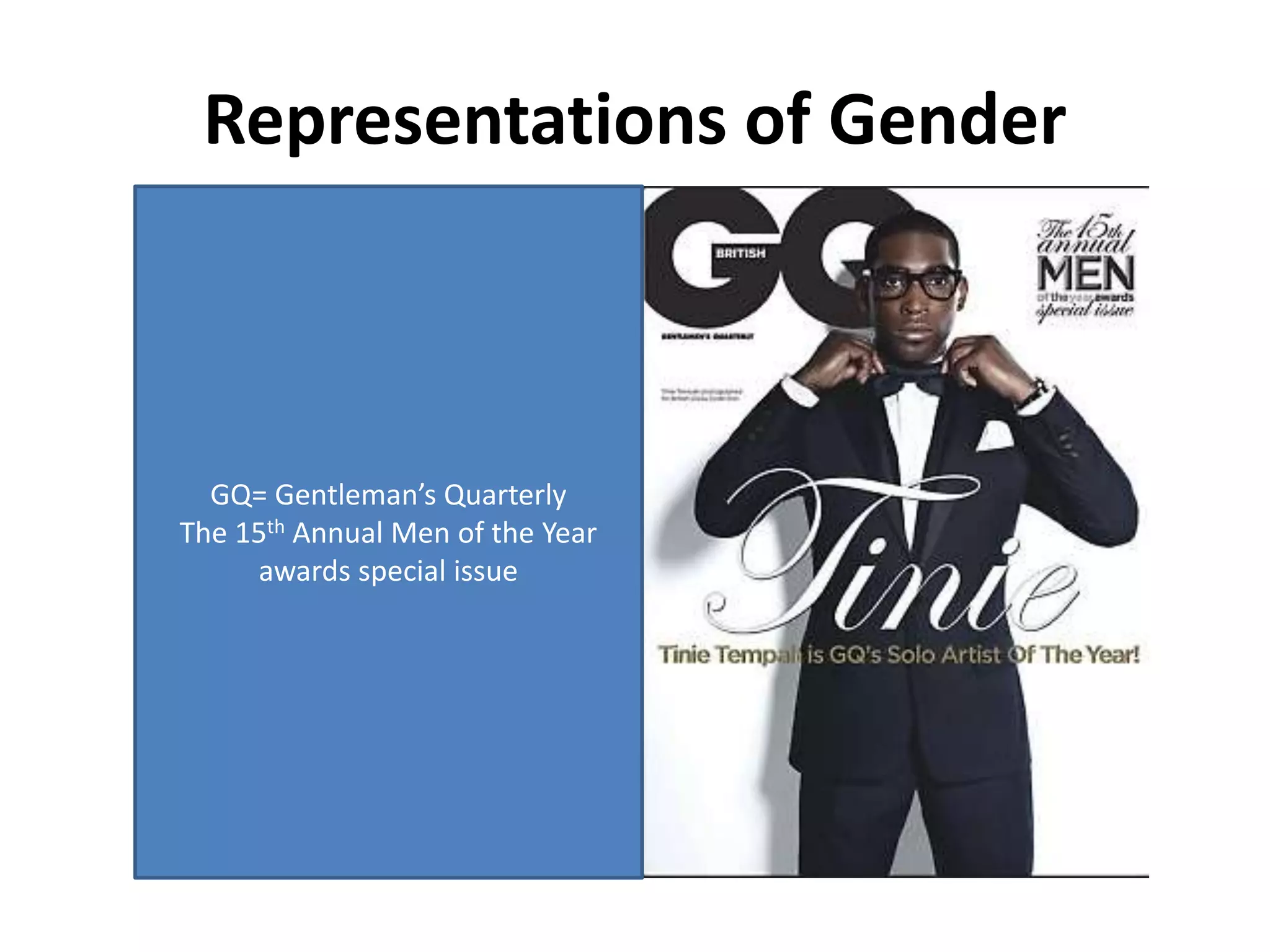
GQ= Gentleman’s Quarterly
The 15th Annual Men of the Year
awards special issue
Patriarchy
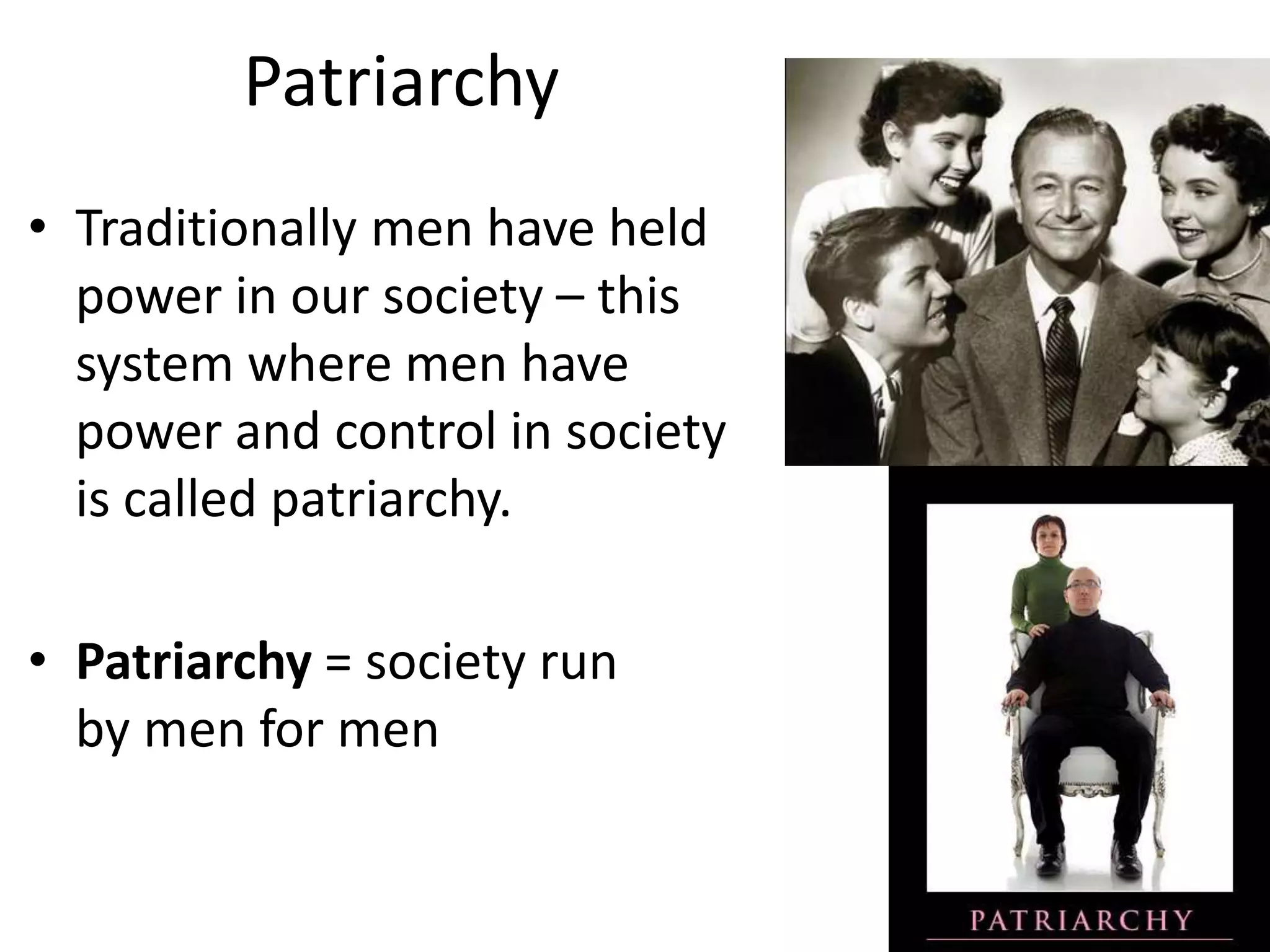
• Traditionally men have held
power in our society – this
system where men have
power and control in society
is called patriarchy.
• Patriarchy = society run
by men for men
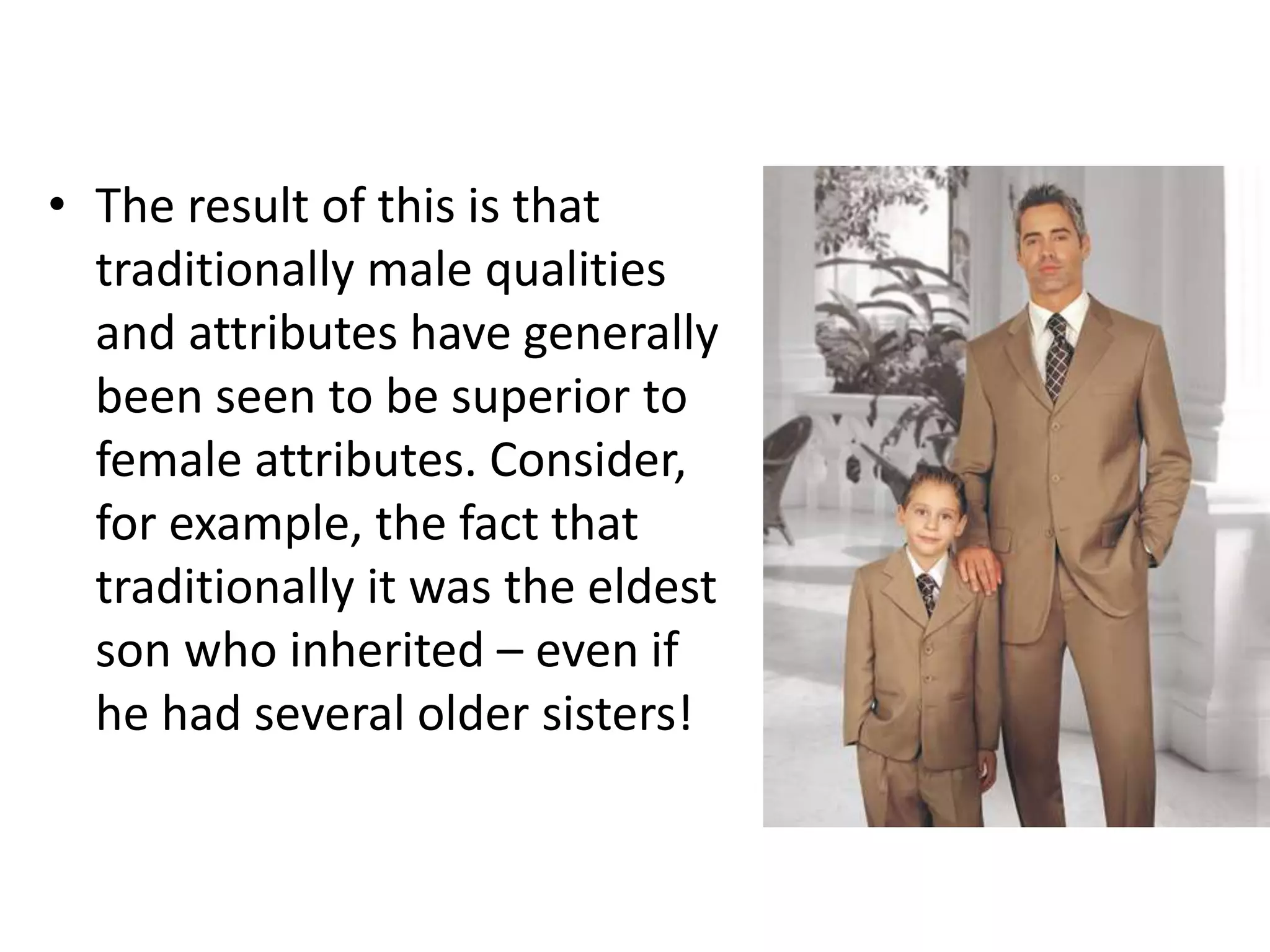
• The result of this is that
traditionally male qualities
and attributes have generally
been seen to be superior to
female attributes. Consider,
for example, the fact that
traditionally it was the eldest
son who inherited – even if
he had several older sisters!
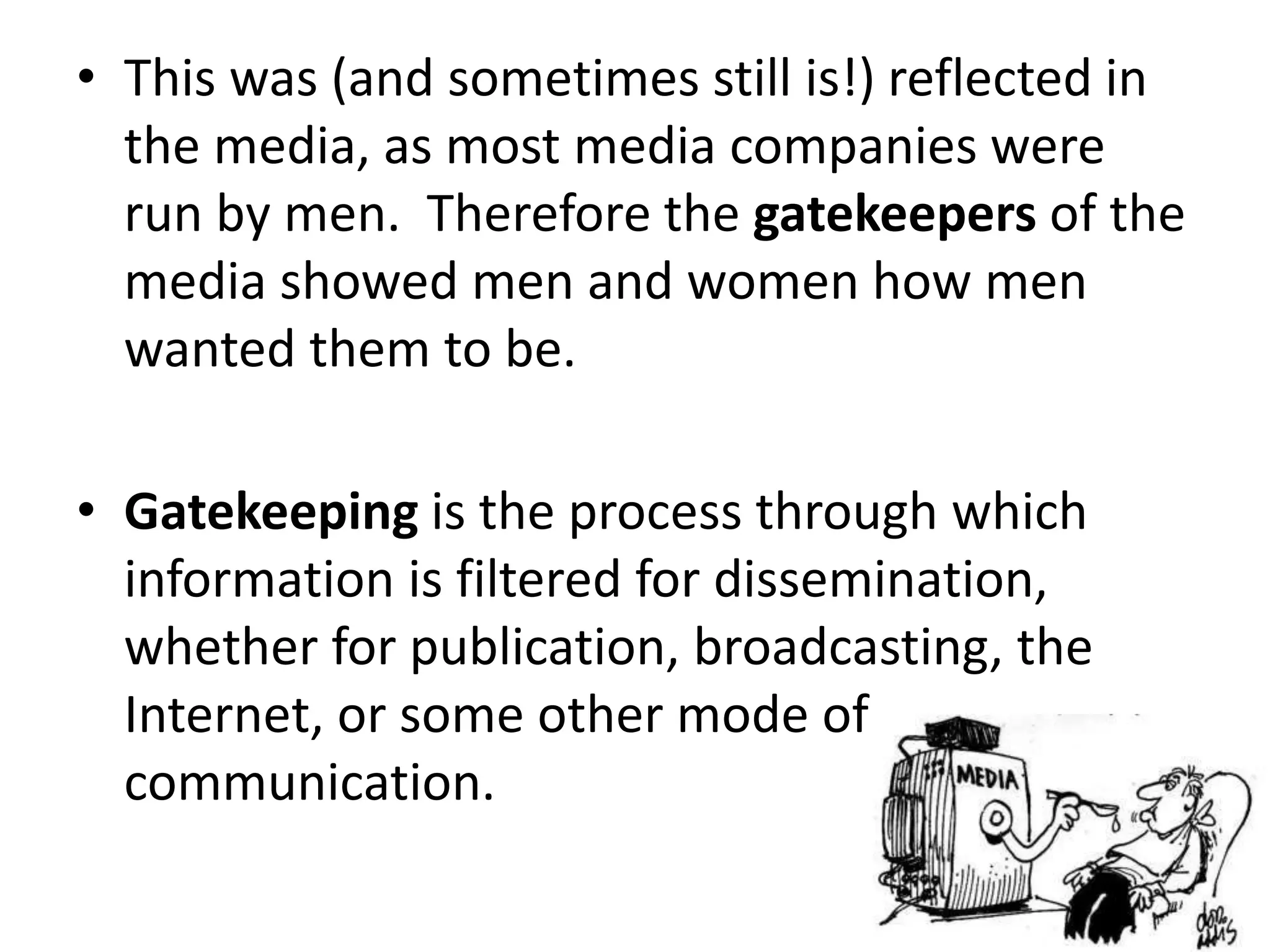
• This was (and sometimes still is!) reflected in
the media, as most media companies were
run by men. Therefore the gatekeepers of the
media showed men and women how men
wanted them to be.
• Gatekeeping is the process through which
information is filtered for dissemination,
whether for publication, broadcasting, the
Internet, or some other mode of
communication.
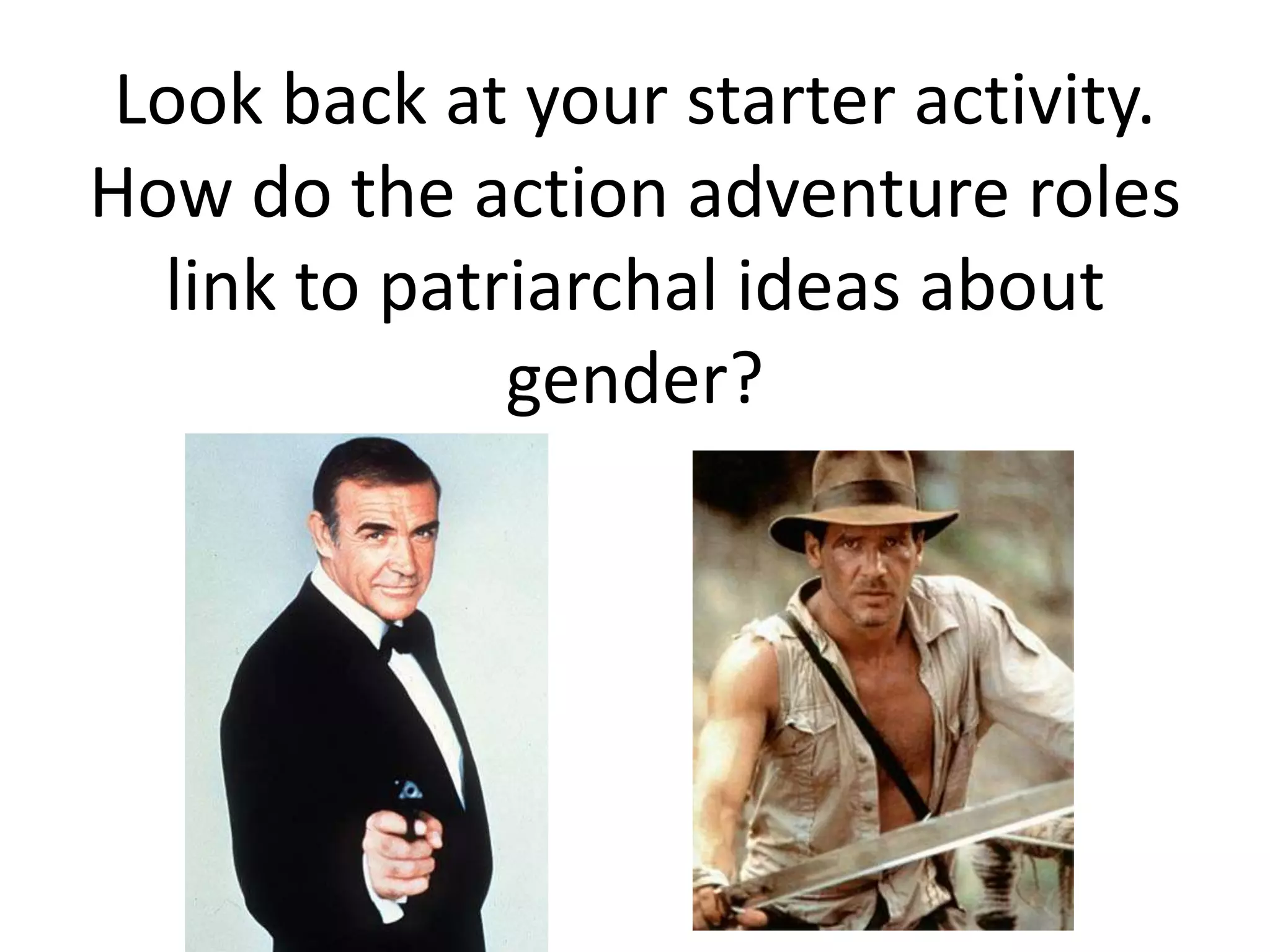
Look back at your starter activity.
How do the action adventure roles
link to patriarchal ideas about
gender?
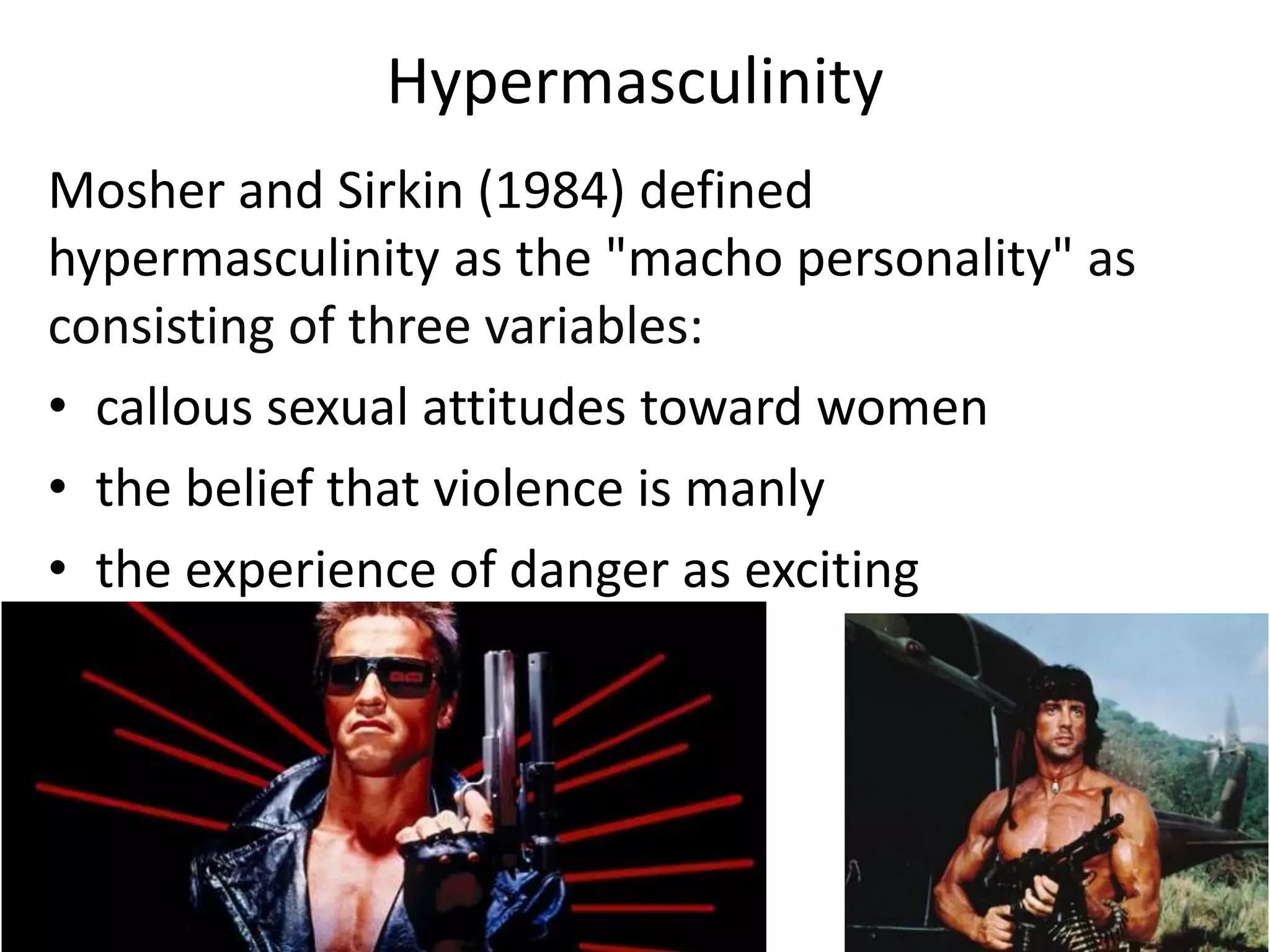
Hypermasculinity
Mosher and Sirkin (1984) defined
hypermasculinity as the "macho personality" as
consisting of three variables:
• callous sexual attitudes toward women
• the belief that violence is manly
• the experience of danger as exciting
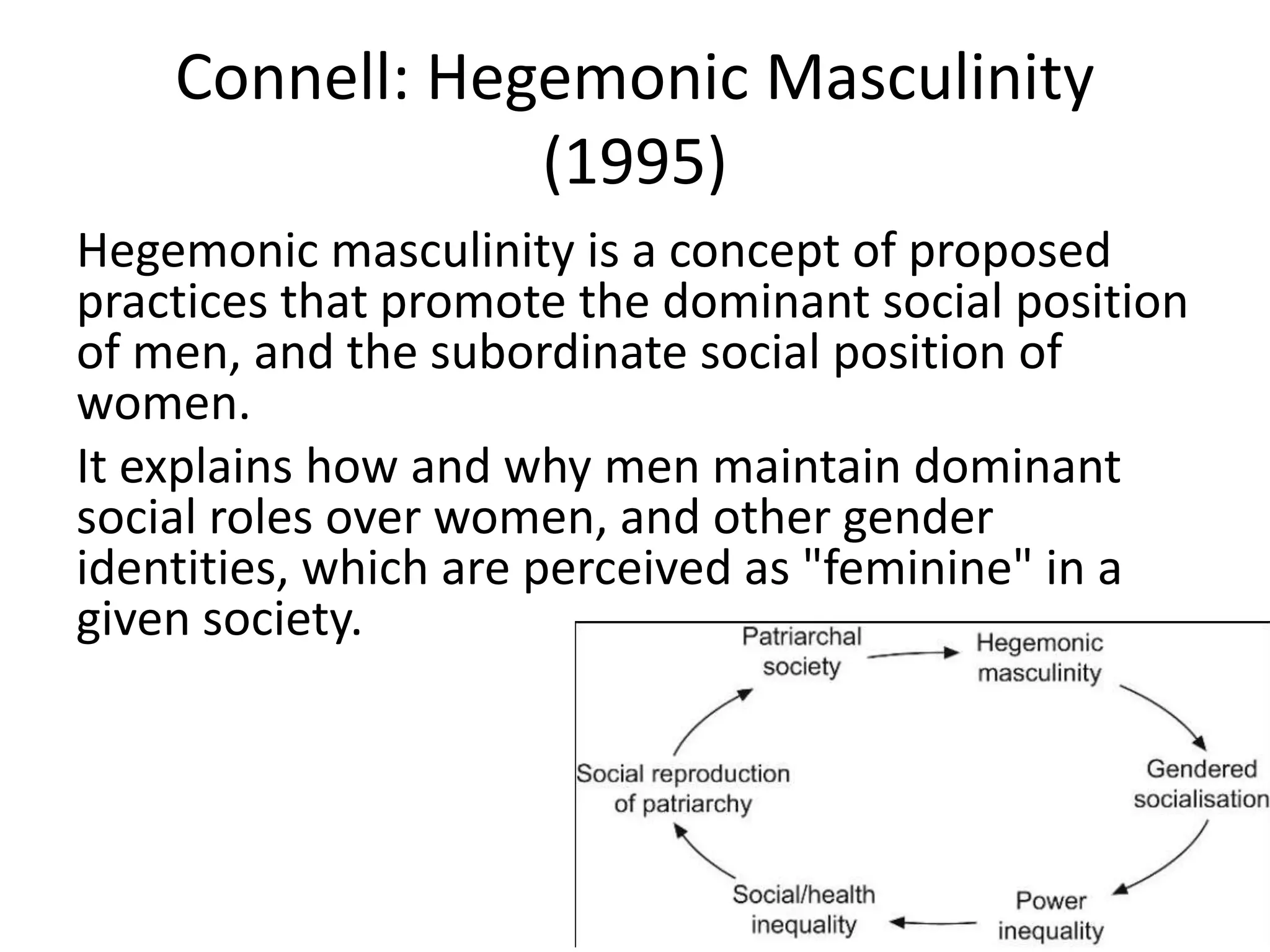
Connell: Hegemonic Masculinity
(1995)
Hegemonic masculinity is a concept of proposed
practices that promote the dominant social position
of men, and the subordinate social position of
women.
It explains how and why men maintain dominant
social roles over women, and other gender
identities, which are perceived as "feminine" in a
given society.
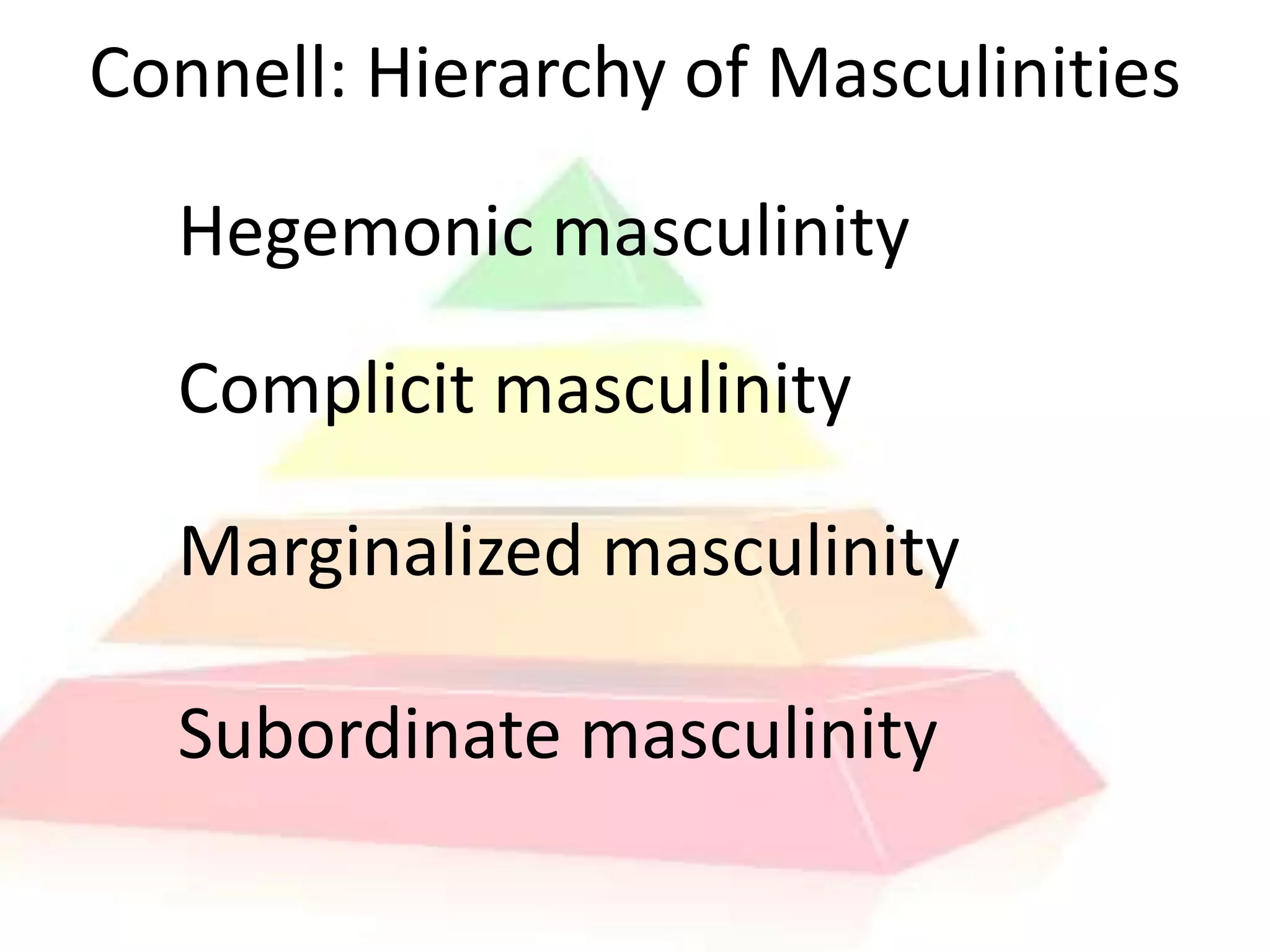
Hegemonic masculinity
Complicit masculinity
Marginalized masculinity
Subordinate masculinity
Connell: Hierarchy of Masculinities
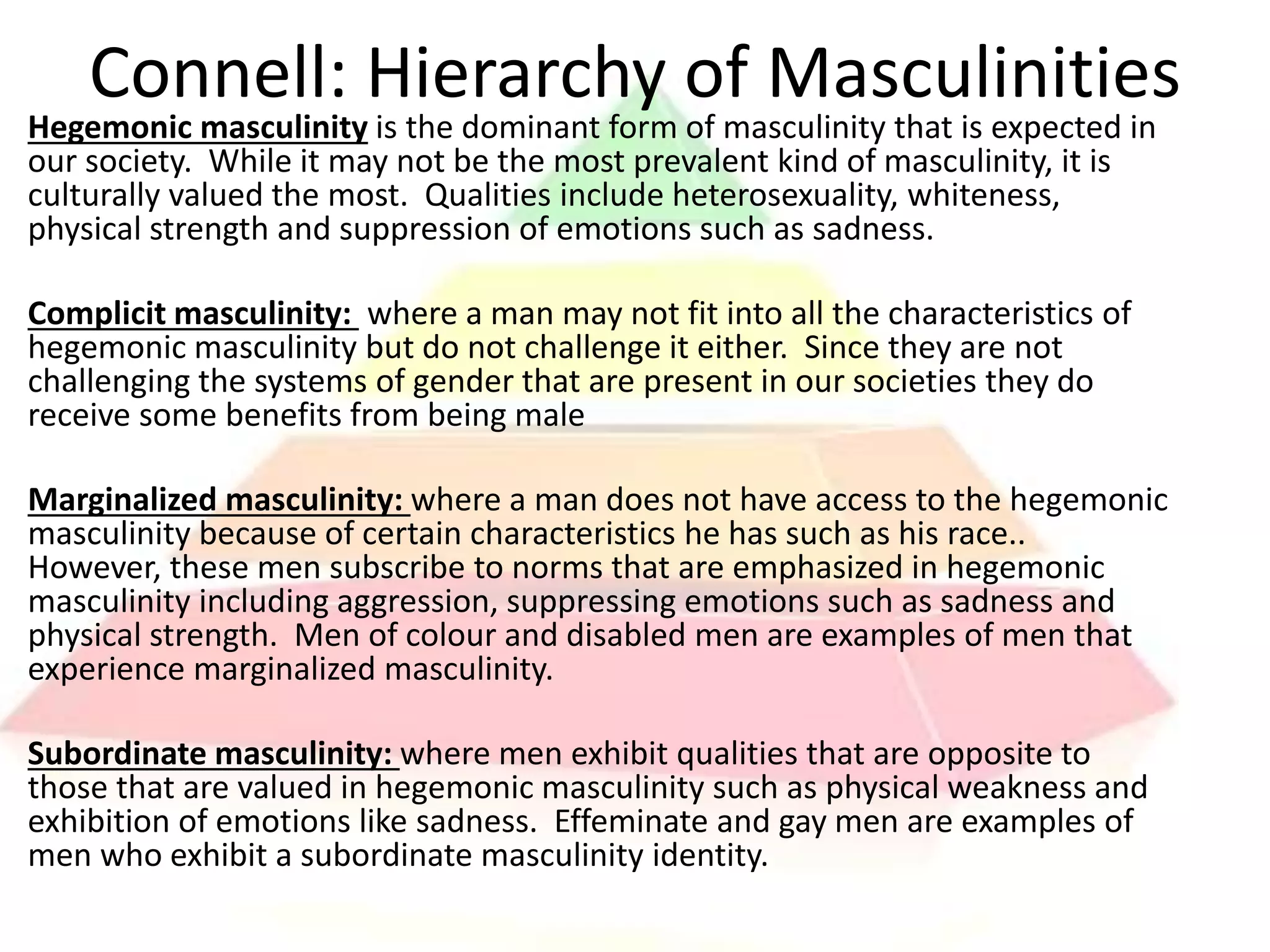
Hegemonic masculinity is the dominant form of masculinity that is expected in
our society. While it may not be the most prevalent kind of masculinity, it is
culturally valued the most. Qualities include heterosexuality, whiteness,
physical strength and suppression of emotions such as sadness.
Complicit masculinity: where a man may not fit into all the characteristics of
hegemonic masculinity but do not challenge it either. Since they are not
challenging the systems of gender that are present in our societies they do
receive some benefits from being male
Marginalized masculinity: where a man does not have access to the hegemonic
masculinity because of certain characteristics he has such as his race..
However, these men subscribe to norms that are emphasized in hegemonic
masculinity including aggression, suppressing emotions such as sadness and
physical strength. Men of colour and disabled men are examples of men that
experience marginalized masculinity.
Subordinate masculinity: where men exhibit qualities that are opposite to
those that are valued in hegemonic masculinity such as physical weakness and
exhibition of emotions like sadness. Effeminate and gay men are examples of
men who exhibit a subordinate masculinity identity.
Connell: Hierarchy of Masculinities
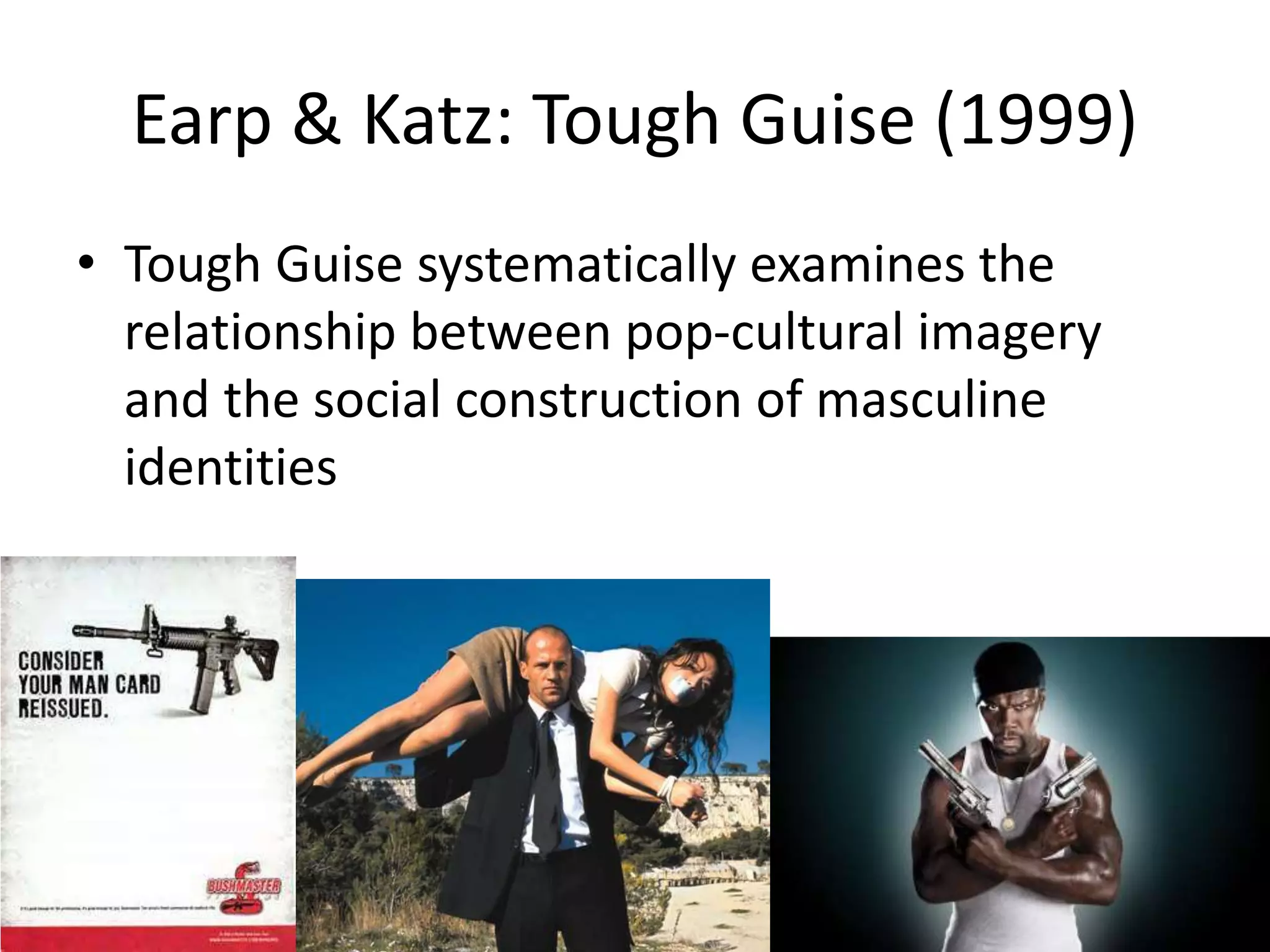
Earp & Katz: Tough Guise (1999)
• Tough Guise systematically examines the
relationship between pop-cultural imagery
and the social construction of masculine
identities
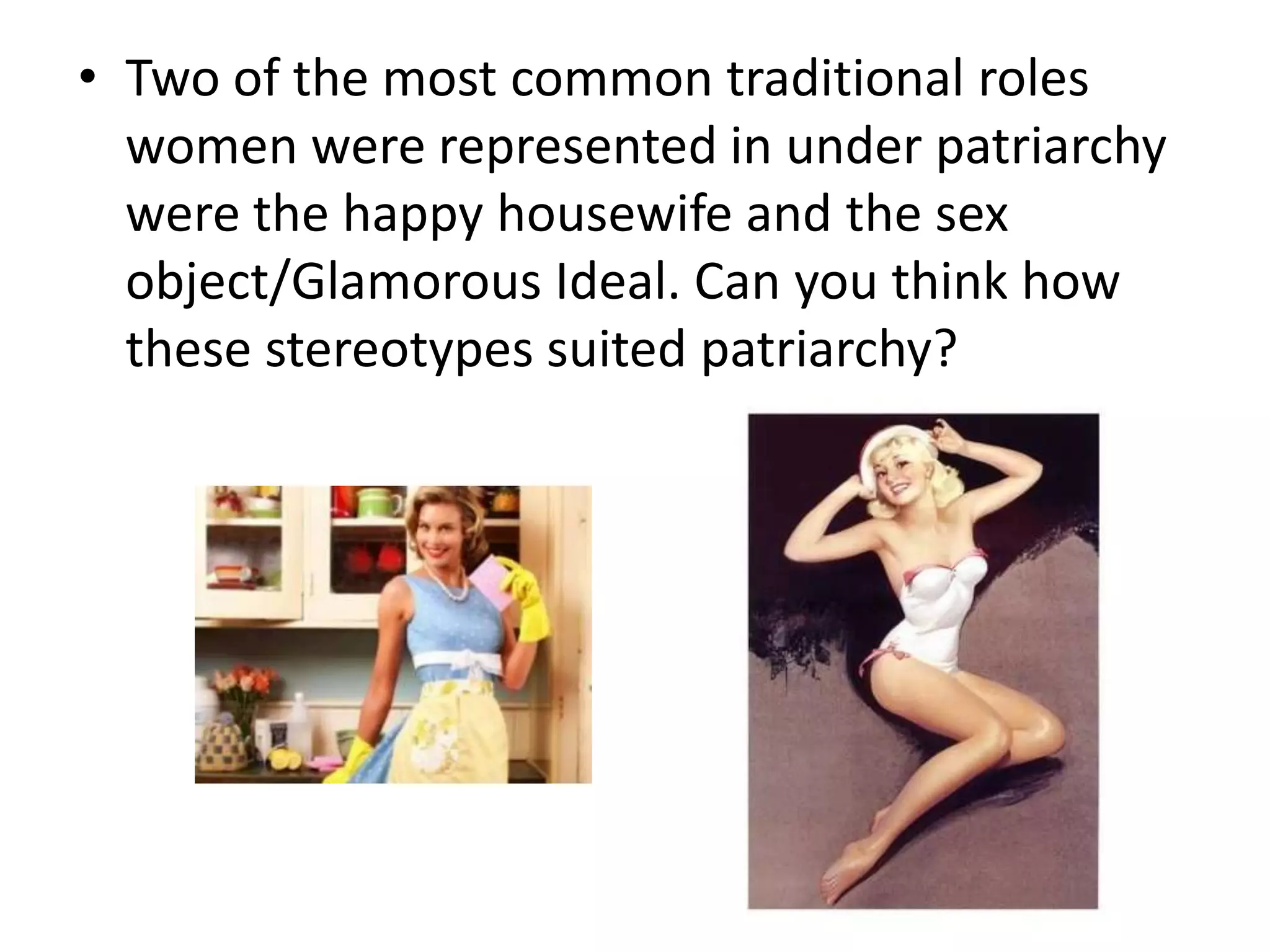
• Two of the most common traditional roles
women were represented in under patriarchy
were the happy housewife and the sex
object/Glamorous Ideal. Can you think how
these stereotypes suited patriarchy?
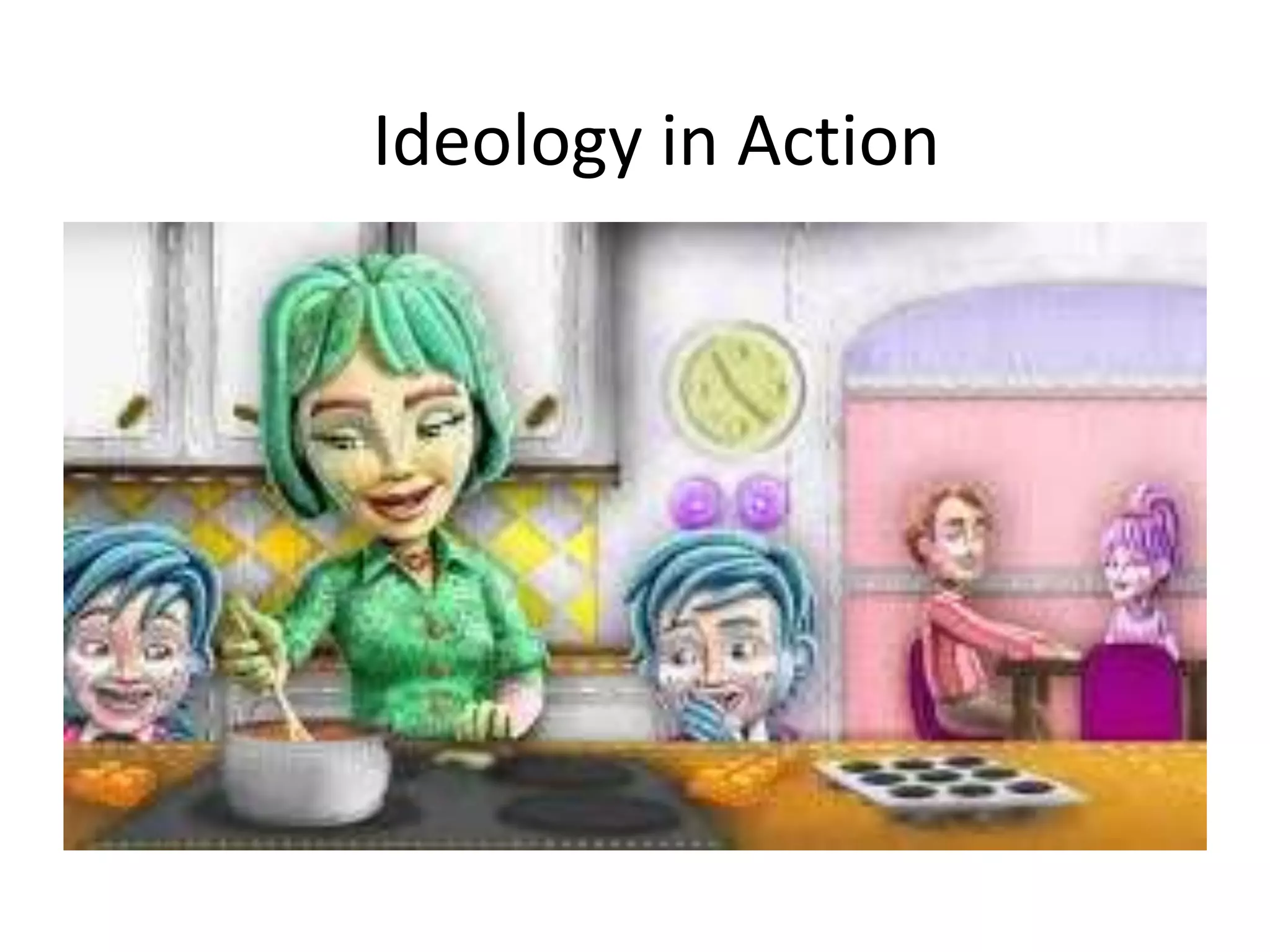
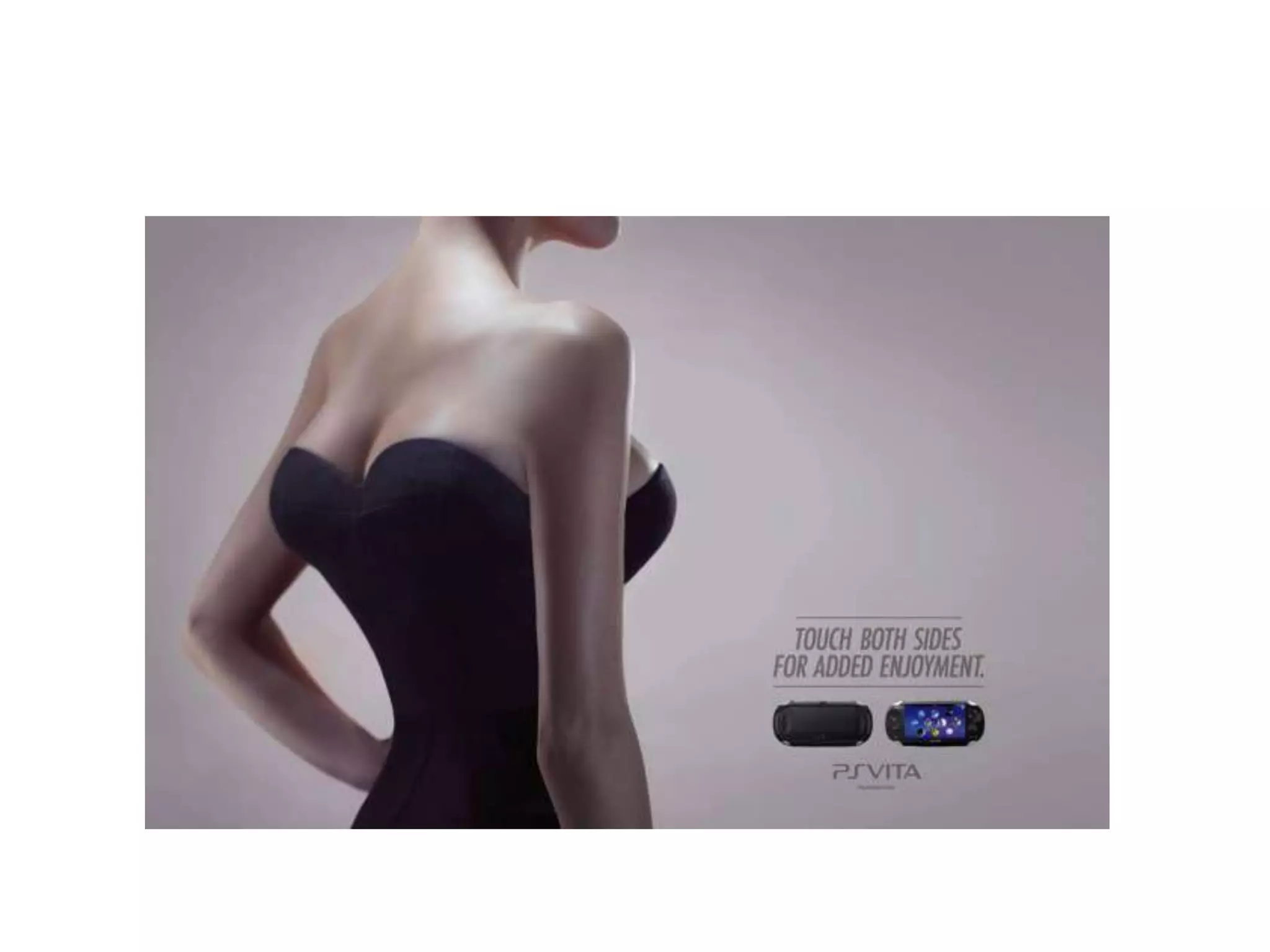
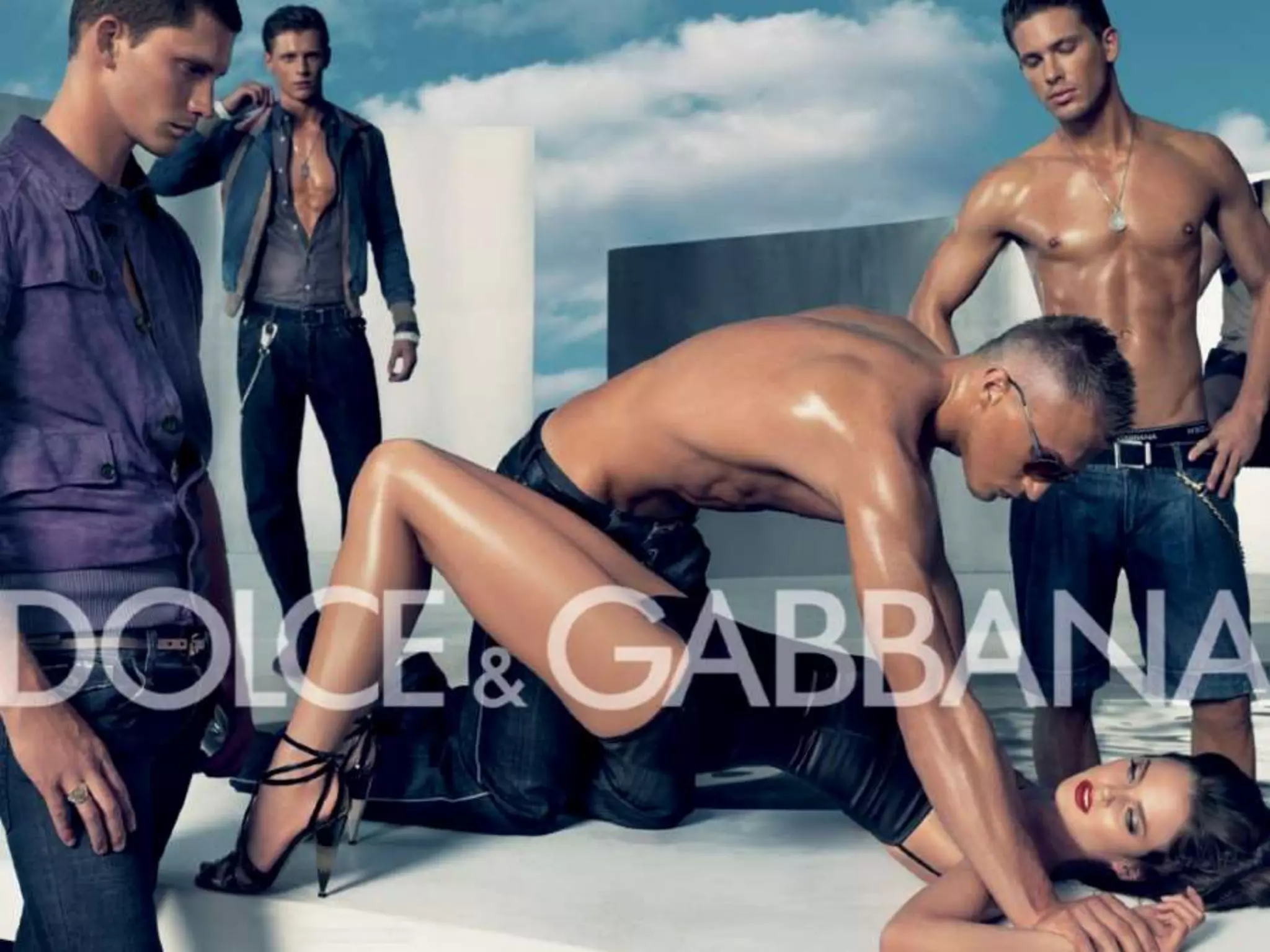
Ideology in Action – Traditional Representations
• Look at the following adverts – what messages
and values are being portrayed? What roles are
women offered?
Ideology in Action
Ideology in Action
Summarise
• Based on the print texts we have just looked
at, explore the ideologies that you observed.
• Write a 50-100 word response (aim to use the
keys words: ‘patriarchy’, ‘hegemonic
masculinity’ or ‘hypermasculinity’)
Countertypes
• A more positive representation – yet still
simplified version of a group of people.
New man
A term that was originally introduced in the
1980s to describe a new era of masculinity.
These men rejected sexist attitudes; they
were in touch with their feminine side and
were therefore not afraid to be sensitive and
caring, and could sometimes be seen in a
domestic role. The concept disappeared for
a while during the 90s but has since begun
to emerge and even evolve.
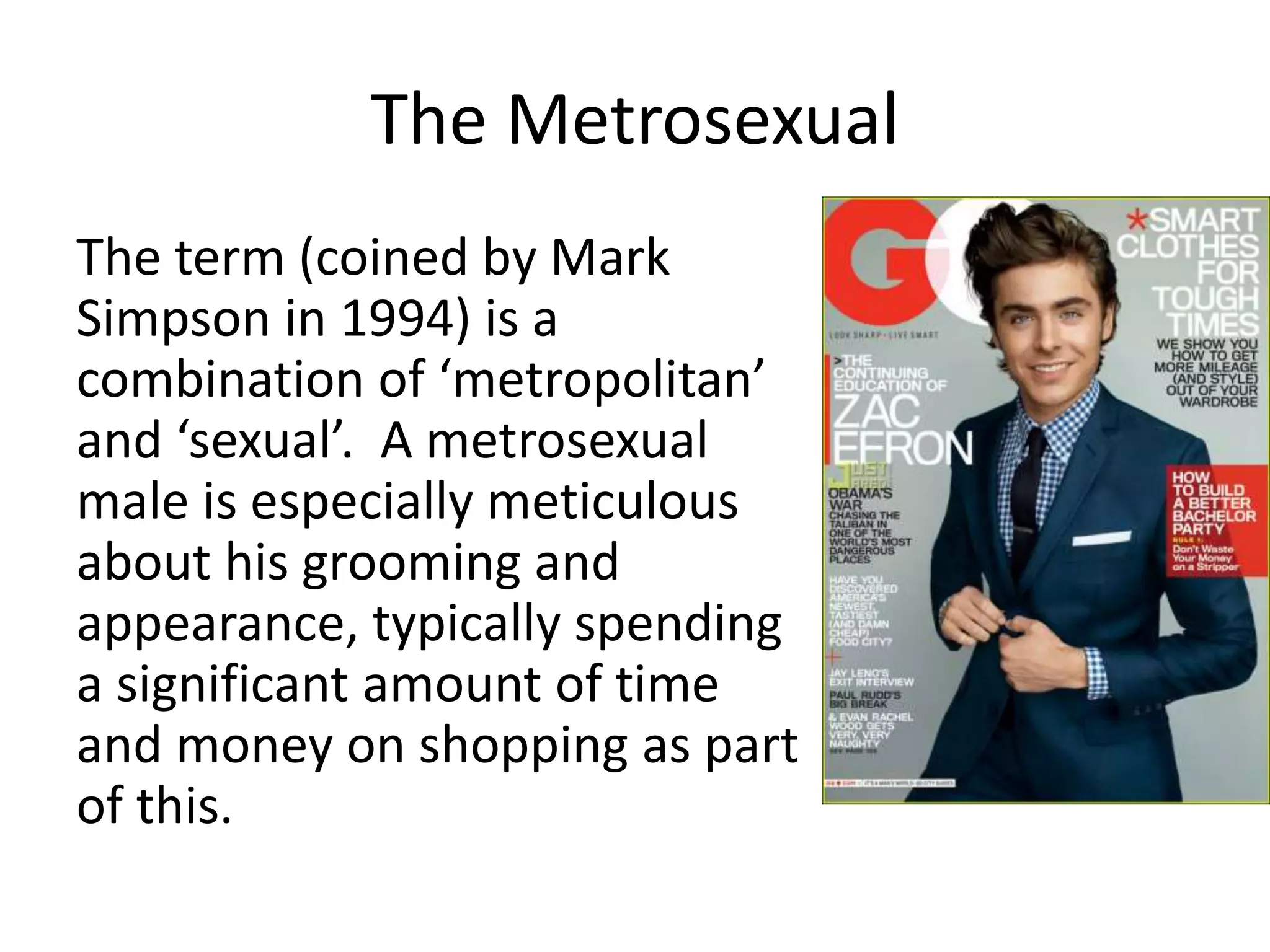
The Metrosexual
The term (coined by Mark
Simpson in 1994) is a
combination of ‘metropolitan’
and ‘sexual’. A metrosexual
male is especially meticulous
about his grooming and
appearance, typically spending
a significant amount of time
and money on shopping as part
of this.
What’s next…?
• Simpson believes that the metrosexual is
evolving...
• “Glossy magazines cultivated early
metrosexuality. Celebrity culture then sent it
into orbit. But for today’s generation, social
media, selfies and porn are the major vectors
of the male desire to be desired. They want to
be wanted for their bodies, not their
wardrobe. And certainly not their minds”.
What’s next…?
• “With pumped and chiselled bodies, muscle-
enhancing tattoos, piercings, adorable beards and
plunging necklines it’s eye-catchingly clear that
second-generation metrosexuality is less about
clothes than it was for the first. Eagerly self-
objectifying, second generation metrosexuality is
totally tarty. Their own bodies have become the
ultimate accessories, fashioning them at the gym
into a hot commodity – one that they share and
compare in an online marketplace”.
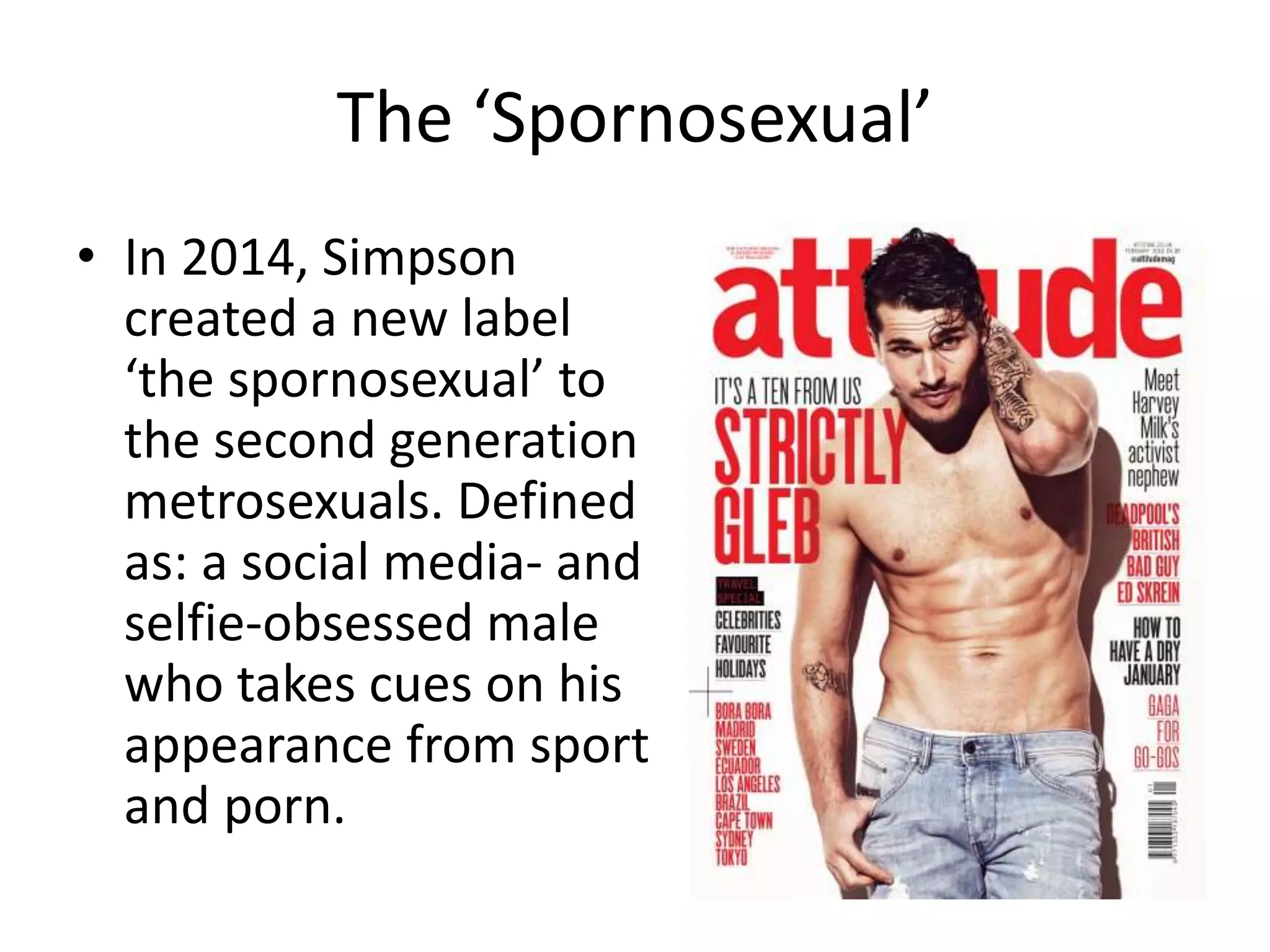
The ‘Spornosexual’
• In 2014, Simpson
created a new label
‘the spornosexual’ to
the second generation
metrosexuals. Defined
as: a social media- and
selfie-obsessed male
who takes cues on his
appearance from sport
and porn.

Lesson 3 Masculinity

  • 1.
    Masculinity To understand masculinitytheories and how to apply them to media texts STARTER: Complete the following: “Boys don’t… “
  • 2.
    List some typicalaction films – think about the typical roles assigned to men and women
  • 3.
    Representations of Gender GQ=Gentleman’s Quarterly The 15th Annual Men of the Year awards special issue
  • 4.
    Patriarchy • Traditionally menhave held power in our society – this system where men have power and control in society is called patriarchy. • Patriarchy = society run by men for men
  • 5.
    • The resultof this is that traditionally male qualities and attributes have generally been seen to be superior to female attributes. Consider, for example, the fact that traditionally it was the eldest son who inherited – even if he had several older sisters!
  • 6.
    • This was(and sometimes still is!) reflected in the media, as most media companies were run by men. Therefore the gatekeepers of the media showed men and women how men wanted them to be. • Gatekeeping is the process through which information is filtered for dissemination, whether for publication, broadcasting, the Internet, or some other mode of communication.
  • 7.
    Look back atyour starter activity. How do the action adventure roles link to patriarchal ideas about gender?
  • 8.
    Hypermasculinity Mosher and Sirkin(1984) defined hypermasculinity as the "macho personality" as consisting of three variables: • callous sexual attitudes toward women • the belief that violence is manly • the experience of danger as exciting
  • 9.
    Connell: Hegemonic Masculinity (1995) Hegemonicmasculinity is a concept of proposed practices that promote the dominant social position of men, and the subordinate social position of women. It explains how and why men maintain dominant social roles over women, and other gender identities, which are perceived as "feminine" in a given society.
  • 10.
    Hegemonic masculinity Complicit masculinity Marginalizedmasculinity Subordinate masculinity Connell: Hierarchy of Masculinities
  • 11.
    Hegemonic masculinity isthe dominant form of masculinity that is expected in our society. While it may not be the most prevalent kind of masculinity, it is culturally valued the most. Qualities include heterosexuality, whiteness, physical strength and suppression of emotions such as sadness. Complicit masculinity: where a man may not fit into all the characteristics of hegemonic masculinity but do not challenge it either. Since they are not challenging the systems of gender that are present in our societies they do receive some benefits from being male Marginalized masculinity: where a man does not have access to the hegemonic masculinity because of certain characteristics he has such as his race.. However, these men subscribe to norms that are emphasized in hegemonic masculinity including aggression, suppressing emotions such as sadness and physical strength. Men of colour and disabled men are examples of men that experience marginalized masculinity. Subordinate masculinity: where men exhibit qualities that are opposite to those that are valued in hegemonic masculinity such as physical weakness and exhibition of emotions like sadness. Effeminate and gay men are examples of men who exhibit a subordinate masculinity identity. Connell: Hierarchy of Masculinities
  • 12.
    Earp & Katz:Tough Guise (1999) • Tough Guise systematically examines the relationship between pop-cultural imagery and the social construction of masculine identities
  • 13.
    • Two ofthe most common traditional roles women were represented in under patriarchy were the happy housewife and the sex object/Glamorous Ideal. Can you think how these stereotypes suited patriarchy?
  • 14.
    Ideology in Action– Traditional Representations • Look at the following adverts – what messages and values are being portrayed? What roles are women offered?
  • 15.
  • 16.
  • 19.
    Summarise • Based onthe print texts we have just looked at, explore the ideologies that you observed. • Write a 50-100 word response (aim to use the keys words: ‘patriarchy’, ‘hegemonic masculinity’ or ‘hypermasculinity’)
  • 20.
    Countertypes • A morepositive representation – yet still simplified version of a group of people.
  • 21.
    New man A termthat was originally introduced in the 1980s to describe a new era of masculinity. These men rejected sexist attitudes; they were in touch with their feminine side and were therefore not afraid to be sensitive and caring, and could sometimes be seen in a domestic role. The concept disappeared for a while during the 90s but has since begun to emerge and even evolve.
  • 22.
    The Metrosexual The term(coined by Mark Simpson in 1994) is a combination of ‘metropolitan’ and ‘sexual’. A metrosexual male is especially meticulous about his grooming and appearance, typically spending a significant amount of time and money on shopping as part of this.
  • 23.
    What’s next…? • Simpsonbelieves that the metrosexual is evolving... • “Glossy magazines cultivated early metrosexuality. Celebrity culture then sent it into orbit. But for today’s generation, social media, selfies and porn are the major vectors of the male desire to be desired. They want to be wanted for their bodies, not their wardrobe. And certainly not their minds”.
  • 24.
    What’s next…? • “Withpumped and chiselled bodies, muscle- enhancing tattoos, piercings, adorable beards and plunging necklines it’s eye-catchingly clear that second-generation metrosexuality is less about clothes than it was for the first. Eagerly self- objectifying, second generation metrosexuality is totally tarty. Their own bodies have become the ultimate accessories, fashioning them at the gym into a hot commodity – one that they share and compare in an online marketplace”.
  • 25.
    The ‘Spornosexual’ • In2014, Simpson created a new label ‘the spornosexual’ to the second generation metrosexuals. Defined as: a social media- and selfie-obsessed male who takes cues on his appearance from sport and porn.