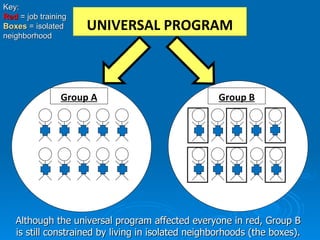
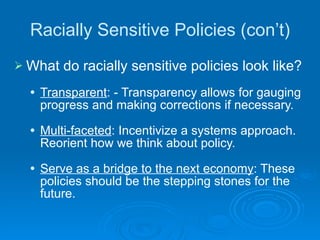
The document discusses targeted universalism as an approach to policymaking that recognizes both universal goals of benefiting all groups as well as targeted approaches that address the specific needs of marginalized communities. It argues targeted universalism is needed because universal policies alone fail to account for how different groups are situated within inequitable social and economic systems. As an example, it analyzes how the GI Bill and New Deal policies, while universal, had unintended consequences and did not benefit Black communities equally due to systemic barriers. It advocates applying targeted universalism to the economic stimulus by including requirements for hiring local workers and partnering with community groups.