Game Technology and
Experience
     Frank Van Reeth
     IBBT-EDM-Uhasselt
     &
     Mieke Van Gils
     IBBT-CUO-KU Leuven
Presentation overview

Experience items
   Survey gaming
   Measuring user experiences in digital games
   IBBT game experience research


Technology items
   Technological activity areas
   Scalable 3D Networked Virtual Environments
   Specific applications
   Rendering on mobile devices
   Technical aspects influencing user experience
Survey gaming


Survey GAMING, IBBT-MICT UGent
Online survey of 2895 Flemish gamers
Conclusion:
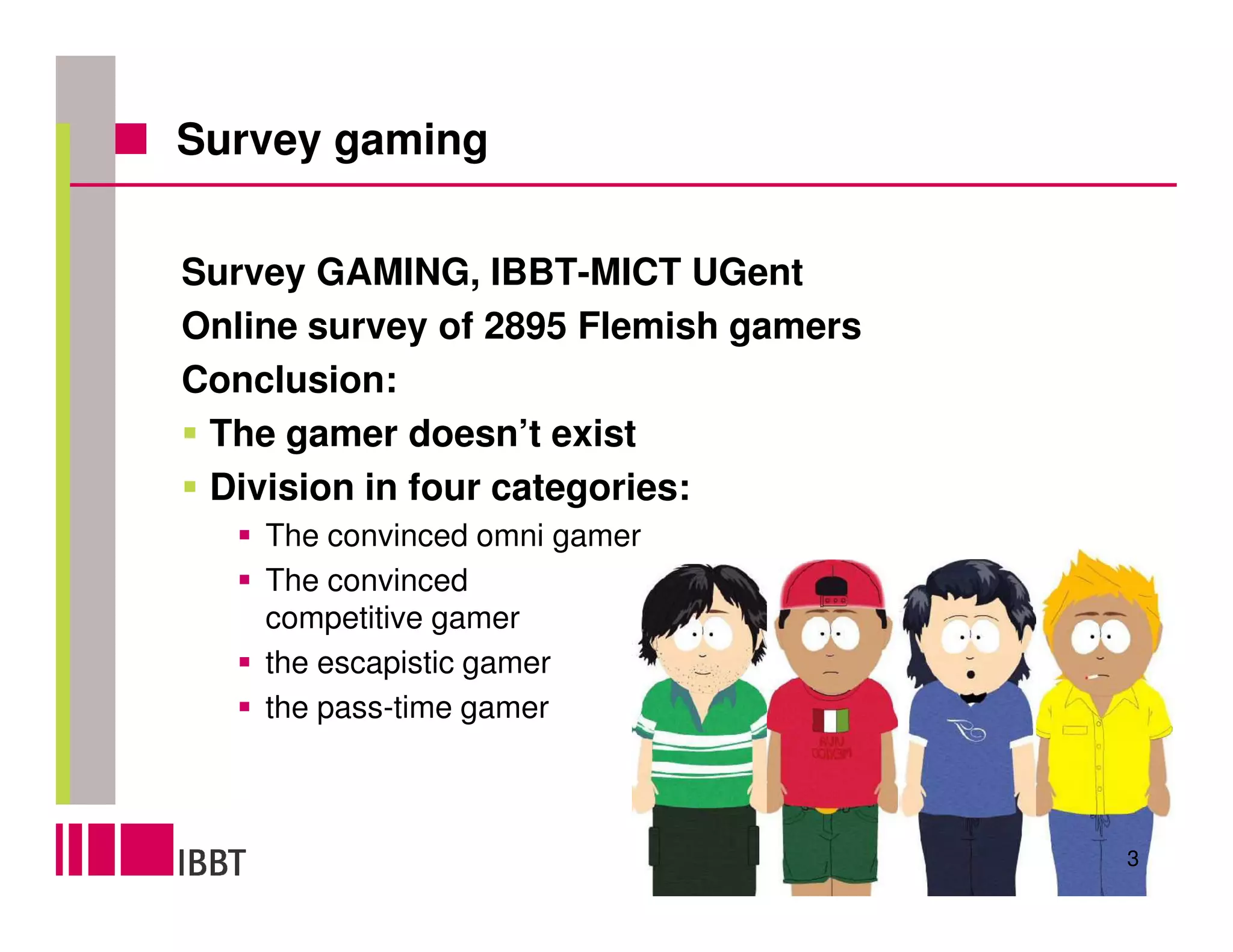
 The gamer doesn’t exist
 Division in four categories:
    The convinced omni gamer
    The convinced
    competitive gamer
    the escapistic gamer
    the pass-time gamer


                                       3
Measuring user experiences in digital games

 Overall game experiences
   focus groups
   surveys

 In-game experiences
   breaks the flow
   physiological measurements, facial analysis,
   eye tracking
   usability testing
         observations
         traditional HCI performance metrics
         usability = ‘gatekeeper on the fun of the game’
Usability testing of digital games


 Post-game experiences
    Hard to describe or communicate
    Limited generic terms
    Questionnaires, in-depth interviews,...


How to measure e.g. flow, immersion?


Multi-method, multi-measure approach
IBBT game experience research

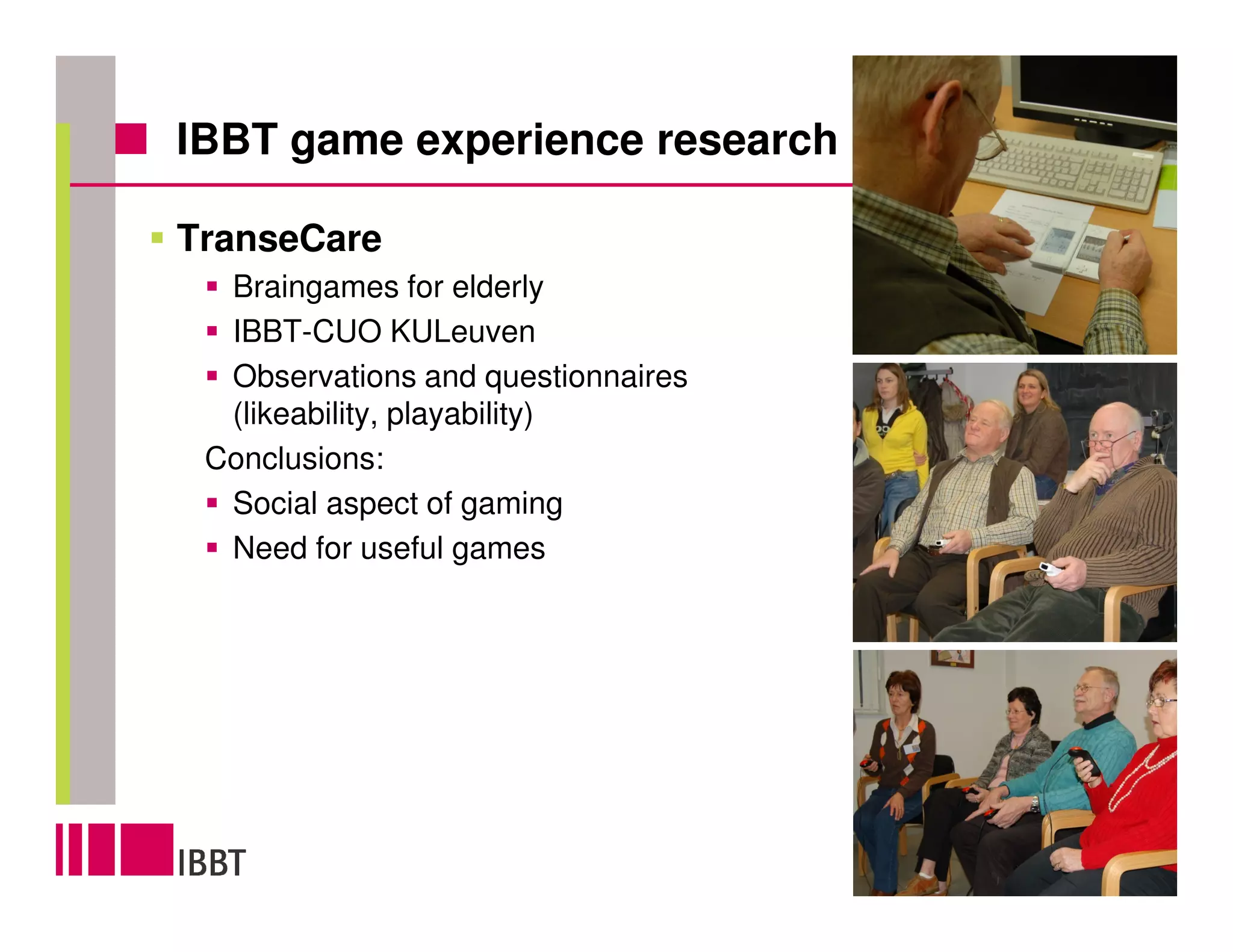
TranseCare
  Braingames for elderly
  IBBT-CUO KULeuven
  Observations and questionnaires
  (likeability, playability)
 Conclusions:
  Social aspect of gaming
  Need for useful games


                                    6
IBBT game experience research

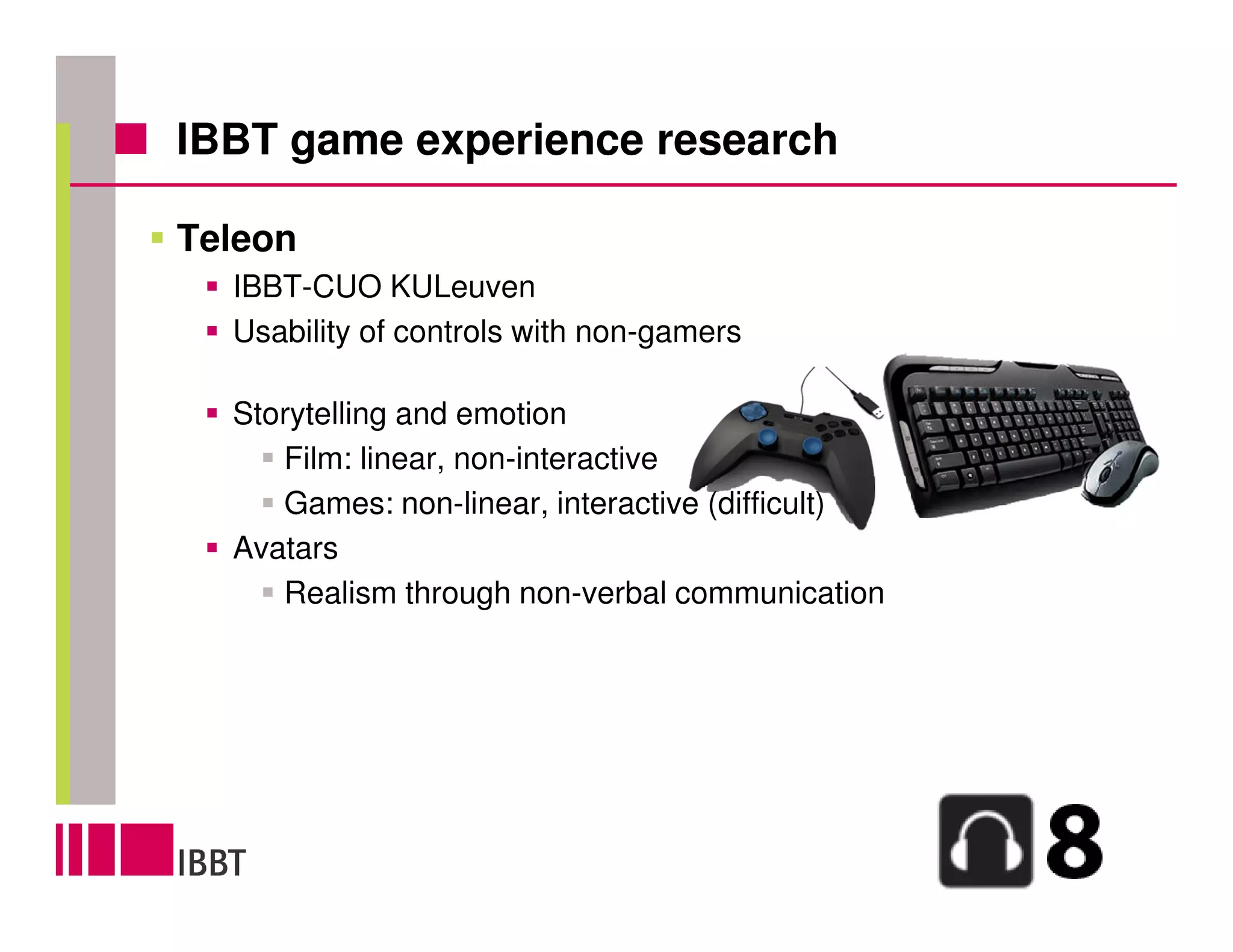
Teleon
  IBBT-CUO KULeuven
  Usability of controls with non-gamers

  Storytelling and emotion
     Film: linear, non-interactive
     Games: non-linear, interactive (difficult)
  Avatars
     Realism through non-verbal communication
IBBT game experience research


Teleon
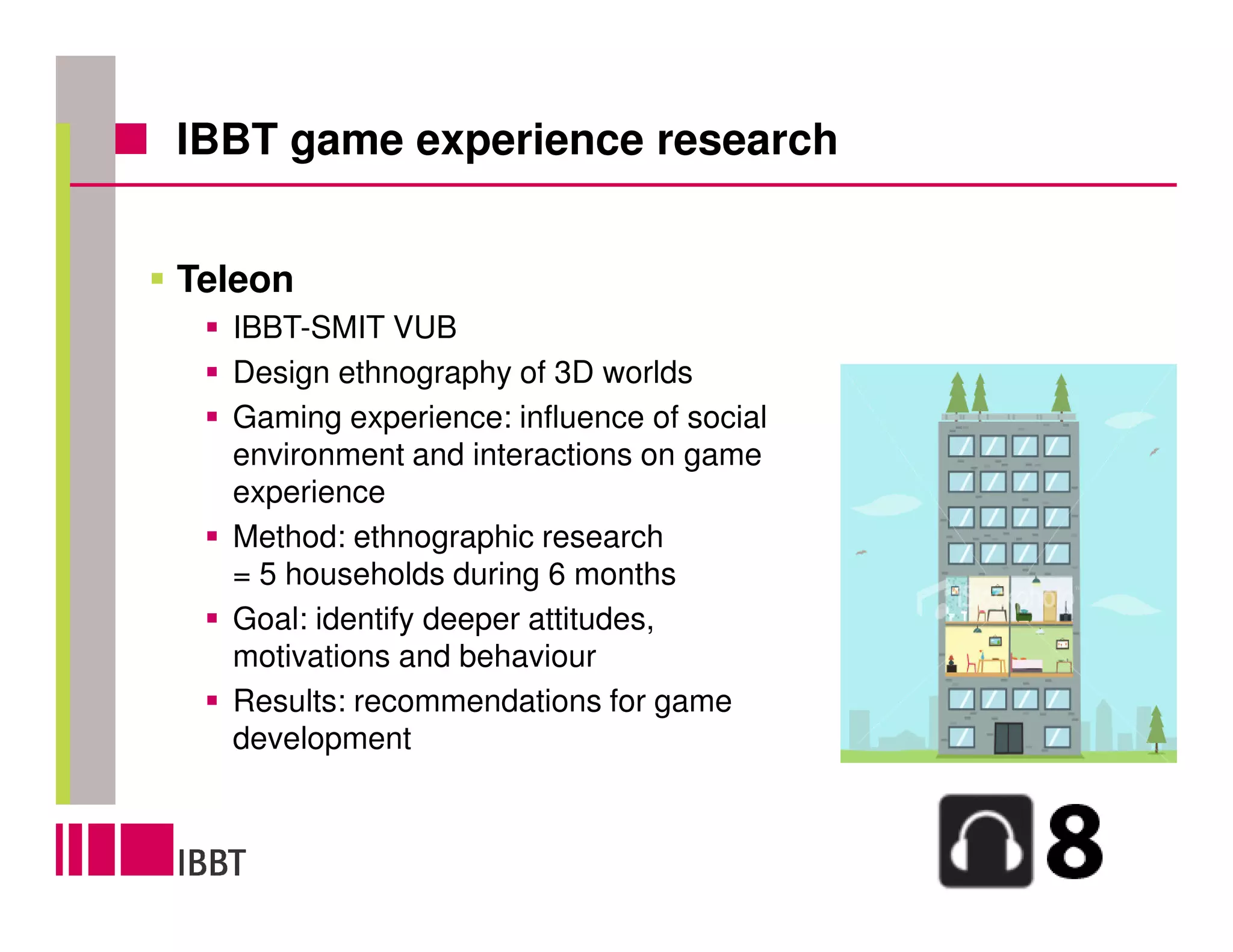
  IBBT-SMIT VUB
  Design ethnography of 3D worlds
  Gaming experience: influence of social
  environment and interactions on game
  experience
  Method: ethnographic research
  = 5 households during 6 months
  Goal: identify deeper attitudes,
  motivations and behaviour
  Results: recommendations for game
  development
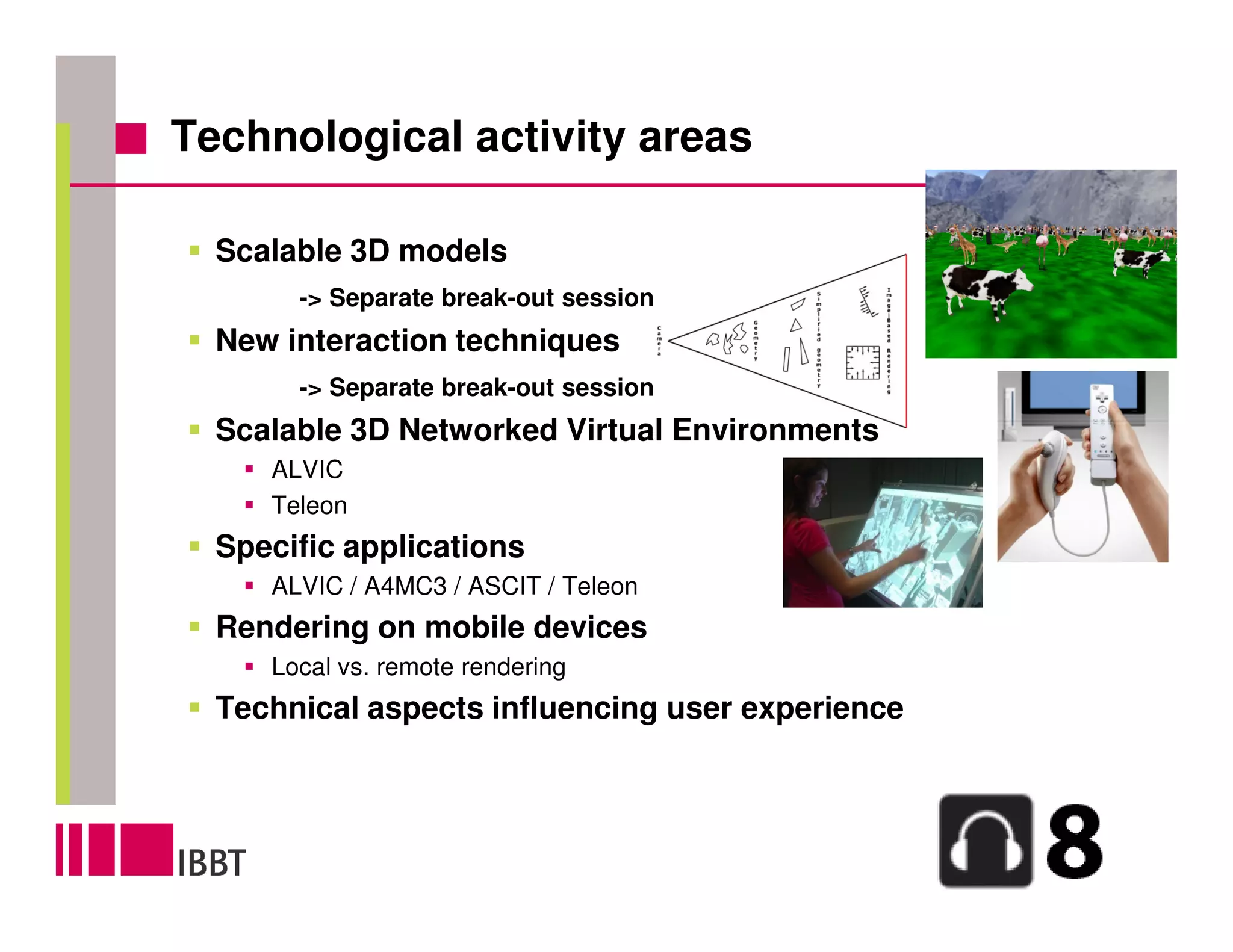
Technological activity areas

  Scalable 3D models
       -> Separate break-out session
  New interaction techniques
       -> Separate break-out session
  Scalable 3D Networked Virtual Environments
     ALVIC
     Teleon
  Specific applications
     ALVIC / A4MC3 / ASCIT / Teleon
  Rendering on mobile devices
     Local vs. remote rendering
  Technical aspects influencing user experience
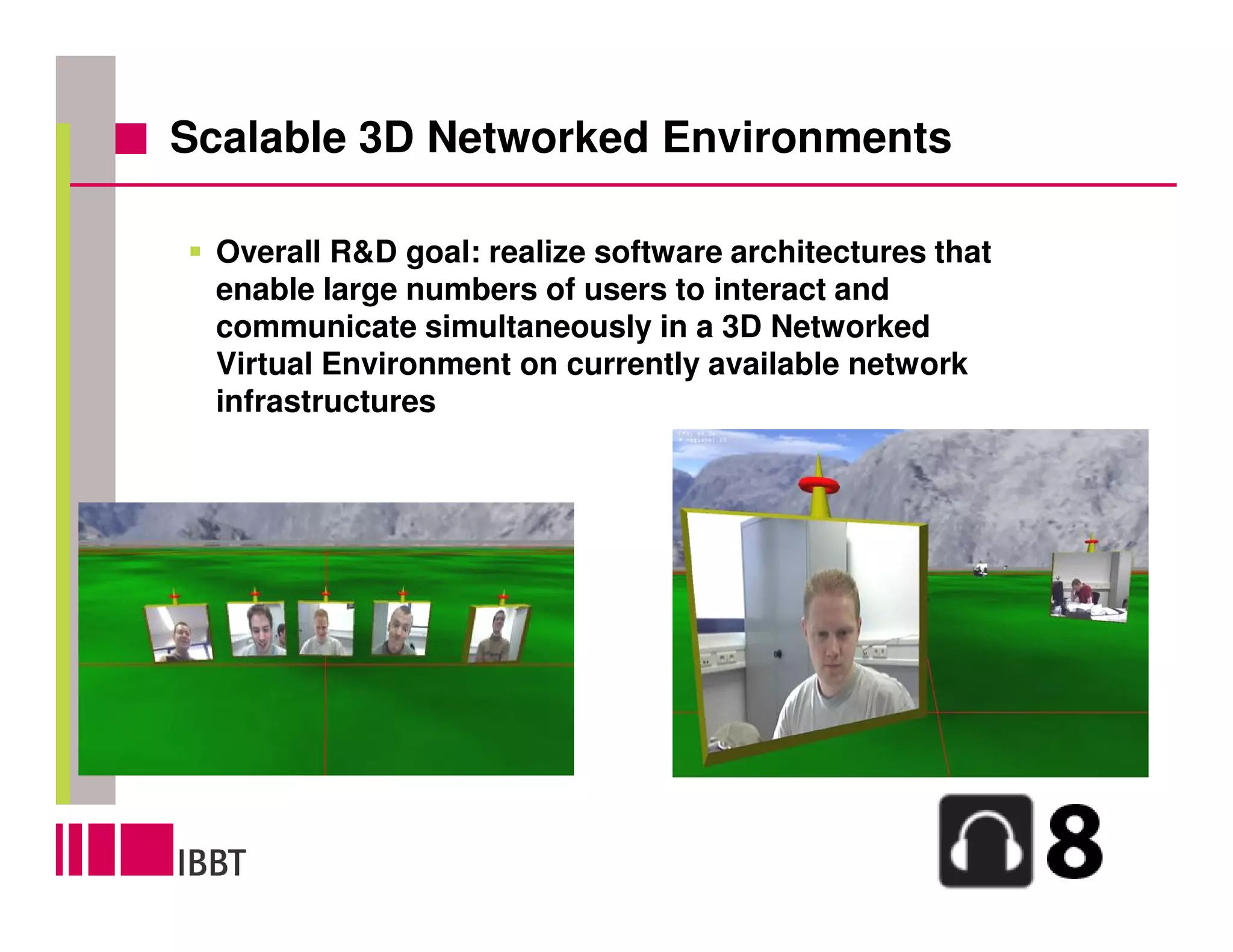
Scalable 3D Networked Environments

  Overall R&D goal: realize software architectures that
  enable large numbers of users to interact and
  communicate simultaneously in a 3D Networked
  Virtual Environment on currently available network
  infrastructures
Scalable 3D Networked Environments

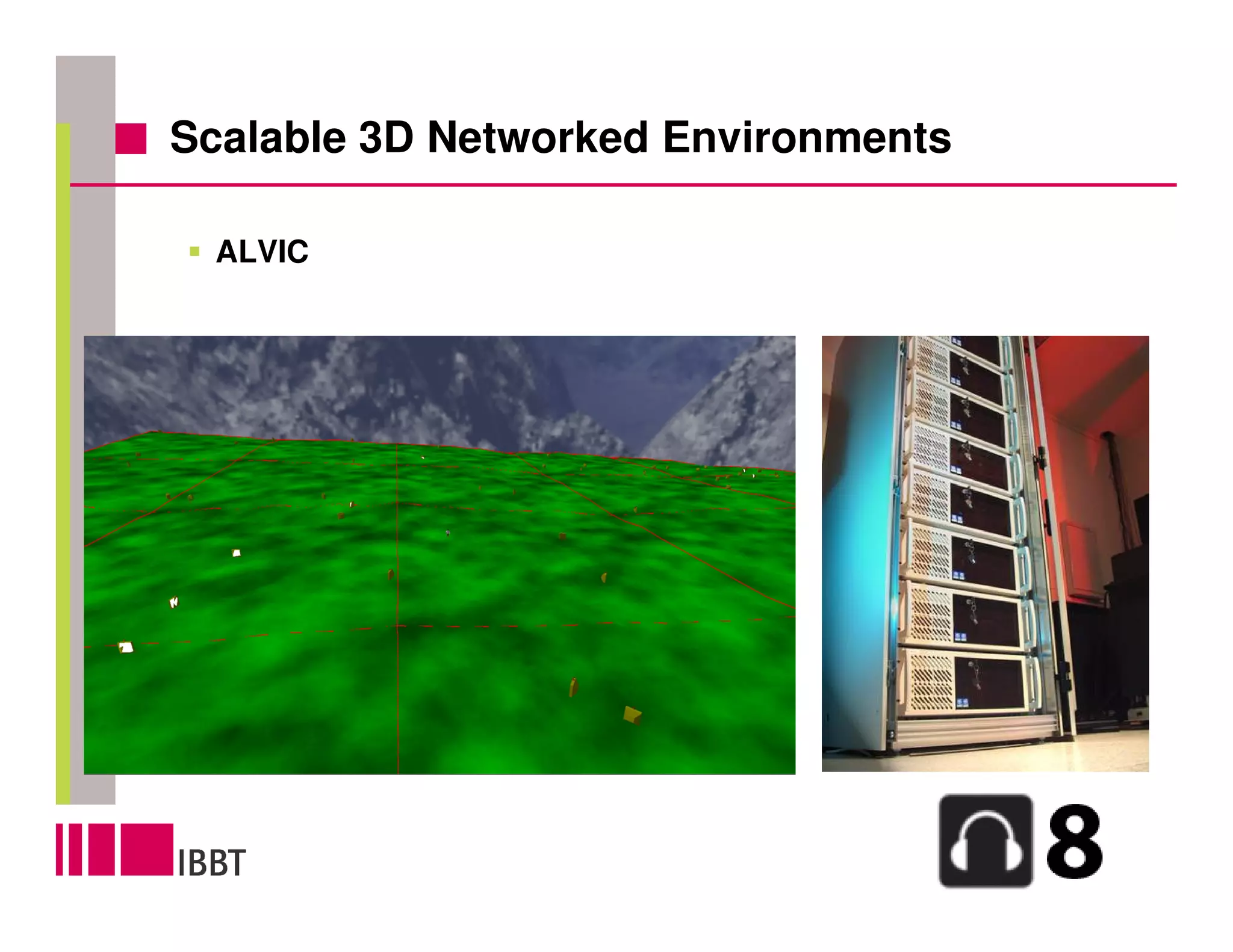
 ALVIC
Scalable 3D Networked Environments

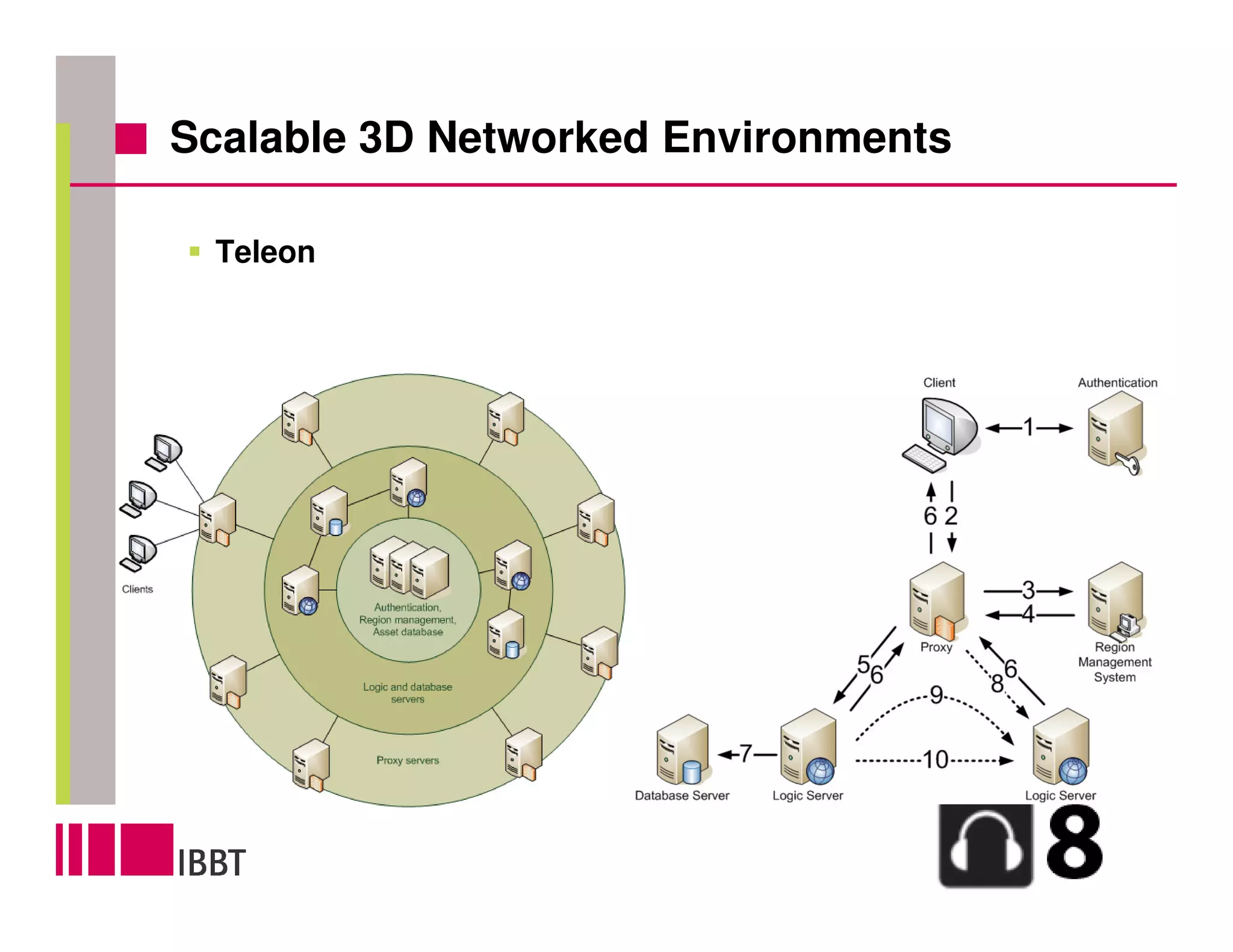
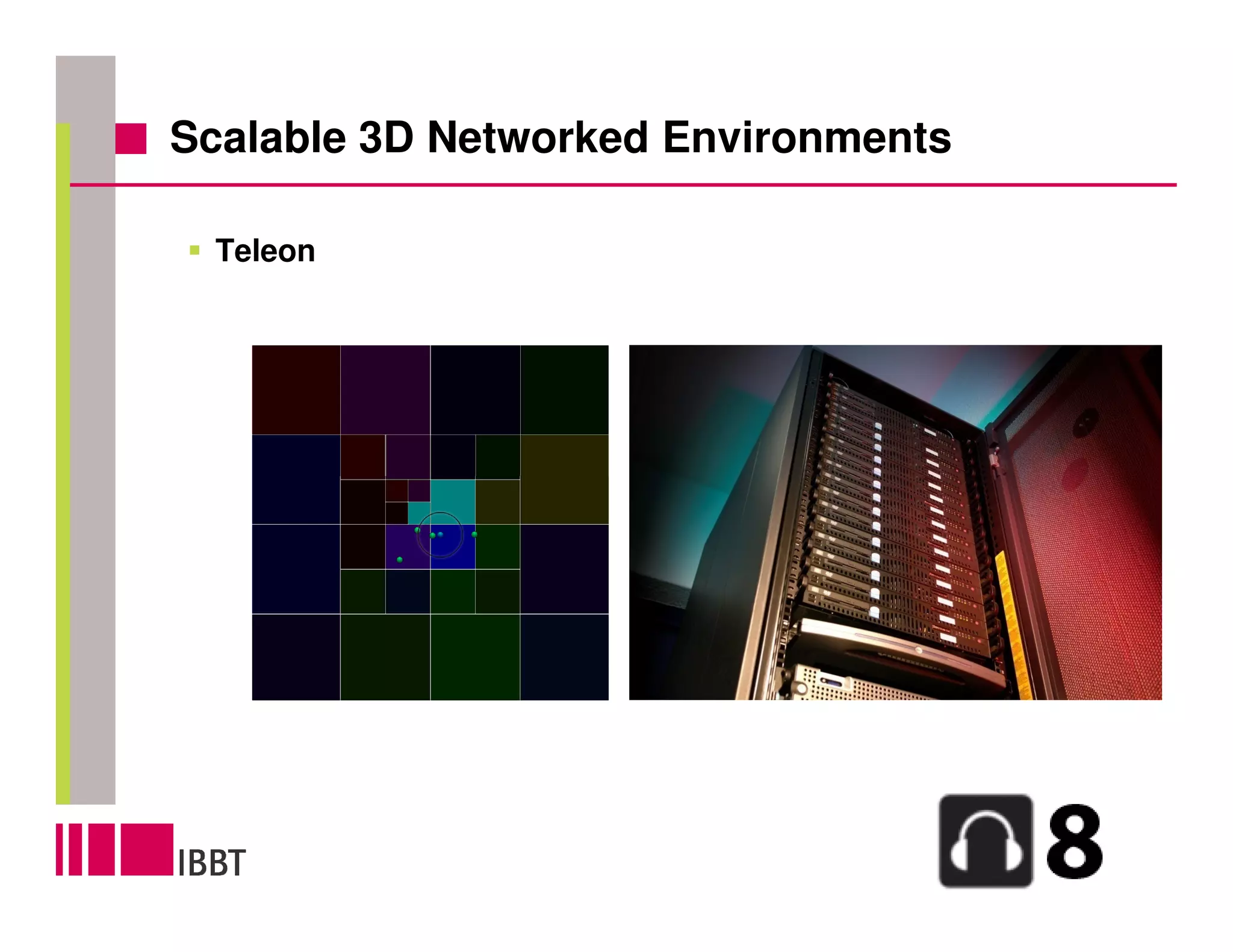
 Teleon
Scalable 3D Networked Environments

 Teleon
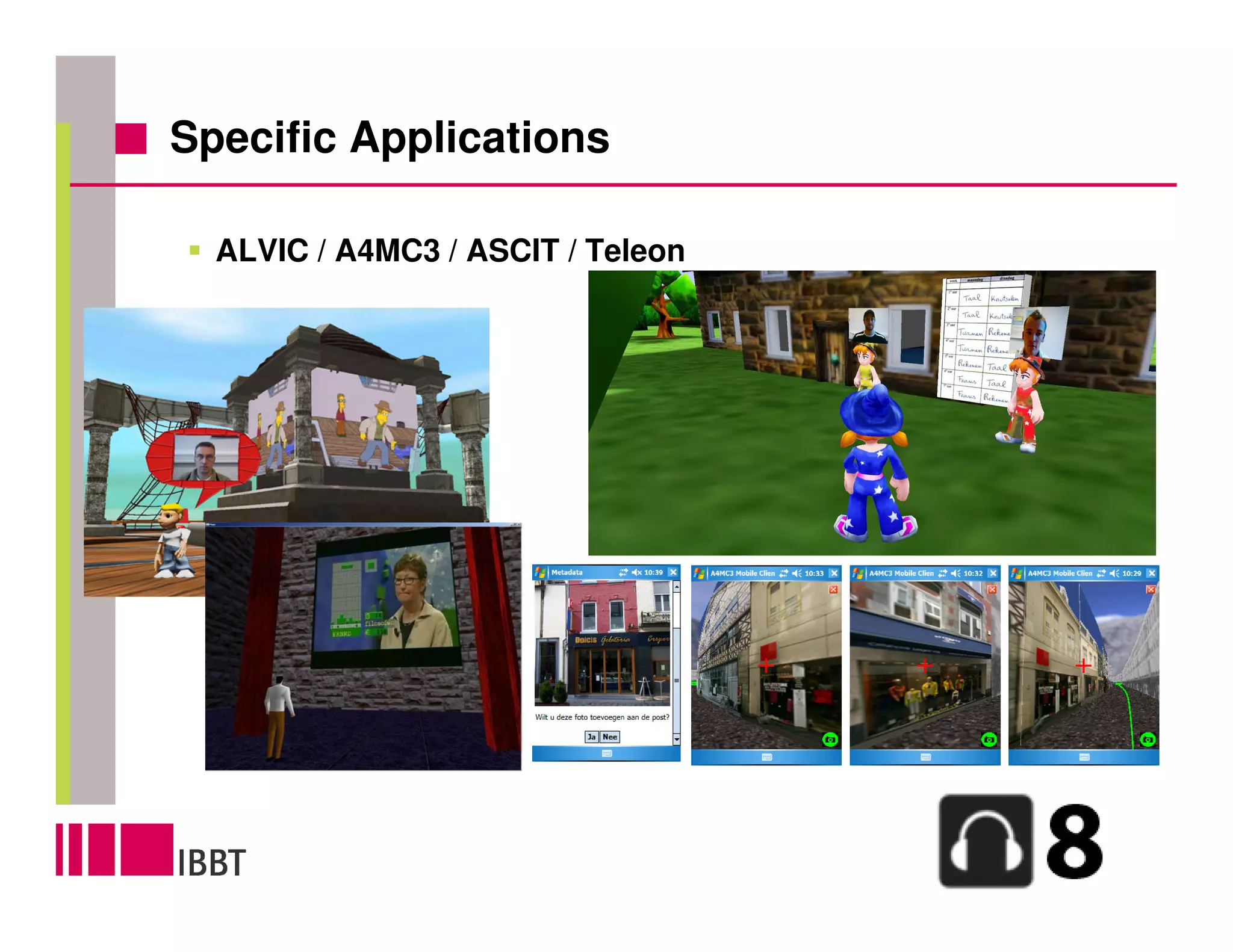
Specific Applications

  ALVIC / A4MC3 / ASCIT / Teleon
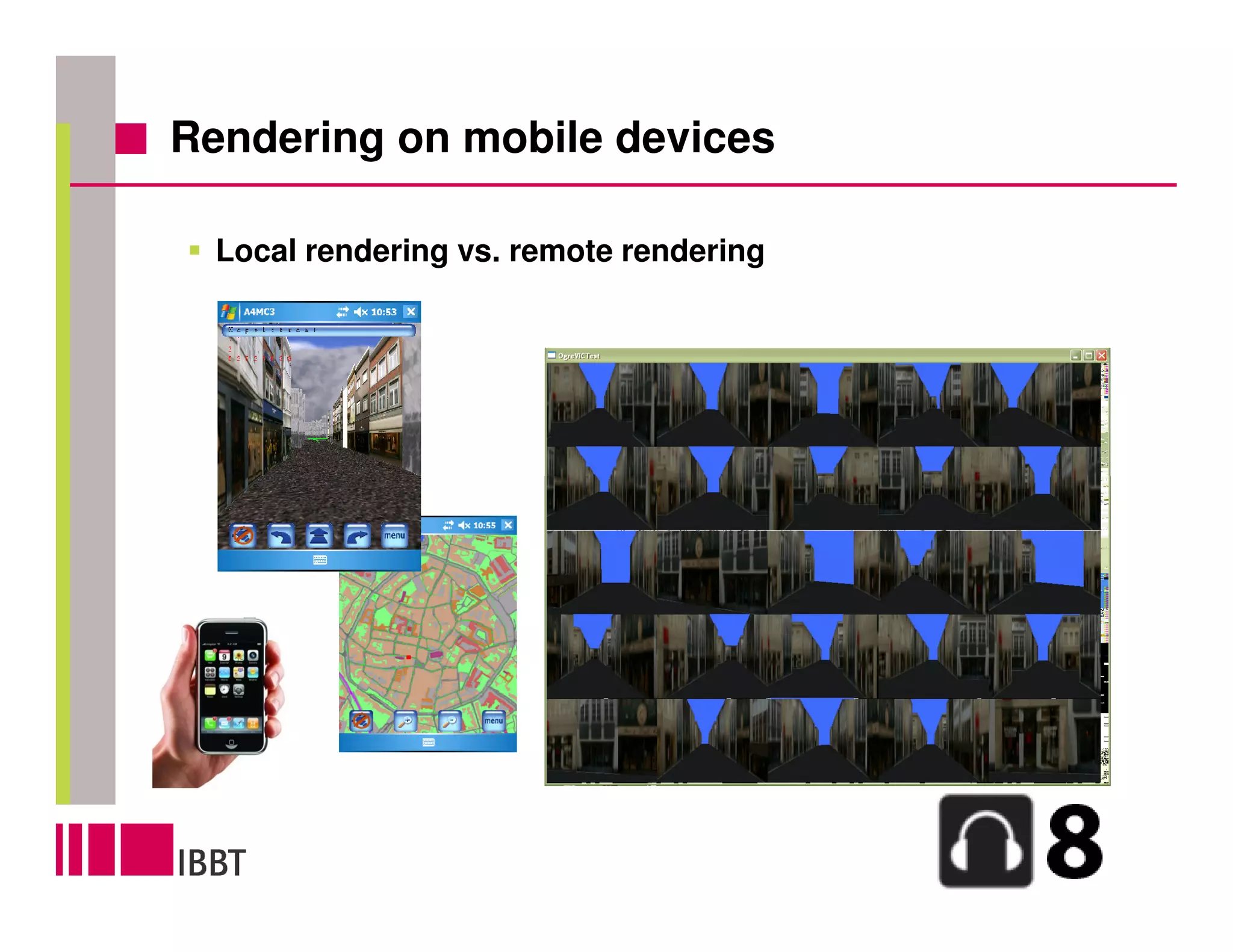
Rendering on mobile devices

  Local rendering vs. remote rendering
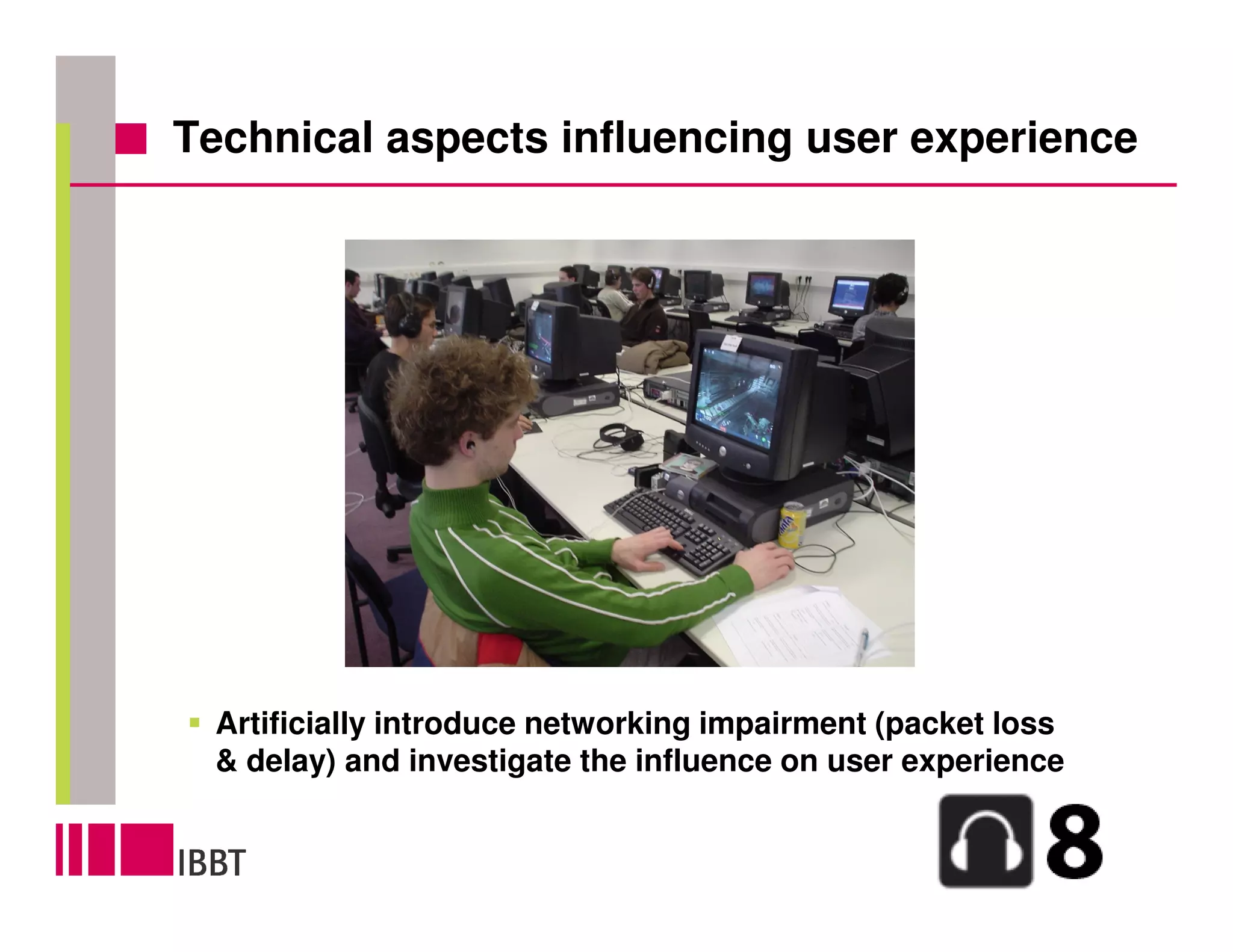
Technical aspects influencing user experience


 Artificially introduce networking impairment (packet loss
 & delay) and investigate the influence on user experience
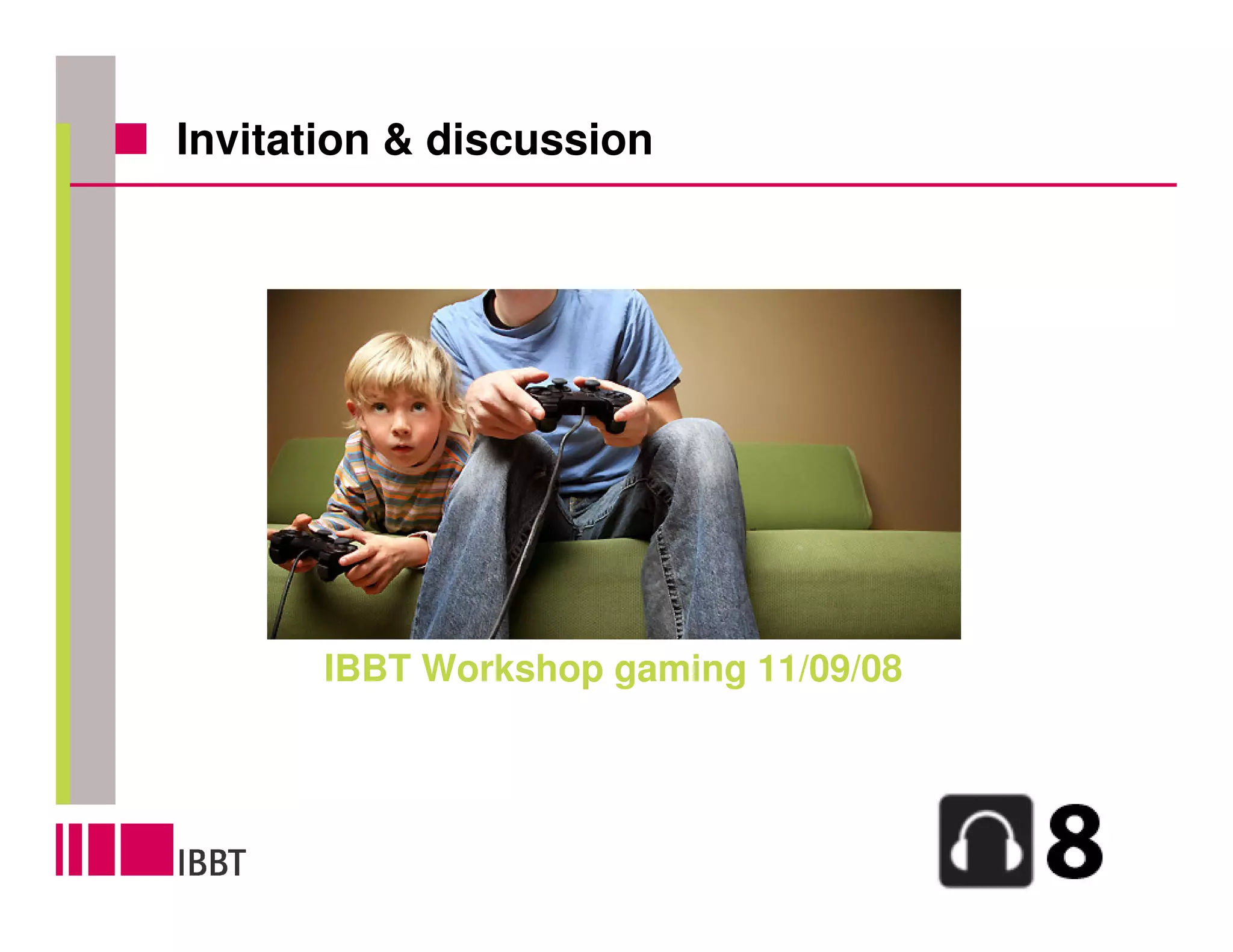
Invitation & discussion


       IBBT Workshop gaming 11/09/08

2008 brokerage 08 game technology and experience [compatibility mode]

  • 1.
    Game Technology and Experience Frank Van Reeth IBBT-EDM-Uhasselt & Mieke Van Gils IBBT-CUO-KU Leuven
  • 2.
    Presentation overview Experience items Survey gaming Measuring user experiences in digital games IBBT game experience research Technology items Technological activity areas Scalable 3D Networked Virtual Environments Specific applications Rendering on mobile devices Technical aspects influencing user experience
  • 3.
    Survey gaming Survey GAMING,IBBT-MICT UGent Online survey of 2895 Flemish gamers Conclusion: The gamer doesn’t exist Division in four categories: The convinced omni gamer The convinced competitive gamer the escapistic gamer the pass-time gamer 3
  • 4.
    Measuring user experiencesin digital games Overall game experiences focus groups surveys In-game experiences breaks the flow physiological measurements, facial analysis, eye tracking usability testing observations traditional HCI performance metrics usability = ‘gatekeeper on the fun of the game’
  • 5.
    Usability testing ofdigital games Post-game experiences Hard to describe or communicate Limited generic terms Questionnaires, in-depth interviews,... How to measure e.g. flow, immersion? Multi-method, multi-measure approach
  • 6.
    IBBT game experienceresearch TranseCare Braingames for elderly IBBT-CUO KULeuven Observations and questionnaires (likeability, playability) Conclusions: Social aspect of gaming Need for useful games 6
  • 7.
    IBBT game experienceresearch Teleon IBBT-CUO KULeuven Usability of controls with non-gamers Storytelling and emotion Film: linear, non-interactive Games: non-linear, interactive (difficult) Avatars Realism through non-verbal communication
  • 8.
    IBBT game experienceresearch Teleon IBBT-SMIT VUB Design ethnography of 3D worlds Gaming experience: influence of social environment and interactions on game experience Method: ethnographic research = 5 households during 6 months Goal: identify deeper attitudes, motivations and behaviour Results: recommendations for game development
  • 9.
    Technological activity areas Scalable 3D models -> Separate break-out session New interaction techniques -> Separate break-out session Scalable 3D Networked Virtual Environments ALVIC Teleon Specific applications ALVIC / A4MC3 / ASCIT / Teleon Rendering on mobile devices Local vs. remote rendering Technical aspects influencing user experience
  • 10.
    Scalable 3D NetworkedEnvironments Overall R&D goal: realize software architectures that enable large numbers of users to interact and communicate simultaneously in a 3D Networked Virtual Environment on currently available network infrastructures
  • 11.
    Scalable 3D NetworkedEnvironments ALVIC
  • 12.
    Scalable 3D NetworkedEnvironments Teleon
  • 13.
    Scalable 3D NetworkedEnvironments Teleon
  • 14.
    Specific Applications ALVIC / A4MC3 / ASCIT / Teleon
  • 15.
    Rendering on mobiledevices Local rendering vs. remote rendering
  • 16.
    Technical aspects influencinguser experience Artificially introduce networking impairment (packet loss & delay) and investigate the influence on user experience
  • 17.
    Invitation & discussion IBBT Workshop gaming 11/09/08