From the smallest earthworm that crawl
on the ground to the large blue whales
that swim in the oceans, animals
fascinate people who want to know how
animals move, eat, and survive in their
environment.
Animals Have Different Body Parts
Different animals have body parts that vary in size,
shape, and color. These body parts have different
functions. They enable animals to live in their
habitats, move from one place to another, get food,
and protect themselves from other animals.
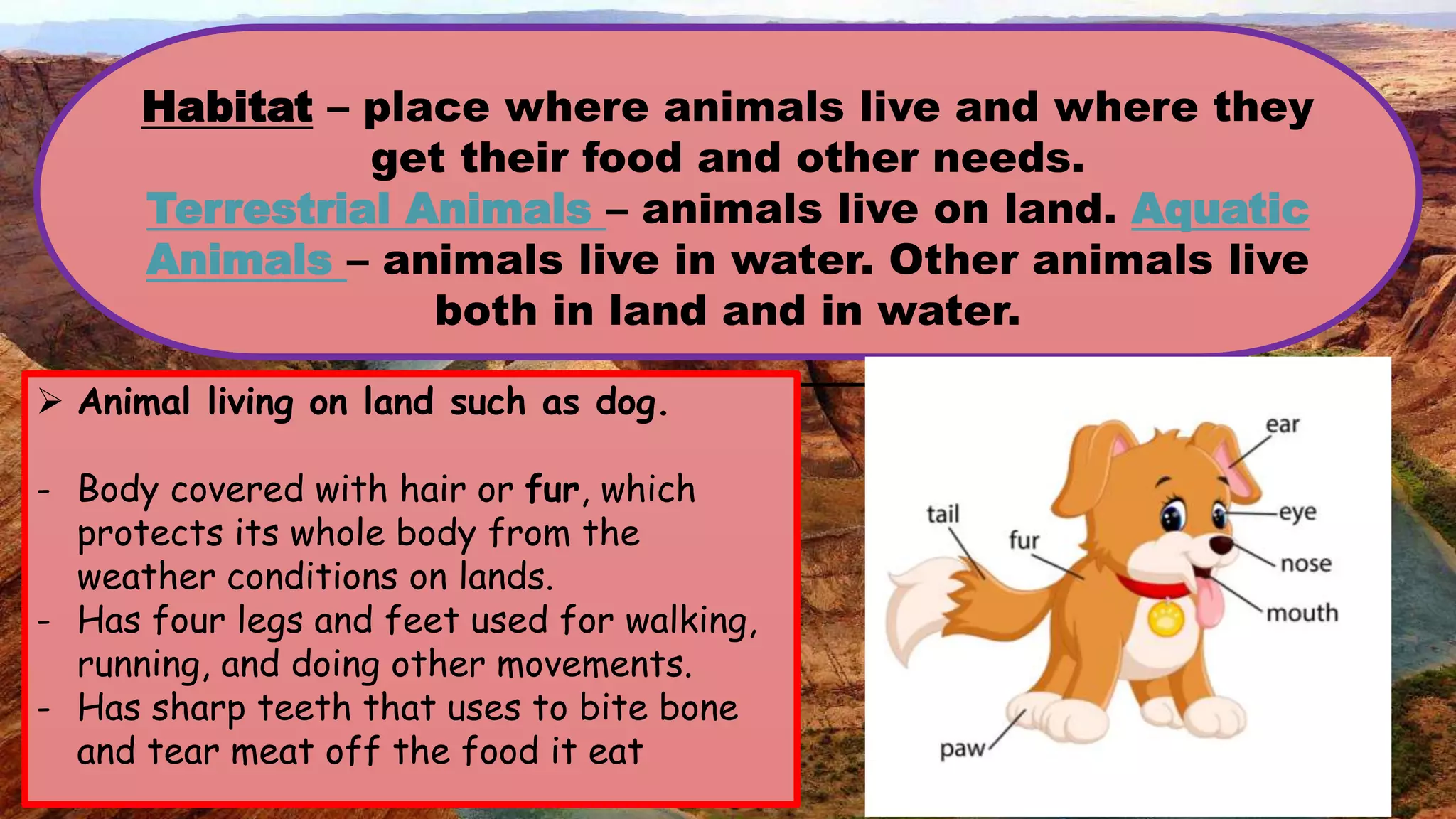
Habitat – place where animals live and where they
get their food and other needs.
Terrestrial Animals – animals live on land. Aquatic
Animals – animals live in water. Other animals live
both in land and in water.
 Animal living on land such as dog.
- Body covered with hair or fur, which
protects its whole body from the
weather conditions on lands.
- Has four legs and feet used for walking,
running, and doing other movements.
- Has sharp teeth that uses to bite bone
and tear meat off the food it eat
 Animal live the trees that grows on land
such as birds.
- Make nests on the branches and in holes of
the trees
- Body is covered with feathers that keeps
them warm during cold days.
- Has wings use to fly from place to place.
- Has beaks and claws for getting their food.
 Animal living in water like fish
- Uses tails and fins for swimming.
- Has gills to breathe under water and its
mouth to get food.
- Most fishes are covered with scales that
protects the body, and make it difficult for
some predators like sharks and tuna to get
the fish
 Animal live both on land and water like
turtle;
- Has webbed feet that enable it to swim in
water and crawl on land.
- Has a beaklike mouth and a jaw uses to bite,
tear, and chew food.
- The body covered with carapace or a hard shell
to protect from predators.
 And frogs
- Hops or jumps on land using hind legs.
- Skin is smooth and moist, and its color enables
it to adapt to, or blend to the surroundings and
hide from its enemies.
- Has webbed feet for moving and swimming fast
in water
- Has sticky pads on its feet that helps them in
climbing trees
- Other kind of frog have feet with clawlike
fingers for digging the ground for them to hide.
Movements allow animals to go from place to place
to place to get its food or to scape from predators.
 Wolf
- Has four legs for walking and running.
- Strong legs for chasing other animals
- Has excellent senses of sight, hearing
and smell that makes them to quickly
find its prey.
 Eagle
- Uses wings to fly or move across the
sky
- Has excellent vision that can spot their
prey as small as mouse even at a
thousands of feet above.
 Earthworm
- Does not have legs or wings, it moves by
slithering or sliding on its belly.
 Caterpillar
- Appear to move like a snake, if looking it
closely it has many tiny feet underneath its
body.
- It uses feet for crawling on plants and
other surfaces.
 Dolphin
- Uses its powerful fins and tail for speed
swimming
 Kangaroo
- Has two strong hind and back
legs for hopping
and jumping faster
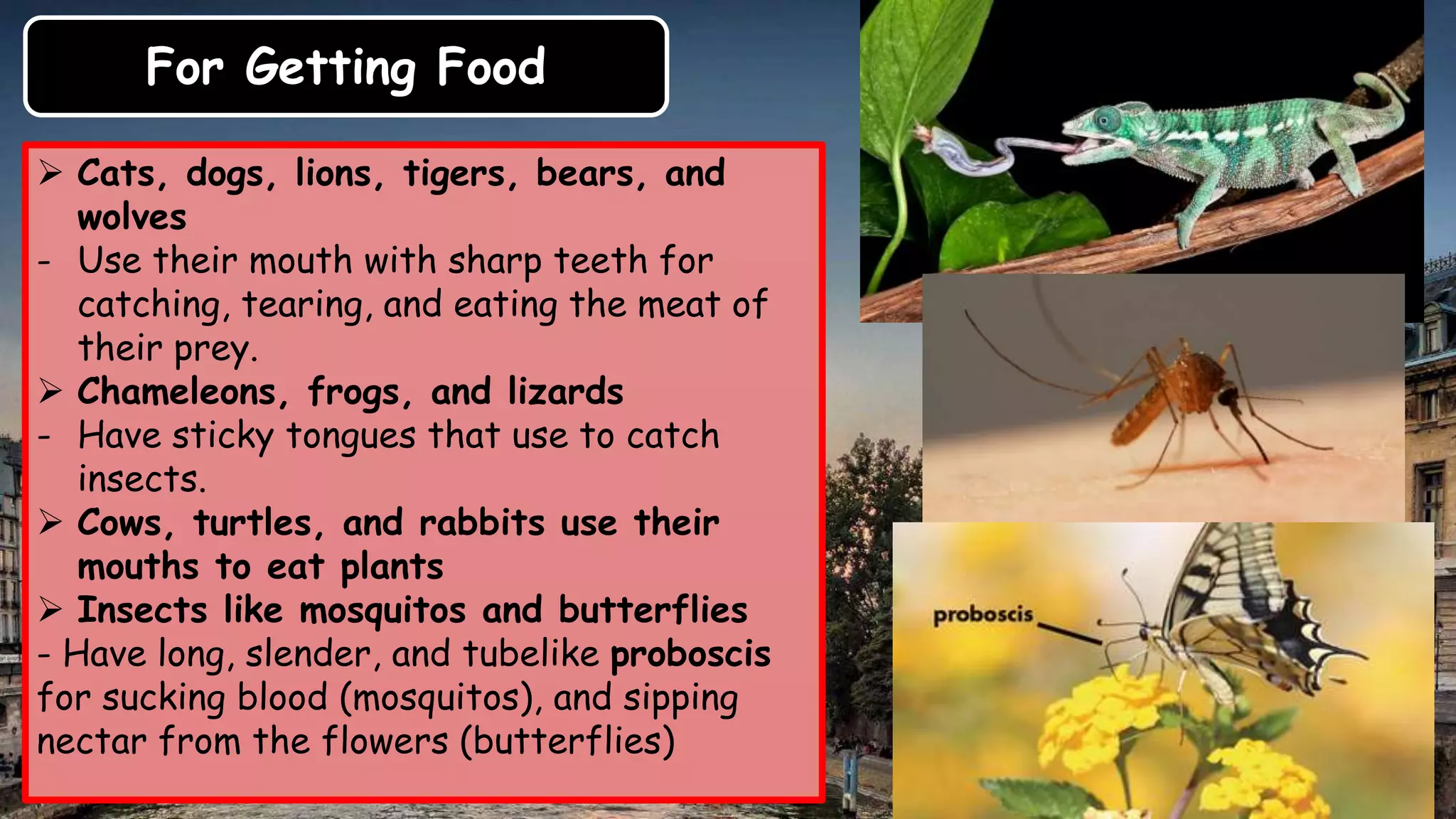
For Getting Food
 Cats, dogs, lions, tigers, bears, and
wolves
- Use their mouth with sharp teeth for
catching, tearing, and eating the meat of
their prey.
 Chameleons, frogs, and lizards
- Have sticky tongues that use to catch
insects.
 Cows, turtles, and rabbits use their
mouths to eat plants
 Insects like mosquitos and butterflies
- Have long, slender, and tubelike proboscis
for sucking blood (mosquitos), and sipping
nectar from the flowers (butterflies)
 Chickens, owls, eagles,
hawks, parrots, other birds
have beaks and claws that is
used for getting food.
 Snakes
- Have flexible jaws that can be
unhinged and fangs that curve
backward, and it is use for
holding and swallowing animals
such as mice and rabbits.
For Protecting Themselves
 Crocodiles, bears, cats, dogs, lions,
tigers, and wolves use their sharp teeth
and sharp claws for protecting themselves.
 Chameleon, frogs, and lizards mimicking
their environment by blending their bodies
on their surroundings and other animals do
not easily find them.
 Carabaos, goats, and rhinoceroses have
horns to ward off enemies
- Carabaos and goats have two horns, while
rhino either one or two horns on their
snouts.
 Birds (chickens, eagles, owls, and parrots)
- Use their beaks and claws to peck and claw
enemies
 Porcupines, hedgehogs, and lionfishes
- Have spines or quills or hallow hairs that
grow deep in the skin of animals. it sticks
out from the animal’s bodies and protect
them from the attacks of other animals.
 Snakes and scorpion
- Have poison sacs that produces venom, a
toxic or poisonous substance.
- Snake’s poison sac is connected to its fangs,
and a scorpion’s sacs are in its stinger
(located at the top of its tail).
 Crabs and lobsters
- Have hard claws called pincers
- They use these against attackers and also
for getting and eating food.
Animals Eat Different Kinds of
food
Classified into three:
1. Herbivores
2. Carnivores
3. Omnivores
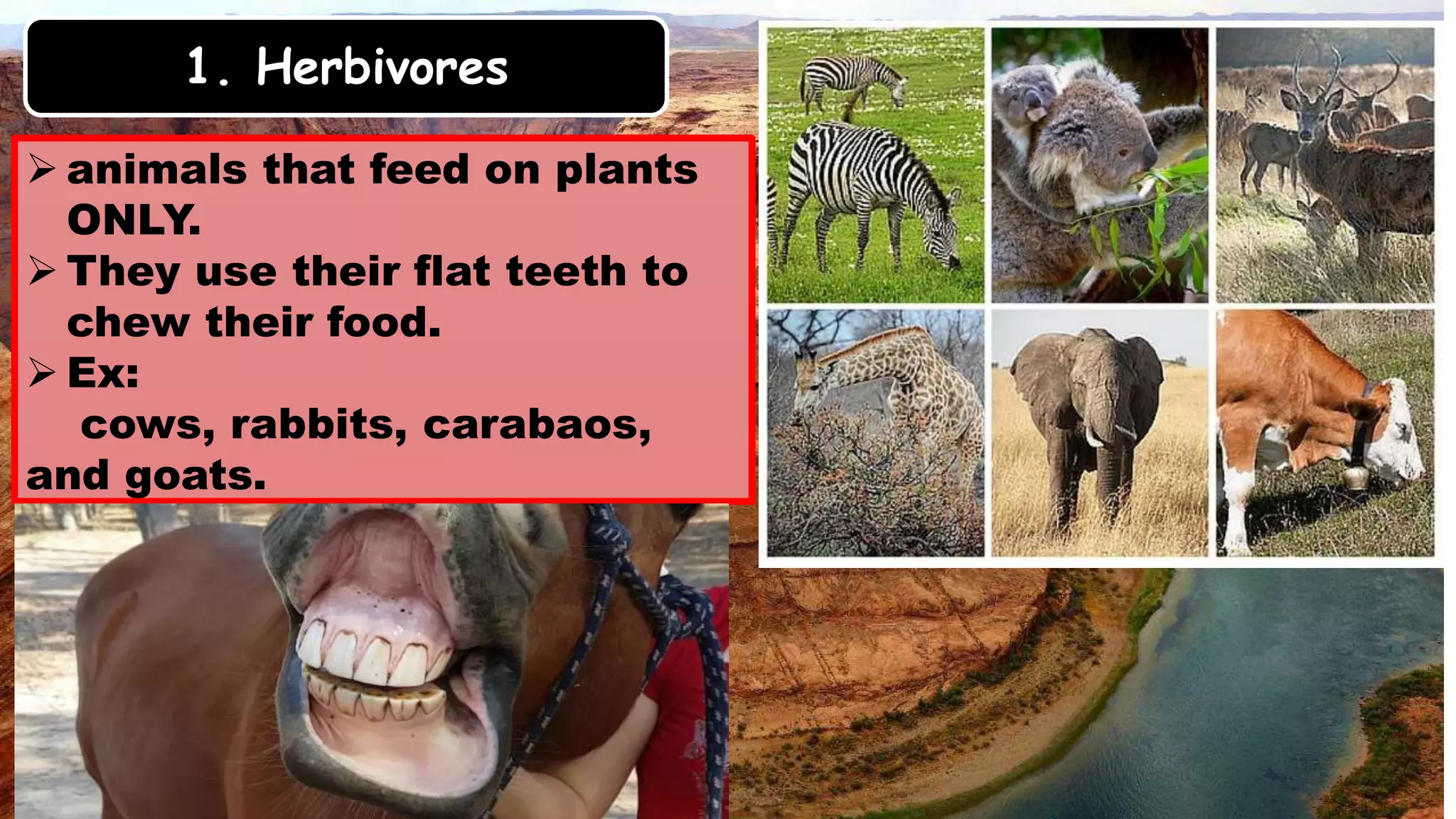
1. Herbivores
 animals that feed on plants
ONLY.
 They use their flat teeth to
chew their food.
 Ex:
cows, rabbits, carabaos,
and goats.
2. Carnivores
 Feed on meat of other
animals
 Use their sharp, pointed
teeth to tear meat into
pieces
 Ex: lions, eagles, tigers,
sharks, and foxes
3. Omnivores
 animals that eat both plants
and he meat of other animals
 Use of combination of flat
and sharp teeth to eat both
plants and animals
 Ex: pigs, bears, and bats

2 les 8 sci 3

  • 2.
    From the smallestearthworm that crawl on the ground to the large blue whales that swim in the oceans, animals fascinate people who want to know how animals move, eat, and survive in their environment.
  • 3.
    Animals Have DifferentBody Parts Different animals have body parts that vary in size, shape, and color. These body parts have different functions. They enable animals to live in their habitats, move from one place to another, get food, and protect themselves from other animals.
  • 4.
    Habitat – placewhere animals live and where they get their food and other needs. Terrestrial Animals – animals live on land. Aquatic Animals – animals live in water. Other animals live both in land and in water.  Animal living on land such as dog. - Body covered with hair or fur, which protects its whole body from the weather conditions on lands. - Has four legs and feet used for walking, running, and doing other movements. - Has sharp teeth that uses to bite bone and tear meat off the food it eat
  • 5.
     Animal livethe trees that grows on land such as birds. - Make nests on the branches and in holes of the trees - Body is covered with feathers that keeps them warm during cold days. - Has wings use to fly from place to place. - Has beaks and claws for getting their food.  Animal living in water like fish - Uses tails and fins for swimming. - Has gills to breathe under water and its mouth to get food. - Most fishes are covered with scales that protects the body, and make it difficult for some predators like sharks and tuna to get the fish
  • 6.
     Animal liveboth on land and water like turtle; - Has webbed feet that enable it to swim in water and crawl on land. - Has a beaklike mouth and a jaw uses to bite, tear, and chew food. - The body covered with carapace or a hard shell to protect from predators.  And frogs - Hops or jumps on land using hind legs. - Skin is smooth and moist, and its color enables it to adapt to, or blend to the surroundings and hide from its enemies. - Has webbed feet for moving and swimming fast in water - Has sticky pads on its feet that helps them in climbing trees - Other kind of frog have feet with clawlike fingers for digging the ground for them to hide.
  • 7.
    Movements allow animalsto go from place to place to place to get its food or to scape from predators.  Wolf - Has four legs for walking and running. - Strong legs for chasing other animals - Has excellent senses of sight, hearing and smell that makes them to quickly find its prey.  Eagle - Uses wings to fly or move across the sky - Has excellent vision that can spot their prey as small as mouse even at a thousands of feet above.
  • 8.
     Earthworm - Doesnot have legs or wings, it moves by slithering or sliding on its belly.  Caterpillar - Appear to move like a snake, if looking it closely it has many tiny feet underneath its body. - It uses feet for crawling on plants and other surfaces.  Dolphin - Uses its powerful fins and tail for speed swimming  Kangaroo - Has two strong hind and back legs for hopping and jumping faster
  • 9.
    For Getting Food Cats, dogs, lions, tigers, bears, and wolves - Use their mouth with sharp teeth for catching, tearing, and eating the meat of their prey.  Chameleons, frogs, and lizards - Have sticky tongues that use to catch insects.  Cows, turtles, and rabbits use their mouths to eat plants  Insects like mosquitos and butterflies - Have long, slender, and tubelike proboscis for sucking blood (mosquitos), and sipping nectar from the flowers (butterflies)
  • 10.
     Chickens, owls,eagles, hawks, parrots, other birds have beaks and claws that is used for getting food.  Snakes - Have flexible jaws that can be unhinged and fangs that curve backward, and it is use for holding and swallowing animals such as mice and rabbits.
  • 11.
    For Protecting Themselves Crocodiles, bears, cats, dogs, lions, tigers, and wolves use their sharp teeth and sharp claws for protecting themselves.  Chameleon, frogs, and lizards mimicking their environment by blending their bodies on their surroundings and other animals do not easily find them.  Carabaos, goats, and rhinoceroses have horns to ward off enemies - Carabaos and goats have two horns, while rhino either one or two horns on their snouts.  Birds (chickens, eagles, owls, and parrots) - Use their beaks and claws to peck and claw enemies
  • 12.
     Porcupines, hedgehogs,and lionfishes - Have spines or quills or hallow hairs that grow deep in the skin of animals. it sticks out from the animal’s bodies and protect them from the attacks of other animals.  Snakes and scorpion - Have poison sacs that produces venom, a toxic or poisonous substance. - Snake’s poison sac is connected to its fangs, and a scorpion’s sacs are in its stinger (located at the top of its tail).  Crabs and lobsters - Have hard claws called pincers - They use these against attackers and also for getting and eating food.
  • 13.
    Animals Eat DifferentKinds of food Classified into three: 1. Herbivores 2. Carnivores 3. Omnivores
  • 14.
    1. Herbivores  animalsthat feed on plants ONLY.  They use their flat teeth to chew their food.  Ex: cows, rabbits, carabaos, and goats.
  • 15.
    2. Carnivores  Feedon meat of other animals  Use their sharp, pointed teeth to tear meat into pieces  Ex: lions, eagles, tigers, sharks, and foxes
  • 16.
    3. Omnivores  animalsthat eat both plants and he meat of other animals  Use of combination of flat and sharp teeth to eat both plants and animals  Ex: pigs, bears, and bats

Editor's Notes

  • #2 A template for students to design a field trip to a location for other students to view. Includes directions to the student of what to include on each slide and what content should be considered. 
  • #3 A template for students to design a field trip to a location for other students to view. Includes directions to the student of what to include on each slide and what content should be considered. 
  • #4 A template for students to design a field trip to a location for other students to view. Includes directions to the student of what to include on each slide and what content should be considered. 
  • #5 A template for students to design a field trip to a location for other students to view. Includes directions to the student of what to include on each slide and what content should be considered. 
  • #6 A template for students to design a field trip to a location for other students to view. Includes directions to the student of what to include on each slide and what content should be considered. 
  • #7 A template for students to design a field trip to a location for other students to view. Includes directions to the student of what to include on each slide and what content should be considered. 
  • #8 A template for students to design a field trip to a location for other students to view. Includes directions to the student of what to include on each slide and what content should be considered. 
  • #12 A template for students to design a field trip to a location for other students to view. Includes directions to the student of what to include on each slide and what content should be considered. 
  • #14 A template for students to design a field trip to a location for other students to view. Includes directions to the student of what to include on each slide and what content should be considered. 
  • #15 A template for students to design a field trip to a location for other students to view. Includes directions to the student of what to include on each slide and what content should be considered. 
  • #16 A template for students to design a field trip to a location for other students to view. Includes directions to the student of what to include on each slide and what content should be considered. 
  • #17 A template for students to design a field trip to a location for other students to view. Includes directions to the student of what to include on each slide and what content should be considered.