Terrestrial plants - are plants that grow on land.
There are many different types
of specialized roots, but two of the more familiar types
of roots include:
a.
b. .
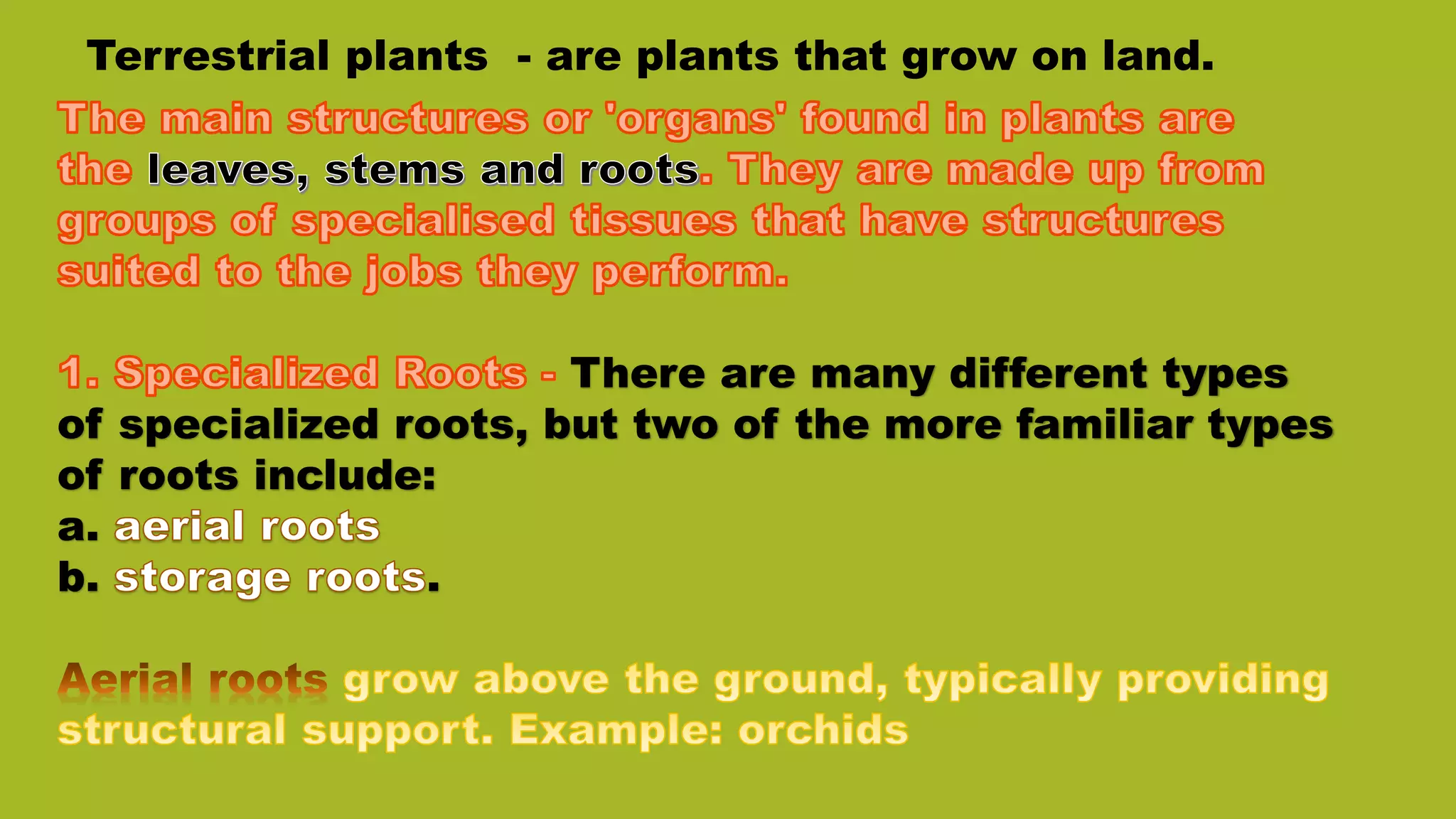
are adapted for growing in the
canopies of trees. Up in the branches of
trees, they have much greater access to
light. Their epiphytic roots don’t require
soil, are capable of absorbing water that
accumulates on them from dew, and
collect nutrients from detritus that builds
up around them.
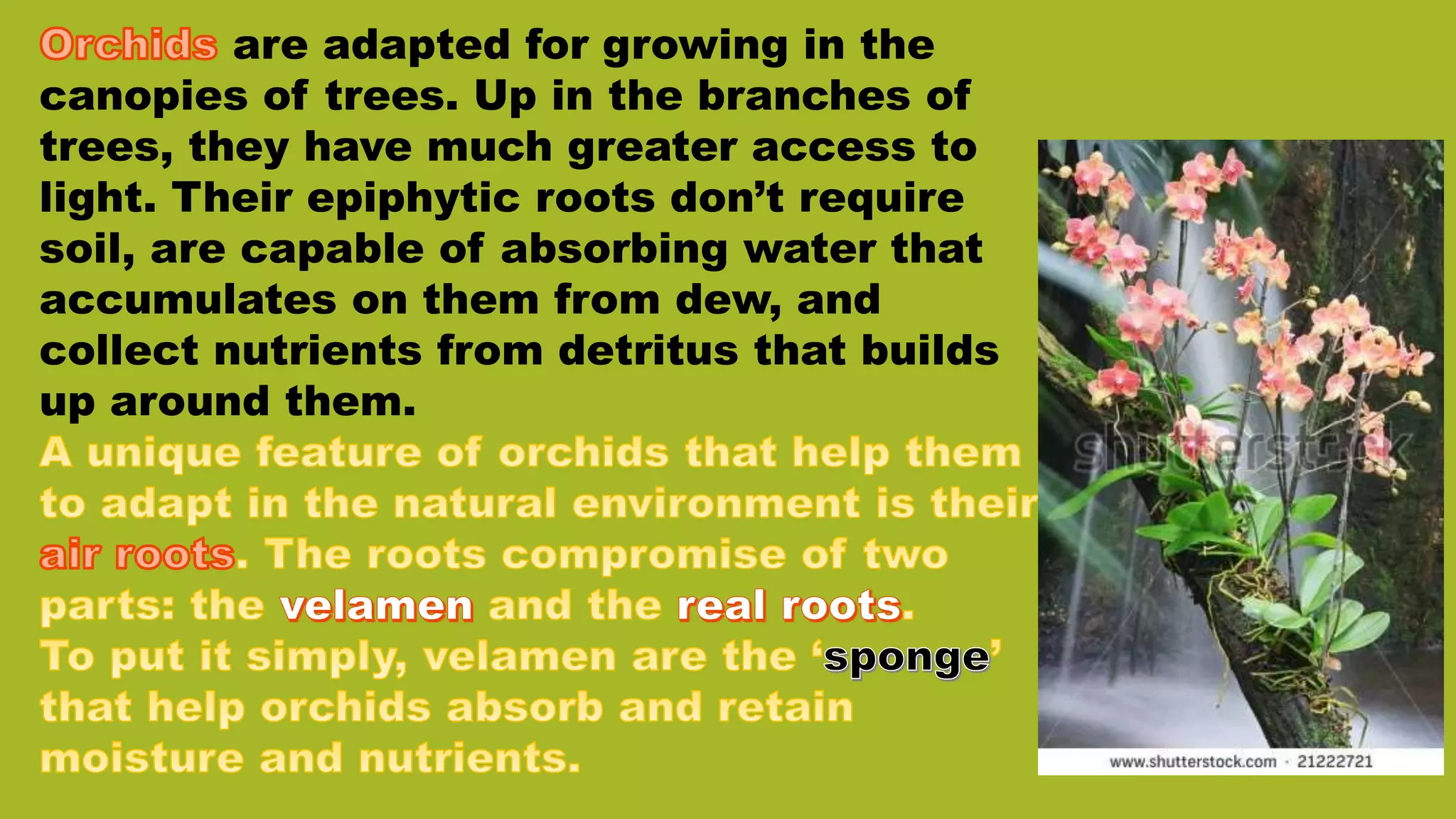
Plants living in desert lie immediately under the ground
and are spread horizontally. This root system enables
them to seep easily the water especially that the place
has little or no rainfall in a year.
. -
Examples - carrots,
beets, and sweet
potatoes. They
are specially modified for
storage of starch and
water. They usually grow
underground as
protection from plant-
eating animals. Their
roots allow the plants to
absorb water and
nutrients from other
plants.
2. Specialized Stem
Terrestrial plants like have developed
or with thick and twisted stems that loop
around the palms’ and move upward to
reach the sunlight.
- a modified branch that
has adapted such that it is
sharper and more pointed than
the rest of the branch.
Animals trying to much on a
plant that has thorn like rose
had to contend with the plant’s
thorns.
– modified part of the
leaf that is sharper and more
pointed than the rest of the leaf.
It protect themselves from being
eaten by animals that would like
to get their water.
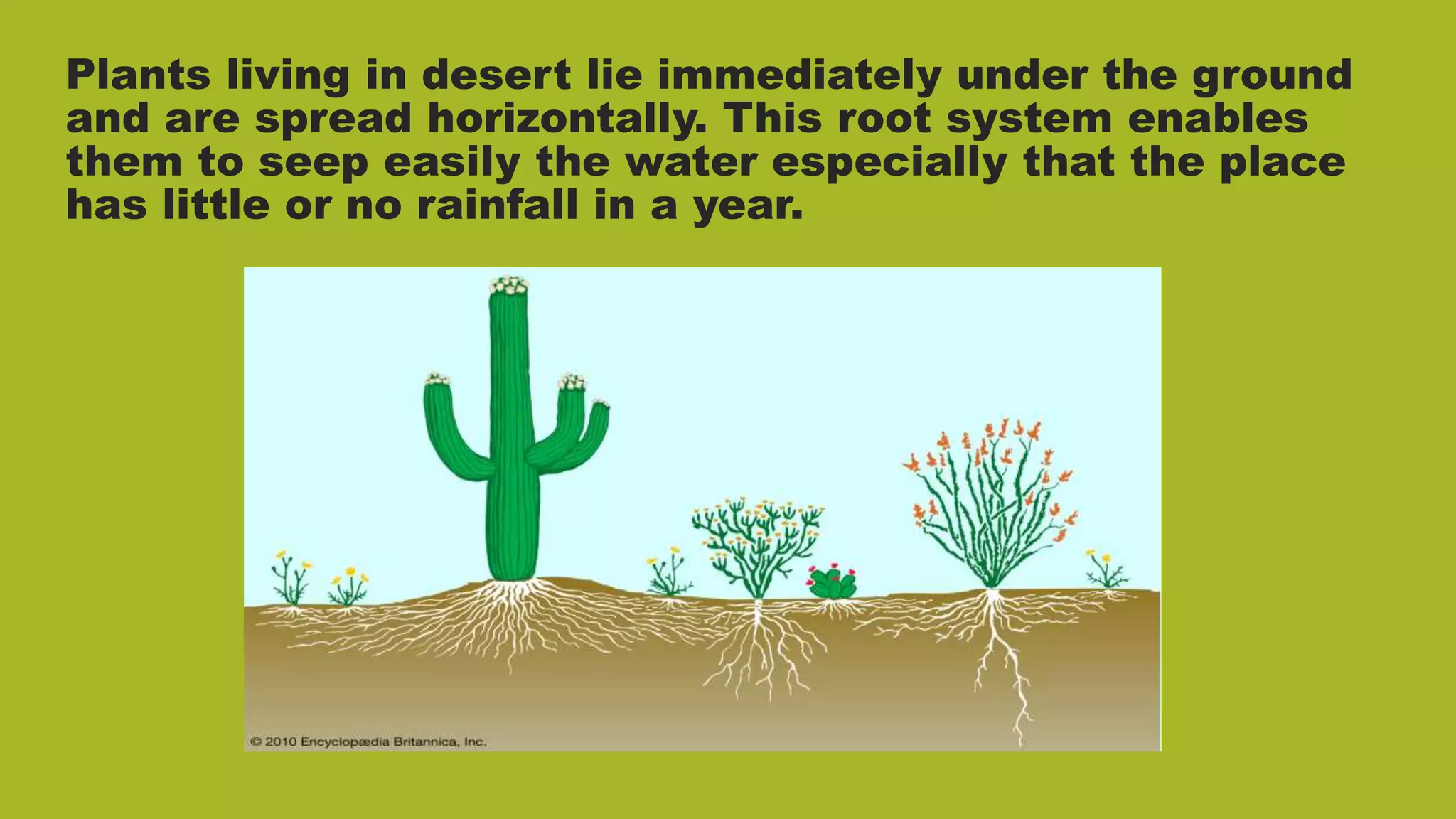
have tiny hair or
hairlike structures that
release a stinging and toxic
liquid when the plants are
touched.
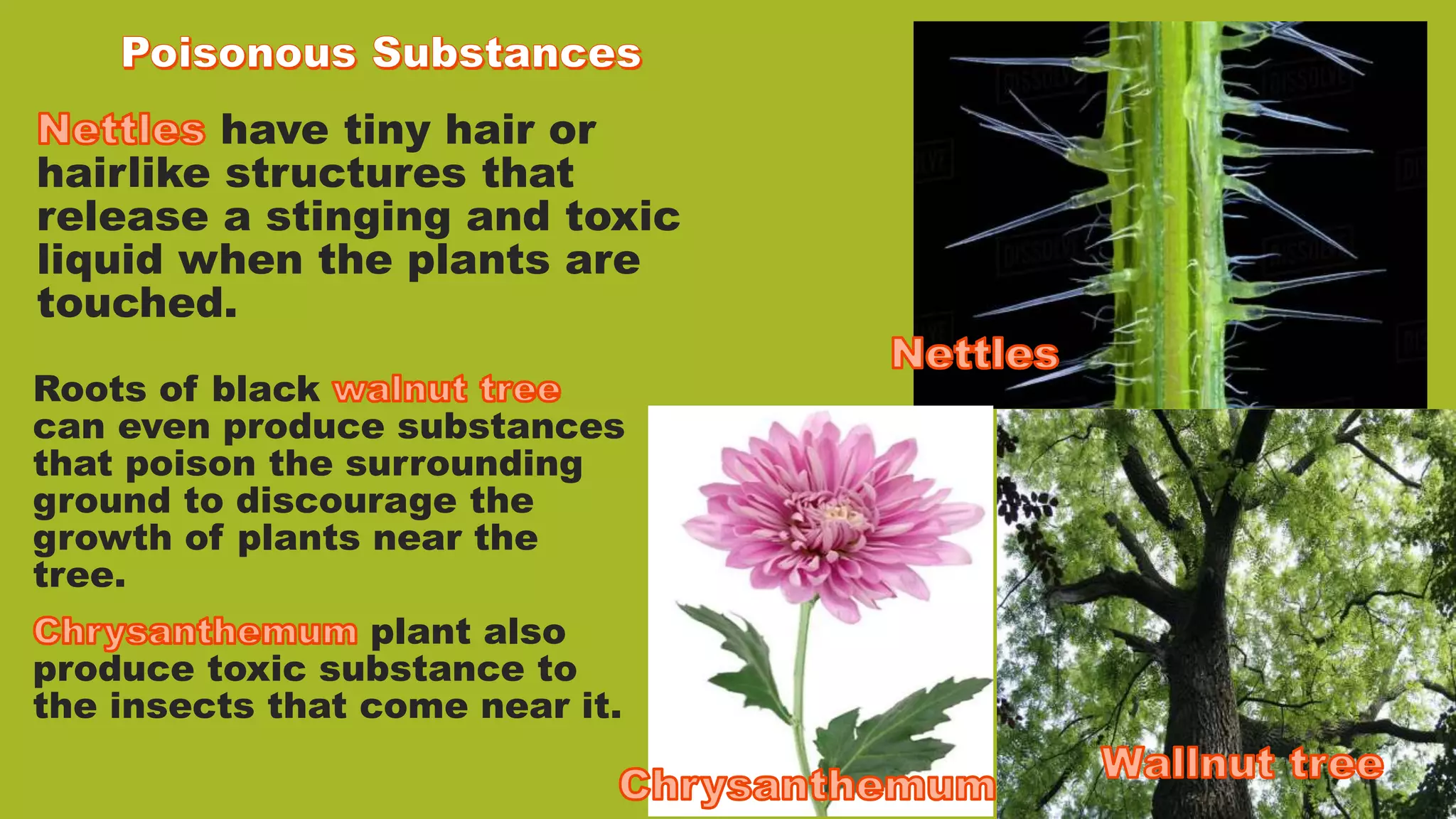
Roots of black
can even produce substances
that poison the surrounding
ground to discourage the
growth of plants near the
tree.
plant also
produce toxic substance to
the insects that come near it.
Plants in the deserts have developed leaves that are usually
thick, tough, and waxy. These structures enable the plant to
retain water, keep the water inside the leaves from dripping
out, reflect light from the sun and help reduce the loss of
water, and leaves have sunken middle part that
catches water from the rain.
Bromeliads
Bromeliads -
have huge leaves, which help to capture lots
of sunlight. They have
which enables them to shed
excess water from the tip and funnel vast amounts of
water to the thirsty base of the plant.
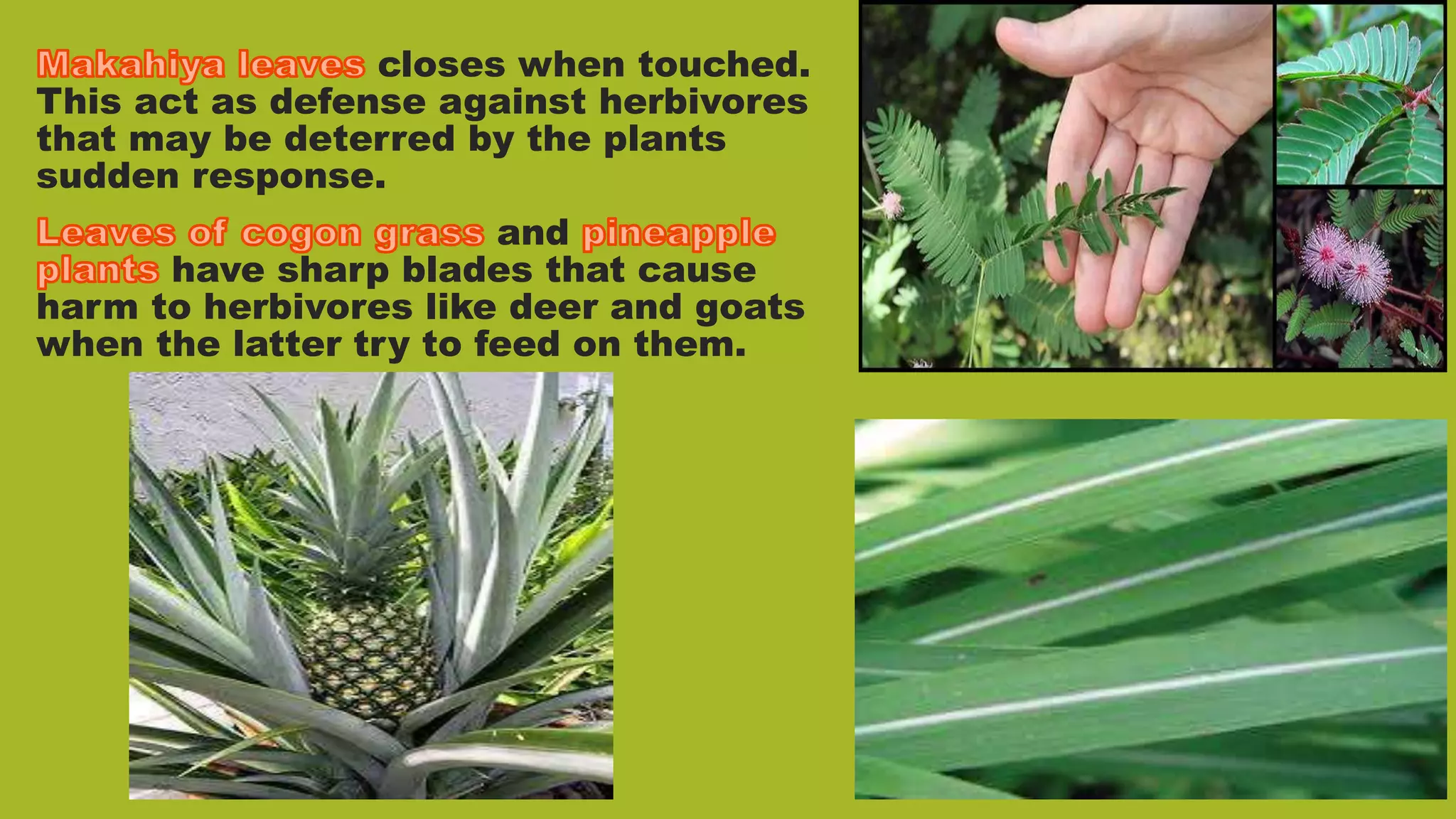
closes when touched.
This act as defense against herbivores
that may be deterred by the plants
sudden response.
and
have sharp blades that cause
harm to herbivores like deer and goats
when the latter try to feed on them.
The , , and
have stinky smells that drive away their enemies.
contains substance
that can poison the people who
try to eat them.
though it is edible to
humans but for the lower type of
animals (herbivorous) are hurt
when they attempt to eat them.

3 les 3 sci 4

  • 2.
    Terrestrial plants -are plants that grow on land. There are many different types of specialized roots, but two of the more familiar types of roots include: a. b. .
  • 3.
    are adapted forgrowing in the canopies of trees. Up in the branches of trees, they have much greater access to light. Their epiphytic roots don’t require soil, are capable of absorbing water that accumulates on them from dew, and collect nutrients from detritus that builds up around them.
  • 4.
    Plants living indesert lie immediately under the ground and are spread horizontally. This root system enables them to seep easily the water especially that the place has little or no rainfall in a year.
  • 5.
    . - Examples -carrots, beets, and sweet potatoes. They are specially modified for storage of starch and water. They usually grow underground as protection from plant- eating animals. Their roots allow the plants to absorb water and nutrients from other plants.
  • 6.
    2. Specialized Stem Terrestrialplants like have developed or with thick and twisted stems that loop around the palms’ and move upward to reach the sunlight.
  • 8.
    - a modifiedbranch that has adapted such that it is sharper and more pointed than the rest of the branch. Animals trying to much on a plant that has thorn like rose had to contend with the plant’s thorns. – modified part of the leaf that is sharper and more pointed than the rest of the leaf. It protect themselves from being eaten by animals that would like to get their water.
  • 9.
    have tiny hairor hairlike structures that release a stinging and toxic liquid when the plants are touched. Roots of black can even produce substances that poison the surrounding ground to discourage the growth of plants near the tree. plant also produce toxic substance to the insects that come near it.
  • 10.
    Plants in thedeserts have developed leaves that are usually thick, tough, and waxy. These structures enable the plant to retain water, keep the water inside the leaves from dripping out, reflect light from the sun and help reduce the loss of water, and leaves have sunken middle part that catches water from the rain. Bromeliads Bromeliads -
  • 11.
    have huge leaves,which help to capture lots of sunlight. They have which enables them to shed excess water from the tip and funnel vast amounts of water to the thirsty base of the plant.
  • 12.
    closes when touched. Thisact as defense against herbivores that may be deterred by the plants sudden response. and have sharp blades that cause harm to herbivores like deer and goats when the latter try to feed on them.
  • 13.
    The , ,and have stinky smells that drive away their enemies.
  • 14.
    contains substance that canpoison the people who try to eat them. though it is edible to humans but for the lower type of animals (herbivorous) are hurt when they attempt to eat them.