 Part of the ocean between the tide
marks of the low tide and high tide
on land and usually extends to the
edge of the continental shelf
 CONTINENTAL SHELF – shallow area
of the ocean that is less than 200 m
in depth. It is an area where
pounding waves occur.
 Water level change abruptly because
of the continuous movement of
water
 Organisms living: brittle stars,
mussels, crabs, and barnacles.
 People utilize the area as source of
food and site for shelter and
recreational activities.
Intertidal zones are divided into different layers
It has four distinct physical subdivisions based on the
amount of exposure each gets -- , and the
, and . Each subzone has
a characteristic and distinct biological community. Refer
on page 132 to 134 in your book.
Intertidal Zone Facts
Fact #1 – Intertidal Zones are Harsh Habitats.
.
Fact #3 – The Intertidal Zone Has Three Regions.
1. It is a harsh habitat
because the organisms
that live there have
adaptions that allow them
to live both submerged
with water and out of
water.
Depth: From high tide
down to low tide.
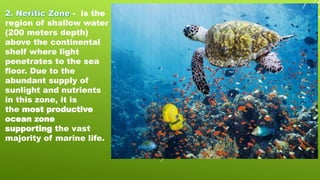
- is the
region of shallow water
(200 meters depth)
above the continental
shelf where light
penetrates to the sea
floor. Due to the
abundant supply of
sunlight and nutrients
in this zone, it is
the most productive
ocean zone
supporting the vast
majority of marine life.
Brittle fish mussels
barnacles
crab
> Living things in the zone interact
with each other
> Interaction of organisms to non
living things is related to the
movement of water
> Ex: continuous pounding of waves
against the intertidal zone,
organisms may able to adapt to the
sudden change of water levels.
> Such as barnacles and sea star
have tube feet that able them to
provide suction for them to cling to
rocks and keep from being washed
off
 > During low tide, clams burrow
themselves into the sand to
prevent their bodies from drying
due to too much heat and
exposure to sun
 > Aside from interaction
between living and nonliving
things, there is also interaction
between organisms: predation,
competition, and symbiosis (2
types are mutualism and
commensalism).
1. Don't dump your trash overboard; dispose of properly and recycle.
2. Maintain your boats to reduce oil leaks.
3. Keep your boat or motorized watercraft out of sensitive areas like
seagrass beds.
4. Install and maintain marine sanitation devices on your boat.
5. Use designated pumpout stations.
Ways to protect and conserve intertidal zones

2 les 5 sci 5

  • 2.
     Part ofthe ocean between the tide marks of the low tide and high tide on land and usually extends to the edge of the continental shelf  CONTINENTAL SHELF – shallow area of the ocean that is less than 200 m in depth. It is an area where pounding waves occur.  Water level change abruptly because of the continuous movement of water  Organisms living: brittle stars, mussels, crabs, and barnacles.  People utilize the area as source of food and site for shelter and recreational activities.
  • 3.
    Intertidal zones aredivided into different layers It has four distinct physical subdivisions based on the amount of exposure each gets -- , and the , and . Each subzone has a characteristic and distinct biological community. Refer on page 132 to 134 in your book.
  • 4.
    Intertidal Zone Facts Fact#1 – Intertidal Zones are Harsh Habitats. . Fact #3 – The Intertidal Zone Has Three Regions. 1. It is a harsh habitat because the organisms that live there have adaptions that allow them to live both submerged with water and out of water. Depth: From high tide down to low tide.
  • 5.
    - is the regionof shallow water (200 meters depth) above the continental shelf where light penetrates to the sea floor. Due to the abundant supply of sunlight and nutrients in this zone, it is the most productive ocean zone supporting the vast majority of marine life.
  • 6.
  • 7.
    > Living thingsin the zone interact with each other > Interaction of organisms to non living things is related to the movement of water > Ex: continuous pounding of waves against the intertidal zone, organisms may able to adapt to the sudden change of water levels. > Such as barnacles and sea star have tube feet that able them to provide suction for them to cling to rocks and keep from being washed off  > During low tide, clams burrow themselves into the sand to prevent their bodies from drying due to too much heat and exposure to sun  > Aside from interaction between living and nonliving things, there is also interaction between organisms: predation, competition, and symbiosis (2 types are mutualism and commensalism).
  • 8.
    1. Don't dumpyour trash overboard; dispose of properly and recycle. 2. Maintain your boats to reduce oil leaks. 3. Keep your boat or motorized watercraft out of sensitive areas like seagrass beds. 4. Install and maintain marine sanitation devices on your boat. 5. Use designated pumpout stations. Ways to protect and conserve intertidal zones