Interactions among
Living and Non-Living
Things in Intertidal
Zone
JENEFER AGUSTTINA P. MAGORA
SUBJECT TEACHER
What is intertidal zone?
Is a rocky shorelines host
sea stars, snails, seaweed,
algae, and crabs.
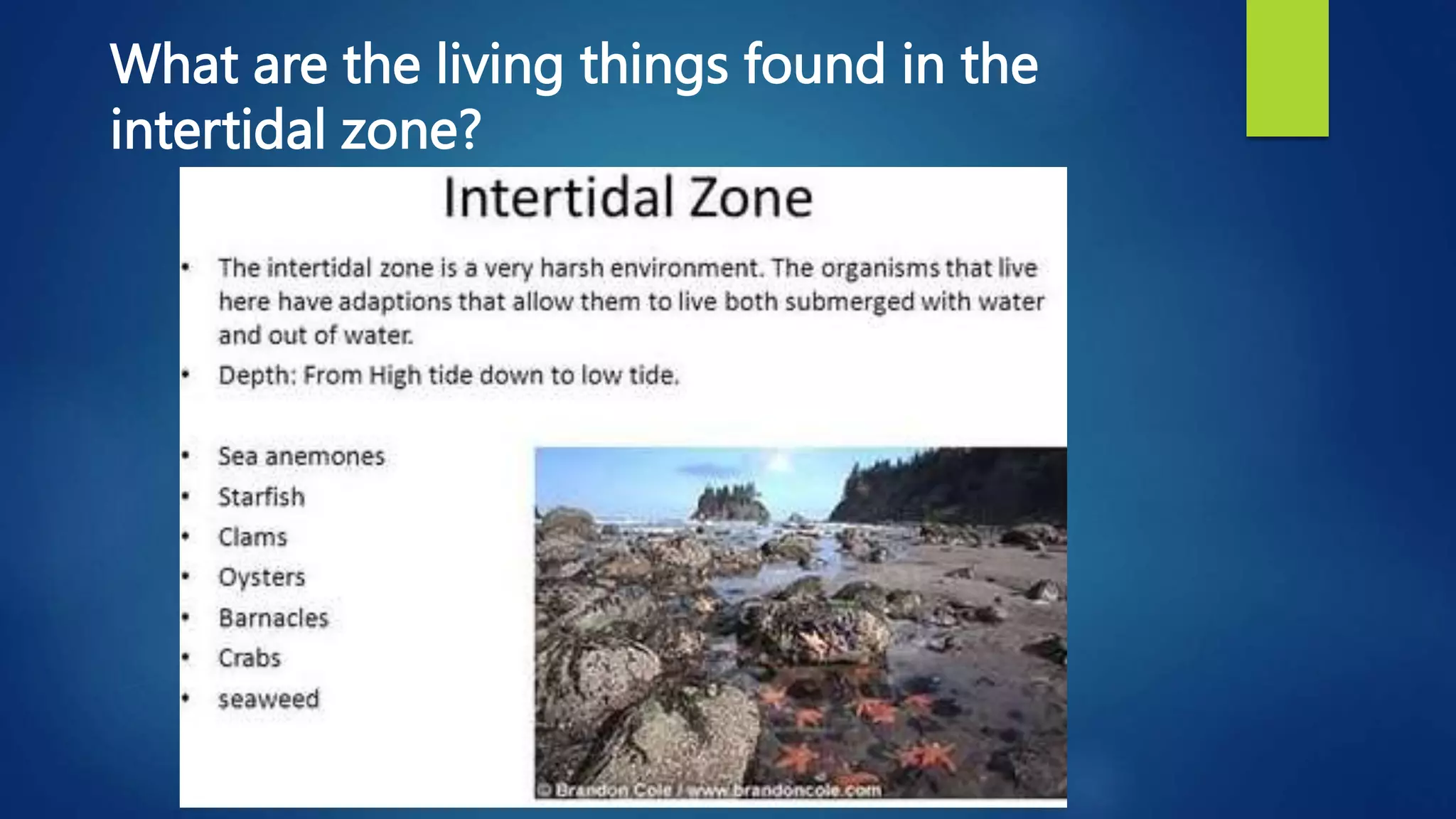
What are the living things found in the
intertidal zone?
What do you think is the water level in high tide?
How about the water level in low tide?
How would you describe the differences between the
two?
Sea weed shell
1.Why is it difficult to live in intertidal zone?
2.Give organisms that can live in an intertidal
zone?
3.In each intertidal zone how do organisms
interact?
4.How do organisms interact with one
another?
5.How do organisms adapt with the
environment?
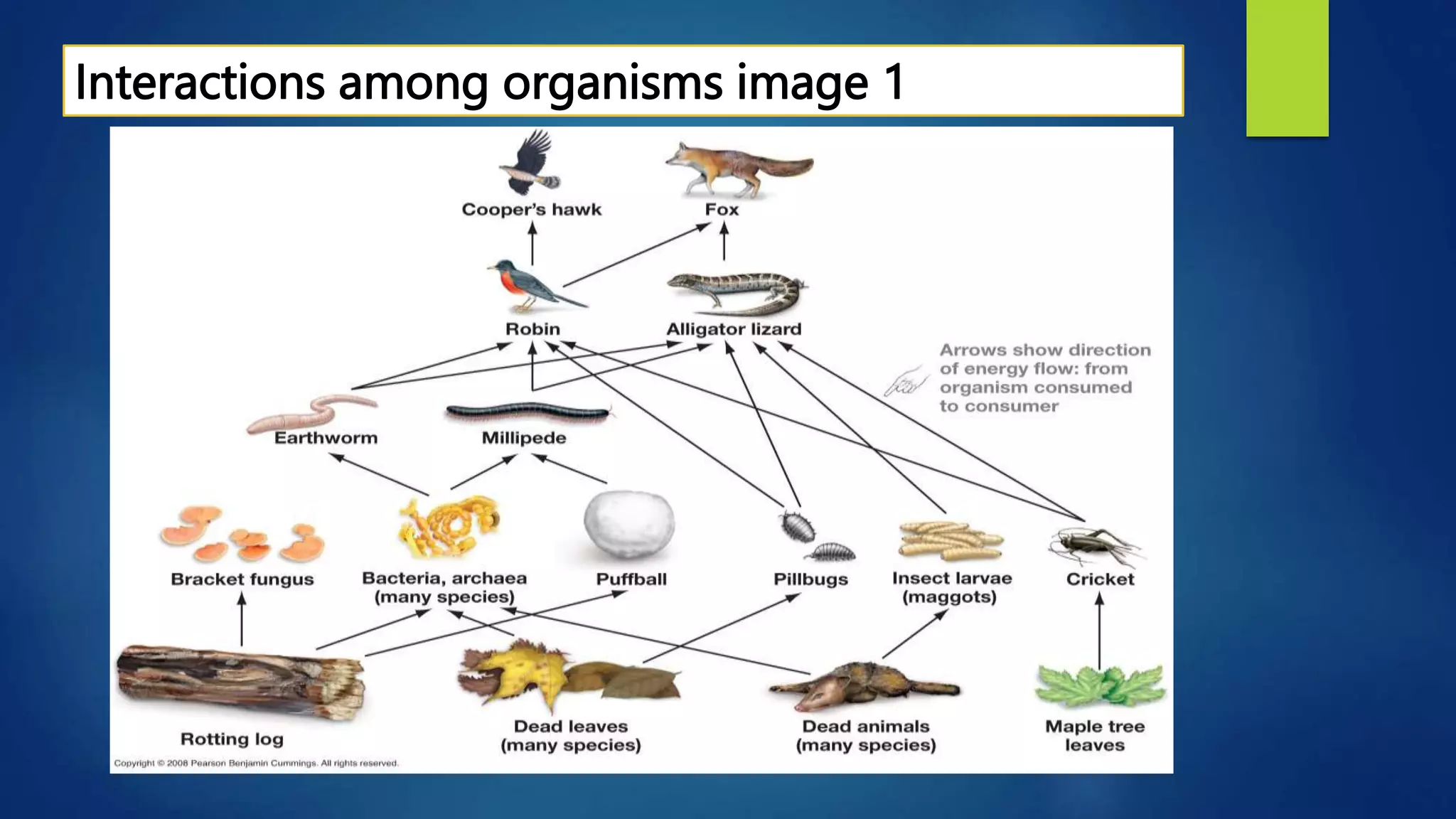
Interactions among organisms image 1
Interactions among organisms image 2
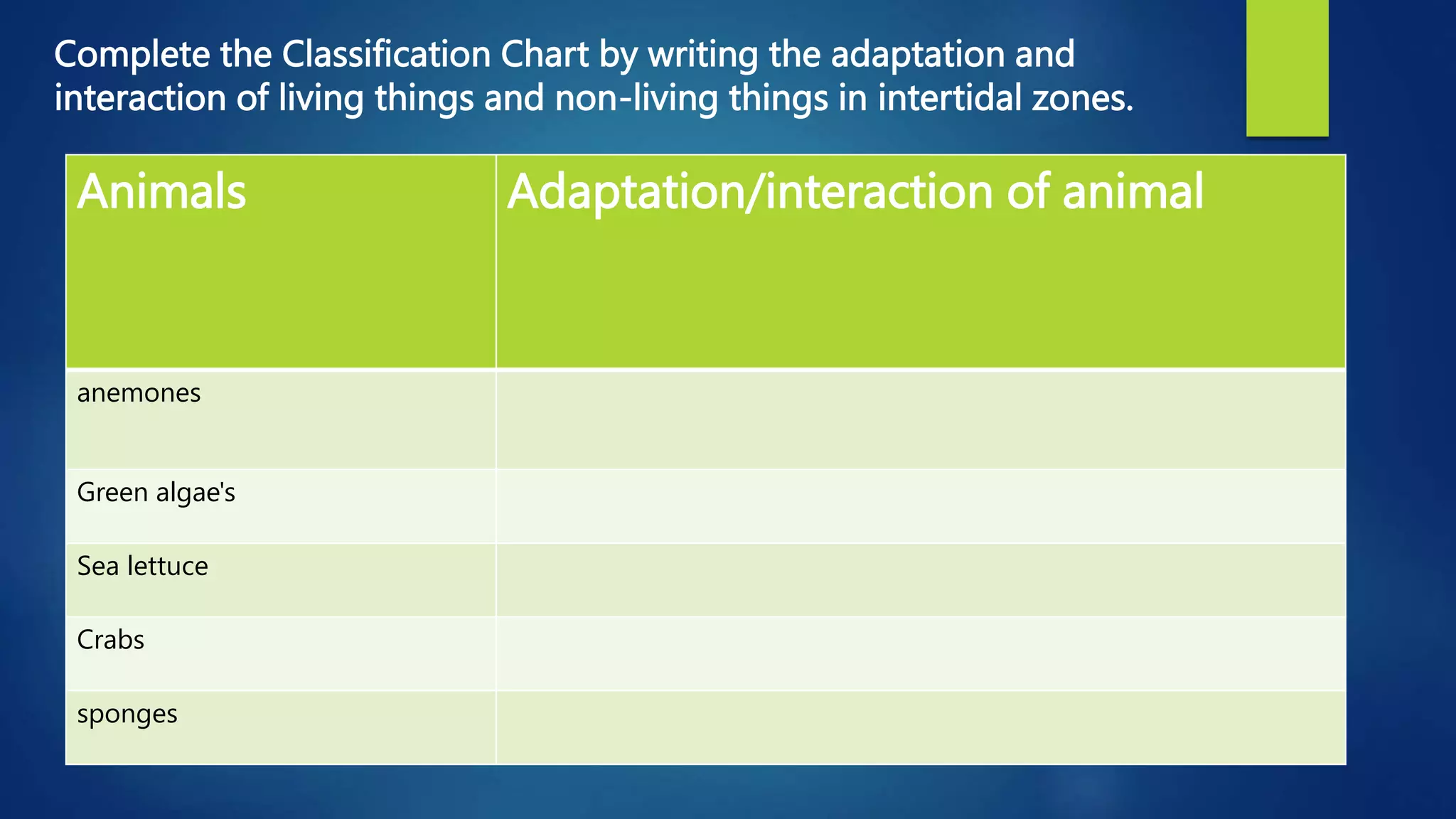
Complete the Classification Chart by writing the adaptation and
interaction of living things and non-living things in intertidal zones.
Animals Adaptation/interaction of animal
anemones
Green algae's
Sea lettuce
Crabs
sponges
The intertidal zone, also known as
the foreshore and seashore and
sometimes referred to as the littoral
zone, is the area that is above water
at low tide and under water at high
tide (in other words, the area
between tide marks).
This area can include many different types
of habitats, with many types of animals,
such as starfish, sea urchins, and numerous
species of coral. The well-known area also
includes steep rocky cliffs, sandy beaches,
or wetlands (e.g., vast mudflats).
The defining characteristic of the
intertidal zone is that it is
submerged with water during high
tide and exposed to the air during
low tide. The zone can take many
forms, from sandy beaches to rocky
cliffs.
A typical rocky shore can be divided into a
spray zone or splash zone (also known as
the supratidal zone), which is above the
spring high-tide line and is covered by
water only during storms, and an intertidal
zone, which lies between the high and low
tidal extremes.
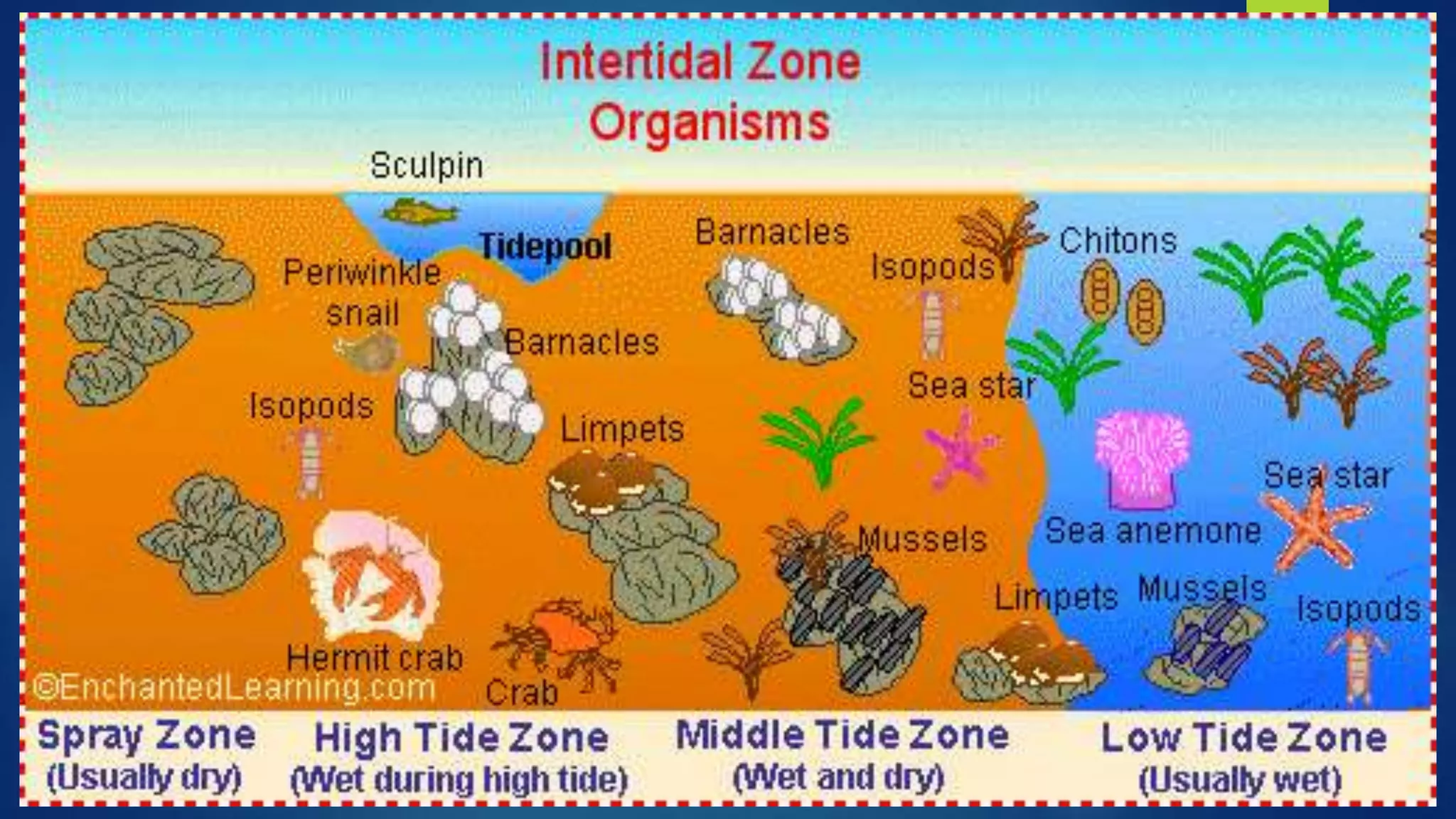
Along most shores, the intertidal zone can
be clearly separated into the following
subzones: high tide zone, middle tide zone,
and low tide zone. The intertidal zone is one
of a number of marine biomes or habitats,
including estuaries, neritic, surface and deep
zones.
Read each question carefully and encircle the letter of
the correct answer.
1.Organisms that live in the intertidal zone are adapted to
crashing waves and tidal changes. How do barnacles prevent
being washed away?
A. They cling tightly to rocks
B. Barnacles go with the waves
C. They open their shells
D. They store much salt in their bodies
2.How do organisms exposed to air be able to
prevent drying out?
A. They seal completely their shells
B. They move up to zones that have plenty of
water
C. Organism feed on other organisms that are
watery
D. Organism store much water in their bodies
3.Why do you think there are organisms that can
be found in more than one zone?
A. They are able to reproduce more of their kind
B. They are more adapted to the conditions in
the zone
C. They cannot adjust to harsh environment
D. They require little amount of water
4.What factors may affect the salinity of water
across the Intertidal zone?
A. Amount of rainfall and evaporation
B. Kinds of organisms living in the area
C. Availability of space and food
D. Runoff from the people living along the shoreline
5.In many desert regions, water is diverted from
streams and rivers to people in cities. How does this
affect the animals in the area?
A. The animals become more active in daylight hours
B. The animals migrate to tropical rainforests
C. The animals move closer to others to get food
D. The animals stop searching for food and water
Additional activities for application or remediation
Identify your favorite intertidal organism
1.Name ___________________
2. Draw it’s picture
3. Where is this organism’s habitat?
4. What adaptation/interaction does it have?
Interactions among Living and Non-Living Things in Intertidal grade 5 week 8 day 4.pptx

Interactions among Living and Non-Living Things in Intertidal grade 5 week 8 day 4.pptx

  • 1.
    Interactions among Living andNon-Living Things in Intertidal Zone JENEFER AGUSTTINA P. MAGORA SUBJECT TEACHER
  • 2.
    What is intertidalzone? Is a rocky shorelines host sea stars, snails, seaweed, algae, and crabs.
  • 3.
    What are theliving things found in the intertidal zone?
  • 4.
    What do youthink is the water level in high tide? How about the water level in low tide? How would you describe the differences between the two?
  • 7.
  • 8.
    1.Why is itdifficult to live in intertidal zone? 2.Give organisms that can live in an intertidal zone? 3.In each intertidal zone how do organisms interact? 4.How do organisms interact with one another? 5.How do organisms adapt with the environment?
  • 9.
  • 10.
  • 11.
  • 12.
    Complete the ClassificationChart by writing the adaptation and interaction of living things and non-living things in intertidal zones. Animals Adaptation/interaction of animal anemones Green algae's Sea lettuce Crabs sponges
  • 14.
    The intertidal zone,also known as the foreshore and seashore and sometimes referred to as the littoral zone, is the area that is above water at low tide and under water at high tide (in other words, the area between tide marks).
  • 15.
    This area caninclude many different types of habitats, with many types of animals, such as starfish, sea urchins, and numerous species of coral. The well-known area also includes steep rocky cliffs, sandy beaches, or wetlands (e.g., vast mudflats).
  • 16.
    The defining characteristicof the intertidal zone is that it is submerged with water during high tide and exposed to the air during low tide. The zone can take many forms, from sandy beaches to rocky cliffs.
  • 17.
    A typical rockyshore can be divided into a spray zone or splash zone (also known as the supratidal zone), which is above the spring high-tide line and is covered by water only during storms, and an intertidal zone, which lies between the high and low tidal extremes.
  • 18.
    Along most shores,the intertidal zone can be clearly separated into the following subzones: high tide zone, middle tide zone, and low tide zone. The intertidal zone is one of a number of marine biomes or habitats, including estuaries, neritic, surface and deep zones.
  • 20.
    Read each questioncarefully and encircle the letter of the correct answer. 1.Organisms that live in the intertidal zone are adapted to crashing waves and tidal changes. How do barnacles prevent being washed away? A. They cling tightly to rocks B. Barnacles go with the waves C. They open their shells D. They store much salt in their bodies
  • 21.
    2.How do organismsexposed to air be able to prevent drying out? A. They seal completely their shells B. They move up to zones that have plenty of water C. Organism feed on other organisms that are watery D. Organism store much water in their bodies
  • 22.
    3.Why do youthink there are organisms that can be found in more than one zone? A. They are able to reproduce more of their kind B. They are more adapted to the conditions in the zone C. They cannot adjust to harsh environment D. They require little amount of water
  • 23.
    4.What factors mayaffect the salinity of water across the Intertidal zone? A. Amount of rainfall and evaporation B. Kinds of organisms living in the area C. Availability of space and food D. Runoff from the people living along the shoreline
  • 24.
    5.In many desertregions, water is diverted from streams and rivers to people in cities. How does this affect the animals in the area? A. The animals become more active in daylight hours B. The animals migrate to tropical rainforests C. The animals move closer to others to get food D. The animals stop searching for food and water
  • 25.
    Additional activities forapplication or remediation Identify your favorite intertidal organism 1.Name ___________________ 2. Draw it’s picture 3. Where is this organism’s habitat? 4. What adaptation/interaction does it have?