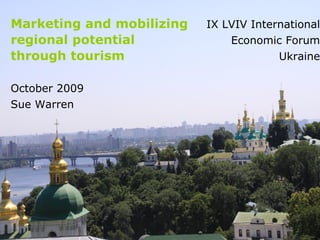
Marketing and mobilizing   IX LVIV International
regional potential             Economic Forum
through tourism                         Ukraine


October 2009
Sue Warren
Importance of tourism
one of the strongest drivers of trade and prosperity

a major player in the economy

sheer size and growth of sector

a major way to alleviate poverty

a major role to safeguard and encourage sustainability

can improve and nurture places for people to live,
work and invest in - and for people to visit

can influence regional development
Tourism impact

 quantifiable economic impact
  (direct, indirect and induced economic benefits)
  Tourism Satellite Accounting (TSA)

 unquantifiable “soft” benefits
  ….image, social inclusion, pride of place, quality of
  life,

 sustainability managed (Sustainable Indicators)

 tourism is part of rural development – EU agendas
Tourism is a strategic business
            attractors


           Destination
           Management

services
                          infrastructure
Attractors - pull the market
 Product
 - well developed and value
 laden product


 product development
 – meeting trends
Services meet needs of visitors,
high in-destination spending
                           accommodation,
      Quality              restaurants,
      Correct pricing
                           Guides, Tour
                           operators,
                           taxis, rental cars
                           Souvenirs, markets
Infrastructure –
facilitates access, quality and operation

makes the destination work with basic
requirements for people,
access…comfort…security...getting around

make it easy for tourists

soft: information systems, ICT
hard: access (air, roads, signage),
spatial planning, traffic control, parking,
public amenities (rubbish control, toilets)
Creating competitive identity
…beginning with tourism


   Public
   Diplomacy       Business


    Inward         Tourism
    Investment
Is your image fair?

 identify your image
 analyze how you want to be positioned
 develop a brand strategy to deal with it


 how much of your reputation is deserved
 is there a gap between reality & perception…
if unfair…a communication problem
if fair…..you need new policies and new behaviours
Establishing a competitive identity
                       branding a destination is
                        about amplification, not
                        fabrication
                       identify what is relevant,
                        credible, distinctive and
                        motivating to your target
                        audiences
                       how you stand out from
                        your competitors
                       find a powerful story,
                        develop a brand strategy
                       reinforce your positioning
                        with behaviour
Competitive Identity for New Zealand: “Flying the
Fern”


 www.investmentnz.govt.
 nz
Focused marketing
to identified niches noting trends….
Promotional activities –
do a few things well
 Internet and individuality – move ahead
 Engage the media
 Imagery – convey values
 Editorial and empathy – inspired literature,
  language carefully reviewed
 Events – make a statement
 Advertising – find diversity in the story, review
  your language
Destination Management
- partnership organisation, holistic approach
destination management organisation (DMO)
The big agenda
    is sustainable development

   Institutional Sustainability
   Social Inclusion
   Cultural sustainability, ethics
   Sustainability of lifestyle
   Environmental sustainability
   Climate Change (risk management)
Principles of
 Sustainable tourism

1. using resources sustainably
2. reducing over-consumption and waste
3. maintaining diversity
4. integrating tourism into planning
5. supporting local economies
6. involving local communities
7. consulting stakeholders and the public
8. training staff
9. marketing tourism responsibly
10. undertaking research
Big challenges & new opportunities
 Tourism has economic and other soft impacts
  This is why Governments / EU prioritize funding for tourism
  development

  BUT tourism can have negative impacts – polluting industry, polarize
  communities, marginalize local people, so has to be done well

  Must be planned & managed in a SUSTAINABLE way

 regional bodies to be prepared, eg destination management
 understand the environment
 understand who is coming, who is not, why, what is required to
  attract them understand the impact of climate change
 tune in to the trends, new global frameworks, EU policies etc,
 understand the NEED to get together to work towards sustainability

Opportunities are there in tourism FOR THOSE WHO ARE PREPARED

2 4 Warren

  • 1.
    Marketing and mobilizing IX LVIV International regional potential Economic Forum through tourism Ukraine October 2009 Sue Warren
  • 2.
    Importance of tourism oneof the strongest drivers of trade and prosperity a major player in the economy sheer size and growth of sector a major way to alleviate poverty a major role to safeguard and encourage sustainability can improve and nurture places for people to live, work and invest in - and for people to visit can influence regional development
  • 3.
    Tourism impact  quantifiableeconomic impact (direct, indirect and induced economic benefits) Tourism Satellite Accounting (TSA)  unquantifiable “soft” benefits ….image, social inclusion, pride of place, quality of life,  sustainability managed (Sustainable Indicators)  tourism is part of rural development – EU agendas
  • 4.
    Tourism is astrategic business attractors Destination Management services infrastructure
  • 5.
    Attractors - pullthe market Product - well developed and value laden product product development – meeting trends
  • 6.
    Services meet needsof visitors, high in-destination spending accommodation, Quality restaurants, Correct pricing Guides, Tour operators, taxis, rental cars Souvenirs, markets
  • 7.
    Infrastructure – facilitates access,quality and operation makes the destination work with basic requirements for people, access…comfort…security...getting around make it easy for tourists soft: information systems, ICT hard: access (air, roads, signage), spatial planning, traffic control, parking, public amenities (rubbish control, toilets)
  • 8.
    Creating competitive identity …beginningwith tourism Public Diplomacy Business Inward Tourism Investment
  • 9.
    Is your imagefair?  identify your image  analyze how you want to be positioned  develop a brand strategy to deal with it  how much of your reputation is deserved  is there a gap between reality & perception… if unfair…a communication problem if fair…..you need new policies and new behaviours
  • 10.
    Establishing a competitiveidentity  branding a destination is about amplification, not fabrication  identify what is relevant, credible, distinctive and motivating to your target audiences  how you stand out from your competitors  find a powerful story, develop a brand strategy  reinforce your positioning with behaviour
  • 11.
    Competitive Identity forNew Zealand: “Flying the Fern” www.investmentnz.govt. nz
  • 12.
    Focused marketing to identifiedniches noting trends….
  • 13.
    Promotional activities – doa few things well  Internet and individuality – move ahead  Engage the media  Imagery – convey values  Editorial and empathy – inspired literature, language carefully reviewed  Events – make a statement  Advertising – find diversity in the story, review your language
  • 14.
    Destination Management - partnershiporganisation, holistic approach destination management organisation (DMO)
  • 15.
    The big agenda is sustainable development  Institutional Sustainability  Social Inclusion  Cultural sustainability, ethics  Sustainability of lifestyle  Environmental sustainability  Climate Change (risk management)
  • 16.
    Principles of Sustainabletourism 1. using resources sustainably 2. reducing over-consumption and waste 3. maintaining diversity 4. integrating tourism into planning 5. supporting local economies 6. involving local communities 7. consulting stakeholders and the public 8. training staff 9. marketing tourism responsibly 10. undertaking research
  • 17.
    Big challenges &new opportunities  Tourism has economic and other soft impacts This is why Governments / EU prioritize funding for tourism development BUT tourism can have negative impacts – polluting industry, polarize communities, marginalize local people, so has to be done well Must be planned & managed in a SUSTAINABLE way  regional bodies to be prepared, eg destination management  understand the environment  understand who is coming, who is not, why, what is required to attract them understand the impact of climate change  tune in to the trends, new global frameworks, EU policies etc,  understand the NEED to get together to work towards sustainability Opportunities are there in tourism FOR THOSE WHO ARE PREPARED