18Lobar or Segmental Collapse*
CLINICAL IMAGAGING
AN ATLAS OF DIFFERENTIAL DAIGNOSIS
EISENBERG
DR. Muhammad Bin Zulfiqar
PGR-FCPS III SIMS/SHL
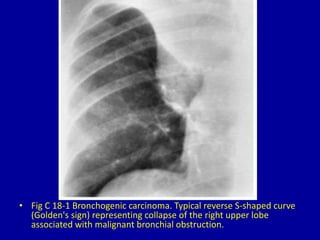
• Fig C 18-1 Bronchogenic carcinoma. Typical reverse S-shaped curve
(Golden's sign) representing collapse of the right upper lobe
associated with malignant bronchial obstruction.
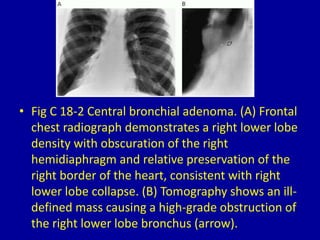
• Fig C 18-2 Central bronchial adenoma. (A) Frontal
chest radiograph demonstrates a right lower lobe
density with obscuration of the right
hemidiaphragm and relative preservation of the
right border of the heart, consistent with right
lower lobe collapse. (B) Tomography shows an ill-
defined mass causing a high-grade obstruction of
the right lower lobe bronchus (arrow).
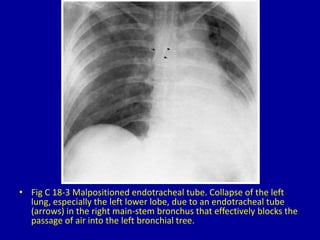
• Fig C 18-3 Malpositioned endotracheal tube. Collapse of the left
lung, especially the left lower lobe, due to an endotracheal tube
(arrows) in the right main-stem bronchus that effectively blocks the
passage of air into the left bronchial tree.
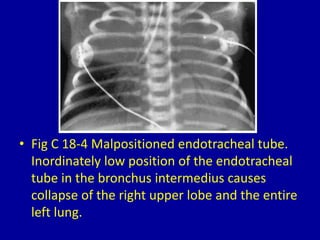
• Fig C 18-4 Malpositioned endotracheal tube.
Inordinately low position of the endotracheal
tube in the bronchus intermedius causes
collapse of the right upper lobe and the entire
left lung.
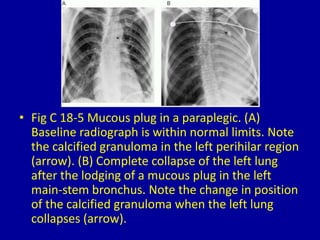
• Fig C 18-5 Mucous plug in a paraplegic. (A)
Baseline radiograph is within normal limits. Note
the calcified granuloma in the left perihilar region
(arrow). (B) Complete collapse of the left lung
after the lodging of a mucous plug in the left
main-stem bronchus. Note the change in position
of the calcified granuloma when the left lung
collapses (arrow).
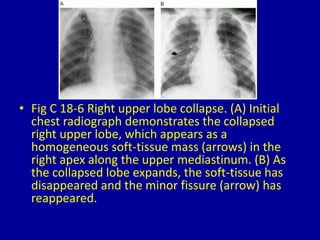
• Fig C 18-6 Right upper lobe collapse. (A) Initial
chest radiograph demonstrates the collapsed
right upper lobe, which appears as a
homogeneous soft-tissue mass (arrows) in the
right apex along the upper mediastinum. (B) As
the collapsed lobe expands, the soft-tissue has
disappeared and the minor fissure (arrow) has
reappeared.
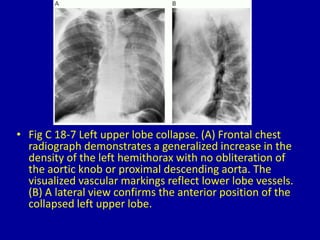
• Fig C 18-7 Left upper lobe collapse. (A) Frontal chest
radiograph demonstrates a generalized increase in the
density of the left hemithorax with no obliteration of
the aortic knob or proximal descending aorta. The
visualized vascular markings reflect lower lobe vessels.
(B) A lateral view confirms the anterior position of the
collapsed left upper lobe.
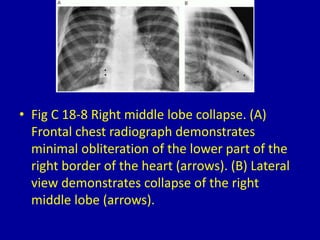
• Fig C 18-8 Right middle lobe collapse. (A)
Frontal chest radiograph demonstrates
minimal obliteration of the lower part of the
right border of the heart (arrows). (B) Lateral
view demonstrates collapse of the right
middle lobe (arrows).
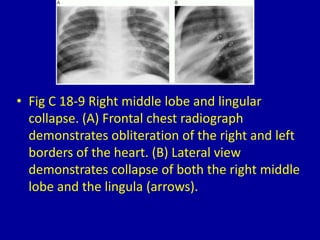
• Fig C 18-9 Right middle lobe and lingular
collapse. (A) Frontal chest radiograph
demonstrates obliteration of the right and left
borders of the heart. (B) Lateral view
demonstrates collapse of both the right middle
lobe and the lingula (arrows).
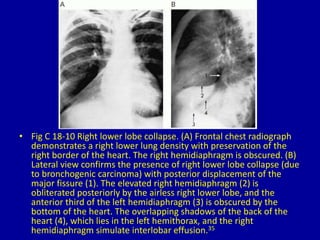
• Fig C 18-10 Right lower lobe collapse. (A) Frontal chest radiograph
demonstrates a right lower lung density with preservation of the
right border of the heart. The right hemidiaphragm is obscured. (B)
Lateral view confirms the presence of right lower lobe collapse (due
to bronchogenic carcinoma) with posterior displacement of the
major fissure (1). The elevated right hemidiaphragm (2) is
obliterated posteriorly by the airless right lower lobe, and the
anterior third of the left hemidiaphragm (3) is obscured by the
bottom of the heart. The overlapping shadows of the back of the
heart (4), which lies in the left hemithorax, and the right
hemidiaphragm simulate interlobar effusion.35
• Fig C 18-11 Left lower lobe collapse. (A)
Frontal chest radiograph demonstrates
obliteration of the descending thoracic aorta
and obscuration of much of the left
hemidiaphragm. (B) Lateral view confirms the
posterior portion of the collapsed left lower
lobe.
18 lobar or segmental collapse

18 lobar or segmental collapse

  • 1.
  • 2.
    CLINICAL IMAGAGING AN ATLASOF DIFFERENTIAL DAIGNOSIS EISENBERG DR. Muhammad Bin Zulfiqar PGR-FCPS III SIMS/SHL
  • 3.
    • Fig C18-1 Bronchogenic carcinoma. Typical reverse S-shaped curve (Golden's sign) representing collapse of the right upper lobe associated with malignant bronchial obstruction.
  • 4.
    • Fig C18-2 Central bronchial adenoma. (A) Frontal chest radiograph demonstrates a right lower lobe density with obscuration of the right hemidiaphragm and relative preservation of the right border of the heart, consistent with right lower lobe collapse. (B) Tomography shows an ill- defined mass causing a high-grade obstruction of the right lower lobe bronchus (arrow).
  • 5.
    • Fig C18-3 Malpositioned endotracheal tube. Collapse of the left lung, especially the left lower lobe, due to an endotracheal tube (arrows) in the right main-stem bronchus that effectively blocks the passage of air into the left bronchial tree.
  • 6.
    • Fig C18-4 Malpositioned endotracheal tube. Inordinately low position of the endotracheal tube in the bronchus intermedius causes collapse of the right upper lobe and the entire left lung.
  • 7.
    • Fig C18-5 Mucous plug in a paraplegic. (A) Baseline radiograph is within normal limits. Note the calcified granuloma in the left perihilar region (arrow). (B) Complete collapse of the left lung after the lodging of a mucous plug in the left main-stem bronchus. Note the change in position of the calcified granuloma when the left lung collapses (arrow).
  • 8.
    • Fig C18-6 Right upper lobe collapse. (A) Initial chest radiograph demonstrates the collapsed right upper lobe, which appears as a homogeneous soft-tissue mass (arrows) in the right apex along the upper mediastinum. (B) As the collapsed lobe expands, the soft-tissue has disappeared and the minor fissure (arrow) has reappeared.
  • 9.
    • Fig C18-7 Left upper lobe collapse. (A) Frontal chest radiograph demonstrates a generalized increase in the density of the left hemithorax with no obliteration of the aortic knob or proximal descending aorta. The visualized vascular markings reflect lower lobe vessels. (B) A lateral view confirms the anterior position of the collapsed left upper lobe.
  • 10.
    • Fig C18-8 Right middle lobe collapse. (A) Frontal chest radiograph demonstrates minimal obliteration of the lower part of the right border of the heart (arrows). (B) Lateral view demonstrates collapse of the right middle lobe (arrows).
  • 11.
    • Fig C18-9 Right middle lobe and lingular collapse. (A) Frontal chest radiograph demonstrates obliteration of the right and left borders of the heart. (B) Lateral view demonstrates collapse of both the right middle lobe and the lingula (arrows).
  • 12.
    • Fig C18-10 Right lower lobe collapse. (A) Frontal chest radiograph demonstrates a right lower lung density with preservation of the right border of the heart. The right hemidiaphragm is obscured. (B) Lateral view confirms the presence of right lower lobe collapse (due to bronchogenic carcinoma) with posterior displacement of the major fissure (1). The elevated right hemidiaphragm (2) is obliterated posteriorly by the airless right lower lobe, and the anterior third of the left hemidiaphragm (3) is obscured by the bottom of the heart. The overlapping shadows of the back of the heart (4), which lies in the left hemithorax, and the right hemidiaphragm simulate interlobar effusion.35
  • 13.
    • Fig C18-11 Left lower lobe collapse. (A) Frontal chest radiograph demonstrates obliteration of the descending thoracic aorta and obscuration of much of the left hemidiaphragm. (B) Lateral view confirms the posterior portion of the collapsed left lower lobe.