Presented By
A.prem
A PRESENTATION ON
THERMAL POWER PLANT
CONTENTS
 Introductory overview
 Efficiency
 Electricity cost
 Diagram of a typical coal-fired thermal power station
 Boiler and steam cycle
 Steam turbine generator
 Stack gas path and cleanup
 Transport of coal fuel to site and to storage

Major Thermal Power Plants in India
 Advantages &Disadvantages
 A thermal power station is a
power plant in which the prime mover
is steam driven.
Introductory overview
 Water is heated, turns into steam
and spins a steam turbine which drives
an electrical generator.
 After it passes through the turbine,
the steam is condensed in a condenser
and recycled to where it was heated.
 The different fuel sources, some
prefer to use the term energy center
because such facilities convert forms
of heat energy into electricity.
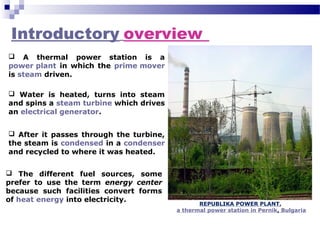
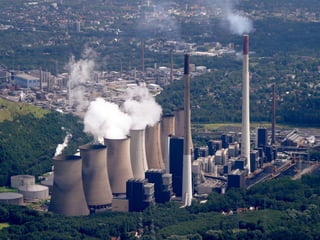
REPUBLIKA POWER PLANT,
a thermal power station in Pernik, Bulgaria
Efficiency
 The energy efficiency of a conventional
thermal power station.
 Considered as salable energy as a
percent of the heating value of the fuel
consumed, is typically 33% to 48%.
 The rest of the energy must leave the
plant in the form of heat, this waste heat
can go through a condenser and be
disposed of with cooling water or in
cooling towers.
 If the waste heat is instead utilized for
district heating, it is called co-generation.
Electricity cost
 The direct cost of electric energy produced by a thermal power station
is the result of cost of fuel, capital cost for the plant, operator labour,
maintenance, and such factors as ash handling and disposal.
 Indirect, social or environmental costs such as the economic value of
environmental impacts, or environmental and health effects of the
complete fuel cycle.
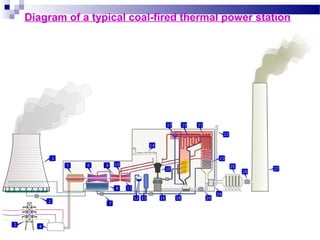
Diagram of a typical coal-fired thermal power station
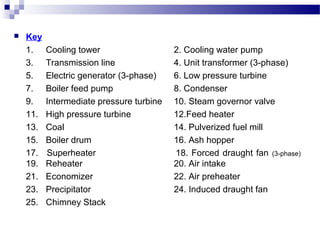
 Key
1. Cooling tower 2. Cooling water pump
3. Transmission line 4. Unit transformer (3-phase)
5. Electric generator (3-phase) 6. Low pressure turbine
7. Boiler feed pump 8. Condenser
9. Intermediate pressure turbine 10. Steam governor valve
11. High pressure turbine 12.Feed heater
13. Coal 14. Pulverized fuel mill
15. Boiler drum 16. Ash hopper
17. Superheater 18. Forced draught fan (3-phase)
19. Reheater 20. Air intake
21. Economizer 22. Air preheater
23. Precipitator 24. Induced draught fan
25. Chimney Stack
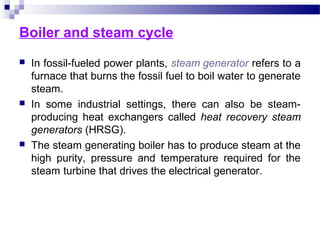
Boiler and steam cycle
 In fossil-fueled power plants, steam generator refers to a
furnace that burns the fossil fuel to boil water to generate
steam.
 In some industrial settings, there can also be steam-
producing heat exchangers called heat recovery steam
generators (HRSG).
 The steam generating boiler has to produce steam at the
high purity, pressure and temperature required for the
steam turbine that drives the electrical generator.
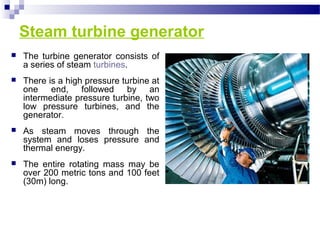
Steam turbine generator
 The turbine generator consists of
a series of steam turbines.
 There is a high pressure turbine at
one end, followed by an
intermediate pressure turbine, two
low pressure turbines, and the
generator.
 As steam moves through the
system and loses pressure and
thermal energy.
 The entire rotating mass may be
over 200 metric tons and 100 feet
(30m) long.
Stack gas path and cleanup
 As the combustion flue gas exits the boiler it is routed through a
rotating flat basket of metal mesh which picks up heat and returns it
to incoming fresh air as the basket rotates, This is called the
air preheater.
 Fly ash is captured and removed from the flue gas by electrostatic
precipitators or fabric bag filters (or sometimes both) located at the
outlet of the furnace and before the induced draft fan.
Transport of coal fuel to site and to
storage
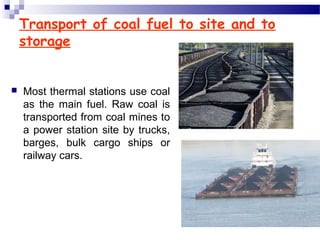
 Most thermal stations use coal
as the main fuel. Raw coal is
transported from coal mines to
a power station site by trucks,
barges, bulk cargo ships or
railway cars.
Major Thermal Power Plants in India
 Super thermal power plants in India are the solutions the
government of India found to overcome the power deficit
 Maharastra stands first in production of thermal power in India and
NTPC leads in the thermal power generating sector with total
capacity of 24,395 MW.
 Maharastra has plenty of coal mines encouraging the inception of
coal operated thermal power plants.
Advantages
 The fuel used is quite cheap.
 Less initial cost as compared to other generating plants.
 It require less space as compared to Hydro power plants.
 Cost of generation is less than that of diesel power plants.
Disadvantages
 It pollutes the atmosphere due to production of large amount of
smoke and fumes.
 It is costlier in running cost as compared to Hydro electric plants.
Thermal Power Plant

Thermal Power Plant

  • 1.
    Presented By A.prem A PRESENTATIONON THERMAL POWER PLANT
  • 2.
    CONTENTS  Introductory overview Efficiency  Electricity cost  Diagram of a typical coal-fired thermal power station  Boiler and steam cycle  Steam turbine generator  Stack gas path and cleanup  Transport of coal fuel to site and to storage  Major Thermal Power Plants in India  Advantages &Disadvantages
  • 3.
     A thermalpower station is a power plant in which the prime mover is steam driven. Introductory overview  Water is heated, turns into steam and spins a steam turbine which drives an electrical generator.  After it passes through the turbine, the steam is condensed in a condenser and recycled to where it was heated.  The different fuel sources, some prefer to use the term energy center because such facilities convert forms of heat energy into electricity. REPUBLIKA POWER PLANT, a thermal power station in Pernik, Bulgaria
  • 4.
    Efficiency  The energyefficiency of a conventional thermal power station.  Considered as salable energy as a percent of the heating value of the fuel consumed, is typically 33% to 48%.  The rest of the energy must leave the plant in the form of heat, this waste heat can go through a condenser and be disposed of with cooling water or in cooling towers.  If the waste heat is instead utilized for district heating, it is called co-generation.
  • 5.
    Electricity cost  Thedirect cost of electric energy produced by a thermal power station is the result of cost of fuel, capital cost for the plant, operator labour, maintenance, and such factors as ash handling and disposal.  Indirect, social or environmental costs such as the economic value of environmental impacts, or environmental and health effects of the complete fuel cycle.
  • 6.
    Diagram of atypical coal-fired thermal power station
  • 7.
     Key 1. Coolingtower 2. Cooling water pump 3. Transmission line 4. Unit transformer (3-phase) 5. Electric generator (3-phase) 6. Low pressure turbine 7. Boiler feed pump 8. Condenser 9. Intermediate pressure turbine 10. Steam governor valve 11. High pressure turbine 12.Feed heater 13. Coal 14. Pulverized fuel mill 15. Boiler drum 16. Ash hopper 17. Superheater 18. Forced draught fan (3-phase) 19. Reheater 20. Air intake 21. Economizer 22. Air preheater 23. Precipitator 24. Induced draught fan 25. Chimney Stack
  • 8.
    Boiler and steamcycle  In fossil-fueled power plants, steam generator refers to a furnace that burns the fossil fuel to boil water to generate steam.  In some industrial settings, there can also be steam- producing heat exchangers called heat recovery steam generators (HRSG).  The steam generating boiler has to produce steam at the high purity, pressure and temperature required for the steam turbine that drives the electrical generator.
  • 9.
    Steam turbine generator The turbine generator consists of a series of steam turbines.  There is a high pressure turbine at one end, followed by an intermediate pressure turbine, two low pressure turbines, and the generator.  As steam moves through the system and loses pressure and thermal energy.  The entire rotating mass may be over 200 metric tons and 100 feet (30m) long.
  • 10.
    Stack gas pathand cleanup  As the combustion flue gas exits the boiler it is routed through a rotating flat basket of metal mesh which picks up heat and returns it to incoming fresh air as the basket rotates, This is called the air preheater.  Fly ash is captured and removed from the flue gas by electrostatic precipitators or fabric bag filters (or sometimes both) located at the outlet of the furnace and before the induced draft fan.
  • 11.
    Transport of coalfuel to site and to storage  Most thermal stations use coal as the main fuel. Raw coal is transported from coal mines to a power station site by trucks, barges, bulk cargo ships or railway cars.
  • 12.
    Major Thermal PowerPlants in India  Super thermal power plants in India are the solutions the government of India found to overcome the power deficit  Maharastra stands first in production of thermal power in India and NTPC leads in the thermal power generating sector with total capacity of 24,395 MW.  Maharastra has plenty of coal mines encouraging the inception of coal operated thermal power plants.
  • 13.
    Advantages  The fuelused is quite cheap.  Less initial cost as compared to other generating plants.  It require less space as compared to Hydro power plants.  Cost of generation is less than that of diesel power plants. Disadvantages  It pollutes the atmosphere due to production of large amount of smoke and fumes.  It is costlier in running cost as compared to Hydro electric plants.